Schools are increasingly installing bullet-resistant glass and films to protect students and staff against forced entry, active shooter situations, and everyday hazards. But terms like “bulletproof” and “ballistic” are thrown around loosely, making it difficult for school administrators to know what actually works and what’s just marketing. This article cuts through the confusion and explains exactly what ballistic window film does, where it falls short, and how to plan a realistic upgrade for your campus.
Table of Contents
Click any section to jump directly to the answers you need right now.
What is Ballistic Window Film for Schools?
How Ballistic Window Film Improves School Safety and Security
Is Ballistic Window Film Bulletproof? Understanding Its Limits
How Ballistic Film Performs in Forced Entry and Active Shooter Scenarios
Ballistic Film vs. Bullet Resistant Glass and Glazing Systems
Planning a Ballistic Film Project for Your School
Costs, Budgeting, and Grant Funding for School Security Film
Best Locations to Install Ballistic Film in K–12 and Higher Education Buildings
Maintenance, Lifespan, and Performance Over Time
FAQ: Ballistic Window Film and School Security
Why Choose Our Team for Ballistic Film and School Glazing Upgrades
Conclusion: Next Steps to Protect Your School’s Windows and Doors
What Is Ballistic Window Film for Schools?
Ballistic film for schools is a heavy-duty polyester layer applied to glass to enhance its impact resistance. It’s specifically designed to hold broken glass together when struck by tools, debris, or gunfire, keeping the opening intact and slowing unauthorized entry. It is not the same thing as bulletproof glass, and understanding that distinction is critical before spending a dollar.
The term “ballistic window film” is commonly referred to alongside related products like security window film and safety film. All three describe thick adhesive laminates installed on existing glass, but they serve different levels of protection. Ballistic glass and bullet resistant glazing, by contrast, are full multi-layer assemblies of laminated glass, polycarbonate, and engineered frames that are independently tested to stop specific calibers. Film is a retrofit; ballistic glazing is a purpose-built system.
Ballistic film can be retrofitted to existing glass surfaces with minimal disruption. It’s applied to the interior face of existing windows and door glass, bonded to the existing glazing frame with structural caulk or mechanical anchors. The film maintains a transparent appearance, allowing natural light into buildings while adding an additional layer of protection that’s virtually invisible.
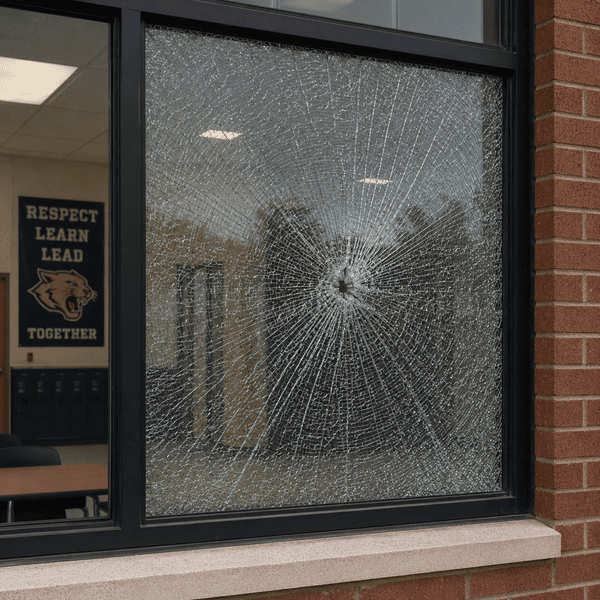
Performance depends on the complete system: film thickness, glass type, and window frame condition all matter. Typical security films range from 8 to 14 mil for forced entry resistance, while true ballistic glazing assemblies measure ¾ inch or thicker.
Film alone is not certified “bulletproof.” It can be part of a bullet resistant system only when paired with tested glazing, proper frames, and certified anchoring.
Key terms at a glance:
- Security window film – thick adhesive laminate applied to existing glass to hold glass fragments in place and delay entry
- Safety film – lighter-weight film meeting human-impact safety glazing codes (ANSI Z97.1, CPSC)
- Ballistic window film – heavier security film, commonly referred to in school security contexts, designed to resist forced entry
- Bullet resistant glass / ballistic glass – multi-layer glazing assemblies tested and rated under standards like UL 752 to stop specific rounds
- Ballistically rated glass – glass meeting a defined ballistic protection level within the UL 752 framework
How Ballistic Window Film Improves School Safety and Security
Many schools face overlapping glass-related risks: active shooter threats, break ins, vandalism, severe weather, and simple accidents. Standard glass shatters into sharp shards that can cause lacerations and injuries to building occupants. Window film for schools addresses multiple risks simultaneously.
Core protective functions:
- Holds shattered glass together after impact, preventing flying shards from injuring students and staff. 3M Safety and Security Window Film, for example, holds glass together when broken, keeping fragments contained.
- Delays forced entry by keeping the glass panel intact even after repeated strikes, buying critical time for lockdown procedures and law enforcement response.
- Reduces broken glass hazards – security window films help contain glass fragmentation during attacks, protecting those sheltering nearby.
- Prevents door glass from “popping out” of the frame after impact or gunfire when the film is anchored properly to the window frame with structural caulk.
- Ballistic window film can help prevent glass fragmentation injuries, which account for a significant portion of harm in both active shooter situations and natural disasters.
- Ballistic film acts as a spall shield during natural disasters like tornadoes and hurricanes, holding glass in place when debris strikes.
Typical use cases include main entrances, vestibules, classroom sidelites, glass doors along corridors, interior office windows, cafeteria curtainwalls, and gym lobby glass.
Secondary benefits: sun control films and security films often block over 99% of UV rays, protect furnishings, and can reduce glare while delivering minor energy savings. One suburban high school reported roughly 12% lower HVAC costs after combining security film with sun control options. The film remains optically clear, so it doesn’t change how the school looks or feels inside.
Is Ballistic Window Film Bulletproof? Understanding Its Limits
There is no such thing as 100% bullet proof glass. No glass is 100% bulletproof, only bullet-resistant – meaning it can stop certain calibers under tested conditions. The term “bullet proof” is misleading, and school administrators should be cautious of any vendor using it without qualifications.
Ballistic window film does not stop bullets on regular glass. When applied over standard tempered or annealed glass, security film keeps the panel from collapsing but does not provide meaningful bullet resistance against most firearms. Security window films are not ballistically rated without proper glass underneath. The film’s role on standard glazing is to delay forced entry and hold glass together – not to achieve full ballistic stoppage.
True bullet resistant performance requires specially engineered bullet resistant glazing or polycarbonate shields meeting standards like UL 752 or ASTM F1233. BulletShield, for example, meets UL752 standards for ballistic resistance when installed as a complete system. Ballistic protection levels range from Level 1 to Level 10 under UL 752. Level 1 can sustain three 9mm bullets. Level 10 can stop a single 50 BMG bullet. Each level specifies ammunition type, shot count, and velocity.
Three tiers of protection:
- Basic safety film: shatter resistance for accidental impact and storms.
- Forced entry / anti–active shooter film: heavy-gauge film with structural anchoring to delay intrusion.
- Bullet resistant glazing systems: laminated glass and polycarbonate packages designed and tested to stop specific calibers.
Marketing red flags to watch for: vague “bulletproof” claims with no third-party test data, no mention of underlying glass type, and no specification of the attachment system. Always ask for independently tested results and confirmed UL 752 or ASTM F1233 ratings for the full assembly – not just the film.
How Ballistic Film Performs in Forced Entry and Active Shooter Scenarios
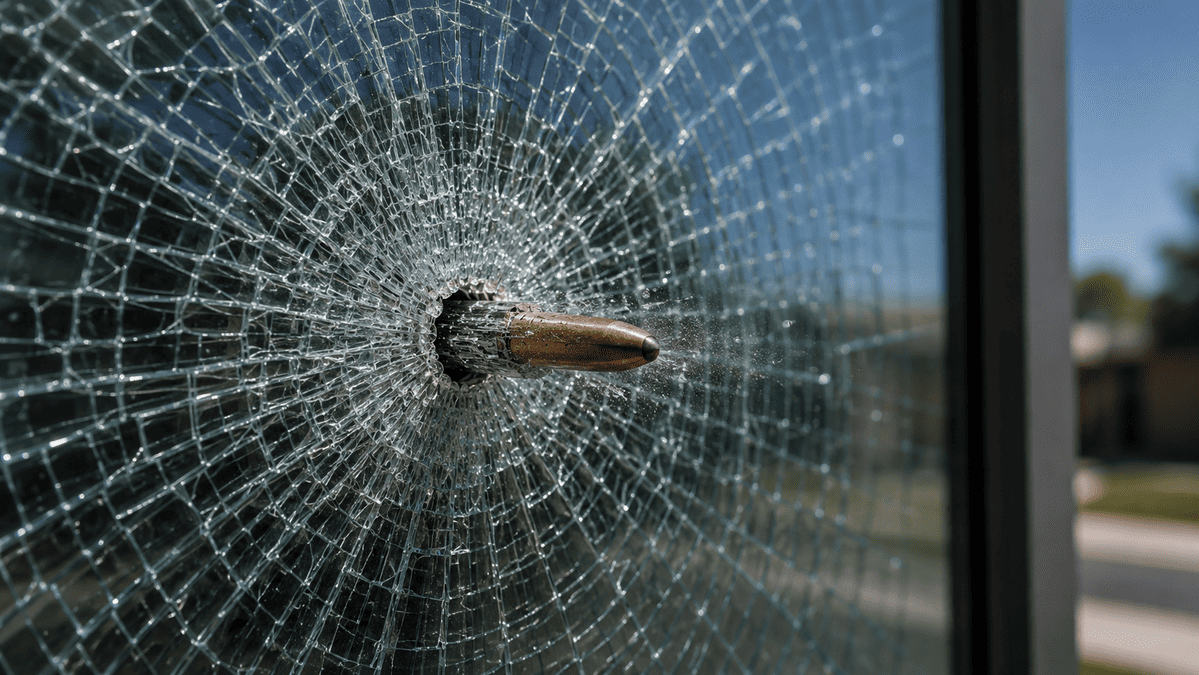
Picture a common school shooting or forced entry scenario: an attacker targets the locked front door, striking or shooting the door glass or sidelites to gain entry. Here’s what typically happens when that glass has security film installed correctly:
- Bullets or impact may penetrate the glass but the film holds glass fragments together, preventing the pane from collapsing.
- The opening remains partially closed, making it difficult for potential intruders to reach through and manipulate door hardware.
- Repeated blows or shots are required to create a large enough opening, dramatically slowing access.
- The effectiveness of ballistic film depends on its anchoring system – films bonded to frames with structural caulk or mechanical anchors perform significantly better than unanchored film.
- The delay caused by ballistic film can provide critical time during emergencies, allowing staff to initiate lockdown and students to shelter.
Independent testing shows delay times of 30 seconds to over three minutes depending on the film, glass, and anchoring configuration. RiotLite security film delays entry for up to 60 seconds under tool and impact attack. RiotLite can delay entry for up to 60 seconds during an attack, which is enough time for a school to complete initial lockdown procedures and for first responders to begin mobilizing. Similar to Riot Glass security solutions, the goal is to slow attackers and increase response time.
This delay entry capability matters because every second counts. Security professionals consistently emphasize that slowing an attacker – even by 30 to 60 seconds – gives staff and students measurably better odds.
One critical point: door hardware, reinforced strike plates, and strong framing must work together with the film. If the frame or lock fails, the film’s protection is bypassed. Physical security requires treating the entire opening as a system.
Ballistic Film vs. Bullet Resistant Glass and Glazing Systems
Both security film and bullet resistant glass help protect schools, but they differ sharply in performance, cost, and ideal placement. Replacement of windows with ballistically rated glass is often prohibitively expensive for most districts to deploy campus-wide, which is why many schools use a layered approach.
Ballistic / security window film:
- Retrofit solution for existing door glass and existing windows.
- Lower upfront cost, minimal disruption, faster installation.
- Primary value is forced entry delay and glass retention, not full ballistic stoppage on standard glass.
Bullet resistant glazing and bulletproof glass alternatives:
- Purpose-built laminated glass and polycarbonate layers designed to stop specific calibers. Ballistic glass absorbs impact force from gunshots through multiple engineered layers.
- Thicker, heavier, higher cost and often requires new frames or major modifications.
- Ideal for main entrances, secure vestibules, front offices, and areas identified as highest risk.
Bullet resistant glazing as a category includes glass-clad polycarbonate, all-polycarbonate, and hybrid systems mounted over or in place of existing glass. These are the systems that carry actual UL 752 ratings.
A layered security strategy is often the most effective solution: install high-level bullet resistant glazing at primary entry points and use security window film on secondary doors, classroom sidelites, and ground-level school windows. This balances cost, protection, and feasibility.
Base your decisions on a documented risk assessment, your budget, and your building constraints – not on marketing jargon.
Planning a Ballistic Film Project for Your School
Successful projects start with a thorough security assessment and clear goals. Ballistic film can be installed quickly and non-invasively in educational settings, but planning determines whether the investment actually improves safety. Many schools begin researching solutions using terms such as bulletproof window film before comparing the available security glazing options.
- Site walk with a security glazing specialist to identify vulnerable glass: front vestibules, classroom door glass, nurse and admin offices, corridors, and media centers.
- Review of existing glazing types (tempered vs. annealed vs. laminated) and frames to determine compatibility and expected performance.
- Selection of film thickness, attachment systems (structural silicone, mechanical anchors), and any tint or sun control options to reduce glare and heat.
- Phasing plan to prioritize highest-risk areas first when budgets are limited. Schools often implement phased approaches to enhance security with ballistic film, starting with entrances and working outward.
- Scheduling installation during breaks, evenings, or summer to avoid classroom disruption.
- Obtaining product data sheets, third-party test reports, and written installation specifications to satisfy district risk managers, insurers, and school board members.
- Industry standards recommend using certified professional installers for ballistic film to ensure proper adhesion, anchoring, and code compliance.
After installation, update emergency response plans and staff training to align with the improved door and window performance. Staff should understand how filmed glass behaves differently during a lockdown drill or real event.
Costs, Budgeting, and Grant Funding for School Security Film
Ballistic film provides a cost-effective alternative to bullet-resistant glazing for most of a school’s glass openings. It’s often chosen because it can significantly improve protection at a fraction of what full bulletproof glass replacement would cost – security film typically runs $12 to $40 per square foot installed, while bullet resistant glass systems cost $100 to $400+ per square foot.
Main cost drivers:
- Total square footage of glass being treated.
- Film type and thickness (standard safety vs. high-security forced entry film).
- Complexity of frames and required anchoring systems.
- Accessibility (ground floor vs. multi-story, interior vs. exterior access).
- Project timing (summer retrofit vs. rush emergency installation).
Larger districts can sometimes secure volume pricing. One urban district filmed 85,000+ square feet with 12-mil film and silicone anchoring for approximately $1 million – about $12 per square foot installed. A rural K-8 school used 14-mil film and spent roughly $38,000 total.
Grant funding opportunities include state school safety grants, federal programs like the STOP School Violence Act and COPS Office grants, FEMA Hazard Mitigation grants (when film provides storm and debris protection), and local foundation support. Schools that document risks, incident history, and projected safety measures tend to build stronger applications. Some districts combine grant funding with capital improvement budgets to phase projects across multiple years.
Best Locations to Install Ballistic Film in K–12 and Higher Education Buildings
Not every pane of glass must be upgraded on day one. Focus on where film delivers the greatest risk reduction for your security needs.
- Main entry doors and sidelites, especially where visitors first enter.
- Secure vestibules between exterior and interior office doors.
- Classroom door glass and narrow sidelites along main corridors.
- Ground-level classroom windows facing public streets, playgrounds, or parking lots.
- Administrative offices, counseling areas, and nurse suites with public-facing glazing.
- Large lobby, cafeteria, and gym lobby glass walls that could be targeted for forced entry or vandalism.
- Special areas like computer labs, testing centers, and record rooms where break ins for property theft are a concern – these qualify as critical infrastructure within a campus.
Map these locations on school floor plans as part of a building perimeter hardening strategy. This visual approach helps security professionals and school administrators prioritize spending and communicate the plan to stakeholders.
Maintenance, Lifespan, and Performance Over Time
Once installed correctly, high-quality ballistic window film can protect school glass for many years with minimal upkeep.
- Typical warranted lifespans are often 10+ years for interior-applied safety and security film under normal conditions. With proper care, actual service life can reach 15 years.
- Basic care: clean with non-abrasive solutions and soft cloths. Avoid metal scrapers or harsh chemicals that can scratch or degrade the film.
- Periodic inspections by facility staff – and every few years by the original installer – should check edges, anchoring points, and any signs of peeling or delamination.
- How to handle damaged film after an incident: document the damage with photographs, notify the installer, and schedule replacement while keeping areas secure with temporary measures.
Quality security products are UV stable and designed not to discolor or haze over time. Maintaining the film properly ensures it continues to enhance safety throughout its rated lifespan.
FAQ: Ballistic Window Film and School Security
These are the questions we hear most often from superintendents, school boards, and parents.
Is there really “ballistic window film” for schools, or is that just marketing?
Film itself is not rated to stop bullets unless used as part of a tested ballistic glass system. On standard glass, it primarily delays forced entry and holds glass together. The term “ballistic” in film marketing refers to its role in ballistic attack scenarios – slowing access and reducing shattered glass injuries – not to a certified ability to stop bullets.
Do we need bulletproof glass, or is security window film enough?
Risk assessments usually lead to a combined approach: bullet resistant glazing at main entries and high-risk areas, with window film across secondary doors and school windows. This cost effective solution addresses both the highest threats and the broadest coverage within realistic budgets.
How long does it take to install film throughout an average K–12 school?
For a mid-size school with 200 to 300 openings, a dedicated crew can typically complete the work in several days to two weeks. District-wide rollouts across dozens of campuses are phased over months.
Will ballistic film make our windows dark or change how the school looks?
Most schools choose optically clear films that are virtually invisible once installed. Optional tints are available when sun control or privacy is desired, but standard security film preserves natural light and aesthetics.
How does security film interact with fire and life-safety codes?
Reputable security products and installations are designed to maintain egress requirements and comply with local building codes. Always consult your local authority having jurisdiction before modifying fire-rated doors or safety glazing.
Why Choose Our Team for Ballistic Film and School Glazing Upgrades
We specialize in helping K–12 districts and higher education campuses improve safety through properly specified, professionally installed glazing upgrades.
- Experience completing security window film and ballistic glazing projects for K–12 districts and colleges across multiple campuses.
- Expertise in pairing ballistic window film with appropriate door glass, frames, and – where needed – bullet resistant glazing to meet each school’s specific security goals.
- Support with security assessments, product selection, and documentation for boards, insurers, and local law enforcement partners.
- Assistance with budgeting and aligning projects with available grant funding and state-level school safety programs.
- Professional, certified installation crews trained to work in occupied school environments with background checks and strict safety protocols.
- Ready to schedule a site assessment or consultation to help you prevent active shooter situations and unwanted entry through a realistic, phased plan.

Conclusion: Next Steps to Protect Your School’s Windows and Doors
Ballistic film for windows is a practical, cost-effective solution to strengthen school glass against forced entry, active shooter threats, and break ins – especially when combined with other safety measures like access control, lockdown drills, and coordination with law enforcement.
While film alone is not bulletproof, it plays a vital role in a layered security plan that gives students and staff critical time during the moments that matter most. Paired with bullet resistant glazing at key entry points, it delivers broad campus-wide protection within realistic budgets.
Contact our team to schedule a walkthrough, risk assessment, or quote. We’ll help you determine how security window film, ballistic glass, and other upgrades can be phased to fit your budget and grant timelines – and start making your campus safer now.