- The Bulletproof Film Myth
- What Really Determines Your Security Window Film Cost?
- How to Get an Accurate Security Film Quote for Your School
- A Clearer Path to School Safety
- Frequently Asked Questions
The Bulletproof Film Myth
If you’re a school superintendent or facility manager, the pressure to enhance security is immense. And when you’re looking for solutions, you’ve likely searched for phrases like “3M bulletproof window film cost.” You’re not alone. It’s a common starting point, but it’s based on a dangerous misconception that can lead to a false sense of security and a poorly spent budget.
The truth is, there’s no such thing as a simple “bulletproof” film you can stick on a window. Real protection is not about a brand name or a misleading term. It’s about a comprehensive security system, and understanding that difference is the key to making your school safer while respecting your budget.
How Security Window Film Actually Works
Let’s get into what security window film is and how it provides real-world protection. It’s not magic. It’s a practical application of material science designed to buy you the one thing you need most during an emergency: time. Many school administrators researching Bullet Proof Film for Windows discover that the primary value of security film is delaying forced entry and creating critical response time rather than stopping bullets.
The Science of Delay: A High-Tech Safety Net
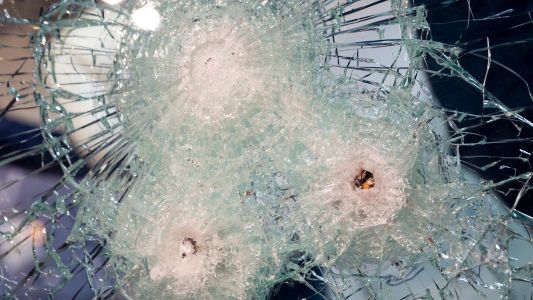
At its core, security window film is a heavy-gauge polyester material bonded to glass with an exceptionally strong adhesive. Think of it less as a shield and more as a high-tech net. When an object like a hammer or rock strikes the window, the glass will still break. That’s an important fact to understand.
However, instead of shattering and falling to the floor, the broken shards remain stuck to the film. The window pane, though fractured, stays largely intact within its frame. This simple mechanism is the key. It denies an intruder the immediate entry they were expecting, forcing them to waste precious seconds and make more noise trying to breach the filmed glass. This delay is often enough to deter them or provide critical time for people inside to react and for first responders to arrive.
Forced Entry vs. Ballistic Resistance
This is the most important distinction to grasp. Confusing the two can be a costly and dangerous mistake.
- Forced Entry Resistance is what security window films are designed for. They are incredibly effective at delaying entry from blunt force attacks. The goal is to make breaking a window so difficult and time-consuming that an intruder gives up. This is the most common and realistic threat for most schools and commercial buildings.
- Ballistic Resistance refers to the ability to stop a bullet. Standard security films, even the thickest ones, are not rated to stop bullets. True ballistic resistance requires specialized, multi-layered systems that are significantly thicker, heavier, and exponentially more expensive, often requiring new window frames.
For a school leader, understanding this difference is crucial. You can achieve a dramatic increase in security against common threats like forced entry for a fraction of the cost of a full ballistic system.
In school settings, understanding how security window film creates critical response time is key. By reinforcing vulnerable glass points, it slows forced entry attempts, giving staff and students valuable time to initiate lockdown procedures and wait for first responders.
Understanding the Different Levels of Film Protection
Not all safety films are created equal. They exist on a spectrum of thickness, measured in mils (one-thousandth of an inch), with each level designed to counter different threats.
- 4-7 Mil Films: These are excellent for basic safety, protecting against accidental breakage and holding glass shards together during storms. They are a cost-effective upgrade for any ground-level window.
- 8-14 Mil Films: This is the sweet spot for most security concerns, including forced entry resistance. An 8 mil film is often the starting point for a serious security project, providing a significant delay against intruders. This is where most school safety window film projects land.
- 15+ Mil Films: These ultra-thick films are typically reserved for high-risk government and commercial facilities requiring blast mitigation or enhanced protection against extreme threats.
The key is that you don’t need to pay for a 15 mil film if your primary concern is deterring a smash-and-grab attempt. An experienced consultant can help you assess your building and recommend the most cost-effective mil thickness for your needs.
What Really Determines Your Security Window Film Cost?
It’s tempting to look for a simple cost per square foot, but that number can be misleading. The final price tag is a result of several critical decisions, each tied to the level of protection your building actually receives. Let’s break down the real factors that shape your investment.
Film Thickness: The Foundation of Your Investment
The film itself is the first factor. While it might seem like thicker is always better, the real goal is to match the film’s thickness to your specific threats. An 8-mil film or thicker is where true forced-entry delay begins and is what we typically recommend for schools concerned about serious security threats. Naturally, as film thickness increases, so does the material cost, but so does the time it takes an intruder to breach the glass.
The Critical Role of Anchoring Systems
An anchoring or attachment system is arguably the most important factor after the film itself. A security film is only as strong as its bond to the window frame. Think of it this way: the film holds the shattered glass together, but what holds that sheet in the frame? An attachment system anchors the film to the window frame using a specialized structural silicone.
Without this system, a determined intruder can simply push the entire pane of filmed, broken glass out of the frame. For any serious security application, an attachment system is not optional. It adds to the project cost, but it’s what ensures the film performs under duress. Skipping it to save money is like buying a bank vault door and installing it in a drywall frame.
Window Size, Type, and Accessibility
Every building is unique, and the nature of your windows plays a huge role in the final labor cost. An installer can’t give a flat rate without understanding the job’s complexity.
Key labor factors include:
- Window Complexity: Is it a single large pane or a door with ten small, individual panes? The latter requires much more time for cutting and installation.
- Accessibility: Are the windows at ground level or two stories up, requiring lifts or scaffolding? Hard-to-reach windows require more time and equipment.
- Site Conditions: Is the installation happening in an empty building or a functioning school full of furniture that needs to be moved and protected?
A transparent proposal should break down your true project cost, which includes the film, the attachment system, and the labor for preparation, installation, and cleanup. When you see a quote that seems too good to be true, it’s often because it’s missing a critical component like the anchoring system.
How to Get an Accurate Security Film Quote for Your School
Getting a reliable quote isn’t about filling out a form online. It’s a process that moves from understanding your unique vulnerabilities to receiving a detailed proposal that solves them.
Step 1: The Professional Threat Assessment
A legitimate quote always begins with a professional threat assessment. An expert will walk through your facility with you to get a clear picture of your specific needs. It’s a collaborative conversation, not a sales pitch.
During this assessment, a consultant will:
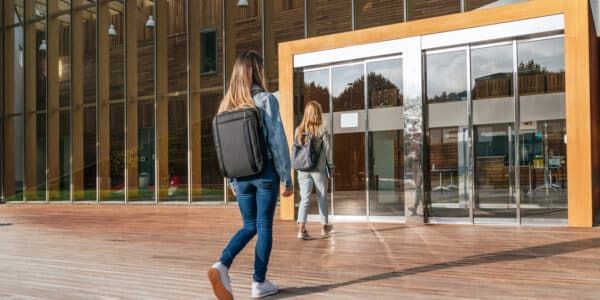
- Identify Vulnerable Points: They’ll look at your building the way a threat would, noting ground-floor windows, glass-paneled doors, and isolated entryways.
- Analyze Existing Structures: The type of glass and the condition of your window frames determine which films and attachment systems are viable.
- Discuss Your Concerns: Your goals directly influence the recommended solution.
The outcome is a tailored strategy that ensures your budget is spent where it matters most.
Step 2: Ask the Right Questions
When meeting with potential providers, you’re conducting an interview. To separate the experts from the opportunists, ask these key questions:
- What is your process for recommending a specific film thickness and attachment system?
- Can you provide case studies or references for other schools you’ve worked with?
- What types of attachment systems do you offer, and why would you choose one over another for our frames?
- Are your installers certified employees, and what specific training do they have?
- What does your warranty cover? Does it include the film, labor, and the glass itself?
- Can you help us identify and apply for school security grants to fund this project?
An experienced partner will have confident, detailed answers. Vague responses should be a major red flag.
Step 3: Look for a Comprehensive Proposal
After the assessment, you’ll receive a proposal. This document is your best tool for evaluating a provider’s expertise. A quick, one-line quote is practically useless.
A comprehensive proposal is a blueprint for your security. It should clearly break down:
- The scope of work, detailing which windows are being treated.
- The recommended film, its thickness, and the specific attachment system.
- A clear explanation of why that solution was chosen.
- A detailed breakdown of costs for materials and labor.
- Warranty information and an estimated project timeline.
This level of detail gives you the power to make an informed decision based on value and safety, not just a lowball price.
A Clearer Path to School Safety
Navigating the world of security film can feel overwhelming, but by shifting your perspective away from misleading claims, you can find an effective and affordable path forward. The goal isn’t just to buy a product; it’s to implement a complete security solution.
Remember these core principles:
- The right system, combining the correct film and an attachment system, is more important than any single brand.
- A professional, on-site threat assessment is the only way to determine what you actually need.
- An expert installation is non-negotiable. The best film will fail if not applied and anchored correctly.
Your first and most important step is to schedule a professional needs assessment with a reputable security film expert. This is the foundation upon which all effective security decisions are built. In the end, you aren’t just buying window film. You’re investing in peace of mind by partnering with an expert who can deliver true security. For a professional assessment and expert installation, connect with CoolVu to find your trusted local security film specialist.
Frequently Asked Questions
Is 3M security film really bulletproof?
No, standard security window film, including 3M’s Ultra Series, is not bulletproof. It is rated for “ballistic resistance,” meaning it can help contain glass fragments upon impact, but it is not designed to stop a bullet. Its primary purpose is to delay forced entry and mitigate hazards from blasts or severe weather. Achieving true bulletproof protection requires specialized laminated glass or polycarbonate systems that are much more expensive. Bullet resistant window film offers delay and containment benefits but should not be confused with true ballistic glazing.
What is the average security window film cost per square foot?
Relying on a simple cost per square foot is misleading. The true cost depends on several factors: the film’s thickness (e.g., 8 mil vs. 14 mil), the complexity of your windows, accessibility for installation, and whether you include a critical anchoring system. A real project cost can range from $12 to $30+ per square foot once all these factors are included. Always get a comprehensive proposal that breaks down all costs.
Do I really need an attachment system for my security film?
Yes. For any serious security application, an attachment system is essential. The film holds shattered glass together, but the attachment system anchors the film and glass to the window frame. Without it, an intruder could simply push the entire sheet of broken, filmed glass out of the frame. Skipping the attachment system severely compromises the effectiveness of the security film.
Are there grants available for school safety window film?
Yes, many schools can get help with funding. Numerous federal, state, and local grant programs exist to help schools fund security upgrades, and security window films are often an eligible expense. An experienced security film provider who works with schools can often help you identify and apply for these school security grants.