Table of Contents
- Separating Fact from Fiction
- Understanding Security Window Film vs Bulletproof Claims
- Real Ballistic Protection Solutions for Windows
- Security Film Applications and Installation Process
- Common Misconceptions and Practical Solutions
- Choosing the Right Protection for Your Needs
- Frequently Asked Questions
Separating Fact from Fiction
True bulletproof window film does not exist in the way most people believe. Despite marketing claims suggesting otherwise, no security window film applied to regular glass can stop bullets from penetrating your windows.
This content addresses security professionals, facility managers, and school administrators who need clarity on what window film actually provides versus what real ballistic protection requires. The distinction matters because misinformation in this space can create dangerous false security—particularly in school settings and high traffic areas where active shooter concerns drive purchasing decisions.
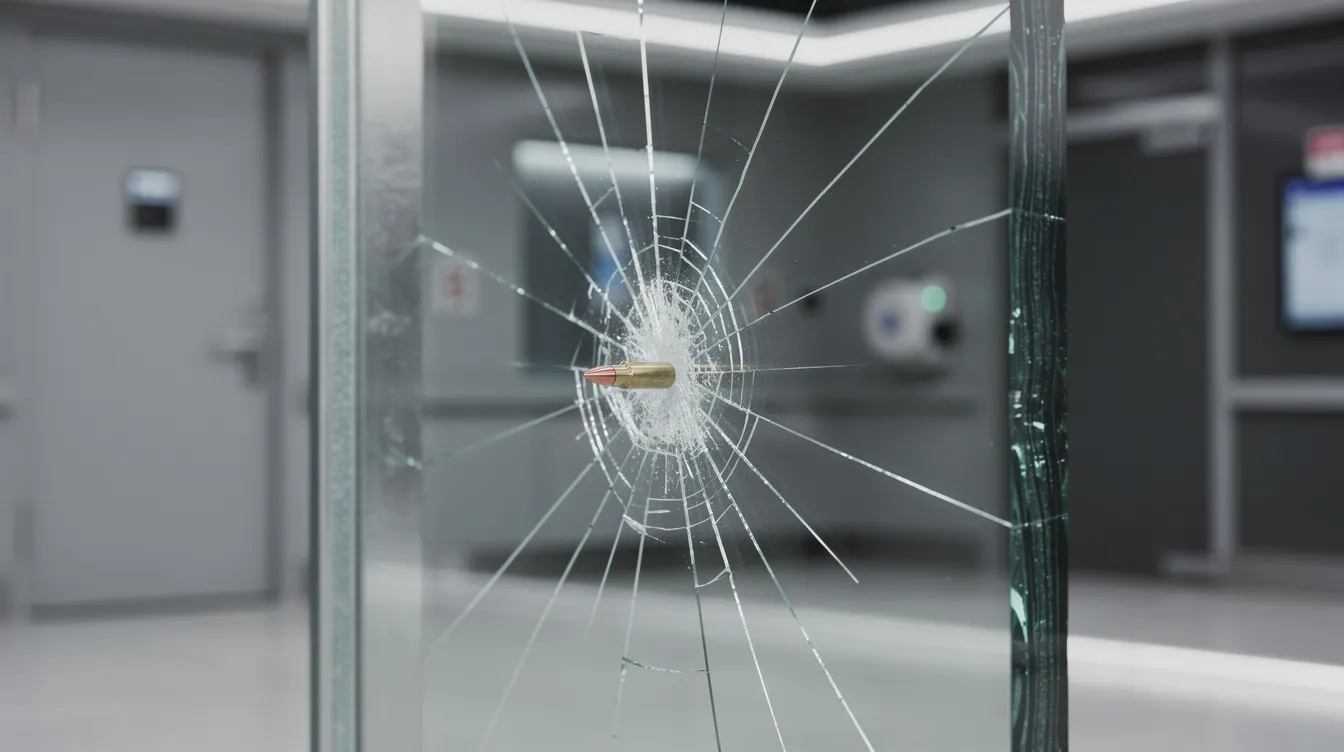
Direct answer: Security film delays forced entry and holds broken glass together, but it cannot stop bullets. Real bullet resistance requires bulletproof glass, glass clad polycarbonate systems, or other UL 752 certified ballistic glazing installed correctly with proper structural support. There is no such thing as a standalone film that turns ordinary glass into true ballistic protection.
Key concepts this article covers:
- What security window film actually does versus marketing claims
- UL 752 certified ballistic protection solutions and their cost
- Proper installation requirements for security film effectiveness
- Decision framework for matching protection level to threat assessment
- Cost comparisons between film, ballistic glass, and polycarbonate systems
Understanding Security Window Film vs Bulletproof Claims
Marketing confusion has created widespread misconceptions about what security window film can accomplish. Terms like “ballistic window film” and “bullet resistant” appear in product descriptions that often fail to specify testing standards or realistic protection capabilities.
What People Think Bulletproof Film Is
Many buyers believe that applying bulletproof window film to existing glass windows will stop bullets fired at standard windows. This misconception stems from marketing materials that use phrases like “bullet resistance” or “ballistic film” without clarifying critical dependencies: the film thickness, how it anchors to the frame, and whether the underlying glass itself carries any ballistic rating.
Some vendors present “bullet resistant” film in school security contexts, implying protection that the product simply cannot deliver when applied to regular glass. Without rated glass beneath it, no film thickness will prevent bullet penetration—the bullet passes through the window glass regardless of what film adheres to the surface.
These expectations are unrealistic because security film technology addresses fragment retention and entry delay, not projectile stopping power. The physics of ballistic resistance require mass, multiple material layers, and energy absorption that thin polymer films cannot provide.
What Security Window Film Actually Does
Security window film is a heavy-gauge polyester laminate (commonly PET-based or newer urethane materials) applied to glass with strong adhesive backing. Its primary functions serve legitimate safety measures:
- Holds broken glass fragments together after impact, reducing injury risk from flying shards during break-ins, storms, or explosions
- Delays forced entry by 60 to 90+ seconds when properly installed with frame anchoring, buying critical response time during an active shooter event and making it harder for attackers to gain entry.
- Maintains optical clarity while adding an extra layer of protection against smash-and-grab intrusions
- Reduces injury risk by containing glass fragments that would otherwise scatter at high velocity
Newer products use urethane interlayers with break strains up to 500-600%, providing better tear resistance during dynamic impacts. This makes security film effective for its intended purpose—but that purpose is delay and fragment retention, not bullet stopping.
Limitations of Security Film on Regular Glass
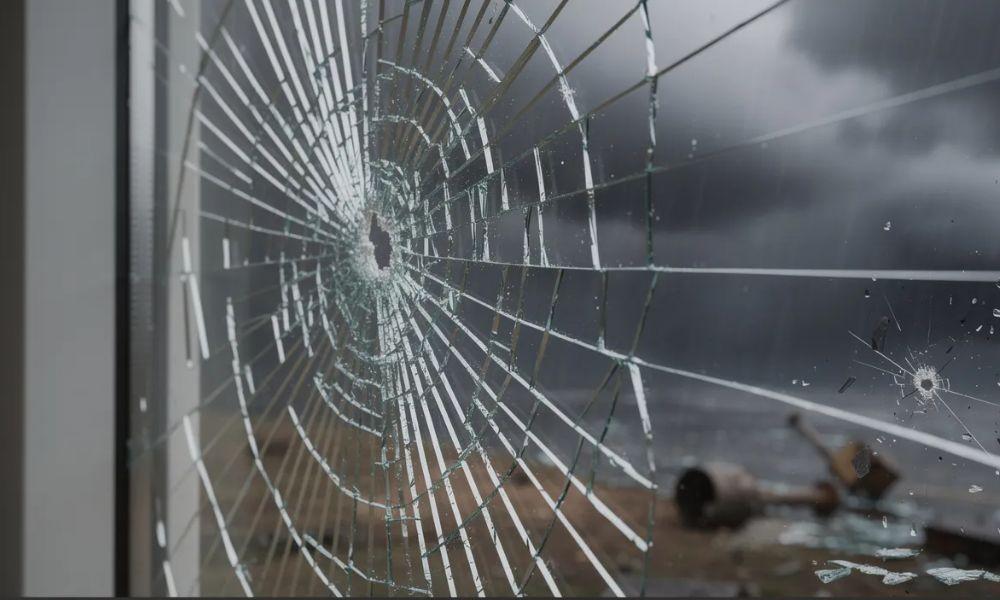
Security glass cannot stop bullets from penetrating standard glass. When a bullet strikes window glass protected only by film, the projectile penetrates the glass immediately; the film may retain fragments on the other side, but the bullet has already breached the barrier.
Effectiveness depends heavily on installation quality. Film must be mechanically or chemically bonded to the window frame—not just adhered to the glass surface. Without proper anchoring, impact forces can dislodge the entire pane or create gaps that render delay claims invalid.
Thickness variations affect performance within the film’s actual capability range:
- 4-7 mils: Basic protection for windstorms and small impacts
- 8-14 mils: Improved forced entry resistance for schools and commercial buildings
- 15+ mils: Specialized applications including blast mitigation
Even ultra-thick film does not correspond to any UL 752 ballistic level unless the complete system—glass, film, adhesive, anchoring, and frame—has been tested and certified together.
Real Ballistic Protection Solutions for Windows
When ballistic threats require actual bullet resistance, security film is insufficient. Real protection demands systems designed, tested, and certified to stop specific calibers and velocities.
UL 752 Certified Bulletproof Glass
UL 752 is the primary U.S. standard for bullet resistant building materials. It defines eight protection levels based on threat caliber and shot count:
| Level | Threat | Test Requirement |
|---|---|---|
| 1 | 9mm FMJ | 3 shots |
| 2 | .357 Magnum | 3 shots |
| 3 | .44 Magnum | 3 shots |
| 4 | .30-06 Rifle | 1 shot |
| 5 | 7.62mm NATO | 1 shot |
| 6 | 9mm (higher velocity) | 5 shots |
| 7 | 5.56mm Rifle | 5 shots |
| 8 | 7.62mm Rifle | 5 shots |
Bulletproof glass meeting these standards uses laminated glass with polycarbonate or polymer backing to absorb energy. Multiple interlayers prevent both penetration and spalling (rear-side fragment hazards). Level 1-2 assemblies may be under 1 inch thick; rifle-rated systems (Levels 5-8) often exceed 1.5-2 inches. These systems are often used where bulletproof glass commercially is required for higher-risk facilities. It is important to understand that bulletproof glass is not completely impervious to every threat. Depending on the weapon, ammunition type, and protection level, it can be penetrated by high-powered firearms or specialized ammunition, which is why systems are designed and tested against specific threat levels.
Installation requires structural considerations: frames must support substantial weight, door glass hardware needs upgrading, and framing members may require reinforcement. This is not a simple retrofit but a comprehensive system installation.
Polycarbonate Security Glazing Systems
Glass-clad polycarbonate constructions offer lighter-weight ballistic solutions, making them suitable for retrofit applications where weight and thickness constraints matter. These systems sandwich polycarbonate between glass layers, combining the scratch resistance of glass with the energy absorption of tough polymers. Bulletproof windows, often called ballistic windows, are engineered to help protect occupants from threats such as bullets and shrapnel, making them a common choice for schools, banks, government facilities, and other higher-risk environments.
Exterior and interior mounting options exist for different building configurations:
- Bolt-on systems attach to existing frames without complete replacement
- Full replacement assemblies provide tested frame and glazing combinations
- Laminated polycarbonate panels can retrofit office windows and side windows in vehicles
Performance depends on interlayer chemistry, adhesion quality, and edge-sealing to prevent moisture ingress or delamination over time. Systems must be independently tested to verify protection claims for specific calibers.
Laminated Security Glass Options
Laminated glass bonds two or more glass layers with interlayers—commonly PVB, ionoplast, or polyurethane. For ballistic applications, these laminations include tougher inner layers or composite backings.
Options include:
- Glass-clad polycarbonate: Standard for high-performance systems where inner polymer absorbs kinetic energy
- Insulated ballistic glass units: Combine double glazing with ballistic resistance and thermal efficiency, similar in concept to insulated glass systems used for energy performance.
- Advanced interlayer materials: Ionoplasts and urethane types allow thinner assemblies at given protection levels with better optical clarity
Recent Level-3 rated all-glass systems can stop three shots of .44 Magnum using improved glass layering—thinner and lighter than previous generations while maintaining certification under UL 752 or EN 1063 standards.
Security Film Applications and Installation Process
Security film serves legitimate purposes when applied appropriately and installed correctly. Understanding when film is the right choice—and when bulletproof glass is necessary—prevents costly mistakes and false security.
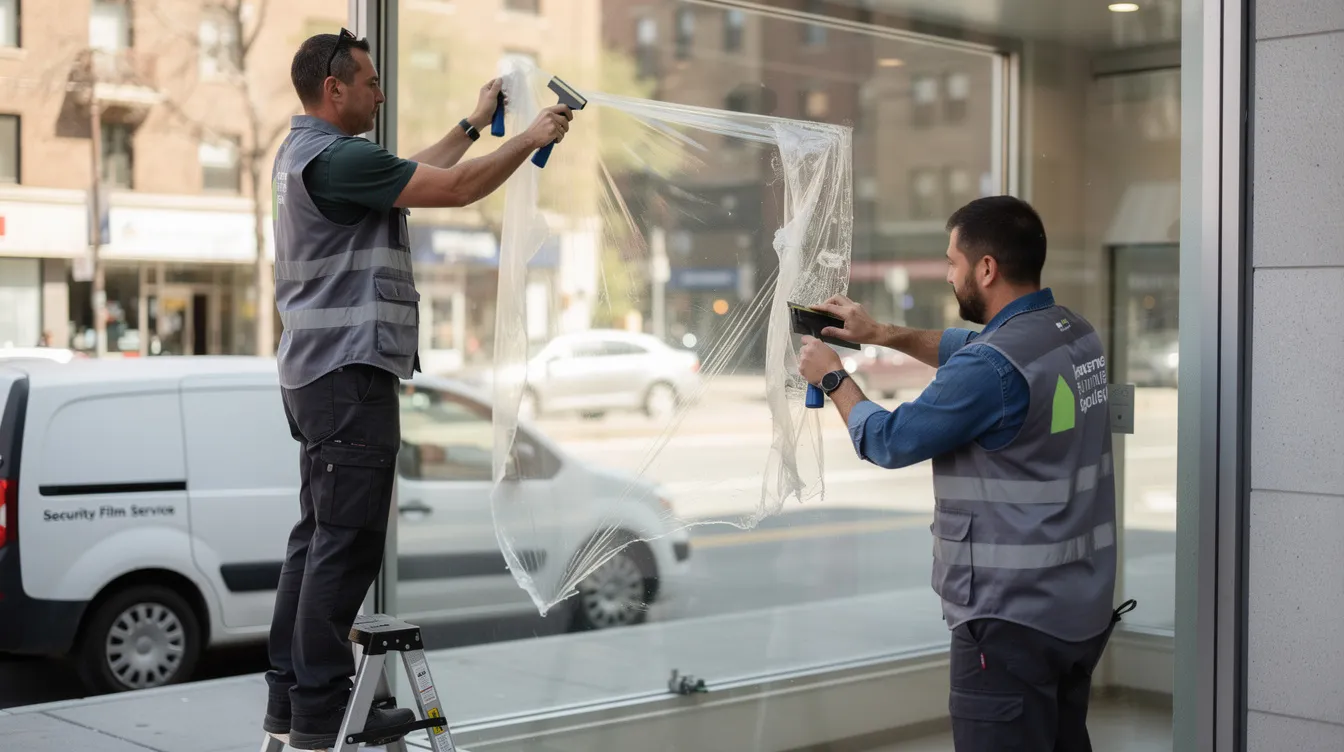
Proper Installation Procedures
Professional installation follows a systematic process:
- Threat assessment: Identify attack vectors (forced entry tools, blunt force, or firearms) and evaluate existing frame construction (steel, aluminum, or wood)
- Surface preparation: Clean all glass surfaces, removing grease, decals, and contamination to ensure proper adhesive bonding
- Film application: Apply film with appropriate mil thickness for the threat level, ensuring complete coverage without bubbles or gaps
- Frame anchoring: Bond film edges to the frame using structural glazing adhesive, wet glaze methods, or mechanical anchoring systems with metal strips clamped over film edges
- Curing period: Allow adhesives to cure under appropriate temperature and humidity conditions before the film achieves full strength
- Post-installation testing: Verify performance through impact tests or simulated forced entry on site
DIY film kits risk improper framing anchoring and typically omit attachment systems, severely reducing delay or protective capacity. Only professional installation with proper anchoring delivers full system performance and warranty coverage.
Cost Analysis and Comparison
Protection costs vary dramatically based on threat level and system type:
| Solution | Material Cost | Installed Cost | Best Application |
|---|---|---|---|
| Security window film (8-14 mil) | $8-20/sq ft | $15-25/sq ft with anchoring | Forced entry delay, schools, commercial |
| Bulletproof glass (Level 1-3) | $25-60/sq ft | $60-140/sq ft | Handgun protection, reception areas |
| Bulletproof glass (Level 4-8) | $100-200+/sq ft | $200-420+/sq ft | Rifle protection, critical facilities |
| Polycarbonate systems | $30-80/sq ft | $50-150/sq ft | Retrofit applications, moderate threat |
Maintenance considerations:
- Security film: 10-15 year lifespan; adhesive degradation from UV and moisture reduces efficacy
- Ballistic glass: 20+ year lifespan with proper maintenance; may need interlayer replacement or re-sealing
ROI factors:
- School safety grants and federal funding may offset ballistic glass costs
- Insurance premium reductions for upgraded glazing
- Liability considerations when specifications claim protection levels without certification
For many schools and commercial buildings, security film offers a cost-effective solution for immediate delay benefits across main entrances, entrance vestibules, and door glass—while reserving budgets for ballistic glass at highest-risk access points.
Common Misconceptions and Practical Solutions
Buyer confusion about security film and ballistic protection leads to three recurring problems. Each has a straightforward solution.
Film Marketing Claims vs Reality
Problem: Marketing materials label film as “bullet resistant” or “bulletproof” without specifying testing or ratings, implying protection that doesn’t exist when film is applied to regular glass. These products are commonly referred to in ways that can create confusion about actual performance.
Solution: Always request UL 752 test documentation for any ballistic claims. Certification must cover the complete system—glass type, frame type, adhesive, and anchoring details—not film alone. If a vendor cannot provide testing information based on the exact system configuration you’re purchasing, the claims are unverified.
Expecting Film to Stop Bullets
Problem: Facility managers and school administrators install security film believing it will protect against an active shooter or ballistic attack, then discover too late that bullets penetrate immediately.
Solution: Use film for its actual purpose—delay tactics and fragment retention. For bullet resistance against handgun or rifle threats, invest in proper bulletproof glass or polycarbonate systems with verified UL 752 ratings. Film is part of layered security measures, not a standalone solution for bullet threats.
Underestimating Installation Complexity
Problem: Buyers assume security film installation is simple, then experience failures because film wasn’t anchored to frames, structural support was inadequate, or improper adhesives were used.
Solution: Factor structural support and professional installation into all budgets. For ballistic systems, include frame modifications, hardware upgrades, and potentially structural reinforcement in cost estimates. Understand that even excellent film fails under stress without proper edge bonding and mechanical attachment.
Choosing the Right Protection for Your Needs
Security film and bulletproof systems serve fundamentally different purposes. Matching protection level to actual threats prevents both overspending and dangerous under-protection.
Decision framework:
- Threat assessment: Define likely threats—handgun, rifle, forced entry tools, or blunt force. A school shooting scenario requires different protection than smash-and-grab prevention.
- Budget constraints: Security film enables broad coverage across all glass windows at lower cost; ballistic glass requires prioritizing highest-risk entry points like main entrances, reception areas, and unlocked doors, as well as vulnerable back doors.
- Building constraints: Evaluate frame strength, structural capacity, and whether full system replacement or retrofit solutions are feasible.
- Response time: If law enforcement response exceeds 5-10 minutes, delay from security film may provide critical protection even without bullet resistance.
- Regulatory requirements: Some jurisdictions require bullet resistant glazing at public building entry points; many schools must meet specific security mandates.
Immediate next steps:
- Conduct professional site assessment identifying vulnerable glass surfaces
- Request vendor consultations with documented UL 752 certification for any ballistic claims
- Plan phased implementation: secure high-risk windows first, expand coverage over time
- Integrate glazing upgrades with broader safety measures including access control, alarms, and response protocols
Related topics to explore: Active shooter response planning, perimeter security integration, access control systems for schools and commercial buildings.
Frequently Asked Questions
Does bulletproof window film really exist?
No standalone bulletproof window film exists that can stop bullets when applied to regular glass. Products marketed as “bulletproof film” are actually fragment-retention security films that hold broken glass together and delay entry. Ballistic performance requires complete systems including rated glass, proper framing, and anchoring—all tested and certified together under UL 752 standards.
What’s the difference between security film and ballistic protection?
Security film provides delay, fragment retention, and forced entry resistance. It cannot stop bullets. Ballistic protection prevents bullet penetration entirely, meeting specific standards (UL 752, EN 1063) for defined calibers, velocities, and multiple hits. Film is a layer in security strategy; ballistic glass is actual bullet resistance.
How much does security window film cost compared to bulletproof glass?
Security window film costs approximately $8-20 per square foot for materials, or $15-25 installed with proper anchoring. Bulletproof glass ranges from $25-60 per square foot material cost for handgun-rated (Levels 1-3) to $100-200+ for rifle-rated systems. Installed costs run $60-140 average, up to $420+ for high-level rifle protection including structural modifications.
Can security film stop bullets on regular windows?
No. Bullets penetrate standard glass regardless of film thickness or quality. The film may retain glass fragments after penetration, but it cannot prevent the bullet from breaching the barrier. Only UL 752 certified ballistic glazing systems can stop bullets.
What thickness of security film is most effective?
For forced entry delay in schools and commercial buildings, 8-14 mil thickness is standard. Films above 15 mils serve specialty or high-risk applications including blast mitigation. However, proper frame anchoring matters as much as thickness—thick film improperly installed provides minimal protection improvement over thin film.
How long does security window film last before replacement?
Most security films carry 10-15 year warranties. Actual useful life depends on UV exposure, moisture, weather conditions, and mechanical damage. Adhesive off-gassing and edge deterioration can degrade performance before warranty expiration in harsh climates. Plan for inspection and potential replacement within 10-15 year cycles.
Is security film worth it for schools and commercial buildings?
Yes, as part of layered security. Film enables cost effective coverage across all door glass and entry windows, providing immediate delay benefits during forced entry or an active shooter event. Many schools install 8-14 mil film with anchor profiles for less than $20 per square foot. However, film cannot replace ballistic glass where rifle or high-velocity threats are realistic concerns.
What are UL 752 standards for ballistic protection?
UL 752 defines eight protection levels: Level 1 (three shots from 9mm), Level 2 (.357 Magnum), Level 3 (.44 Magnum), Level 4 (single shot .30-06 rifle), Level 5 (7.62mm NATO), Level 6 (five shots 9mm at higher velocity), Level 7 (5.56mm rifle), and Level 8 (five shots 7.62mm). Tests specify shot count, caliber, velocity, acceptable damage, and spall restrictions.
Can I install security film myself or do I need professionals?
DIY kits exist but typically produce inadequate results. Professional installation ensures proper anchoring to frames, precise edge sealing, correct mil thickness selection, and appropriate adhesive curing. Poor installation means failure under stress. Only professionals can deliver full system performance, provide warranties, and document compliance with security specifications.
What’s the best alternative to bulletproof film for real bullet protection?
UL 752 certified bullet resistant glass or glazing assemblies provide genuine protection. Options include laminated glass-polycarbonate systems, glass clad polycarbonate panels, and glass-ceramic composites. For critical applications, transparent ceramics (ALON) or ceramic armor backing provide maximum protection. All must be combined with strong framing, proper hardware, and complementary security measures like access control and alarm systems. A properly specified bullet resistant window system is designed and tested as a complete assembly.