Table of Contents
- Strengthening Glass Against Threats
- Understanding Ballistic Film for Windows
- Types and Installation Methods
- Performance Standards and Comparisons
- Common Challenges and Solutions
- Cost Considerations and ROI
- Conclusion and Next Steps
- Frequently Asked Questions
Strengthening Glass Against Threats
Ballistic film for windows is a multi-layered polyester adhesive film applied to existing glass to enhance security and safety in buildings. This security window film transforms standard glass windows into reinforced barriers that hold glass together when broken and delay forced entry attempts.
This guide covers security window films, their installation requirements, performance limitations, cost considerations, and when bullet resistant glass alternatives make more sense. Property managers, security professionals, school administrators, and business owners will find practical guidance for making informed protection decisions.
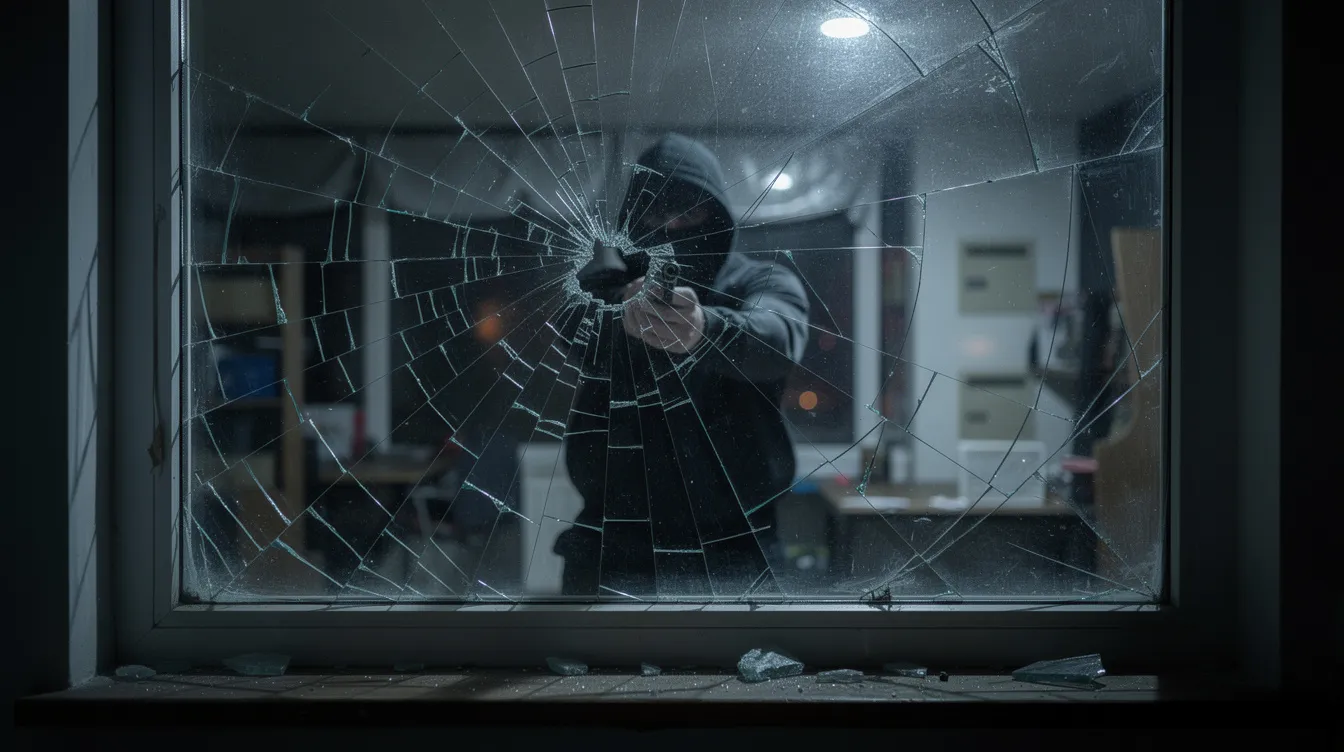
Direct answer: Ballistic window film is a safety enhancement that holds shattered glass together and delays intruder access, but it does not stop bullets from penetrating the glass.
After reading this guide, you will understand:
- The actual capabilities and limitations of ballistic film versus bullet resistant glass
- Installation requirements including attachment systems and frame reinforcement
- Cost ranges and how to calculate return on investment
- Testing standards that determine real-world performance
- When to choose security film and when bullet resistant products are necessary
Understanding Ballistic Film for Windows
Ballistic window film functions by transforming standard glass into a cohesive, energy-absorbing unit. The film’s advanced polymers and strong adhesives spread the impact energy across a larger surface area, reducing the concentration of force during impacts. This security window film technology provides measurable safety improvements without requiring complete window replacement. It can also serve as a cost-effective upgrade for facilities seeking enhanced protection.
A critical misconception persists in the security industry: many people assume any film labeled “ballistic” or “bulletproof” will actually stop bullets. There is no such thing as truly bulletproof window film for retrofit applications. The term “ballistic film” refers to films designed to perform under high-impact conditions, not films that provide ballistic protection against firearms. Many consumers mistakenly compare these products to bulletproof glass, even though they serve very different purposes.
What Ballistic Film Actually Does
Fragment retention of ballistic film holds shattered pieces together, preventing shards from scattering into dangerous flying fragments. When glass breaks due to impact, the film maintains the structural integrity of the window, keeping broken glass in the frame rather than allowing it to become airborne projectiles.
Ballistic film is effective against “smash-and-grab” attempts, buying critical time for occupants to hide or evacuate during active shooter situations. RiotLite security film can delay an attacker’s access through glass for up to 60 seconds, providing critical time for law enforcement to respond during an active shooter situation, similar to other ballistic window film and glazing solutions for schools. This delay can prevent attackers from quickly attempting to gain access to occupied spaces.
Shatter resistance of ballistic film prevents dangerous shards from becoming airborne during impacts such as explosions or storms. High-performance ballistic films can withstand ballistic threats and mitigate danger from bomb blasts by holding shattered glass in place.
Ballistic films typically block up to 99% of harmful UV rays, protecting interior furnishings from fading—an additional benefit beyond security applications that aligns with the performance of solar window tinting films for heat and glare control.
What Ballistic Film Cannot Do
Ballistic film is a thin layer applied to traditional glass, which does not stop bullets but can help hold shattered glass together after an impact. While ballistic film can slow down an intruder attempting to break a window, thereby delaying forced entry and providing additional time for security responses, it cannot prevent a determined attacker with sufficient time and tools from gaining entry. Individuals entering a building may still be at risk if additional security measures are not in place.
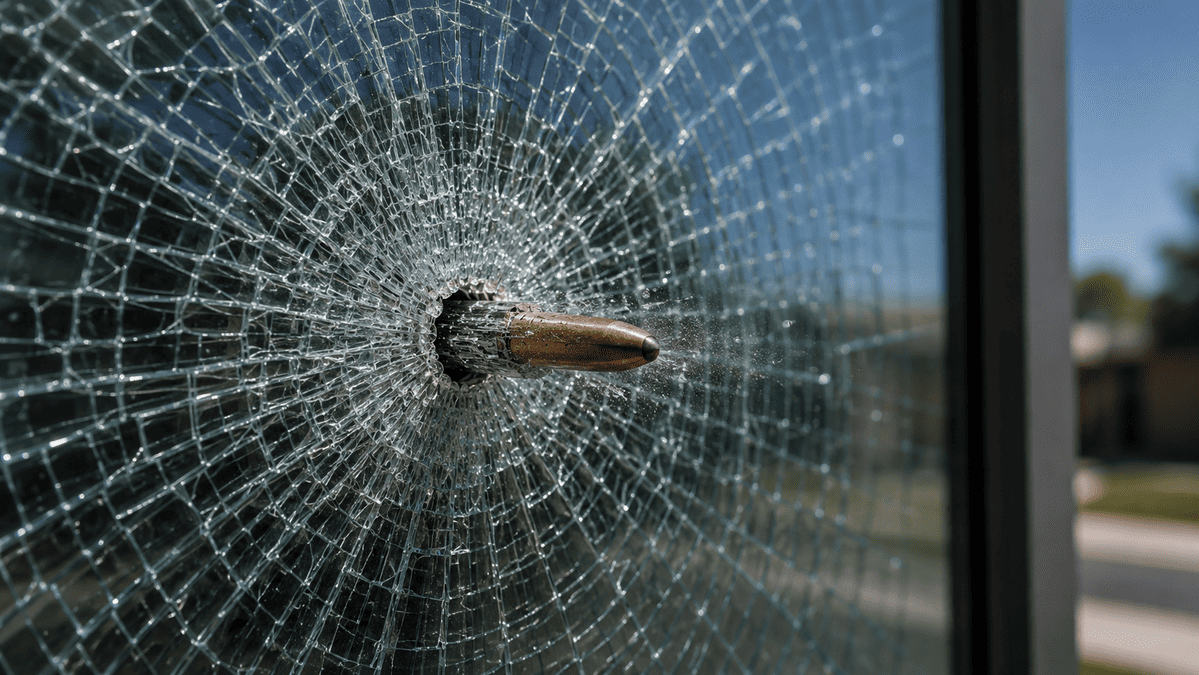
While ballistic film does not stop bullets, it can help hold glass together after being shot, preventing it from shattering and causing injury. This distinction matters significantly for security planning in populated areas where active shooter mitigation is a concern.
While ballistic film can delay entry and provide some level of protection, it is not a substitute for bullet resistant glass, which is necessary for effective ballistic protection in populated areas. Bullet resistant glass is specifically engineered to stop bullets and is made from materials like laminated polycarbonate or glass-clad polycarbonate, designed to meet UL 752 standards.
Understanding these limitations helps security professionals determine the appropriate protection level for each application and avoid the dangerous assumption that film alone provides complete security.
Types and Installation Methods
Security film performance depends heavily on thickness, quality, and proper installation methods. The protection level you achieve relates directly to selecting the right film type and ensuring professional window film installation by specialized providers with proper attachment to the window frame system.
Security Film Thickness Options
Security films are measured in mils (1 mil = 0.001 inch), with thickness directly correlating to protection level:
Standard security films (4-mil to 8-mil): These provide basic safety protection, primarily designed to hold glass together during accidental breakage or minor impacts. They offer limited forced entry delay but protect against shattering from everyday accidents.
Heavy-duty security films (8-mil to 15-mil): Films in this range provide meaningful forced entry resistance. The Pittston Area School District installed 8-mil safety/security film across approximately 2,000 square feet of entry doors and windows, including door glass, completing installation in under one week with three installers.
Maximum protection films (15-mil to 21-mil and above): Products like RiotLite represent the upper range of film-based protection. Ballistic films can significantly delay or prevent forced entry by creating time for escape or police response, while thicker architectural films also support energy-efficient architectural window film upgrades. Some facilities use stackable film systems to achieve maximum thickness.
Professional Installation Requirements
Ballistic window films are multi-layered polyester adhesive films applied to glass to enhance security, but their performance depends entirely on proper installation. Professionals recommend an attachment system that bonds ballistic film to the window frame for maximum effectiveness.
Interior vs. Exterior Application: Most security film is applied to the interior side of existing glass. Interior installation protects the film from weather, UV exposure, and mechanical abrasion while also enabling privacy and security window film solutions for homes and businesses. Exterior application requires special protective coatings and more frequent maintenance.
Attachment Systems: The critical difference between film that performs under attack and film that fails involves how it connects to the window frame:
- Wet-glaze (structural adhesive) uses high-strength silicone beads to bond the film-glass assembly to the frame, providing load transfer and an aesthetic finish
- Mechanical attachment employs metal battens, clips, or bolt-through hardware to secure the laminated panel, offering faster initial resistance without curing time
Frame Reinforcement: Even perfectly installed film fails if the frame cannot hold. Frame “bite” depth (how much glass sits within the frame) and frame condition significantly impact system performance. Weak frames, insufficient bite depth, or gasket-only attachments can cause the entire pane to dislodge under force, which is why local experts, such as window tinting and bullet-resistant film providers in Oshkosh, emphasize a full system assessment. A failure at this stage can create a security breach despite the presence of protective film.
Common Application Areas
Schools and buildings can improve security by reinforcing door and window glass with bullet resistant products, which can slow intruders and provide time for law enforcement to arrive, often implemented through regional providers offering security window film and privacy solutions for communities like The Villages.
Active shooter mitigation involves techniques and materials used to prevent and slow individuals attempting to harm people in populated areas with firearms. These measures help facilities remain ready for emergency situations.
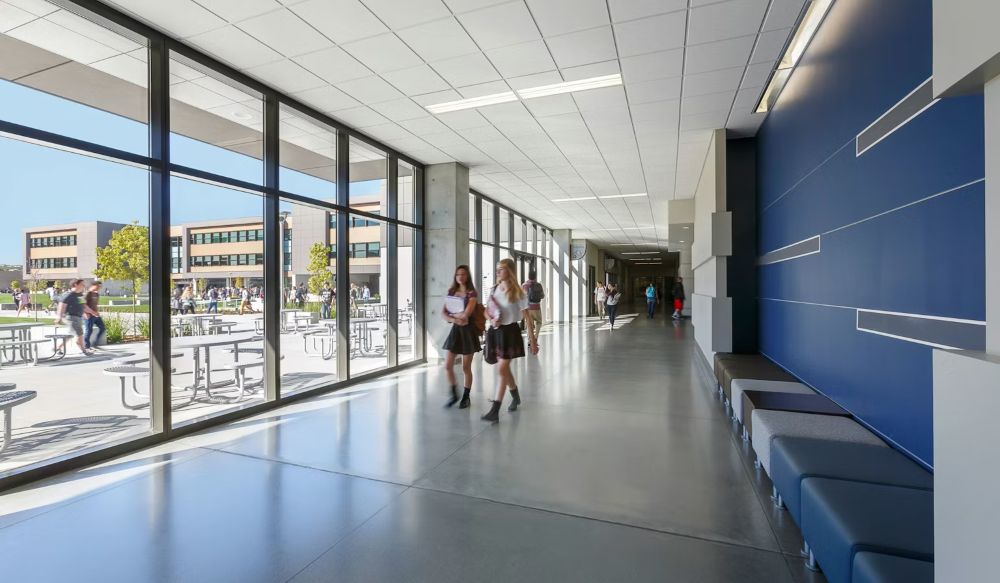
Educational facilities: Classroom windows, entrance lobbies, cafeteria glazing, and administrative offices represent common installation areas. Schools frequently choose security film because it allows incremental security upgrades while maintaining natural light and visibility.
Commercial buildings: Ground-floor storefronts, lobby glazing, and bank branch windows benefit from forced entry delay. The film is particularly valuable for retail locations vulnerable to smash-and-grab theft.
Government and institutional buildings: Perimeter protection, visitor entrance areas, and secure zones utilize security film as part of layered security approaches. Historic buildings where window replacement is difficult or prohibited benefit significantly from film retrofit solutions.
Performance Standards and Comparisons
Understanding testing standards helps you evaluate product claims and select appropriate protection. Many manufacturers make performance claims that exceed what independently tested results support.
Testing Standards for Window Security Films
Several standards apply to security films and glazing systems, each measuring different threat types:
ASTM F3561 (Forced-Entry-Resistance After Simulated Active Shooter Attack): Introduced in 2022, this standard measures complete systems—glass, framing, and anchoring—under ballistic weakening followed by forced entry via pendulum tests. It produces Level 1-8 ratings. Note that retrofit film installations often fall outside this standard’s scope unless they include proper frame anchoring.
ASTM F1233: Evaluates security glazing materials for ballistic and forced-entry threats, useful for comparing different glazing frames and film laminates.
UL 972: Tests burglary resistance through repeated tool and blunt impacts. Film thickness significantly affects performance under this standard.
UL 752: The UL 752 standard is the most widely known and respected standard of bullet resistance in the United States, specifically designed to evaluate the performance of bullet-resistant materials against various firearms. Ballistic protection materials are tested to withstand specific types of bullets, including 9mm handguns and high-powered rifles, ensuring they meet the required safety standards for various applications.
Hurricane Impact Standards (ASTM E1886/E1996, Miami-Dade TAS 201/203): Relevant for coastal buildings, testing high-speed debris impact and pressure cycling. Films around 12-15 mil often achieve compliance.
Performance Comparison Table
| Protection Type | Cost per Sq Ft (Installed) | Bullet Resistance | Forced Entry Delay | Installation Time | Optical Clarity |
|---|---|---|---|---|---|
| Standard Annealed Glass | Very low | None | Seconds | N/A | Excellent |
| Basic Security Film (4-8 mil) | $12-$18 | None | 15-30 seconds | Hours | Good |
| Heavy-Duty Security Film (8-15 mil) | $18-$30 | None | 30-60 seconds | Hours to 1 day | Good |
| Premium Security Film + Anchoring (15+ mil) | $30-$40+ | None | 60+ seconds | 1-2 days | Moderate |
| UL 752 Level 1-3 Bullet Resistant Glass | $45-$150 | Handgun rounds | Very high | Days | Varies |
| UL 752 Level 4-8 Bullet Resistant Glass | $150-$400+ | Rifle rounds | Extremely high | Days to weeks | Varies |
Bullet resistant glass is manufactured with materials such as acrylic, laminated polycarbonate, glass-clad polycarbonate, or all-glass laminate, and is specifically designed to stop bullets from penetrating. Security film provides meaningful protection against forced entry but cannot match bullet resistant glass for ballistic attacks.
When selecting protection level, consider the primary threat: for smash-and-grab or forced entry scenarios, security film provides cost-effective protection. For ballistic threats in populated areas, only UL 752-rated glazing provides adequate protection.
Common Challenges and Solutions
Implementation issues can undermine security film performance. Understanding common problems helps ensure your installation performs as expected.
Film Bubbling or Peeling After Installation
Improper surface preparation, humidity during installation, or incompatible adhesives cause adhesion failure. Ensure professional installers thoroughly clean glass surfaces, remove any existing film or sealant residue, and use manufacturer-approved adhesives.
Installation should occur within proper temperature and humidity ranges, typically between 40°F and 95°F with moderate humidity.
Edge sealing and proper curing time (often 30+ days for full adhesive cure) are essential. Inspect installations periodically for edge lifting, particularly in the first year.
Reduced Visibility or Optical Clarity
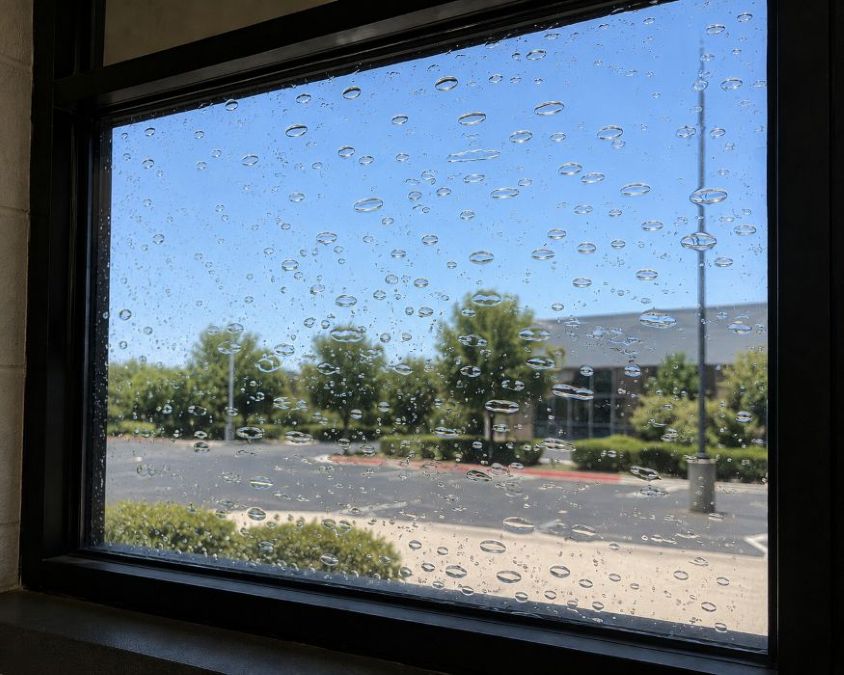
Thicker films or lower-quality products can exhibit haze, warping, and visible distortion, especially under angled light. Select optically clear films with published optical quality ratings, and consider privacy and decorative window film options for interior applications where sightlines and aesthetics matter. High-grade films with certified optical clarity maintain view quality while providing security benefits.
Avoid layering multiple films unless specifically designed for stacking, as multiple layers compound distortion. Request sample evaluations on test windows before committing to large installations.
Inadequate Protection for High-Risk Facilities
When security film alone cannot provide sufficient protection, facility managers must explore alternatives. Ballistic film is often used in conjunction with bullet-resistant glass to enhance security, particularly in areas that are not primary entry points.
For facilities requiring ballistic protection, install UL 752-rated bullet resistant glass on critical entry points, reception areas, and ground-floor windows facing public access. Use security film on secondary windows, upper floors, and interior glazing where forced entry delay rather than ballistic resistance is the primary concern.
This layered approach provides appropriate protection at each location while managing installation costs effectively.
Cost Considerations and ROI
Understanding total costs helps security managers allocate budgets appropriately and justify investments to stakeholders.
Material and Installation Costs:
- Standard security film (4-8 mil): $8-$18 per square foot material; $12-$25 installed
- Heavy-duty security film (8-15+ mil): $12-$25 per square foot material; $18-$40 installed
- Full bullet resistant glass systems: $45-$400+ per square foot depending on UL rating level
The Pittston Area School District’s security film installation across multiple school buildings cost less than one-third the price of laminated security glass replacement, demonstrating the significant cost advantage of film retrofit approaches.
Major Cost Drivers:
- Frame reinforcement and anchoring systems
- Labor complexity (high windows requiring lifts, custom apertures)
- Surface preparation and existing film removal
- Code compliance and permitting in institutional settings
- Geographic location and installer availability
Insurance and Liability Considerations: Security film installations can reduce liability exposure from glass-related injuries. Some insurance carriers offer premium reductions for buildings with certified security glazing, though benefits vary by carrier and policy type. Document your installation with certificates and test reports to support insurance claims.
Maintenance and Lifespan: Quality security film typically lasts 10-20 years under normal conditions. Factors reducing lifespan include UV exposure (mitigated by UV-blocking properties in most films), moisture intrusion at edges, frame seal failures, and physical abrasion. Schedule annual inspections of edges, adhesion, and frame connections. Replace film after any incident causing glass stress or visible degradation. Advanced options like smart window films that switch between clear and private states may have additional maintenance considerations related to electrical components.
Grant Funding: Schools and government buildings may access state or federal safety grants. Ohio schools have used security window films to meet SAVE legislation requirements, demonstrating how policy incentives can offset costs.
Conclusion and Next Steps
Ballistic film enhances safety by reinforcing glass to delay forced entry and prevent shattering during impacts. However, it does not stop bullets or provide the level of protection that bullet resistant glass offers. Understanding this distinction helps you select appropriate protection for your specific threat environment.
Immediate action items:
- Conduct a site security assessment identifying which windows face public access, ground-floor vulnerabilities, and primary entry points requiring enhanced protection
- Schedule professional consultation with certified security film installers to evaluate existing glass and frame conditions
- Request independently tested performance documentation for any products under consideration
- Develop a budget plan that allocates bullet resistant glass for critical areas and security film for secondary protection zones
- Contact your insurance carrier regarding potential premium adjustments for security glazing installations
For facilities requiring protection against ballistic attacks, explore UL 752-rated bullet resistant glass systems for primary entry points. Consider integrating window protection with access control systems, surveillance, and emergency response planning for comprehensive security. This is simply one component of a broader protection strategy, with each defensive line contributing to overall building security.
Frequently Asked Questions
Is ballistic window film really bulletproof?
No. Ballistic film is a thin layer applied to traditional glass, which does not stop bullets but can help hold shattered glass together after an impact. Only bullet resistant glass manufactured with materials like laminated polycarbonate or glass-clad polycarbonate and tested to UL 752 standards actually stops bullets from penetrating.
How long does security window film installation take?
Installation time depends on project scope. Small projects covering approximately 2,000 square feet can be completed in less than one week with a three-person crew. Single residential or small commercial installations often finish within one or two days. Larger facilities with high-elevation windows or complex apertures require longer timelines.
Can I install ballistic film myself or do I need professionals?
Professional installation is essential for security performance. DIY application typically results in improper adhesion, edge peeling, optical distortion, and voided warranties. Frame anchoring, edge sealing, curing requirements, and safety protocols require skilled installers. Self-installed film provides minimal security benefit compared to professionally applied systems.
What’s the difference between security film and ballistic glass?
Security film is a retrofit product applied to existing glass that holds broken glass together and delays forced entry. Bullet resistant glass is specifically engineered to stop bullets and is made from materials like laminated polycarbonate or glass-clad polycarbonate, designed to meet UL 752 standards. Film is a cost-effective upgrade; ballistic glass is a complete glazing replacement providing actual bullet resistance.
How much does ballistic window film cost compared to bullet-resistant glass?
Security film installed with proper anchoring typically costs $12-$40 per square foot. Bullet resistant glass systems range from $45-$400+ per square foot depending on UL 752 rating level, size, frame requirements, and installation complexity. Film retrofits cost roughly one-quarter to one-third the price of equivalent bullet resistant glass replacement.
Will security film affect window appearance or visibility?
High-quality security films maintain excellent optical clarity when properly installed. Lower-quality films or excessive thickness may cause slight haze or distortion. Request optical quality certifications and evaluate samples before purchasing. Thick composite systems show more visible effects than single-layer films.
How long does ballistic window film last before replacement?
Quality polyester security films typically last 10-20 years under normal conditions. UV exposure, moisture at edges, frame seal failures, and physical damage reduce lifespan. Annual inspections help identify degradation. Replace film after any incident involving glass stress or visible adhesion problems.
Can ballistic film be removed if needed?
Yes, security films can be removed, though thick adhesives may leave residue requiring professional cleaning. Removal may stress older glass or require frame seal reconditioning. Professional removal services ensure glass and frame integrity. Plan for potential glass replacement if removing film from aged installations.