
Table of Contents
Ballistic Film Explained: What It Is (And What It Isn’t)
The term “ballistic film” often sounds more extreme than it really is. While it does not create an indestructible barrier, ballistic film is a highly advanced security solution designed to protect commercial properties from serious threats. Its strength comes from a careful combination of advanced materials and professional installation, all working together to make glass much harder to break through.
Ballistic film is very different from basic window protection products.
It is engineered specifically to slow down forced entry, resist heavy impacts, and reduce danger during violent or high-risk events.
Understanding how it works helps business owners make informed decisions about protecting people, property, and assets.
Ballistic Resistant Film vs. Standard Security Window Film
Not all security window films provide the same level of protection. Standard security window film is mainly designed to hold broken glass together. When a window breaks, the film keeps glass shards from flying inward and makes smash-and-grab theft slightly harder. It provides basic protection and helps reduce injury. The term bulletproof window film is often used to describe higher-performance security films, although these products are designed to delay entry and retain glass rather than provide true ballistic glazing protection.
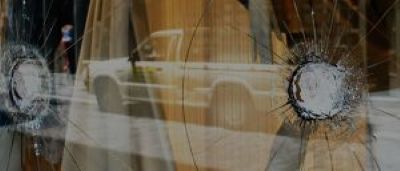
Ballistic resistant film goes much further. It is thicker, stronger, and made with multiple layers of high-strength materials. Instead of just containing broken glass, ballistic glass film is designed to resist repeated impacts, forced entry attempts, and even certain projectile threats. It significantly slows down attackers, making it much harder to create an opening. This delay is critical because it gives occupants time to react and allows emergency services to respond. Ballistic film turns glass from a weak point into a serious obstacle.
How Ballistic Film Protects Against Forced Entry
Ballistic film works because of its layered construction and how it bonds to glass. It is not simply a thicker plastic sheet. Each layer is designed to absorb impact energy and spread it across a larger area of the window.
When someone strikes a filmed window, the film stretches and flexes instead of breaking apart. The glass cracks, but it stays in place within the frame. This makes it extremely difficult for an intruder to punch through or kick out the glass. What could have been a quick break-in becomes a slow, loud, and frustrating process, which greatly reduces the chances of a successful attack.
What “Shatterproof” Really Means
When people refer to ballistic film as “shatterproof,” they don’t mean the glass can never break. No window is completely unbreakable. Instead, shatterproof means the film keeps broken glass together, preventing it from turning into dangerous shards.
Ballistic film uses strong, flexible polymers layered together to hold glass in place even after severe damage. The film absorbs force from impacts such as bricks, tools, or bullets, maintains the window’s structure, and stretches instead of tearing. Even if the glass cracks, the film keeps it secured in the frame, protecting people inside from flying debris.
The Importance of Adhesives and Film Construction
The film itself is only part of the system. The adhesive used to bond the film to the glass is just as important. High-performance adhesives create a permanent bond that allows the film and glass to work together as one unit.
In many applications, the film is also anchored to the window frame using specialized systems. This ensures the entire window assembly stays intact during impact. The thickness of the film, the number of layers, and the quality of the adhesive all determine how well the system performs. When properly installed, ballistic film transforms standard glass into a much stronger and safer barrier.
How Advanced Film Technology Strengthens Commercial Buildings
Ballistic film is not just a clear layer on glass. It changes how glass behaves under stress. Instead of shattering instantly, the glass and film work together to absorb and spread impact energy.
When an object hits a filmed window, the energy is distributed across the surface instead of focusing on one point. This prevents immediate failure and keeps the glass in place. The result is a flexible but extremely strong barrier that protects people and property.
Protection From Multiple Threats
Ballistic film provides protection in many situations, not just violent attacks. It greatly increases the time and effort needed for forced entry, contains broken glass during vandalism, and helps resist impacts from thrown objects or vehicles. It is also effective during severe weather events, where flying debris can easily break unprotected windows.
By keeping glass intact, the film reduces injuries, limits property damage, and helps maintain the building’s structure during emergencies.
Buying Time During Forced Entry Attempts
One of the biggest advantages of ballistic film is time. Unprotected glass can be breached in seconds. With ballistic film installed, forced entry becomes slow and difficult.
This delay allows alarms to activate, gives occupants time to seek safety or lock down, and increases the chance that security or law enforcement will arrive before an attacker gains access. Even a short delay can make a major difference in preventing injury or loss.
Blast Mitigation and Extreme Weather Protection
Ballistic film also helps in blast and extreme weather scenarios. While it cannot stop the full force of an explosion, it greatly reduces the danger caused by flying glass, which is often the biggest source of injury.
During hurricanes, tornadoes, or strong storms, the film helps keep debris from breaking through windows. This prevents sudden pressure changes inside the building, reduces interior damage, and protects occupants from broken glass.
Broader Security Benefits for Commercial Properties
Ballistic film strengthens overall security by protecting people, assets, and operations. During active threats, the extra time it provides can save lives. For businesses with valuable inventory or sensitive equipment near windows, it prevents quick access by intruders.
It is especially effective at stopping smash-and-grab theft, which depends on speed. By making entry slow and noisy, ballistic film discourages criminals and reduces losses, repair costs, and downtime.
When combined with alarms, cameras, and access control systems, ballistic film becomes part of a layered security strategy that makes a property far less attractive to criminals.
Clearing Up the “Bulletproof” Myth
Industry Standards and Performance Ratings
Ballistic film performance is often measured against industry standards. UL 972 testing evaluates resistance to forced entry, while National Institute of Justice (NIJ) ratings help classify resistance to different ballistic threats.
These standards help set expectations and guide proper film selection based on risk level. They do not promise total protection but indicate how much resistance and delay a system can provide.
No window film is truly bulletproof. Bulletproof window film implies complete and permanent resistance, which is unrealistic. Ballistic film is better described as bullet resistant. It is designed to absorb energy, hold glass together, and slow down or prevent penetration.
This resistance buys time and reduces harm. That time can be used to escape, secure the building, or allow responders to arrive. This is why ballistic film is considered a practical alternative to full bullet-resistant glass systems.

Why Ballistic Film Is a Practical Alternative to Bullet-Resistant Glass
Replacing windows with thick bullet-resistant glass is expensive and often requires structural changes. Ballistic film for windows offers a more affordable and flexible solution.
It upgrades existing glass, improves resistance to forced entry and impact, and enhances safety without major construction. For many businesses, it provides the right balance of protection, cost, and practicality.
Why Professional Installation Is Essential
Ballistic film only works when installed correctly. Proper adhesion, edge sealing, and frame anchoring are critical. Any gaps, bubbles, or weak edges can compromise performance.
Professional installers ensure the film is fully bonded, properly secured to the frame, and integrated with the window system. Without this expertise, even the best film can fail when it is needed most.
Risks of DIY or Improper Installation
DIY or inexperienced installation often leads to bubbles, peeling edges, poor adhesion, and weak points. In many cases, warranties are voided, and the film provides a false sense of security.
Because ballistic film is thick and complex, it requires specialized tools and training. Professional installation is not optional—it is essential.
The Value of Experience and Expertise
Proper ballistic film installation requires deep knowledge of materials, glass types, frames, and anchoring systems. CoolVu’s approach is built on decades of experience in advanced film technology.
Certified professionals carefully assess each site, select the right solution, and install it with precision. This ensures the film performs exactly as intended and provides maximum protection.
Choosing the Right Level of Protection for Your Business
Every business has different risks. Retail stores, offices, schools, and government buildings all face unique threats. The right solution depends on location, operating hours, assets, and existing security measures.
Film thickness, layering, and anchoring methods must match the threat level. Thicker films provide greater resistance, while anchoring systems prevent the window from being pushed out entirely.
Integrating Ballistic Film Into a Complete Security Plan
Ballistic film works best as part of a layered security strategy. It strengthens weak points while alarms, cameras, and access controls handle detection and response.
By slowing entry and increasing resistance, ballistic film allows all other security systems to work more effectively.

The Importance of a Professional Security Consultation
Because of the complexity involved, expert consultation is critical. Professionals can assess risks, recommend the correct film, and design a solution that delivers the best protection without unnecessary cost.
This ensures your investment is effective, compliant, and aligned with your actual security needs.
The CoolVu Advantage
CoolVu combines trained consultants, high-quality materials, and precision installation to deliver reliable ballistic film solutions. Each project is customized to the property, threat level, and business goals.
By partnering with CoolVu, businesses turn vulnerable glass into strong deterrents and gain confidence that their security investment will perform when it matters most.
Frequently Asked Questions
What is the primary difference between ballistic film and regular security window film?
The primary difference lies in their engineering and purpose. Regular security window film primarily holds shattered glass together to prevent injuries and deter opportunistic smash and grab attempts. Ballistic film, however, is significantly thicker and multi-layered, designed to resist forced entry, heavy impacts, and even projectile attacks, significantly delaying penetration and providing critical time during an active threat.
Can ballistic film truly make my windows bulletproof?
No window film is truly “bulletproof.” The term “bulletproof” implies absolute impenetrability, which is not realistic. Ballistic film provides “ballistic resistance,” meaning it is engineered to withstand and mitigate the impact of ballistic threats, significantly delaying or preventing penetration, but not stopping every projectile indefinitely. It aims to buy invaluable time for response and safety.
Is professional installation necessary for ballistic film?
Yes, professional installation is non-negotiable for ballistic film. Its effectiveness depends entirely on proper adhesion, edge retention, and structural integration with the window frame. DIY or inexperienced installation can lead to weak points, delamination, and a false sense of security, rendering the film ineffective when most needed.
How does ballistic film help protect against severe weather events?
During severe weather like hurricanes or tornadoes, ballistic film prevents wind-borne debris from easily penetrating windows. By holding shattered glass intact within the frame, it maintains the building’s envelope, preventing rapid depressurization, protecting interiors from water and wind damage, and safeguarding occupants from flying glass shards.
How does ballistic film integrate with my existing commercial security systems?
Ballistic film acts as a critical physical layer in a comprehensive security strategy. It complements existing alarm systems, surveillance cameras, and access control by significantly delaying forced entry. This extended delay allows more time for alarms to trigger, cameras to capture clear footage, and security personnel or law enforcement to respond, enhancing the overall effectiveness and resilience of your commercial security infrastructure.
Find your local CoolVu installer: www.coolvu.com
MORE POSTS:
- Does Window Security Film Work? – How engineered film strengthens glass, delays forced entry and protects occupants when it matters most.
- Strengthening Vulnerable Windows – What is window security film and how it supports safety, security, and business continuity
- Choosing the Best Window Security Film – What is the best window security film, why thickness alone isn’t enough, and how anchoring and expert installation define true protection.
- Commercial Window Film Types – How solar, security, decorative, and specialty films address different business needs.
- Beyond the Sticker Price — The real cost of security film includes performance, lifespan, and protection, not just installation.