
Table of Contents
- What is Tempered Glass? (Quick Definition)
- Understanding Tempered Glass Fundamentals
- Key Properties and Characteristics of Tempered Glass
- Applications and Manufacturing Standards
- Common Challenges and Solutions
- Conclusion and Next Steps
- Frequently Asked Questions
What is Tempered Glass? (Quick Definition)
Tempered glass is a type of safety glass that has been heat-treated to become significantly stronger than standard glass. Through a controlled thermal tempering process, this toughened glass gains enhanced strength and develops a unique breakage pattern that makes it far safer for everyday use.
This guide covers the complete tempered glass meaning, including the manufacturing process, key properties, safety features, building code requirements, and real-world applications. Whether you’re a homeowner planning a bathroom renovation, a contractor specifying materials, an architect designing commercial spaces, or a safety professional evaluating glazing options, this resource provides the technical details and practical insights you need.
Direct answer: Tempered glass is manufactured through a process of extreme heating to over 1,000 degrees Fahrenheit followed by rapidly cooling using high-pressure air blasts, which increases its strength compared to regular glass. The tempering process makes the glass four to five times stronger than standard annealed glass, and when tempered glass breaks, it shatters into small, blunt pieces rather than sharp shards, significantly reducing the risk of injury compared to regular glass.
Key concepts you’ll learn:
- How the thermal tempering process creates internal stresses that multiply strength
- Why tempered glass breaks into granular chunks instead of jagged shards
- Building codes that require tempered safety glass in specific locations
- Common applications from shower doors to kitchen appliances
- Limitations and alternatives like laminated glass for security needs
Understanding Tempered Glass Fundamentals
Tempered glass represents a critical advancement in glass safety technology. Understanding its core definition and manufacturing process reveals why this material has become essential in modern construction and consumer products.
Core Definition and Properties
Tempered glass is created through controlled thermal treatment that fundamentally changes the glass’s internal structure. Unlike regular annealed glass, tempered glass contains carefully engineered internal stresses—the outer layers remain in compression while the inner layers exist in tension. This stress profile is what makes tempered glass four to five times stronger than standard annealed glass.
This enhanced strength places tempered glass firmly within the safety glass category. Building codes recognize tempered safety glass as an approved material for hazardous locations where human impact with glass surfaces is possible. The compression at the outer surfaces prevents micro-cracks from propagating, dramatically increasing resistance to both impact and thermal stress.
Manufacturing Process Basics
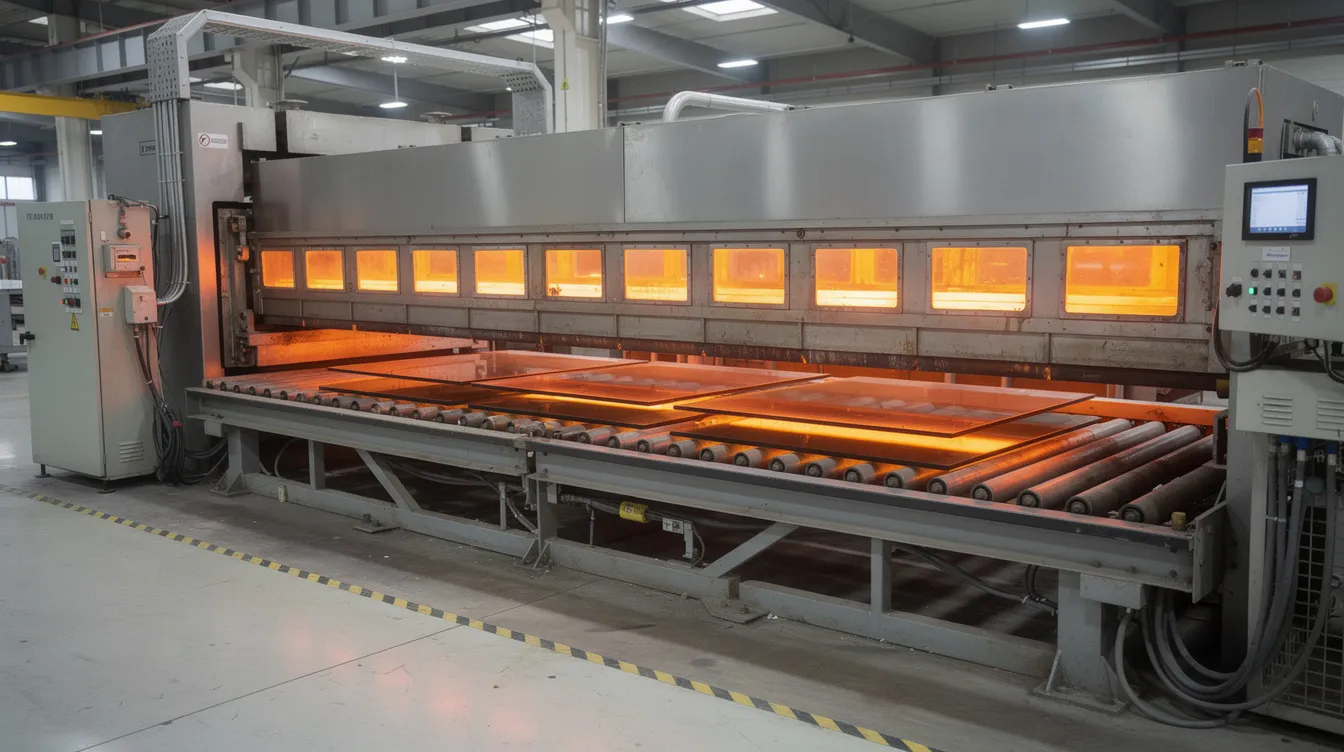
The manufacturing process begins with regular annealed glass that has already been cut, edged, and drilled to final specifications. All fabrication must be completed before tempering because the glass cannot be modified afterward without shattering.
During the thermal tempering process, the glass is heated in a furnace to temperatures exceeding 1,000 degrees Fahrenheit (typically 1,100-1,300°F or 620-680°C). The heated glass is then cooled rapidly using high-pressure air blasts directed at both surfaces. This rapid cooling causes the outer layers to solidify quickly while the inside cools more slowly, creating the characteristic compression-tension stress pattern that defines tempered glass properties.
Key Properties and Characteristics of Tempered Glass
The manufacturing process creates specific properties that distinguish tempered glass from other types of glass. These characteristics determine where and how tempered glass should be used.
Strength and Impact Resistance
The tempering process creates internal stresses in the glass, with the outer layers in compression and the inner layers in tension, making tempered glass four to five times stronger than standard annealed glass. This dramatic strength increase allows tempered glass windows and panels to resist impact that would shatter regular glass.
Thermal resistance is equally impressive. Tempered glass can resist temperatures up to 250°C (482°F), handling extreme temperatures and rapid temperature changes that would cause thermal stress failure in annealed glass. Standard glass might fail under temperature gradients of just 40-60°C, while tempered glass remains stable under far more extreme weather conditions.
Safety Breakage Pattern
When tempered glass breaks, it shatters into small, blunt pieces rather than sharp shards, which significantly reduces the risk of injury compared to regular glass. This breakage pattern is engineered intentionally—the stored internal stresses cause the entire panel to fragment into thousands of small pieces with rounded edges rather than the jagged shards and sharp edges characteristic of broken glass from annealed panels. These small fragments help prevent large, sharp pieces from causing severe injuries.
Safety standards require tempered glass to meet specific fragmentation requirements. Testing ensures that when the glass shatters, it produces a minimum number of granular chunks per area, confirming the glass will not create large shards capable of causing serious injury. This key benefit is why building codes often require the use of tempered glass in areas where safety is a top concern.
Limitations and Considerations
Despite its strength, tempered glass has important limitations. When any part of the panel is damaged—whether the surface or edges—the entire window will shatter completely. There is no partial failure; the stored tension releases instantly, fragmenting the whole piece.
Tempered glass cannot be resized or reshaped after the tempering process, making it necessary to complete all sizing before treatment, which can limit customization options. Any attempt to cut, drill, or modify the glass after tempering will cause immediate, complete fragmentation. This means all measurements must be precise before manufacturing begins.
Additionally, impurities in tempered glass can lead to spontaneous breakage, which creates safety hazards as it can shatter unexpectedly, raining glass shards on anyone nearby. Nickel sulfide inclusions, though rare, can cause delayed failure months or years after installation.
Applications and Manufacturing Standards
The unique properties of tempered glass make it ideal for specific applications where safety, strength, and thermal resistance are priorities. Understanding where tempered glass is required helps ensure proper specification and code compliance.
Building Code Requirements
Building codes often require the use of tempered glass in areas where safety is critical, such as bathroom doors, shower enclosures, and near stairways. The International Residential Code (IRC) and International Building Code (IBC) mandate safety glazing in numerous “hazardous locations.” Using the right glass in these settings helps improve safety and meet code requirements.
Locations requiring tempered or safety glass:
- All glass in swinging and sliding doors
- Sidelights within 24 inches of door frames
- Windows with bottom edges less than 18 inches from the floor
- Shower doors and bathtub enclosures
- Glass panels near stairs and walking surfaces
- Swimming pools and hot tub surrounds
- Guards and railings
Safety standards including ANSI Z97.1 and CPSC 16 CFR 1201 govern safety glazing requirements. All tempered glass must carry a permanent label identifying compliance, manufacturer, and safety glazing category.
Common Application Comparison
| Application Type | Safety Requirements | Typical Thickness | Code Requirements |
|---|---|---|---|
| Residential Doors & Sidelights | Tempered safety glass mandatory | 3/16” to 1/2” (4-13mm) | IRC R308, IBC §2406.4 |
| Shower Doors & Wet Areas | Safety glazing required in all wet environments | 3/8” to 1/2” | IRC R308.4.5 |
| Commercial Spaces | Impact and wind load resistance | 6-19mm, often laminated-tempered combinations | ASTM C1048, local building codes |
| Automotive (Side/Rear Windows) | Tempered safety glass standard | Thinner than architectural glass | Automotive safety standards |
| Kitchen Appliances | Heat and impact resistance | Varies by application | Consumer product safety standards |
| Common applications for tempered glass include shower doors, car side windows, smartphone screen protectors, and oven doors. In commercial settings, tempered glass is recommended for windows, doors, and areas near stairs or wet surfaces to meet safety regulations and reduce injury risks. Tempered glass is often required in high-traffic areas prone to accidental impacts, such as public buildings, airports, and stadiums, where safety and durability are essential. |

Common Challenges and Solutions
Specifying and installing tempered glass involves practical considerations that affect project success. Understanding these challenges helps avoid costly mistakes.
Sizing and Customization Limitations
Because tempered glass cannot be modified after treatment, precise measurements are essential before ordering. Mismeasurement or design changes after fabrication result in complete replacement rather than simple adjustment.
Solution: Work with certified glaziers during the planning phase. Create detailed specifications including exact dimensions, edge treatments, and any required holes or cutouts. Use site templates when possible to verify measurements before committing to fabrication.
Cost vs Regular Glass
The cost of installing tempered glass is generally higher than that of regular glass because each piece must be custom-manufactured and cannot be adjusted after tempering, leading to potentially costly replacements if damaged. The heating, rapid cooling, and specialized handling add to production costs. When evaluating tempered glass vs standard glass, it is important to consider the added safety benefits and code compliance requirements.
Solution: Focus on long-term value rather than initial price. Tempered glass provides safety compliance, reduced liability, and fewer replacements over time. Use tempered glass only where codes require it or safety benefits justify the investment, and consider bulk purchasing and standard sizes to reduce costs.
Security Limitations
When tempered glass breaks, it shatters completely into small, blunt pieces, which can pose a security risk as it allows intruders to gain access more easily compared to other types of glass that may remain intact. Unlike wired glass or laminated glass that stays in the window frame, tempered glass disappears entirely upon failure.
Solution: For applications where forced entry resistance is a priority, consider alternatives. Laminated glass consists of two or more layers of glass with an interlayer of polyvinyl butyral that holds the glass together if it breaks, making it more resistant to forced entry compared to tempered glass. Security window films applied to existing glass can add protection. Polycarbonate panels offer another option for high-security applications requiring impact resistance and helping to protect vulnerable openings.
Conclusion and Next Steps
Tempered glass meaning centers on a heat-treated safety glass engineered for strength and safer breakage patterns. The thermal tempering process creates surface compression that makes the glass four to five times stronger than regular annealed glass, while ensuring it fragments into small, blunt pieces rather than dangerous sharp shards when broken. For applications requiring additional protection, a protective window film can be combined with existing glazing to help retain broken glass and enhance security performance.
Immediate next steps:
- Review local building codes to identify where tempered glass is required in your project
- Measure all glass openings precisely before ordering—modifications are impossible after tempering
- Contact certified glaziers who work with ASTM C1048-compliant materials
- Verify that installed glass carries proper safety labels and manufacturer identification
Related topics to explore: While tempered glass is a primary type of safety glass, laminated glass provides different benefits including UV protection and security against forced entry. For energy efficiency, consider tempered glass combined with low-E coatings. Where extreme security is needed, evaluate multiple layers including ballistic and bullet-resistant security films and polycarbonate panels. Security window films may also be considered as an additional layer of window protection in certain applications. Many property owners also use security film to strengthen glass and improve post-breakage resistance without replacing existing glazing.
Frequently Asked Questions
What does tempered glass mean in simple terms?
Tempered glass is ordinary glass that has been heated to high temperatures and then cooled rapidly to make it much stronger. This process creates internal stresses that increase strength four to five times compared to regular glass. The key safety benefit is that tempered glass is designed to shatter into small, blunt pieces rather than sharp shards, significantly reducing the risk of injury when broken.
How can you tell if glass is tempered?
Tempered glass typically carries a permanent stamp or etched label in a corner identifying the manufacturer, compliance standard (such as “Tempered” or “ASTM C1048”), and safety glazing category. Professional identification methods include viewing the glass through polarized sunglasses, which reveals faint internal strain patterns unique to tempered glass. If no marking is visible and professional verification isn’t available, assume the glass may not be tempered.
Is tempered glass the same as safety glass?
Tempered glass is one type of safety glass, but not all safety glass is tempered. Safety glass is any glass designed to reduce injury risk upon breakage. While tempered glass is designed to shatter into small, blunt pieces when broken, significantly reducing the risk of injury, laminated glass holds together when broken, preventing shards from scattering. While tempered glass is about 4 to 5 times stronger than standard glass, laminated glass provides better security features by preventing glass shards from falling and offering resistance to forced entry. When tempered glass breaks, it shatters completely into small, blunt pieces, which can pose a security risk as it allows intruders to gain access more easily compared to other types of glass that may remain intact. This is one reason laminated glass is often preferred in applications where security is a primary concern.
Can tempered glass be cut or drilled?
No. Once glass has completed the tempering process, it cannot be cut, drilled, or modified in any way without immediately shattering. All fabrication—cutting to size, edge finishing, drilling holes, creating notches—must be completed before the glass enters the tempering furnace. This is why precise measurements and complete specifications are essential before ordering tempered glass.
Where is tempered glass required by building codes?
Building codes require tempered or safety glass in numerous hazardous locations: all glass in entry, patio, and interior doors; sidelights within 24 inches of doors; shower doors and bathtub enclosures; windows with bottom edges less than 18 inches from the floor; glass adjacent to stairs; guards and railings; and swimming pool or hot tub enclosures. Tempered glass is commonly used in applications such as car windows, shower doors, glass tables, and kitchen appliances due to its enhanced safety features.
How much stronger is tempered glass than regular glass?
Tempered glass is approximately four to five times stronger than regular annealed glass of the same thickness. This strength increase applies to both impact resistance (resistance to physical force) and thermal stress resistance (ability to withstand temperature changes). For example, while regular glass might fail under moderate impact or temperature gradients of 40-60°C, tempered glass can resist temperatures up to 250°C (482°F) and withstand significantly greater physical force before breaking.