Table of Contents
- What Is Window Protection and Why Does It Matter?
- Understanding Window Protection Fundamentals
- Types of Window Protection Solutions
- Professional Installation and Application Methods
- Common Window Protection Challenges and Solutions
- Conclusion and Next Steps
- Frequently Asked Questions
What Is Window Protection and Why Does It Matter?
Window protection is the practice of applying temporary materials—films, tapes, and coverings—to safeguard glass surfaces during construction, renovation, and painting projects. Whether you’re managing a commercial build-out or tackling a home renovation, protecting your glass windows from damage is essential for maintaining project quality and avoiding costly repairs.
This guide covers protective films, tapes, and specialized coverings for both residential and commercial applications. The target audience includes contractors, painters, facility managers, and homeowners who need reliable methods to protect windows throughout various work phases. Window protection matters because 92% of glass damage occurs before final cleaning, making prevention far more cost-effective than replacement. For this page, understanding the value of temporary window film solutions can help reduce unnecessary repair costs.
Direct answer: Window protection involves applying temporary protective materials—primarily polyethylene films with pressure-sensitive adhesives—to prevent damage from paint overspray, debris, chemicals, mortar stains, and construction materials. These films can typically be left on surfaces for a duration of up to 60 days without leaving residue upon removal.
By reading this guide, you will learn:
- How to select the right protection type for your specific project timeline and conditions
- Professional installation techniques that ensure complete coverage and easy removal
- Solutions for common challenges like adhesive residue and film lifting
- Cost-saving strategies through damage prevention and proper material selection
- Best practices for removal that preserve window integrity and warranties
Understanding Window Protection Fundamentals
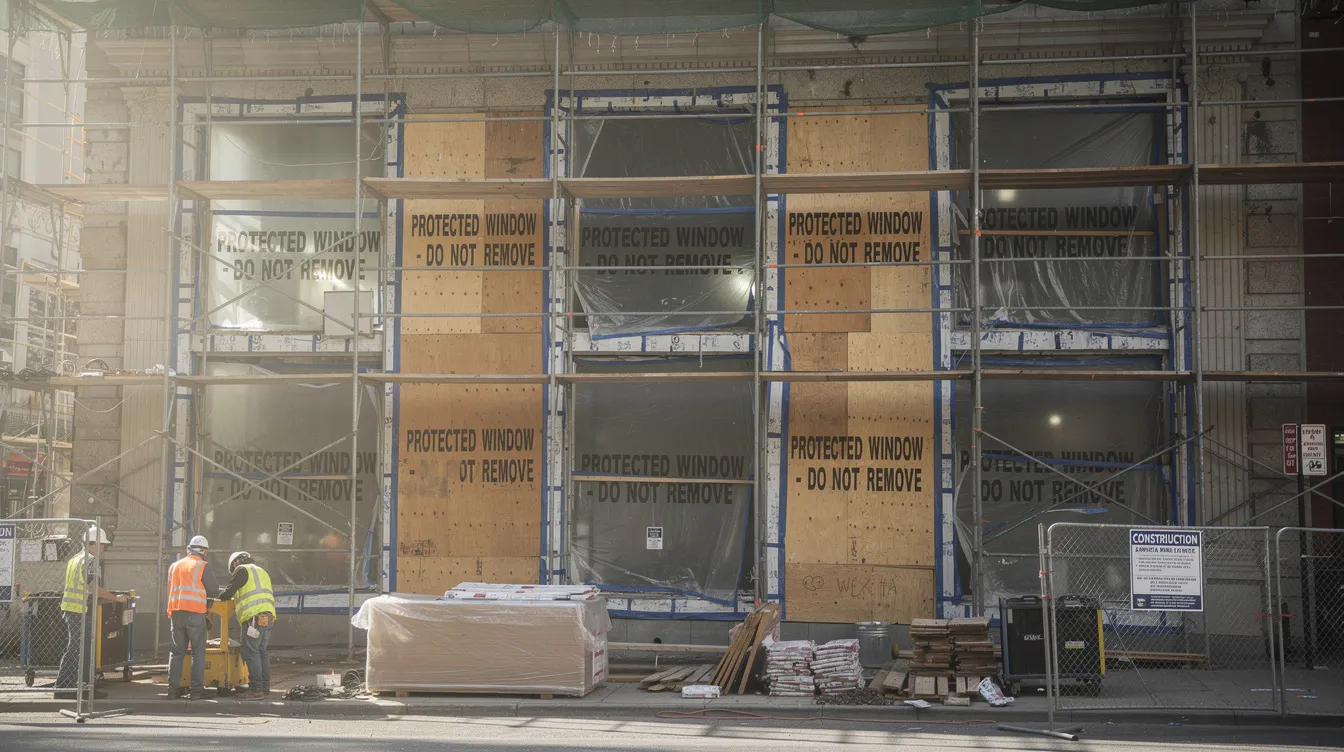
Window protection serves as the first line of defense against damage during construction and renovation work. Understanding what it covers and when it’s essential helps you plan effectively and protect your property investment.
What Window Protection Covers
Window protection refers to temporary safeguarding of glass surfaces, frames, and glazed elements from damage during work activities. Window protection films are typically made from polyethylene and are designed to adhere to glass surfaces to protect them from dirt, dust, debris, and paint overspray during construction or renovation projects.
The types of damage window protection prevent include:
- Paint splatter and spray from interior and exterior painting operations
- Adhesive residue from tape or films left beyond their rated timeframes
- Scratches and abrasion from tools, scaffolding, and grit particles
- Chemical stains from high-alkaline materials like cement and stucco, which can permanently etch glass
- Mortar stains from masonry work that bond to glass surfaces
Proper window protection connects directly to overall project quality and cost management. Damaged glass often requires complete replacement, which is particularly expensive for high-performance, coated, tempered, or laminated glass. The time and labor costs for rework and remedial cleaning can significantly impact project timelines and budgets.
When Window Protection is Essential
Construction phases requiring protection include drywall installation, plastering, painting, staining, and all exterior work. Any phase involving spray application of materials, demolition, roofing, or scaffolding presents risk to unprotected windows and doors.
Renovation scenarios demanding window protection encompass kitchen remodels where sealants and finishes are applied, bathroom updates with chemical cleaning agents, and whole-house projects involving multiple trades working simultaneously. Protection is also critical during transport and storage of prefabricated window units or curtain wall modules.
Window protection is categorized by its main purpose: protecting against extreme weather, forced entry, or environmental factors during construction. Understanding your specific needs guides you toward the right protection solutions.
Types of Window Protection Solutions
Building on these fundamentals, selecting the appropriate protection method depends on your project type, duration, and the level of risk your windows face. From light-duty films to heavy security solutions, the variety of options allows you to fit protection to your specific application.
Adhesive Protection Films
Self-adhesive window protection films are designed for easy application and removal, allowing users to cover windows quickly and efficiently without the need for additional tools or clamps. These films use pressure-sensitive adhesives that provide secure hold during work while allowing clean removal within specified timeframes.
Thickness options and applications:
- 1.5 to 2 mil films: Light-duty protection for interior work, dust, and light overspray
- 2 to 4 mil films: Standard construction protection against paint, debris, and moderate exposure
- 4 mil and above: Heavy-duty protection for extended outdoor exposure or high-risk environments
Adhesive strength varies by product type. Some window protection films are designed to be effective for up to 45 days, providing a reliable barrier against construction-related damage. Many window protection films can be safely left on surfaces for a specified duration, typically ranging from 45 to 60 days, without leaving residue upon removal if applied correctly.
Pre-Taped Masking Solutions
Combination film and tape products provide edge-to-edge coverage with integrated adhesive strips that seal to window frames. These products reduce edge lifting and improve coverage consistency compared to applying film and tape separately.
Size variations range from narrow rolls for residential windows to wide formats for commercial applications. Dispenser systems allow professional contractors to unroll and apply protection rapidly across large façades. Time-saving benefits for large-scale projects are substantial—pre-taped solutions can reduce application time by 30-40% compared to traditional methods.
Specialized Protection Materials
Clear film options maintain visibility during work, allowing natural light transmission and enabling site inspection without removing protection. This is particularly valuable when safety lighting or visual access to the job site is required and when maintaining a clear view of work areas is important.
Beyond temporary construction films, specialized protection materials address other threats:
- Security films typically range from 4 to 14 mils thick and hold shattered glass together upon impact, delaying intruders
- Impact-resistant windows use laminated glass that holds together when shattered, providing protection from hurricanes and break-ins
- Hurricane fabric is a lightweight, high-strength fabric deployed over windows to absorb impact from flying debris
- Rolling shutters provide excellent protection against storms and intruders, can block 100% of light, and reduce outdoor noise by 50%
Security window film and laminated glass create a harder-to-break surface, discouraging forced entry by burglars. Impact-resistant windows provide 24/7 protection against hurricanes and break-ins, offer significant noise reduction and block UV rays.
| Protection Type | Primary Use | Duration/Permanence | Cost Level |
|---|---|---|---|
| Adhesive PE Film | Construction debris, paint | 45-60 days temporary | Low |
| Security Film | Break-in deterrent | Permanent | Medium |
| Impact Windows | Hurricanes, security | Permanent | High |
| Hurricane Shutters | Storm protection | Deployed as needed | Medium-High |
| Budget options for window protection include low-cost plywood coverings and thinner security films for those needing protection without significant investment, while premium architectural window films can add year-round energy efficiency and comfort benefits. |
Professional Installation and Application Methods
Proper installation technique determines whether your window protection performs as intended. Even quality materials fail when applied incorrectly, leading to difficult removal, inadequate coverage, or adhesive residue on your finished windows.
Step-by-Step Application Process
Surface preparation and correct application ensure protection stays in place throughout your project while remaining easy to remove when work is complete.
- Surface preparation: Clean glass with mild soap and water solution to remove dirt, dust, grease, and old sealant residues. Dry thoroughly—any residue or micro-abrasives trapped can cause bubbles or adhesion failure. Clean frames as well.
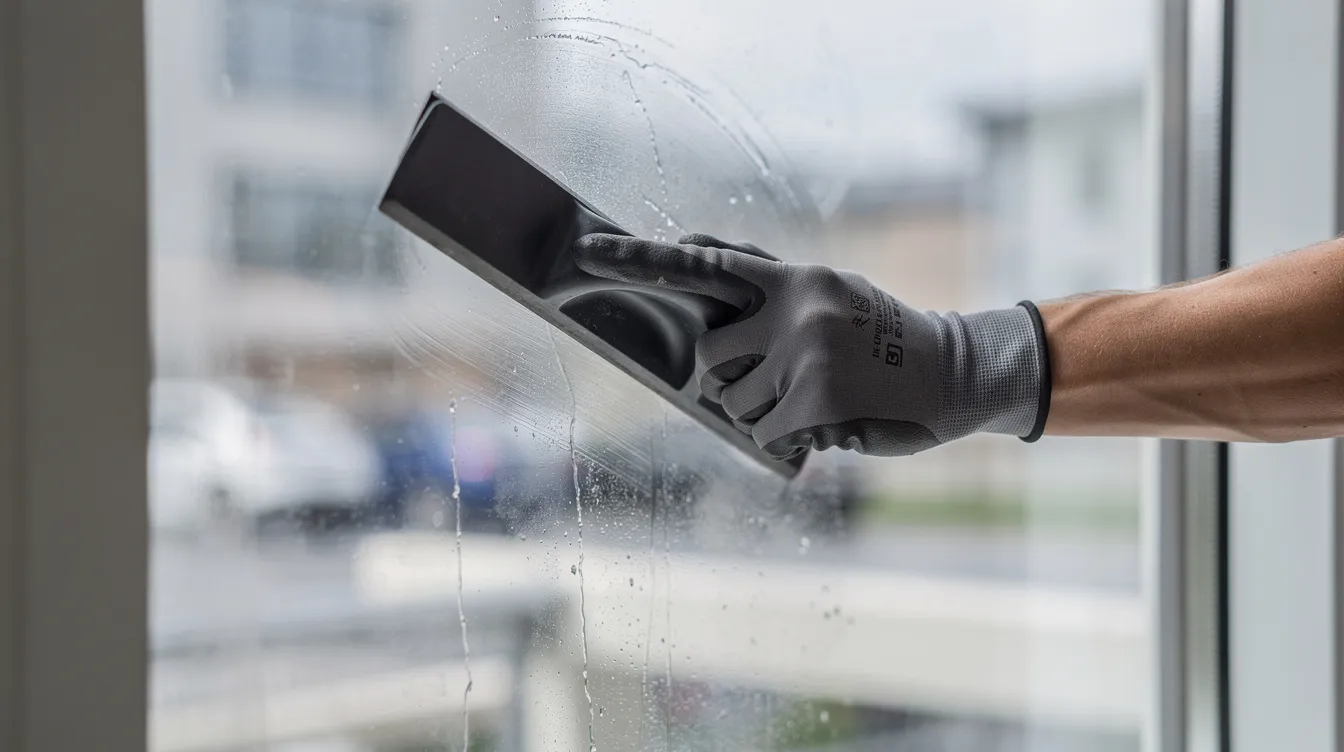
- Film positioning: Apply protection from top to bottom. For wet application, use soapy water solution to float the film so it can be positioned before adhesion engages. Press firmly once aligned.
- Squeegee application: Use a felt or soft rubber squeegee to remove air and water from the center outward. Work methodically to eliminate bubbles and ensure full contact with the glass surface.
- Edge trimming: Cut excess film with a sharp blade after positioning is complete. Trim to the frame line or just behind frame material for clean edges. Ensure all four corners receive proper sealing.
- Edge sealing (for exterior applications): Apply neutral cure silicone sealant to all edges, overlapping at least 1/8” onto both film and glass. Use masking tape to create a clean channel for sealant application.
The effectiveness of window protection films can be influenced by environmental factors, such as exposure to sunlight, which can affect their performance over time. Install when moderate temperatures are expected and avoid application in extreme cold, heat, or high humidity.
Film Selection Comparison
Selecting appropriate film duration based on project timeline prevents both premature failure and difficult removal. This comparison helps you add the right product to your order or project cart.
| Criterion | 30-Day Film | 45-Day Film | 60-Day Film |
|---|---|---|---|
| Adhesive Strength | Low-tack, minimal hold | Medium-tack, weather-resistant | High-strength, UV inhibitors |
| Removal Ease | Very easy, minimal residue | Moderate care required | More effort, follow guidelines |
| Weather Resistance | Interior use preferred | Moderate outdoor exposure | Extended outdoor exposure |
| UV Stability | Limited | Good | Excellent |
| Cost per Square Foot | Lowest | Moderate | Highest |
| Best Use Case | Quick interior work | Standard construction | Extended exterior projects |
| For projects exceeding 60 days, consider phased protection—applying fresh film midway through rather than using a single application beyond rated timeframes. This approach provides continuous protection while ensuring easy removal. |
Field studies across 27 construction sites showed medium-tack UV-resistant film reduced scratches by approximately 68% compared to unprotected glass, with zero adhesive transfer after 60 days when UV-rated film was used properly, especially when installed by professional window film specialists.
Common Window Protection Challenges and Solutions
Even with proper planning, window protection projects encounter obstacles. Understanding these challenges and their solutions helps you maintain quality results and avoid costly mistakes.
Adhesive Residue After Removal
Residue occurs when film remains beyond its rated exposure window, when heat bakes adhesive onto glass, or when low-quality products are used. Prevention through timely removal within manufacturer timeframes is the primary defense. These are common reasons protection materials fail prematurely.
Solution: Remove residue using isopropyl alcohol and plastic scrapers—never metal scrapers on tinted or coated glass. Apply heat with a hairdryer to soften stubborn adhesive, then peel at a 45-degree angle. For severe cases, use commercial adhesive removers, testing on a small area first. Soapy water or mild acidic solutions (vinegar and water) work for dried chemical stains.
Film Lifting in Weather Conditions
Wind, thermal cycling, UV degradation, and moisture infiltration cause edge lifting, particularly when films are exposed to outdoor conditions without proper sealing.
Solutions: Secure edges with additional tape or weighted materials in high-wind conditions. For exterior applications, always use UV-resistant film and apply edge sealing with neutral cure silicone within 24-72 hours of installation. Temperature considerations for outdoor applications include avoiding installation in extreme heat or cold, which inhibits proper adhesive curing.
Laminated impact glass can reduce noise transmission, contributing to a quieter home environment while also providing superior protection compared to standard glazing; in higher-risk settings, ballistic-resistant window film and glazing solutions are sometimes used as part of a layered security strategy.
Inadequate Coverage and Edge Sealing
Gaps in coverage allow paint, debris, and chemicals to reach glass surfaces. Poor overlap causes visible seams or paint bleed under protection.
Solutions: Measure accurately before cutting and allow 1-2 inches of overlap at seams. Proper overlap techniques include butting joints at straight lines parallel to frames. Edge sealing methods for exterior applications require neutral silicone sealant applied to all four edges. Tools for achieving complete protection coverage include sharp blades, felt squeegees, and masking tape for sealant channels.
Many UV-blocking window films block up to 99% of harmful UV rays, reducing solar heat gain and protecting furniture from fading—an additional benefit when protection films remain in place during extended projects.
Conclusion and Next Steps
Window protection delivers measurable cost-effectiveness through damage prevention, with field data showing scratch reduction of nearly 70% on properly protected surfaces. The investment in quality materials and proper installation techniques pays dividends through avoided replacement costs, faster project completion, and professional results. While many products are advertised as simple solutions, proper selection and installation remain essential.
Immediate action items:
- Measure all project windows and doors to determine square footage requirements
- Assess project timeline to select appropriate film duration (30, 45, or 60-day)
- Gather application tools: squeegee, sharp blade, spray bottle, and masking tape
- Clean all glass surfaces before protection application
- Schedule removal within manufacturer-specified timeframes
Installing code-approved impact windows or shutters can result in lower home insurance premiums, making permanent protection solutions a worthwhile consideration for properties in high-risk areas. Impact windows and shutters protect against wind-borne debris and prevent high winds from entering a home, reducing structural failure risks.
Related topics worth exploring include surface preparation techniques for optimal adhesion, privacy and decorative window films that provide both protection and design benefits, paint protection methods beyond windows for floors and finished surfaces, and post-project cleanup procedures for professional handoffs. You can continue researching these topics to improve project outcomes and use them as a useful reference for future work involving window film applications.
Frequently Asked Questions
How long can window protection film safely remain on glass?
Window protection films can typically be left on surfaces for a duration of up to 60 days without leaving residue upon removal. Short-term films are rated for 7-30 days, medium-term for 30-60 days, and specialized UV-resistant films for 60-90 days. Exceeding these windows risks adhesive curing, making removal difficult and potentially damaging glass surfaces.
What’s the difference between 30-day and 60-day protection films?
The differences include adhesive strength, UV stability, and thickness. 60-day films use medium-to-high-tack adhesives with UV inhibitors and are generally thicker (3-4 mil versus 1.5-2 mil). 30-day films use lighter adhesives suitable for interior work, while 60-day films withstand outdoor exposure including sun and rain. Cost per square foot increases with longer-duration films.
Can window protection film be used on tinted windows?
Yes, but with precautions. Adhesives must be compatible with tinted, low-E, or solar-control coatings. Some adhesives can degrade or stain specialty coatings. Use plastic scrapers during removal rather than metal blades, which can scratch coated surfaces. Always test a small area first and follow manufacturer guidelines for coated glass applications.
What tools are needed for professional film application?
Essential tools include a felt or soft rubber squeegee for air removal, a sharp blade or utility knife for trimming, a spray bottle with soapy water solution for wet application, masking tape for edge sealing channels, and neutral cure silicone sealant for exterior applications. Clean microfiber cloths and isopropyl alcohol aid surface preparation.
How do you remove stubborn adhesive residue from windows?
Apply heat with a hairdryer to soften the adhesive, then peel remaining film at a 45-degree angle. Use isopropyl alcohol on a soft cloth to dissolve residue, followed by plastic scrapers for stubborn areas. Commercial adhesive removers work for severe cases—test on a small area first. Never use metal scrapers on tinted or coated glass, as scratching is difficult to repair.
Is window protection film reusable?
Most adhesive protection films are not reusable—once removed, the adhesive bond is compromised and cannot provide reliable protection on reapplication. Static-cling or specialized low-tack reusable films exist for display or signage purposes, but for construction protection where secure adhesion is critical, plan on single-use products. Many contractors have thought reusable products could reduce costs, but performance requirements often make replacement necessary.
What weather conditions affect film adhesion and removal?
Extreme temperatures—both hot and cold—inhibit proper adhesive curing and can cause edge lifting. High humidity affects water-based adhesives, while intense UV radiation accelerates adhesive degradation. Ideal application occurs in moderate temperatures (50-85°F). Wind pressure on exterior films can cause edge failure without proper sealing. Schedule application and removal during favorable weather conditions whenever possible.
Reinforced frames made of steel, aluminum, or fiberglass significantly increase resistance to forced entry compared to standard vinyl—a consideration when evaluating permanent window protection upgrades alongside innovations like smart switchable window films that offer privacy on demand.
Accordion shutters can be quickly closed and locked before a storm and are a more affordable option for larger openings, while insulated blinds and solar films can significantly reduce heating and cooling costs in a home.