Table of Contents
- What Is Smart Glass Film and How Does It Work?
- Understanding Smart Glass Film Technology
- Types and Applications of Smart Glass Film
- Installation and Control Systems
- Common Challenges and Solutions
- Conclusion and Next Steps
- Frequently Asked Questions
What Is Smart Glass Film and How Does It Work?
Smart glass film is a self-adhesive switchable film that transforms any existing glass surface into privacy glass at the flip of a switch. This amazing technology uses PDLC (Polymer Dispersed Liquid Crystal) technology to electrically control whether light passes through or scatters, switching your windows from completely transparent to frosted private in milliseconds, similar to other switchable smart glass film solutions for offices and commercial spaces.
This guide covers residential, commercial spaces, and automotive applications of smart film technology, excluding the manufacturing of laminated smart glass units. Whether you’re a property owner seeking instant privacy for bathrooms, an architect designing modern office partitions, a facility manager upgrading conference rooms, or an automotive enthusiast exploring electric window solutions, you’ll find comprehensive technical specifications and practical guidance here.
Direct answer: Smart film can be applied to existing glass surfaces, transforming them into switchable glass without the need for extensive renovations—making it the most accessible path to switchable privacy for most applications.
By reading this guide, you will understand:
- How PDLC film creates instant privacy control with just a tap of a button
- The energy savings from blocking solar heat and reducing UV rays by up to 99%
- Installation requirements including self-adhesive technology options
- Control options ranging from remote control to smart home automation systems
- Cost factors and industry leading warranty coverage for your investment
Understanding Smart Glass Film Technology
Making an informed purchasing decision requires understanding how switchable smart film actually works and what differentiates various adhesive technology options. This foundational knowledge helps you evaluate products, communicate with installers, and set realistic expectations for performance.
PDLC Technology and How It Works
The most common type of smart film uses Polymer Dispersed Liquid Crystal (PDLC) technology which functions like a “light valve” controlled by electricity. The film consists of three primary layers: two transparent conductive films (typically Indium Tin Oxide) sandwiching a polymer matrix containing millions of microscopic liquid crystal droplets.
In the opaque state, liquid crystal molecules scatter light, making the glass appear frosted and private, while in the clear state, an electric field aligns the liquid crystals to allow light to pass through. Smart window film technologies that switch between opaque and transparent states allow users to switch windows from clear to opaque at the touch of a button, providing instant privacy and light control.
The switching speed is remarkably fast; transitions occur in 0.01 to 0.04 seconds. When transparent, genuine smart film achieves visible light transmission of 80-85% with extreme clarity. Operating voltage typically ranges from 60-65V AC, with smart film technology consuming only about 5 watts of power per 10 square feet, which is comparable to the energy consumption of a standard light bulb, making it an energy-efficient option for window treatments.
Smart Cling vs Traditional Adhesive Systems
Proprietary smart cling self-adhesive technology represents a significant advancement over traditional adhesive systems. Smart Cling uses a dry peel-and-stick backing rather than wet glue or lamination processes, offering several distinct advantages.
Smart film can be easily installed using a peel-and-stick application method, allowing it to be applied to any smooth glass surface without the need for professional tools. Additionally, smart film can be removed without leaving any sticky residue, making it a convenient option for those who may want to change or update their window treatments in the future.
Traditional adhesive systems often suffer from moisture trapping, which can cause “solar fracturing” (cracks from trapped heat), yellowing over time, and potential damage to underlying glass. Smart Cling self-adhesive technology allows for out-gassing, enabling small air bubbles to escape naturally and reducing long-term deterioration risks.
Understanding these adhesive differences directly impacts your decision when considering applications where removal might be necessary or where long-term clarity matters most.
Types and Applications of Smart Glass Film
Now that you understand how switchable film technology works, exploring real-world applications reveals the practical value this technology delivers across different environments. From residential privacy to commercial functionality, smart glass transforms how spaces can be used.
Residential Applications
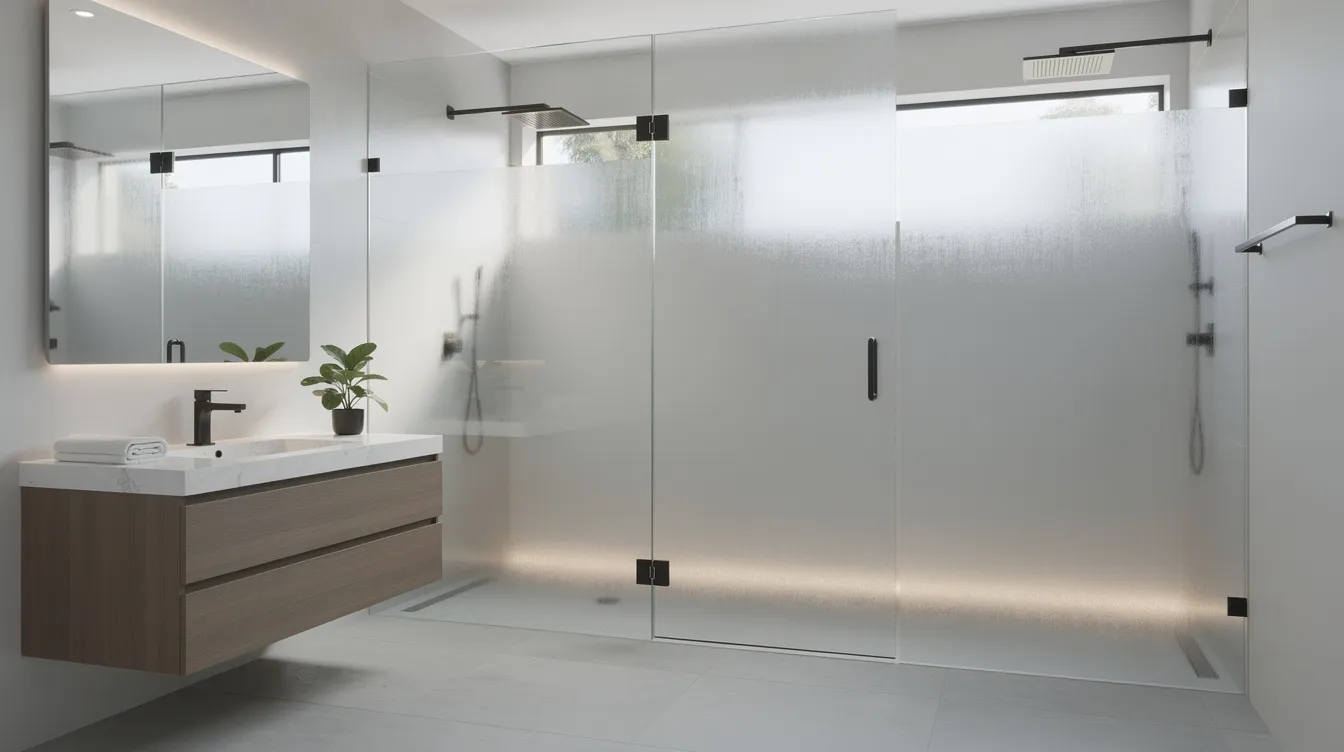
In homes, smart film delivers the ultimate privacy solution for bathrooms, bedroom windows facing streets, and home office spaces that need occasional visual separation. The film blocks 99% of harmful UV rays and can be used to enhance security by blocking visibility when in opaque mode—protecting both your privacy and your interior furnishings from fading and complementing more traditional privacy window film and decorative glass film options.
Smart glass film can enhance interior aesthetics by providing a minimalist, “fabric-free” look and can be used in various applications such as bathrooms, offices, and healthcare facilities. When powered off, smart film still allows approximately two-thirds of natural light to pass through, reducing the need for artificial lighting and contributing to energy savings, especially when combined with solar window film for glare and heat reduction.
Sizing capabilities accommodate most residential windows, with adhesive PDLC film available in widths up to approximately 47 inches (1200mm) and lengths up to 118 inches (3000mm). For larger installations, multiple panels can be tiled with proper planning of wire locations and busbar placement.
Commercial and Office Use
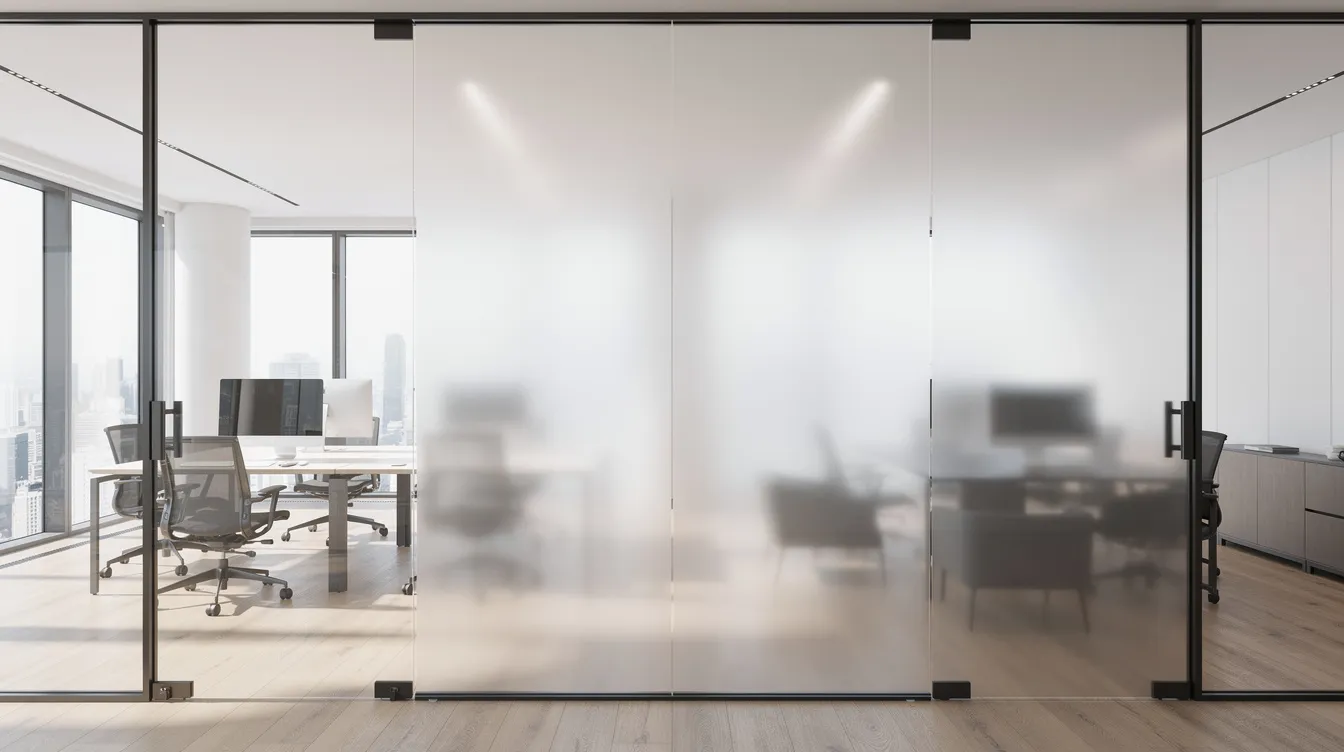
The applications of smart film include commercial environments such as conference rooms and retail displays, where instant privacy transforms how spaces function. Conference rooms with glass walls gain on-demand privacy for sensitive meetings, while storefront windows can switch to frosted glass for after-hours security or special displays.
Smart Film is increasingly used in hotels and high-end skyscrapers, allowing for flexible room configurations and enhancing the aesthetic appeal of spaces by providing on-demand privacy. Integration with third party control systems like Crestron and Lutron enables centralized building automation, allowing facility managers to control entire floors from a single interface, often alongside solar window film for additional energy efficiency and glare control and other switchable smart glass film solutions for commercial interiors.
Dual-purpose functionality extends value further: when in the opaque state, smart film surfaces can serve as projection screens. Production companies and countless movie studios have adopted this technology for flexible filming environments. Commercial retrofits using smart film typically complete in 1-3 days per zone, compared to weeks for built-in smart glass replacement.
Specialty Applications
Beyond standard residential and commercial spaces, switchable privacy technology serves critical functions in specialized environments. In automotive applications, smart tint provides privacy screens for limousines, switchable sunroofs, and van conversions. Note that safety regulations typically prohibit the use of smart film on windshields, and many project teams pair these systems with security window films to reinforce glass against impact and intrusion.
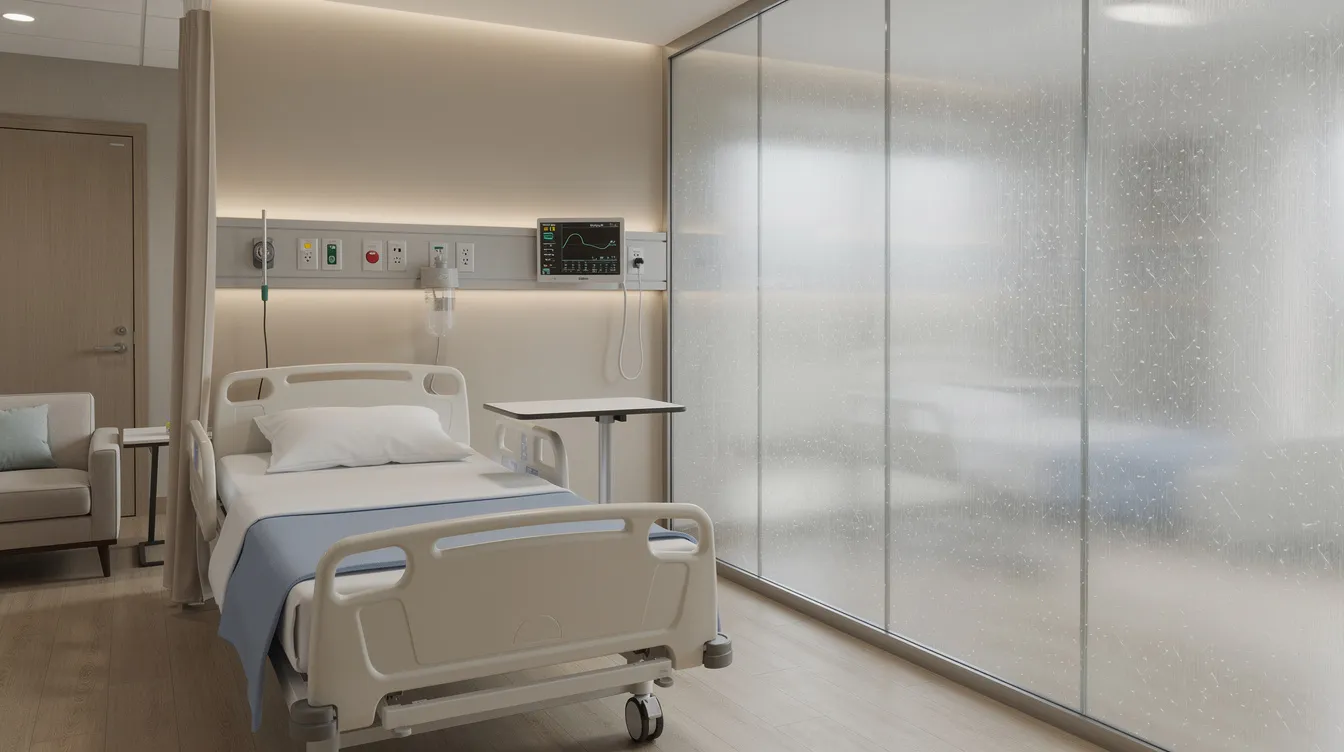
Healthcare facilities use Smart Film for its hypoallergenic properties, UV protection, and on-demand privacy. Smart film requires little maintenance, resists dust buildup, and allows staff to clean it like standard glass, helping improve hygiene in medical settings.
Museums worldwide utilize switchable film to protect priceless artwork from UV exposure while maintaining natural light when desired. The ability to control each lighting scenario independently makes smart glass invaluable for preserving UV-sensitive pieces while creating dynamic exhibition spaces, similar in spirit to transitional window films that automatically adapt to sunlight. Many museums world wide also use switchable privacy technology to help protect sensitive exhibits while maintaining an engaging visitor experience.
Installation and Control Systems
With applications defined, understanding the practical implementation process ensures your project achieves maximum performance. Whether you’re planning a DIY installation or working with professional installers, these procedures and control options shape your project scope.
Professional Installation Process
For large or permanent applications—or where warranty validation depends on proper installation—work with a dedicated project manager and professional installers. Experienced window tinting and security window film installers can correctly position busbars, connect wiring, and address other project details before final manufacturing. This helps install system components correctly from the start.
Surface Preparation: The glass surface must be completely clean and free from dust, oil, and debris. Use 98%+ isopropyl alcohol and microfiber cloths. Work in a dust-free environment—halt nearby construction activities during installation.
Measurement Verification: Final measurements should allow film panels to be 2-3mm smaller than the visible glass area to avoid edge contact with frames. Shop drawings should document all dimensions, wire locations, and busbar placement before production begins.
Film Application: Peel the protective liner gradually, applying from one edge while using a squeegee to press the film smoothly. Work out air bubbles systematically. For genuine smart film products using Smart Cling technology, dry application is standard—avoid water during installation.
Electrical Connection: Attach busbar wires using appropriate connectors or lead-free soldering. Connect the transformer matching voltage and current specifications. All wiring must be insulated and comply with local electrical codes.
Testing and Quality Control: Once powered, test multiple switching cycles. Verify clarity in the transparent state and complete opacity when off. Document any defects for warranty validation—submit required forms within the specified timeframe (typically 21 business days).
Control Options Comparison
Developed power control options range from simple manual switches to full smart home automation systems integration. Selecting the right control method depends on your budget, technical requirements, and desired user experience.
| Control Type | Cost | Complexity | Best For |
|---|---|---|---|
| Optional wall switch | Low | Simple hardwired toggle | Single panels, basic needs |
| Remote control | Low-Medium | RF wireless included | Multiple zones, convenience |
| Smartphone apps | Medium | WiFi/Bluetooth setup | Scheduling, remote access |
| Smart home integration | Higher | Requires compatible system | Crestron, Lutron, whole-building control |
| DMX systems | Higher | Professional programming | Stage, projection, commercial venues |
| Smart Film can be applied to various environments including homes, offices, conference rooms, and commercial spaces, providing instant privacy and light control through whichever control method fits your needs. Party control systems and scenes can activate multiple panels simultaneously, while dimming capabilities (where supported) allow the film to be easily variably controlled for partial opacity, helping achieve the desired privacy level for different applications. |
For comprehensive building automation, genuine smart tint products integrate with industry leaders worldwide in control systems. A talented team of installers familiar with your chosen platform ensures seamless integration with existing infrastructure, similar to the approach used by regional window tinting and privacy film specialists serving residential and commercial clients.
Common Challenges and Solutions
Addressing typical installation and operation concerns proactively prevents problems that could affect your switchable film investment. These solutions represent best practices from completed projects across the industry.
Air Bubbles During Installation
Air bubbles result from trapped air or dust particles between the film and glass surface. Prevention requires working in a dust-free environment, peeling the liner gradually while applying with consistent squeegee pressure in horizontal strokes.
Products featuring proprietary smart cling adhesive technology allow for out-gassing, meaning small bubbles can dissipate naturally over time. If significant bubbles persist at edges after installation, removal and careful reapplication may be necessary—though this should be avoided when possible.
Power Supply Sizing and Voltage Requirements
Smart film can block up to 99% of harmful UV rays and reduce solar heat gain by up to 73% when powered off, which helps in lowering heating and cooling costs. To calculate power consumption for system planning, use the specification of 0.3-0.39 watts per square foot for quality genuine smart film products.
Calculate total square footage of your installation, multiply by power consumption rate, and select a transformer rated 20% above your calculated need to ensure stability. Verify voltage specifications (typically 60-65V AC) and ensure compliance with local electrical codes.
Clarity and Performance Issues
Reduced clarity can stem from dirty underlying glass, imperfect adhesion, or aging materials degraded by UV exposure. Choose ETL-certified films meeting UL standards for optimal transparency and safety compliance—this certification ensures products meet North American safety requirements.
Higher-end smart films offer superior optical clarity and longer durability, which can affect their pricing compared to standard options. Many property owners also compare these solutions with services from local providers of security window film, smart glass, and privacy film or regional specialists offering privacy window film and decorative surface finishes. Warranty coverage is often contingent on using authorized installers and following proper installation procedures documented with serial number tracking. In many cases, a video shows the recommended installation and maintenance procedures for reference.
Conclusion and Next Steps
Smart glass film represents accessible switchable privacy technology that transforms existing windows and glass partitions without extensive renovation. Whether you need instant privacy for a bathroom, confidential meeting spaces, or UV protection for valuable interiors, PDLC film delivers these benefits while reducing solar heat gain and energy costs.
Your immediate next steps:
- Measure your spaces and calculate total square footage for accurate pricing
- Request a sample kit to evaluate clarity and switching performance firsthand
- Review project details including wire locations and control preferences
- Contact certified installers to discuss your project’s specifications and timeline
- Verify product details including warranty coverage and shipping cost to your location
For related topics, explore smart glass manufacturing processes for new construction, building automation integration best practices, and current energy efficiency regulations that may offer incentives for smart film installations. USA direct manufacture options can reduce lead times and provide access to the most comprehensive online database of product specifications. Some manufacturers also reference registrations with the United States Patent and Trademark Office when discussing proprietary technologies.
Contact a talented team today to begin transforming your spaces with this amazing technology.
Frequently Asked Questions
What is the lifespan of smart glass film?
Standard warranty coverage for genuine smart film products is typically 3 years, with industry leading warranty options extending to 5-7 years or longer for premium products. Real-world lifespan often aligns with warranty periods, ranging 3-5 years for most adhesive films when properly installed and maintained. Built-in smart glass units in commercial applications may last 10-15 years.
How much energy does smart glass film consume?
Smart film technology consumes approximately 0.3-0.39 watts per square foot when powered (transparent state). For a typical 10 square foot panel, this equals roughly 5 watts—comparable to a standard LED light bulb. When powered off in the opaque state, there is no energy consumption.
Can smart glass film be removed without damaging windows?
Yes, you can remove products that use smart cling self-adhesive technology without leaving sticky residue, making them convenient if you want to change or update your window treatments. Traditional adhesive systems can make clean removal more difficult. Always follow the manufacturer’s guidelines to avoid damaging the glass or voiding the warranty.
What sizes are available for smart glass film?
Adhesive PDLC film is commonly available in widths up to 71 inches and lengths up to 1968 inches, though standard production runs are typically up to 47 inches wide by 118 inches long. Custom manufactured sizes are available through engineering team consultation, with shop drawings confirming final measurements before production begins.
Is smart glass film suitable for outdoor use?
Switchable film performs best in interior or protected installations. Direct exposure to weather, UV radiation, and moisture accelerates degradation. For outdoor applications, built-in smart glass units with sealed IGU construction offer better durability and weather resistance.
How much does professional installation cost?
The price of switchable film varies between $37 and $69 USD per square foot, depending on clarity, quality, and warranty coverage. Standard switchable glass costs between $80 and $140 USD per square foot, with potential discounts for bulk orders. Installation complexity, control system integration, and engineering time affect final pricing.
Can smart glass film work with existing home automation systems?
Yes, smart film integrates with major smart home automation systems including Crestron, Lutron, DMX, Amazon Alexa, and Google Home. Third party control systems compatibility varies by product—verify integration capabilities before purchase. Remote controls and smartphone apps give users convenient control when full automation is unnecessary.
Does smart glass film block UV rays?
The film blocks 99% of harmful UV rays, protecting interior furnishings from fading and reducing UV exposure for occupants. This UV protection functions in both transparent and opaque states. This makes smart film valuable for museums, healthcare facilities, and residential applications where UV-sensitive materials require protection.