Looking for a way to turn any window or glass partition into an on-demand privacy screen? Switchable film makes it possible without tearing out your existing glass. Here’s everything you need to know before you purchase.
Table of Contents
- What Is Switchable Film? (Fast Overview for Buyers)
- How Switchable Film Works (PDLC Technology Explained Simply)
- Key Benefits of Switchable Film
- Common Applications for Smart Film & Smart Glass Effects
- Types of Switchable Film & Feature Options
- Switchable Film vs Smart Glass vs Traditional Window Treatments
- Installation: Self Adhesive Smart Film on Existing Glass
- Design Ideas & Use Cases for Switchable Privacy
- Maintenance, Durability & Safety
- Frequently Asked Questions About Switchable Film
- Why Choose Us for Your Smart Film Project
- Conclusion: Is Switchable Film Right for Your Space?
What Is Switchable Film? (Fast Overview for Buyers)
Switchable film is a thin, electrically controlled layer applied to existing glass that delivers smart glass effects without replacing the glass itself. Smart film provides instant privacy at the touch of a button, switching from transparent to frosted in seconds. This makes it a perfect fit for retrofit projects in both residential and commercial spaces.
You may also see it called smart film, smart tint, or switchable smart film-these are variations of the same PDLC-based concept. The material is available in self adhesive versions that peel-and-stick directly onto a clean glass surface, making the process of upgrading existing windows fast and non-destructive. If you prefer a modern alternative to traditional window treatments like blinds or curtains, this is the product to watch.
How Switchable Film Works (PDLC Technology Explained Simply)
Switchable film utilizes Polymer Dispersed Liquid Crystal technology. Tiny liquid crystal droplets are suspended inside a thin polymer layer. When you apply a low-voltage current, the system works like this:
- Powered ON (clear state): Aligned liquid crystals allow light to pass through, making the glass transparent.
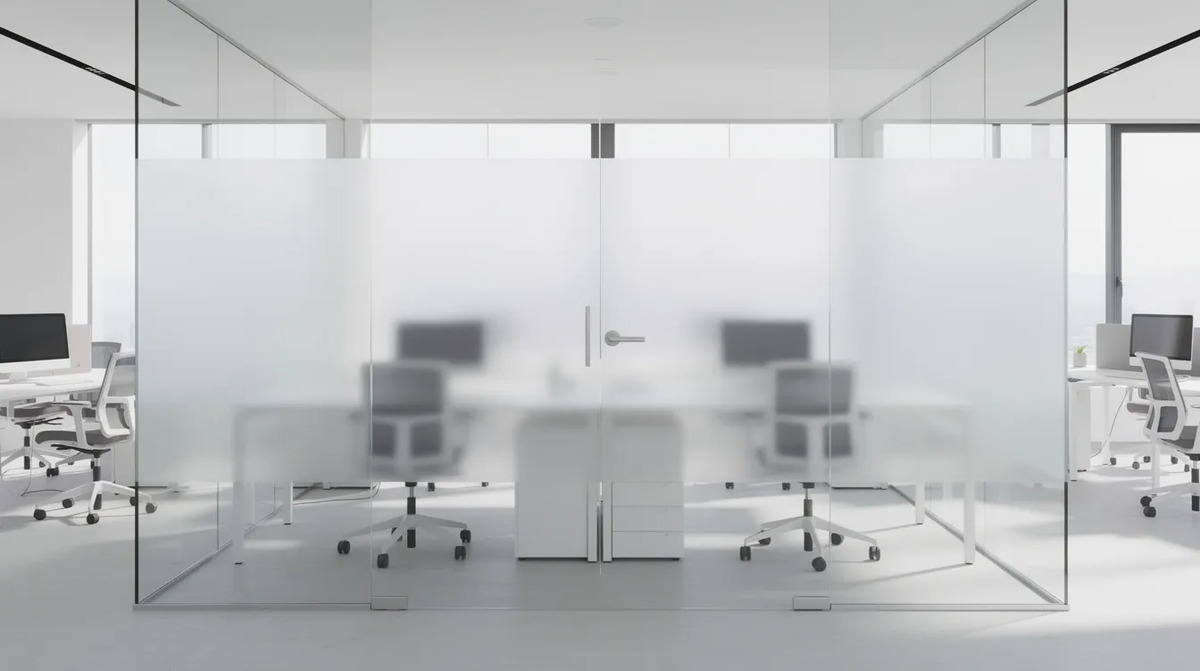
- Powered OFF (frosted state): Light is scattered by randomly arranged liquid crystals, producing a frosted, private appearance with soft diffused light-not total blackout.
Smart film can switch from clear to opaque in seconds, and the actual transition happens in milliseconds. Switchable film requires power to operate, typically fed through a small transformer connected to standard wiring. Control options include a simple wall switch, remote control, or auto integration with smart home systems like voice assistants, timers, and sensors, similar to other smart window film technologies.
Secondary benefits of the PDLC layer include UV filtering (blocking over 98% of UV rays), moderate glare reduction, and some noise dampening. When turned off, the film resembles etched or frosted glass-keeping spaces bright without direct lines of sight.
Key Benefits of Switchable Film
Property owners choose switchable privacy over fabric window treatments for several compelling reasons:
- Instant switchable privacy – Switch from clear to private at a tap for meeting rooms, bathrooms, bedrooms, and doors. Switchable film is commonly used in commercial office buildings and homes alike.
- Light control – Enjoy natural daylight while blocking direct views, reducing reliance on curtains or heavy blinds.
- Space-saving design – The film sits flat on the glass surface, eliminating bulky shades and keeping your space minimal and clean.
- Hygiene and cleanability – Glass with smart film is simple to sanitize, which matters in clinics, hospitals, and shared workspaces, while decorative privacy window film solutions can add style and visual separation to other interior surfaces.
- Aesthetic upgrade – The sleek, high-tech look mimics custom intelligent glass installations at a fraction of the cost.
- UV and heat performance – Smart film offers over 98% UV blocking, and switchable film can reduce heat by up to 50%. Transitional window film blocks 99% of UV radiation and adapts to sunlight automatically, with potential to pay for itself in 3-5 years through energy savings. Note: these products are not a complete replacement for dedicated solar-control window films in extreme sun exposure climates.
- Privacy on demand for glass partitions – Convert open-plan offices to private rooms in seconds for calls, meetings, or focus work.
Common Applications for Smart Film & Smart Glass Effects
Switchable film is used across residential, commercial, healthcare, hospitality, and educational settings. In all cases, the film turns existing glass into practical switchable glass without structural changes.
- Residential: Bathroom windows, shower enclosures, street-facing windows, and home offices. It can transform bathrooms into private spaces while maintaining cleanliness.
- Commercial spaces: Conference rooms, interior glass walls, executive offices, and storefronts. Switchable film is used in conference rooms for on-demand privacy during presentations or sensitive discussions.
- Healthcare: Patient-room partitions, ICU viewing windows, and consultation rooms. Switchable film provides instant patient confidentiality in healthcare settings and replaces traditional hospital curtains for better hygiene.
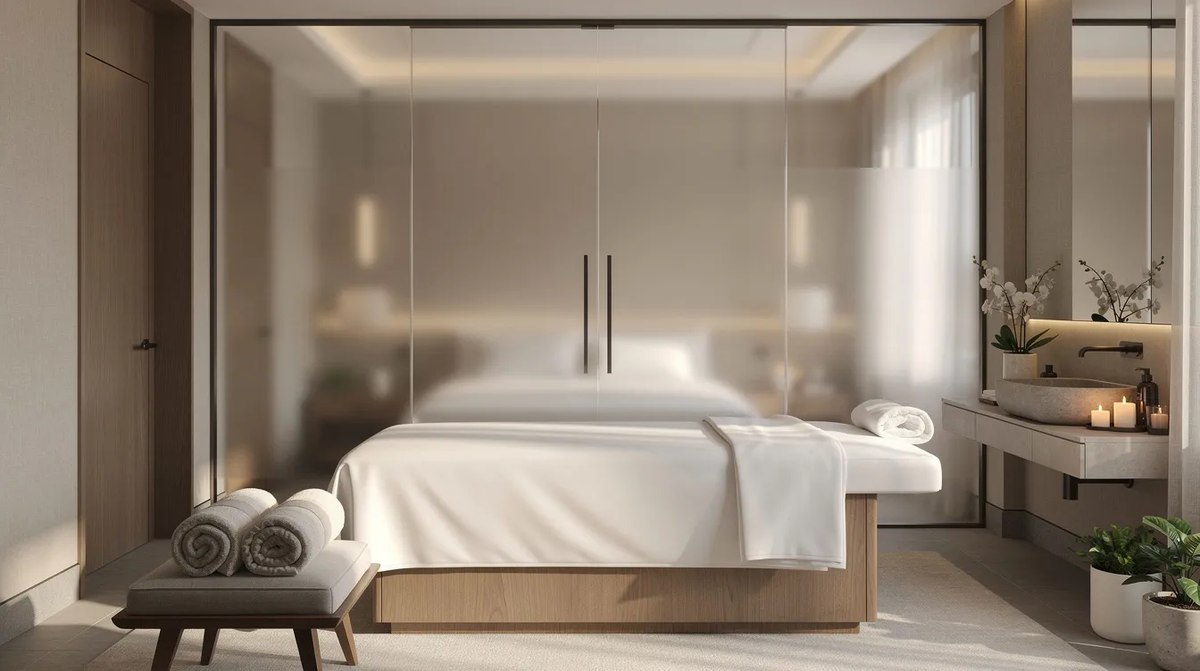
- Hospitality: Hotel bathrooms, spa treatment rooms, lobby partitions, and VIP areas where instant privacy enhances the guest experience.
- Retail & showrooms: Display windows that alternate between transparent merchandising and frosted projection screens using smart tint, leveraging switchable smart glass film for flexible branding and privacy.
- Education & government: Classrooms, internal offices, and briefing rooms that need switchable privacy without blinds or permanent walls.
Types of Switchable Film & Feature Options
Not all smart films are identical. Before you order, understand the main variations:
| Type | Best For | Key Feature |
|---|---|---|
| Standard PDLC smart film | Most privacy applications | White/frosted when off, clear when on |
| Self adhesive switchable film | Retrofitting existing glass | Peel-and-stick adhesive peel backing |
| Non-adhesive (lamination) film | New-build projects | Laminated inside glass during fabrication |
| Color-tinted smart film | Mild solar control + privacy | Grey or other color options |
| Dimmable/gradient control | Variable opacity needs | Partial opacity via dimmer, not just on/off |
| Custom shape and size | Unique openings | Factory-cut edges; curved glass has limits |
| Transitional film adapts to sunlight automatically, providing a hands-off option depending on your project needs. Choose your film type based on whether you are retrofitting existing glass or ordering new smart glass panels. Confirm final measurements and preferred wire locations before placing your order. |
Switchable Film vs Smart Glass vs Traditional Window Treatments
How does switchable film stack up against replacing glass entirely or sticking with blinds?
- Film vs smart glass: Smart glass integrates PDLC between glass layers during manufacturing, while film is applied to existing glass. Film is faster to ship and install, and typically costs $25–$80 per square foot versus $70–$150+ for smart glass. Smart glass may offer longer warranties (15–25 years vs. 8–12 years for film).
- Cost comparison: Film saves customers roughly 40–60% over replacing entire glazed units, making it the clear winner for renovations and budget-conscious projects.
- Film vs blinds and curtains: No dust-collecting fabric, no bulky hardware, easier to clean, and a far more modern look. Film provides a private, hygienic surface that suits healthcare and office environments.
- Solar performance: Both products block over 98% of UV rays, but neither is a complete substitute for dedicated solar-control films in extreme climates.
- When to choose which: Prefer film for retrofit, smart glass for new construction, and traditional shades only when budget is extremely tight or the window sees zero sun exposure.
Installation: Self Adhesive Smart Film on Existing Glass
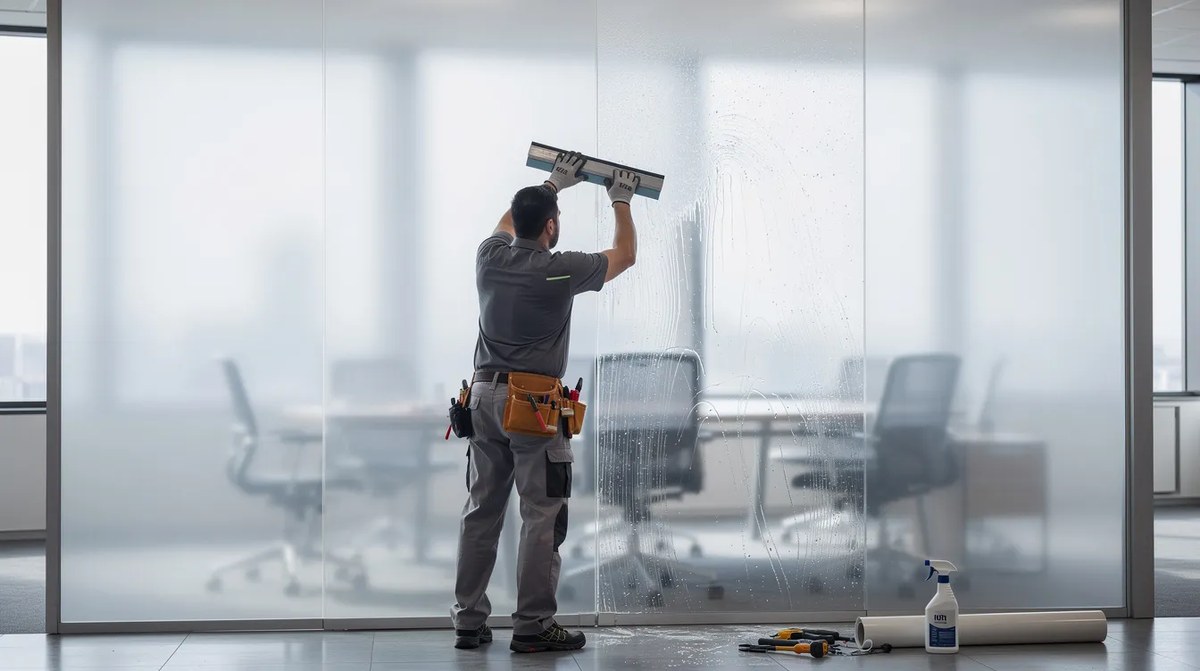
Self adhesive smart film is designed as a retrofit solution that can be professionally installed in hours, not days. Smart film installation is similar to applying a screen protector-just on a larger scale. Self-adhesive smart film applies to any glass surface easily, and smart film can be installed without professional help on smaller panes.
- Site assessment – Verify glass type, measure visible area precisely, and plan preferred wire locations before you send your order. Drawings help confirm dimensions.
- Surface preparation – Clean and degrease the glass surface completely. Remove stickers, silicone, and dust. Any debris will cause bubbles or adhesion failure.
- Application – Peel a small section of the adhesive peel liner, align at the top, and gradually apply with a squeegee to avoid air pockets. Installation requires a tolerance of 1/8″ on all sides to trim properly.
- Electrical connection – Route low-voltage wires from the busbars to a transformer or control box. Keep cables discreet along the frame edges.
- Control integration – Connect to a wall switch, remote, or smart home system for auto control.
- Timelines – Installation can be completed within 2 business days after approval for a standard office partition or meeting room wall.
For larger projects or curved doors, professional install is recommended to ensure clean edges and reliable performance. Contact us to refer your project for guidance on stock availability and deposit requirements.
Design Ideas & Use Cases for Switchable Privacy
Smart film is not just functional-it can be a design feature that transforms any space.
- Open-plan offices: Glass meeting rooms stay clear during the day, then switch to private for confidential calls. Users can qualify rooms by number or schedule.
- Modern bathrooms: Apply film to shower glass and exterior bathroom windows. Watch the room stay bright while keeping it completely private.
- Projection screens: Switchable film serves as a projection screen when in frosted mode-perfect for boardroom presentations or retail digital signage.
- Medical and dental clinics: Glass partitions provide open, bright spaces that become private during consultations or procedures.
- Luxury residential interiors: Master suites, walk-in closets with glass fronts, and dividing doors between rooms all benefit from switchable privacy.
- Security and sensitive areas: Law firms, finance offices, schools, and control rooms use film for intermittent visual shielding when powered on or off depending on the application, often pairing it with security window films or even ballistic-resistant glazing solutions where higher levels of protection are required.
Maintenance, Durability & Safety
Well-made smart film systems are designed for daily use over many years when the material is properly applied.
- Durability: Quality PDLC film lasts 8–12 years indoors under normal conditions. Performance remains stable when operated within rated voltage.
- Cleaning: Use non-abrasive glass cleaners and soft cloths. Avoid sharp tools or harsh solvents on the film surface.
- Edge and busbar protection: Keep electrical edges protected from moisture and impact. This is especially important in frameless glazing or high-traffic areas.
- Safety: Low-voltage operation (powered through a transformer) meets common safety standards when installed per manufacturer instructions.
- Environmental conditions: Operating temperature typically ranges from −20°C to +65°C. High-humidity areas like showers require sealed edges and proper adhesive selection.
- Warranty expectations: Look for clear warranty terms covering film performance, adhesion, transparency, and electronics. Cancel if a supplier won’t provide written coverage.
Frequently Asked Questions About Switchable Film
Can switchable film be cut to any size? Films must be factory-cut to precise final measurements. Field-trimming risks damaging busbars and laminates, so it’s best to provide accurate drawings and confirm dimensions before production.
What happens to privacy if the power goes out? Most products default to the opaque state (frosted/private) when power is lost. Always confirm with the manufacturer, as some designs default to clear.
Is smart film suitable for exterior windows? Standard guidance is to apply film to the interior side of existing windows. Direct weather exposure can degrade adhesives and edges over time.
How much power does smart film use? Approximately 3–7 watts per square meter when turned on. Off-state power draw is negligible.
Can I install switchable film on double-glazed units? Yes. Film is typically applied to the interior face of the unit. Thermal considerations at edges should be reviewed with your supplier.
Is smart film dimmable or only on/off? Both options exist. Basic systems provide simple on/off. More advanced controllers allow partial opacity and gradient control for more comments on flexibility.
What is the difference between smart film, smart glass, and smart tint? Smart film is a retrofit adhesive layer applied to existing glass. Smart glass is a factory-manufactured panel with PDLC embedded between glass layers. Smart tint often refers to the same PDLC-based concept. All provide similar switchable privacy when PDLC-based. Videos from manufacturers can help you watch the differences in action.
Why Choose Us for Your Smart Film Project
We bring hands-on expertise with PDLC smart film projects across residential, commercial, and healthcare environments in Canada and beyond. Our end-to-end support covers initial consultation, final measurements, fabrication, and installation-so every project ships on schedule.
We use high-quality self adhesive materials and reliable control hardware built for everyday switching. Our customers benefit from transparent pricing, clear timelines, and dedicated project management for custom-sized glass panels. From office partitions to clinic privacy walls, we’ve delivered results that our clients prefer to refer others to.
Ready to see if switchable film is the right fit? Send us your project details for a tailored quote, sample review, or on-site assessment.
Conclusion: Is Switchable Film Right for Your Space?
Switchable film delivers instant privacy, a modern aesthetic, and complete smart glass benefits without replacing existing glass. If you need flexible privacy, a clean minimalist look, and a retrofit-friendly installation that won’t disrupt your schedule, this is the solution worth exploring.
Think about where switchable privacy would make the biggest impact in your home or office-a conference room, a bathroom window, a storefront. Then contact us for professional guidance from first idea through installation. Your space is one switch away from a total upgrade.