Table of Contents
- Introduction to Solar Film Technology
- Understanding Solar Film Fundamentals
- Types and Technologies of Solar Films
- Installation Process and Performance Metrics
- Common Challenges and Solutions
- Conclusion and Next Steps
- Frequently Asked Questions
Introduction to Solar Film Technology
Solar film is a thin, multilayered polyester laminate applied to glass surfaces that blocks up to 79% of solar heat and 99% of harmful UV rays, making it one of the most cost effective retrofit solutions for reducing cooling costs and protecting interiors in both residential and commercial buildings.
This guide covers solar window film applications for homes and commercial buildings, including technology types, installation processes, performance metrics, and practical selection guidance. Automotive window tinting falls outside this scope. Whether you’re a homeowner dealing with hot summer rooms or a building manager seeking energy efficiency improvements, this content addresses your core concerns: reducing heat gain, lowering energy costs, preventing interior fading, and improving indoor comfort without replacing existing windows. The combination of comfort and energy efficiency makes solar film a popular choice for both commercial buildings and the modern house.
Solar film works by filtering the solar spectrum—reflecting and absorbing infrared radiation while allowing visible light through—to provide energy savings of 30-60% on cooling costs in hot climates while maintaining natural daylight and protecting furnishings from sun damage.
By reading this guide, you will understand:
- How different solar film technologies control heat, UV rays, and glare
- Which film type suits your specific windows, climate, and aesthetic requirements
- What performance metrics matter when comparing products
- How professional installation affects long-term performance
- What energy savings and comfort improvements you can realistically expect

Understanding Solar Film Fundamentals
Solar window film represents advanced technology in window treatments, offering a practical retrofit solution that transforms existing glass into high-performance glazing without the expense of full window replacement. Modern solar window tinting films for residential and commercial buildings further enhance this value by reducing glare, solar heat gain, and UV radiation while preserving views.
The relationship between solar energy, heat gain, and building efficiency drives the entire value proposition of window film. When sunlight strikes untreated glass, approximately 3% arrives as UV radiation, 44% as visible light, and 53% as infrared energy. Without intervention, most of this total solar energy passes through, raising interior temperatures, straining air conditioning systems, causing interior fading, and increasing energy use throughout cooling season. Installing solar film can help reduce energy consumption while supporting efforts to lower carbon emissions.
How Solar Film Controls Solar Energy
Solar film controls energy through three mechanisms: reflection, absorption, and transmission. The film’s coatings bounce infrared radiation back toward the exterior, absorb portions of the solar spectrum within the film structure, and selectively allow visible light to pass through to maintain room brightness.
Metalized coatings use thin metallic layers (silver, chromium, or nickel-chromium) to reflect solar heat away from the glass surface before it enters the building. Ceramic coatings employ nano-ceramic particles—metal oxides like titanium dioxide or indium tin oxide—that absorb infrared energy and dissipate it, achieving excellent heat rejection without metallic reflectivity or signal interference.
This selective filtering delivers the core benefits homeowners and building managers seek: reduced heat gain during summer, lower cooling costs, protection from harmful UV rays that cause skin damage and material degradation, and enhanced comfort through glare reduction. Advanced spectrally selective films can reject over 90% of infrared radiation while maintaining 50-70% visible light transmission, proving that heat reduction and natural daylight aren’t mutually exclusive.
Solar Film vs. Traditional Window Solutions
Traditional window solutions—tinted glass, low E glass, blinds, curtains, and shades—each address aspects of solar control but present significant limitations compared to solar window film.
Tinted glass requires manufacturing changes and cannot retrofit existing windows. Low E glass windows offer excellent performance but cost 5-10 times more than film when factoring replacement labor. Blinds and curtains block light and provide privacy but do nothing to stop heat already transmitted through glass; they also require active management and occupants frequently leave them open.
Solar window film delivers a highly effective middle ground: it applies directly to existing glass, costs a fraction of window replacement, works continuously without occupant intervention, and offers customizable characteristics matching specific needs for heat rejection, visible light transmission, and aesthetics. For buildings where window replacement proves impractical or budget-prohibitive, film applied to current glazing provides immediate performance improvements with typical payback periods of 2-5 years. For many property owners evaluating whether solar window film worth the investment, these long-term savings and performance benefits provide a compelling answer.
Understanding these fundamentals prepares you to evaluate the specific film technologies available and select the appropriate solution for your windows.
Types and Technologies of Solar Films
Building on the reflection, absorption, and transmission principles covered above, modern solar film technology has evolved into distinct categories, each optimized for different performance priorities, appearance requirements, and budget considerations.
The three primary technologies—ceramic, metalized, and spectrally selective films—represent different engineering approaches to controlling solar heat while balancing factors like visible light transmission, exterior appearance, signal interference, and cost. Most films block over 99% of UV rays regardless of technology type, making UV protection a baseline rather than a differentiator.
Ceramic Solar Films
Ceramic solar films use nano-ceramic particles embedded in or coated onto polyester layers to achieve exceptional heat rejection without metallic components. These films absorb infrared radiation and re-radiate or dissipate it while allowing high levels of visible light through the glass.
The clarity benefits set ceramic films apart: they produce minimal color shift, maintain natural views through windows, and create virtually no exterior reflectivity or “mirror effect.” Signal transparency matters for modern buildings—ceramic films won’t interfere with cell phones, Wi-Fi, GPS, or building communication systems that metallic films can disrupt.
Ceramic technology suits residential applications where homeowners want heat reduction without darkening rooms, and premium commercial installations where aesthetics and communication requirements preclude reflective films. Performance typically reaches 60-80% total solar energy rejected (TSER) with infrared rejection exceeding 90% in premium products, especially in advanced ceramic window films engineered for superior solar control and clarity. This makes ceramic films particularly suitable for projects where maintaining natural light is important.
Metalized Reflective Films
Metalized films incorporate thin metallic layers—applied through sputtering or evaporation processes—that reflect infrared radiation away from the building exterior. This technology delivers among the highest heat rejection values available, with some films achieving TSER values of 75-85%.
The reflective appearance creates a mirror-like exterior that provides privacy during daylight hours while blocking substantial solar heat. For commercial buildings with expansive glass facades where appearance flexibility exists and maximum heat reduction drives decisions, metalized films offer cost-effective performance per percentage of energy rejected.
Trade-offs include visible exterior reflectivity that may conflict with aesthetic requirements or local regulations, potential interference with radio frequency signals, and generally lower visible light transmission than ceramic alternatives.
Metalized films work well for commercial buildings prioritizing performance over appearance, warehouses, industrial facilities, and situations where the reflective exterior actually enhances the desired aesthetic.

Spectrally Selective Films
Spectrally selective films represent the most advanced technology, engineered specifically to block infrared radiation while maximizing visible light transmission. These films leverage combinations of ceramic, dielectric, and specialized coatings to reject heat without the darkness associated with traditional tinted films.
For spaces requiring natural light—offices, retail stores, museums, residential living areas—spectrally selective technology delivers the optimal balance. A VLT 70% spectrally selective film might achieve 46% TSER while keeping rooms bright; a VLT 34% version can reach 72% TSER with corresponding reductions in glare for workspaces where computer screens dominate. In some projects, adaptive transitional window films that automatically darken in response to sunlight provide an additional way to balance comfort, privacy, and daylight.
The key distinction: spectrally selective films break the traditional trade-off between heat rejection and room brightness. Where conventional films require accepting darker interiors for better heat control, spectrally selective technology maintains environment quality while still achieving meaningful energy savings and comfort improvements.
| Film Type | Heat Rejection (TSER) | UV Blocking | Visible Light Transmission | Best Applications |
|---|---|---|---|---|
| Ceramic | 60-80% | 99%+ | 30-70% | Premium residential, signal-sensitive commercial |
| Metalized Reflective | 75-85% | 99%+ | 10-30% | Commercial facades, industrial, privacy needs |
| Spectrally Selective | 50-75% | 99%+ | 50-70% | Offices, retail, spaces requiring daylight |
| With these technology options understood, professional installation becomes the critical factor in achieving the measured performance these films can deliver. |
Installation Process and Performance Metrics
Professional installation determines whether solar film achieves its rated performance or develops problems that compromise both function and appearance. While DIY kits exist, the precision required for proper surface preparation, film application, and curing makes professional installation the recommended approach for quality results and warranty protection.
Understanding installation processes helps you evaluate installer competence and set appropriate expectations for project timelines and outcomes. Professional providers such as window film installation specialists typically follow a structured process from on-site assessment through final inspection. Performance metrics provide the vocabulary to compare products objectively and match film specifications to your building’s requirements.
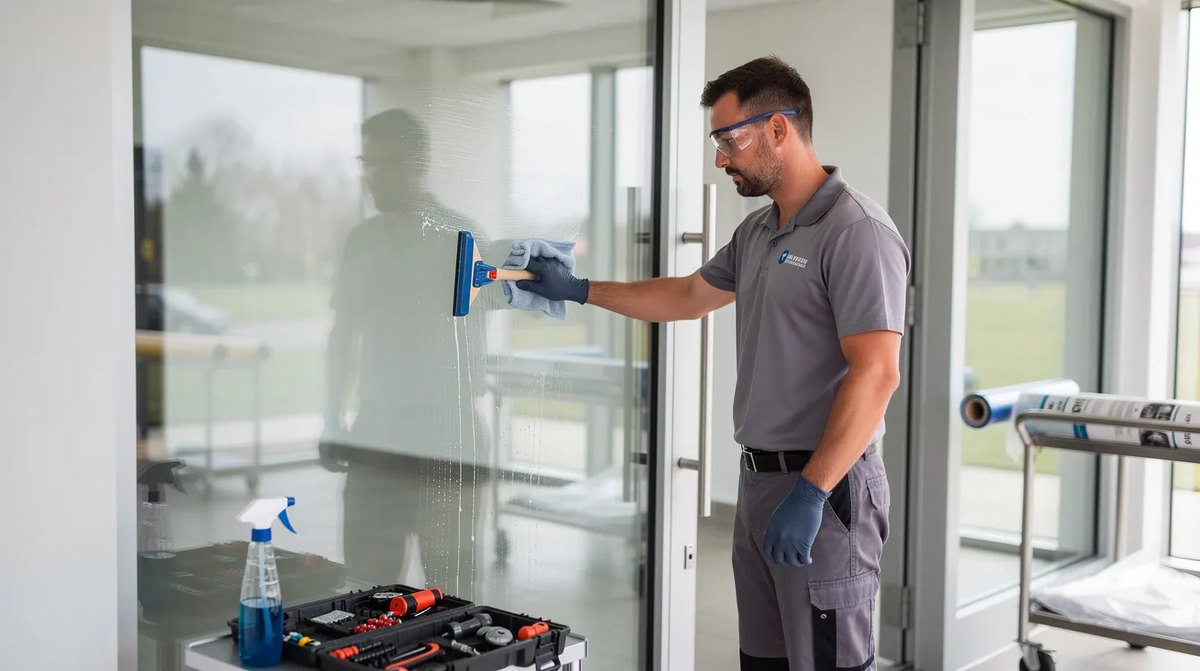
Professional Installation Process
Professional installation begins with site assessment and specification: the installer evaluates existing glazing type (single pane, double pane windows, low E glass), window orientation, shading conditions, and your priorities for heat reduction, glare reduction, and aesthetics.
- Surface preparation: Thorough glass surface cleaning using razor blades and specialized solutions to remove all dust, residue, and contaminants. Any imperfections cause adhesion failures or bubbles that compromise both appearance and performance.
- Film measurement and cutting: Precise cutting to window size with small overhangs for final trimming. Professional tools ensure clean edges and minimize waste.
- Mounting solution application: Installers apply a slippery mounting solution between film and glass, allowing positioning before final adhesion. This step requires controlled conditions—temperature, humidity, and cleanliness all affect results.
- Squeegee application: Systematic squeegee work pushes out mounting solution and air bubbles from center to edges. Proper technique prevents trapped air pockets and ensures complete adhesion across the glass surface.
- Edge sealing and trimming: Final trimming removes excess material while ensuring edges seal properly against the frame. Poor edge work leads to peeling and moisture intrusion.
- Curing period: Films require days to weeks for adhesives to fully set and mounting solution to evaporate completely. Performance and appearance reach optimal levels only after complete curing; installers should specify this timeline and any interim care requirements.
Performance Comparison Table
Comparing solar film products requires understanding standardized metrics that measure actual performance rather than marketing claims. The following table synthesizes typical performance ranges across film categories:
| Performance Metric | Ceramic Films | Metalized Reflective | Spectrally Selective |
|---|---|---|---|
| Total Solar Energy Rejected (TSER) | 60-80% | 75-85% | 50-75% |
| Infrared Rejection (IRR) | 85-95% | 80-90% | 80-95% |
| UV Blocking | 99%+ | 99%+ | 99%+ |
| Visible Light Transmission | 30-70% | 10-30% | 50-70% |
| Exterior Reflectance | Low (5-15%) | High (30-50%) | Low-Medium (10-20%) |
| Signal Interference | None | Possible | None-Minimal |
| When evaluating products, prioritize TSER over single-metric claims like “peak infrared rejection.” Some manufacturers quote IRR at a single favorable wavelength rather than across the full infrared band—this misrepresents real-world heat reduction. Request complete performance data for the film/glass combination you’re considering, and confirm whether values represent laboratory measurements or installed performance on glass similar to yours. |
For hot climates where cooling costs dominate, prioritize high TSER and strong IRR. Meanwhile, mixed climates with significant winter heating needs, consider films with low emissivity properties that also reduce heat loss through windows during cold months. For spaces where maintaining indoor temperature while preserving daylight matters most, spectrally selective films with high VLT and moderate TSER deliver the best balance.
Common Challenges and Solutions
Even properly selected and installed solar film can encounter issues. Understanding potential problems helps you prevent them through proper planning and recognize when professional intervention is needed.
Bubbling and Adhesion Problems
Bubbles forming under film indicate trapped air, moisture, or contamination between film and glass surface. Small bubbles sometimes appear during the curing period and disappear as mounting solution evaporates—this is normal for the first few weeks after installation.
Persistent bubbles after curing indicate installation problems: inadequate surface cleaning, rushed squeegee work, improper mounting solution application, or installation in unsuitable conditions (extreme temperatures, high humidity, dusty environment). Prevention requires thorough preparation, quality materials, controlled conditions, and experienced installers who allow proper curing time. If bubbles persist beyond the curing period, professional reinstallation may be necessary.
Window Thermal Stress and Glass Breakage
When solar film absorbs and reflects solar energy, it can create temperature differences across the glass—particularly between shaded and sun-exposed portions of the same pane. This thermal stress can cause cracking in certain glass types, especially single-pane, annealed, or already-stressed glass.
Mitigation requires pre-installation assessment: identify glass type and condition, evaluate exposure patterns throughout the day, and select appropriate film characteristics. Tempered or heat-strengthened glass tolerates thermal stress far better than standard annealed glass. Professional installers assess glass suitability before recommending specific architectural window films—this assessment protects both your windows and their warranty.
Reduced Natural Light Concerns
The concern that solar film will make rooms too dark reflects a legitimate trade-off in traditional films: higher heat rejection typically meant lower visible light transmission and darker interiors.
Spectrally selective films specifically address this concern. With VLT options ranging from 50% to 70% while still achieving meaningful heat rejection, these films maintain bright, naturally-lit spaces. For rooms where preserving daylight is paramount, professional consultation identifies products balancing heat reduction with your lighting requirements. Studies show that even 50% visible light reduction can work effectively when integrated with appropriate artificial lighting design—the difference in indoor comfort often exceeds expectations despite measured light reduction.
Conclusion and Next Steps
Solar window film delivers measurable benefits: energy savings of 30-60% on cooling costs in hot climates, 99%+ UV protection preventing interior fading and skin exposure, meaningful glare reduction improving visual comfort, and enhanced indoor temperature stability—all without the cost or disruption of window replacement. These benefits combine comfort and energy efficiency in a single upgrade that can help reduce energy use throughout the year.
Choosing the right film requires matching technology to your specific situation: ceramic for signal-sensitive environments requiring clarity, metalized for maximum heat rejection where appearance flexibility exists, spectrally selective for spaces demanding both daylight and heat control. Professional installation ensures these products perform to their rated specifications.
Immediate action steps:
- Conduct an energy audit identifying problem windows—which rooms overheat, which orientations receive intense sun exposure, where glare creates eye strain or discomfort
- Request professional consultation from certified installers who will assess your glass types, recommend appropriate films, and explain trade-offs honestly
- Obtain detailed quotes comparing film types, installed costs, and warranty terms—request specific TSER, VLT, and IRR data for proposed products on your glass type
- Schedule installation during appropriate weather conditions with sufficient curing time before extreme temperature seasons
Related topics worth exploring include complete window replacement for severely outdated glazing, HVAC efficiency improvements that compound the savings from reduced heat gain, and building weatherization strategies addressing insulation, air sealing, and other envelope components. Security considerations also play a role, with security window films helping to deter forced entry and mitigate hazards from broken glass. Solar film often serves as one highly effective element in comprehensive building performance improvements.
Frequently Asked Questions
How long does solar film last on windows?
Quality architectural solar films typically last 10-20 years under normal exposure conditions. Premium ceramic and spectrally selective films often carry manufacturer warranties of 10-15 years covering defects, peeling, bubbling, and significant performance degradation. UV blocking functionality is sometimes warranted for the life of the installation. Actual longevity depends on climate intensity, sun exposure, installation quality, and maintenance practices.
Can solar film be applied to double pane windows?
Homeowners in specific regions, such as those working with residential window tinting specialists in Tucson, often have unique double pane configurations and climate considerations that influence film selection.
Yes, solar film installs successfully on double pane windows and generally poses lower thermal stress concerns than single-pane applications. Research comparing placement shows that film applied to the exterior surface of insulated glazing units can reduce cooling load more effectively than interior application. In one commercial study, exterior placement reduced the solar heat gain coefficient by up to 44%. Interior placement achieved a 22% reduction. However, exterior installation faces greater weathering challenges. Consult with professional installers about optimal placement for your specific glazing.
Will solar film void my window warranty?
Local providers like CoolVu of Tucson residential window tinting typically review manufacturer guidelines with you and specify compatible films to preserve warranty protections where possible.
This depends on your window manufacturer’s policies and glass type. Some manufacturers explicitly void warranties when aftermarket films are applied; others permit approved films installed by certified professionals. Tempered and heat-strengthened glass generally tolerates film better than standard annealed glass. Before installation, review your window warranty documentation and potentially contact the manufacturer to confirm compatibility requirements.
How much can I save on energy costs with solar film?
Regional climate significantly affects savings potential; for example, clients working with window tinting services in West Los Angeles face different solar exposure patterns than those in cooler markets.
Savings vary significantly based on climate, window orientation, existing glass performance, and building characteristics. Research across multiple climates shows cooling energy savings of 44-56% for windows receiving direct solar exposure, with overall building cooling load reductions of 25-35% in hot climates. Payback periods typically range from 2-5 years for commercial installations. One Houston office tower achieved return on investment under 24 months after installing solar film on over 12,000 square feet of glass.
Can I install solar film myself or do I need a professional?
DIY installation kits exist and can work for small, simple applications. However, professional installation delivers better results for several reasons. Proper surface preparation requires experience and specialized tools. Application technique directly affects bubble formation and edge adhesion. Professionals identify glass compatibility issues before problems occur. And warranties often require certified installation. For premium films and critical applications, professional installation protects your investment.
Does solar film work in winter to reduce heat loss?
In addition to static low-E products, emerging technologies like smart window films that switch between opaque and clear states can support seasonal comfort strategies when integrated thoughtfully into the building envelope.
Certain solar films—particularly those with low-emissivity properties—reduce winter heat loss by reflecting interior heat back into the room. Some products reduce thermal transmittance through glass by up to 41%, providing meaningful insulation benefits during cold months. However, films that block substantial solar heat gain also reduce free warming from winter sunlight. For mixed climates with significant heating seasons, select films balancing summer cooling benefits against winter solar gain reduction. Low-E spectrally selective films often provide the optimal year-round performance.
Will solar film make my rooms too dark?
Only if you select a film with low visible light transmission. Spectrally selective films specifically address this concern, achieving meaningful heat rejection (50-75% TSER) while maintaining 50-70% visible light transmission. These films break the traditional trade-off between heat control and room brightness. For applications where preserving natural light is essential, specify VLT requirements upfront. And work with installers to identify products meeting both heat rejection and daylighting goals.
How do I clean windows with solar film?
Use mild, non-ammonia cleaning solutions with soft cloths or squeegees. Avoid abrasive tools, high-pressure cleaning, or harsh chemicals that can damage film edges or coatings. Wait until the curing period completes before first cleaning—typically 30 days after installation. Clean carefully around edges without applying significant pressure. Most film manufacturers provide specific cleaning product recommendations; following these guidelines helps maintain appearance and extends film life.