Table of Contents
- Commercial Window Tinting Essentials
- Understanding Commercial Window Tinting
- Benefits of Professional Commercial Window Tinting
- Finding Quality Commercial Window Tinting Services
- Common Challenges and Solutions
- Conclusion and Next Steps
- Frequently Asked Questions
Commercial Window Tinting Essentials
Commercial window tinting provides businesses with significant energy savings, UV protection, enhanced security, and improved occupant comfort by reducing glare and heat. When searching for commercial window tinting near me, business owners and facility managers need local professionals who understand commercial-grade materials, building codes, and the logistical demands of non-residential installations.
This guide covers everything you need to evaluate commercial window tinting services in your area—from understanding film types and professional installation requirements to vetting contractors and managing project challenges. The content is designed for business owners, facility managers, and property developers seeking window film solutions for office buildings, retail spaces, and commercial properties.
Direct answer: Quality commercial window tinting services near you should offer certified installation, premium commercial-grade films with 10-15 year warranties, and documented experience with projects similar to yours. Expect costs ranging from $7-$25 per square foot depending on film type, with ROI typically achieved within 2-5 years through energy savings.
Key outcomes from this guide:
- Understand the different types of commercial window films and their specific applications
- Learn professional installation requirements and compliance standards
- Know what to look for when vetting local window tinting companies
- Set accurate cost expectations and timeline requirements
- Navigate common project challenges with practical solutions

Understanding Commercial Window Tinting
Commercial window tinting refers to the professional application of specialty films to glass surfaces in non-residential buildings, including office spaces, retail storefronts, industrial facilities, and institutional properties. Unlike residential applications, commercial window film projects typically involve larger glass surfaces, stricter code compliance requirements, and more complex installation logistics.
Businesses invest in professional window film installation for measurable returns: reduced energy costs, enhanced security, improved occupant comfort, and protection of interior assets from harmful UV rays. Specialization in commercial projects is essential as commercial applications often involve larger panes and different installation techniques than residential or automotive jobs. Protection from uv radiation is also a major consideration for many businesses.
Types of Commercial Window Films
Solar control films are designed to block heat and solar energy, reducing reliance on HVAC systems. These advanced solar window films can reject up to 79% of solar energy, decreasing heat gain and improving building efficiency. Energy-efficient films can block up to 99% of UV rays, which helps maintain comfortable indoor temperatures and reduces reliance on air conditioning. Solar films typically range from $7-$12 per square foot installed.
Security window film enhances glass strength, making it more resistant to breakage and reducing the risk of injury from shattered glass. Security window films can deter break-ins and vandalism by holding shattered glass in place, which helps prevent unauthorized entry and reduces the risk of injury. Armorcoat safety and security films are designed to protect against break-ins, accidents, and natural disasters by reinforcing glass doors and windows. Security film costs range from $12-$25+ per square foot depending on thickness and protection level.
Decorative films serve dual purposes of privacy and aesthetic enhancement. Decorative window films offer a wide variety of colors, frosts, and designer options that can transform the appearance of glass surfaces in commercial spaces. These films can be cut to custom shapes and designs, allowing for unique branding and aesthetic enhancements in commercial environments. Decorative films can feature custom logos and patterns to enhance a building’s professional image. Frosted privacy window films can provide a stylish solution for privacy in commercial spaces, creating an opaque appearance without sacrificing natural light. In some settings, they can provide complete privacy while maintaining a professional appearance.
Additional commercial film types include architectural window films such as anti-graffiti window films for protecting storefronts in urban areas, low-emissivity (Low-E) films that provide year-round benefits by reflecting heat back into the building during winter and blocking solar heat in summer, and graphic films for custom branding applications. These products can also work alongside interior shades for additional light control.
Professional Installation Requirements
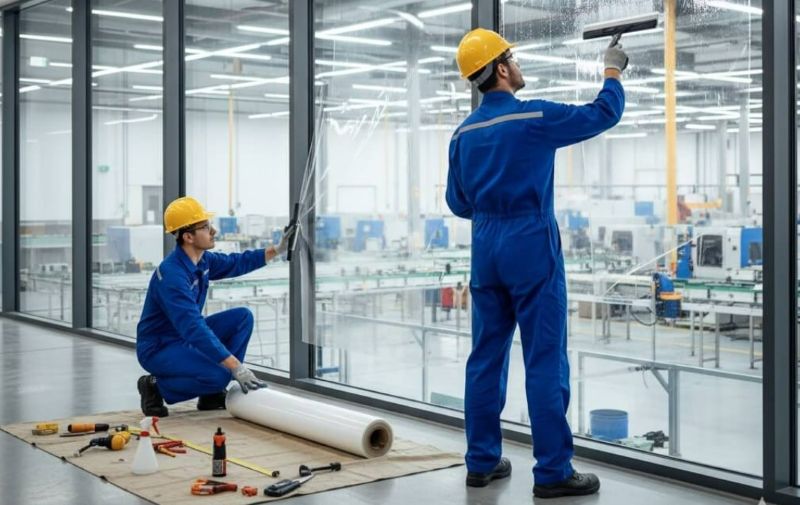
Commercial-grade materials differ substantially from standard residential options. Commercial window film uses thicker construction, more durable adhesives, and protective hard coatings designed for the demands of commercial buildings. Premium films often include non-metallic or ceramic layers to avoid signal interference while maximizing heat rejection. This added layer of window protection contributes to long-term performance.
Building codes and regulations dictate permitted window reflectivity and light transmission percentages. Different regions have strict rules on reflectivity to prevent glare hazards for drivers and neighboring buildings. Installations may need to comply with energy codes such as ASHRAE 90.1 or local IECC requirements, particularly when altering fenestration performance characteristics like SHGC (Solar Heat Gain Coefficient) and U-factor.
Warranty requirements for commercial applications typically run 6-15 years depending on film type and manufacturer. Premium brands often guarantee 10-15 years of performance when films are installed by authorized dealers following manufacturer specifications. These warranties typically cover material defects, peeling, cracking, and performance degradation.
Understanding these requirements prepares you to evaluate the tangible benefits professional commercial window tinting delivers to your business.
Benefits of Professional Commercial Window Tinting
With a clear understanding of film types and installation standards, businesses can now assess the specific advantages professional window tinting brings to their operations, building efficiency, and bottom line.
Energy Efficiency and Cost Savings
Commercial window tinting can lower cooling costs by as much as 30%. Commercial window films can significantly reduce solar heat gain, leading to lower energy costs for heating and cooling systems. By blocking solar heat before it enters the building, films reduces heat and reduce the load on HVAC systems, translating directly to lower energy bills and helping businesses save money.
Businesses that install window films often experience measurable savings in both cooling and lighting energy costs, contributing to overall energy efficiency. ROI calculations typically show payback periods of 2-5 years for buildings with significant sun exposure, particularly those with west or south-facing windows. This is especially relevant for office buildings where maintaining consistent temperatures reduces hot spots and improves occupant comfort.
Window film installations can contribute to LEED certification points and support green building initiatives. Some installations qualify for utility rebates and tax incentives, including potential IRS Section 179D deductions for commercial energy improvements.
Security and Safety Enhancement
Safety and security window films enhance glass strength, making it more resistant to breakage and reducing the risk of injury from shattered glass. While bulletproof window film is a commonly used term, these products are generally designed to hold broken glass together and delay entry rather than provide true ballistic protection. This protection extends beyond forced entry attempts to include protection during natural disasters and accidents and can be combined with ballistic-resistant window film systems in high-risk facilities. An extra layer of protection can be valuable in sensitive environments.
Window films can block up to 99% of harmful UV rays, protecting interiors from fading and damage caused by sunlight. UV protection window films provide essential protection for commercial interiors, helping to maintain the vibrancy of furnishings and decor by reducing sun damage. Using UV protection films in commercial settings can significantly reduce the risk of skin damage from UV exposure while also preserving the aesthetic quality of interior spaces.
Window films can enhance privacy in commercial settings by allowing occupants to see outside while preventing outsiders from seeing in, thus maintaining confidentiality and discretion. Smart window films and one-way privacy films are designed to obscure the view from outside while still allowing natural light to enter, making them ideal for offices and conference rooms. This protection from prying eyes is particularly valuable for conference rooms and executive spaces handling sensitive information and can further increase privacy in key areas.
Professional Appearance and Branding
Professional window tinting creates a uniform building’s appearance across all glass surfaces, improving curb appeal and projecting a polished corporate image. Films eliminate the patchwork look that occurs when different window treatments are used throughout a building. They can also complement existing architectural finishes throughout the property.
Decorative films can be applied quickly, allowing businesses to update their interior design without the need for extensive renovations or costly replacements. Custom graphics, logos, and patterns can be incorporated into film designs for whiteout film effects or switchable smart glass finishes that support branded architectural treatments.
Advanced window films also reduce glare on computer screens and workspaces. Excessive glare can reduce employee productivity by up to 20% due to eye strain and difficulty seeing screens—making glare reduction a significant factor in workplace efficiency.
With these numerous benefits established, finding the right tinting services provider becomes the critical next step.
Finding Quality Commercial Window Tinting Services
Selecting the right contractor for commercial window tinting services determines whether you realize these benefits fully. Professional installation by skilled technicians with commercial experience, such as regional commercial window film specialists, ensures proper application, code compliance, and valid warranty coverage. Expert installation is essential for achieving the expected performance and longevity.
Vetting Local Window Tinting Companies
When evaluating local providers, use this systematic approach:
- Verify commercial licensing and insurance coverage – Request documentation of business licensing, liability insurance, and worker’s compensation. Commercial projects often require proof of adequate coverage before work can begin.
- Check manufacturer certifications and authorized dealer status – Major manufacturers like 3M operate authorized dealer networks with certification levels indicating expertise and scale capabilities. Only authorized dealers can issue full manufacturer warranties; unauthorized installers may void warranty coverage even when using authentic products.
- Review portfolio of completed commercial projects – Request examples of completed projects similar to yours in size and type. Look for experience with office buildings, storefronts, multi-story installations, or whatever matches your specific needs. Before/after energy data and customer references add credibility.
- Obtain multiple detailed quotes with material specifications – Quality quotes should include specific film products (not generic descriptions), TSER ratings, SHGC values, VLT percentages, warranty terms, and installation timeline. Vague quotes often indicate lower-quality materials or inexperienced contractors.

Service Comparison Factors
| Criterion | Quality Contractor | Budget Contractor |
|---|---|---|
| Warranty | 10-15 year comprehensive coverage including material and labor | 1-2 year limited warranty, often material only |
| Materials | Premium commercial-grade films (ceramic, spectrally selective) with documented specifications | Basic residential-quality films with limited technical documentation |
| Installation | Certified technicians with commercial experience, proper equipment for height access | General laborers without specialized training or equipment |
| Code Compliance | Ensures film meets energy and safety glazing codes, obtains necessary permits | May neglect compliance requirements, limited documentation |
| Scheduling | Offers after-hours and weekend options, phased implementation | Standard business hours only, limited flexibility |
| When comparing quotes, the lowest cost-effective option isn’t always cheapest upfront. Factor in warranty coverage, material longevity, and energy savings potential when evaluating total value. |
Understanding these comparison factors helps you anticipate and address the common challenges that arise during commercial window tinting projects.
Common Challenges and Solutions
Even well-planned commercial window tinting projects encounter obstacles. Anticipating these challenges allows for proactive solutions that keep projects on track.
Scheduling Around Business Operations
Large commercial tinting may require working outside normal hours to avoid disruption of tenants and customers. Many contractors offer weekend and after-hours installation options, though this typically adds 10-20% to labor costs.
Solution: Request phased installation that addresses one area or floor at a time, maintaining normal business operations while work progresses. Prioritize customer-facing or high-traffic areas for off-hours work.
Building Management Approval Process
Property managers and building owners often require detailed documentation before approving installations, particularly in leased commercial spaces. Requirements may vary by location and property management policies.
Solution: Prepare a comprehensive documentation package including product technical datasheets (TSER, SHGC, VLT, U-factor specifications), sample visuals showing appearance changes, warranty documents, and projected energy savings calculations. Coordinate early with property management to understand specific requirements and access procedures.
Budget and Timeline Constraints
Full building coverage may exceed initial budget allocations, while permit approvals and material lead times can extend project timelines beyond expectations.
Solution: Prioritize high-impact areas for phased implementation—sun-facing façades with the most significant solar heat gain deliver the fastest energy savings and ROI. Explore utility rebate programs and energy efficiency incentives that offset costs. Build in 2-4 weeks for permit processing and specialty material ordering when establishing project timelines.
Addressing these challenges proactively positions your project for successful completion and long-term value.
Conclusion and Next Steps
Professional commercial window tinting delivers measurable returns through energy savings, enhanced security, UV protection, and improved occupant comfort. Quality installation by certified professionals ensures proper code compliance, valid warranties, and optimal performance from your investment.
Immediate action steps:
- Research local commercial window tinting contractors using manufacturer dealer locators
- Request detailed quotes from 3-4 qualified providers with documented commercial experience
- Compare material specifications, warranty terms, and total project costs
- Schedule site consultations to assess your specific building requirements
- Verify permits and coordinate with building management before installation
For ongoing value, plan for regular maintenance following manufacturer guidelines, document warranty information for future service needs, and consider expansion to additional building windows based on initial results.
Request a free quote from certified local installers to begin evaluating your commercial window film options.
Frequently Asked Questions
How much does commercial window tinting cost per square foot?
Commercial window tinting costs range from $7-$25 per square foot depending on film type and installation complexity. Standard solar films cost $7-$12, ceramic or high-performance films run $12-$18, and security films range $15-$25+. A small retail storefront (500 sq ft of glass) typically costs $3,500-$6,000, while mid-size office spaces (2,000 sq ft) range from $14,000-$24,000.
How long does commercial window film installation take?
Installation time depends on square footage, window accessibility, and building height. Small storefronts (500-1,000 sq ft of glass) typically require 1-2 days. Large multi-story commercial buildings may take several weeks with multiple crews and phased scheduling to minimize business disruption.
What warranty should I expect on commercial window tinting?
Quality commercial window film warranties run 10-15 years from premium manufacturers when window film installed by authorized dealers. Coverage typically includes material defects, peeling, cracking, and performance degradation. Decorative films and exterior applications may have shorter warranty periods of 5-7 years.
Can window tinting be applied to existing commercial buildings?
Yes, retrofitting existing building windows with film is common and often more cost effective than window replacement. A site assessment evaluates existing glass condition, orientation, and compatibility. Some existing windows (low-e glass or sealed units) require specific film types to avoid thermal stress damage.
Do I need permits for commercial window tinting installation?
Many jurisdictions require permits when film installation alters glazing energy performance or safety characteristics. Check local building codes regarding ASHRAE 90.1 or IECC compliance requirements. Your contractor should verify permit requirements and include this in project planning.
How do I maintain commercial window film after installation?
Clean films with non-abrasive materials and appropriate cleaning solutions (check manufacturer specifications—avoid ammonia-based products unless specifically approved). Use soft cloths rather than scrapers or abrasive pads. Perform periodic inspections for peeling, bubbling, or discoloration, and maintain stable interior climate conditions to prevent condensation damage.
What’s the difference between commercial and residential window tinting?
Commercial window tinting involves larger glass areas, stricter building code compliance, and more complex installation logistics requiring specialized equipment for height access. These films typically have 6-15 year warranties with specific conditions, while residential warranties are often lifetime. Commercial projects also require coordination with building management and potentially multiple stakeholders.
How long does commercial window film last?
Quality commercial window film lasts 10-15 years under normal conditions, with some premium films lasting 20+ years when properly maintained and installed. Lifespan depends on sun exposure intensity, climate conditions, film thickness, and adherence to manufacturer maintenance guidelines. Exterior-applied films generally have shorter lifespans than interior applications.