Table of Contents
- What Ballistic Film Does
- Understanding Ballistic Film Fundamentals
- Types and Applications of Ballistic Film
- Installation Methods and Performance Standards
- Common Challenges and Solutions
- Conclusion and Next Steps
- Frequently Asked Questions
What Ballistic Film Does
Ballistic film is a security window film designed to reinforce existing glass, but it does not stop bullets. This distinction is critical for anyone evaluating protection options for commercial buildings, schools, or government facilities.
This guide covers ballistic film installation, applications, performance standards, and realistic limitations. It excludes detailed coverage of ballistic glass systems, which represent a separate category of bullet resistant products requiring different specifications and budgets. The target audience includes security professionals, facility managers, and building owners seeking a cost-effective solution for glass protection without complete window replacement. In Canada, many organizations use ballistic film as part of broader security strategies.
Direct answer: Ballistic film, often referred to as security film or safety film, is a thin layer applied to traditional glass that does not stop bullets but can hold shattered glass together upon impact. It provides forced entry deterrent capabilities and safety protection but cannot replace bullet resistant glass for environments at risk of gun violence.
By reading this guide, you will gain:
- Clear understanding of what ballistic film can and cannot do
- Knowledge of proper applications across different threat scenarios
- Installation requirements and performance standards
- Realistic cost considerations and budget planning
- Guidance on when ballistic film is appropriate versus when you need ballistic glass
Understanding Ballistic Film Fundamentals
Understanding the actual capabilities of ballistic window film versus common misconceptions prevents costly mistakes in security planning. Many building owners discover too late that their protection falls short of expectations because marketing terminology confused them about performance limits.
What Ballistic Film Actually Is
Ballistic film is a heavy-gauge, multi-layered polyester laminate applied to the interior surface of existing glass windows and doors. This security window film ranges in thickness from approximately 4 mils to 14+ mils, with the adhesive bonding process creating a unified barrier across the glass surface.
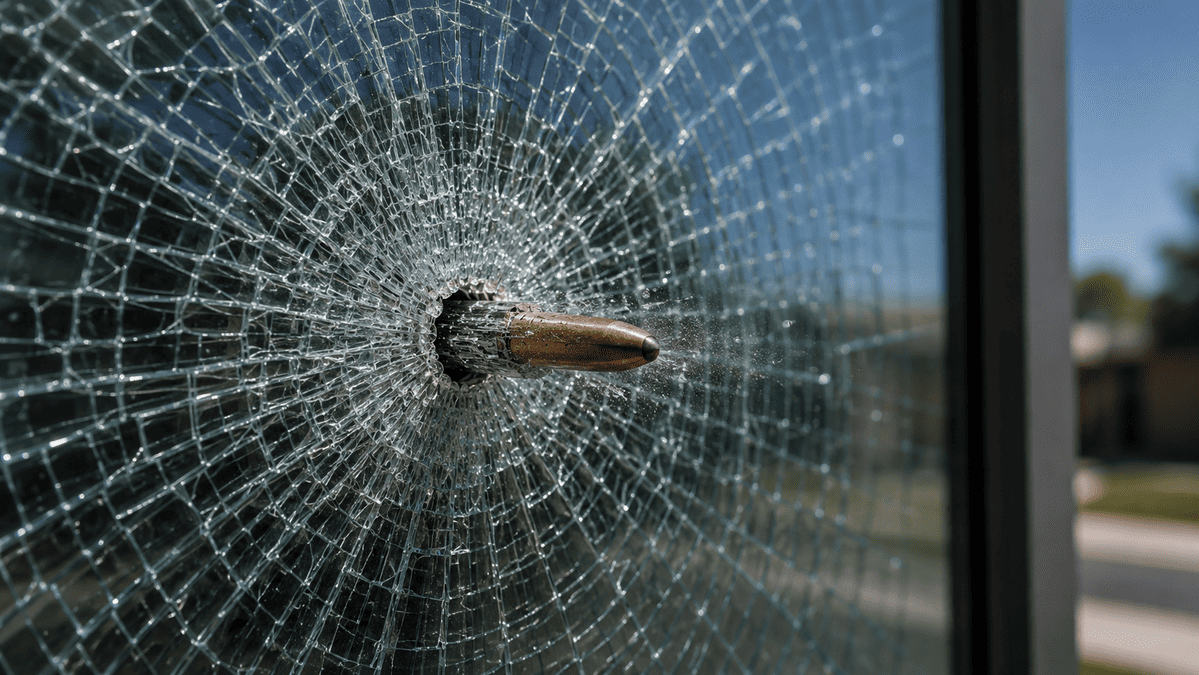
The primary function is glass retention. When properly installed, ballistic film helps hold shattered glass together after an impact, preventing it from falling apart and reducing the risk of injury from flying glass. The film acts as a spall shield, capturing small glass fragments on the interior to prevent secondary injuries to building occupants.
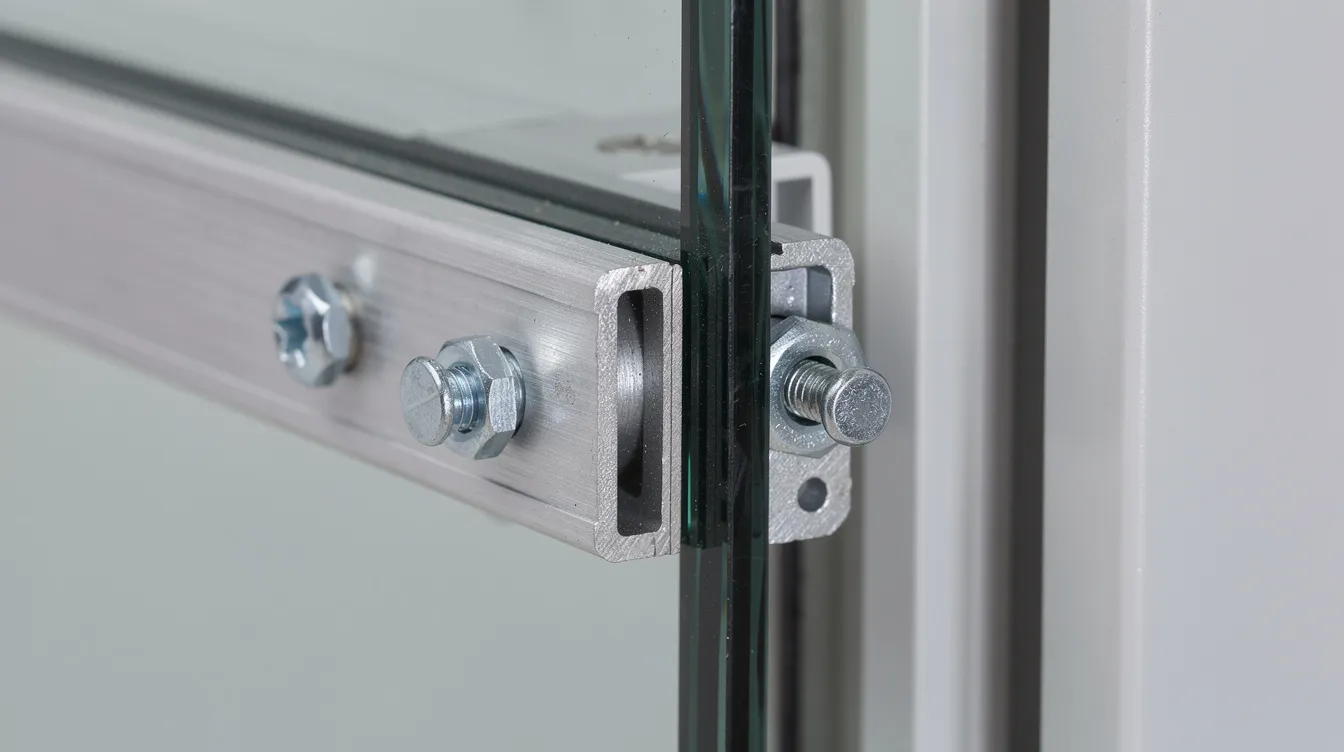
Ballistic film is a retrofit solution applied directly to existing windows using strong adhesives and is typically anchored to the window frame. This anchoring system transfers impact energy from the glass to the building structure, which is essential for the film to perform as engineered.
What Ballistic Film Is Not
Ballistic film, while often marketed as “bullet resistant,” does not stop bullets but can hold shattered glass together to slow down intruders during an attack. This is fundamentally different from true ballistic protection.
Bullet-resistant glass is specifically engineered to stop bullets and is made from materials like laminated polycarbonate or glass-clad polycarbonate, designed to absorb and disperse the energy of a bullet. The UL 752 standard is the most widely known and respected standard of bullet resistance in the United States, specifically designed to test the effectiveness of bullet-resistant materials. Ballistic glass is rigorously tested to standards like UL 752 and NIJ levels, ensuring it can stop specific types of firearms and ammunition.
While ballistic film can slow down an intruder and prevent glass from shattering, it is not a substitute for bullet-resistant glass, which is necessary for environments at risk of gun violence. This distinction ultimately determines whether your security investment matches your actual threat profile.
With these fundamentals established, the next section examines specific applications where ballistic film delivers measurable security value.
Types and Applications of Ballistic Film
Building on the understanding that ballistic film provides glass retention rather than bullet resistance, specific use cases reveal where this technology delivers maximum value. Each application leverages the film’s core capability—holding broken glass together—against different threat scenarios.
Forced Entry Deterrent Applications
Ballistic film is engineered to strengthen glass against forced entry, smash-and-grab thefts, and active shooter threats by keeping the glass intact upon impact. In retail stores, schools, and commercial buildings, this capability transforms standard window glass into a significant barrier.
Ballistic film can slow down someone attempting to break a window to gain access to a building, helping to hold the glass together after an impact. Properly installed ballistic film can delay an intruder’s access through glass for a significant amount of time, providing a critical window for response. This delay allows security personnel or law enforcement to respond before criminals gain entry to protected areas and may create an opportunity to escape.
Anchoring systems are critical for forced entry applications. The film must be mechanically or chemically attached to window frames so that when glass fractures, the load transfers to the structure instead of allowing the entire assembly to be pushed through. Without proper edge anchoring, even thick film may fail when someone attempts to break through.
Safety and Accident Protection
Safety against disasters extends beyond intentional attacks. Ballistic film protects occupants from flying shards during severe weather, natural disasters, or explosions. The same glass retention technology that delays forced entry also prevents injury when door glass or windowpanes shatter from environmental causes.
This application connects directly to the previous aspect—the same material that resists a criminal’s attempt to break through also protects people during hurricanes, earthquakes, or accidental impacts. Building codes often reference ANSI Z97.1 standards for safety glazing, which ballistic film helps existing glass meet without complete replacement. In some cases, it can help prevent serious injury or death.
Additionally, ballistic film blocks up to 99% of UV rays, protecting occupants and interior furnishings from fading. This secondary benefit adds value beyond pure security, functioning similarly to sun control films while providing protection against both UV energy and physical threats.
Cost-Effective Security Enhancement
Ballistic film is primarily used as a cost-effective alternative to full bullet-resistant glazing in environments such as schools and government buildings. The economics favor retrofit applications when threat assessment doesn’t require certified bullet resistance.
Security experts recommend a hybrid approach for layered security: using certified ballistic glass on ground-floor entry points and security film on upper floors. This strategy allocates budget where threats are highest while still hardening the entire building exterior envelope.
Ballistic film is often used in conjunction with bullet-resistant glass to enhance security in vulnerable areas, such as schools and public buildings, by providing a cost-effective solution for less critical windows. Installation costs range from $3-12 per square foot depending on thickness, compared to $70-100+ per square foot for bullet resistant products with full glazing systems.
Key considerations for cost-effective deployment:
- Existing glass quality must be structurally sound
- Frame integrity affects overall system performance
- Proper anchoring adds to project costs but is essential
- Maintenance requirements factor into long-term economics
The following section details exactly how proper installation affects these cost and performance factors.
Installation Methods and Performance Standards
Effective security film performance depends entirely on installation quality and appropriate product selection. The applications discussed above only deliver their protective value when installation follows manufacturer specifications and industry standards.
Professional Installation Process
Professional installation is required for security applications where warranty coverage and tested performance matter. While ballistic film can technically be applied by property owners, security installations demand certified expertise.
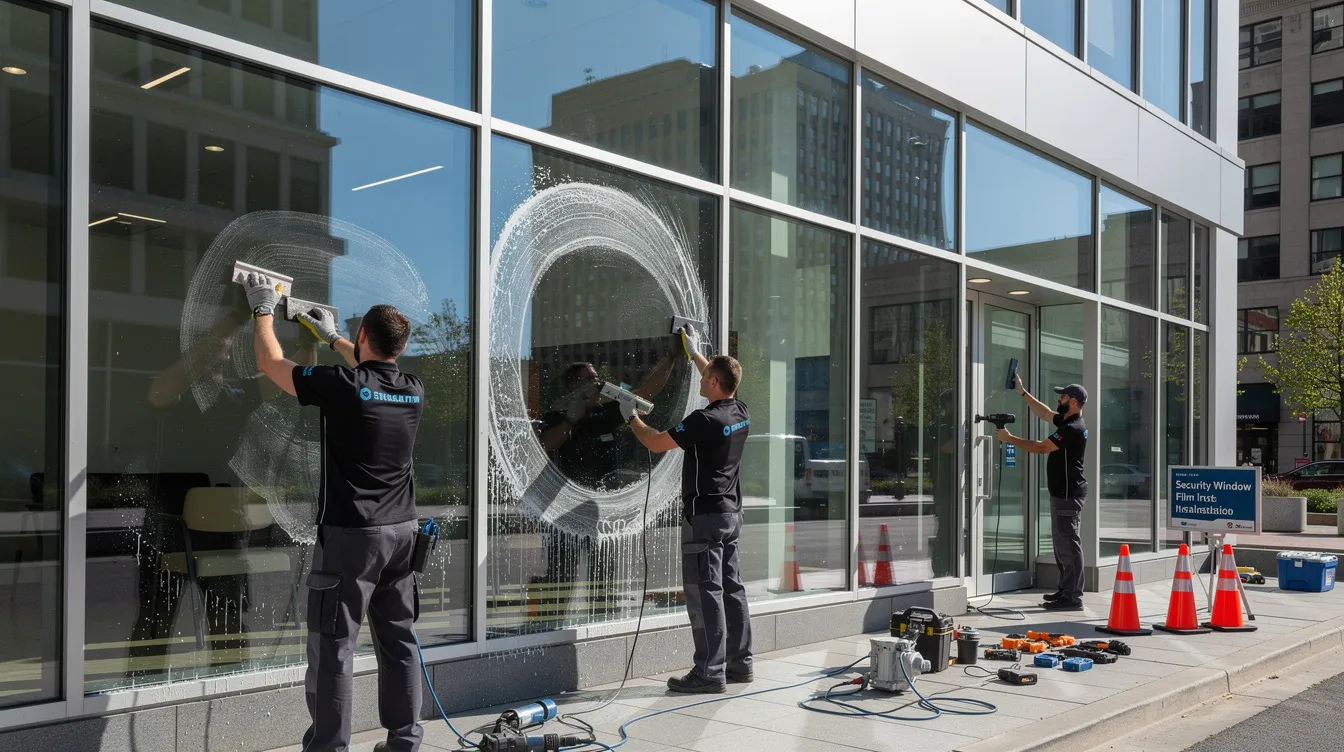
- Surface preparation and cleaning – All contaminants, coatings, and residues must be removed from the glass surface. Imperfections reduce adhesion and create potential failure points at the edges.
- Film application technique – Wet adhesive application with specialized squeegees and rollers ensures complete contact without bubbles or wrinkles that would compromise integrity.
- Anchoring system installation – The film must be bonded to window frames using mechanical anchors, adhesive retention systems, or both. Without this step, the glass and film can be dislodged as a unit even when the film performs correctly.
- Curing time and inspection – Adhesive requires proper curing time before the installation is complete. Final inspection verifies compliance with specified standards and identifies any defects requiring correction.
The note for facility managers: manufacturer warranties typically require certified installer documentation, correct anchorage verification, and environmental condition compliance during installation.
Performance Standards Comparison
Selecting appropriate film thickness requires matching product capabilities to specific security needs. The following comparison helps interpret independently tested ratings against real-world applications:
| Film Thickness | Impact Rating | Typical Application | Installation Cost |
|---|---|---|---|
| 4-7 mils | Basic Safety (ANSI Z97.1) | Accident Protection, UV Blocking | $3-5 per sq ft |
| 8-12 mils | Security Level (UL 972) | Forced Entry Deterrent | $6-8 per sq ft |
| 14+ mils | Maximum Film Rating | High Security Areas, Blast Mitigation | $9-12 per sq ft |
For most commercial applications in educational facilities and government buildings, 8-12 mil films provide the balance between cost and performance. Thicker films in the 14+ mil range are manufactured for limited applications requiring maximum delay against forced entry or blast overpressure protection, while thinner products may be suitable for minimum safety requirements.
The synthesis for selection: match film thickness to your identified threat level, ensure proper anchoring for that thickness, and verify the product has been tested to standards relevant to your application—not just tested in a factory under ideal conditions.
These performance standards provide the framework for addressing common problems encountered during selection and installation.
Common Challenges and Solutions
Three primary issues consistently undermine ballistic film effectiveness. Addressing these problems during the planning phase prevents disappointment and wasted investment.
Unrealistic Performance Expectations
While ballistic film is not bulletproof, it is designed to reinforce glass and can provide a level of protection against forced entry attempts. The problem arises when purchasers expect bullet resistance from a product that cannot deliver it.
Solution: Conduct a formal threat assessment before product selection. If ballistic attacks or active shooter scenarios represent realistic threats, consult with suppliers of true bullet resistant glass rated to UL 752 or NIJ standards. Ballistic film can slow down an intruder attempting to break a window, providing additional time for response teams to react during a security breach—but it cannot stop bullets fired from firearms or stop determined attackers with sufficient time and tools. This distinction is often misunderstood in a movie or television portrayal of security products.
Poor Installation Quality
Installation quality issues negate even premium film performance. Common failures include inadequate surface preparation, missing or improperly installed anchoring systems, and use of degraded or damaged existing glass as the substrate.
Solution: Require certified installer credentials and documented warranty coverage before project approval. Verify that the installation scope includes proper anchoring to the window frame—not merely adhesion to glass and frame gasket. Request documentation showing the film system (not just the film material) has been independently tested to relevant standards.
Maintenance and Longevity Issues
Environmental exposure degrades film performance over time. UV exposure, harsh cleaning chemicals, and moisture infiltration at edges cause yellowing, peeling, and adhesion loss.
Solution: Follow manufacturer cleaning procedures using non-abrasive cleaners without ammonia or harsh solvents. Schedule regular inspections focusing on edge conditions where degradation typically begins. Expected lifespan reaches 10-15 years with proper installation and maintenance, but quality varies significantly between manufacturers and product lines.
These challenges emphasize why ongoing security assessment matters beyond initial installation.
Conclusion and Next Steps
Ballistic film provides verified glass retention and forced entry delay capabilities for buildings where complete ballistic glass replacement isn’t practical or necessary. It protects building occupants from broken glass during forced entry attempts, accidents, and natural disasters while offering UV protection for interior spaces. However, it does not stop bullets and cannot substitute for rated bullet resistant glass in high-threat environments where loss of life is a primary concern.
Immediate actionable steps:
- Conduct a formal threat assessment identifying realistic scenarios for your facility
- Determine which windows and doors require ballistic glass versus security window film
- Request documentation of independent testing for any products under consideration
- Obtain quotes from certified installers with verified warranty backing
- Budget for proper anchoring systems, not just film material and basic installation
Related topics to explore: For facilities requiring true bullet resistance, investigate UL 752-rated ballistic glass options for critical entry points. Comprehensive security systems integrate film, glazing, access control, and monitoring. Building hardening strategies address structural vulnerabilities beyond windows and doors.
Frequently Asked Questions
Does ballistic film stop bullets? No. Ballistic film, while often marketed as “bullet resistant,” does not stop bullets but can hold shattered glass together to slow down intruders during an attack. For protection against firearms and ammunition, you need certified bullet resistant glass tested to UL 752 or NIJ standards.
How long does ballistic film last? Properly installed ballistic film lasts 10-15 years with appropriate maintenance. Lifespan depends on UV exposure, cleaning practices, and installation quality. Edge conditions typically show degradation first.
Can I install ballistic film myself? Professional installation is strongly recommended for security applications. DIY installation voids most warranties and typically results in improper anchoring that compromises performance. Certified installers understand surface preparation, anchoring requirements, and curing procedures essential for tested performance.
What thickness do I need for my building? Most commercial applications require 8-12 mil films for forced entry deterrent capabilities. Basic safety applications use 4-7 mils, while high-security areas or blast mitigation may require 14+ mils. Selection depends on threat assessment, budget, and existing glass quality.
Is ballistic film worth the investment? Yes, for forced entry deterrent, safety glazing, and UV protection applications. It provides a cost-effective solution at $3-12 per square foot compared to $70-100+ for bullet resistant glass systems. However, it is not worth the investment if you need actual ballistic protection—in that case, only rated bullet resistant products will perform as needed.
How much does ballistic film cost? Installation costs range from $3-12 per square foot depending on film thickness, anchoring requirements, and project complexity. Large commercial projects achieve economies of scale. Hidden costs include potential frame modifications, scaffolding for high windows, and proper anchoring systems that some quotes may exclude.