Table of Contents
- The Reality of Bullet Proof Window Tint
- Understanding Bullet-Resistant Window Protection
- Types of Bullet Proof Window Solutions
- Installation Methods and Implementation
- Common Challenges and Solutions
- Conclusion and Next Steps
- Frequently Asked Questions
The Reality of Bullet Proof Window Tint
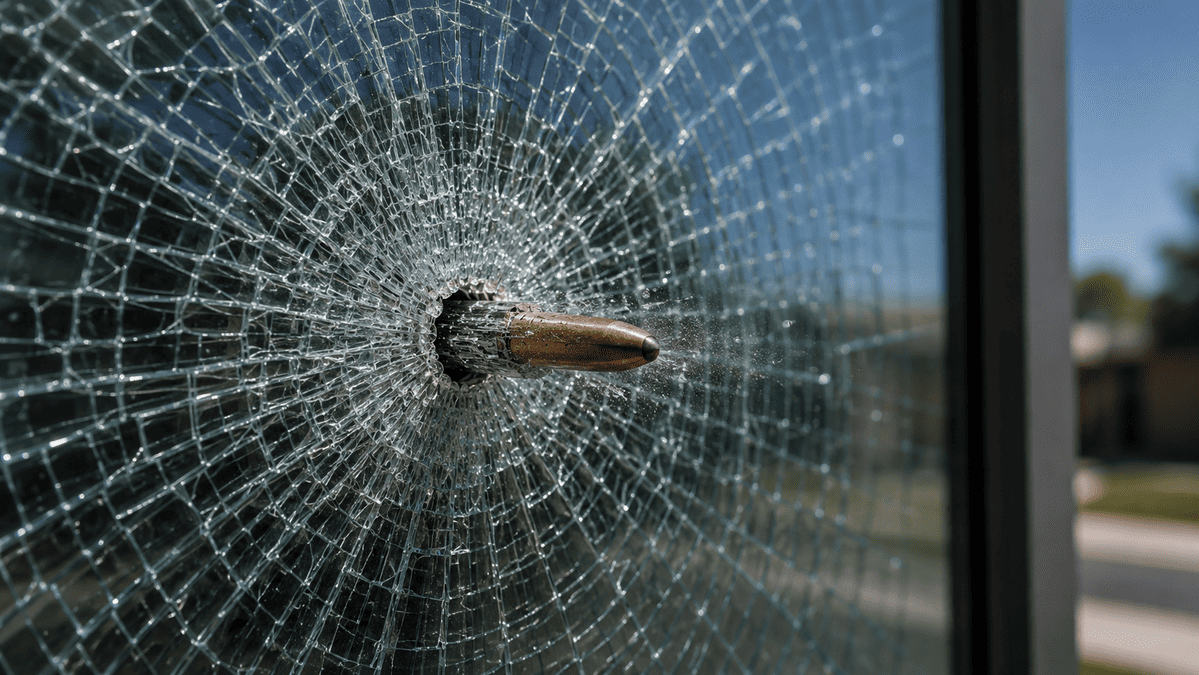
There is no such thing as true bullet proof window tint. What the security industry markets under this term are security window film products that hold broken glass together and delay forced entry—but they cannot stop bullets without being installed onto certified ballistic glazing. Understanding this distinction is essential before investing in window protection for any facility.
This guide covers the full range of ballistic window protection options available in 2026, from basic security film applications to advanced ballistic grade security glazing systems. We address retrofit solutions for existing glass windows, complete replacement installations, and the UL 752 ballistic ratings that define real protection capabilities. Our focus is on commercial and educational facilities where security professionals, school administrators, and facility managers must balance human safety with practical budget constraints.
Direct answer: True bulletproof window film that can stop bullets independently does not exist. Real ballistic protection requires multi-layer glazing systems—laminated glass, polycarbonate, or hybrid materials—that have been independently tested and certified to UL 752 standards. Security film alone provides only shatter resistance and entry delay, not bullet resistance. No bulletproof glass system can provide an absolute guarantee of safety under all circumstances.
By reading this guide, you will:
- Understand the critical difference between security window film and actual bullet resistant window systems
- Learn UL 752 ballistic rating levels and which threats each level addresses
- Compare costs, installation timelines, and protection capabilities across solution types
- Identify the most cost-effective solution for your specific facility and threat profile
- Know what questions to ask vendors and installers before making a purchase
Understanding Bullet-Resistant Window Protection
The terminology around ballistic window protection creates significant confusion in the marketplace. Security professionals and facility managers must clearly distinguish between products that delay entry versus those that actually protect against ballistic attacks. This understanding directly affects purchasing decisions, installation approaches, and ultimately, the safety of building occupants.
Security Window Film Capabilities
Security window film consists of polyester laminates typically 3-8 mils thick (where 1 mil equals 0.001 inch), bonded with specialized adhesives to existing glass. The primary function of this film is to hold glass fragments together when window glass shatters, reducing dangerous spall and preventing shards from becoming secondary projectiles, making security window films an effective and economical upgrade for many facilities.
When installed correctly with proper edge anchoring to the frame, security film can delay forced entry by 30-90 seconds or more. This delay time can prove critical during a break in or attack, giving occupants time to respond, evacuate, or secure themselves while a determined intruder struggles to gain entry through the held-together glass. Many schools have adopted bullet resistant window film and related glazing solutions on doors and windows specifically to buy precious seconds during emergency situations. This is one reason school shooting preparedness discussions often include glazing and window protection upgrades.
However, security window film has clear limitations against ballistic threats. Film products alone cannot stop bullets—repeated handgun rounds or any rifle fire will penetrate the glass and film combination. The reality is that even the thickest security film provides no meaningful ballistic protection without an underlying bullet resistant substrate. Marketing terms like “ballistic film for windows” or “bulletproof window film” often overstate these products’ actual capabilities.
True Ballistic Protection Standards
True ballistic protection is defined by UL 752, the Bullet-Resisting Equipment standard maintained by UL Solutions. This standard specifies exactly what materials must withstand: firearm type, bullet configuration, velocity, number of shots, and whether penetration or dangerous spall occurs on the interior side.
UL 752 protection levels range from handgun threats to high-powered rifle rounds:
| UL 752 Level | Threat Type | Projectile | Velocity (fps) | Shots |
|---|---|---|---|---|
| Level 1 | Handgun | 9mm FMJ, 124-grain | 1,175-1,300 | 3 |
| Level 2 | Handgun | .357 Magnum JSP | 1,250-1,375 | 3 |
| Level 3 | Handgun | .44 Magnum | 1,350-1,485 | 3 |
| Level 4 | Rifle | .30-06 | 2,700-2,800 | 1 |
| Level 5 | Rifle | 7.62mm Military Ball | 2,700-3,000 | 1 |
| Level 7 | Rifle | 5.56mm (.223) | High velocity | 5 |
| Level 8 | Rifle | 7.62mm (.308) | High velocity | 5 |
| The 12th edition of UL 752 (current as of 2026) introduces clearer designations: UL-HG for handgun threats, UL-RF for rifle threats, and UL-SG for shotgun threats. This helps security professionals match protection levels to realistic threat assessments rather than guessing at numbered levels. |
Level 3 protection—rated against .44 Magnum rounds—represents the most common specification for schools and courthouses where handgun threats are the primary concern. Higher levels (4-8) address rifle threats and are typically reserved for government facilities, financial institutions, and high-security commercial applications.
Understanding these standards provides the foundation for evaluating the specific glazing products covered in the next section.
Types of Bullet Proof Window Solutions
With ballistic standards established, we can now examine the three primary material categories that actually deliver bullet resistant performance. Each offers distinct trade-offs in protection level, cost, weight, and optical clarity.
Ballistic Laminated Glass
Ballistic laminated glass construction combines multiple layers of glass (tempered, annealed, or heat-strengthened) with thermoplastic interlayers such as polyvinyl butyral (PVB), urethane, or ionoplast materials. The glass layers resist scratching and weathering while the interlayers absorb projectile energy and prevent shattering into dangerous fragments. These systems are often compared with bulletproof glass solutions when evaluating protection levels.
Thickness and weight increase significantly with protection level. Level 1 all-glass laminates measure approximately 1.18-1.30 inches thick and weigh 15-16 lbs per square foot. Level 2 increases to about 1.80 inches and 22-23 lbs/sq ft. And Level 3 protection typically requires 1.59-2.13 inches of laminated glass weighing 20-26 lbs/sq ft—substantially heavier than standard glazing.
The primary limitation of all-glass ballistic systems is weight. Existing window frames, hinges, and building structure often cannot support loads 3-5 times heavier than original glazing without reinforcement. Additionally, thicker glass assemblies exhibit increased green tint and edge distortion that may affect aesthetics, though low-iron glass and specialized coatings can minimize these effects, while complementary solar window film can further reduce glare, heat gain, and UV exposure.
Polycarbonate Retrofit Systems
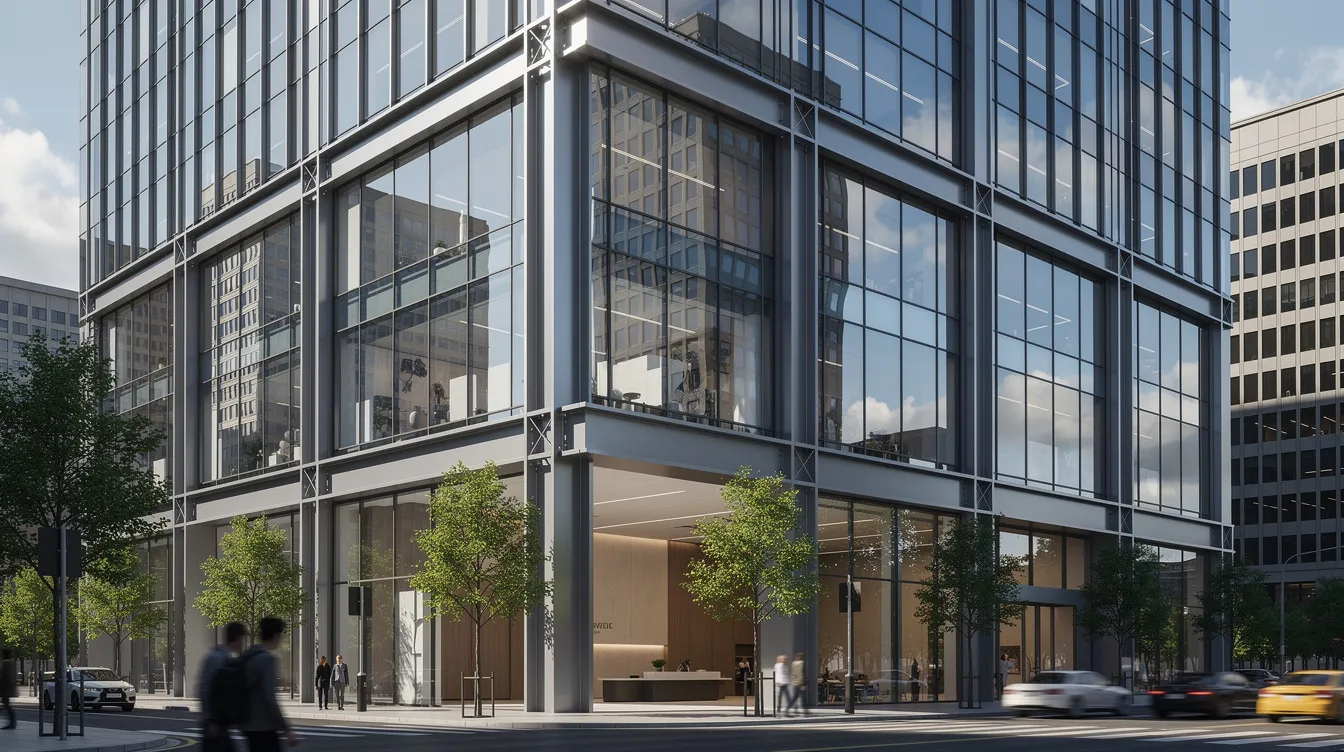
Polycarbonate panels offer a lighter alternative for retrofit applications where replacing window glass entirely isn’t practical. Products like BulletShield and ArmorPlast systems use clear polycarbonate sheets—often multi-ply laminates with anti-reflective coatings—that install over existing glass windows without frame replacement, and are frequently paired with professional window tinting and security window film installation services to address additional comfort and privacy goals.
A typical Level 6 polycarbonate panel (AP125-BR-LV6) measures 1.30 inches thick, weighs approximately 8.1 lbs per square foot, and maintains roughly 78% visible light transmission. This represents significant weight savings compared to equivalent all-glass solutions while providing multi-shot 9mm protection.
Polycarbonate materials do present maintenance considerations. Without protective coatings, they are more prone to scratching, yellowing, and UV degradation than glass surfaces. Hard-coat treatments reduce scratching but add cost. Most manufacturers offer 5-7 year warranties, after which panels may require replacement to maintain optical clarity and certified protection levels.
Glass-Clad Polycarbonate Solutions
Hybrid glass-clad polycarbonate systems combine the best attributes of both materials. These constructions sandwich a polycarbonate core between outer glass surfaces, bonded with specialized adhesives (typically urethane-based) that accommodate thermal expansion without delamination.
The exterior glass layers provide superior scratch resistance and weather durability compared to exposed polycarbonate, while the polycarbonate core delivers impact resistance at reduced weight. For example, the RG3-LS (UL 752 Level 3) measures 1.202 inches thick, weighs 13.03 lbs per square foot, and achieves approximately 75% visible light transmission—lighter than equivalent all-glass laminates while offering comparable protection and better optical quality.
Glass-clad systems represent a cost effective solution when balancing protection requirements against weight limitations and aesthetic concerns. They are increasingly specified for school applications where existing frames cannot accommodate heavy all-glass ballistic panels, and can be combined with privacy window film solutions to control sightlines without compromising ballistic performance.
The cost versus protection trade-off becomes clearer when examining installation methods and total project expenses in the following section.
Installation Methods and Implementation
Choosing between retrofit and full replacement involves evaluating existing structural conditions, protection requirements, budget constraints, and timeline pressures. Both approaches require professional assessment and installation to maintain certified protection levels.
Retrofit Installation Process
Retrofit installation is most appropriate when existing frames are structurally sound, when budget limits full replacement, or when minimal operational disruption is required. In some projects, facilities also integrate smart window films and switchable glass to provide on-demand privacy alongside ballistic or forced-entry protection. The process follows a structured sequence:
- Site assessment and measurement — Security professionals evaluate threat levels, identify priority protection zones (entrances, ground-floor windows, door glass), assess frame conditions, and verify structural load-bearing capacity for additional panel weight.
- Custom fabrication and delivery — Ballistic glazing and polycarbonate panels are manufactured to exact specifications. Lead time typically runs 4-6 weeks depending on size, UL level, coatings, and edge treatments required.
- Professional installation and frame integration — Certified installers mount panels using appropriate anchoring methods (mechanical fasteners or specialized adhesives). Edge anchoring is critical—if film or panels peel away at the frame, protection fails. Standard frames not rated for ballistic applications may require retrofit extrusions or reinforcement.
- Final testing and certification documentation — Installers verify that completed installation matches tested specimen specifications (same materials, thickness, framing). Documentation confirms UL rating compliance and establishes warranty coverage.
Cost Comparison Analysis
Understanding cost ranges helps facility managers develop realistic budgets and prioritize protection investments:
| Solution Type | Cost per Sq Ft | Installation Time | UL 752 Level | Typical Applications |
|---|---|---|---|---|
| Security Film | $8-15 | Days | None (delay only) | General shatter protection, break in deterrent |
| Polycarbonate Retrofit | $45-75 | 1-2 weeks | Levels 1-6 | Schools, retail, existing buildings |
| Glass-Clad Hybrid | $65-100 | 2-3 weeks | Levels 1-5 | Commercial, high-visibility locations |
| Ballistic Glass Replacement | $85-150 | 3-6 weeks | Levels 1-8 | Government, banks, new construction |
| These ranges reflect materials, fabrication, and professional installation. Actual costs vary with project size, complexity, geographic location, and current material pricing. Quotes from multiple certified vendors are essential for accurate budgeting, and many regional providers, such as security window film and tinting specialists in Salt Lake City, offer detailed proposals and site-specific recommendations. |
Security film provides the cheapest entry point but offers no actual ballistic protection—only delay capability. Organizations facing genuine ballistic threats must invest in rated glazing systems. The cost differential between $8-15/sq ft film and $85-150/sq ft ballistic glass reflects the fundamental difference between products that delay entry versus those that stop bullets. Some facilities also evaluate bullet resistant window film as part of a layered security strategy.
These cost realities lead directly to the implementation challenges most organizations face.
Common Challenges and Solutions
Most facilities encounter predictable obstacles when implementing ballistic window protection. Addressing these challenges proactively prevents costly mistakes and installation failures.
Existing Frame Weight Limitations
Solution: Specify polycarbonate retrofit systems or glass-clad hybrids that add minimal weight to existing frames. A Level 3 polycarbonate panel at 8-13 lbs/sq ft weighs significantly less than equivalent all-glass laminates at 20-26 lbs/sq ft. When structural assessment reveals inadequate load capacity, polycarbonate options often enable protection that would otherwise require complete frame and structural replacement, and local security window film and privacy tint providers in The Villages area can help pair these systems with additional glare and privacy control.
Professional structural evaluation should precede any product specification. Headers, mullions, hinges, and foundation elements all factor into maximum allowable weight. This assessment adds upfront cost but prevents expensive failures after installation.
Budget Constraints for Full Building Protection
Solution: Implement phased protection strategies that prioritize high-risk zones first. Main entrances, ground-floor classrooms facing exterior access points, and reception areas typically receive priority. Door glass replacement often provides significant security improvement at limited cost since doors represent primary entry points.
Federal funding programs can offset costs for educational facilities. Schools may qualify for ESSER, EANS, and dedicated security improvement grants that specifically cover glazing and barrier projects. Many ballistic glazing vendors and regional specialists, such as window tinting and security film providers in Oshkosh and Appleton, structure their products and documentation to facilitate grant applications.
Commercial businesses can often justify investment through insurance premium reductions and demonstrated risk mitigation. Contact insurers about available credits for certified ballistic protection before finalizing budgets.
Balancing Security with Aesthetics
Solution: Specify optically clear materials that maintain building appearance while providing protection. Modern glass-clad polycarbonate systems achieve 75-78% visible light transmission with minimal distortion. Low-iron exterior glass layers reduce the green tint common in thick laminated assemblies.
Anti-reflective coatings improve clarity and reduce glare. Custom tinting options allow privacy control without compromising ballistic ratings when specified correctly. The key is ensuring any coatings or treatments are part of the tested and certified assembly—not aftermarket additions that could void protection ratings.
These solutions work best when implemented through professional consultation. Free consultation from certified installers helps match specific facility requirements with appropriate protection levels before any money is committed, and providers like CoolVu of North Nassau County for glass and surface solutions offer this type of guided assessment and specification support.

Conclusion and Next Steps
True bullet proof window tint does not exist. Real protection against ballistic attacks requires certified glazing systems—laminated glass, polycarbonate panels, or hybrid constructions—that have been independently tested to UL 752 standards. Security window film provides valuable shatter resistance and entry delay but cannot stop bullets on its own.
The technology available in 2026 offers a full range of protection options from basic forced entry delay through rifle-rated ballistic resistance. Selection depends on realistic threat assessment, structural capabilities, budget parameters, and operational requirements. There is no single solution appropriate for every facility—protection must be matched to actual risks and constraints.
Immediate next steps:
- Conduct professional threat assessment to identify realistic risks and priority protection zones
- Obtain structural evaluation to determine what existing frames and building elements can support
- Request quotes from multiple certified installers with UL-listed product lines
- Review UL 752 level requirements against assessed threats—avoid over-specifying (wasting money) or under-specifying (inadequate protection)
- Schedule a free consultation with qualified security glazing professionals before making final decisions. Following this process provides a clear course toward selecting the most appropriate ballistic protection solution.
Related topics worth exploring include perimeter security systems that create layered protection beyond windows, access control integration that works with ballistic barriers, and ongoing maintenance requirements that preserve protection capabilities over time. Ballistic glazing represents one component of comprehensive facility security—not a complete solution on its own.
Frequently Asked Questions
Is bullet proof window tint the same as security window film?
No. Security window film holds broken glass together and can delay forced entry, but it cannot stop bullets. True ballistic protection requires multi-layer glazing systems certified to UL 752 standards. The term “bulletproof window film” is marketing language that overstates actual capabilities. Film products provide value for shatter resistance and entry delay but should not be relied upon for ballistic attacks.
What UL 752 rating do I need for my facility?
Most schools, courthouses, and commercial facilities specify Level 3 (protection against .44 Magnum handgun rounds) as the baseline for handgun threats. Financial institutions and high-security government facilities may require Levels 4-8 for rifle protection. A professional threat assessment should determine realistic risks before selecting protection levels. Over-specifying wastes money; under-specifying creates dangerous gaps.
Can bullet proof windows be installed over existing glass?
Yes, through retrofit systems. Polycarbonate panels and glass-clad shields can be mounted over existing glass without complete window replacement. However, existing frames must support the additional weight, and proper anchoring is critical for maintaining protection. Retrofit solutions work best when structural conditions are favorable and budget limits full replacement.
How much does bullet proof window protection cost per square foot?
Costs range significantly by solution type: security film runs $8-15/sq ft (no ballistic rating), polycarbonate retrofit systems $45-75/sq ft, glass-clad hybrids $65-100/sq ft, and full ballistic glass replacement $85-150/sq ft. Higher UL levels, larger panels, and specialized coatings increase costs. Installation, frame modifications, and structural work add to total project expense.
Do bullet proof windows look different from regular windows?
Modern ballistic glazing achieves 75-78% visible light transmission with minimal visual difference from standard glass. Thicker laminates may show slight green tint or edge distortion, but low-iron glass and anti-reflective coatings minimize these effects. Glass-clad polycarbonate systems offer the best optical clarity among bullet resistant options.
How long does installation take for a typical commercial building?
Timeline depends on scope and product type. Custom ballistic glazing requires 4-6 weeks for fabrication before installation begins. Installation itself typically takes 1-3 weeks depending on the number of windows, structural modifications required, and access conditions. Security film installation can be completed within days once materials arrive.
Are there maintenance requirements for ballistic window protection?
Polycarbonate components may yellow or haze over time without protective coatings; most manufacturers provide 5-7 year warranties. Glass surfaces require standard cleaning. Inspect edge seals and anchoring annually to ensure continued protection. UV exposure and environmental conditions affect longevity. Budget for potential panel replacement after warranty periods expire.
Can bullet proof windows be tinted for privacy?
Yes, when tinting is specified as part of the certified assembly. Aftermarket tint films applied to ballistic glazing may void protection ratings and warranties. Work with manufacturers to specify integrated tinting options that maintain UL certification. Privacy tinting and low-E coatings are available but must be included in original fabrication specifications.