- Why Unprotected Glass is Your Building’s Biggest Security Risk
- The Hidden Costs of a Breach
- A Modern Solution: How Commercial Window Protection Works
- More Than Just Security: The Added Benefits of Window Film
- How to Choose the Right Film for Your School or Business
- The Professional Installation Process: What to Expect
- Measuring the ROI of Commercial Window Protection
- Conclusion: Your Next Steps Toward a Safer Facility
- Frequently Asked Questions
Why Unprotected Glass is Your Building’s Biggest Security Risk
When we think about securing a school or business, our minds go to reinforced doors, access control, and surveillance cameras. Yet, we often overlook the most common and fragile material in the entire building: the glass in its windows and doors. This creates a dangerous vulnerability that is too often ignored until it’s too late.
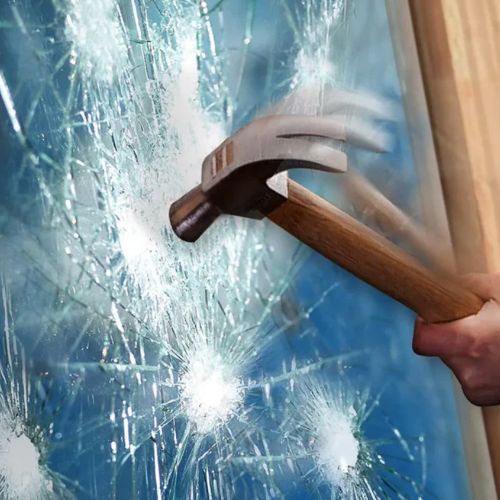
Standard annealed glass, the kind found in most commercial buildings, offers a false sense of security. While it protects you from the weather, it provides almost no resistance to intentional force. A single strike with a common tool is enough to shatter an entire pane in seconds.
That loud crash isn’t the deterrent you might think it is. For a determined intruder, it’s the sound of an open invitation. In less than three seconds, an unprotected window can become an open doorway, granting immediate access to your property.
This speed makes alarm systems less effective, as a response team often needs more time to arrive. The simple truth is, a locked door doesn’t mean much when it’s surrounded by glass that can be instantly compromised.
The Hidden Costs of a Breach
The immediate cost of a broken window is just the tip of the iceberg. For a decision-maker like a school superintendent or property manager, the secondary costs of a security breach are far more damaging.
First, there’s operational downtime. A school may need to close to manage repairs and ensure the site is safe, disrupting education and creating logistical headaches for families. A retail business loses sales for every hour it can’t operate. Then comes the cost of restoring confidence. For students, teachers, and employees, the feeling of safety is shattered right along with the glass. This psychological impact can lead to decreased morale and a loss of trust in the institution’s ability to protect them.
A Modern Solution: How Commercial Window Protection Works
Many facility managers assume the only fix is a costly and disruptive full window replacement. Fortunately, there’s a more effective and affordable alternative: commercial window protection, often called security window film.
Security film is a specialized polymer layer that is professionally applied to the interior surface of your existing glass. It’s a simple concept with a powerful result. Instead of replacing your windows, you’re retrofitting them, turning a fragile pane into a resilient and formidable barrier. This upgrade is virtually invisible, preserving your building’s clean, open aesthetic while strengthening its weakest points without a massive capital investment.
The effectiveness of shatterproof window film commercial applications lies in its engineering. These films are made from layers of heavy-duty polyester, known for exceptional tensile strength. This robust material is bonded directly to the glass with a powerful adhesive that cures to form a surprisingly strong connection.
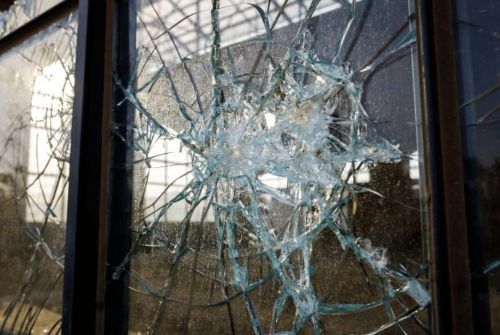
When an intruder strikes the window, the glass will still crack, but the film holds the thousands of dangerous shards tightly together in the frame. Instead of collapsing inward, the window remains a tough, flexible barrier.
This is the key to its success. It denies an intruder immediate entry and contains the broken glass, preventing hazardous projectiles. That delay is everything. It frustrates the intruder and, most importantly, buys precious time for your alarm system and security response to work effectively.
More Than Just Security: The Added Benefits of Window Film
While strengthening your facility against forced entry is the main goal, modern security films offer a suite of additional benefits that deliver a greater return on your investment.
- UV Ray Rejection: High-quality films block up to 99% of harmful ultraviolet rays. This protects people from UV exposure and prevents the costly fading of furniture, flooring, and merchandise.
- Glare Reduction: The film can significantly cut down on intense sun glare, improving comfort in classrooms and offices and making it easier to view screens and whiteboards.
- Improved Energy Efficiency: Many films include solar control properties that reject heat, keeping your building cooler in the summer. This can reduce the load on your HVAC system and lead to noticeable energy savings.
- Enhanced Privacy: In addition to clear films, you can choose tinted or frosted options to increase privacy in sensitive areas like administrative offices or conference rooms.
How to Choose the Right Film for Your School or Business
Selecting the right window film is a strategic decision. It’s about assessing your specific vulnerabilities, budget, and desired outcomes to find a solution that provides a remarkable return on investment in both safety and peace of mind.
Understanding Film Thickness and Protection Levels
The level of protection is directly related to the film’s thickness, measured in mils (one-thousandth of an inch).
- Basic Safety Film (4-7 mil): This is the entry point for glass protection. It’s highly effective for containing glass from accidental impacts or severe weather and provides a baseline deterrent against simple smash-and-grab break-ins.
- Forced-Entry Protection (8-14 mil): This range is the sweet spot for most school safety and storefront security film applications. Films 8 mil or thicker offer a substantial delay against determined intruders using tools like bats or hammers, buying critical time for emergency response.
- Blast Mitigation (15+ mil): The thickest films are typically reserved for high-security environments. When combined with anchoring systems, they offer the highest level of protection against explosive pressure and aggressive forced-entry attempts.
Balancing Security, Budgets, and Aesthetics
For any decision-maker, especially a school superintendent, every investment must be carefully weighed. The beauty of security window film for business is its scalability.
Start by identifying your most vulnerable areas, like ground-floor windows and main entrances. You might choose a thicker film for these critical locations and a standard safety film for less vulnerable upper-floor windows. A phased approach, starting with the most at-risk areas, can provide an immediate security boost while spreading the cost over time.
You don’t have to sacrifice your building’s appearance for security. Modern security films from top manufacturers like 3M and Llumar are optically clear and virtually undetectable. They won’t make your building look like a fortress.
The Professional Installation Process: What to Expect
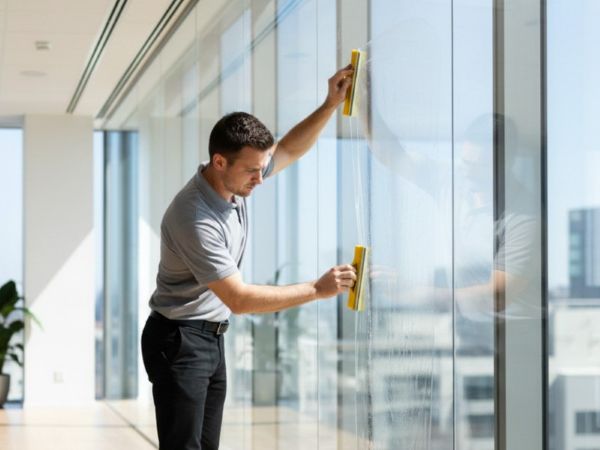
Upgrading your building’s security shouldn’t disrupt your operations. is designed to be a quiet, clean, and efficient process that works around your schedule.
It’s a simple fact: security film is only as good as its installation. An expert application ensures the film forms a seamless bond with the glass, giving it the strength to hold shattered glass together. Our certified technicians follow a meticulous process to guarantee a flawless finish that delivers the full security benefits you’re investing in.
We’ve refined our installation to be as unobtrusive as possible. We work from the inside, so there’s no need for exterior lifts or scaffolding. For organizations like schools or offices, we routinely schedule installations during off-hours, evenings, or holidays. Our goal is to make your building more secure without you ever knowing we were there.
Measuring the ROI of Commercial Window Protection
For any administrator managing a tight budget, every dollar must be justified. Security window film offers an exceptional return on investment that goes far beyond its initial cost.
When considering how to reinforce your building’s glass, the main alternative is replacing windows with laminated or impact-resistant glass. This option is often prohibitively expensive. Professionally installed security film delivers a powerful layer of protection at a fraction of the price, often costing 7 to 15 times less than full window replacement.
The return on your investment is measured in two ways. First is the financial return. The energy savings and protection from UV damage to your interiors provide a tangible payback. Second, and most importantly, is the human return. This is the peace of mind that comes from knowing you’ve taken an effective step to safeguard your people. By delaying an intruder, the film provides a critical window for occupants to find safety and for law enforcement to arrive. You can’t put a price on that, but it is the most valuable return of all.
Conclusion: Your Next Steps Toward a Safer Facility
Your building’s windows and glass doors are its most vulnerable points, but they don’t have to be. Investing in professional commercial window protection is a foundational security measure that transforms this weakness into a powerful layer of defense.
Here’s a recap of the key protections:
- Intrusion Deterrence: Makes forced entry significantly more difficult and time-consuming.
- Active Threat Mitigation: Denies or delays entry, giving occupants precious time to react.
- Blast Hazard Mitigation: Contains dangerous glass shards during an explosion.
- Storm and Seismic Protection: Provides a protective barrier against wind-blown debris and seismic events.

Understanding the need for enhanced security is the first step. The next is to develop a clear, actionable plan. A professional security assessment is the best way to get started. An expert will visit your site to evaluate your building’s vulnerabilities and provide you with a detailed report outlining recommended solutions, prioritized by risk and aligned with your budget.
When you partner with a trusted authority in security, you’re not just getting industry-leading window protection. You’re gaining the peace of mind that comes from making your facility and its occupants safer. Take the next step with CoolVu and connect with a local expert for commercial window protection tailored to your building.
Frequently Asked Questions
Will security window film make my windows dark or look like a fortress?
Not at all. The vast majority of security films are optically clear and virtually undetectable once installed. They are designed to provide powerful protection without changing the appearance of your building. If you do want to add privacy or reduce glare, tinted and frosted options are also available.
How much does commercial window protection cost?
The cost is significantly less than replacing your windows with impact-resistant glass, often 7 to 15 times cheaper. The exact price depends on the type and thickness of the film selected and the total square footage. Many security films also provide energy savings that can help offset the initial investment over time. A professional consultation can provide a precise quote for your specific needs and budget.
Is security film really effective against break-ins?
Yes. While no product can stop a truly determined intruder indefinitely, security film’s primary job is to create a significant delay. By holding the glass together, it prevents quick entry. This delay is often enough to deter intruders who are looking for an easy target and, more importantly, it buys critical time for alarms to sound and first responders to arrive.
How long does the installation take?
The installation process is surprisingly fast and non-disruptive. A professional team can typically complete several hundred square feet of glass per day. For sensitive environments like schools or active businesses, installations can be scheduled during off-hours, weekends, or holidays to ensure there is zero disruption to your normal operations.