
Table of Contents
Deconstructing Protection: The Science Behind Commercial Security Window Film
When considering the best security film for windows for your commercial property, understanding the fundamental mechanics of protective film is paramount. It’s not simply about applying a sheet of material to glass; it’s about integrating advanced materials science into your existing window infrastructure. This article will peel back the layers to reveal how these films transform ordinary glass into a formidable barrier.
What is Commercial Security Window Film? A Technical Overview
Commercial security window film is a highly engineered, multi-layered polyester film applied to the interior, and sometimes exterior, surface of glass.
Its primary function is to enhance the integrity of glass, transforming it from a fragile, easily breached component into a resilient, impact-resistant barrier.
Unlike typical privacy or decorative films, security films are specifically designed to absorb and redistribute impact energy, effectively delaying or preventing forced entry and mitigating hazards from shattering glass due to accidents, natural disasters, or explosive blasts.
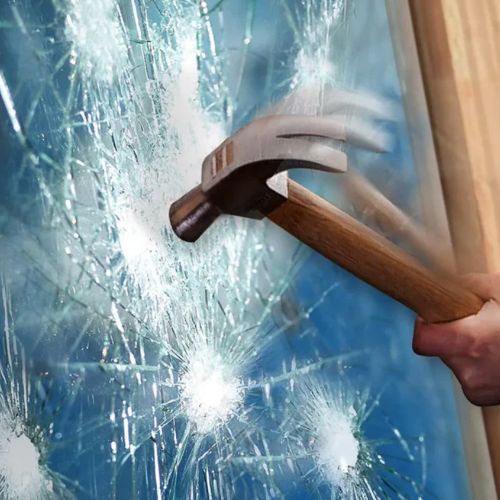
The Mechanics of Resistance: How Shatterproof Window Film Transforms Glass Integrity
The true power of security window film lies in its ability to maintain the glass’s structural integrity even after impact. When an object strikes unprotected glass, it shatters into dangerous shards, creating an immediate and accessible opening. With shatterproof window film for business applied, the film’s robust adhesive and high tensile strength hold the shattered glass fragments firmly in place. This transforms the glass from a collection of dangerous, loose pieces into a single, pliable membrane that remains within the window frame. This drastically increases the time and effort required for an intruder to gain entry, often deterring them entirely due to the persistent resistance and audible struggle. This glass shard retention significantly reduces the risk of injury from flying glass during an impact event, protecting occupants and property inside.
Key Characteristics Defining Film Performance: Thickness, Strength, and Composition
The effectiveness of a security window film is determined by several critical characteristics, which collectively define its performance. It is a common misconception that film thickness alone dictates security. While important, it is one of several interwoven factors.
- Film Thickness: This is often measured in ‘mils,’ where one mil equals one-thousandth of an inch. Security films typically range from 4 mils to 21 mils, with thicker films generally offering greater impact resistance and extended delay times. A 7-mil film, for instance, provides substantial protection against smash-and-grab attempts, while a 14-mil or thicker film is often employed for advanced ballistic or blast mitigation film purposes. However, merely specifying a high-mil film without considering other factors can be misleading.
- Strength: Beyond thickness, the inherent strength of the film material is crucial. This includes its tensile strength, the resistance to breaking under tension, and tear resistance, the ability to resist tearing once a cut or puncture has occurred. These properties ensure the film can withstand dynamic impacts and maintain its integrity under prolonged assault.
- Composition: The base material for most high-performance security films is polyethylene terephthalate (PET). This durable, optically clear polymer is layered to create a resilient composite. The number of layers, their orientation, and the proprietary adhesives used between them and for attachment to the glass all contribute to the film’s overall strength and performance. These advanced adhesives are designed to form a molecular bond with the glass, ensuring maximum forced entry resistance upon impact.
Distinguishing Genuine Forced Entry Window Film from Decorative or Privacy Films
It is imperative for business owners to understand the clear distinction between true security window films and other film types. While decorative films add aesthetic appeal, and privacy films obscure views or reduce glare, neither is engineered to withstand forced entry or significant impact.
- Decorative and Privacy Films: These films are typically much thinner, 1-2 mils, primarily designed for appearance, UV rejection, or minor glare reduction. Their adhesive systems are not formulated for extreme impact retention, meaning they will not prevent glass from shattering and falling out of the frame under attack. They offer virtually no protection against determined intruders or blast events.
- Genuine Forced Entry Window Film: These are purpose-built with multiple layers of PET, significantly thicker profiles, typically 4 mils and above, and specialized, aggressive adhesive systems. Their entire design focuses on absorbing kinetic energy, holding glass fragments together, and creating a robust, resilient barrier that delays or denies unwanted access. When evaluating options, always confirm that the film is specifically rated and designed for security applications, often accompanied by independent testing certifications for forced entry or blast resistance.
Beyond the Film: Engineering a True Forced Entry Deterrent System
Achieving genuinely effective window security extends far beyond simply selecting a strong film. It necessitates the implementation of an “engineered system,” a comprehensive approach where each component works in concert to resist and deter threats. Understanding this principle is foundational to making informed decisions about protecting your commercial property.
The “Engineered System” Principle: Film as One Component, Not the Whole Solution
Many business owners initially believe that security is solely about the film itself. However, true resilience against forced entry or impact is an outcome of an engineered system, where the security film acts as a vital, but single, component. This system integrates the film with the existing glass, the window frame, the building’s structure, and crucially, an appropriate attachment mechanism. The strength of this entire assembly determines its ability to withstand and delay an intrusion. A high-performance film, if not properly integrated, can be significantly compromised.
Many business owners initially believe that security is solely about the film itself. However, true resilience against forced entry or impact is an outcome of an engineered system, where the security film, including ballistic film for windows, acts as a vital, but single, component. This system integrates the film with the existing glass, the window frame, the building’s structure, and crucially, an appropriate attachment mechanism. The strength of this entire assembly determines its ability to withstand and delay an intrusion. A high-performance film, if not properly integrated, can be significantly compromised.
Evaluating Film Types for Specific Threats: Blast Mitigation vs. Anti-Intrusion Applications
The diverse nature of potential threats dictates the specific characteristics required of a security film. Blast mitigation film, for instance, prioritizes holding shattered glass together in one piece, preventing dangerous flying shards and minimizing injury from explosive forces. These films often feature greater elasticity and tensile strength to absorb and dissipate extreme energy without tearing. Anti-intrusion film is engineered to resist repeated blunt force attacks, focusing on delaying entry by making it exceptionally difficult to penetrate or remove the glass from its frame. While both types enhance security, their precise composition and performance profiles differ, making an accurate assessment of the primary threat essential for optimal selection. Film thickness, measured in mils, one thousandth of an inch, is a key indicator, with most security films ranging from 4 mil to 21 mil, but thickness alone does not tell the full story without considering its specific properties.
The Importance of Matching Film to Glass Type, Frame Material, and Building Structure
The effectiveness of any security film system is intricately linked to the existing components of your windows and building. Different types of glass, such as annealed, tempered, or laminated, will respond uniquely to impact, and the chosen film must be compatible with these reactions to perform optimally. Similarly, the window frame material, e.g., aluminum, wood, steel, or vinyl, significantly influences the feasibility and effectiveness of attachment systems. Finally, the structural integrity of the surrounding building components and how the window frame is secured within the wall all play a critical role in how well the entire assembly will hold up under stress. A comprehensive evaluation by an expert considers these variables to ensure the proposed solution does not create new vulnerabilities.
Factors Influencing Optimal Film Selection: Threat Level, Aesthetic Considerations, and Budgetary Alignment
Selecting the ideal security film is a multi-faceted decision process, influenced by several key factors unique to your commercial property.
- Threat Level: The most critical determinant is the specific threats you aim to mitigate, whether it is smash-and-grab theft, prolonged forced entry attempts, or even natural disasters and blast protection. This dictates the required film thickness, strength, and system design.
- Aesthetic Considerations: While security is paramount, the film’s impact on your building’s appearance is also a factor. Many modern security films are optically clear, maintaining natural light and views. Others may offer additional benefits like solar control, heat rejection, glare reduction, or privacy, which can also influence the aesthetic.
- Budgetary Alignment: Your investment must align with the level of protection desired and the overall security strategy for your business. A professional consultation helps navigate the options to find the most cost-effective and robust solution that meets your financial parameters without compromising essential security.
The Unseen Anchor: Why Film Attachment Systems Are Non-Negotiable for Maximum Protection
While security film is adept at holding shattered glass together, its true potential to deter entry is often realized only when paired with a robust film attachment system. This unseen anchor is what transforms a strong film into a truly formidable barrier.
Understanding the Critical Role of Anchoring in Preventing Complete Window Breach
Imagine a security film holding fragmented glass firmly in place after an impact. Without an anchoring system, a determined intruder could still exert enough force to push the entire filmed pane, still intact but detached from the frame, right out of its opening. This is where anchoring becomes non-negotiable. An attachment system mechanically or chemically bonds the security film directly to the window frame, effectively securing the glass within its structural opening. This critical step prevents the complete displacement of the filmed glass, forcing the impact energy to be absorbed by the film and transferred to the more robust window frame, dramatically increasing resistance time and frustrating entry attempts.
Exploring Different Attachment Systems: From Wet Glaze to Mechanical Applications
The choice of attachment system is as crucial as the film itself, and various methods exist, each suited to different applications and threat levels.
- Wet Glaze Systems: These involve using a structural silicone sealant to bond the applied security film directly to the window frame around the perimeter of the glass. This creates a flexible, yet incredibly strong, bond that allows the film and glass to remain secured even after severe impacts. Wet glaze systems are often preferred for their clean aesthetics and their ability to absorb dynamic loads effectively.
- Mechanical Systems: These systems employ physical components, such as metal battens, clips, or specialized edge retention profiles, that are mechanically fastened to the window frame. The security film is then secured within or behind these components, providing a robust, physical barrier that holds the filmed glass in place. Mechanical systems are highly effective for extreme threat levels or specific frame types where wet glazing may be less suitable.
Each system offers distinct advantages, and the optimal choice depends on factors like the existing window structure, the desired level of security, and aesthetic considerations.
Why an Anchored System is Superior to Film-Only Applications for Sustained Resistance
A security film applied without an anchoring system offers a significant upgrade over unprotected glass, primarily by retaining glass shards and making immediate penetration more difficult. This is often sufficient for basic smash-and-grab scenarios where the intruder seeks quick access. However, against a more determined attacker or in blast mitigation scenarios, a film-only application is prone to “daylighting” or “pop-out,” where the entire filmed pane is dislodged from the frame, creating an entry point. An anchored system fundamentally changes this dynamic. By securing the filmed glass to the frame, it transforms the entire window into a structural barrier. This dramatically increases the time required for forced entry, converting what might be a quick breach into a sustained, noisy, and challenging endeavor, a critical deterrent for any intruder.
Assessing the Structural Integrity of the Window Frame and Substrate for Anchor Compatibility
The strength of any anchoring system is ultimately limited by the integrity of the structure it attaches to. Before recommending an attachment system, a thorough assessment of the existing window frame and its surrounding substrate is essential. This evaluation considers the frame’s material, its condition, its age, and crucially, how securely the frame itself is anchored into the building’s rough opening. For instance, an older, corroded aluminum frame may not provide a sufficiently strong substrate for certain mechanical anchoring systems without prior reinforcement. Similarly, the method by which the frame is secured to the building can influence the overall resilience against impact. Expert installers analyze these details to ensure that the chosen anchoring system will genuinely enhance the window’s security, rather than merely transferring the point of failure to a weaker component of the building structure.
The Expertise Multiplier: Why Professional Installation Guarantees Proven Performance
The selection of a high-quality security window film is undoubtedly a critical first step. However, its inherent strength and protective capabilities are only fully realized through impeccable installation. Just as an advanced alarm system requires precise calibration to be effective, so too does security film demand expert application to form a reliable barrier. This often overlooked aspect is, in fact, the “expertise multiplier” that transforms a product into a proven security solution.
The Precision Required: Why DIY or Inexperienced Installation Compromises Security Effectiveness
Security film installation is far more intricate than simply applying a decal. It involves meticulous preparation, precise measurements, and a deep understanding of adhesive technology and window dynamics. Even minor imperfections, such as dust particles trapped beneath the film, air bubbles, or an uneven application of mounting solution, can compromise the film’s structural integrity and its adhesion to the glass. In a high-impact event, these seemingly small flaws can become critical vulnerabilities, allowing the glass to fracture and detach from the film far more easily than intended. This is why attempting a do-it-yourself approach or relying on inexperienced installers is a significant risk, potentially rendering even the most robust film ineffective against forced entry or impact.
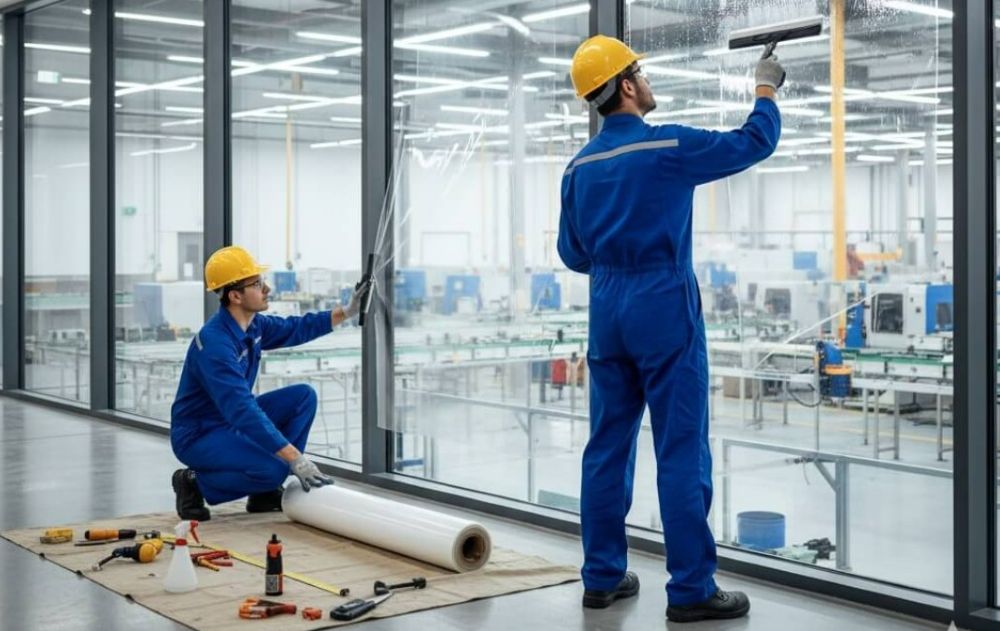
The Nuances of Application: Ensuring Optimal Adhesion, System Integration, and Edge Sealing
Professional installation hinges on several critical application nuances that ensure the film performs as designed. Optimal adhesion, the bond between the film and the glass, is paramount. This requires thorough cleaning of the glass, the use of specialized slip solutions, and precise squeegee techniques to eliminate moisture and air. Beyond the film itself, system integration is key, particularly for films designed to resist forced entry. This involves securely anchoring the film to the window frame or existing mullions, often using specialized edge retention systems that prevent the entire filmed pane from being pushed inward. Without this frame attachment, even a strong film might simply keep the glass fragments together, but still allow the entire unit to be removed. Proper edge sealing, a meticulous process of trimming and sealing the film’s perimeter, prevents premature peeling, delamination, and degradation from environmental factors, thereby maintaining the film’s long-term effectiveness.
Post-Installation Curing and Maintenance: Maximizing Long-Term System Integrity and Effectiveness
The installation process does not conclude with the final squeegee stroke. Security films undergo a crucial curing period, typically several weeks, during which the adhesive fully bonds to the glass as the mounting solution evaporates. During this time, it is vital to avoid disturbing the film, and professional installers provide clear guidance on this critical phase. Understanding the curing process is essential to maximize long-term system integrity. Proper ongoing maintenance, including specific cleaning instructions and periodic inspections, ensures the film retains its clarity, adhesion, and protective properties for its intended lifespan. A certified installer will not only apply the film correctly but also equip you with the knowledge to maintain its peak performance for years to come.
The Value of a Certified and Experienced Installation Team
Entrusting your security film installation to a certified and experienced team brings invaluable peace of mind and guarantees the investment’s return. Such teams possess a proven track record, having undergone rigorous training and demonstrated expertise in handling various film types, window configurations, and security challenges. They understand the specific requirements for commercial applications, from navigating local building codes to ensuring minimal disruption to business operations. Their certifications signify adherence to industry best practices, ensuring that every installation meets the highest standards of quality and performance. This level of expertise ensures that your security film is not just an applied product, but a fully integrated and dependable component of your facility’s protection strategy.
A Holistic View: Integrating Security Film into Your Overall Protection Strategy
While the technical merits of security film are compelling, its true value emerges when considered as a strategic component within a broader security framework. It is not designed to be a standalone solution but rather a powerful enhancement that complements and elevates existing protection measures, offering a sophisticated and layered defense against a spectrum of threats.
Commercial Security Window Film as a Critical Delay Tactic: Buying Valuable Time
The primary, and perhaps most critical, function of commercial security window film is to act as a significant delay tactic. When faced with an attempted forced entry, whether from a burglar, vandal, or active threat, the film’s ability to hold shattered glass within the frame significantly increases the time and effort required to breach the window. This delay is invaluable. It provides precious minutes for alarms to trigger, surveillance systems to capture evidence, and security personnel or law enforcement to respond. In many scenarios, the added difficulty and noise created by attempting to penetrate filmed glass is enough to deter an attacker altogether, causing them to abandon their attempt and seek an easier target.
Complementing Other Security Measures: Alarms, Surveillance, and Access Control Systems
Security film seamlessly integrates with and enhances your existing security infrastructure. Consider how it augments:
- Alarms: By slowing down entry, film gives alarm systems more time to alert authorities, improving response times and reducing potential losses.
- Surveillance: The extended breach attempt provides more time for cameras to capture clear footage of intruders, aiding identification and prosecution.
- Access Control Systems: While access control manages who enters a building, security film fortifies the perimeter, preventing unauthorized entry through vulnerable windows, especially in areas where access control might be less stringent, like ground-level windows.
Rather than replacing these systems, security film creates a synergistic effect, making each component of your security plan more effective and robust.
When Security Film Provides a Superior Solution Compared to Bars, Gates, and Traditional Barriers
While traditional physical barriers like window bars and roll-down gates have their place, security film often offers a superior solution, particularly for commercial environments where aesthetics, egress, and multi-threat protection are paramount.
- Aesthetics: Film is virtually invisible once installed, preserving the architectural integrity and natural light of your building, unlike unsightly bars or gates that can detract from a professional appearance.
- Emergency Egress: In emergency situations, filmed glass can still be broken from the inside for escape, a critical safety advantage over fixed bars.
- Multi-Threat Protection: Beyond deterring forced entry, security film provides protection against a wider range of threats including severe weather, accidental impact, and even bomb blasts or active shooter incidents by containing hazardous glass fragments. Businesses seeking additional privacy and light-control benefits may also explore smart glass film, which can switch between transparent and frosted states on demand while complementing broader glazing strategies.
- Unobstructed Views: It maintains clear views both into and out of the premises, which is essential for retail displays, employee morale, and security monitoring.
Illustrative Scenarios: Integrating Film for Comprehensive Perimeter Protection
The versatility of security film makes it suitable for a wide array of commercial applications, creating a comprehensive perimeter defense.
- Retail Stores: Protecting display windows from smash-and-grab attempts, where the film can delay entry long enough for alarms to trigger and deter opportunistic thieves.
- Office Buildings: Fortifying ground-level windows and entryways against forced entry, and mitigating risks from natural disasters or civil unrest.
- Schools and Universities: Enhancing safety in classrooms and administrative areas by containing glass fragments during an active threat or accidental impact, providing an additional layer of protection for occupants.
- Government Facilities: Reinforcing vulnerable access points against sophisticated threats and protecting against blast events.
In each scenario, security window film works silently and effectively, forming a resilient, unobtrusive barrier that buys time, deters threats, and enhances the overall safety and security profile of the commercial property.
Your Path to Proven Protection: Securing an Expert Commercial Window Assessment
Why a Professional, Site-Specific Security Assessment is the First Step to True Protection
In the realm of commercial security, a generic approach is inherently flawed. Relying solely on a product’s advertised strength without considering its specific application is akin to choosing a lock without inspecting the doorframe. Every commercial property possesses a unique set of vulnerabilities, influenced by its location, architectural design, operational hours, and the specific assets it aims to protect.
A professional, site-specific security assessment is not merely a recommendation; it is the foundational step toward developing a truly resilient and effective security solution. It moves beyond product specifications to understand how those products integrate into your unique operational environment.

Without this tailored analysis, even the highest-grade security film, measured in impressive film thickness of mils, can fall short of expectations if applied incorrectly or without an adequate anchoring system. The objective is not just to install a security film, but to implement a cohesive system that accounts for every potential point of failure. This initial assessment ensures that the ultimate solution, including the best security film for windows, is precisely engineered to address your business’s specific threat profile and structural characteristics, providing protection that is both robust and cost-effective.
What an Expert Assessment Entails: Identifying Vulnerabilities and Tailoring Custom Solutions
An expert commercial window assessment goes far beyond a quick visual inspection. It is a comprehensive process designed to meticulously identify existing vulnerabilities and gather the data necessary to engineer a truly bespoke security solution. Your consultant will approach this with a critical eye, considering both external threats and internal operational dynamics.
Key aspects of a thorough assessment typically include:
- Detailed Site Survey: This involves a physical examination of all glass surfaces, including windows, doors, and skylights, to determine existing glass types, frames, and conditions. The consultant will also evaluate the surrounding environment, including potential access points, lighting, and landscaping that could aid or deter intruders.
- Vulnerability Identification: Understanding where your property is most susceptible to forced entry, blast impacts, or natural disaster damage. This includes analyzing typical attack vectors, whether it is a quick smash-and-grab attempt or a more sustained breach effort.
- Asset Protection Prioritization: Identifying the most critical assets within your facility. The level of protection required for a display window in a jewelry store, for instance, will differ significantly from that of an administrative office window.
- Local Code and Regulatory Review: Ensuring any proposed solutions comply with local building codes, fire safety regulations, and insurance requirements.
- Discussion of Threat Profiles: A detailed conversation with you, the business owner, to understand your specific concerns, past incidents, and the types of threats you anticipate, e.g., vandalism, theft, active threat protection, severe weather or the installation of bullet proof window tint.
- Attachment Systems Integration Analysis: Evaluating the existing window frames and structures to determine the most effective attachment systems that can genuinely bond the security film to the frame, preventing the entire pane from being pushed in, even if shattered.
The outcome of this rigorous assessment is a customized security plan, not a generic product catalog. This plan outlines specific film types, film thickness recommendations in mils, precise anchoring systems, and professional installation methodologies tailored to each window and door opening, ensuring maximum protection for your unique property.
Asking the Right Questions: What to Expect from a Trusted Security Consultant Partner
Engaging with a security consultant should be an interactive process. As a business owner, you have the right to expect transparency, expertise, and a partner who is genuinely invested in your long-term security. When evaluating a potential consultant, consider the types of questions they ask you, and what questions you should ask them to ensure you are getting a true expert.
A trusted security consultant will:
- Inquire about your operational flow and peak vulnerability times. Understanding when your business is most at risk helps tailor protection strategies.
- Ask about your specific security concerns and historical incidents. Past experiences provide critical context for future planning.
- Discuss your budget and long-term security goals. A good consultant will work within your parameters while offering optimal solutions.
- Explain the ‘why’ behind their recommendations. They should articulate how a specific film type, thickness, or anchoring system directly addresses an identified vulnerability.
- Detail their installation process. Understanding the professionalism and experience of their installation teams is crucial.
- Provide clear examples of similar projects. This demonstrates their relevant experience and proven success.
In turn, you should expect answers to questions such as:
- “What specific training and certifications do your installation technicians hold for security film and anchoring systems?”
- “How do you ensure your proposed solution integrates seamlessly with our existing security infrastructure, like alarms or surveillance?”
- “Can you explain the differences between various attachment systems and why a specific one is recommended for my property?”
- “What are the long-term maintenance requirements, if any, for the proposed security film solution?”
- “What is the warranty coverage for both the film product and the installation?”
These dialogues establish trust and confirm that you are collaborating with a true expert who values a holistic, engineered approach to security.
The Value of Partnership: Building a Long-Term, Adaptable Security Strategy for Your Business
Selecting a commercial window security solution is not a one-time transaction; it is the initiation of a partnership focused on enduring protection. The business landscape, alongside threat vectors, is constantly evolving, meaning your security strategy must possess an inherent capacity for adaptation. A trusted security consultant acts as more than just an installer; they become a long-term partner dedicated to safeguarding your assets.
This partnership extends beyond the initial installation to encompass ongoing support and strategic foresight. An experienced consultant will help you:
- Adapt to Evolving Threats: As new vulnerabilities emerge or your business operations change, your partner can advise on necessary adjustments to your security film or anchoring systems.
- Conduct Periodic Reviews: Regular assessments ensure your security measures remain effective against current risks and that the film and anchoring systems are performing optimally.
- Plan for Future Expansion: If you acquire new properties or expand existing ones, your partner can ensure consistent and integrated security across your portfolio.
- Ensure Regulatory Compliance: They can keep you informed of any changes in local codes or insurance requirements that might impact your window security solutions.
This collaborative relationship transforms security from a reactive expense into a proactive, strategic investment. By choosing a partner committed to your long-term safety, you ensure your business remains protected, resilient, and adaptable in the face of unforeseen challenges with the best security film for windows.
Frequently Asked Questions
What is the best security film for windows on a commercial property?
The best security film for windows is not a single product, but rather an engineered system tailored to your specific threats and building. It combines a high-quality, multi-layered security film, an appropriate attachment system that bonds the film to the window frame, and professional installation.
How does shatterproof window film for business work to prevent forced entry?
Shatterproof window film for business is designed to absorb and redistribute impact energy. When struck, the film’s strong adhesive and high tensile strength hold shattered glass fragments together, transforming the glass into a resilient membrane that remains in the frame. This significantly delays entry, creates noise, and deters intruders.
Is forced entry window film enough on its own, or do I need other security measures?
Forced entry window film is a critical component of a layered security strategy. While it dramatically enhances window integrity and delays access, it works best when integrated with other security measures like alarms, surveillance cameras, and access control systems. The film buys valuable time for these systems to respond.
What is the typical film thickness (in mils) for commercial security window film?
Commercial security window film typically ranges from 4 mils to 21 mils in thickness. Thicker films generally offer greater impact resistance and extended delay times, with 7-mil films providing substantial protection against smash-and-grab and 14-mil or thicker films often used for advanced blast mitigation film purposes.
Why is professional installation crucial for commercial security window film?
Professional installation is paramount because security film performance relies on precise application, optimal adhesion, and proper integration with the window frame. Minor imperfections from DIY or inexperienced installation can create vulnerabilities, compromising the film’s ability to resist forced entry or impact effectively.
By treating security film as a strategic investment rather than a standalone product, businesses gain durable, adaptable protection that strengthens their overall security posture while preserving aesthetics and functionality.
Learn more at www.coolvu.com
MORE POSTS:
- UV Blocking Window Film and Plants – Protect interiors from UV damage while keeping indoor plants healthy and thriving.
- Understanding Bullet-Proof Film – Why “bullet-resistant” is the accurate term and sets realistic expectations for business security.