
- Beyond Discomfort: The Hidden Business Costs of Uncontrolled Hot Spots
- Why Traditional Solutions Like Blinds and Drapes Fall Short
- The Science of Solar Heat Gain: Understanding the Root Cause of Hot Spots
- Deconstructing Sunlight: Differentiating Between Visible Light, UV, and Infrared Heat
- Defining Solar Heat Gain Coefficient (SHGC) for Business Owners
- How Large Commercial Windows Act as Magnifying Glasses for Solar Energy
- The Impact of Building Orientation and Sun Exposure on Office Temperature Balancing
- Advanced Window Film: How to Intelligently Filter the Sun, Not Block the View
- Choosing the Right Film: A Breakdown of Your Commercial Options
- The CoolVu Advantage: Expertise-Driven Installation for Guaranteed Results
- Why Professional Consultation is the First Step to Effective Solar Heat Gain Control
- Leveraging Three Decades of Founder Experience in the Window Industry
- Our Proven Process for Analysis, Selection, and Flawless Installation
- Putting Theory into Practice: Illustrative Scenarios in Office and Retail Spaces
- Conclusion: A Strategic Investment in Comfort, Efficiency, and Asset Protection
- Frequently Asked Questions
Beyond Discomfort: The Hidden Business Costs of Uncontrolled Hot Spots
As a business owner, you understand that a productive office is a profitable one. Knowing how to reduce hot spots can greatly improve your space. One of the most common and disruptive issues we see in modern commercial spaces is the “hot spot,” those areas near large windows that become unbearably warm on sunny days. While often dismissed as a minor inconvenience, these pockets of intense heat create a ripple effect of negative consequences that directly impact your bottom line. That’s why it’s crucial to know how to reduce the heat coming through windows without needing expensive window replacement.
How Inconsistent Temperatures Impact Employee Productivity and Morale
An employee forced to work in a sun-drenched, overly warm environment is a distracted employee. Studies and common sense tell us that thermal comfort is directly linked to cognitive function. When a team member is battling glare on their screen and feeling overheated, their ability to focus, concentrate, and perform complex tasks plummets.
This issue extends beyond individual performance. Inconsistent temperatures create divisions in the workplace. Employees near the windows are constantly complaining of the heat, while those further inside may feel chilled by an overcompensating HVAC system. This disparity leads to decreased morale, frequent complaints to management, and a general sense of frustration that undermines a positive and collaborative company culture.
The Unseen Strain on Your HVAC System and Energy Bills
Your building’s HVAC system is designed to maintain a consistent, comfortable temperature throughout the entire space. However, intense solar heat gain from large windows forces the system into a constant, unwinnable battle. The thermostat registers the high temperatures near the windows and kicks the air conditioning into overdrive to compensate.
This constant cycling does two things, both of them costly. First, it drives up your energy consumption significantly, leading to predictably higher utility bills month after month. Second, it places excessive wear and tear on your HVAC equipment, shortening its operational lifespan and leading to more frequent, expensive maintenance calls and premature replacement. You are essentially paying more to cool a space that never truly feels comfortable.
Fading and Sun Damage: Protecting Your Assets and Inventory
The sun’s energy that creates hot spots is also a primary source of UV radiation. Over time, this invisible force causes irreversible damage to your physical assets. The investment you’ve made in your office’s interior and your business’s inventory is at risk every single day.
This degradation manifests in costly ways that directly subtract from your company’s value. We regularly see clients who are struggling with:
- Faded and discolored office furniture and carpets.
- Warped or damaged hardwood flooring.
- Bleached and ruined retail merchandise displayed near windows.
- Degraded artwork and corporate branding materials.
Protecting these assets is not an aesthetic choice. It is a fundamental part of preserving the capital you have invested in your business.
Why Traditional Solutions Like Blinds and Drapes Fall Short
Faced with the problems of heat and glare, the most common reaction is to install traditional window coverings like blinds or drapes. This approach seems logical, but it is based on a fundamental misunderstanding of how solar energy works. For business owners seeking a strategic, long-term solution, these methods are inefficient, incomplete, and ultimately create more problems than they solve.
The Flaw of Blocking Light to Stop Heat
The primary flaw in using blinds is the assumption that blocking visible light is the same as blocking heat. Solar energy is a spectrum composed of visible light, ultraviolet (UV) radiation, and infrared radiation, which is felt as heat. Standard blinds are designed to block light, but they do little to stop the invisible infrared and UV rays from passing through the glass and into your space.
Creating a Gloomy Environment: The Trade-Off of Lost Natural Light
To achieve even a marginal reduction in heat with blinds, you must close them completely. This action sacrifices one of the greatest assets of your commercial space: natural light. The result is a dark, gloomy environment that has been proven to negatively affect employee mood and alertness. This then forces you to rely on artificial lighting, which increases your energy costs and can add its own heat to the room, partially negating the effect of the blinds in the first place.
The Inefficiency of Trapping Heat Between Glass and Blinds
Even when blinds are closed, they provide a very inefficient barrier. Solar energy passes through the window glass and is absorbed by the surface of the blinds or drapes. This material then heats up and radiates that heat directly into your office. A significant amount of heat also becomes trapped in the air gap between the window and the covering, eventually warming the room. You are not stopping the heat, you are just delaying its entry and concentrating it on an interior surface.
The Constant Battle of Manual Adjustments and Maintenance
From an operational perspective, blinds are a persistent headache. They require constant manual adjustment as the sun moves throughout the day, a task often left to employees who have more important work to do. This results in an inconsistent, often unprofessional appearance from both inside and out. Furthermore, blinds and drapes accumulate dust, and their delicate cords and slats are prone to breaking, creating an ongoing maintenance cost in both time and money.
The Science of Solar Heat Gain: Understanding the Root Cause of Hot Spots
To effectively solve a problem, you must first understand its source. The uncomfortable hot spots plaguing your office are not a failure of your HVAC system, but a direct result of a scientific process called solar heat gain. When sunlight passes through untreated glass, it deposits an enormous amount of thermal energy into your space, creating the temperature imbalances that drive up costs and drive down productivity.
Deconstructing Sunlight: Differentiating Between Visible Light, UV, and Infrared Heat
Sunlight is more complex than what we see with our eyes. It is composed of a spectrum of energy, and for business owners, three components are critical to understand:
- Visible Light: This is the part of the spectrum that allows us to see. It provides natural daylight, which is proven to boost employee mood and productivity. While it contributes a minor amount of heat, it is the most desirable component of sunlight in an office environment.
- Ultraviolet (UV) Rays: This invisible, high-energy radiation is the primary cause of fading in your carpets, furniture, and artwork. It offers no benefit for illumination or warmth and is harmful to human skin over long-term exposure.
- Infrared (IR) Rays: This is the primary source of solar heat. Though invisible, infrared radiation accounts for over half of the sun’s thermal energy. When it passes through your windows, it is absorbed by surfaces and people, creating the intense, localized warmth you know as a hot spot.
The crucial takeaway is that the heat you feel (infrared) is separate from the light you see (visible light). This distinction is the key to solving the problem without creating new ones.
Defining Solar Heat Gain Coefficient (SHGC) for Business Owners
The Solar Heat Gain Coefficient, or SHGC, is the most important metric for understanding how your windows perform. It is a simple measurement, on a scale of 0 to 1, that tells you what fraction of the sun’s heat is transmitted through a window and released into your building.
Think of it as a performance score. A window with a high SHGC of 0.80 is allowing 80% of the sun’s heat to enter your office. A window with a lower SHGC of 0.30 allows only 30% to pass through. For any business looking to control temperature and energy costs, a lower SHGC is always the goal.
How Large Commercial Windows Act as Magnifying Glasses for Solar Energy
Your building’s large windows, while architecturally impressive, are likely the biggest contributor to your energy inefficiency. Standard commercial glass has a very high SHGC, acting like a massive, passive solar collector.
Throughout the day, these vast panes of glass absorb immense amounts of solar energy, particularly infrared heat. This energy is then radiated into the interior space, where it becomes trapped. The effect is similar to a magnifying glass, concentrating heat in the areas closest to the windows and creating the persistent hot spots that make these prime locations unusable.
The Impact of Building Orientation and Sun Exposure on Office Temperature Balancing
The sun’s path across the sky directly influences which areas of your building suffer the most. In the Northern Hemisphere, south-facing windows receive intense, direct sun for most of the day, while west-facing windows are blasted with low-angle sun in the afternoon, when temperatures are already at their peak.
This uneven solar load creates a constant battle for your HVAC system. The thermostat in a cool, shaded part of the building will continue to call for heat, while the system struggles to pump enough cold air to the sun-drenched offices. The result is a perpetual state of imbalance, with some employees shivering while others are overheating, all while your energy bills continue to climb.
Advanced Window Film: How to Intelligently Filter the Sun, Not Block the View

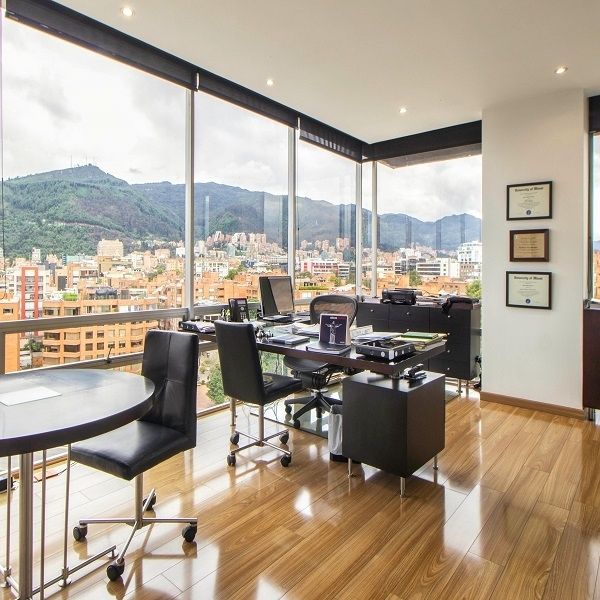
For business owners, battling these inconsistent temperatures is a losing game. The only strategic, long-term solution is not to block the view, but to intelligently filter the sun’s energy with advanced window film. Unlike blinds or drapes that offer an all-or-nothing approach, modern films provide a sophisticated, targeted solution.
The Core Principle: Spectrally Selective Technology Explained
The technology at the heart of modern window films is known as “spectrally selective” engineering. This process allows the film to differentiate between the various wavelengths of the sun’s energy—the spectrum of light.
These films are engineered with microscopic, multi-layer coatings that are precisely tuned to interact with specific types of energy. They can be designed to block a huge percentage of undesirable infrared and ultraviolet rays while allowing a high percentage of beneficial visible light to pass through uninterrupted. It is the ultimate expression of control, allowing you to choose which parts of the sun you let into your building.
How Films Reject Infrared Heat (IRR) While Preserving Natural Light
The primary function of solar control window film is to target and reject heat. This is measured by its Infrared Rejection (IRR) capability. Advanced films, particularly non-metallic ceramic versions, are designed to reflect or absorb this invisible thermal energy before it can pass through the glass.
The result is a dramatic reduction in the Solar Heat Gain Coefficient of your existing windows. By rejecting up to 97% of the sun’s infrared heat, these films stop hot spots at their source. Your office is filled with clear, natural daylight, but the oppressive heat that once came with it is gone. This allows your HVAC system to operate more efficiently, maintaining a consistent and comfortable temperature throughout the entire space.
The Added Benefit of Near-Total UV Rejection
Beyond heat control, professional-grade window films provide an essential layer of protection by blocking over 99% of the sun’s harmful UV rays. This delivers two critical benefits for your business:
- Asset Protection: UV radiation is the leading cause of fading. By virtually eliminating it, window film acts as a powerful shield, preserving the color and integrity of your expensive office furniture, flooring, artwork, and merchandise.
- Employee Wellness: For employees sitting near windows, daily exposure to UV rays is a real concern. Installing UV-blocking film demonstrates a commitment to a healthier work environment, protecting your team from prolonged skin exposure.
Achieving Glare Reduction Without Sacrificing Your Commercial Vista
Finally, advanced window films solve the persistent problem of glare. The same technology that filters heat also softens the intensity of the visible light, reducing the harsh reflections that cause eye strain and make it difficult to view computer screens.
This means your employees no longer have to squint or close the blinds, obscuring the very views that make your commercial space valuable. You can maintain an open, bright, and productive atmosphere where the outside world can be enjoyed without discomfort. It is the only solution that reduces heat and glare while preserving your commercial vista.
Choosing the Right Film: A Breakdown of Your Commercial Options
Once you recognize that simply blocking light is not a solution, the path to a more comfortable and efficient building becomes clear. The goal is not to create a darker space, but a smarter one. Advanced window films achieve this by selectively managing the sun’s energy. However, not all films are created equal. Choosing the right technology is critical to solving your specific hot spot problem.
Spectrally Selective Films: The Premium Choice for Heat Reduction
For businesses where preserving natural light and clear views is paramount, spectrally selective window films represent the pinnacle of window film technology. These films are engineered to perform a very specific task: they allow high levels of visible light to pass through while rejecting a significant portion of infrared radiation, the wavelength that is primarily responsible for solar heat gain.
Think of it as an intelligent filter for your windows. Instead of the brute-force approach of blinds, which block everything, these films precisely target and block the invisible heat. The result is a dramatic reduction in hot spots near windows without sacrificing the bright, open atmosphere that boosts employee morale and creates a welcoming environment for clients. This is the ideal solution for modern offices, high-end retail, and any space where views and daylight are part of the architectural design.
Low-Emissivity (Low-E) Films for Year-Round Climate Control
While many films focus on rejecting summer heat, Low-Emissivity (Low-E) films offer a more comprehensive, year-round approach to energy efficiency. Their unique properties allow them to manage heat transfer in both directions, adapting to the needs of the season.
In the summer, Low-E films reflect solar heat away from the glass, reducing the load on your air conditioning system. In the winter, they perform the opposite function. The film’s coating reflects your building’s interior heat back into the room, preventing it from escaping through the windows. This dual-action performance provides a more consistent interior temperature throughout the year, leading to significant energy savings and improved comfort in both hot and cold climates.
Ceramic and Metalized Films: Balancing Performance and Aesthetics
Beyond the specialized functions of spectrally selective and Low-E films, the core materials used in construction also play a vital role. Two of the most common high-performance options are metalized and ceramic films.
Metalized films are highly effective at reflecting solar heat due to a micro-thin layer of metal embedded within the film. While their performance in heat rejection is excellent, they often have a more reflective or mirrored appearance from the exterior.
Ceramic films offer a powerful, modern alternative. By using non-conductive, non-metallic ceramic nanoparticles, these films can achieve exceptional levels of heat rejection without the reflective look of metalized films. A key advantage for a commercial environment is that ceramic films do not interfere with cellular signals or wireless networks, ensuring your business operations continue without disruption.
Matching the Film Technology to Your Specific Business Needs
The most effective solution is never one-size-fits-all. The optimal window film for your business depends entirely on your specific challenges, priorities, and building characteristics. An expert consultation is required to properly diagnose the situation and prescribe the correct remedy.
Consider these factors:
- Building Orientation: A south-facing wall of glass has a far greater solar heat gain than a north-facing one and requires a film with higher heat rejection.
- Primary Complaint: Is the main issue employee discomfort, excessive glare on screens, fading merchandise, or high energy bills? Each problem points toward a different film technology.
- Aesthetic Goals: Does your business require a crystal-clear view, or would a slight tint or reflective quality be acceptable or even desirable for privacy?
- Climate: A business in a hot southern climate has different needs than one in a region with four distinct seasons, making the choice between a pure solar control film and a Low-E film critical.
The CoolVu Advantage: Expertise-Driven Installation for Guaranteed Results
Selecting the right film technology is only half the battle. The long-term performance, durability, and effectiveness of your investment are entirely dependent on the quality of the consultation and installation. This is where decades of experience become your greatest asset.
Why Professional Consultation is the First Step to Effective Solar Heat Gain Control
Attempting to choose a window film without a professional site analysis is like a doctor prescribing medication without a diagnosis. The variables are simply too complex. An experienced consultant will evaluate your existing glass type, window orientation, and local solar conditions to understand the precise nature of your heat and UV-load.
This initial analysis is the most critical phase of the process. It prevents costly mistakes, such as choosing a film with an absorption rate that is incompatible with your glass, which can lead to thermal stress and breakage. A professional consultation ensures the solution you invest in will perform as promised and directly solve the root cause of your hot spot problem.
Leveraging Three Decades of Founder Experience in the Window Industry
The principles that guide every CoolVu project are built on a foundation of over 30 years of direct experience in the window and film industry. Our founder’s deep, hands-on knowledge has been instrumental in analyzing and solving thermal and solar challenges in tens of thousands of commercial buildings.
This extensive history is not just a talking point; it is a core component of our operational DNA. It informs our product selection, our installation techniques, and the comprehensive training we provide to our nationwide network of franchise professionals. When you work with CoolVu, you are benefiting from a legacy of expertise that has been tested and proven in countless real-world commercial applications.
Our Proven Process for Analysis, Selection, and Flawless Installation
To ensure consistent, high-quality results, we follow a meticulous and transparent process designed to move from problem diagnosis to final solution with precision and professionalism.
- Step 1: Comprehensive Site Analysis: We begin by visiting your property to measure, identify glass types, and use specialized tools to assess the solar energy impacting your building.
- Step 2: Needs and Goal Assessment: We sit down with you to understand your primary objectives. We discuss comfort, energy savings, glare reduction, UV protection, privacy, and aesthetics to form a complete picture of success.
- Step 3: Tailored Solution Proposal: Based on the analysis and your goals, we recommend specific film options that will deliver the best results for your budget and performance requirements, explaining the benefits of each.
- Step 4: Flawless Professional Installation: Our certified installers prepare the glass and apply the film with exacting precision, ensuring a perfect, bubble-free cure and maximum long-term performance.
Putting Theory into Practice: Illustrative Scenarios in Office and Retail Spaces
How does this process deliver results? Consider two common commercial challenges.
The Corner Office Challenge
A law firm has a beautiful corner office with floor-to-ceiling windows. However, from 1 PM onward, the intense sun makes the space unbearably hot, causes harsh glare on computer screens, and forces employees to draw blinds, defeating the purpose of the premium view. After an analysis, we recommend a spectrally selective film. The installation dramatically reduces heat and glare, allowing employees to work comfortably with the blinds open all day, improving morale and productivity without sacrificing natural light.
The Retail Storefront Dilemma
A boutique clothing store owner is frustrated. Expensive merchandise in the front display is fading quickly from UV damage, and customers rarely linger near the sun-baked front windows. The solution is a transitional film that blocks 99.9% of UV rays and rejects a high level of solar heat. The film also adapts to the intensity of the sun, providing more tint and glare control during the brightest parts of the day. As a result, the merchandise is protected, the storefront is more comfortable, and the entire space feels more inviting to shoppers.
Conclusion: A Strategic Investment in Comfort, Efficiency, and Asset Protection
For business owners, the persistent battle against inconsistent temperatures is more than a minor annoyance. It is a drain on resources, a drag on employee morale, and a constant operational challenge. The preceding analysis has shown that conventional methods like blinds and shades are incomplete fixes that treat a symptom, light, instead of the root cause, solar energy. The only strategic, long-term solution is not to block the view, but to intelligently filter the sun’s energy with advanced window film.
Key Takeaways: Moving Beyond Inefficient Hot Spot Battles
Relying on blinds to manage solar heat is a fundamentally flawed approach. It forces a daily choice between a comfortable space and a naturally lit one, often resulting in a gloomy interior that feels disconnected from the outside world. To truly solve the problem of hot spots, a more sophisticated understanding of the sun’s energy is required.
Here are the essential points to remember:
- The Problem is Heat, Not Just Light: Hot spots are primarily caused by infrared radiation, the invisible heat component of sunlight, which passes easily through standard glass. Blocking only visible light with blinds does little to stop this influx of heat.
- Window Film Offers a Selective Solution: Modern commercial window films are engineered to distinguish between different types of solar energy. They can block a significant percentage of infrared heat and nearly all harmful UV radiation while allowing a high level of natural light to pass through.
- Preserving the View is a Business Asset: Large windows are a valuable architectural feature. They enhance the work environment and provide a connection to the outdoors. Window film preserves this asset, unlike view-obstructing blinds.
- Comfort is No Longer a Compromise: By addressing the root cause of temperature imbalances, window film creates a consistently comfortable environment for everyone, eliminating the need for employees to constantly adjust their position or for management to field complaints.
The Long-Term ROI of Commercial Window Tinting for Heat Reduction
Viewing commercial window film as a one-time expense misses the larger picture. It is a capital improvement that delivers a measurable return on investment across several critical areas of your business. The financial and operational benefits accumulate over the entire lifespan of the film, making it one of the most cost-effective upgrades you can make.
First and foremost are the direct energy savings. By rejecting a substantial amount of solar heat before it enters your building, window film significantly reduces the load on your HVAC system. This translates into lower cooling costs month after month, providing a clear and predictable payback period. In many climates, the year-round energy savings alone are enough to justify the initial investment.
Beyond utility bills, the return extends to your most valuable assets: your people and your property. An environment free from distracting temperature swings and harsh glare is one where employees can focus and be more productive. This improvement in comfort also boosts morale and can be a key factor in tenant attraction and retention. Furthermore, by blocking over 99% of UV radiation, window film acts as a powerful shield, protecting expensive furniture, flooring, and merchandise from fading and degradation, thus extending their life and reducing replacement costs.
Your Next Step Toward a Cooler, More Productive Business Environment
Understanding the science behind solar heat gain is the first step. The next is to apply that knowledge to your unique commercial space. Every building has its own set of challenges, from the orientation of its windows and the type of glass installed to the specific activities taking place near the perimeter.
A professional consultation is the most effective way to determine the ideal solution for your property. An expert can assess your specific needs, measure your windows, and recommend a film that balances heat rejection, light transmission, and aesthetics. This tailored approach ensures you are not just buying a product, but investing in a comprehensive solution that will deliver comfort and efficiency for years to come.
Frequently Asked Questions
1. Why aren’t my office blinds enough to stop the “hot spots” near windows?
Standard blinds and drapes are designed to block visible light, but they are ineffective at stopping infrared radiation, which accounts for over 50% of the sun’s thermal energy. Even when closed, blinds absorb heat and radiate it into the room, or trap hot air against the glass. Furthermore, closing them sacrifices natural light, leading to a gloomy environment and higher artificial lighting costs.
2. Will installing window film make my office too dark or ruin the view?
No. Unlike traditional tinted glass, modern spectrally selective films act as an intelligent filter. They are engineered to block the invisible wavelengths responsible for heat (infrared) and fading (UV) while allowing high levels of beneficial visible light to pass through. This means you can maintain your commercial vista and natural daylight without the accompanying heat and glare.
3. What is SHGC, and why should a business owner care about it?
SHGC stands for Solar Heat Gain Coefficient. It is a rating (from 0 to 1) that measures how much solar heat a window allows into a building. A high SHGC (e.g., 0.80) means 80% of the heat is entering your space. High-performance window films lower this coefficient significantly, which directly reduces the load on your HVAC system and lowers your monthly energy bills.
4. Can window film really help extend the life of my office furniture and flooring?
Yes. Ultraviolet (UV) radiation is the primary cause of fading and material degradation. Professional-grade window films block over 99% of harmful UV rays. This protection preserves the color and integrity of carpets, hardwood floors, office furniture, and retail merchandise, protecting the capital you’ve invested in your interior assets.
5. How do I know which type of film is right for my specific building?
The right choice depends on your building’s orientation (e.g., south-facing windows need higher heat rejection), your local climate, and your primary goal (glare reduction vs. heat retention). For example, Low-E films are excellent for year-round climate control in four-season regions, while ceramic films provide high heat rejection without interfering with cellular or Wi-Fi signals. A professional site analysis is the best way to determine the optimal match for your needs.