- Beyond Blinds: Why Your Commercial Property Needs a Modern Window Upgrade
- Introducing the Next Generation of Commercial Window Treatments
- A Deep Dive into the Functional Benefits of Architectural Window Films
- Comparing the ROI: Architectural Films vs. Traditional Blinds and Drapes
- How to Choose the Right Modern Window Solution for Your Business
- Conclusion: The Strategic Advantage of Investing in Modern Window Films
- Frequently Asked Questions
Beyond Blinds: Why Your Commercial Property Needs a Modern Window Upgrade
As a business owner, you scrutinize every line item, from payroll to paper clips, ensuring each expense contributes to your bottom line. Yet, one of the most significant features of your building—its windows—is often treated with an outdated, passive solution: traditional blinds and drapes. While seen as a default choice, these coverings are frequently a source of hidden costs, operational headaches, and missed opportunities.
It’s time to re-evaluate what you expect from your windows. The choice is no longer just about privacy or blocking light; it’s about actively improving your commercial environment, enhancing its value, and reducing your operating expenses.
The Hidden Costs and Frustrations of Traditional Window Coverings
Are blinds and drapes holding your business back? At first glance, they seem like a simple, low-cost fix for light and privacy. In reality, they introduce a host of ongoing problems that drain resources and detract from the professional environment you work so hard to cultivate.
The Constant Cycle of Cleaning, Maintenance, and Replacement
Traditional window coverings are a recurring maintenance liability. They are magnets for dust, allergens, and grime, requiring constant cleaning that is both time-consuming and costly. Beyond the dust, the physical wear and tear create a perpetual cycle of repair and replacement.
Consider the common issues that plague almost any commercial space with blinds or drapes:
- Cleaning Demands: Fabric drapes absorb odors and require expensive professional cleaning, while the slats on blinds necessitate tedious, individual wiping.
- Operational Failure: Cords get tangled and break, slats bend or snap, and drapery hardware pulls away from the wall. This not only looks unprofessional but can also present safety hazards.
- Frequent Replacement: Unlike a durable building material, blinds and drapes are furnishings with a limited lifespan. They fade, stain, and break down, requiring a full replacement every few years, which represents a recurring capital expense.
How Outdated Coverings Negatively Impact Aesthetics and Natural Light
Your physical space is a direct reflection of your brand. Bulky, broken, or dusty window coverings can make an office feel dated and poorly maintained. They create a visual inconsistency, with some blinds open, some closed, and others stuck halfway, projecting an image of disorganization.
Furthermore, these traditional solutions force a binary choice: open or closed. When closed, they block precious natural light, which studies have repeatedly shown to improve employee mood, productivity, and well-being. When open, they offer no protection from glare or solar heat. This all-or-nothing approach prevents you from creating the bright, open, and modern environment that today’s employees and clients expect.
The Inefficiency of Traditional Solutions in Energy Management
Perhaps the highest hidden cost is energy waste. While blinds and drapes can block visible light, they do very little to manage solar heat gain. In the summer, solar energy streams through your windows, heating up the interior and forcing your HVAC system to work overtime, driving up electricity bills. In the winter, they offer minimal insulation, allowing heat to escape through the glass.
They are a passive barrier, not an intelligent solution. They fail to address the primary driver of energy inefficiency in commercial buildings with large window expanses: the thermal properties of the glass itself.
Introducing the Next Generation of Commercial Window Treatments
If traditional coverings are the problem, what is the solution? The answer lies in shifting your perspective from passively covering a window to actively improving its performance. Modern advancements in material science have given rise to a new category of window solutions that are more effective, durable, and cost-efficient.
What Are Architectural Window Films?
Architectural window films are technologically advanced polyester or ceramic-based laminates that are professionally applied directly to the surface of your existing glass. These micro-thin films are engineered to selectively filter the sun’s energy.
Think of it as a high-performance upgrade for your current windows. Without replacing the glass, you can add powerful new capabilities, including:
- Advanced solar control to reject heat and reduce energy costs.
- UV filtering to protect interiors from fading.
- Glare reduction to improve comfort and screen visibility.
- Enhanced safety, security, and privacy.
A Quick Look at Other Modern Alternatives: Smart Glass and Low-E Coatings
To provide a full picture, it’s helpful to understand other modern technologies. Smart glass, or switchable glass, can change from clear to opaque with the flip of a switch. Low-E, or low-emissivity, coatings are microscopic metallic layers applied at the factory during window manufacturing to improve insulation.
While powerful, these solutions have significant drawbacks for existing buildings. Smart glass is prohibitively expensive and requires a complete window replacement and electrical wiring. Low-E coatings are only available on new windows, making them an impractical solution unless you are already undertaking a major, multi-million-dollar window replacement project.
Why Window Film Represents the Optimal Blend of Performance and Value
When you compare these options, architectural window film emerges as the clear winner for most commercial property owners seeking a strategic upgrade. It delivers the high-tech benefits of modern window solutions without the extreme costs or disruptive installation of a full window replacement.
Here’s why it provides the best return on investment:
- Cost-Effectiveness: Window film can provide similar energy savings and UV protection as new Low-E windows for a fraction of the cost, typically delivering a full ROI in as little as 2-5 years through energy savings alone.
- Installation and Versatility: Film installation is quick, quiet, and minimally disruptive to your business operations. It can be applied to virtually any window shape or size, allowing you to upgrade your building without the mess and expense of a construction project.
- Performance Spectrum: Unlike a single-function solution, there is a vast portfolio of window films. You can choose a film that maximizes energy savings, a security film that reinforces glass against impact, a decorative film that adds privacy and branding, or one that combines multiple benefits.
Shifting from Passive Coverings to Active Window Solutions
Ultimately, the decision comes down to a fundamental shift in strategy. Traditional blinds and drapes are passive coverings that require constant maintenance and offer poor performance. They are an expense that depreciates over time.
Architectural window films, on the other hand, are an active, intelligent solution. They work continuously to manage energy, protect assets, and improve the indoor environment. They represent a one-time capital improvement that adds measurable, long-term value to your property, making them a strategic investment in the performance and appeal of your business.
A Deep Dive into the Functional Benefits of Architectural Window Films
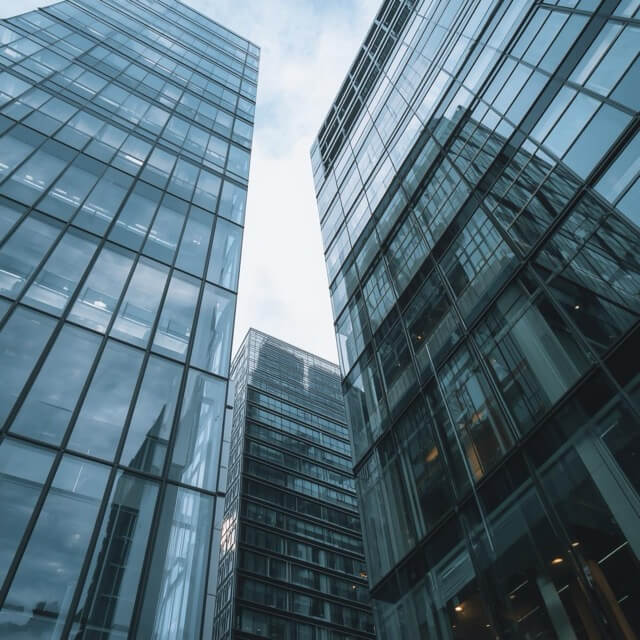
While the aesthetic upgrade is immediate, the true value of architectural window films lies in their powerful, multi-faceted performance. These are not simply decorative applications, but strategic upgrades that actively solve common and costly problems for commercial property owners.
Maximizing Energy Efficiency and Reducing HVAC Costs
Unprotected windows are a significant source of solar heat gain, forcing your building’s HVAC system to work overtime to maintain a comfortable temperature. This continuous strain results in higher energy consumption and increased operational costs, especially during warmer months.
Architectural window films directly address this issue by rejecting a substantial amount of solar energy before it enters your building. By acting as a thermal shield, these films can reduce solar heat gain through glass by up to 80%. The result is a more stable indoor temperature, a significantly reduced load on your air conditioning units, and a direct, measurable decrease in your monthly utility bills.
Protecting Your Assets: Blocking 99% of Harmful UV Rays
Ultraviolet radiation is the single largest contributor to the fading and degradation of interior furnishings. Sunlight streaming through untreated windows can permanently damage expensive assets, including flooring, carpeting, office furniture, artwork, and retail merchandise. This leads to premature replacement costs and a diminished appearance for your space.
Modern window films are engineered to block over 99% of damaging UV rays. This level of protection acts as a constant safeguard for your investments. By virtually eliminating UV radiation, you extend the life and preserve the color and integrity of your interiors, protecting the capital you have invested in your property’s assets.
Enhancing Employee and Customer Comfort by Reducing Glare
Intense glare from the sun is more than a minor annoyance. For employees, it causes eye strain and reduces productivity, particularly for those working on computer screens. For customers in a cafe, retail store, or waiting room, it can create an uncomfortable and unwelcoming experience.
Solar control films are designed to dramatically reduce glare without sacrificing natural light or obstructing views. Unlike blinds or drapes that create an “all or nothing” scenario of either darkness or blinding light, films modulate the intensity of the sunlight. This creates a soft, diffused light that enhances visual comfort, reduces eye fatigue, and improves the overall experience for everyone inside the building.
Understanding the Technology Behind Solar Control Films
The performance of modern window films is rooted in advanced material science. These multi-layered products utilize a combination of technologies to manage the sun’s energy.
At their core, solar control films work by selectively filtering the solar spectrum. Micro-thin layers of metal or ceramic particles are embedded within the film to reflect or absorb specific wavelengths of light. Infrared rays, which are the primary source of solar heat, are rejected. Harmful ultraviolet rays are blocked. Meanwhile, a high percentage of visible light is allowed to pass through, preserving the clarity and brightness of your space. This spectrally selective technology is what allows the film to control heat and UV without making your building feel dark or enclosed.
Comparing the ROI: Architectural Films vs. Traditional Blinds and Drapes
A smart business decision is always grounded in a clear return on investment. While traditional window coverings like blinds and drapes may seem like a less expensive option initially, a closer analysis reveals that architectural films deliver far greater long-term financial and operational value.
Calculating the Upfront Investment vs. Long-Term Savings
Blinds and drapes are typically viewed as a furnishing expense with a limited lifespan. They require frequent maintenance, repair, and eventual replacement. Architectural film, on the other hand, is a one-time capital improvement that begins generating returns from the day it is installed.
When you invest in window film, you are purchasing a durable solution that integrates directly with your existing glass. The upfront cost includes professional installation and a product designed to last for years, often backed by extensive warranties. This single investment unlocks ongoing savings that quickly surpass the initial cost of less effective, traditional alternatives.
The Financial Impact of Reduced Energy Consumption
The most direct and easily calculated return from window film comes from energy savings. By reducing the workload on your HVAC system, you lower your building’s primary operational cost. Depending on the climate, building orientation, and type of film selected, commercial properties can realize annual energy savings of 5% to 15%.
These are not one-time savings. They accumulate month after month, year after year, directly improving your net operating income. Over the lifespan of the film, these savings alone can often exceed the total initial investment, delivering a clear and compelling payback.
Factoring in Maintenance and Replacement Cost Avoidance
Consider the hidden costs associated with traditional window coverings. Blinds accumulate dust and allergens, requiring frequent and costly cleaning. Their mechanical parts, like cords and wands, are prone to breaking, leading to constant repair and replacement cycles. Drapes can become stained and faded, diminishing the professional appearance of your space.
Architectural films eliminate these recurring costs. They have no moving parts to break and require no special maintenance beyond normal window cleaning. Their durability means you avoid the cycle of purchasing, repairing, and replacing coverings every few years. This translates to significant savings in both materials and labor over time.
The Intangible ROI of Improved Aesthetics and Tenant Satisfaction
Beyond the hard numbers, architectural films provide valuable returns that enhance the appeal and value of your property.
- Elevated Aesthetics: Films offer a clean, uniform, and modern appearance from both the interior and exterior, improving curb appeal without the visual clutter of mismatched or broken blinds.
- Unobstructed Views: You can control heat and glare without blocking the desirable outdoor views that make a property more attractive to tenants and customers.
- Enhanced Comfort: A space free from glare and temperature imbalances is more comfortable and productive. For commercial landlords, this can be a key factor in attracting and retaining high-value tenants.
- Increased Privacy: Certain films can add a layer of daytime privacy, allowing light in while preventing outsiders from seeing into the building, which is a valuable feature for many businesses.
How to Choose the Right Modern Window Solution for Your Business
Selecting the ideal window film is less about picking a product and more about defining a strategy for your commercial space. With a clear understanding of the versatile solutions available, the next step is a methodical approach to ensure your investment aligns perfectly with your business objectives. This process guarantees you not only solve your immediate problems but also maximize your return for years to come.
Assessing Your Primary Needs: Glare, Heat, Privacy, or Aesthetics?
Before exploring specific products, begin with a simple walkthrough of your property. Observe how your space functions and feels throughout the day. The most effective window film solution is one that is prescribed to solve your most significant pain points.
Are your west-facing offices unusable in the afternoon due to intense heat and glare? Are employees using makeshift cardboard barriers on their windows to see their computer screens? Your primary need is likely solar control. Is your ground-floor conference room’s fishbowl-like transparency a concern for confidential meetings? Then privacy is your main driver. Perhaps your storefront feels dated and fails to capture the attention of foot traffic. In that case, your focus is on aesthetics and branding. By clearly identifying your number one priority, you create a focused starting point for a productive consultation.
Navigating the Key Differences in Film Types and Technologies
Once you have identified your primary need, you can begin to navigate the different categories of architectural films. While a professional will guide you to the exact specifications, understanding the main types will empower you to have a more informed conversation.
- Solar Control Films: These are engineered to reject solar heat, block UV radiation, and reduce glare. They range from nearly invisible films that preserve your view to more reflective options that offer maximum heat rejection.
- Decorative Films: This broad category includes everything from frosted films that mimic the look of etched glass to vibrant, custom-printed graphics. They are used to enhance aesthetics, add privacy, and reinforce brand identity on glass partitions, doors, and exterior windows. Businesses can also incorporate window perf for graphics on glass surfaces to extend branding, advertising, and visual messaging throughout the workplace while maintaining visibility where needed.
- Privacy Films: While many decorative films offer privacy, dedicated privacy films include options like one-way mirror films for daytime security and blackout or whiteout films for areas requiring total visual obstruction.
- Safety and Security Films: These thick, heavy-duty films are designed to hold shattered glass in place. They serve as a deterrent to intruders and significantly reduce the risk of injury from broken glass during accidents or severe weather events.
It is important to note that many modern films are hybrids, combining technologies to solve multiple problems at once. For instance, a decorative frosted film can also offer excellent UV protection, and some solar films provide a degree of daytime privacy.
The Critical Importance of Professional Consultation and Installation
Choosing the right type of film is only the first step. The success of your investment hinges entirely on professional expertise. A seasoned consultant does more than just present samples; they analyze your specific environment, including your building’s orientation, the type of glass in your windows, and your operational goals, to recommend the optimal solution. An incorrect film choice can lead to subpar performance or, in rare cases, even damage your glass.
Equally important is the installation itself. Professional installers are trained to prepare the glass and apply the film for a flawless, long-lasting bond. A poor, amateur installation inevitably results in bubbles, peeling edges, and contaminants trapped under the film, completely negating the aesthetic and functional benefits. Furthermore, manufacturer warranties are almost always contingent on installation by a certified professional, protecting your investment for the long term.
Questions to Ask a Window Film Provider Before You Invest
To ensure you are partnering with a credible and capable provider, arm yourself with the right questions. A true professional will welcome your diligence and provide clear, confident answers.
- Based on my stated needs, what specific film do you recommend and why?
- Can you provide the performance data for that film, such as Total Solar Energy Rejected (TSER) and Visible Light Transmission (VLT)?
- What is the full cost of the project, including materials and installation, with no hidden fees?
- What does the warranty cover, and what is its duration? Does it cover both the film and the labor?
- Are your installers employees or subcontractors, and what certifications do they hold?
- Can you provide references or show me a portfolio of similar projects you have completed?
- What is your process for installation, and what steps will you take to minimize disruption to my business?
Conclusion: The Strategic Advantage of Investing in Modern Window Films
The decision of how to treat your commercial windows extends far beyond simple decoration. It is a strategic choice that directly impacts your operating budget, the longevity of your assets, the comfort of your employees and customers, and the overall perception of your brand. While traditional blinds and drapes have been the default option for decades, a detailed comparison reveals they are an outdated and inefficient solution for the demands of a modern business.
Recapping the Superiority of Films Over Outdated Coverings
Throughout this analysis, a clear conclusion emerges. Architectural window film consistently outperforms traditional coverings in every category that matters to a discerning business owner.
- Functionality: Window films are an active solution, working continuously to reject solar heat, block over 99% of damaging UV rays, and reduce glare. Blinds and drapes are passive. They must be closed to be effective, which sacrifices natural light and views, creating a closed-off, artificial environment.
- Maintenance: Films integrate seamlessly with your glass and require nothing more than standard window cleaning. Blinds and drapes, with their numerous slats, cords, and fabric folds, are notorious for collecting dust, allergens, and requiring frequent, costly repairs or replacement.
- Aesthetics: Modern films offer a clean, sophisticated look that enhances a building’s architecture without obstructing the view. They provide a uniform exterior appearance, unlike the chaotic look of mismatched, half-drawn blinds.
- Longevity: Professionally installed window films are a durable, long-term solution designed to last for years without mechanical failure. Traditional coverings suffer from constant wear and tear, leading to broken slats, torn fabrics, and malfunctioning mechanisms.
In essence, window film is a “set it and forget it” upgrade, while traditional coverings are a recurring maintenance liability.
Embracing Window Film as an Intelligent Business Investment
Shifting your perspective from viewing window treatments as a mere expense to seeing them as a capital investment is crucial. Blinds and drapes are a cost with little to no return. Architectural window film, on the other hand, is an investment that actively works to improve your bottom line.
The return on investment begins immediately. By significantly reducing solar heat gain, films can lower your building’s cooling costs by up to 30%, generating tangible savings on every energy bill. This one-time installation cost often pays for itself in just a few years.
Furthermore, the protective benefits translate directly into cost avoidance. By blocking the UV radiation that causes fading, you extend the life of your interior assets, from flooring and furnishings to valuable merchandise. This protection preserves your capital and reduces future replacement costs. When you factor in the enhanced productivity and comfort for employees, the financial case becomes undeniable.
The Future of Commercial Windows and Your Market Opportunity
The trend in commercial real estate is clear. Business owners and property managers are increasingly seeking smart, sustainable, and high-performance building solutions. Energy efficiency is no longer a bonus; it is a core requirement driven by both financial sense and corporate responsibility.
This shift marks a significant and growing market opportunity. Businesses are actively looking for the exact solutions that modern window films provide. They need to reduce operating costs, enhance building security, and create more comfortable, modern spaces. They are moving away from the liabilities of outdated coverings and toward the strategic advantages of architectural films.
For entrepreneurs looking to enter a market with expanding demand and a clear value proposition, this is a pivotal moment. The need is real, the solution is proven, and the opportunity to become the go-to expert for these transformative upgrades in your community is immense.
Frequently Asked Questions
If I switch from blinds to window film, will I lose my privacy?
Not at all. While traditional window coverings like blinds provide privacy by blocking the view entirely, modern films offer options like frosted, mirrored, or tinted finishes. These allow you to maintain daytime privacy or consistent 24/7 obstruction without the “all-or-nothing” drawback of closing a physical curtain.
Can window film actually replace the insulation provided by heavy drapes?
Yes, and often more effectively. While drapes trap a small pocket of air, Low-E architectural films reflect radiant heat back into the room during winter and reject solar heat in the summer. This treats the glass itself as an insulator, providing year-round thermal control that fabric simply cannot match.
Do I have to clean window film differently from how I cleaned my blinds?
It is actually much easier. Blinds are notorious dust collectors that require individual slat wiping. Window film is a smooth, non-porous surface that integrates with your glass; you simply clean it using a soft cloth and standard ammonia-free glass cleaner during your normal window washing routine.
Will removing my current window coverings make the office too bright for screens?
No, because high-performance films are specifically engineered to “tame” light. They reduce the intense, high-contrast glare that causes screen washout while still allowing soft, natural light to illuminate the office. You get the benefits of a sunlit space without the squinting associated with bare windows.
Is window film more expensive than buying commercial-grade blinds?
While the upfront cost of professional film can be similar to high-end custom blinds, the ROI is vastly superior. Blinds are a depreciating expense that eventually breaks or stains. Window film is a capital improvement that pays for itself in 2–5 years through lower energy bills and reduced HVAC maintenance.