- The Unseen Drain: How an Inefficient Building Bleeds Your Profits
- The Renovation Dilemma: Why Major Overhauls Aren’t Always the Smartest Move
- Quick Wins for Immediate Impact: Low-Disruption Energy Saving Strategies
- The Ultimate Non-Invasive Upgrade: Advanced Window Films Explained
- Calculating the True ROI: Window Film vs. Full-Scale Renovation
- Partnering with an Expert for Maximum Energy Savings
- Conclusion: A Clearer Path to Profitability and Performance
- Frequently Asked Questions
The Unseen Drain: How an Inefficient Building Bleeds Your Profits
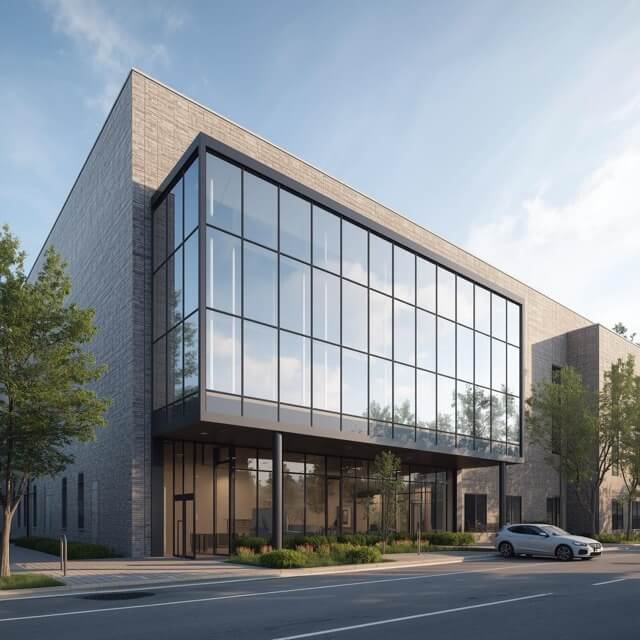
As a business owner, you scrutinize your P&L statement for any drag on profitability. Yet, one of the most significant and consistent drains on your bottom line is often hiding in plain sight: the building itself. An inefficient commercial property doesn’t just result in a high utility bill. It actively works against your financial goals, creating a cascade of direct and indirect costs that erode margins and hinder growth.
Beyond the Utility Bill: The Full Spectrum of Energy Waste
The monthly electricity or gas bill is the most obvious symptom of an inefficient building, but it’s only the tip of the iceberg. The true cost of energy waste extends far deeper into your operational budget.
When your HVAC system runs constantly to combat heat gain or loss, it’s not just consuming more energy. It’s also undergoing excessive wear and tear. This leads to more frequent service calls, costly component failures, and a drastically shortened operational lifespan. The capital expense of replacing a commercial HVAC system, often years ahead of schedule, can dwarf years of elevated utility payments.
How Poor Insulation and Inefficient Windows Impact HVAC Load
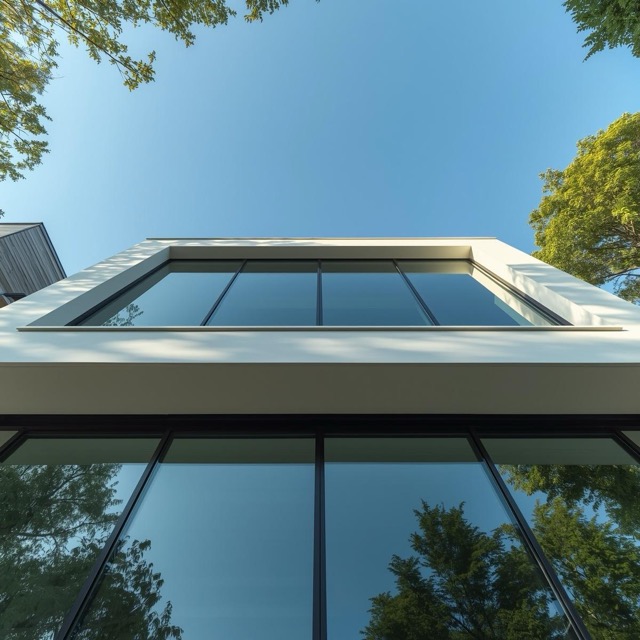
Your building’s windows are often the weakest link in its thermal envelope. Older, untreated glass is a massive liability in energy management. In the summer, it allows solar radiation to pour in, creating a greenhouse effect that drives up interior temperatures. Your air conditioning system is then forced into a losing battle, running nonstop just to maintain a tolerable climate.
In the winter, the reverse is true. That same inefficient glass becomes a conduit for heat to escape, forcing your furnace to work overtime. This constant thermal transfer places a tremendous and unnecessary load on your HVAC system. You are essentially paying to cool the outdoors in the summer and heat it in the winter, a fundamentally unprofitable endeavor.
The Tangible Cost of Discomfort: Productivity and Tenant Retention
The financial bleeding caused by an inefficient building isn’t limited to mechanical systems and utility providers. It directly impacts the people inside, and that has a very real price tag.
For businesses that occupy their own space, employee comfort is directly linked to productivity. An office plagued by hot spots, cold drafts, and distracting glare is an office full of distracted, uncomfortable employees. Studies have repeatedly shown that thermal stress and poor lighting conditions lead to decreased concentration, more errors, and lower overall output.
For property managers and commercial landlords, the stakes are even higher. In a competitive market, tenant comfort is a key differentiator. If your building is known for being too hot in the summer or too cold in the winter, you will struggle to retain high-quality tenants. The costs associated with tenant turnover, including lost rent during vacancies, marketing for a new lessee, and broker commissions, are substantial. It is always more profitable to keep a happy tenant than to find a new one.
The Renovation Dilemma: Why Major Overhauls Aren’t Always the Smartest Move
Faced with mounting energy costs and comfort complaints, many building owners logically turn to the most visible solution: a large-scale renovation. Replacing windows, upgrading the HVAC system, or redoing the roof seem like the only ways to solve the problem permanently. However, this traditional approach often introduces a new set of financial and operational challenges that can make it the wrong move for your business.
The High Price of Disruption: Operational Downtime and Lost Revenue
A major capital project is inherently disruptive. Replacing windows or overhauling an HVAC system involves noise, dust, and a constant stream of contractors. For a customer-facing business like a retail store or restaurant, this can mean closing your doors for days or weeks, resulting in a direct and immediate loss of revenue.
For office-based businesses, the disruption translates into lost productivity as employees are displaced or forced to work in a chaotic environment. The true cost of a renovation is never just the invoice from the general contractor. It’s the sum of the project price plus all the revenue you lose and the operational efficiency you sacrifice while the work is being done.
Navigating the Financial Burden of Large-Scale Capital Projects
The sticker shock associated with major renovations is significant. A full window replacement for a mid-sized commercial building can easily run into the hundreds of thousands or even millions of dollars. These are massive capital expenditures that place a heavy strain on a company’s finances.
Securing funding for such a project can be a complex and lengthy process, diverting your focus from core business activities. For many small to medium-sized businesses, tying up that much capital or taking on that much debt simply isn’t a viable option.
When the Payback Period Doesn’t Align with Business Goals
Perhaps the most critical flaw in the “renovate-at-all-costs” mindset is the payback period. While new windows or a state-of-the-art HVAC system will eventually pay for themselves in energy savings, “eventually” can be a very long time.
- Long-Term Horizon: Payback periods for these projects are often measured in decades, not years. A 15-year ROI may not align with your 5-year business plan or a potential exit strategy.
- Urgency Mismatch: The solution’s timeline does not match the problem’s urgency. A 15-year payback does little to solve the cash-flow crunch you’re experiencing from high energy bills today.
- Opportunity Cost: The capital locked up in a slow-returning renovation project could often be invested elsewhere in the business for a much faster and higher return.
The goal is to reduce energy costs and improve profitability now, not 15 years from now. This fundamental misalignment is why many savvy business owners are looking past the renovation dilemma for smarter, faster, and more cost-effective solutions.
Quick Wins for Immediate Impact: Low-Disruption Energy Saving Strategies
For any business owner, the prospect of a full-scale energy efficiency renovation is daunting. The capital outlay is immense, and the operational disruption can impact revenue for weeks or even months. The good news is that a multi-million dollar overhaul is not the only path to lower utility bills. A strategic focus on low-disruption upgrades can deliver a substantial return on investment without halting your business operations.
The Role of Smart Thermostats and Automated Lighting
Among the most accessible upgrades are smart controls for your building’s core systems. Smart thermostats learn your building’s occupancy patterns, adjusting heating and cooling automatically to eliminate waste during off-hours. Similarly, automated lighting systems using motion sensors and timers ensure that you are only paying to illuminate occupied spaces.
These systems are effective first steps, creating immediate savings by optimizing how you use energy. They are relatively low-cost and can be installed with minimal disruption. However, they primarily address the consumption side of the equation. They do not solve the underlying problem of how energy, particularly thermal energy, is lost or gained through the building itself.
Sealing the Building Envelope: Simple Fixes for Air Leaks
Your building’s “envelope” is the physical barrier between the conditioned interior and the exterior environment. Every unsealed gap, crack, or seam in this envelope is a potential source of significant energy loss. Air infiltration from poorly sealed windows, doors, and utility penetrations can force your HVAC system to work overtime, fighting a constant battle against the outside air.
A thorough audit and subsequent sealing with caulk and weatherstripping is one of the most cost-effective energy-saving measures you can undertake. This foundational fix plugs obvious leaks and provides a rapid payback, but it only addresses one component of energy transfer. The largest, most inefficient surfaces in your building envelope are often left untreated: your windows.
Transitioning to an Energy-Efficient Window Solution Without Replacement
Windows are frequently the single greatest point of energy inefficiency in a commercial building. Older single-pane or even double-pane glass offers poor insulation, allowing costly conditioned air to escape and unwanted solar heat to pour in. The traditional solution, full window replacement, is prohibitively expensive, invasive, and disruptive, often ranking as one of the costliest capital improvements a building owner can face.
This is where a critical shift in strategy pays dividends. Instead of focusing on replacing the entire window unit, you can upgrade the performance of the existing glass. This approach allows you to achieve significant energy efficiency gains for a fraction of the cost and with zero structural modification or operational downtime, transforming your largest energy liability into a high-performance asset.
The Ultimate Non-Invasive Upgrade: Advanced Window Films Explained
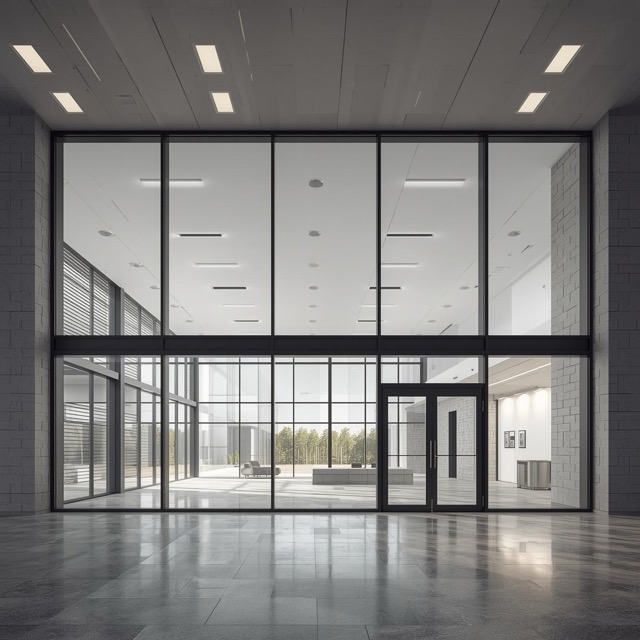
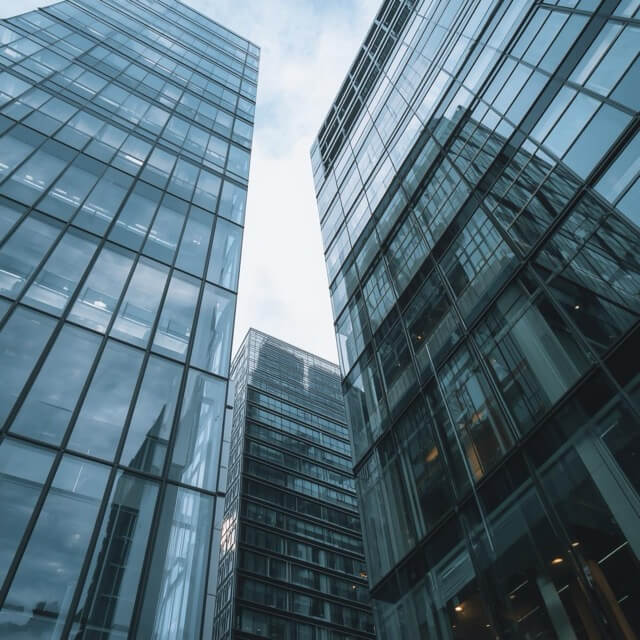
While the strategies above provide a solid foundation, the single most impactful, non-invasive upgrade for improving a building’s energy performance is the application of modern window film. Far from the simple tinted sheets of the past, today’s advanced films are sophisticated, multi-layered products engineered to control energy transfer with remarkable precision. They tackle the primary driver of cooling costs—solar heat gain—directly at the source, delivering results that rival the performance of new, high-efficiency windows at a mere fraction of the investment.
How Modern Window Films Control Solar Heat Gain
A building’s windows act like greenhouses, allowing solar energy to pass through the glass and become trapped inside as heat. This effect, known as solar heat gain, can dramatically increase indoor temperatures and place an enormous load on your air conditioning system.
Advanced window films work by filtering the sun’s energy. They are engineered to be transparent to visible light but reflective to infrared (IR) and ultraviolet (UV) radiation. Since infrared radiation is responsible for the heat you feel from the sun, rejecting it before it enters the building is the key to controlling solar heat gain. By coating your existing glass with a thin, optically clear film, you can block up to 80% or more of the sun’s heat-producing infrared energy.
From Tinting to Technology: Three Decades of Window Film Innovation
The perception of window film is often rooted in the dark, dyed “limo tint” of the 1980s and 90s. Those early products worked primarily by absorbing light, making them dark and prone to fading and bubbling over time. The industry has since undergone a technological revolution.
Modern window films are not dyed; they are constructed with durable polyesters and infused with layers of ceramic or precious metals through advanced processes like sputtering. This technology allows for the creation of films that are virtually clear yet possess incredible heat-rejecting capabilities. This innovation means you no longer have to choose between energy efficiency and natural light or views.
Understanding Spectrally Selective and Low-E Window Film
The performance of modern window films is driven by two key technologies that business owners should understand.
- Spectrally Selective Films: These are the pinnacle of window film technology for solar control. As the name implies, they are selective about which parts of the solar spectrum they allow to pass through. They are engineered to precisely target and reject heat-producing infrared and damaging ultraviolet wavelengths while allowing a high percentage of visible light to enter. The result is a dramatic reduction in solar heat gain without noticeably changing the appearance of your windows or sacrificing natural daylight.
- Low-E Window Films: Low-emissivity, or Low-E, films offer a year-round energy management solution. In the summer, they reflect solar heat away from the glass, just like a spectrally selective film. In the winter, they provide an additional benefit by reflecting radiant heat from your building’s heating system back into the room. This dual-action performance reduces heat loss in colder months, providing energy savings in every season and making Low-E films an excellent investment for climates with both heating and cooling demands.
Beyond Energy Savings: The Added Benefits of Glare Reduction and UV Protection
While the financial return from reduced energy consumption is the primary driver for installing window film, the secondary benefits provide significant additional value to your business, employees, and customers.
- Glare Reduction: Intense sun glare can create an uncomfortable environment for employees and customers, reducing productivity and straining eyes. Window film can reduce glare by over 80%, making computer screens easier to read and creating a more pleasant indoor atmosphere.
- UV Protection: Standard glass does little to block the sun’s harmful ultraviolet rays, which are the leading cause of fading. Advanced window films block over 99% of UV radiation, acting like a powerful sunscreen for your building. This protects expensive inventory, flooring, furniture, and artwork from premature fading and degradation, extending their lifespan and preserving their value.
Calculating the True ROI: Window Film vs. Full-Scale Renovation
Making a sound financial decision requires looking beyond the initial price tag to the total return on investment. While a major renovation might eventually pay for itself, the timeline is often measured in decades. Strategic upgrades like energy-saving window film offer a far more compelling business case, driven by a dramatically lower initial outlay and a significantly faster path to profitability.
A Direct Comparison of Upfront Investment Costs
The most immediate and striking difference is the upfront capital required. A full-scale commercial window replacement, a common component of an energy-focused renovation, is a massive capital expenditure. Costs can easily range from $100 to over $300 per square foot, factoring in materials, labor, and the potential need for structural modifications. This can translate into a multi-million dollar project for even a moderately sized building.
In stark contrast, a professional installation of advanced window film is a fraction of that cost. Typically running between $10 and $25 per square foot, this non-invasive upgrade delivers substantial energy performance improvements without the crippling expense of window replacement. For a business owner, this means achieving a significant impact on utility bills without depleting capital reserves or seeking massive financing.
Modeling Your Energy Savings: How to Forecast Reduced Utility Costs
Forecasting the return on your investment is not guesswork. Professionals use sophisticated energy modeling software to provide a clear and data-driven projection of your savings. This analysis considers critical variables unique to your building:
- Building-Specific Data: Factors like geographic location, building orientation, and window-to-wall ratio are entered to create a precise digital model.
- Glazing System: The type of glass currently installed (single-pane, double-pane, coated, or clear) is a key input.
- Film Performance Metrics: The specific properties of the selected film, such as its Solar Heat Gain Coefficient (SHGC) and U-value, are applied to the model.
- Local Utility Rates: Your actual cost of electricity is used to calculate the projected dollar savings.
This process transforms an abstract benefit into a concrete financial forecast, allowing you to see exactly how the investment will impact your bottom line month after month.
Factoring in HVAC Longevity and Reduced Maintenance
The financial benefits of window film extend beyond the direct reduction in your utility bill. One of the largest operational expenses for any commercial building is the heating, ventilation, and air conditioning (HVAC) system. By rejecting a significant amount of solar heat, window film dramatically reduces the workload on your air conditioning units.
This reduced strain has a clear monetary value. Your HVAC systems run for fewer hours and with less intensity, leading to a direct decrease in wear and tear. This translates to a longer operational lifespan for expensive equipment, deferring costly replacements for years. Furthermore, a less-stressed system requires fewer service calls and less frequent maintenance, creating an additional stream of operational savings that contributes directly to your ROI.
The Accelerated Payback Period of Energy-Saving Window Film
When you combine a low upfront investment with substantial, multi-faceted savings, the result is an exceptionally fast payback period. While a full-scale renovation project may take 15, 20, or even more years to break even, the investment in energy-saving window film is often fully recovered in just 2 to 5 years.
After this short period, every dollar saved on energy and maintenance becomes pure profit, improving your building’s net operating income and increasing its overall asset value. For a cost-conscious owner focused on cash flow and rapid returns, this accelerated timeline makes window film an undeniable financial winner.
Partnering with an Expert for Maximum Energy Savings
Achieving the impressive ROI outlined above is not a DIY project. The performance of advanced window films is directly tied to the expertise of the team you choose for assessment and installation. A professional partner is not just a vendor, but a strategic advisor who ensures your project is optimized for success from start to finish.
Why Professional Assessment is Crucial for Selecting the Right Film
The term “window film” encompasses a wide range of specialized products, each engineered for a different purpose. A one-size-fits-all approach will not deliver optimal results. A professional energy consultant will conduct a thorough assessment of your building to identify the ideal solution for your unique circumstances.
This assessment considers which elevations receive the most intense sun, the primary complaints of tenants (e.g., heat vs. glare), the existing glass type, and your specific financial goals. Based on this analysis, they can recommend the right product, whether it’s a high-performance solar control film, a spectrally selective film that blocks heat without darkening rooms, or an insulating Low-E film for year-round performance.
The Importance of Flawless Installation for Optimal Performance
The performance specifications of a window film are only valid if it is installed perfectly. An amateur or careless installation can lead to bubbles, peeling, and gaps along the edges, which not only look unprofessional but also create weak points in the thermal barrier.
Professional installers are factory-trained technicians who use specialized tools and proven techniques to ensure a flawless, contamination-free application. This guarantees edge-to-edge coverage and a perfect bond to the glass, maximizing both the film’s energy-saving capabilities and its longevity. This commitment to quality protects your investment and ensures you receive the full financial benefit for years to come.
Leveraging a Proven Track Record to Ensure Your Project’s Success
When you partner with an established expert, you are buying more than just a product. You are leveraging years of experience and a portfolio of successfully completed projects. An experienced firm understands the nuances of working in occupied commercial spaces, ensuring the installation process is clean, quiet, and causes zero disruption to your daily operations.
Furthermore, a partner with a proven track record can provide accurate energy modeling based on real-world data from past projects in your region. They are also knowledgeable about local utility rebate programs and tax incentives that can further reduce your initial investment and accelerate your payback period.
How to Reduce Commercial Energy Costs with a Trusted Advisor
Ultimately, selecting a window film partner is about finding a trusted advisor who can guide you through every step of the process. From the initial energy audit and product selection to flawless installation and post-project support, a true professional acts in your best interest. They demystify the technology, provide transparent and data-driven proposals, and manage the project efficiently. This partnership transforms a simple building upgrade into a strategic financial decision that delivers measurable, long-term value.
Conclusion: A Clearer Path to Profitability and Performance
The persistent challenge of rising operational costs demands a strategic response, not necessarily a disruptive one. While the idea of a comprehensive green renovation is appealing, the reality of its immense cost, lengthy timeline, and operational downtime makes it an impractical solution for most business owners. The path to a more energy-efficient and profitable building does not have to be paved with demolition dust and multi-million dollar invoices.
Summarizing the Business Case for Non-Invasive Upgrades
The core argument for non-invasive upgrades is a matter of simple, powerful business logic. Instead of overhauling an entire building system, you make targeted improvements that address the most significant sources of energy waste. This approach fundamentally changes the investment equation, prioritizing rapid return on investment and immediate cost savings over long-term, high-risk capital expenditure.
By avoiding major construction, you eliminate the single greatest barrier to efficiency projects: business disruption. There is no need to close sections of your facility, relocate staff, or suffer from lost productivity and revenue. The financial case is clear. Non-invasive solutions carry a fraction of the upfront cost of their renovation-based counterparts, leading to payback periods measured in months or a few years, not a decade.
Why Advanced Window Film is the Premier Non-Disruptive Solution
Among the various non-invasive options available, advanced window film stands out as the most impactful single solution for commercial buildings. It directly targets the largest source of energy inefficiency in most structures: the windows. Traditional glass is a poor insulator, allowing massive amounts of solar heat to enter in the summer and valuable interior heat to escape in the winter.
Modern architectural films fundamentally correct this weakness. They act as a spectrally selective barrier, rejecting a high percentage of solar heat and UV radiation without sacrificing natural light. This dramatically reduces the load on your HVAC system, the single largest consumer of energy in most commercial properties. The result is an immediate and substantial drop in utility bills.
Furthermore, no other upgrade delivers such a comprehensive list of secondary benefits with zero operational downtime. The installation process is fast, clean, and quiet, taking place with minimal impact on your daily business. In a single application, you gain energy savings, improve tenant and employee comfort by eliminating hot spots and glare, and protect your interior furnishings from fading. This unique combination of high-impact performance, cost-effectiveness, and non-disruptive implementation makes window film the premier strategic upgrade for any cost-conscious building owner.
Your Next Steps Toward a More Efficient and Profitable Building
Taking control of your building’s energy performance is more straightforward than you might think. Instead of committing to a costly and uncertain renovation plan, you can begin with a simple, data-driven evaluation of your property’s needs. A clear path forward involves these manageable steps:
- Request a Consultation: Start with a no-obligation energy assessment from a qualified professional. They can help identify your building’s specific vulnerabilities and quantify the potential for savings.
- Analyze the Proposal: A credible partner will provide you with a detailed proposal that includes product recommendations, performance data, and a clear projection of your return on investment. This allows you to make an informed decision based on concrete financial metrics.
- Schedule a Seamless Installation: Once you decide to move forward, the installation can be scheduled at a time that works for your business, ensuring there is no interruption to your operations.
- Measure Your Savings: The impact of advanced window film is not theoretical. You will see the results reflected directly in your subsequent utility bills, confirming the value of your investment month after month.
Frequently Asked Questions
How exactly does window film affect a building’s HVAC system?
Window film acts as a thermal shield, rejecting up to 80% of solar heat before it enters the glass. This significantly reduces the “cooling load,” meaning your AC units don’t have to cycle as often or run as hard to maintain a set temperature. This results in immediate energy savings and less mechanical wear and tear.
Can improving window efficiency really impact my bottom line as much as a new HVAC unit?
Yes, and often more cost-effectively. While a new HVAC unit is more efficient at generating cool air, window film is more efficient at keeping heat out in the first place. By addressing the source of the heat gain, you can often downsize future HVAC requirements and achieve a much faster ROI than a total equipment overhaul.
Will “Spectrally Selective” films make my office too dark or require more interior lighting?
No. Spectrally selective technology is engineered to be a “smart filter.” It identifies and blocks invisible infrared heat and UV rays while remaining virtually transparent to visible light. This allows you to maintain a bright, natural atmosphere and keep your daytime lighting costs low.
How does the ROI of window film compare to full window replacement?
Full window replacement is a massive capital expenditure with a payback period often exceeding 15–20 years due to labor and material costs. In contrast, advanced window film provides similar thermal performance at roughly 1/10th of the cost, typically seeing a full return on investment through energy savings in just 2 to 5 years.
Does the film help with heating costs in the winter as well?
If you choose a Low-E (Low-Emissivity) film, yes. While standard films primarily reject summer heat, Low-E films feature a specialized coating that reflects interior radiant heat back into the room during winter. This prevents heat from escaping through the glass, lowering your heating bills during colder months.