Glass keeps a space open, bright, and modern, but it does not always give you the privacy or glare control you need. Smart film solves that problem by turning ordinary glass into a switchable surface that can become clear or frosted on demand.
In this guide, you’ll learn how the technology works, where it performs best, what to know about power and wiring, and how to decide whether it is the smart choice for your home, office, clinic, or commercial space.
Table of Contents
- What Is Smart Glass Film?
- How Smart Film Works (PDLC Technology Explained)
- Key Benefits: Privacy, Natural Light, and Energy Efficiency
- Smart Film vs Smart Glass vs Traditional Window Coverings
- Applications: From Conference Rooms to Healthcare and Homes
- Technical Specs: Power Supply, Operating Voltages, and Performance
- Installation and Wiring Overview
- Design Tips: Getting the Most from Light Control and Privacy
- Why Choose Our Smart Film Solutions
- Frequently Asked Questions About Smart Film and PDLC Glass
- Conclusion & Next Steps
Jump directly to topics like conference rooms, power supply, or operating voltages if you need a fast answer.
What Is Smart Glass Film?
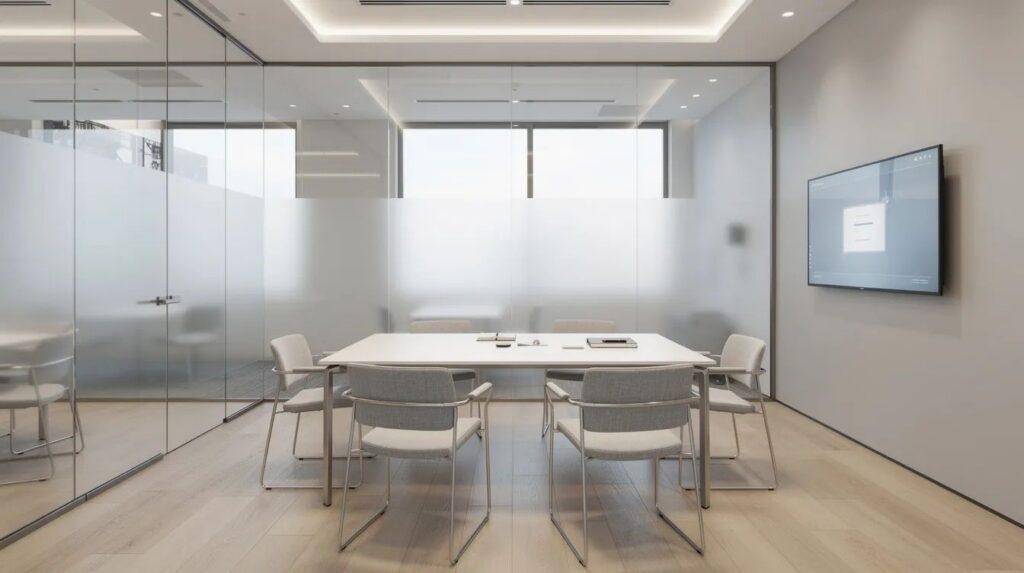
Smart glass film is a thin switchable film applied to a glass surface so it can change from transparent to frosted opaque with electricity. Also called smart film, switchable film, glass film, or PDLC film, it uses polymer-dispersed liquid crystal material to control transparency without replacing the glass.
Unlike factory-made smart glass, where the PDLC layer is sealed inside laminated glass or an insulated glass unit, smart film is a retrofit solution for existing glass, windows, doors, partitions, and storefronts. Our smart glass film lets you upgrade existing glass without replacement.
- Smart film provides instant privacy at the touch of a button, remote control, wall switch, or smartphone command.
Smart glass film supports modern, minimalist design by eliminating the need for blinds. It allows users to control privacy and natural light on-demand, improves energy efficiency, and removes many bulky window treatments from the space.
Typical uses include homes, conference rooms, healthcare rooms, retail storefronts, office partitions, and meeting spaces where people need the ability to switch between open visibility and private screening.
How Smart Film Works (PDLC Technology Explained)
Smart film technology is based on polymer-dispersed liquid crystal, a PDLC technology developed in the late 20th century and commercialized more widely as materials, adhesives, and controls improved. The basic function is simple: electricity changes how the liquid crystal droplets behave inside one layer of film.
In the opaque state, with no power applied, the liquid crystal molecules are randomly arranged. They scatter light, making the film look milky or white in appearance while still allowing daylight to enter.
In the transparent state, voltage aligns the crystals with the electric field. This lets light pass through more directly, so the glass appears clear.
The PDLC layer is typically sandwiched between transparent conductive films, often ITO-coated PET, then connected by wires to a low-voltage AC power supply. At the film level, operating voltages commonly sit around 40–60 VAC, delivered by a compact transformer from mains power.
PDLC is different from other dynamic glazing options. Electrochromic devices change light transmission properties with voltage, but they usually tint gradually rather than switch instantly. SPD controls shading differently, and thermochromic films react passively to heat or sunlight. PDLC technology allows instant switching from clear to opaque, which is why it is preferred for switchable privacy rather than slow tinting.
Key Benefits: Privacy, Natural Light, and Energy Efficiency
Smart film is useful because it solves several problems at once: privacy control, light control, glare, cleaning, and comfort. The best results come when the project is planned around how people actually use the room.
Smart glass film instantly changes from transparent to frosted opaque. Smart film can switch from clear to opaque in seconds, and many products switch in under one second. That makes it ideal for bathrooms, street-facing windows, HR offices, clinics, and busy office areas that need instant privacy.
Even when opaque, the film still allows diffuse natural light into the room. Compared with blackout blinds or curtains, this keeps the space brighter and can reduce the need for artificial lighting during the day.
Smart film blocks over 98% of UV rays. Smart film blocks 98% of UV rays, and many specifications state that Smart Film provides UV protection blocking over 98% of rays. Some smart glass film can block up to 99% of harmful UV rays, while Smart Tint® blocks 99% of UV rays and solar heat where that specific product is used.
Solar reduction is another benefit. Smart film can reduce solar heat by up to 49%, helping reduce cooling costs during hot months. Smart film provides energy savings through solar reduction, and smart glass can reduce heating and cooling costs significantly depending on climate, orientation, and glass type.
Comfort also improves. Smart film reduces glare and eye strain effectively, especially in office areas with screens, conference rooms with presentations, and spaces with strong afternoon sun.
Finally, the flat surface is easy to maintain. Smart Film does not accumulate dust or require frequent maintenance like blinds, curtains, or fabric shades. It also supports hygiene in clinics, food environments, and high-traffic areas.
Smart Film vs Smart Glass vs Traditional Window Coverings
Retrofit smart film, factory smart glass, and traditional coverings all solve privacy in different ways. The right option depends on whether you are upgrading existing glass or planning new construction.
Smart film is a smart choice when the glass is already installed and in good condition. It can be self-adhesive or non-adhesive, applied on-site, and usually involves less cost, disruption, and downtime than replacing the entire glass panel. Smart Film features self-adhesive peel-and-stick backing, and some removable versions are designed so Smart Film can be removed without leaving residue.
Smart glass is manufactured with the switchable layer sealed inside laminated or insulated glass. It offers excellent durability for new builds, exterior glazing, or full window upgrades, but it requires final manufacturing of the glass unit and usually longer lead times.
Traditional roller shades, venetian blinds, curtains, and static frosted window film can be useful, but they do not provide instant transparency. They either block the view, gather dust, reduce daylight, or require manual adjustment.
There is also a safety benefit. Smart glass film can enhance security by providing shatter-resistant surfaces, helping hold broken glass fragments together depending on the product construction and installation method.
Applications: From Conference Rooms to Healthcare and Homes
PDLC film is versatile because it works on many interior glass types, from a single door sidelight to large commercial spaces.
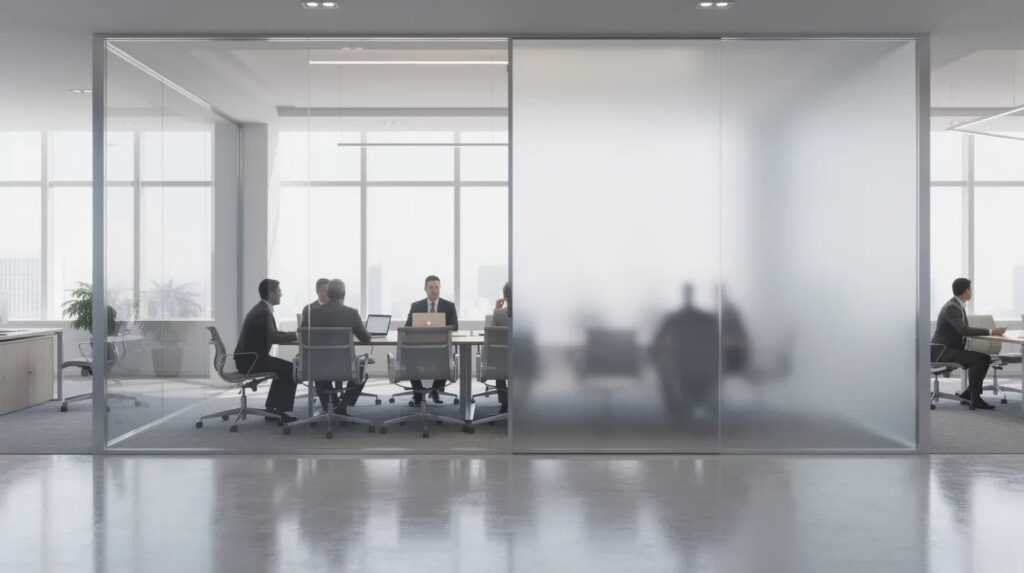
For conference rooms, switchable smart film lets teams move from open collaboration to private meetings with one switch. It is especially valuable for presentations, confidential calls, board meetings, and glass walls facing open-plan workstations.
In an executive office, finance space, law office, or HR room, transparency helps the office feel open when privacy is not needed. When a private conversation starts, the surface turns opaque immediately.
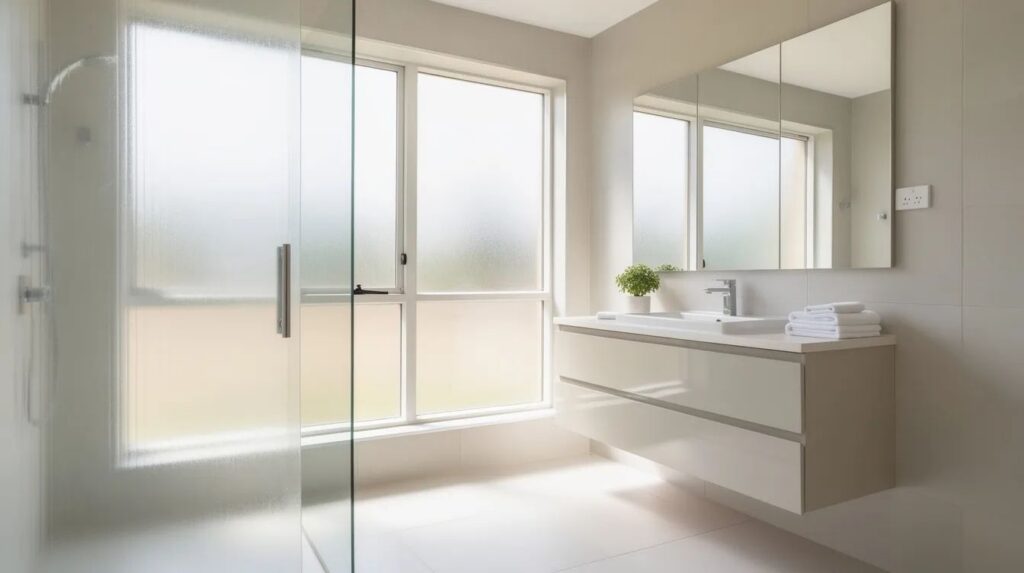
At home, smart film works well on bathroom glass, bedroom sidelights, balcony doors, street-facing living room windows, and home office glass. It gives privacy without sacrificing daylight.
In healthcare and clinics, switchable glass supports discretion and hygiene in consultation rooms, ICU observation windows, nurse stations, and procedure areas. A clean glass surface is easier to wipe down than fabric curtains.
Retail storefronts can use smart tint effects to change shopfront glass after hours, create private consultation zones, or turn the opaque surface into a projection screen for advertising. Specialty uses include hospitality suites, museums, RVs, automotive side glass where legal, and presentation surfaces.
Technical Specs: Power Supply, Operating Voltages, and Performance
This section is for designers, electricians, facility managers, and owners who need practical numbers before planning a project.
Most systems use a transformer connected to standard 110–240 VAC mains. In North America, installation requires a power supply of 110VAC feeding the transformer or controller. At the film, typical AC operating voltages are around 40–60 VAC, while some control systems also use low-voltage DC signal lines.
Power consumption varies by product. Smart Film energy use is 0.07 to 0.10 Watts per square foot in some listed systems, while other PDLC products may be specified higher. The film draws power when clear and almost no power when frosted.
Place transformers and controllers in accessible but hidden locations such as ceiling voids, bulkheads, nearby cabinets, or service closets. Preferred wire locations and final wire locations should be confirmed before production, especially for doors, sidelights, and multiple pieces of film.
Control options include wall switch controls, RF remote control, smartphone app control, keypads, occupancy sensors, meeting room panels, and smart automation platforms. Smart film can be controlled via remote or smartphone. Smart Film can be controlled via smartphone or remote.
Common performance ranges include:
- Clear mode VLT around 80–90%
- Frosted mode high haze, often around 95–98%
- Switching time under one second
- UV rejection around 98–99%
- Roll widths around 70–71 inches, or about 1800 mm
- Operating temperature ranges that vary by product, often from below freezing to high interior heat conditions
For more technical background on PDLC history and material development, see this overview of polymer-dispersed liquid crystal technology.
Installation and Wiring Overview (For Renovations and New Builds)
This is a high-level overview, not a DIY wiring guide. Smart Film can be installed as a DIY project, but professional installation services are available for Smart Film and are strongly recommended for larger glass, commercial spaces, wet areas, or integrated controls.
The glass must be clean, smooth, and stable. Old stickers, silicone, dust, paint, or surface defects should be removed before applying the film. The cleaner the glass surface, the better the performance.
Measurements matter. Final measurements are normally taken after frames and glass are installed. Film is custom-cut slightly smaller than the visible glass area, often leaving a small tolerance so it does not touch the frame.
Adhesive peel installation uses a stick backing, often called peel-and-stick. Smart Film is easy to install and leaves no sticky residue when designed as a removable product. A heat gun may be used carefully by trained installers for certain edge or finishing tasks, but too much heat can damage the material.
Each panel has busbars or wire tabs along one edge. The wires connect in parallel to a controller and then to the power supply. Correct insulation, routing, and electrical safety are essential.
For larger projects, shop drawings should show panel sizes, busbar sides, preferred wire locations, controls, and power supply locations before final manufacturing. This reduces engineering troubleshooting later and helps contractors coordinate with the smart film team.
Always follow local codes, use properly rated components, and consider UL/ETL-listed products where applicable. In wet areas, electrical isolation and protection are critical, and UL standards or equivalent regional standards should guide the installation.
Design Tips: Getting the Most from Light Control and Privacy
Good design is what makes switchable film feel seamless rather than added on. Plan circuits, visibility, and wiring before ordering.
Group panels by function. For example, one circuit can control all conference room walls, while another controls the hallway door or executive office front.
Use smart film strategically. You may not need to cover every inch of glass. Lower panels, sidelights, and sensitive sightlines often provide enough privacy while keeping upper glass clear for brightness.
Standard PDLC film is usually milky white when off. Gray or darker tones may be available, but they can reduce light transmission, so review samples before choosing.
In opaque mode, the film can also serve as a projection surface. This works well in conference rooms where a clean glass wall can become a presentation screen without adding hardware.
Plan framing and cable concealment early. Mullions, channels, and door frames can hide busbars and wiring, keeping the final space clean and modern.
Choose retrofit film when existing glass is good, timelines are tight, and you want minimal disruption. Choose factory switchable glass when you are replacing the glazing anyway or building from scratch.
Why Choose Our Smart Film Solutions
Choosing smart film is not just about buying material. The quality of the survey, ordering process, wiring plan, installation, and support all affect the final result.
Our smart film solutions are built around practical project support from consultation to installation. We help review glass conditions, panel sizes, controls, power supply needs, and wire locations before production begins.
We focus on quality, clean appearance, and electrical safety. Where applicable, projects can be specified with UL/ETL-recognized components and control systems aligned with North American, European, and Canadian project requirements.
Customization is also important. Doors, sidelights, office fronts, specialty glass, custom shapes, and unique busbar positions can be planned when feasible. For high-visibility architectural spaces, we help balance performance, aesthetics, budget, and lead time.
Trained installers are available for local projects, reducing the risk of bubbles, edge failure, wiring issues, or misalignment. Clear quotations and realistic timelines help you make smart film a smart choice instead of a surprise expense.
Frequently Asked Questions About Smart Film and PDLC Glass
How long does smart film last?
Quality smart film often lasts 8–15 years depending on usage, climate, exposure, installation quality, and maintenance. Smart Film is tested for over 3,000,000 cycles, and Smart Film is designed for daily operation in high-traffic areas.
Is smart film safe around children or in bathrooms?
Yes, when installed correctly. The film uses low voltage at the glass, but the system still connects to mains through a transformer, so electrical safety matters. Bathrooms, spas, and wet zones should use protected wiring, proper isolation, and code-compliant components.
Can smart film be cut on-site?
Final cutting should be done by the manufacturer whenever possible. On-site trimming can damage busbars, conductive layers, or the PDLC material. If a field adjustment is unavoidable, it should be handled by an experienced installer.
Does smart film work during a power outage?
Standard PDLC film usually becomes opaque when power is off and becomes clear when powered on. Reverse configurations may be available for projects that need a clear default state, but they must be specified in advance.
How do you clean and maintain smart film?
Use non-abrasive glass cleaner and a soft cloth. Avoid blades, harsh solvents, or aggressive scrubbing at the edges. The surface is low-maintenance compared with blinds because it does not trap dust.
Can smart film be dimmed?
Some controllers allow intermediate voltage settings that adjust haze and light transmission. This gives partial privacy and softer light control, although the appearance may not be as optically clear as full transparent mode.
Conclusion: Is Smart Glass Film the Smart Choice for Your Project?
Smart glass film is a practical, future-ready way to add instant privacy, natural light control, UV protection, and energy-efficient performance to existing glass. It switches fast, uses low power, reduces glare, supports clean design, and can help lower cooling costs during hot months.
Start by identifying the spaces where privacy or glare causes the most friction: a main conference room, executive office front, bathroom window, storefront, or healthcare treatment area.
If you are ready to compare PDLC film options, power supply requirements, controls, and installation methods, contact our team to request a smart film quote or speak with a smart glass specialist.