
Table of Contents
- Tempered Glass Door Essentials
- Understanding Tempered Glass Door Fundamentals
- Types and Applications of Tempered Glass Doors
- Selection and Installation Process
- Common Challenges and Solutions
- Conclusion and Next Steps
- Frequently Asked Questions
Tempered Glass Door Essentials
Tempered glass doors are heat-treated safety glass doors engineered to be 4–5 times stronger than regular glass, making them the standard choice for residential and commercial applications where durability and safety matter. These doors combine structural integrity with aesthetic appeal, allowing natural light to flow through spaces while meeting strict building code requirements.
This guide covers the essential knowledge you need about tempered glass door types, installation considerations, and safety benefits. The scope excludes general glass manufacturing processes unrelated to door applications. Whether you’re a homeowner planning a bathroom renovation, a contractor specifying materials for a commercial project, or an architect designing custom entryways, understanding tempered glass doors helps you make informed decisions that balance safety, aesthetics, and budget.
Direct answer: A tempered glass door is a safety glass door that undergoes a specialized heat treatment process, creating internal tension that makes it significantly stronger than standard glass and causes it to shatter into small, safe pieces rather than dangerous shards when broken.
Key outcomes from this guide:
- Understanding the different types of tempered glass doors and their applications
- Recognizing the safety benefits that make tempered glass code-compliant
- Learning selection criteria for thickness, frames, and hardware
- Knowing installation requirements and when to hire professionals
- Mastering maintenance practices for long-term performance

Understanding Tempered Glass Door Fundamentals
Understanding how tempered glass works at a fundamental level helps you make better door selection decisions and recognize quality products. This knowledge also clarifies why building codes specifically require tempered glass in certain areas and applications.
Safety Glass Manufacturing Process
The tempering process transforms ordinary glass into safety glass through controlled heat treatment. Glass panels are heated to temperatures exceeding 600°C in specialized furnaces, then rapidly cooled using high-pressure air jets on both surfaces. This rapid cooling creates a specific stress pattern where the outer surfaces compress while the interior remains under tension.
This internal tension is what makes tempered glass perform differently from standard glass. The compression on the surface must be overcome before the glass can break, requiring significantly more force. The process must be completed before any cutting, drilling, or shaping occurs—once tempered, the glass cannot be modified without shattering completely.
The manufacturing requirements mean tempered glass doors must be custom manufactured to exact specifications. Any holes for handles, hinges, or hardware must be cut before the tempering process, making accurate measurements critical from the start.
Safety Features and Benefits
When broken, tempered glass shatters into small, dull cubes rather than the sharp shards that regular glass produces. This breakage pattern significantly reduces the risk of serious cuts and injuries, which is why building codes often require the use of tempered glass in areas where safety is a concern, such as near stairs, in wet areas, and in doors.
The impact resistance of tempered glass makes it suitable for high-traffic areas and applications where accidental contact is likely. Shower doors, patio entries, and commercial storefronts all benefit from this enhanced durability. Additionally, the safety profile reduces liability concerns for property owners and businesses.
Tempered glass can withstand higher temperatures and rapid temperature changes, making it ideal for high-heat areas like oven doors or in specific climates. The glass can tolerate fluctuations up to 470°F (250°C) without cracking, providing thermal stability that standard glass cannot match.
Structural Properties
For door applications, tempered glass delivers strength characteristics that allow it to handle wind loads, human impact, and environmental stresses. The thickness of tempered glass in residential applications usually ranges from 6mm to 10mm, while high-traffic or commercial applications may require 10mm to 12mm or thicker.
Tempered glass is heavy; ensure the frame material can support the weight of thicker panes, such as reinforced aluminum, steel, or solid wood. The relationship between glass thickness and frame capacity directly affects installation success and long-term performance.
These structural properties influence which door type suits your specific application. Understanding the strength requirements for your intended use—whether interior privacy or exterior weather exposure—guides you toward appropriate specifications.
Types and Applications of Tempered Glass Doors
Building on the safety fundamentals covered above, tempered glass doors come in diverse configurations designed for specific environments and purposes. The door type you select depends on location, usage patterns, and aesthetic preferences. This helps you find the right option for your specific application.
Interior Door Applications
Shower doors represent one of the most common applications of tempered glass in residential settings. In wet areas like bathrooms and around swimming pools, tempered glass is preferred for shower doors and windows to reduce the risk of injury from falls. Frameless designs create a sleek, modern aesthetic, while semi-framed options offer additional structural support at lower cost.
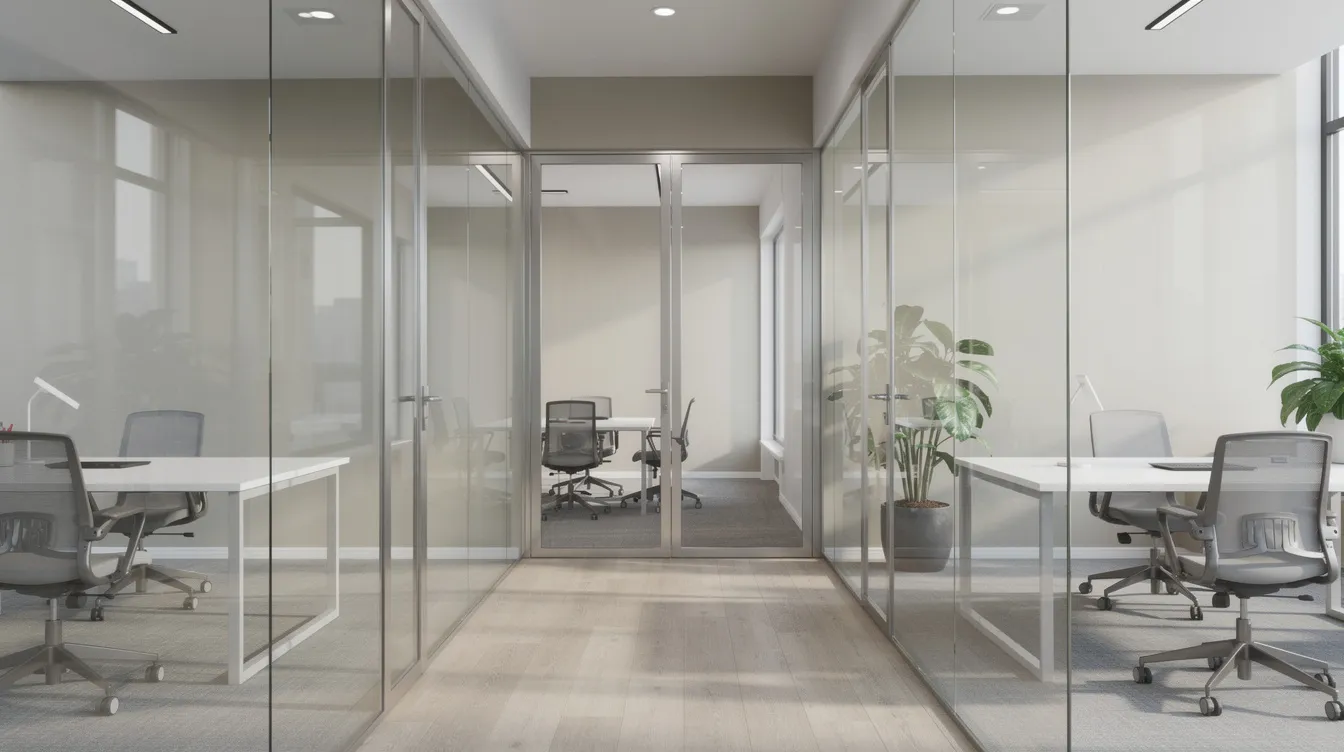
Office partitions and room dividers use tempered glass panels to maintain visual openness while defining separate spaces. Determine privacy rating needs when selecting glass options, including clear, frosted, or tinted glass. Frosted and tinted variations provide privacy without sacrificing natural light transmission and are available in various colors.
Interior installations offer flexibility between framed and frameless configurations. Frameless doors deliver minimalist style but require thicker glass (typically 10-12mm) to support hardware without perimeter framing. Framed options accommodate thinner glass while providing easier hardware mounting and greater tolerance for minor measurement variations.
Exterior Door Applications
Storefront doors, patio doors, and entry door panels face weather exposure that interior applications never encounter. For exterior doors, thicker tempered glass is recommended to ensure durability against high winds and extreme temperatures. Commercial storefronts typically specify 12mm tempered or laminated glass to handle heavy traffic and security demands.
Weather resistance and thermal performance require attention to the complete door assembly, not just the glass. Choosing insulated glass units or Low-emissivity coatings can reduce energy costs by blocking heat while allowing light in. These energy-efficient options combine tempered safety glass with thermal performance.
Security considerations differ between residential and commercial exterior doors. Tempered glass alone provides safety in breakage but limited forced-entry resistance. For enhanced security in commercial areas or high-risk residential locations, laminated tempered glass combines multiple layers with interlayer materials that hold fragments together even when broken.
Specialty Door Configurations
Sliding doors and bifold systems allow large openings that connect indoor and outdoor spaces. These configurations use tempered glass panels mounted on tracks, requiring robust hardware rated for the combined weight of multiple panels. Bottom supports and top rollers must distribute loads without concentrating stress on glass edges or placing excessive stress on any corner.
Pivot doors rotate on central hardware rather than side hinges, creating dramatic architectural statements. The pivot mechanism must handle the full weight and rotational forces, typically requiring thicker tempered glass and specialized hardware designed specifically for glass applications.
Custom sizing and shapes accommodate unique architectural requirements. Tempered glass can be manufactured in various configurations with notches, curves, and holes—provided all cutting happens before the tempering process. These specialty options open design possibilities while maintaining safety compliance.
Selection and Installation Process
With door types and applications understood, the selection and installation process translates that knowledge into practical decisions. Getting these steps right prevents costly mistakes and ensures long-term satisfaction while providing access to the best solution for your needs.
Door Selection Criteria
Before ordering any tempered glass door, systematically evaluate these factors:
- Measure opening dimensions accurately – Verify rough opening size, frame width, and jamb depth. Account for clearances required by gaskets and seals. Measure twice and consider professional verification for custom orders.
- Determine appropriate glass thickness – Match thickness to door size, usage intensity, and exposure conditions. Interior shower doors typically use 8-10mm glass, while exterior applications often require 12mm or thicker.
- Select compatible frame materials – The frame must support the glass weight without flexing or binding. Reinforced aluminum handles most residential applications, while commercial or heavy-duty installations may require steel frames.
- Choose certified hardware – Hinges, handles, pivots, and closers must be rated for tempered glass weight and thickness. Hardware mounting points require pre-tempering preparation, making specifications final before manufacturing.
- Verify code compliance – Confirm the glass carries appropriate safety certifications and permanent markings. Building codes often require the use of tempered glass in areas near stairs or where glass is used for stair railings to enhance safety.
Installation Methods Comparison
| Factor | Professional Installation | DIY Installation |
|---|---|---|
| Measurement Accuracy | Professionals verify structure and handle templates | Risk of errors requiring costly reorders |
| Tools and Handling | Specialized lifting equipment and safety gear | Heavy glass handling poses injury risk |
| Warranty Coverage | Installation typically warrantied | May void manufacturer warranties |
| Code Compliance | Knowledge of local requirements and permits | May miss safety glazing requirements |
| Cost | Higher upfront, lower risk of errors | Lower cost if successful, expensive mistakes |
Professional installation is recommended for exterior doors, large panels, custom configurations, and any application where code compliance must be documented. DIY installation may be feasible for small interior doors with prefabricated components and standard hardware when the installer has appropriate experience and tools.
Code Compliance and Permits
Building codes in most jurisdictions require tempered safety glass for doors, adjacent sidelights within door swing paths, and glass panels within 24 inches of door openings or 18 inches from floor level. These requirements exist because tempered glass is commonly used in residential and commercial settings for applications such as windows, doors, shower enclosures, and glass railings due to its strength and safety features.
Permits may be required when door installation involves structural modifications, changes to fire ratings, or alterations to building envelope thermal performance. Contact your local building department before beginning work to understand specific requirements for your project.
Safety glazing must carry permanent markings indicating compliance with ANSI Z97.1 or CPSC 16 CFR 1201 standards. These markings provide legal proof of safety glass certification and should never be removed or obscured.
Common Challenges and Solutions
Even well-planned tempered glass door projects encounter obstacles. Understanding common problems and their solutions helps you avoid issues or address them quickly when they arise.
Incorrect Sizing and Measurement
Accurate measurement is critical because tempered glass cannot be cut or modified after manufacturing. Use the following approach: measure the rough opening at multiple points, account for frame and gasket dimensions, and subtract appropriate clearances for thermal expansion. For custom or expensive installations, invest in professional measurement verification before ordering.
Hardware Compatibility Issues
Hardware must be rated for your specific glass thickness and weight. Select hinges, pivots, and closers designed for tempered glass applications—standard door hardware often cannot handle the weight or provide appropriate mounting. Ensure any required holes or notches are specified before manufacturing, as these cannot be added after tempering.
Thermal Stress and Breakage
Thermal stress occurs when one area of the glass heats significantly more than another, such as when heavy solar exposure hits a partially shaded panel. For exterior installations, specify tempered glass rated for expected temperature differentials. Avoid installing reflective films or heavy coatings after tempering without consulting the manufacturer. Ensure frames allow slight movement to accommodate thermal expansion.
Replacing tempered glass can be costly since any small injury to the glass can cause the entire piece to break apart, necessitating a full replacement. Proper installation techniques that prevent edge damage and thermal stress protect your investment.
Maintenance and Cleaning Requirements
Clean tempered glass doors with neutral pH cleaners and non-abrasive materials. Harsh chemicals can etch the surface, and abrasive pads may create scratches that weaken the glass over time. Establish a regular cleaning schedule—weekly for high-traffic areas, monthly for interior residential applications.
Inspect hardware, seals, and frames annually. Lubricate moving parts, tighten loose fasteners, and replace worn weatherstripping. Address any chips or edge damage immediately, as these can propagate and cause complete failure.

Conclusion and Next Steps
Tempered glass provides an effective combination of safety, durability, and aesthetic appeal for both interior and exterior applications. Their heat-treated construction delivers 4-5 times the strength of regular glass while ensuring that any breakage results in small, safe pieces rather than dangerous shards. From shower enclosures to commercial storefronts, these doors meet building code requirements while enhancing the visual appeal of any space.
Immediate next steps:
- Measure your door openings accurately, recording multiple points and accounting for frame requirements
- Research local building codes to understand safety glazing requirements and permit needs
- Get professional quotes from certified glass installers, comparing specifications and warranty coverage
- Plan your installation timeline, allowing lead time for custom manufacturing
Related topics to explore: ongoing glass door maintenance practices, security upgrade options for exterior applications, and energy efficiency improvements through insulated glass units and low-E coatings.
Frequently Asked Questions
What is a tempered glass door and how is it different from regular glass doors?
Tempered glass is heat-treated to be 4–5 times stronger than regular glass, making it a safer option for various applications. The tempering process creates internal tension that increases impact resistance and causes the glass to break into small, blunt pieces rather than sharp shards. Regular glass lacks this treatment and poses greater injury risk when broken.
Where are tempered glass doors required by building codes?
Building codes typically require tempered safety glass in doors, sidelights adjacent to doors, glass within 24 inches of door openings, glass panels with bottom edges within 18 inches of walking surfaces, shower enclosures, and glass near stairs or in stair railings. Specific requirements vary by jurisdiction.
How much do tempered glass doors cost compared to standard doors?
Prices for custom cut tempered glass can start as low as $4.95, depending on the size, thickness, edgework, and tint chosen. Complete installed doors typically range from $1,200 to $4,500 depending on configuration and hardware. Tempered glass is more expensive to install than some other options because it must be custom-manufactured and cannot be adjusted after the tempering process.
Can tempered glass doors be cut or modified after installation?
No. Once glass has been tempered, it cannot be cut, drilled, or modified in any way. Attempting to alter tempered glass causes immediate and complete shattering. All holes, notches, and edge work must be completed before the tempering process.
What thickness of tempered glass is recommended for different door sizes?
The thickness of tempered glass in residential applications usually ranges from 6mm to 10mm, while high-traffic or commercial applications may require 10mm to 12mm or thicker. Frameless doors typically require 10-12mm minimum, while framed interior doors may use 6-8mm glass. Exterior applications generally require thicker specifications.
How do you clean and maintain tempered glass doors?
Use neutral pH glass cleaners and soft, non-abrasive cloths or squeegees. Avoid harsh chemicals and abrasive pads that can etch or scratch the surface. Clean weekly in high-traffic areas, monthly for residential applications. Inspect and lubricate hardware annually and replace worn seals or weatherstripping as needed.
Are tempered glass doors energy efficient for exterior applications?
Tempered glass alone provides minimal insulation value. For energy efficiency, specify insulated glass units (IGUs) that incorporate tempered safety glass with air or gas-filled gaps between panes. Choosing insulated glass units or Low-emissivity coatings can reduce energy costs by blocking heat while allowing light in.
What happens if a tempered glass door breaks?
When broken, tempered glass shatters into small, dull cubes rather than sharp shards, significantly reducing the risk of injury. The entire panel breaks at once, losing all structural integrity. Laminated tempered glass holds fragments together via interlayer material. Any broken panel requires complete replacement.
Can existing doors be retrofitted with tempered glass panels?
Yes, you can retrofit existing doors with tempered glass panels if the existing frame can accommodate the glass weight and dimensions. The frame needs to provide adequate support, and the new glass must meet current safety glazing requirements. A professional can assess compatibility and verify code compliance. In many cases, homeowners and businesses find complete door replacement more practical.
What hardware is compatible with tempered glass doors?
Use hardware specifically designed and rated for tempered glass applications, including patch fittings, glass-specific pivots, and door closers with glass door arm pads. All hardware mounting points require pre-tempering preparation. Verify weight ratings match your glass thickness and panel size and select corrosion-resistant finishes for exterior or wet area installations.