Table of Contents
- Finding Qualified Local Installers
- Understanding Window Security Films
- Professional Installation Services in Your Area
- Choosing the Right Security Film Installer
- Common Installation Challenges and Solutions
- Conclusion and Next Steps
- Frequently Asked Questions
Finding Qualified Local Installers
Window security film installation services are widely available across the United States, including New York and surrounding areas, with certified professionals offering both residential and commercial applications designed to protect glass surfaces from forced entry, impact events, and shattered glass hazards. For property owners seeking both security and privacy, professional window security film installation is the perfect solution. Whether you’re securing bedroom windows in your house or protecting entry doors in commercial buildings, local installers can typically be found within 25-50 miles of most urban areas through manufacturer dealer networks like 3M.
Local professionals offer a range of tinting solutions, including security, privacy, and decorative films, to meet diverse needs. Certified experts can install window film on most types of windows, ensuring compatibility and optimal performance. This guide covers everything property owners need to know about finding qualified security window film installers, from understanding different film types to evaluating credentials and comparing service options. The content applies to residential window films for homes and commercial window tinting for businesses, government buildings, and large-scale facilities. Target readers include homeowners seeking enhanced security, facility managers responsible for building protection, and security-conscious individuals wanting professional installation rather than DIY solutions.
Direct answer: Local certified installers can be located through manufacturer-authorized dealer networks such as 3M’s Prestige, Premier, and Premier Elite programs, which list verified professionals by geographic area and certification level.
By reading this guide, you will gain:
- Methods for finding qualified installers in your service area
- Understanding of different security films and their installation requirements
- Criteria for comparing local installation options and costs
- Knowledge to avoid common installation mistakes that compromise protection
- Insight into warranty coverage and what to expect from professional installation
Understanding Window Security Films
Security window film is a specialized multi-layered polyester material applied to existing glass to provide an extra layer of protection for glass surfaces, enhancing resistance against impact, forced entry, and shattering. Unlike decorative window films that primarily enhance aesthetic appeal, security window films are engineered to hold broken glass together upon impact, reducing the risk of injury from flying shards and making it significantly more challenging for potential intruders to gain access.
Safety and security window films help prevent shattering by holding shattered glass together, reducing the risk of injury from flying shards in the event of an accident, natural disaster, or attempted break-in. These films also help protect against sun damage to floors and furniture by blocking harmful UV rays, preserving the quality and appearance of your interior furnishings. Tinted safety films can block up to 99% of harmful UV rays, helping to protect interior furnishings from fading while also providing an added layer of security.
Additionally, security window films offer glare reduction and sun control, improving indoor comfort by minimizing harsh sunlight and heat coming through windows while maintaining naturally lit environments. They also contribute to energy efficiency by reducing heat transfer and helping to maintain consistent indoor temperatures, which can lower energy consumption and costs. These films create a robust barrier that deters break-ins and provides valuable time during intrusion attempts, as burglars typically abandon targets that resist quick entry.
Types of Security Films Available
Standard Safety Films (4-6 mil): These provide basic protection against accidental breakage and everyday hazards. Installed costs typically range from $7-$10 per square foot. Standard films suit residential applications where the primary concern is preventing shattering rather than deterring determined intrusion attempts.
Mid-Grade Security Films (8-12 mil): Commercial and residential properties benefit from this thickness range, which offers improved impact resistance and often includes enhanced UV protection. Sun control films are also available in this category for both residential and commercial applications, providing additional benefits such as reducing glare and improving energy efficiency. High-performance solar control window films can reduce solar heat gain and improve comfort, especially on sun-facing glass in homes and commercial spaces. Security film typically ranges from 4-15 mil in thickness, with various thickness recommendations for different levels of protection. Mid-grade options cost approximately $9-$14 per square foot installed and represent the most common choice for homes and small commercial buildings.
Premium High-Security Films (12-15+ mil): Designed for serious protection against forced entry, storms, and blast mitigation. For maximum security, attachment systems using silicone or structural adhesive are necessary to prevent the entire window pane from falling out during a break-in. Premium installations often exceed $13-$25 per square foot and require specialized expertise.
Security film is thicker and harder to install than solar tinting, making specialized training and experience critically important for installers working with higher-mil products, so many property owners turn to professional window film installation services that handle both security and tinting applications, and institutions facing elevated threat levels may also consider bullet resistant window film and glazing upgrades as part of broader security planning.
Professional vs DIY Installation
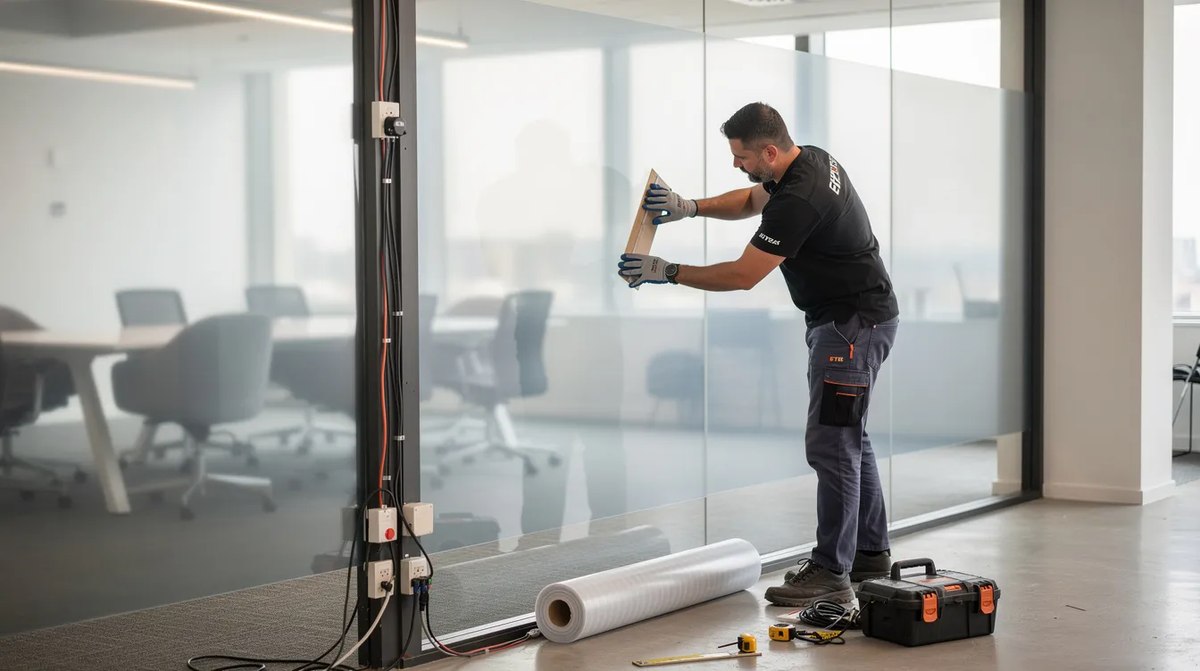
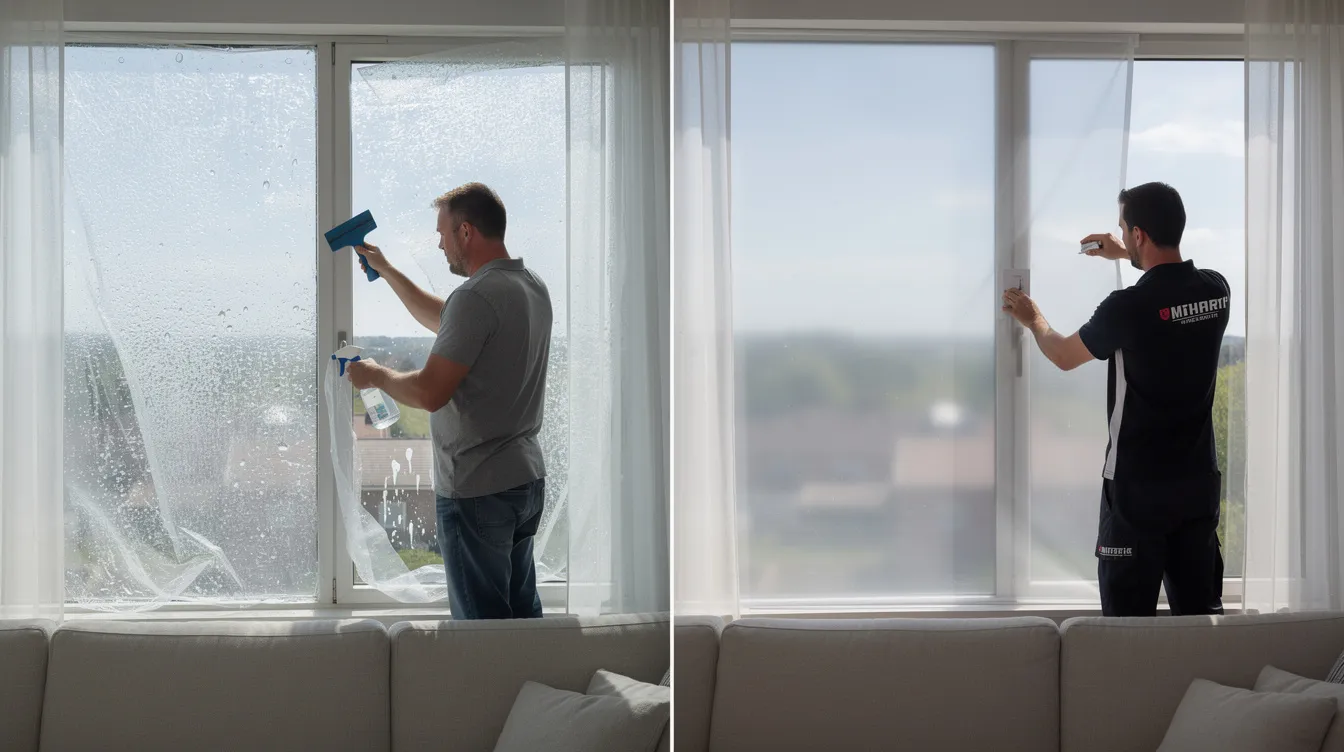
Professional installation ensures precision cutting, proper surface preparation, correct adhesive application, and essential edge sealing with structural silicone adhesive, which greatly enhances the security of the film application. Installing window security film involves cleaning the glass, cutting the film 2+ inches larger than the pane, applying a soapy slip solution, applying the film, and squeegeeing out water from the center outward to remove bubbles. This process requires significant pressure to remove moisture during installation due to the film’s thickness (often 8 mil or more).
Proper preparation requires thorough glass cleaning with a razor scraper and soapy water to remove debris before installation. For larger windows, it is recommended to have two people apply the film together to prevent creases and improper alignment. Use a high-quality squeegee to ensure enough pressure is applied to thicker security films during installation.
DIY installations frequently result in air bubbles, adhesion failure, edge lifting, and voided warranties. Many manufacturers require certified installation to honor full warranty coverage, making professional service essential for quality assurance and long-term protection.
Professional installers also understand that applying a structural silicone seal to the edges after the film cures significantly increases the security level against forced entry—a critical step often missed in DIY applications. The final installation step is critical for ensuring the durability, aesthetic appeal, and long-term performance of your window security film, making professional expertise invaluable for the best results.
Professional Installation Services in Your Area
With security films requiring specialized expertise that differs significantly from basic window tinting, finding qualified local professionals becomes essential for ensuring proper installation and warranty coverage.
Authorized Dealer Networks
The 3M Prestige Network represents one of the most established certification programs for window film installation. 3M maintains multiple dealer tiers—Authorized, Premier, Premier Elite, and Prestige—with each level reflecting increasing training, expertise, and access to premium products. Prestige dealers hold the highest level of certification, receive advanced training, and offer comprehensive warranties backed directly by the manufacturer.
Other major brands including Llumar, Vista, Terminax, and XPEL maintain similar certification programs that ensure installers meet specific competency standards. A professional window security film installer should have experience with thick security films (8+ mil) and manufacturer certifications verifying their training.
Authorized dealers display their certification credentials and can be verified through manufacturer websites or customer service hotlines. Some film series include watermarks or logos that confirm authenticity, providing additional assurance that genuine products are being installed.
Commercial vs Residential Installers
Commercial installers specialize in large-scale projects involving storefronts, glass curtain walls, multi-floor commercial buildings, and government buildings. These professionals coordinate with architects and engineers, understand complex code requirements for interior glass, and deploy equipment like scaffolding for high-access installations. Commercial window film projects often require staggered phases and extended timelines, and many modern offices increasingly incorporate switchable smart glass film solutions for on-demand privacy in conference rooms and shared spaces.
Residential-focused companies handle smaller-scale home applications including bedroom windows, entry doors, and standard residential window configurations, with some providers offering comprehensive window tinting, security film, and privacy film services tailored to neighborhood needs. While many installation companies service both markets, verifying portfolio experience with your specific project type ensures appropriate expertise.
Service Area Coverage
Urban areas typically offer multiple installation options within close proximity, while suburban and rural locations may have fewer choices, but many regional specialists provide window tinting, security window film, and privacy film installation across wider metro service areas. Many authorized dealers travel beyond their immediate city to service surrounding communities—3M Prestige dealers specifically service larger areas than their home city location, and similar regional installers often cover multi-city territories for residential and commercial window tinting projects.
Installers often establish minimum project size requirements (typically expressed in square footage) or minimum service fees to cover travel and setup costs. Off-peak or remote projects may incur additional travel charges, while large commercial jobs can experience lead times of 2-4 weeks or more, particularly during peak seasons.
Key considerations:
- Verify service area coverage before requesting quotes
- Ask about minimum project requirements
- Expect potential travel fees for rural locations
- Plan ahead during spring and summer peak seasons
Choosing the Right Security Film Installer
Building on the availability of local services, evaluating specific installers requires systematic comparison of credentials, costs, and service terms to ensure quality protection for your property.
Evaluation Criteria and Process
Use the following criteria when assessing potential installers:
- Check manufacturer certifications and training credentials: Look for dealers listed on manufacturer-authorized networks with current certification. A professional should inspect the glass type to ensure compatibility with security film, especially with low-e windows, demonstrating technical knowledge.
- Verify insurance coverage and business licensing: Choosing a professional installer involves ensuring they are licensed, bonded, and carry liability insurance to protect against accidental damage during installation. Commercial and residential projects both require this protection, and many homeowners and businesses work with local experts offering residential window tinting and professional film installation to ensure properly licensed and insured service.
- Request references from recent security film installations: Ask for project portfolios and customer references with similar scope to your needs. Photographs of completed work and contact information for previous clients help verify quality.
- Compare warranty terms offered by different installers: Installers should provide a warranty that covers both the film and labor, protecting against issues like bubbling, peeling, or discoloration. Manufacturer warranties typically run 5-15 years, while premium installations may offer extended or lifetime coverage.
Cost and Service Comparison
| Factor | Certified Dealer | General Contractor |
|---|---|---|
| Manufacturer Training | Required certification with ongoing education | May lack specialized security film training |
| Warranty Coverage | Full manufacturer backing (5-15+ years) | Limited to installer warranty only |
| Material Access | Direct from manufacturer with authenticity verification | Third-party suppliers without quality guarantees |
| Edge Sealing Expertise | Trained in structural silicone application | Often unfamiliar with security-specific techniques |
| Price Range (per sq ft) | $7-$15+ depending on film grade | Potentially lower but higher risk of issues |
| When comparing options, certified dealers command higher rates but provide manufacturer support, authentic materials, and proper installation techniques. General contractors may offer lower quotes but often lack the specialized training required for thicker security films that demand precision application and proper edge sealing. | ||
| National cost averages show professional security film installation running approximately $650 for moderate residential projects, with common ranges between $350-$950 for smaller applications. A typical 3-bedroom house with 200-250 square feet of glass using mid-grade film may cost $2,000-$3,750 inclusive of materials and labor, and regional providers that specialize in window film installation for homes and businesses can offer more precise estimates based on local pricing. |
Common Installation Challenges and Solutions
Understanding potential installation obstacles helps property owners prepare appropriately and work effectively with their chosen installer to achieve optimal results.
Scheduling and Availability Issues
Peak installation demand occurs during spring and summer months when homeowners undertake improvement projects and hurricane-prone regions prepare for storm season. Book installations 2-4 weeks in advance during these periods to secure preferred scheduling.
For large commercial projects requiring quick completion, consider engaging multiple installers working in coordinated phases, or partnering with established local teams that provide window tinting, security film, and smart film solutions for both small and large properties. Some installers offer discounts during slower winter months, providing cost savings for flexible scheduling, and local firms that focus on security window film, privacy film, and decorative upgrades may run seasonal promotions that reduce overall project cost.
Window Condition and Compatibility
Pre-installation glass inspection should identify cracks, loose gaskets, double-pane seal failures, or other structural issues that interfere with film adhesion and performance. A professional should inspect the glass type to ensure compatibility with security film, especially with low-e windows that may react differently to certain film types.
Decorative and privacy window films can enhance the aesthetic appeal of spaces without the need for additional hardware or infrastructure, and there are various types available including etched, cut, sandblasted, and textured options allowing for design flexibility when security needs combine with visual preferences.
Decorative window films can also provide privacy while still allowing natural light to enter, making them ideal for offices and commercial interiors, and many property owners combine these with residential window tinting and security film installation to address both privacy and protection needs throughout the building.
Proper surface preparation for optimal film adhesion includes thorough cleaning and removal of any existing films or residues. Dual-pane and insulated glass windows require specific adhesives and film compatibility considerations.

Weather and Environmental Constraints
Schedule installations during dry conditions for exterior applications, as adhesive curing depends on appropriate temperature and humidity levels. Professionals recommend allowing the film to cure for at least 3-5 days, potentially up to 30 days in cold weather, before cleaning or touching it.
Large glass surfaces exposed to direct sun require careful handling to avoid air entrapment during application. Coastal installations face additional considerations including salt spray exposure that can affect edge seal durability over time.
Working with an experienced installer ensures proper environmental conditions are maintained throughout the project, preventing issues that compromise long-term performance and protection.
Conclusion and Next Steps
Finding qualified local security window film installers through manufacturer networks like 3M’s authorized dealer program ensures access to trained professionals who deliver proper installation, warranty coverage, and lasting protection. The investment in certified installation protects your family, property, and interior furnishings while providing added protection against break-ins, harsh sunlight, and impact events.
Immediate action steps:
- Contact 2-3 certified installers through manufacturer dealer locators to request detailed quotes
- Verify credentials including certification level, insurance coverage, and business licensing
- Schedule on-site consultations to assess your specific windows, glass types, and security needs
- Compare warranty terms covering both materials and workmanship
- Plan installation timing to avoid peak season delays
Related topics worth exploring include integration with broader security systems, ongoing maintenance requirements to preserve film performance, and smart window film options that provide privacy on demand alongside energy saving window film options that combine security with heat reduction and UV protection benefits. Tinted transitional window films can help reduce energy costs by blocking heat during the summer and retaining warmth during the winter, maintaining more consistent indoor temperature and improving overall comfort throughout your home or commercial space.
High-performance solar control window films can reduce solar heat gain and improve comfort, especially in sun-facing rooms, by minimizing glare and hot spots. Tinted safety films can block up to 99% of harmful UV rays, helping to protect interior furnishings from fading while providing security benefits, and many homeowners in specific regions work with local providers for security, tinting, and privacy film that understand area climate and building styles. Additionally, 3M™ Thinsulate™ Climate Control Window Film is one example of architectural window films that can improve the insulation value of a typical single-pane window close to that of a double-pane window, and of a double-pane close to that of a triple-pane, offering significant energy performance improvements.
Frequently Asked Questions
How much does professional security film installation cost in my area?
Professional security film installation costs depend on region, film grade, and total window area. National averages range from $7-$15 per square foot installed for standard to mid-grade security films. Total residential projects typically run $2,000-$4,500 for mid-size homes, while smaller jobs covering one or two windows may cost $350-$1,000. Premium high-security films or bullet-resistant systems command significantly higher prices, sometimes exceeding $25-$50 per square foot.
How long does security film installation take for an average home?
For a typical home with 200-300 square feet of glass, expect 4-10 hours of total labor, potentially spread across 1-2 days depending on crew size and project complexity. The process includes measuring and templating, thorough glass cleaning, precise film application, and final inspection. Commercial projects with larger glass areas require proportionally more time.
Do I need special permits for security film installation?
Residential projects typically do not require permits, though this varies by local building codes and historic district regulations. Commercial buildings, storefronts, and properties in flood or hurricane zones may need permits. Fire codes and safety glazing standards (ANSI Z97.1, 16 CFR 1201) sometimes apply. Contact your local building department to confirm requirements for your specific project.
What warranty should I expect from professional installation?
Manufacturer warranties commonly cover 5-15 years for defects including adhesive failure, peeling, and hazing. Premium films from authorized dealers may include longer or lifetime warranties under specific conditions. Installers should provide separate workmanship warranties. Coverage often requires certified installation, proper edge sealing, and adherence to maintenance guidelines.
Can security film be installed on all window types?
Security film works on most glass types including single-pane, dual-pane, tempered, laminated, storefront glass, and sliding doors. However, limitations exist for glass with pre-existing damage, insulated glass units with failed seals, highly curved surfaces, and some skylights. A professional should inspect the glass type to ensure compatibility, especially with low-e windows that may require specific film formulations.
How do I verify an installer’s credentials and experience?
Search manufacturer-authorized dealer locators such as 3M’s web tools to confirm listing and certification level. Request copies of current certifications and training documentation. Ask for references and project portfolios from recent installations similar to yours. Verify insurance coverage and business licensing. Check whether they use authentic branded film with watermarks or logos confirming product authenticity.
What questions should I ask during the initial consultation?
Essential questions include: What film thickness and grade do you recommend for my security needs? Does the film meet ANSI Z97.1 and CPSC 1201 safety standards? What edge sealing and frame anchoring methods will you use? How will you handle older windows or specialty glass? How much preparation does the glass surface require? Are there any additional fees beyond the quoted project cost? What warranty coverage do you provide on materials and workmanship?
How far will certified installers travel for projects?
Many authorized dealers service areas beyond their immediate city location, extending to suburbs and surrounding communities. 3M Prestige dealers specifically service larger territories than their home office city. Travel fees may apply for distant locations, and minimum project requirements often increase for remote jobs. Verify service area coverage and any associated travel charges when requesting initial quotes.