If you’ve been dealing with hot spots, screen glare, or a lack of privacy in your home or office, local window film installation is one of the fastest and most cost-effective fixes available. This guide walks you through exactly how to find qualified installers, compare film types, understand real costs, and make a confident decision in 2025–2026.
Quick Answer: How to Find the Best “Window Film Near Me” Fast
You’re probably searching window film near me because a specific room is too hot, too bright, or too exposed. The good news: finding the right local installer and film type is straightforward once you know what to look for.
- Start by searching Google Maps for local window film installers. Filter for recent reviews (2023–2026) and confirm they specialize in residential or commercial architectural film-not just auto tint.
- On the first call, ask three things: the pricing range for a standard 3×5 ft window (expect $105–225 for premium film), warranty length (look for 10–25 years), and whether they offer a free in-home consultation.
- Prioritize three benefits when comparing: energy savings, privacy, and glare reduction.
- Professional installation on a standard 3-bedroom home typically takes 1–2 days. Local dealers offer a variety of window film options for homes, so you’ll have choices even for niche needs.
- Home window tinting services are available in areas like Gilbert, Arizona and most metro regions nationwide.
Table of Contents
- What Is Window Film and How Does It Work?
- Types of Window Films You Can Get Locally
- Key Benefits of Installing Window Film Near You
- How to Choose the Right Local Window Film Company
- Installation Process: What to Expect From Local Pros
- Cost of Window Film Near You in 2025–2026
- DIY Window Film vs. Professional Installation
- FAQ: Common Questions About Window Film Near Me
- Conclusion: Next Steps to Get the Right Window Film Near You
What Is Window Film and How Does It Work?
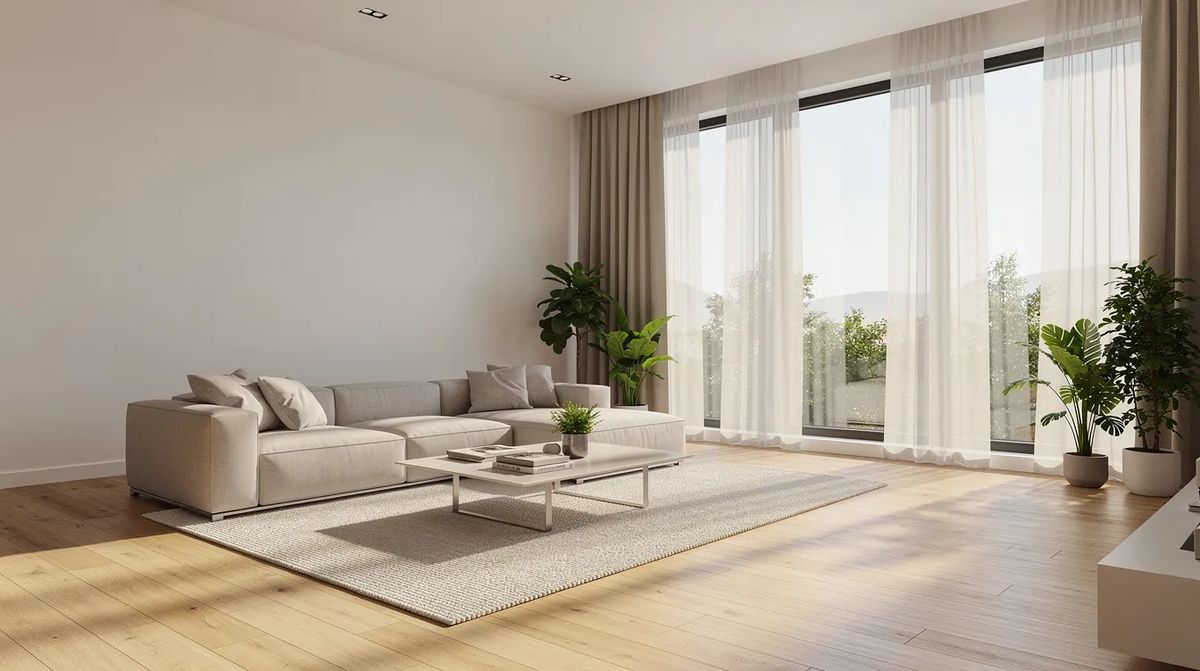
Window film is a thin, multi-layer polyester or nano-ceramic laminate applied to the interior surface of glass in homes, offices, and storefronts. Modern films (2024–2026) use advanced constructions-base substrates, ceramic or metallic coatings, adhesives, and scratch-resistant top layers-to block UV rays, reduce solar heat, and control glare without making a room feel dark.
- Visible Light Transmission (VLT) measures brightness-how much daylight passes through. Films range from ~15% (very dark) to ~70% (nearly clear).
- Solar Heat Gain Coefficient (SHGC) measures heat entry through the glass. Lower SHGC means better cooling performance. Quality film can drop SHGC from ~0.70 to ~0.28 on single-pane glass.
- U-Value measures heat retention in windows, which matters in cold-climate performance.
- Window film can block up to 99% of UV rays and reduce heat by up to 88%, depending on product grade.
- Ceramic and spectrally selective films block infrared heat and UV rays while remaining nearly invisible-a major improvement over older dyed or metallic options.
Practical example: A south-facing living room in Phoenix without film can spike several degrees during midday. Adding a nano-ceramic film with ~60% total solar energy rejection and ~90% infrared rejection noticeably cuts afternoon heat gain, reducing HVAC workload without closing the blinds.
Types of Window Films You Can Get Locally
Not all window films solve the same problem. Local installers typically carry multiple product lines for different needs-solar control, privacy, decorative, and security. A good company will bring physical samples so you can compare light levels and color tones on your actual windows before you commit.
Solar Control Films for Heat and Energy Savings
- High-performance solar control or ceramic window films reject radiant heat, with premium nano-ceramic options achieving total solar energy rejection of 50–65% and infrared rejection up to 95%.
- South- and west-facing windows receive the most intense sunlight and benefit most from these films. North- and east-facing windows require lighter tint films to control glare without cutting too much daylight.
- Homeowners in hot climates can cut cooling costs by up to 30%. Solar window film lowers energy bills by reducing HVAC workload across the house.
- Window films can improve energy efficiency and lower utility bills-especially with rising energy prices through 2026. Some local utilities offer rebates for qualifying energy-efficient films; ask your installer about current programs.
Privacy Window Films for Homes and Offices
- Privacy and decorative window films like frosted options provide privacy while allowing light to pass through, making them ideal for bathrooms, street-level bedrooms, and ground-floor offices facing sidewalks.
- One-way mirror or frosted films provide daytime privacy without blocking light. The mirror effect relies on a light imbalance between sides, so it works during daylight only.
- For 24/7 obscurity-like conference rooms with glass walls-fully frosted or patterned options are more reliable.
- Window film maintains visual aesthetics while providing privacy, and window film enhances privacy while allowing natural light into every space.
Decorative and Branded Window Films
- Architectural decorative window films come in various patterns and colors, offering a cost-effective alternative to etched or sandblasted glass.
- Popular options in 2025–2026 include geometric frosts, gradient fades, logo cutouts for storefront sign windows, and colored accent bands.
- Unlike permanent glass treatments, decorative film can be changed or removed when styles or branding evolve-keeping your place current without replacing the glass itself.
Safety & Security Window Films
- Security window films strengthen glass and reduce injury risk. These thicker membranes (4–14 mil) are often paired with frame anchoring systems.
- Safety and security films hold shattered glass fragments together tightly if impacted, reducing flying glass hazards during storms, forced entry, or accidental breakage.
- Heavy-duty ballistic and safety films prevent glass shattering during impacts, though they do not make glass unbreakable-they delay entry and protect occupants from shards.
- Note: certain reflective films can crack double-pane or insulated glass if mismatched to the glass type. Always confirm compatibility with your installer.
Key Benefits of Installing Window Film Near You
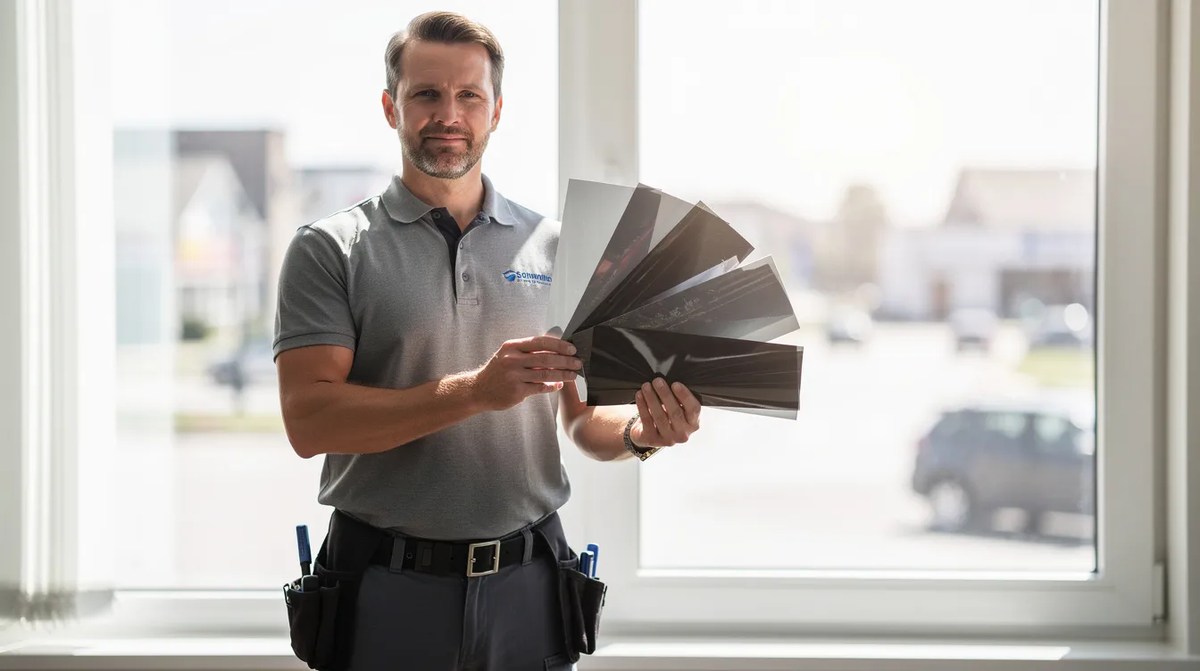
Modern films address comfort, safety, and aesthetics while costing far less than full window replacement. Benefits apply to both homes and commercial properties-from open-plan offices to glass-walled waiting rooms.
Heat and Glare Reduction for Everyday Comfort
- Window film installation can reduce heat by up to 88%, making a room usable during hot afternoons without heavy curtains or closed screens.
- Window film reduces glare for a clearer viewing experience, with realistic glare reduction ranges of 60–94% depending on film type and darkness level.
- A home office on a west-facing wall-common since the remote work boom-becomes far more comfortable for screen use when film cuts glare without blocking natural light entirely.
UV Protection and Fading Control
- Window film blocks up to 99% of UV rays, functioning like SPF for your glass.
- Films with a 99% or higher UV rating halt UV-related fading of flooring and furniture, protecting hardwood floors, artwork, carpets, and upholstery.
- High UV-rejection properties help protect against sun-faded furniture over years of exposure. While no film eliminates all fading, it dramatically slows the damage compared to clear glass.
Privacy, Security, and Aesthetic Appeal
- Frosted or tinted films give older windows a clean, modern look without replacement-an easy way to add curb appeal.
- Reduced visibility into the home or business creates a stronger sense of security, especially on street-facing windows.
- From the sidewalk, a uniform tint across mismatched panes creates a simple, cohesive appearance. A 1960s-era house refreshed with neutral gray solar film in 2025 can look entirely updated.
How to Choose the Right Local Window Film Company
Results depend as much on the installer as on the film itself. Focus your search on companies that specialize in architectural films rather than shops that only handle auto tint.
- Check for manufacturer certifications, portfolio photos of completed work, verified online reviews, and clear written quotes.
- Request an in-home sample demonstration or visit a showroom before committing.
What to Look for in Reviews and References
- Focus on recent Google and Yelp reviews (2023–2026) for residential and commercial projects similar to yours.
- Red flags: repeated mentions of bubbling, peeling, missed appointments, or poor communication.
- Ask for 2–3 local addresses where you can see installed film in person. Consistent feedback about clean work, punctuality, and respectful crews is a strong trust indicator.
Questions to Ask During a Consultation
- “Which film lines do you recommend for my orientation and climate?”
- “What are the exact warranty terms-manufacturer and workmanship?”
- “Is the quote all-inclusive, or are there extra charges for removal or access?”
- Ask for performance data sheets with TSER, VLT, and SHGC values rather than accepting vague promises. Clarify whether installers are employees or subcontractors and whether the company is insured.
Installation Process: What to Expect From Local Pros
Professional installation is typically clean and fast. A small home can be completed in half a day; a larger property or office may take 1–2 full days.
Pre-Installation Assessment and Measuring
- A technician measures each pane, checks glass type (tempered, laminated, low-E), and notes existing seals or damage.
- Proper measurement is crucial before cutting window film-accurate sizing reduces seams and waste, especially on picture windows and sliding doors.
Day-of Installation Steps
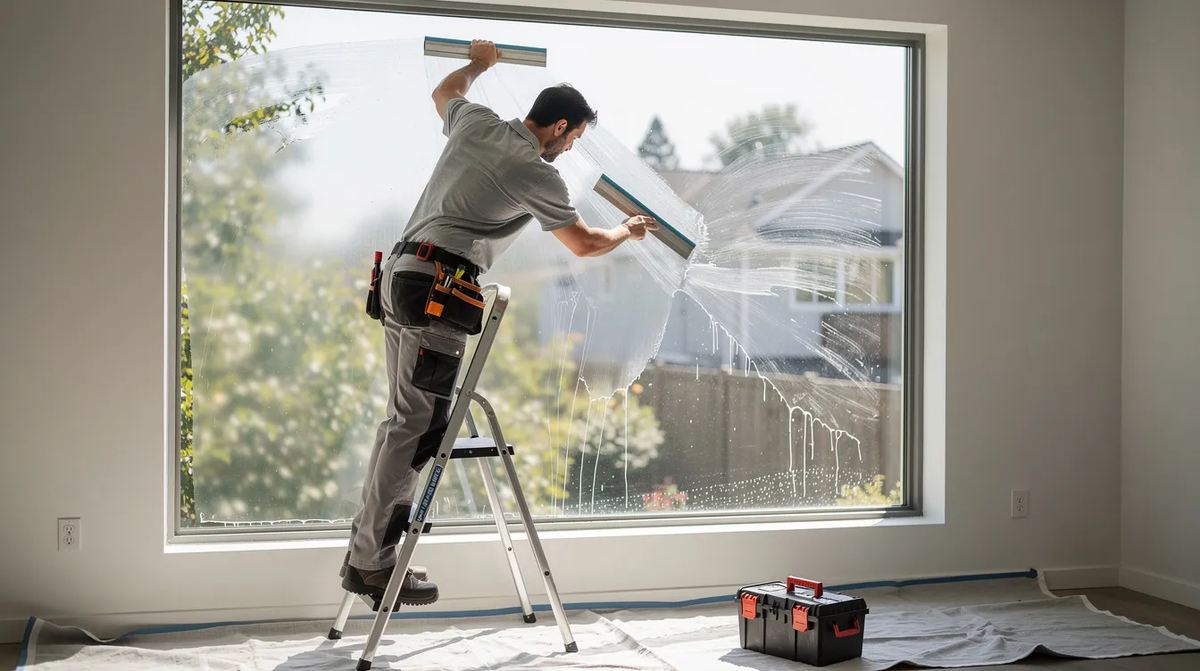
- Crews protect floors and furniture, then thoroughly clean glass with non-ammonia solutions and scraper blades.
- Window films apply easily using water and soap-a slip solution allows precise positioning. Film is squeegeed to remove water and air, then edge-trimmed for a seamless result.
- Noise and disruption are minimal. You can usually remain at home or keep your business open during the work.
Curing Time and Aftercare
- Film can take a few days to 4–6 weeks to fully cure depending on type, sun exposure, and season.
- Small water bubbles, haziness, or streaks during curing are normal and dissipate as moisture evaporates.
- Clean with soft cloths and mild, ammonia-free cleaners after the recommended waiting period. Avoid abrasive tools-scratching from pets or metal blinds is not typically covered under warranty.
Cost of Window Film Near You in 2025–2026
Costs vary by film type, window size, access difficulty, and local labor rates. Here are realistic ranges per square foot for professional installation:
| Film Type | Price per Sq Ft (Installed) |
|---|---|
| Basic solar/privacy | $7–$10 |
| Premium nano-ceramic | $10–$24 |
| Decorative | $10–$15 |
| Safety & security | $8–$12+ |
| DIY kits (film only) | $1–$5 |
| A typical home with ~200 sq ft of glass might run $2,500–$5,000 depending on film grade. Over 5–10 years, reduced energy bills and extended furnishing life often offset the upfront investment. |
Factors That Influence Price
- Film technology level (dyed vs. ceramic vs. spectrally selective)
- Number and size of panes, plus ladder or lift requirements
- Removal of existing old film
- Complex shapes like French panes, skylights, or arched windows increase labor
- Get at least two detail-matched written quotes in the same week for an accurate comparison.
DIY Window Film vs. Professional Installation
DIY rolls from home centers cost $1–$5 per square foot for film alone. Professional-grade films installed by certified technicians cost more but deliver superior performance, longevity, and appearance.
When DIY Might Be Enough
- Low-risk applications: small bathroom sidelights, glass cabinet doors, or a private rental where you use removable static cling films. Transitional films that automatically tint in sunlight can also be a good fit for select DIY-friendly projects when sized appropriately, using photochromic adaptive window tint.
- Static cling window films are easy to install and remove. Static cling films do not require adhesive for installation, and window films can be easily removed without damage.
- Installation takes less than 30 minutes for most users on single small panes.
- Trade-offs: narrower rolls create visible seams on larger windows, and warranty coverage is far more limited than professional lines.
Advantages of Hiring Local Professionals
- Access to higher-grade films, including switchable smart glass films, professional tools, and manufacturer-backed warranties (often 10–25 years).
- Local climate expertise matters-installers know which films perform best in humid coastal areas versus high desert versus cold northern states, and when to recommend smart window films with on-demand privacy for glass walls and specialty applications.
- Professional crews complete in hours what might take a DIYer all weekend, with cleaner edges and fewer dust specks.
- Choosing window film involves assessing primary goals and glass type-pros handle this for you during the consultation.
FAQ: Common Questions About Window Film Near Me
Here are questions homeowners and business owners ask most frequently in 2024–2026:
- Will window film void my window warranty? If the correct product is matched to your glass type and installed properly, it should not. Using the wrong film on tempered or insulated glass can cause thermal stress issues-always confirm compatibility.
- Can I still open my windows after film is installed? Yes. Film is applied to the fixed glass surface; moving parts are unaffected.
- How long does window film last? Premium architectural films carry warranties of 10–25 years. Lifespan depends on film quality, sun exposure, and maintenance.
- Will it make my home too dark? That depends on VLT. Many films allow 40–70% visible light, keeping rooms bright while cutting heat and glare.
- Does film help in winter too? Spectrally selective films block summer heat while still allowing some passive solar gain in winter. There’s a trade-off-lower SHGC reduces cooling loads but also limits winter solar warmth.
- How do I clean filmed windows? Wait for the curing period to end. Then use soft cloths with mild, ammonia-free cleaners. Avoid abrasive pads or metal scrapers.
- Is window film worth the investment? In hot climates, ROI is often 2–5 years through energy savings alone-before factoring in furnishing protection and improved comfort.
Conclusion: Next Steps to Get the Right Window Film Near You
Window film delivers measurable improvements in comfort, privacy, glare reduction, and energy efficiency-often within a single day of professional installation. Choosing a reputable local installer with the right certifications matters just as much as selecting the film itself.
- Start by scheduling a free consultation with a local installer. Ask for samples, performance data, and a written quote.
- Check their recent reviews, verify their warranty terms, and compare at least two quotes before committing.
Professionally installed window film is one of the few home upgrades that pays for itself while making every room more comfortable from day one.