Bright rooms are great until direct sunlight turns your office into a glare zone, overheats your interior, or starts fading flooring and furnishings. Transition film for windows solves that problem with adaptive tint technology that reacts to sunlight instead of staying permanently dark.
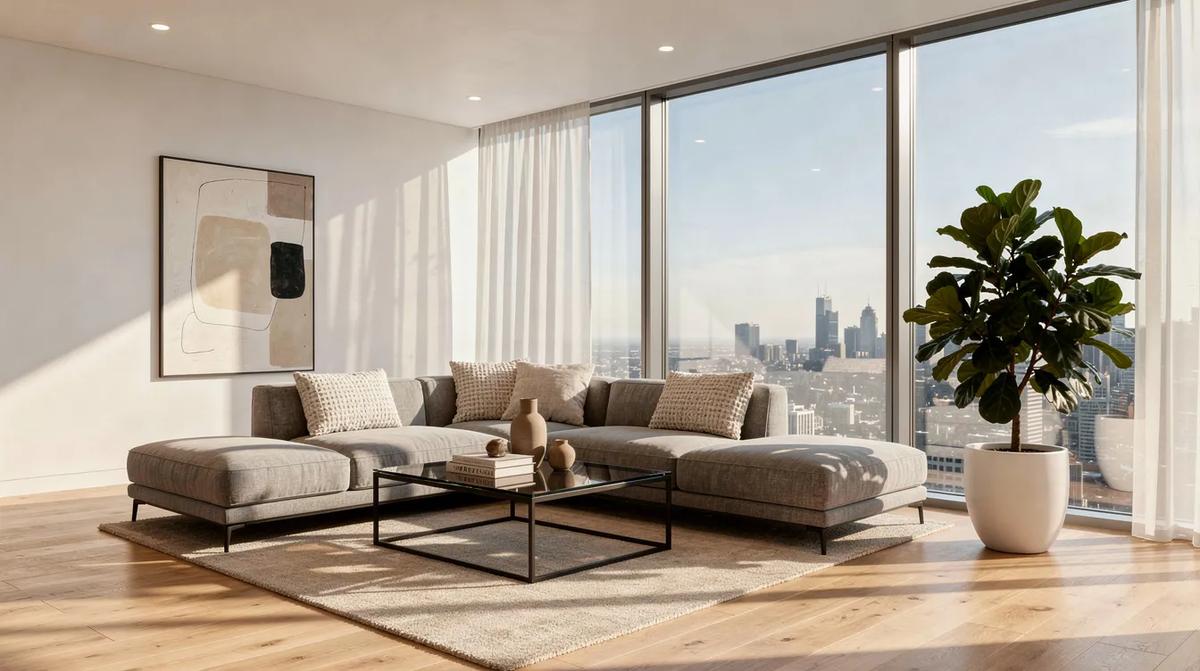
Table of Contents
- What Is Transition Film for Windows?
- How Transitional Window Film Works
- Key Benefits: Comfort, Glare Reduction, and Energy Efficiency
- Types of Transitional Film and Tinted States
- Best Applications for Transitional Window Film
- Transitional Film vs. Traditional Window Tint
- Installation, Durability, and Maintenance
- Cost, ROI, and Getting a Free Estimate
- FAQs About Transitional Window Film
- Conclusion: Is Transitional Window Film Right for Your Space?
What Is Transition Film for Windows?
Transitional window films are adaptive films applied to glass that shift from a clearer appearance to a tinted state as sunlight and uv rays increase. Unlike traditional window tint, which stays one fixed shade all day and night, this photochromic window film changes with conditions.
Modern products may shift from roughly 60–75% visible light transmission on cloudy days to about 20–30% in full sun, depending on the model. If you want adaptive light, privacy, and heat control, transitional window film is a practical retrofit solution for a home, building, storefront, or select car and vehicles where automotive laws allow.
- Photochromic window films darken in response to UV exposure.
- The film is embedded with carbon-based photochromic molecules that react to UV radiation.
- They automatically adjust tint levels based on sunlight intensity.
- Photochromic tints adjust opacity based on sunlight exposure.
- Photochromic films can be applied to most types of glass.
- They help customers enjoy natural light without leaving shades closed all day.
How Transitional Window Film Works
The science is simple enough: UV-reactive molecules inside the window film change structure when exposed to ultraviolet energy, commonly around the 350–400 nm range. As sunlight exposure increases, the film absorbs more visible light and starts to darken.
- The film responds to sunlight exposure without requiring switches motors or electrical wiring.
- Transition film requires zero wires buttons or power sources.
- Darkening can begin within about 30 seconds and reach stronger tint in roughly 2–3 minutes.
- When uv exposure drops, such as shade, cloudy weather, or evening, the tint fades back over several minutes.
- Visible light control affects brightness; infrared rejection affects heat.
- Transition film blocks up to 80% of infrared heat gain during hot periods, while some premium photochromic films can reduce infrared heat by up to 95%.
That automatic adjustment is fully reversible and has no moving parts, which makes the functionality clean and low-profile.
Key Benefits: Comfort, Glare Reduction, and Energy Efficiency
Transitional film upgrades existing glass without replacing the whole window. It improves the indoor environment by balancing light, glare, heat, and protection.
- Glare reduction: Photochromic films enhance comfort by reducing glare indoors. These tints reduce glare, improving comfort and visibility on TVs, tablets, and office monitors.
- Dynamic comfort: Photochromic films can reduce glare and improve comfort dynamically as the sun moves.
- Heat control: Transitional window films block over 80% of infrared heat, and strong products can reduce room temperatures by about 3–5°C or 5–9°F in sun-heavy rooms.
- Improved energy efficiency: These films enhance energy efficiency by reducing reliance on air conditioning. Transitional window films improve energy efficiency in sunny climates and can lower energy bills by reducing AC runtime.
- UV protection: These films block up to 99% of harmful UV rays. Photochromic window tint blocks up to 99% of UV rays, and photochromic films block up to 99% of harmful UV rays, protecting skin, artwork, fabrics, and flooring from fading.
- Privacy: Photochromic films enhance daytime privacy by darkening in sunlight. Photochromic window films provide privacy without sacrificing natural light, and dedicated privacy window films can be used in areas where year-round screening is the priority.
- Aesthetics: The appearance stays sleek: brighter daylight on gray days, lightly smoked glass in strong sun, and less need for blinds.
Types of Transitional Film and Tinted States
Not all transitional film is sold with the same tint level. Some films are nearly clear indoors and darken only when exposed to direct sunlight. Others begin with a soft neutral tint and become more private when sunlight intensity rises.
| Film type | Base VLT | Tinted VLT | Recommended use |
|---|---|---|---|
| Clear-to-tint architectural film | 60–75% | 25–40% | Homes, offices, daylight-sensitive rooms |
| Deeper adaptive film | 35–55% | 15–25% | West-facing glass, high-glare space |
| coolvu transitional window films style specs | Varies | Often strong sun-control range | Projects prioritizing heat, glare, and privacy |
| Specialty photochromic film | Varies | Varies | Design-focused glass, skylights, specialty settings |
| Common shades include neutral gray, cool blue-gray, and very light bronze. Gray usually preserves color best; bronze can warm the interior tone. |
Best Applications for Transitional Window Film
Transitional film is most useful where sunlight changes dramatically by hour, season, or orientation.
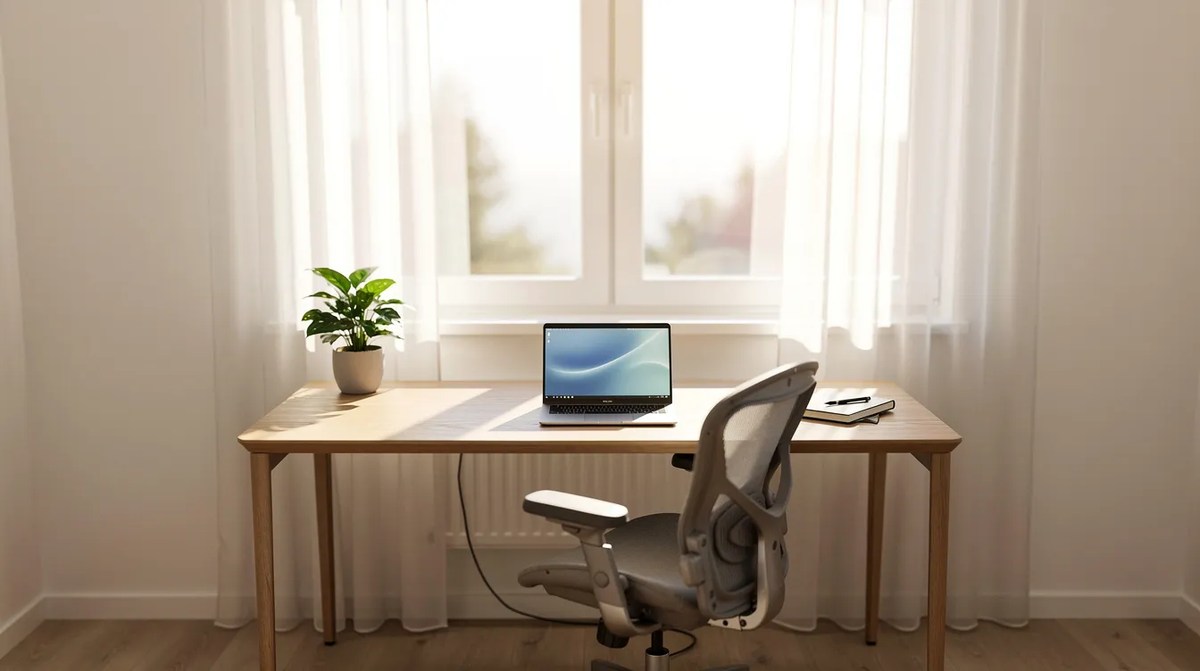
- Residential: South- and west-facing living rooms, two-story foyers, home offices from the post-2020 remote work boom, and open-plan kitchens with large patio doors.
- Commercial spaces: Conference rooms with large exterior glazing, street-facing storefronts needing visibility plus control, and co-working spaces with many screens.
- Specialty glass: Skylights, sunrooms, and atriums built in the 1990s–2010s that now struggle with hotter summers and higher cooling costs.
- Automotive: Side and rear automotive glass may be suitable, but always review local window tint laws before installing on a car or vehicles.
- Safety and security note: This is not the same as security window film, but better visibility, less glare, and less heat can still enhance daily comfort and safety.
Transitional Film vs. Traditional Window Tint
Both options are window film, but they behave differently. Traditional solar window films provide fixed opacity regardless of light conditions. Traditional window tints do not adapt to changing light conditions.
- Traditional dark tints block light permanently requiring overhead lights on cloudy days.
- Traditional tints provide fixed opacity regardless of light conditions.
- Transitional film automatically adjusts between a clearer and dark tinted state.
- Static tint can be cheaper, but it may make rooms too dark in winter or on cloudy mornings.
- Transitional film helps you enjoy natural light while still getting glare reduction and heat control when the sun is strongest.
Example: in a 2024 renovated living room with large west-facing glass, a fixed 20% tint feels dark all morning. A transitional film may stay brighter early, then darken in the afternoon when glare and heat peak.
Installation, Durability, and Maintenance
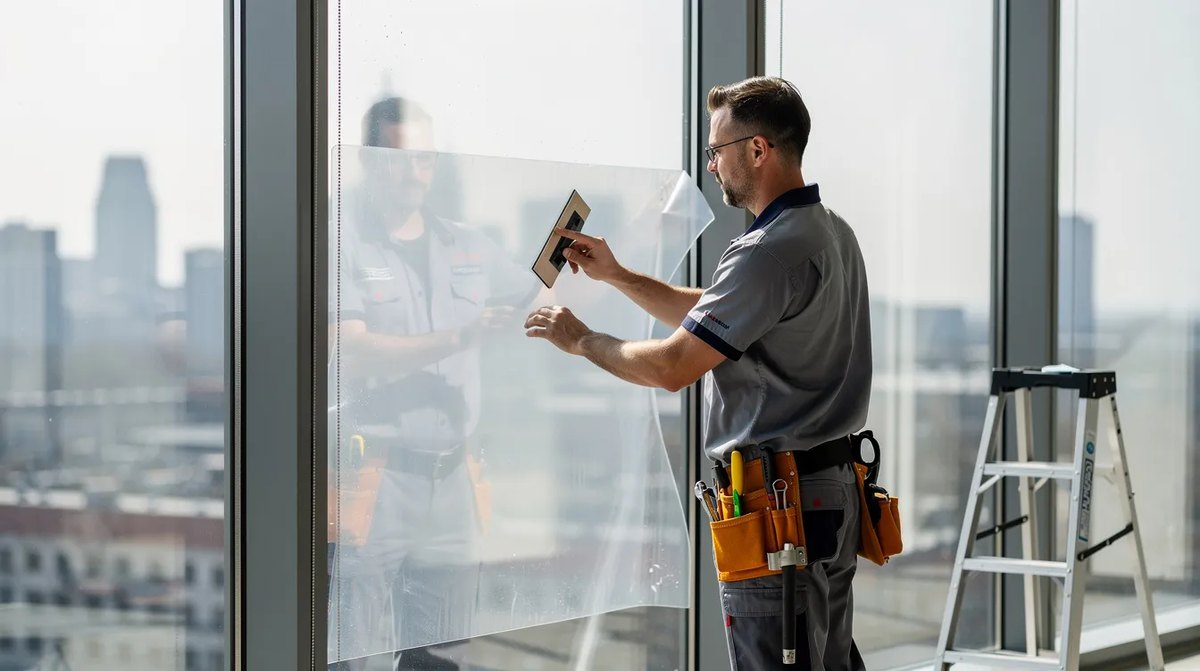
Professional installation is recommended for architectural window film and photochromic window tint because clarity and performance depend on clean glass, proper alignment, and careful edge work. Photochromic window tint installation requires careful attention to detail, and improper installation can affect the tint’s performance.
Typical install steps include:
- Measure each window.
- Clean the glass thoroughly.
- Cut the film to size.
- Apply with a wet mounting solution.
- Squeegee out water and air.
- Trim edges and inspect the exterior and interior appearance.
DIY installation can lead to bubbling or peeling issues. After installation, curing may take 7–30 days, depending on weather and humidity. Minor haze or small moisture pockets can be normal during cure.
For maintenance, use mild soap, water, and microfiber cloths. Avoid ammonia cleaners, abrasive pads, and razor blades on the film. Premium products often last 10–15 years on interior-facing glass, with warranties commonly covering peeling, bubbling, or excessive discoloration for 7–15 years.
Cost, ROI, and Getting a Free Estimate
Transitional window film usually costs more than basic static tint, but it delivers adaptive performance. In 2024–2026 pricing, professional material and installation often range from about $10–$15+ per square foot, depending on the project.
Price depends on:
- Total glass area
- Window height and accessibility
- Film performance level
- Old film removal
- Shape, size, and glass type
- Residential versus commercial project requirements
Photochromic window tints can reduce energy bills significantly in sunny settings. Transitional films help maintain comfortable indoor temperatures, extend the life of furnishings by reducing fading, and may support energy efficiency goals. For broader context, the U.S. Department of Energy notes that window attachments can improve building energy performance when properly selected and installed.
For accurate pricing, prepare window measurements, photos, orientation, and goals for heat, glare, privacy, or uv protection. Then request a free estimate so the right solution can be matched to your space.
FAQs About Transitional Window Film
How is transitional film different from smart glass?
Transitional film is passive photochromic film. Smart window film and smart glass may use electricity, sensors, or controls, while transition film reacts to uv exposure without wiring.
How dark will the glass get?
Many products shift into a tinted state around 20–40% VLT, depending on the model. At night, visibility depends on interior lighting and outside darkness.
Does it work behind low-E or laminated glass?
Often yes, but activation may be slower or weaker because coatings can reduce UV reaching the film. A professional should review the glass before installation.
Is the film removable?
Yes. When professionally removed, quality window film should not damage glass, although adhesive cleanup may be needed.
Are there code or legal concerns?
Commercial properties may need to review building rules, appearance standards, and daylight requirements, especially when adding switchable smart glass film to interior partitions. Automotive use must follow state or country tint laws.
Conclusion: Is Transitional Window Film Right for Your Space?
Transitional window film combines glare reduction, heat control, uv protection, privacy, and energy efficiency in one adaptive solution. It is especially useful for bright living rooms, home offices, storefronts, and glass-heavy commercial spaces built or renovated in the last decade.
If your current windows create glare, heat, fading, or high energy bills, compare those costs with the advantages of adaptive tint. Contact our CoolVu glass and surface solutions team to schedule a consultation or request a free estimate; many projects can begin with photos and window measurements submitted online.