
Table of Contents
The Fundamental Shift: From Fragility to Fortification
For generations, glass has served as a necessary but inherently weak element in building design, offering light and visibility but little in the way of true security. Its crystalline structure, while visually appealing, is brittle and easily compromised by impact, transforming into dangerous shards. This vulnerability has long been a challenge for businesses seeking to protect their assets and ensure the safety of their employees and customers.
However, the advent of advanced security window film marks a fundamental shift in this paradigm. It doesn’t replace the glass, but rather overlays it with an invisible, high-strength shield. Imagine a fragile pane of glass suddenly reinforced by an incredibly strong, flexible, and adhesive membrane.
When subjected to impact, instead of shattering into loose, hazardous fragments, the glass is held firmly in place by the film, creating a resilient barrier that resists penetration and disperses force. This transformation redefines glass from a mere transparent partition into an integral component of an engineered safety system.

Dispelling Common Misconceptions About Commercial Window Protection
It’s easy to misunderstand what security window film actually achieves. Many business owners initially believe it makes glass “unbreakable,” or confuse it with simple window tinting. To be clear, security film does not render glass impervious to all forms of attack. A determined intruder with enough time and specialized tools can eventually breach any barrier.
Instead, the true power of security film lies in its ability to dramatically delay entry, mitigate harm from projectiles, and contain dangerous glass fragments. It’s not about creating an impenetrable wall, but rather about turning a swift, easy entry into a prolonged, noisy struggle. This crucial delay provides invaluable time for security personnel to respond, alarms to function effectively, and occupants to seek safety. It also transforms potential flying glass into a cohesive, less dangerous structure, significantly reducing the risk of injury from sharp shards.
The Core Problem: Why Standard Glass is a Business Vulnerability
Without the reinforcement of security film, standard glass presents numerous liabilities for any commercial establishment. It is often the weakest point in a building’s shell, easily exploited by those seeking quick access. A simple rock, a crowbar, or even a determined kick can shatter a typical storefront window in seconds.
The consequences of such an event extend far beyond the immediate damage. Businesses face substantial risks including:
- Rapid Intrusion: Burglaries become smash-and-grab opportunities, allowing thieves to quickly access valuable inventory, cash registers, or sensitive data.
- Employee and Customer Safety Risks: Shattering glass creates dangerous projectiles, posing a serious threat of injury during an attempted break-in, an accidental impact, or even severe weather events.
- Vandalism and Property Damage: Easily broken windows invite acts of vandalism, leading to costly repairs, operational downtime, and a diminished sense of security.
- Operational Disruption: A broken window means lost business, cleanup costs, emergency boarding, and the time spent dealing with repairs, all impacting profitability and continuity.
These vulnerabilities underscore the critical need for a solution that proactively fortifies glass, converting it from a passive weakness into an active layer of defense.
The Engineering Behind the Shield: Core Components of Security Film
Understanding the true capability of security window film requires looking beyond its transparent appearance and delving into its sophisticated construction. It is a marvel of material science, meticulously designed to perform under extreme stress.
The Multilayered Strength of Polyethylene Terephthalate (PET)
At the heart of security window film is Polyethylene Terephthalate, more commonly known as PET. This advanced polyester is renowned for its exceptional tensile strength, tear resistance, and optical clarity. What sets security film apart from standard films is not just the material itself, but how it’s constructed.
Security films are composed of multiple, extraordinarily strong layers of PET, laminated together to achieve impressive thicknesses, often ranging from 2 mil up to 14 mil or even more. Each additional layer contributes to the film’s ability to absorb and distribute impact energy across a wider area, much like how multiple layers of Kevlar provide superior protection over a single sheet. This layered construction ensures that even when the glass beneath shatters, the film maintains its integrity, resisting penetration and holding the broken fragments firmly in place.
The Critical Role of Aggressive Adhesives and Their Formulation
While the PET layers provide the structural strength, it is the sophisticated adhesive system that truly binds the security film to the glass, transforming it into a single, cohesive unit. These are not standard glues; they are specially formulated, aggressive acrylic-based adhesives designed for maximum sheer strength and long-term durability.
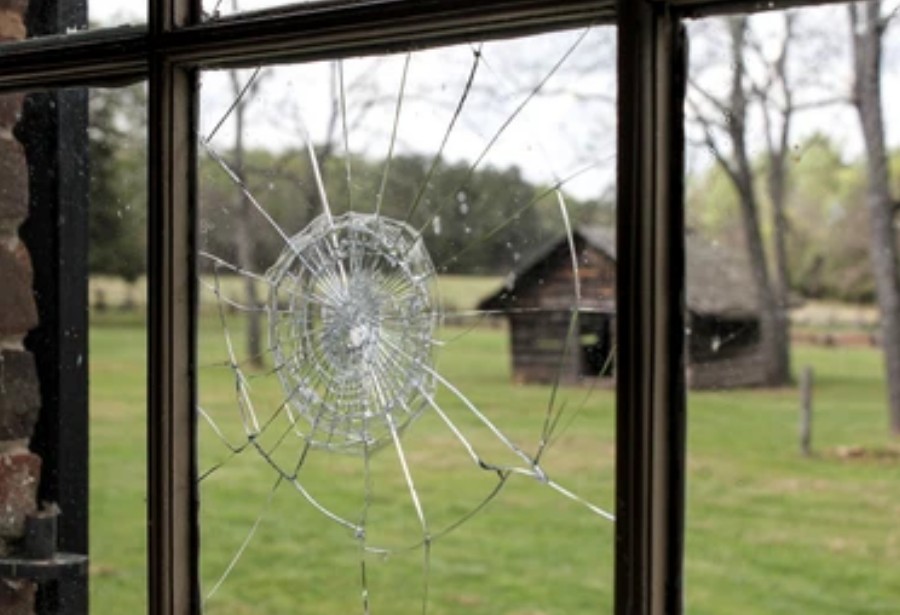
Upon impact, the adhesive’s primary role is to prevent the shattered glass from separating from the film. It essentially acts as a powerful, flexible net, turning what would be thousands of dangerous, flying shards into a largely intact, albeit cracked, membrane.
This tenacious bond ensures that even after the glass has failed, the film remains adhered to the frame, maintaining a robust barrier that dramatically delays forced entry and contains hazardous fragments within the window opening. Without this critical adhesive, the multi-layered PET would be far less effective in securing the window.
Unpacking the Film’s Structure: Layers, Coatings, and Durability
A high-quality security window film is a precisely engineered laminate, optimized for both protection and longevity. Its typical construction involves several key elements:
- Multiple PET Layers: As discussed, these provide the core strength and resistance to tearing and penetration.
- Aggressive Adhesive: This layer ensures an unbreakable bond with the glass, holding fragments together.
- Mounting Adhesive: This is the pressure-sensitive adhesive that permanently affixes the film to the glass surface during installation.
- Scratch-Resistant Hard Coat: Applied to the exterior surface of the film, this transparent coating protects against everyday wear and tear, ensuring optical clarity and extending the film’s lifespan without compromising its protective qualities.
- UV Inhibitors: Integrated into the film’s layers or adhesive, these components block up to 99% of harmful ultraviolet rays, protecting interior furnishings and merchandise from fading, and also prolonging the film’s own life by preventing degradation from sun exposure.
Each component is meticulously designed to work in concert, creating a product that offers superior protection while maintaining excellent optical clarity and durability in demanding commercial environments.
Differentiating Security Film from Standard Tinting or Decorative Films
It’s crucial for business owners to understand that not all window films are created equal, and mistaking one for another can have serious consequences when security is paramount.
- Standard Tinting Films: These are primarily designed for aesthetic enhancement, glare reduction, heat control, and basic UV protection. They are typically much thinner, often single-ply, and utilize a less aggressive adhesive. While they might hold a few glass fragments together, they offer minimal resistance to forced entry or impact.
- Decorative Films: As their name suggests, these films are for aesthetic purposes, offering privacy, etched glass effects, or branding opportunities. Their construction is generally similar to standard tinting films in terms of thickness and adhesive strength, providing no significant security benefits.
Security window films, in stark contrast, are purpose-built for protection. Their defining characteristics include:
- Significantly Greater Thickness: Multi-layered PET construction results in a much thicker film (e.g., 8-14 mil compared to 1-2 mil for tint).
- Advanced Adhesives: Formulated for maximum bond strength to glass, ensuring shattered fragments remain adhered.
- High Tensile and Tear Strength: Engineered to resist tearing and absorb massive amounts of impact energy.
While some security films can incorporate tinting or UV blocking properties, their fundamental design and construction are solely focused on transforming the vulnerability of glass into a formidable security asset. Choosing a film based purely on aesthetics or basic UV protection, without understanding these critical structural differences, leaves a business exposed to significant risk.
The Science of Adhesion: A Microscopic Bond for Macro Protection
Security window film fundamentally changes the behavior of glass upon impact, but this transformation begins at a molecular level. It’s not just a sheet of plastic; it’s an engineered system designed to integrate with the glass itself.
Understanding the Molecular Connection: How Film Bonds to Glass Surfaces
The effectiveness of security window film hinges on its sophisticated adhesive layer. Typically composed of durable acrylic polymers, this adhesive creates an incredibly strong, continuous bond with the glass surface. Think of it less as a simple sticker and more like a molecular embrace. Through precise chemical engineering, the adhesive molecules establish deep, uniform contact with the glass, maximizing surface area for interaction. This molecular connection ensures that the film doesn’t merely sit on the glass but becomes an integral part of it, providing a robust foundation for the properties of protective window film.
Energy Absorption and Impact Dispersion: The Film’s Protective Mechanism
Once bonded, the multi-layered polyester construction of the film comes into play. Upon impact, whether from a thrown object or an attempted forced entry, the film doesn’t resist the force rigidly. Instead, it’s designed to stretch and flex.
This dynamic response allows the film to absorb and then disperse the energy of the impact across a wider area, much like a trampoline cushions a fall by distributing the weight and force.
This mechanism prevents the concentrated stress that typically causes glass to shatter explosively. By spreading the energy, the film reduces the likelihood of catastrophic failure, maintaining the glass’s structural integrity far beyond its untreated counterpart.
The “Safety Net” Effect: Containing Shattered Glass and Its Dangers
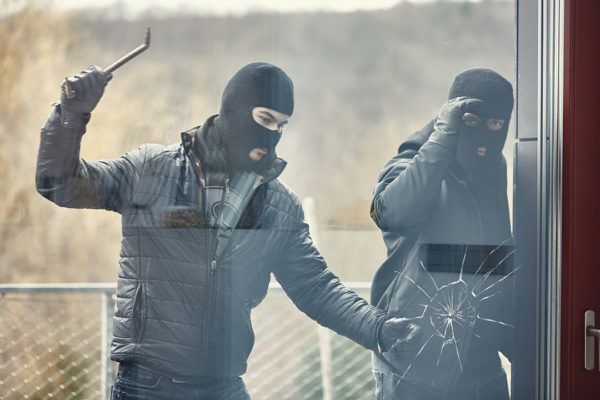
Perhaps the most critical benefit of security window film is its ability to create a “safety net” for shattered glass. Even if the impact is severe enough to break the glass, the film’s powerful adhesive and high tensile strength hold the fractured pieces firmly within the window frame. This prevents dangerous shards from flying inward as deadly projectiles, protecting occupants, inventory, and equipment from severe injury or damage. It also keeps an opening from forming instantly, denying intruders immediate access and ensuring that a broken window remains a formidable barrier rather than a gaping hole.
Quantifying Strength: Tensile Strength and Puncture Resistance in Action
To truly appreciate the protective capabilities of security film, it helps to understand key metrics like tensile strength and puncture resistance.
- Tensile Strength: This measures the film’s ability to resist breaking when subjected to a pulling or stretching force. High tensile strength means the film can absorb significant energy without tearing, effectively holding the glass fragments together even under extreme stress.
- Puncture Resistance: This quantifies the film’s ability to withstand penetration by sharp objects. The multi-layered construction and dense composition make it incredibly difficult for an intruder to pierce the film and create an entry point, forcing them to expend considerable effort and time.
These quantified properties directly translate into real-world protection, making the glass far more resistant to blunt force, sharp impacts, and repeated assaults than standard glazing.
Transforming Threats into Time: Real-World Applications of Security Window Film
Security window film’s engineered capabilities translate directly into tangible benefits for business owners, transforming potential vulnerabilities into resilient strengths. Its primary function is to buy precious time, deterring threats and minimizing damage.
Deterring “Smash-and-Grab” Attacks: Delaying Intruder Access and Minimizing Loss
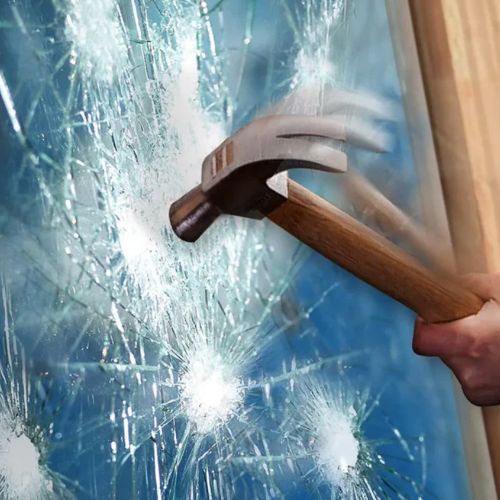
For businesses vulnerable to “smash-and-grab” burglaries, security film acts as a powerful deterrent. Intruders typically seek quick, easy access. When they strike a filmed window, they expect glass to shatter and fall away, creating an immediate opening. Instead, the glass holds firm, remaining an intact barrier. This unexpected resistance frustrates and delays them significantly. Every extra second an intruder spends struggling with a window increases their risk of detection, often prompting them to abandon the attempt altogether. This delay is critical for minimizing inventory loss and property damage, providing valuable time for security personnel or law enforcement to respond.
Mitigating the Force of Blasts: Protecting Occupants from Flying Shards
In the unfortunate event of an explosion, whether accidental or intentional, untreated glass becomes one of the most dangerous elements. The force of a blast can turn ordinary windowpanes into thousands of lethal projectiles traveling at high speeds. Security window film drastically mitigates this hazard. By holding shattered glass fragments together within the frame, the film prevents these dangerous shards from becoming a widespread hazard. This significantly reduces the risk of severe injury or fatality to occupants and protects valuable assets from shrapnel damage, creating a safer environment within the building.
Guarding Against Vandalism, Graffiti, and Everyday Accidents
While often overlooked, routine incidents can also pose significant costs and risks. Security window film offers robust protection against:
- Vandalism: The film acts as a sacrificial layer against etching, scratching, and graffiti. Instead of damaging the expensive glass beneath, vandals mar the film, which can then be professionally removed and replaced at a fraction of the cost of glass replacement.
- Everyday Accidents: From misplaced carts to accidental bumps, film reinforces glass against common impacts. It prevents minor incidents from escalating into costly and dangerous broken windows.
This proactive protection maintains your property’s appearance and reduces maintenance costs over time.
Enhancing Building Resilience Against Natural Disasters and Severe Weather
Natural disasters like hurricanes, tornadoes, and severe storms present unique challenges, often featuring high winds and flying debris. Standard glass is highly susceptible to impact from windborne objects, which can breach a building’s envelope, leading to extensive water damage and structural compromise. Security window film fortifies glass, allowing it to withstand impacts that would otherwise cause total failure. By keeping the glass intact, even if cracked, it helps maintain the building’s protective barrier, safeguarding the interior from the elements and preventing widespread damage.
Illustrative Scenarios: How Film Protects Against Forced Entry
To fully grasp the impact of security window film, consider these scenarios:
- Retail Store Break-in: An assailant attempts a “brick through window” entry. With untreated glass, the brick sails through, creating an instant opening. With security film, the brick strikes the glass, which cracks, but the film holds it together, creating only a spiderweb pattern. Frustrated, the intruder repeatedly strikes, making noise and attracting attention, ultimately fleeing before gaining entry or before police arrive. The delay proves critical.
- Office Building Security: A disgruntled individual attempts to force entry with a pry bar. On an unprotected window, the glass quickly shatters and yields. On a window with security film, the pry bar creates significant cracking, but the film resists tearing and stretching, maintaining the barrier. The sustained effort and noise trigger alarms and security protocols, allowing time for intervention.
In each case, the film acts as a robust, engineered shield, transforming what would be a swift breach into a time-consuming, noisy, and often unsuccessful endeavor.
Tailoring Protection: Selecting the Right Security Film for Your Commercial Property
Choosing the optimal security window film for your business is not a one-size-fits-all decision. It involves a strategic assessment of potential threats, property vulnerabilities, and the specific performance characteristics of various film types. Understanding these nuances ensures that your investment provides the highest level of protection, truly transforming your glass from a potential weak point into a robust component of your security infrastructure.
Navigating Film Thickness and Strength: Performance Metrics and Considerations
The effectiveness of security film largely hinges on its thickness and inherent strength, measured in mils (thousandths of an inch). Films typically range from 4 mil to 21 mil or more, with thicker films offering a significantly greater deterrent effect against forced entry. However, thickness alone doesn’t tell the whole story. The film’s tensile strength, tear resistance, and puncture resistance—properties that describe how well it withstands pulling, ripping, and piercing forces—are equally crucial. These characteristics are engineered through multi-layered polyester constructions and advanced adhesive technologies.
Consider the analogy of a spiderweb: a single strand might be easily broken, but a complex, interconnected web can absorb and distribute immense force. Similarly, security film utilizes multiple layers of strong, clear polyester bound by a pressure-sensitive adhesive. When impact occurs, this layered system dissipates energy across the entire glass surface, holding shattered fragments together in a strong membrane, much like a robust net. This drastically delays breach attempts, buying critical time for first responders and deterring criminals.
Understanding Industry Standards and Testing: GSA and ASTM International Certifications
When evaluating security films, it is essential to look for products that meet recognized industry standards. These certifications indicate that a film has undergone rigorous testing to prove its performance under simulated attack conditions.
- GSA (General Services Administration) Standards: Primarily developed for government buildings and high-security installations, GSA standards (such as GSA level C, B, A) specify the film’s ability to resist specific blast pressures and forced entry attempts. Films meeting these standards demonstrate exceptional resilience.
- ASTM International (American Society for Testing and Materials): ASTM sets globally recognized standards for a vast array of materials and products. For security films, relevant standards include:
- ASTM F1642: Standard Test Method for Glazing and Glazing Systems Subject to Airblast Loading, evaluating a film’s performance against explosive forces.
- ASTM F1233: Standard Test Method for Security Glazing Materials and Systems, assessing resistance to manual attack (e.g., impact from tools).
- ASTM E84: Standard Test Method for Surface Burning Characteristics of Building Materials, relevant for fire safety considerations.
These certifications provide an objective benchmark, assuring business owners that the chosen film has been independently verified to perform under stress.
Matching Film Properties to Specific Threat Profiles and Business Needs
The right film choice depends entirely on the threats your commercial property faces. A retail storefront prone to smash-and-grab burglaries has different needs than a corporate office requiring blast mitigation or a school focused on active shooter scenarios.
- For Smash-and-Grab Prevention: Thicker films (8 mil to 14 mil) with strong adhesive systems are ideal. They create a significant barrier, slowing down intruders and often causing them to abandon their efforts due to the time and noise involved.
- For Vandalism and Graffiti Mitigation: While security film won’t stop vandalism entirely, it can prevent etching and make graffiti removal easier, as the film itself can be replaced without replacing the entire window.
- For Blast Mitigation and Ballistic Resistance (enhanced): The highest-grade films (15 mil to 21 mil and beyond), often combined with specialized attachment systems that anchor the film directly to the window frame, are necessary. These solutions are engineered to contain glass fragments and maintain structural integrity against extreme forces.
- For Enhanced Employee and Customer Safety: Even thinner security films (4 mil to 6 mil) offer excellent protection against accidental glass breakage, transforming potentially dangerous shards into safely contained fragments, reducing injury risk significantly.
A thorough assessment of your property, location, and the prevalent risks will guide the selection process, ensuring a tailored security solution.
Beyond Security: Exploring Additional Benefits Like UV Protection and Glare Reduction
While security is the primary driver, modern window films offer a suite of additional benefits that enhance a commercial property’s overall environment and longevity. Integrating these features can provide a comprehensive upgrade to your building’s glass.
- UV Protection: Most security films block 99% or more of harmful UVA and UVB rays. This not only protects building occupants from sun exposure but also prevents fading of interior furnishings, merchandise, and artwork, preserving your assets’ value and appearance.
- Glare Reduction: Films can significantly reduce uncomfortable glare, improving visibility on computer screens, enhancing comfort for employees and customers, and creating a more productive and inviting space.
- Energy Efficiency: Some security films are engineered with solar control properties, reflecting solar heat in the summer and retaining interior heat in the winter. This can lead to noticeable reductions in HVAC costs and contribute to a more comfortable indoor temperature year-round.
- Privacy: Certain films can add a level of daytime privacy, obscuring the view from the outside without sacrificing natural light from within, depending on the film’s tint or reflective properties.
These integrated benefits underscore how security window film is not merely a defensive measure but a multifaceted improvement to your business environment.
The Unseen Foundation: Why Professional Installation is Paramount for Security Film Performance
The finest security film in the world is only as effective as its installation. This critical step acts as the unseen foundation, dictating the film’s ability to perform its protective duties and deliver on its promised longevity. Professional installation ensures that the engineered properties of the film are fully realized, turning a raw material into a reliable safety system.
The Precision of Application: Ensuring a Flawless, Bubble-Free Bond
The application of security film requires meticulous precision. Any air bubbles, dust particles, or improper adhesion points can compromise the film’s integrity, creating weak spots that diminish its ability to hold glass together upon impact. Professional installers possess the specialized tools, cleanroom-like techniques, and extensive experience to achieve a flawless, bubble-free bond across the entire glass surface. This ensures maximum film-to-glass adhesion, which is crucial for uniform energy dissipation and fragment retention. Think of it as creating a seamless extension of the glass itself, where every square inch is equally fortified.
Expertise in Edge Retention and Curing: Maximizing Long-Term Durability
Beyond initial application, proper edge retention and the curing process are vital for the film’s long-term performance and durability. Edge retention refers to how well the film is sealed at the perimeter of the glass. If edges lift or peel, moisture and contaminants can penetrate, leading to delamination and reduced protective capabilities. Professional installers utilize specific trimming techniques and ensure proper seals to prevent this.
The curing process, which can take several weeks depending on environmental conditions and film type, involves the complete evaporation of the water solution used during installation. During this time, the adhesive bond strengthens significantly. Expert installers understand this process, advise clients on post-installation care, and ensure conditions are optimal for the film to reach its full adhesive strength, maximizing its lifespan and protective efficacy.
The CoolVu Difference: Three Decades of Experience and Rigorous Installer Training
At CoolVu, our commitment to superior security film performance is anchored in three decades of industry experience and an unparalleled installer training program. We understand that our reputation, and your safety, rests on the hands of our technicians.
- Proven Methodologies: Our installation protocols are refined through years of practical application and continuous improvement, incorporating the latest advancements in film technology and application techniques.
- Comprehensive Training: Every CoolVu installer undergoes rigorous, hands-on training that covers everything from precise cutting and preparation to specialized adhesion techniques and advanced attachment systems. This ensures a consistent, high-quality application every time.
- Quality Control: We implement stringent quality control measures at every stage of the installation process, guaranteeing that the film is applied correctly, adheres fully, and performs as intended, transforming your windows into formidable barriers.
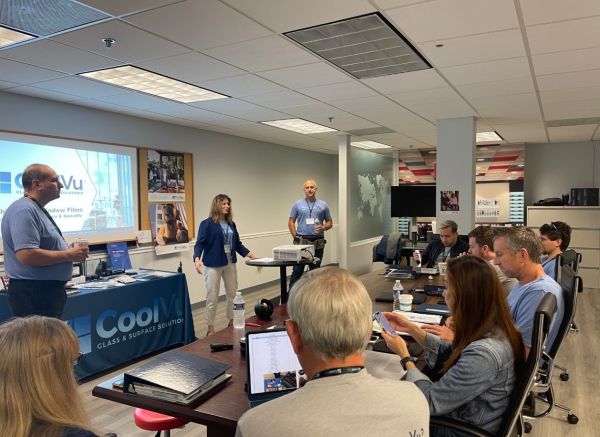
This dedicated approach means that when you choose CoolVu, you’re not just getting a product; you’re investing in an expertly installed, high-performance security system backed by deep industry knowledge.
Why DIY Solutions Compromise Both Security and Longevity
While the idea of a do-it-yourself security film installation might seem cost-effective, it almost always compromises the very security and longevity you seek. Without the specialized tools, training, and experience of a professional, common issues quickly arise:
- Bubbles and Wrinkles: These not only look unsightly but create weak points where the film is not fully bonded to the glass, rendering it ineffective against impact.
- Improper Adhesion: Insufficient cleaning or incorrect application techniques prevent the adhesive from bonding fully, leading to premature peeling and dramatically reduced security performance.
- Poor Edge Finish: Untidy or lifted edges are vulnerable to peeling, dirt accumulation, and moisture, leading to film degradation and a significantly shortened lifespan.
- Incorrect Film Selection: Without expert guidance, choosing the wrong film for your specific threat profile means your investment may not provide the necessary level of protection.
Ultimately, a DIY approach to security film is a false economy, jeopardizing your assets and the safety of your occupants by undermining the film’s engineered protective capabilities. Professional installation is an investment in genuine security.
Conclusion: Key Takeaways and Next Steps
Transforming Vulnerability into Resilience
Throughout this discussion, we’ve explored how security window film, including bullet resistant film, fundamentally redefines the role of glass in your business. What many perceive as a building’s most vulnerable point—a brittle, easily compromised barrier—is, with the right application, transformed into an engineered safety system. This transformation isn’t about making glass unbreakable; it’s about making it resilient. By leveraging advanced multi-layered polyester and sophisticated adhesive technologies, security film acts as a formidable, flexible membrane, ensuring that even when glass shatters, it holds together. This critical function is what converts a destructive impact into a delayed entry, safeguarding your invaluable assets, employees, and customers from immediate harm and theft.
The Tangible Benefits for Your Business
The scientific principles behind security window film translate directly into practical, undeniable advantages for any business owner seeking to fortify their premises. The benefits extend far beyond a simple pane of glass, offering a comprehensive security upgrade.
- Enhanced Safety and Security: The primary advantage is the film’s ability to significantly delay forced entry attempts, buying crucial time for emergency services to respond. It also prevents dangerous glass fragments from becoming airborne projectiles during impacts or natural disasters, protecting occupants from serious injury.
- Deterrence Against Vandalism and Theft: A visibly reinforced window can act as a powerful deterrent. Criminals seeking quick access are often discouraged by the prospect of encountering a barrier that resists immediate smashing, leading them to bypass your property in favor of an easier target.
- Protection of Valuables and Inventory: By preventing easy access and minimizing damage from smash-and-grab incidents, security film helps preserve your merchandise, equipment, and sensitive information, reducing financial losses and operational disruptions.
- Increased Peace of Mind: For business owners, managers, and employees, knowing that an additional layer of protection is in place provides a significant sense of security. This peace of mind fosters a more focused and productive work environment, free from constant worry about potential threats.
Moving Forward: Your Next Steps Towards Enhanced Security
Understanding the mechanics and benefits of security window film is the first step toward creating a safer, more secure environment for your business. The next logical step is to explore how this advanced solution can be tailored to your specific needs. Every business has unique vulnerabilities and security requirements, making a one-size-fits-all approach less effective.
We encourage you to connect with commercial window experts who can assess your property, identify potential risks, and recommend the optimal security film solution. A professional consultation will provide clarity on film types, thicknesses, and installation methods best suited for your premises. Investing in security window film is not merely an expenditure; it is a strategic investment in the longevity, safety, and operational continuity of your business. Contact us for all the information required to get your enhanced security.
MORE POSTS:
- Choosing the Best Window Security Film – What is the best window security film, why thickness alone isn’t enough, and how anchoring and expert installation define true protection.
- UV Blocking Window Film and Plants – Protect interiors from UV damage while keeping indoor plants healthy and thriving.
- Commercial Windows & Hidden Costs – How solar heat, UV exposure, and inefficient glass impact energy, comfort, and assets, and how window film solves it.
- Architectural Window Film in New Construction – Why architects integrate film to meet energy codes, sustainability goals, and design intent.