Table of Contents
The Unspoken Threat: Standard Commercial Glass Doors as an Open Invitation
For many businesses, the glass doors that welcome customers also represent a critical security blind spot. Standard commercial glass, while aesthetically pleasing and providing natural light, offers virtually no resistance to a determined intruder. It serves as the path of least resistance, a clear and inviting target for anyone looking to gain quick, illicit access. This inherent fragility means that your primary entry points are often your most significant security vulnerability, making effective glass door break-in prevention a critical concern and a key reason many businesses explore bullet proof film for windows.
Understanding the Psychology and Mechanics of Forced Entry and Smash-and-Grab Incidents
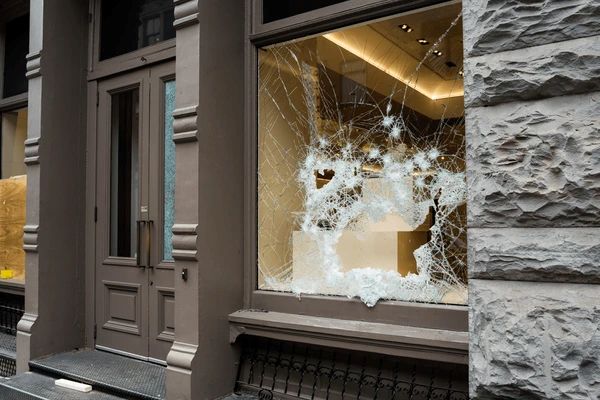
Criminals often operate on principles of speed, opportunity, and minimal risk. A glass door presents a low-barrier target that fits this psychology perfectly. The mechanics of forced entry into a standard glass door are remarkably simple: a common rock, a hammer, or even a heavy object can shatter the glass in mere seconds.
This allows for rapid entry, often referred to as a “smash-and-grab,” where valuable merchandise or cash can be seized before any traditional alarm system has even dispatched a response. The entire event can be over in less than a minute, leaving behind shattered glass, property loss, and significant disruption.
Beyond Break-ins: The Hidden Risks of Vandalism, Accidents, and Environmental Damage
While break-ins are a primary concern, the vulnerability of standard glass doors extends far beyond theft. They are equally susceptible to costly damage from various sources, impacting your business’s operations and bottom line.
- Vandalism: Graffiti, etching, or impact damage from projectiles can quickly deface your storefront, creating an unwelcoming appearance and requiring expensive replacement or repair.
- Accidents: Accidental impacts from forklifts, delivery vehicles, or even customers carrying large items can cause significant glass breakage, leading to immediate safety hazards and operational downtime.
- Environmental Damage: Severe weather events, such as high winds, hail, or flying debris during storms, can easily compromise standard glass doors, turning them into entry points for the elements and causing further damage inside.
Each of these scenarios results in not only repair costs but also potential business interruption, cleanup expenses, and a compromised sense of security.
The False Sense of Security: Why Alarms and Cameras Alone Are Insufficient for True Protection
Many business owners rely heavily on electronic security measures like alarm systems and surveillance cameras, believing these provide comprehensive protection. While alarms are excellent for alerting you to an intrusion and cameras are invaluable for recording events and identifying perpetrators, neither technology actively prevents the initial breach. They are reactive tools. An alarm sounds only after the glass has been shattered and entry has been gained. Cameras provide evidence after the damage is done and property is potentially stolen. They do not create a physical barrier or delay an intruder. This fundamental limitation means that while they play a crucial role in a security strategy, they leave your most vulnerable entry points exposed to immediate forced entry. True protection requires a physical deterrent that works in conjunction with these systems, not in place of them.
What Exactly Is Security Film and How Does It Transform Your Glass?
The Innovative Science Behind Shatter Resistance and Glass Containment
Security film is far more than just a decorative tint. It is an engineered polymer solution designed to reinforce glass. At its core, security film consists of multiple layers of clear, high-tensile polyester, bonded together with a powerful, pressure-sensitive adhesive. When applied to existing glass, this film forms a robust, invisible shield, often acting as a shatterproof door film. If the glass is struck and shatters, the film holds the broken fragments firmly in place, maintaining the integrity of the window or door. This containment dramatically reduces the risk of flying glass shards, a major cause of injury, and transforms a simple breach into a formidable, frustrating barrier for intruders. Businesses seeking higher levels of protection may also consider Riot Glass security glazing systems.
From Basic Safety to Advanced Shielding: Tracing the Evolution of Security Film Technology
The journey of security film technology began with simple safety applications, primarily to prevent injuries from accidental glass breakage. Early films were thinner and mainly focused on keeping shards from scattering. However, continuous innovation in polymer science and adhesive technology has propelled security films into the realm of advanced shielding. Today’s high-performance security films are multi-ply, often incorporating unique cross-laminating techniques and stronger, more durable adhesives. This evolution allows modern films to offer significantly enhanced resistance against impacts, explosions, and forced entry, effectively upgrading standard glass to meet demanding security specifications.
Decoding Performance: The Critical Roles of Film Thickness (Mils) and Tensile Strength
Understanding security film performance hinges on two key specifications:
- Film Thickness (Mils): Measured in “mils” (one thousandth of an inch), this is arguably the most straightforward indicator of a film’s protective capacity. Thicker films (e.g., 8 mil, 12 mil, 14 mil, or more) provide a substantially greater barrier against impact and penetration than thinner films. Each mil adds layers of polymer that increase resilience.
- Tensile Strength: This metric quantifies the maximum stress a material can withstand before breaking or tearing when stretched. A higher tensile strength means the film is more resistant to tearing and stretching, which is crucial when fragmented glass attempts to push against the film.
Together, a greater film thickness combined with high tensile strength creates a powerful, tear-resistant membrane that actively resists efforts to breach the glass, turning what would be a quick entry into a prolonged struggle.
The Mechanism of Intrusion Delay: How Security Film Turns a Quick Smash into a Stubborn Barrier
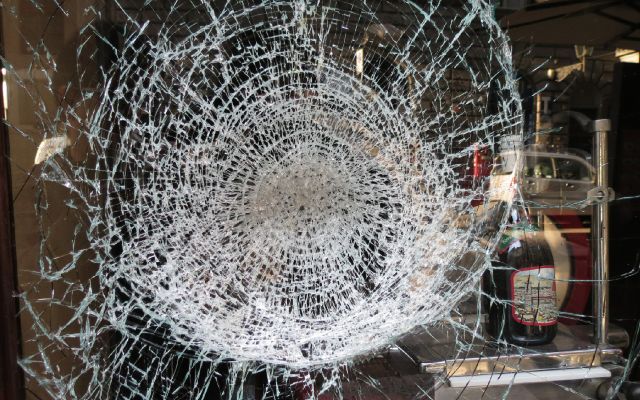
The true power of security film lies in its ability to create an “intrusion delay.” When an attacker attempts to smash through a glass door protected by security film, the glass may shatter, but critically, it remains adhered to the film. Instead of falling out in large, accessible pieces, the broken glass forms a web of cracks, held tightly within the film’s structure. This forces the intruder to expend significant time, effort, and noise to repeatedly strike and tear at the now-reinforced barrier to create an opening large enough to enter. This extended struggle drastically increases their risk of detection, drawing attention, and often leading to them abandoning the attempt. By physically delaying entry, security film provides precious minutes for alarm systems to trigger, surveillance systems to capture clear footage, and law enforcement or security personnel to respond, transforming a business’s most vulnerable point into a remarkably stubborn obstacle.
Key Benefits: How Security Film Bolsters Your Business’s Defense
Security film is far more than a simple window treatment. It is a sophisticated layer of defense engineered to protect your business. Understanding its core benefits reveals why it is becoming an indispensable component of modern commercial security strategies.
Physically Delaying Forced Entry and Deterring Potential Intruders
The primary function of professional-grade security film is to transform ordinary glass into a robust, resilient barrier. Upon impact, rather than shattering into dangerous, easily removable pieces, the glass adheres firmly to the film. This creates a spiderweb effect, holding the entire pane together and making it incredibly difficult for an intruder to gain rapid entry. The significant time and sustained effort required to break through film-protected glass often deter would-be criminals, who typically seek quick, unhindered access. This physical delay is crucial, buying valuable time for alarms to trigger and for authorities to respond, bolstering your commercial door security.
Containing Dangerous Shattered Glass: A Crucial Safety and Security Imperative
Beyond forced entry, the integrity of glass after an impact is vital for both safety and security. When unprotected glass breaks, it can fragment into sharp, deadly shards, posing a severe risk to employees, customers, and even emergency responders.
Security film effectively mitigates this hazard by keeping shattered glass intact and contained within the frame. This not only prevents injuries but also maintains the building’s envelope, preventing opportunistic entry through a large, gaping hole. The mess and cleanup associated with broken glass are also significantly reduced, allowing for quicker business recovery.
Mitigating Damage from Vandalism, Accidental Impacts, and Flying Debris
The protective qualities of security film extend well beyond preventing break-ins. Businesses are often susceptible to damage from various sources, including vandalism, accidental impacts, or even severe weather. A stray rock, a forceful kick, or flying debris during a storm can easily compromise standard glass. Security film provides a resilient shield that absorbs and disperses these impacts, significantly reducing the likelihood of glass breakage. This protection minimizes repair costs, prevents business interruptions, and maintains a professional appearance for your storefront.
An Unseen Layer of Protection: Enhancing Security Without Sacrificing Storefront Aesthetics
One of the most compelling advantages of security film is its discreet nature. Unlike unsightly bars, grates, or roll-down shutters that can detract from a business’s curb appeal and create an unwelcoming atmosphere, security film is virtually invisible once installed. It allows natural light to flood your interior and maintains clear, unobstructed views to the outside, preserving the intended aesthetic and open feel of your business. This allows you to enhance security without compromising the inviting appearance that attracts customers.
Addressing Specific Threats: From Blast Mitigation to Extreme Weather Resilience
The advanced engineering behind professional security films allows them to address an array of specialized threats. High-performance films are specifically designed for blast mitigation, providing a critical layer of protection by containing glass fragments in the event of an explosion, thus reducing shrapnel-related injuries. Similarly, during extreme weather events like hurricanes or high winds, these films fortify glass against flying objects and pressure changes, maintaining the building’s integrity and shielding the interior from severe damage. This versatile protection makes security film a comprehensive safety solution for any business environment.
Security Film vs. Other Security Upgrades: A Strategic Cost-Benefit Analysis
When evaluating security investments, business owners often consider a range of options. Understanding how security film strategically fits into this landscape, and often outperforms or complements other systems, is key to making informed decisions.
The Proactive Advantage: Comparing Security Film to Reactive Alarm and Surveillance Systems
Alarm systems and surveillance cameras are undeniably vital components of a comprehensive security strategy. However, their primary role is reactive. They alert you to an intrusion already in progress or provide evidence after an event has occurred. Security film, in stark contrast, offers a proactive defense. It physically delays and deters forced entry, actively preventing the crime from fully unfolding. While alarms sound and cameras record, security film is actively working to keep intruders outside, transforming your most vulnerable entry points into formidable barriers that buy critical response time. It does not just monitor a problem. It actively prevents one.
Beyond Physical Barriers: Why Security Film Outperforms Bars, Grates, and Shutters
Historically, physical barriers like bars, grates, or solid shutters were the go-to solution for securing vulnerable entry points. While these options provide robust physical protection, they come with significant drawbacks:
- Aesthetics: They often give a business an unwelcoming, fortress-like appearance, which can deter legitimate customers.
- Visibility: They block natural light and obstruct views, making the interior feel dark and confined, and obscuring merchandise displays.
- Emergency Egress: In an emergency, heavy grates or shutters can complicate or impede rapid exit.
- Cost and Maintenance: Installation can be costly and ongoing maintenance may be required.
Security film offers comparable, and often superior, protection without these aesthetic and operational compromises. It maintains the open, inviting look of glass while providing a formidable, continuous barrier that is always active and never requires opening or closing.
Unpacking the Long-Term Value: Return on Investment and Reduced Loss Prevention Costs
Investing in security film offers a tangible return on investment that extends beyond immediate protection. By significantly reducing the likelihood of successful break-ins, property damage, and glass replacement, businesses save money on:
- Repair and Replacement Costs: Fewer shattered windows mean fewer expensive glass replacements.
- Insurance Premiums: Some insurance providers may offer reduced premiums for enhanced security measures.
- Inventory Loss: Preventing successful intrusions minimizes theft of merchandise or equipment.
- Downtime and Lost Business: Avoiding lengthy closures for repairs allows businesses to maintain operations without interruption.
The peace of mind and continuity of business operations that security film provides represent invaluable long-term benefits, directly impacting a business’s bottom line by reducing overall loss prevention costs.
Strategic Security: Positioning Security Film as a Foundational, Cost-Effective Solution
When developing a security strategy, it is crucial to view security film not as an optional add-on, but as a foundational element that underpins and enhances other security systems. It addresses the inherent vulnerability of glass doors and windows more directly and cost-effectively than many alternatives. By proactively fortifying your primary entry points, security film creates a layered defense system where each component reinforces the others. It ensures that while your alarms are ready to sound and your cameras are ready to record, your physical perimeter is already actively resisting threats, making it a truly strategic and invaluable investment for any business.
The Critical Importance of Professional Installation for Optimal Protection
Installing security film is a precise endeavor, and its effectiveness as a barrier hinges entirely on the quality of its application. Unlike decorative films, security film’s primary role is to withstand significant force, delay entry, and hold glass fragments together. This critical function means that shortcuts in installation directly compromise the very security it is meant to provide.
Why Do-It-Yourself or Inexperienced Installation Compromises Your Security
Attempting a do-it-yourself security film installation, or entrusting it to inexperienced hands, can inadvertently create more vulnerability than protection. Security film is not a simple peel-and-stick application. Its robust nature and the precise requirements for bonding to glass demand specialized tools, techniques, and expertise. Improper installation can lead to a host of problems, including:
- Substandard Adhesion: Bubbles, creases, or inadequate bonding mean the film will not perform as designed under impact, potentially separating from the glass prematurely.
- Edge Failure: The edges are critical stress points. If not properly trimmed, sealed, and anchored, they can lift or peel, providing a weak point that an intruder can exploit.
- Reduced Impact Resistance: The film’s ability to absorb and distribute force is severely diminished if not applied with uniform tension and full adhesion across the entire glass surface. This directly compromises its ability to delay forced entry.
Ultimately, a poorly installed film provides a false sense of security, failing precisely when your business needs it most.
The Art and Science of Adhesion, Edge Retention, and Proper Curing for Maximum Durability
Professional security film installation is a blend of meticulous artistry and applied science, ensuring the film delivers its promised performance.
The Science of Adhesion
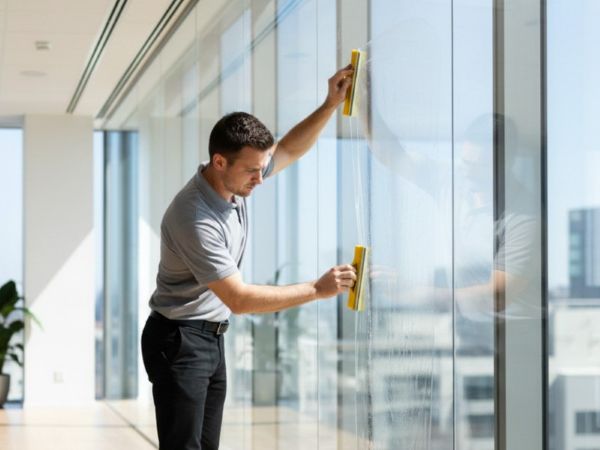
Achieving a durable bond between the film and the glass begins long before the film is even applied. It requires thorough cleaning, specific slip solutions, and precise squeegee techniques to remove all moisture and air, creating a strong, uniform molecular bond. This adhesion is the foundation of the film’s ability to hold glass fragments together upon impact, maintaining the integrity of the opening.
Mastering Edge Retention
The edges of security film installations are particularly vulnerable. Expert installers employ precise trimming techniques, often utilizing specialized edge-anchoring systems, to integrate the film seamlessly into the window frame or glass rebate. This prevents peeling, delamination, and ensures that the film’s structural integrity extends to the very perimeter of the glass panel. Proper edge retention is crucial for maximizing the film’s resistance to prying and blunt force attacks.
Understanding Proper Curing
After installation, the film enters a curing phase where the adhesive fully bonds to the glass. This process can take several weeks, depending on environmental conditions and film type. Professional installers understand these curing times and conditions, advising clients on how to best care for the film during this critical period. They also ensure the initial application is perfect, as defects that appear during curing cannot be easily rectified without reinstallation. This scientific understanding guarantees the film reaches its maximum strength and durability for long-term protection.
Ensuring Compliance: Meeting Building Codes, Warranty Requirements, and Performance Standards
Professional installation goes beyond mere application. It encompasses critical considerations for regulatory compliance and product longevity.
- Building Code Adherence: Depending on the property type and location, certain building codes may dictate specific requirements for glass and window treatments, particularly concerning safety and fire egress. Expert installers are knowledgeable about these codes, ensuring your security film application meets all necessary legal standards.
- Manufacturer Warranty Validity: Security film manufacturers typically offer substantial warranties, but these are almost universally contingent upon professional installation. DIY or inexperienced applications often void these warranties, leaving your business unprotected against potential defects or premature failure.
- Performance Standards: High-quality security films are rated to specific performance standards (e.g., anti-shatter, blast mitigation, forced entry resistance). Improper installation can prevent the film from achieving these rated performances, meaning the product you invested in may not deliver its promised level of protection.
Professional installation is your assurance that your investment will comply with regulations, maintain its warranty, and perform precisely as intended.
The CoolVu Advantage: Leveraging Decades of Expert Experience and a Proven Track Record
Choosing a CoolVu franchise means partnering with a network built on a foundation of deep expertise and a consistent track record of success. Our installers undergo rigorous training that covers not only the technical aspects of film application but also the science behind security performance and the nuances of various glass types. This collective knowledge ensures that every installation benefits from:
- Specialized Security Film Training: Focused education on the unique demands of security film, distinct from standard window tints.
- Access to Advanced Tools and Techniques: Utilizing the latest equipment and methods for flawless application and optimal adhesion.
- Problem-Solving Acumen: The ability to address complex architectural challenges and specific security vulnerabilities with tailored solutions.
This robust framework allows CoolVu to consistently deliver superior results that business owners can rely on.
The Power of a Nationwide Network: Connecting Businesses with Certified Commercial Window Experts
The CoolVu network extends across the nation, providing unparalleled access to certified commercial window experts. This widespread presence offers significant advantages for business owners:
- Consistent Quality: Whether you operate a single storefront or a chain of locations, you can expect the same high standard of professional installation and customer service from any CoolVu franchise.
- Local Expertise, National Backing: Each franchise understands the specific needs and regulations of its local market, while benefiting from the collective knowledge and support of the entire national network.
- Reliable Support: From initial consultation to post-installation service, you have a trusted, certified expert within reach, ready to provide solutions and support.
This integrated approach ensures that businesses everywhere can access top-tier security film solutions, delivered by professionals who stand behind their work.
Choosing the Right Security Film for Your Business’s Unique Needs
Selecting the appropriate security film is not a one-size-fits-all decision. The optimal solution for your business depends on a careful analysis of your specific security requirements and the unique characteristics of your property. A thoughtful, informed approach ensures that your investment yields maximum protection.
Conducting a Comprehensive Assessment of Your Specific Vulnerabilities and Security Goals
The first step in fortifying your business with security film is to understand where your vulnerabilities lie and what you aim to achieve. A professional assessment will consider factors such as:
- Location and Crime Rates: Businesses in high-crime areas or those with isolated entrances may require more robust solutions.
- Value of Assets: The type and value of inventory, equipment, or sensitive data stored on-site influence the level of protection needed.
- Operational Hours: Businesses operating late at night or left unoccupied for extended periods might face different threats.
- Existing Security Measures: How security film integrates with alarms, cameras, and access control systems to create a layered defense.
- Historical Incidents: Previous attempts at forced entry or vandalism can highlight specific weak points.
This holistic review helps identify critical entry points, glass panels most susceptible to attack, and the specific types of threats you need to mitigate, guiding the selection of the most effective film for intrusion prevention.
Navigating Film Grades: Understanding Different Performance Characteristics and Protection Levels
Security films come in various thicknesses and constructions, each offering distinct levels of protection. Understanding these grades is crucial for matching the film to your specific security goals.
- Standard Security Films (4-6 mil): These films primarily address smash-and-grab attempts and provide basic protection against accidental glass breakage. They hold shattered glass together, minimizing injury from flying shards and providing a minor deterrent against quick entry.
- Intermediate Security Films (8-11 mil): Offering enhanced resistance, these films significantly delay forced entry from blunt force impacts, prying tools, and even some ballistic attacks. They are a popular choice for storefronts, government buildings, and schools, providing a substantial increase in barrier strength.
- High-Performance Security Films (12 mil and above): Designed for maximum protection, these thick, multi-layered films provide superior resistance to prolonged forced entry attempts, bomb blasts, and extreme weather events. They are often used in high-security environments, critical infrastructure, and for protection against severe threats.
Beyond thickness, some films integrate additional features like solar control for energy efficiency, privacy tints, or anti-graffiti coatings, providing multi-functional benefits without compromising security.
Tailored Solutions: Custom Applications for Tempered Glass, Laminated Glass, and Diverse Storefront Systems
The type of glass in your doors and windows, along with your storefront’s design, plays a significant role in determining the most effective security film application. A one-size-fits-all approach is ineffective, as different glass types react differently to impact.
- Tempered Glass: Designed to shatter into small, blunt pieces upon impact, tempered glass can be particularly vulnerable to forced entry. Security film holds these pieces together, maintaining the glass barrier and delaying access.
- Laminated Glass: Already featuring an interlayer, laminated glass offers some inherent security. However, professional-grade security film can significantly enhance its resistance to penetration, making it even more formidable against persistent attacks.
- Diverse Storefront Systems: Modern storefronts often incorporate various glass sizes, framing materials, and door mechanisms. Professional installers are adept at creating custom solutions that seamlessly integrate security film into these diverse systems, ensuring comprehensive protection across all glass entry points and surrounding structures.
This customization ensures that the security film works in harmony with your existing architecture, optimizing its protective capabilities.
The Value of Professional Consultation: Designing Your Optimal Commercial Door Security Strategy
Navigating the complexities of security film grades, installation techniques, and building codes can be daunting for any business owner. This is precisely where the value of a professional consultation becomes indispensable. Experts do more than just sell film. They act as security consultants, guiding you through the process of designing a robust defense strategy for your commercial doors.
Through a detailed consultation, professionals will:
- Assess your specific risks: Identifying the most pertinent threats to your business.
- Educate you on options: Explaining the differences in film performance and what each grade can realistically achieve.
- Recommend tailored solutions: Proposing the most effective film type and application method for your unique glass and structural design.
- Address compliance and warranty concerns: Ensuring your chosen solution meets all necessary standards and is backed by manufacturer warranties.
This strategic partnership ensures you make an informed decision that provides optimal, long-lasting protection for your business, transforming vulnerable entry points into formidable barriers.
Conclusion: Key Takeaways and Next Steps
Reaffirming the Core Thesis: Security Film as the Only Proactive Physical Defense Against Forced Entry
Throughout this discussion, a critical distinction has emerged: while surveillance systems and alarms serve as invaluable tools for detection and post-event response, they do not prevent a breach from occurring. Security film, however, stands alone as the truly proactive physical defense against forced entry through glass doors. Its fundamental function is to transform fragile glass into a durable, resilient barrier that holds together even after impact. This physical integrity acts as a significant deterrent, buying precious time and often causing would-be intruders to abandon their efforts in favor of an easier target. It is the only solution that physically delays and deters, making it an indispensable layer of protection.
The Unmatched Combination of Quality Film and Expert Installation for Enduring Protection
The effectiveness of security film hinges on two equally vital components: the inherent quality of the film itself and the precision of its installation. High-grade security films are engineered with multiple layers of polyester, fortified with robust adhesives designed to bond firmly with glass. These materials are chosen for their tensile strength, tear resistance, and optical clarity, ensuring long-term performance without compromising visibility.
However, even the most advanced film can fail if not installed correctly. Expert installation ensures proper adhesion, edge sealing, and a seamless application that maximizes the film’s protective capabilities. Professional installers possess the training and experience to handle various glass types and door configurations, guaranteeing that the film performs as intended under stress. This combination delivers enduring protection that significantly upgrades your business’s security posture.
Transforming Your Business’s Most Vulnerable Points into Formidable, Deterrent Barriers
Glass doors are undeniably a primary point of vulnerability for any commercial establishment. They offer visibility, but also present an inviting target for opportunistic crime or accidental damage. Implementing professional-grade security film fundamentally alters this dynamic. It transforms these accessible entry points from weak links into formidable, deterrent barriers.
When confronted with security film, the typical smash-and-grab attempt becomes a frustrated, time-consuming struggle. This increased difficulty not only deters many potential intruders but also provides critical extra minutes for law enforcement to respond, or for internal security measures to activate. The visual presence of a professionally installed film can also serve as a deterrent, signaling a higher level of security to those scouting targets.
Taking the First Step Towards Enhanced Commercial Door Security with a Professional Assessment
Understanding the benefits of security film is the first step. Implementing it effectively is the next. The ideal approach begins with a professional security assessment tailored to your specific business needs. This involves evaluating your existing glass doors, identifying potential vulnerabilities, and recommending the most appropriate type and thickness of security film.
A professional assessment considers factors such as local crime rates, exposure to potential accidents, and your business’s operational requirements. This personalized guidance ensures that you invest in a solution perfectly matched to provide optimal protection. Taking this initial step means engaging with experts who can help you fortify your premises, ensuring peace of mind and enhanced safety for your assets and personnel.
Frequently Asked Questions
What is the main difference between security film and traditional alarms or cameras?
While alarms and cameras are vital for alerting and recording after an intrusion, security film provides a proactive, physical defense. It transforms fragile glass into a resilient barrier that physically delays and deters forced entry, working to keep intruders out before a crime can fully unfold.
How does security film actually prevent or delay break-ins?
When glass protected by security film is struck, it may shatter, but the film holds the broken fragments firmly in place. This creates a web-like structure that prevents immediate access, forcing intruders to spend significant time and effort to create an opening, increasing their risk of detection and often leading to them abandoning the attempt. This mechanism provides crucial intrusion delay.
Is security film visible, and will it affect my business’s appearance?
One of the key advantages of security film is its discreet nature. Once professionally installed, it is virtually invisible. It maintains natural light and clear views, preserving your storefront’s aesthetic and welcoming appearance, unlike bars or shutters that can detract from curb appeal.
Why is professional installation crucial for security film for doors?
Professional installation is critical because the film’s effectiveness as a physical barrier depends entirely on precise application. Experts ensure proper adhesion, secure edge retention, and correct curing, maximizing the film’s tensile strength and shatter resistance. Improper installation can lead to premature failure, voids warranties, and compromises the very security the film is meant to provide.
What types of threats does security film protect against beyond break-ins?
Beyond preventing forced entry, security film significantly mitigates damage from vandalism, accidental impacts, and severe weather. It contains dangerous shattered glass, reducing injury risk, and high-performance films can also offer blast mitigation, making it a comprehensive safety film solution for commercial storefronts.
Find your local CoolVu installer: www.coolvu.com
MORE POSTS:
- The Hidden Cost of Commercial Windows – How energy loss, glare and UV damage impact businesses and how window film solves it.
- The Value of Commercial Window Solar Film – How solar film cuts energy loss, improves comfort, and protects building assets.
- Spike in ‘Riot Glass Cost’ Searches – A clear signal that businesses are actively budgeting for stronger security.
- What is Tempered Glass: The Complete Guide to Safety Glass Manufacturing and Applications