Choosing the right window tint for your home or business can cut energy bills, protect interiors, and transform how a space looks and feels. This guide covers every film type, real-world benefits, realistic costs, and what to expect from professional installation.
Table of Contents
- What Is Window Tint?
- How Does Window Tint Work?
- Types of Window Films and Window Tint
- Benefits of Window Tint and UV Protection
- Residential and Car Window Tinting
- Commercial Window Tint
- Choosing the Right Window Tint
- How Much Does Window Tint Cost?
- Frequently Asked Questions About Window Tint
What Is Window Tint?
Window tint is a laminate film applied to glass surfaces in homes, offices, schools, and commercial buildings. These thin, adhesive films modify how existing glass handles sunlight-blocking harmful rays, reducing heat, and controlling glare-without the cost of full window replacement.
Modern window films are constructed from multiple laminated layers. Polyethylene terephthalate (PET) is the primary material in window films, often combined with scratch-resistant coatings, pressure-sensitive adhesives, and embedded particles such as dyes, metals, carbon, or nano-ceramics. Hybrid window tint combines metallic and dyed films for better performance in mid-range products, while premium ceramic films use non-conductive particles for maximum clarity and heat control.
The terms “window tint” and “window film” overlap but aren’t identical. Tint generally refers to shaded or colored films that darken glass and reduce glare, while film is the broader category covering clear safety films, UV-blocking layers, decorative graphics, and security products. Throughout this guide, we use both terms interchangeably when discussing architectural applications.
Typical performance ranges are impressive: quality films filter over 99% of UV radiation, reject 50–80% of total solar energy, and offer visible light transmission options from around 10% (very dark) to 70%+ (near clear). CoolVu specifies and installs the full range of architectural window films for residential, commercial, institutional, and government properties nationwide.
How Does Window Tint Work?
Sunlight reaches your glass as three energy components: ultraviolet (UV), visible light, and infrared radiation. Each affects your interior differently, and window films are engineered to manage all three.
Solar heat control. Tinted films reject large levels of heat and visible light by reflecting and absorbing infrared radiation before it passes through glass. Quality solar control films achieve a Total Solar Energy Rejected (TSER) of 50–65%, while premium ceramic options push above 70%. Infrared heat rejection is important for maintaining lower temperatures in sun-exposed rooms-much the same way tint reduces solar heat entering the cabin of vehicles. In buildings, this directly lowers the demand on air conditioning systems and reduces cooling costs.
UV filtering. Window films can filter out over 99% of UV rays in the 300–380 nm range, dramatically slowing the fading of hardwood floors, artwork, fabrics, and retail merchandise. UV accounts for only 3–8% of solar energy but causes outsized damage to interiors.
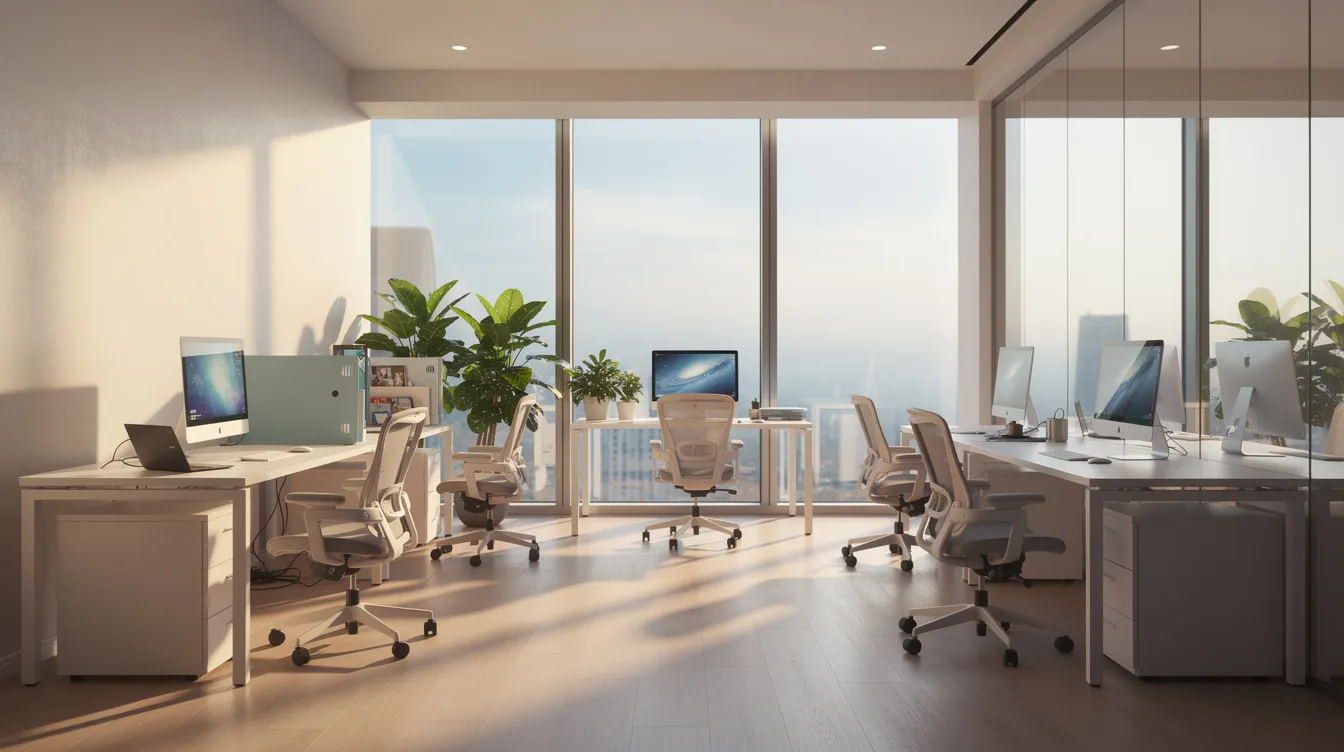
Glare reduction. Window tint reduces glare on computer screens and televisions in buildings by lowering the amount of visible light that enters. Visible Light Transmission (VLT) measures the amount of light passing through tinted glass-a 20% VLT film creates a noticeably darker tint suitable for privacy, while 60–70% VLT preserves a bright, natural interior. Common VLT percentages range from 5% to 70% for window tinting, depending on the product and application.
Insulating properties. Some films-especially low-emissivity types-help stabilize interior temperatures during winter by reducing heat loss through glass. Window films enhance building insulation for energy efficiency, though they complement rather than replace double-pane or low-E glazing. Interior-applied films are the most common retrofit, but exterior films can reject more heat on curtainwalls since they block energy before it enters the glass assembly.
Types of Window Films and Window Tint
Every building has different challenges-excessive heat, fading merchandise, street-level privacy, or outdated aesthetics. Architectural window films are designed to solve specific problems, and many properties combine multiple film types across different windows. A west-facing conference room might get solar tint while a lobby partition receives frosted privacy film.
CoolVu specifies and installs films compatible with single-pane, double-pane, tempered, and annealed glass, reducing risk of thermal stress and breakage. Below is a brief overview of each major film category.
Solar Window Tint
Solar window tint is designed primarily for heat rejection, glare control, and UV protection. These films target south- and west-facing glass in homes, curtainwalls on office towers, and retail storefronts where overheating drives up HVAC costs. Key metrics include solar heat gain coefficient (SHGC), shading coefficient, and TSER. Premium solar films deliver TSER values of 60–80% while maintaining visible light options from light-neutral to moderately tinted, so natural daylight still fills the space. Window films can improve energy efficiency in buildings by cutting solar heat gain before it reaches the HVAC system.
Decorative Window Film
Decorative window films add patterns, gradients, frosted bands, or full-color branded graphics to glass without replacing it. Decorative films can enhance aesthetics in residential spaces-think pantry doors, glass cabinets, and shower enclosures. In commercial settings, decorative films can be applied to glass for branding and signage, including custom murals in lobbies, wayfinding graphics in hospitals, and school spirit designs. CoolVu offers printable films for these applications, combining visual impact with moderate light diffusion and daytime privacy.
Privacy Window Film
Privacy window film comes in two broad categories: daytime reflective films that create a one-way mirror effect in bright conditions, and always-on solutions like frosted or opaque films. Privacy films reduce visibility into spaces while allowing light to enter. Certain films enhance privacy and security by making windows opaque from the outside-ideal for ground-floor apartments, street-level medical offices, and HR conference rooms. Darker tints improve privacy but may limit visibility at night when interior lights reverse the reflective effect, and some states have varying laws on the darkness and reflectivity of window tint where those standards apply. For extreme darkness, limo tint with very low VLT is available, though it’s more common in automotive applications.
Security Window Film
Security window film is a thick, multi-layered product-often 4 to 21+ mils-designed to hold glass together under impact, blast, or forced entry. These films are tested against standards like ANSI Z97.1, CPSC 16 CFR 1201, and EN 12600. Safety window films meet standards like ANSI Z.97 and BS 6206, giving facility managers documented compliance for schools, retail storefronts, and government buildings. Typical applications include smash-and-grab mitigation on retail glass, school safety upgrades, and critical infrastructure protection. Security films can be combined with frame-anchoring attachment systems for enhanced resistance-a detail that matters when regulations require defined levels of blast or ballistic protection.
Safety Window Film
Safety film differs from security film in scope: it focuses on protection from accidental human impact and glass breakage rather than deliberate forced entry. Safety window films enhance shatter resistance of automotive glass and architectural glazing alike, making them suitable for gym sidelites, stairwell windows, interior glass doors, and daycare centers. Safety window films can block over 99% of UV rays while helping older glazing meet impact safety requirements without full glass replacement-a cost-effective solution for compliance in aging buildings.
Frosted Window Film
Frosted window film mimics the look of sandblasted or acid-etched glass at a fraction of the replacement cost. These translucent, light-diffusing films are popular on conference room fronts, bathroom windows, medical exam rooms, and residential entry doors with sidelites. Customization options include bands, logos, and cut patterns that support both privacy and branding. Because frosted films scatter light rather than block it, they maintain a bright interior while obscuring direct line of sight.
Reflective Window Film
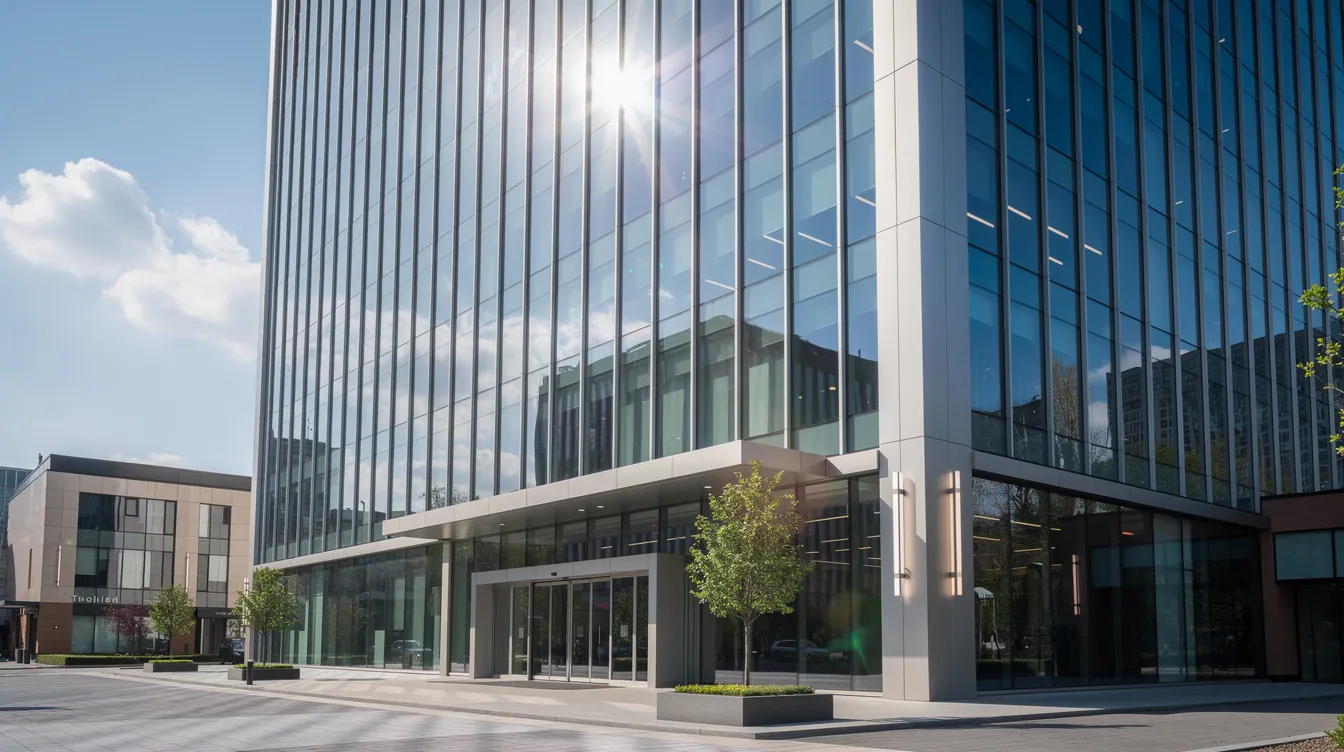
Reflective window films use metallic layers-often sputtered aluminum or titanium-to create a mirror-like exterior appearance during daylight hours. They’re common on commercial buildings with large glass façades, where reflecting solar energy reduces heat gain and glare simultaneously. Metalized window tints improve glass durability and reduce shattering, and metalized window tint enhances window durability and scratch resistance. The trade-off: high exterior reflectivity can cause aesthetic concerns or neighbor complaints, and at night the mirror effect reverses, reducing interior privacy. CoolVu helps clients balance reflective performance with appearance requirements.
Ceramic Window Tint
Ceramic window tint represents advanced technology in the film industry. These non-metallic, nano-ceramic films deliver exceptional heat rejection-often rejecting 90–95% of infrared energy-while maintaining low reflectivity and excellent optical clarity. Ceramic window tint blocks over 99% of harmful UV rays, making it ideal for high-end homes, Class A office space, museums, and galleries where clear views and color neutrality are critical. Ceramic tint provides superior heat rejection and UV blocking without impairing signal transmission, so Wi-Fi, cell service, and Bluetooth remain unaffected. Color stability is excellent, with minimal discoloration or hazing over the film’s lifespan.
Neutral Window Tint
Neutral window films, including transitional photochromic films, are subtle, low-reflective tints that slightly dim and balance light without an obvious mirror effect or color shift. Crystalline window tint maintains near-perfect transparency while blocking UV rays, fitting within this category. These films are ideal where building owners want solar and UV benefits while preserving a natural glass appearance-think historic buildings, HOA-regulated neighborhoods, and corporate campuses with strict façade aesthetics. Spectrally selective neutral films can achieve TSER values of 44–80% depending on the product line while keeping visible reflectance low.
Benefits of Window Tint and UV Protection
Quality architectural window films deliver measurable improvements across comfort, energy performance, and safety in both homes and commercial buildings.
Lower energy bills. Window films can reduce heating and cooling costs by cutting solar heat gain through existing glass. Films help single- or double-pane windows perform closer to modern glazing, and window films are cost-competitive energy improvements in hot climates. The Embarcadero Center retrofit in San Francisco saved approximately $350,000 per year in energy costs after installing solar control film.
Increased comfort. Films reject heat and stabilize room temperatures, eliminating hot spots near sun-facing glass and reducing cold drafts in winter. Previously uncomfortable sunrooms, corner offices, and south-facing living rooms become usable year-round.
UV protection. Specialist films can block over 99% of UV rays, dramatically slowing fading of hardwood floors, artwork, retail displays, and office furnishings.
Reduced glare. Films reduce glare on screens in workspaces, classrooms, and home theaters. The Embarcadero Center project documented glare reduction of up to 72%.
Protect furniture and flooring. Window films protect furniture and flooring from UV radiation that causes fading. UV and infrared heat accelerate deterioration of wood, carpets, and fabrics-film extends their useful life significantly.
Increased privacy. From reflective tinted film on street-facing windows to frosted films on bathroom glass, the right product limits visibility into private rooms without sacrificing daylight. Tinted windows provide safety and privacy by limiting visibility into vehicles and buildings alike.
Improved security and safety. Security and safety films hold broken glass together during impacts, storms, or forced-entry attempts, protecting occupants from flying shards.
Better aesthetics. Films can unify mismatched glass across a façade, modernize older buildings, and create designer looks with frosted and decorative finishes.
CoolVu provides free on-site consultations to match film benefits to specific property goals-whether that’s energy savings, privacy, branding, or safety-and specifies architectural window films tailored to those needs.
Residential and Car Window Tinting
Homeowners typically turn to window tinting to solve practical problems: a living room that overheats by 2 PM, hardwood floors bleaching near the patio door, or a street-level bedroom that feels exposed.
Best rooms to tint. Focus on west- and south-facing rooms first-great rooms with large picture windows, sunrooms, and home offices that catch afternoon sun. Bedrooms near busy streets or adjacent to neighbors also benefit from privacy film. Entry doors with sidelites are prime candidates for frosted or decorative options.
Energy efficiency. Homes built before 2010 often lack low-E coatings. Solar films retrofit these older windows, reducing AC loads in summer. A typical house with 500 square feet of sun-exposed glass applying a premium solar film (TSER ~65–70%) may see summer cooling savings of 10–25% for those spaces. Dyed tint is an affordable option primarily used for privacy and aesthetics, though it offers less heat rejection than ceramic alternatives.
Comfort improvements. Cutting west-facing temperature spikes in July and reducing glare on the family room TV are among the most common homeowner wins. Carbon tint effectively blocks glare and has a matte finish that resists fading, making it a popular mid-range choice.
Privacy and decorative options. Frosted films work well on bathroom windows and entry sidelites. Decorative films on pantry doors, shower enclosures, and glass cabinets add a designer look. CoolVu’s mobile franchise network provides in-home consultations, film sampling on glass, and professional window tinting and window film installation with minimal disruption.
Commercial Window Tint
Window films play a critical role in commercial, institutional, and government properties-improving comfort, protecting assets, and supporting energy and safety goals.
Office buildings. Curtainwalls and perimeter offices benefit most from solar films that reduce glare on monitors and lower HVAC costs. Films support green building certifications and energy benchmarking. The Embarcadero Center blocked up to 59% of solar heat and 99% of UV across its southern façade, with payback in three to five years.
Retail stores. Storefront glass exposes merchandise to UV-driven fading and creates uncomfortable hot spots near entrances. Solar films with high VLT maintain clear window displays while protecting inventory and keeping shoppers cooler.
Healthcare facilities. Waiting rooms and exam areas need privacy-frosted and decorative films handle that without construction. Anti-glare solutions in lobbies and staff areas improve the patient experience.
Schools and universities. Security film on entryways and sidelites addresses safety mandates. Glare reduction in classrooms supports learning. At Temple College in Texas, a low-e window film retrofit achieved return on investment in as little as 1.3 years.
Hospitality. Hotels and restaurants use solar films in guest-facing lounges and dining areas, and branded decorative films in lobbies to reinforce identity.
Government buildings. Security and blast-mitigation films protect sensitive areas. Older government facilities often have single-pane glass that benefits from energy-focused retrofits. CoolVu supports multi-site rollouts with specification assistance and compliance with relevant glass and safety standards, backed by over a century of combined industry experience.
Choosing the Right Window Tint
Selecting the best film depends on your climate, glass type, occupant needs, and budget. Getting it wrong can mean overspending or, worse, thermal stress that cracks glass.
Climate considerations. In hot, sunny regions, prioritize films with high TSER (65–75%+) and strong infrared rejection. In mixed or cold climates, balance heat rejection against passive solar gain in winter-spectrally selective films that reject IR while admitting visible light are often the best fit.
Glass type. Single-pane, double-pane, tempered, annealed, and low-E coated glass each have different baseline performance. Some films can cause thermal breakage on certain glass types if incorrectly specified. Professional assessment prevents costly mistakes. States have varying laws on the darkness and reflectivity of window tint, and while automotive window tinting laws restrict visible light transmission levels on car window tinting for front side windows, rear side windows, rear windows, the front windshield, the rear windshield, and even the sunroof of a vehicle, architectural projects also face local building codes and HOA regulations that determine what is permitted.
Privacy needs. Full privacy requires frosted or opaque film. Daytime-only privacy works with reflective films. Neutral films offer partial privacy while preserving views.
Appearance. Consider exterior visible reflectance, interior hue, and whether the film creates a dark or natural look. Neutral and spectrally selective films preserve original glass aesthetics-suitable for historic buildings and HOA-regulated neighborhoods where shades of reflective film may be illegal or restricted by court-enforced covenants.
Performance ratings. Key metrics to compare: VLT, SHGC, UV rejection percentage, TSER, and visible reflectance. Manufacturer spec sheets list these for every product line.
Budget. Standard solar films cost less per square foot than premium ceramic or thick security products. CoolVu consultants use manufacturer data and on-glass samples to help homeowners and facility managers compare options side by side, so you prioritize features that matter most within your budget, and local teams such as CoolVu of The Villages can tailor those recommendations to regional climate and code requirements.
Professional Installation vs. DIY
While DIY window film kits exist, architectural projects generally benefit from professional specification and installation. Installation quality significantly affects the performance of window films-bubbles, dust contamination, and misaligned edges all degrade results and shorten lifespan.
Installation process. A professional installer assesses glass type and condition, measures dimensions, cleans surfaces to remove contaminants, cuts the film to size, applies it with proper squeegee technique, and seals edges. Curing time before cleaning is typically 30–60 days.
Common mistakes. DIY issues include trapped air bubbles, visible light gaps at edges, film contaminated by dust or hair, and choosing a product unsuitable for the glass type. Using the wrong tinted film on tempered glass, for instance, can cause thermal stress and breakage.
Warranty considerations. Manufacturer warranties from major brands often require a certified installer. CoolVu offers both product and labor warranties through its franchise network-a layer of protection DIY projects lack.
Expected lifespan. Professionally installed ceramic and spectrally selective films can last 15–25 years. Dyed or standard metalized films typically last 5–10 years. DIY products often use thinner material with weaker adhesive, shortening useful life. Proper maintenance helps maintain performance regardless of product tier.
How Much Does Window Tint Cost?
| Factor | DIY | Professional |
|---|---|---|
| Cost | Lower upfront | Higher upfront, better ROI |
| Quality | Variable | Consistent |
| Warranty | Usually voided | Manufacturer-backed |
| Glass compatibility | Risk of error | Assessed on-site |
| Lifespan | Shorter | Longer |

Costs vary by film type, project size, glass access, and installation complexity. Here are realistic ranges to help you plan.
Factors affecting cost. Total square footage, film category (standard solar, decorative, ceramic, security), window height and accessibility, removal of existing film, and substrate condition all drive pricing.
Residential pricing. Most residential window tinting projects run $7 to $15 per square foot for film and professional installation, according to HomeAdvisor data. Premium films or complex windows can push costs higher. Dyed window tint costs between $100 and $200 for basic installation on a few windows, making it the most budget-friendly entry point for homeowners focused on privacy and aesthetics. Overall home project totals typically range from $317 to $942 depending on scope.
Commercial pricing. Larger installations benefit from economies of scale on film cost, but site logistics-scaffolding, boom lifts, after-hours access-can raise labor. Multi-site rollouts through a national provider like CoolVu allow volume pricing and standardized specifications across locations.
Long-term ROI and energy savings. Window films can improve energy efficiency in buildings with payback periods as short as one to four years in commercial settings. Consider a 2,000-square-foot office suite with 500 square feet of west-facing glass. Installing a mid-range solar control film at $10 per square foot yields a $5,000 investment. If annual cooling costs for those zones are $2,000 and the film cuts them by 15–20%, savings of $300–$400 per year-plus reduced HVAC wear, improved comfort, and potential utility rebates-create a measured return over time. In hot climates, window tint lowers the demand on air conditioning systems significantly, and the payback timeline compresses.
CoolVu provides free written estimates and can model approximate payback timelines for energy-focused installations, with regional specialists like CoolVu of Salt Lake advising on local utility rates and rebate programs.
How Long Does Window Tint Last?
Quality architectural films are long-term upgrades that routinely last many years when professionally installed and properly maintained.
Lifespan by film type. Dyed solar films sit at the lower end-typically 5–10 years before color fading and adhesive yellowing become noticeable. Metalized films offer better durability but may oxidize in humid or coastal climates. Premium ceramic and spectrally selective films last 15–25 years or longer for interior applications. Safety and security films maintain mechanical integrity for decades, though adhesives and edges may eventually degrade.
Factors that affect lifespan. South- and west-facing glass sees harsher sun exposure. Humidity, temperature extremes, and salt air in coastal areas accelerate aging. Exterior-applied films generally have shorter lifespans than interior ones due to weather exposure.
Maintenance tips. Allow the full cure period (usually 30–60 days) before washing. Use soft cloths and mild, non-ammonia detergents. Avoid abrasive tools and harsh solvents. Keep edges clean to maintain adhesion and absorb no excess moisture along seams.
Signs it’s time to replace. Watch for edge lifting or peeling, discoloration, hazing, crazing (fine cracks), or a sign that heat rejection is declining-rooms feeling noticeably hotter is a reliable indicator. CoolVu can remove and replace aging or failing legacy films on existing buildings, upgrading to current-generation products with improved performance, and local providers such as CoolVu of South St. Paul offer this service for nearby homes and businesses.
Frequently Asked Questions About Window Tint
Is window tint worth it?
For most homes and commercial buildings, yes. The combination of energy savings, UV protection, glare reduction, and extended life of interior finishes delivers value well beyond the initial investment. In many commercial retrofits, films pay for themselves within a few years through lower utility bills alone.
Does window tint reduce heat?
Absolutely. Films with TSER of 50–75% cut solar heat gain significantly. Ceramic films offer the strongest infrared rejection without darkening glass excessively. While people often associate tint with car window tinting-where tint minimizes glare from sunlight and headlights, improving driving safety for the driver-the same technology protects buildings from excessive heat.
Does window tint block UV rays?
Quality films block over 99% of UV rays. This is standard across most professional-grade solar and ceramic products. By contrast, clear untreated glass and basic factory tint on some doors and sidelites allow substantial UV transmission that accelerates fading.
Can window tint improve privacy?
Yes. Options range from light-neutral films that reduce visibility to frosted and decorative films that fully obscure views. The level of darkness, reflectivity, and light diffusion can be tailored to each window and each room’s needs.
How long does installation take?
A few key windows in a home can typically be completed in a few hours. A mid-size office suite might take one to two days. Curing time adds 30–60 days before cleaning, but the space is usable immediately.
Can window tint or factory tint be removed?
Yes. Professional removal involves heat application, careful peeling, and adhesive cleanup. CoolVu handles removal and replacement so glass isn’t damaged during the process.
Will window tint damage my windows?
Not when properly specified. Professional installers assess glass type, sticker residue, and thermal compatibility to prevent stress cracking. Incorrect film on the wrong glass-a common DIY risk-is what causes problems.
Does window tint save money on energy bills?
It can. By reducing solar heat gain, films lower HVAC runtime. Savings of 10–25% on cooling costs in sun-exposed zones are typical in hot climates. Whether it’s a residential sunroom or a commercial façade, the law of diminishing returns favors addressing the most exposed glass first. Even across the country, the value of properly installed film is consistent and well-documented.
Find the Best Window Tint for Your Home or Business
The right window tint delivers cooler rooms, lower energy bills, protected interiors, and better privacy-whether you’re upgrading a single bedroom or outfitting an entire office campus. Films constructed with modern ceramic, spectrally selective, or security-grade materials provide solutions that last 15–25 years and pay for themselves through reduced energy and maintenance costs.
Selecting the optimal film depends on your goals and glass conditions, and expert guidance simplifies the decision. CoolVu’s national franchise network supports local homeowners, property managers, schools, healthcare facilities, and government buildings with free on-site consultations, glass evaluation, and professional installation, with regional teams like CoolVu of Central San Diego serving specific communities.
Explore CoolVu’s full product line-from solar control films and privacy and decorative films to safety and security films-and find the right fit for your property, then connect with a regional specialist such as CoolVu of Central San Diego for localized service.
Ready to get started? Contact CoolVu to request a free estimate or locate your nearest franchise for professional window tinting services.