- Your Bottom Line is Leaking: Why Windows Are a Major Source of Business Energy Loss
- The Science of Energy Efficiency: Key Metrics for Window Performance
- An Honest Look at Traditional Window Coverings: Blinds, Shades, and Drapes
- The Clear Winner: How Advanced Window Films Maximize Energy Efficiency
- Calculating the ROI of Energy-Efficient Window Coverings for Your Business
- Estimating Your Potential Energy Savings: A Practical Framework
- The Payback Period: How Quickly Your Investment Pays for Itself
- Factoring in Secondary Financial Benefits: Reduced HVAC Maintenance and Increased Tenant Comfort
- Illustrative Scenarios: Comparing the Financial Performance of Film vs. Traditional Coverings
- Choosing the Right Energy-Saving Solution for Your Commercial Property
- Conclusion: Turning Your Windows from an Expense into a Strategic Asset
- Frequently Asked Questions
Your Bottom Line is Leaking: Why Windows Are a Major Source of Business Energy Loss

As a business owner, you scrutinize every line item on your profit and loss statement, from payroll to marketing. Yet, one of the most significant and consistent drains on your operating budget is often hiding in plain sight. The windows of your commercial building are more than just a source of natural light; they are a primary point of energy transfer, silently siphoning money from your bottom line every single day. Traditional window coverings fall short in today’s modern business landscape.
The Hidden Drain on Your Operating Budget
For the average commercial building, heating and cooling account for a substantial portion of total energy use. According to the U.S. Department of Energy, heat gain and heat loss through windows account for 25% to 30% of residential and commercial heating and cooling energy consumption. This isn’t just a minor inefficiency; it’s a high operational cost that directly impacts your profitability.
Every month, you are paying to cool air that is being heated by the sun streaming through untreated glass, or you are paying to heat a space while that warmth escapes through the same inefficient windows. This constant, invisible transaction is a recurring expense that, unlike other costs, can be dramatically reduced with a strategic, one-time investment.
How Inefficient Windows Overwork Your HVAC System
The financial impact extends beyond your monthly utility bill. Inefficient windows create an unstable indoor environment, with hot spots near sun-drenched glass and cold drafts in the winter. This forces your HVAC system into a relentless cycle of overwork as it struggles to maintain a consistent, comfortable temperature for your employees and customers.
This constant strain leads to two major financial consequences:
- Increased Maintenance and Repairs: An overworked system is far more likely to break down, leading to unexpected and costly repair bills and potential business disruptions.
- Reduced Equipment Lifespan: The additional wear and tear can shorten the operational life of your expensive HVAC units, forcing a major capital expenditure sooner than anticipated. Managing window efficiency is a direct investment in the longevity of your building’s core mechanical systems.
Understanding Solar Heat Gain and Winter Heat Loss in a Commercial Setting
To effectively manage this energy loss, it’s crucial to understand the two primary culprits working against your budget.
Solar Heat Gain is the increase in temperature inside your building caused by solar radiation passing through the glass. In warmer months, this is the primary driver of high cooling costs. Uncontrolled solar heat gain acts like a space heater, forcing your air conditioning to run longer and harder just to keep the environment comfortable. This can also lead to glare and discomfort for employees, impacting productivity and customer experience.
Winter Heat Loss, or heat transfer, is the reverse phenomenon. During colder months, the warm air your furnace works so hard to produce is constantly escaping to the colder outside through the window glass. This process, known as conduction, is why areas near large windows often feel drafty and cold, prompting your heating system to kick on more frequently to compensate for the loss.
The Science of Energy Efficiency: Key Metrics for Window Performance
Making a smart financial decision about your windows requires moving beyond generalities and understanding the specific metrics that quantify performance. These industry-standard ratings, established by the National Fenestration Rating Council (NFRC), provide a clear, data-driven way to evaluate how well a window product, including an applied window film, will manage energy transfer. Knowing these terms empowers you to cut through marketing claims and focus on what truly impacts your bottom line.
Decoding the U-Factor: How Your Windows Lose Heat
The U-factor is a measurement of heat transfer, indicating how well a window insulates. It specifically rates how much heat is lost through the glass. The scale typically ranges from 0.20 to 1.20.
The key takeaway is simple: a lower U-factor is better. A low U-factor signifies superior insulation, meaning less of your expensive heated air will escape during the winter. For businesses in cooler climates or those with significant heating costs, improving the U-factor is a direct path to substantial energy savings.
Understanding Solar Heat Gain Coefficient (SHGC): The Key to Reducing Cooling Costs
The Solar Heat Gain Coefficient (SHGC) is arguably the most critical metric for businesses looking to lower their cooling expenses. This value measures how much of the sun’s heat-producing solar radiation is transmitted through a window. The SHGC is expressed as a number between 0 and 1.
Similar to U-factor, a lower SHGC is better for reducing cooling costs. A window with a low SHGC will block a significant amount of the sun’s heat, keeping your interior spaces cooler and dramatically reducing the load on your air conditioning system. For properties in sunny climates, prioritizing a low SHGC is the single most effective strategy for slashing summer energy bills.
Beyond the Basics: Low-E Coatings and Visible Light Transmittance (VLT)
Modern window solutions achieve these impressive performance metrics through advanced technology. Understanding the two final terms reveals how it’s possible to block heat without sacrificing the benefits of natural light.
- Low-E Coatings: Low-emissivity, or “Low-E,” coatings are the cornerstone of high-performance windows and films. These are microscopically thin, transparent metallic layers applied to the glass or film. Their function is to separate heat from light. Low-E coatings reflect infrared heat (the heat you feel) back to its source, keeping it outside in the summer and inside in the winter. This technology is what allows a modern window film to drastically improve both U-factor and SHGC.
- Visible Light Transmittance (VLT): This metric measures the percentage of visible light that passes through a window. A higher VLT means more natural daylight. The breakthrough of modern window film technology is its ability to provide a low SHGC while maintaining a high VLT. You no longer have to choose between energy efficiency and a bright, welcoming interior. Advanced films can block over 50% of solar heat while remaining virtually invisible, preserving your views and eliminating the dark, “tinted” look of older products.
An Honest Look at Traditional Window Coverings: Blinds, Shades, and Drapes
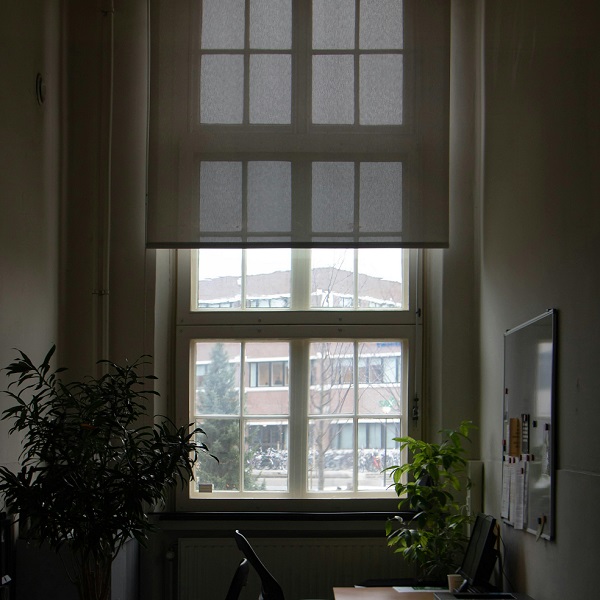
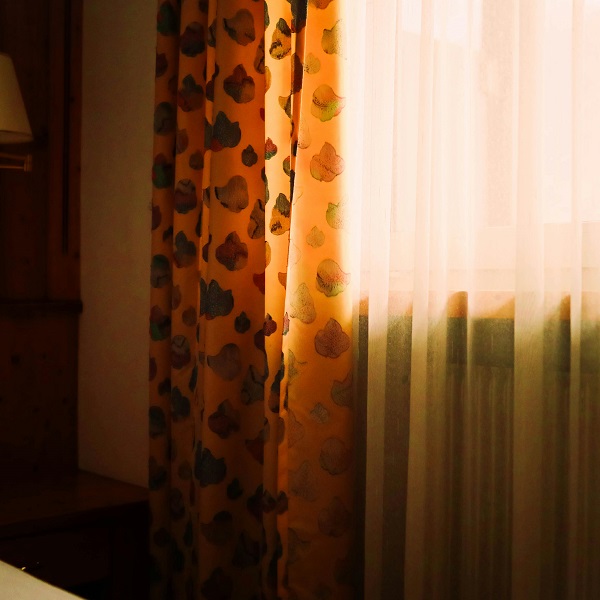
For decades, business owners have turned to a familiar set of tools to manage sunlight and heat: blinds, shades, and drapes. While these options are well-known and can offer aesthetic or privacy benefits, a closer look at their performance reveals significant limitations, particularly when the primary goal is a strong return on investment through energy savings.
The Limited Effectiveness of Blinds for True Energy Savings
Standard blinds, whether vertical or horizontal, are often the default choice for commercial spaces. They offer control over direct sunlight and glare, which seems like a good first step. However, they are fundamentally ineffective at stopping heat transfer.
When sunlight strikes a window, the slats of a blind absorb that solar energy. The heat then radiates off the slats into the space between the blind and the glass. This trapped, super-heated air still enters the room through convection, forcing your HVAC system to work harder to maintain a cool temperature. While closing the blinds can reduce some solar heat gain compared to a completely bare window, their design does little to reject the invisible infrared heat that accounts for over half of the sun’s energy.
Analyzing Cellular Shades and Thermal Curtains: Pros and Cons
Recognizing the shortcomings of blinds, some businesses opt for more robust solutions like cellular shades or thermal curtains. These coverings are designed with insulation in mind and represent a step up in performance.
Cellular shades, with their honeycomb-shaped pockets, trap air and create an insulating barrier that slows heat transfer. Similarly, heavy, multi-layered thermal curtains can provide a noticeable buffer against both heat gain in the summer and heat loss in the winter.
However, these benefits come with significant trade-offs in a commercial environment.
- They Block Natural Light: To be effective, shades and curtains must be kept closed. This plunges your space into darkness, sacrificing the mood-boosting and productivity-enhancing benefits of natural light. It also increases your reliance on artificial lighting, which can partially offset any energy savings gained from temperature control.
- They Obscure Views: A key asset of many commercial properties is the view, which connects occupants to the outside world. Heavy coverings completely eliminate this connection, making a space feel smaller and more confined.
- – They Require Maintenance: Fabric-based coverings like drapes and shades accumulate dust, allergens, and pollutants. They require regular, often costly, professional cleaning to maintain a healthy and professional environment, adding another line item to your operational budget.
Why Traditional Treatments Fall Short on ROI for Commercial Properties
When you analyze the total financial picture, the return on investment for traditional window coverings is disappointing. The central issue is that you cannot achieve their maximum energy efficiency without creating new problems and costs.
To save money on cooling, you must sacrifice natural light, which may increase your electricity bill for lighting. You also create a less inviting and potentially less productive environment for employees and customers. Add in the recurring costs of cleaning and eventual replacement due to wear and tear, and the initial investment becomes much harder to justify from a purely financial standpoint. For a business owner focused on optimizing operational costs, traditional coverings present a flawed value proposition.
The Clear Winner: How Advanced Window Films Maximize Energy Efficiency
In contrast to the compromises required by traditional coverings, modern window films offer a comprehensive solution that directly addresses the core challenges of solar heat gain. By leveraging advanced material science, these films provide superior energy efficiency without the associated drawbacks, making them the clear winner for businesses focused on long-term profitability.
The Technology Behind Commercial Window Film for Heat Reduction
Modern commercial window films are not simply tinted pieces of plastic. They are highly engineered products constructed with multiple micro-thin layers. These layers often incorporate advanced materials like ceramics or microscopic metal particles that are designed to interact with the sun’s energy in a very specific way.
Instead of just absorbing heat like blinds or drapes, these films work primarily by rejecting solar radiation before it can enter the building. They act as a selective barrier, reflecting a high percentage of infrared heat away from the glass while remaining impressively clear. This direct rejection of heat is far more effective at reducing the load on your HVAC system than the passive insulation offered by traditional coverings.
Rejecting Heat, Not Light: The Superiority of Spectrally Selective Films
The true genius of today’s best window films lies in spectrally selective technology. The sun’s energy is composed of a spectrum that includes ultraviolet (UV) light, visible light, and infrared (IR) light. While visible light allows us to see, UV and IR are invisible and are the primary culprits behind heat gain and fading.
Spectrally selective films are engineered to target and reject the undesirable parts of the solar spectrum. They can block up to 99% of UV rays and over 90% of heat-producing IR rays. At the same time, they allow a high percentage of natural, visible light to pass through. This solves the fundamental problem of traditional treatments. You get the powerful energy savings without sacrificing the natural light and open views that make your commercial space valuable.
Beyond Energy Savings: UV Protection, Glare Reduction, and Enhanced Security
The financial case for window film is further strengthened by a host of additional benefits that contribute directly to your bottom line and the well-being of your building’s occupants.
- UV Protection: By blocking nearly all UV radiation, window films act as a powerful sunscreen for your interiors. This dramatically slows the fading of expensive assets like flooring, furniture, artwork, and retail merchandise, extending their life and protecting their value.
- Glare Reduction: Excessive glare on computer screens, televisions, and other surfaces is a common source of eye strain and discomfort. Window film can reduce glare by over 50%, improving employee comfort and productivity while enhancing the customer experience.
- Enhanced Security: Specialty safety and security films are designed to be thicker and more robust. In the event of an impact, whether from an accident, extreme weather, or an attempted break-in, the film helps hold shattered glass in place. This mitigates the danger of flying shards and creates a more formidable barrier against intruders, reducing risk and liability.
How Modern Film Complements Existing High-Performance Windows
A common question from property owners who have already invested in double-pane or Low-E (low-emissivity) windows is whether film is still necessary. The answer is a definitive yes. While high-performance windows are a great start, window film acts as a powerful performance multiplier.
Even the best windows have limitations. Applying a modern spectrally selective film can significantly boost their performance, particularly in rejecting infrared heat, which is often the greatest energy efficiency challenge in commercial buildings. Upgrading your existing windows with film can deliver performance gains comparable to a full window replacement, but at a fraction of the cost and with none of the operational disruption. It is the most cost-effective way to elevate your existing assets to the highest level of energy efficiency.
Calculating the ROI of Energy-Efficient Window Coverings for Your Business
Moving beyond general benefits, a sound business decision rests on quantifiable financial returns. While it may seem complex, calculating the return on investment for an energy-efficient window solution is a straightforward process. By understanding the key variables, you can clearly project the financial impact on your bottom line and see why advanced window films consistently outperform traditional alternatives as a capital investment.
Estimating Your Potential Energy Savings: A Practical Framework
While a commercial window expert can provide a precise energy model, you can create a reliable preliminary estimate with a few key pieces of information. This framework helps you understand the core factors that drive savings and prepares you for a more detailed discussion with a provider.
The fundamental goal is to calculate how much less your air conditioning system will need to run. The key components of this calculation include:
- Your Building’s Window Area: Start by estimating the total square footage of glass in the areas you intend to treat. Focus on the elevations that receive the most direct sun, typically south and west-facing windows.
- Your Local Energy Costs: Review your recent utility bills to find your commercial electricity rate, usually expressed in cents per kilowatt-hour (kWh). This is the direct cost you will be saving.
- The Film’s Performance Data: This is the most critical variable. A professional provider will supply the specific performance metrics for the proposed film, primarily its Solar Heat Gain Coefficient (SHGC). This number represents the fraction of solar heat that passes through the window. A lower SHGC means better heat rejection and greater energy savings.
By combining these factors, an energy analysis can accurately model the reduction in solar heat entering your building. This reduction is then converted into fewer kWhs consumed by your HVAC system, which, when multiplied by your energy rate, reveals your estimated annual savings in real dollars.
The Payback Period: How Quickly Your Investment Pays for Itself
The payback period is a simple yet powerful metric that business owners use to evaluate an investment’s viability. It answers the question: “How long will it take for the savings to completely cover the initial cost?” The calculation is a simple division:
Total Project Cost / Estimated Annual Energy Savings = Payback Period in Years
For many commercial properties, particularly those in sunnier climates or with significant glass, the payback period for advanced window film is often between two and five years. This is a remarkably fast return for a building improvement that offers benefits for decades. Compared to major HVAC upgrades or window replacements, which can have payback periods of ten years or more, window film presents a far more compelling and immediate financial case.
Factoring in Secondary Financial Benefits: Reduced HVAC Maintenance and Increased Tenant Comfort
The direct energy savings calculated above are only part of the financial picture. A comprehensive ROI analysis also includes significant secondary benefits that directly impact your operational budget and asset value.
Lowering HVAC Maintenance and Replacement Costs
By rejecting a significant percentage of solar heat before it enters your building, window film dramatically reduces the daily workload on your HVAC system. A system that runs less frequently and for shorter cycles experiences substantially less wear and tear. This translates directly to lower operational costs through fewer service calls, less frequent parts replacement, and a longer overall lifespan for the equipment, delaying a major capital expenditure by several years.
Enhancing Tenant and Employee Well-being
While often considered a “soft” benefit, occupant comfort has a hard financial value. Eliminating hot spots near windows and cutting harsh glare creates a more pleasant and productive environment. For owner-occupied buildings, this can lead to measurable gains in employee focus and morale. For leased commercial properties, it becomes a powerful tool for tenant retention, reducing the high costs associated with vacancy and turnover. A comfortable building is a more valuable asset.
Illustrative Scenarios: Comparing the Financial Performance of Film vs. Traditional Coverings
To see the financial difference in practice, consider a hypothetical 10,000-square-foot office building with 2,500 square feet of west-facing glass that causes significant afternoon heat and glare.
A common solution is to install standard commercial blinds. While they provide privacy and block some heat when closed, this action also eliminates natural light and views, increasing the need for artificial lighting and disconnecting employees from the outside. The energy savings are moderate and entirely dependent on manual operation.
Now, consider the installation of a high-performance spectrally selective window film. The film works continuously to reject over 60% of the total solar energy while remaining virtually invisible, preserving natural light and views. Though the initial investment for the film might be higher than for the blinds, its superior energy savings result in a much larger annual return. In this scenario, the window film’s payback period would likely be under three years, while the blinds, with their lower savings, could take over seven years to pay for themselves. Over a 15-year lifespan, the window film delivers a total return that is multiples higher than the blinds, proving it to be the more strategic long-term financial decision.
Choosing the Right Energy-Saving Solution for Your Commercial Property
With a clear understanding of the financial upside, the next step is to identify the best solution for your unique property. This involves a practical assessment of your building’s challenges and a careful process for selecting a professional partner who can deliver on the promised value.
How to Conduct a Basic Assessment of Your Building’s Needs
Before contacting a professional, a simple walkthrough of your facility can provide invaluable insight. This self-assessment will help you articulate your needs and identify the highest-priority areas for improvement. As you walk the property, make notes on the following:
- Identify Problem Areas: Take note of which offices or common areas are known for being uncomfortably warm, especially in the afternoon. These are your primary targets for solar heat control.
- Note Window Orientation: Pay special attention to south- and west-facing windows, as these elevations receive the most intense and prolonged sun exposure, contributing the most to your cooling load.
- Assess Glare Issues: Look for signs of occupants struggling with glare on computer screens. Are blinds always drawn? Are there makeshift paper or cardboard “shades” taped to windows? This is a clear indicator of a problem that window film can solve without blocking light.
- Look for Fading: Examine flooring, furniture, and artwork located near windows. Visible fading is a sure sign that damaging UV rays are entering the space unchecked, a problem that nearly all professional window films are designed to eliminate.
- Review Energy Bills: Look at your electricity usage over the last 12-24 months. Sharp, sustained spikes during summer months directly correlate with your HVAC system’s cooling load and highlight the potential for significant savings.
Partnering with a Commercial Window Expert: What to Look For
The quality of a window film installation and its resulting performance are entirely dependent on the expertise of the provider you choose. This is not a commodity purchase. Look for a partner, not just a vendor, who exhibits the following qualities:
- Deep Product Knowledge: A true expert will not push a one-size-fits-all solution. They should be able to clearly explain the differences between various film technologies—like ceramic, metallic, and spectrally selective—and recommend the one best suited to your specific goals for heat rejection, glare reduction, and aesthetics.
- Experience with Commercial Projects: Commercial installations differ greatly from residential ones in scale, logistics, and material requirements. Ensure your provider has a proven track record working in operational business environments like yours.
- Energy Modeling Capability: The most reputable providers use specialized software to generate a detailed energy analysis for your building. This report should forecast savings, calculate ROI, and provide the data you need to make a confident decision.
- Top-Tier Products and Warranties: A professional company stands behind its work with high-quality materials from leading manufacturers. Inquire about the length and coverage of the warranty, which should cover both the film material and the installation labor for a significant period.
Key Questions to Ask a Window Film Provider
To properly vet potential partners and ensure you receive the best possible solution and value, be prepared to ask specific, informed questions. A confident expert will welcome the opportunity to demonstrate their knowledge.
- “Based on my building’s needs, which type of film do you recommend and why?”
- “Can you provide a detailed energy analysis and an ROI projection for my property?”
- “What is the Total Solar Energy Rejected (TSER) and Solar Heat Gain Coefficient (SHGC) for the film you are proposing?”
- “What are the visible light transmission and glare reduction percentages?”
- “What does the manufacturer’s warranty cover, and for how many years?”
- “Can you detail the installation process and explain how you will minimize disruption to our daily operations?”
- “Could you provide references from other local businesses you have worked with?”
Understanding the Installation Process and Long-Term Value
One of the significant advantages of window film is the installation process itself. Unlike disruptive construction projects, the application of window film is a clean, quiet, and efficient process. Professional installation teams are trained to work around your business’s schedule, often completing sections during off-hours to ensure there is zero interruption to your employees or customers.
Beyond the rapid payback period, it is crucial to recognize the long-term value of your investment. Professionally installed window films are engineered to last for decades, providing sustained energy savings year after year. They continuously protect your interior furnishings from UV-related fading, maintain occupant comfort, and enhance the overall value and marketability of your commercial property. It is an investment that stops costing you and starts paying you back in a few short years, then continues to deliver financial returns for the life of the product.
Conclusion: Turning Your Windows from an Expense into a Strategic Asset
Your building’s windows represent a significant variable in your operational budget. Until now, you may have viewed them as a fixed expense, a source of heat gain in the summer and heat loss in the winter that drives up energy costs. However, by leveraging modern material science, you can transform this liability into a high-performing asset that actively contributes to your bottom line.
A Recap of Why Window Film Delivers Superior Energy Savings
Throughout this article, we have compared the performance of traditional window coverings to that of advanced window films. While blinds and shades offer privacy and light control, their impact on energy efficiency is fundamentally limited. They primarily absorb and trap solar heat between the covering and the glass, eventually radiating that heat into the room.
Advanced window film works on a completely different principle, offering a more direct and effective solution.
- Rejection at the Source: Film is applied directly to the glass surface, blocking a significant percentage of solar heat before it can enter your space. This proactive approach is far more efficient than dealing with heat after it has already breached the window pane.
- Spectrally Selective Technology: Modern films are engineered to distinguish between different wavelengths of light. They can reject the vast majority of heat-producing infrared (IR) and damaging ultraviolet (UV) rays while allowing a high level of natural, visible light to pass through. This means you achieve significant energy savings without sacrificing views or creating a dark, uninviting workspace.
- Year-Round Performance: Many high-performance films, particularly low-emissivity (Low-E) types, provide benefits in all seasons. In the summer, they reject external solar heat. In the winter, they reflect your building’s internal heat back into the room, reducing heating costs and improving occupant comfort.
The Financial Argument: A Smarter Investment with a Faster Payback
For any business owner, the decision to invest in a building upgrade comes down to the return on investment. This is where advanced window film clearly separates itself from traditional window treatments. While the initial cost of installing high-quality film can be comparable to purchasing commercial-grade blinds or shades, the financial payback is both faster and more substantial.
The superior energy efficiency of window film translates directly into lower monthly utility bills. These consistent savings begin immediately upon installation and work to pay back the initial investment. In many commercial applications, businesses see a full return on their window film investment in as little as two to five years. After this payback period, the ongoing energy savings become pure profit, continuously reducing your operational overhead for the life of the film, which can be 15 years or more.
Furthermore, the financial benefits extend beyond direct energy savings. By reducing the workload on your HVAC system, window film can help lower maintenance costs and prolong the lifespan of this expensive equipment. This makes window film a one-time capital improvement that delivers compounding returns, unlike traditional coverings which are often a recurring expense with minimal financial benefit.
The Next Step: How a Professional Assessment Can Quantify Your Savings
While the general principles of energy savings are clear, the precise financial impact of installing window film is unique to every building. Factors like your geographic location, building orientation, window-to-wall ratio, and current energy costs all play a role in determining your potential return on investment.
A professional energy assessment is the key to moving from an estimate to a concrete projection. An experienced consultant will analyze your specific situation, measure your windows, and use specialized software to model the energy performance of your building with various film options. This data-driven process removes guesswork from the equation.
The result is a clear, customized report that quantifies your expected annual savings in dollars, calculates your projected payback period, and provides a detailed ROI analysis. This allows you to make a fully informed financial decision, confident that you are choosing a strategic asset that will deliver measurable value for years to come.
Frequently Asked Questions
How much of my building’s energy is actually lost through the windows?
According to the U.S. Department of Energy, windows are responsible for 25% to 30% of heating and cooling energy consumption in commercial and residential buildings. Inefficient glass acts as a “leak” in your budget, allowing expensive cooled air to be heated by the sun in summer and letting furnace-generated warmth escape in the winter.
What is the difference between U-Factor and SHGC?
These are the two primary metrics for measuring window performance:
- U-Factor: Measures heat transfer (insulation). A lower U-Factor means the window is better at keeping heat inside during the winter.
- SHGC (Solar Heat Gain Coefficient): Measures solar radiation (heat gain). A lower SHGC means the window is better at blocking the sun’s heat from entering during the summer. Lower numbers in both categories represent higher efficiency and bigger savings on utility bills.
How does window film “multiply” the performance of my existing Low-E windows?
Even high-quality double-pane or Low-E windows have limits. Modern spectrally selective film acts as a performance multiplier by adding an extra layer of infrared rejection. It can elevate the energy performance of your current windows to match the efficiency of a full window replacement, but at a fraction of the cost and without disrupting your business operations.
What is the typical “Payback Period” for a commercial window film investment?
While every building is different, many commercial properties see a full return on investment (ROI) within two to five years. This calculation is based on direct energy savings from reduced HVAC usage. Because the film lasts 15 years or more, the savings generated after the initial payback period become pure profit for your business.
Why is window film considered a better financial move than buying new blinds?
Blinds are a passive solution; they absorb heat and eventually radiate it into the room, often requiring you to turn on more artificial lights (which creates even more heat). Window film is an active solution that rejects up to 99% of UV and 90% of infrared heat at the glass surface before it enters the room. Film provides continuous savings without blocking the natural light or the views that make your real estate valuable.