- How One-Way Windows for Home Create Daytime Privacy
- The Top 5 Benefits of Installing Home Privacy Window Film
- The Big Question: Does It Work at Night?
- Choosing the Right See-Out-Not-In Film
- Why Professional Installation is a Smart Investment
- Privacy, Light, and Views Without Compromise
- Frequently Asked Questions
How One-Way Windows for Home Create Daytime Privacy
It can feel a bit like magic, can’t it? Being able to see out of your windows perfectly while the outside world just sees a reflection. This is the promise of one-way windows for home privacy, and the science behind it is surprisingly straightforward. It’s what makes this solution so effective for homeowners who crave privacy but refuse to live in the dark.
The Simple Science Behind the “Mirrored” Effect
At its core, a see out not in window film is a high-tech material infused with a micro-thin, semi-transparent layer of metal particles. Think of it less like a solid sheet of metal and more like a fine, reflective mesh that’s invisible to the naked eye.
This layer is engineered to do two things at once: it lets some light pass through while reflecting the rest. It’s not a true one-way mirror in the strictest sense. Instead, it’s a clever application of physics that creates a one-way visual effect under the right conditions.

Understanding the Light Differential
The secret ingredient is something called the light differential. It’s a simple rule: the side of the film exposed to more light is the side that will look like a mirror.
The film itself doesn’t have a “private” side and a “public” side. It always behaves the same way, reflecting more light on its brighter side. This means the mirrored effect isn’t a constant feature. It’s a direct response to the light conditions on either side of your window. Whichever side is significantly brighter is where people will see a reflection, while the side that is darker gets a clear view through the glass.
Why It Creates Perfect Daytime Privacy
This principle is exactly why reflective window film is the perfect solution for daytime privacy. During the day, the sun makes the outside of your home immensely brighter than the inside, even in a well-lit room.
This creates a strong light differential.
- For someone outside: They are standing in the bright sunlight. The film’s reflective layer bounces that bright light back at them, turning your window into a mirror and making it impossible to see inside.
- For you inside: You are in a relatively darker space looking out into the bright outdoors. Since your side has less light, you simply see through the film to the world outside, enjoying your view without interruption.
This is how you get to have it all: total privacy from the outside world while you continue to enjoy natural light and an unobstructed view.
The Top 5 Benefits of Installing Home Privacy Window Film
While the “one-way mirror” effect brings most people to privacy window film, the benefits go far beyond just keeping prying eyes out. It’s a single upgrade that improves your home in multiple ways.
1. Enjoy Your View Without Neighbors Seeing In
This is the number one reason homeowners choose residential reflective film, and for good reason. It solves the fundamental conflict between wanting sunlight and needing privacy. You get to keep your blinds open all day, letting light flood your rooms, without feeling like you’re in a fishbowl. Instead of constantly adjusting curtains, you can move freely through your home with total confidence.
2. Protect Your Family and Furnishings from UV Rays
Sunlight brings with it damaging ultraviolet (UV) rays that cause your hardwood floors, furniture, rugs, and artwork to fade.
Think of UV protection film as sunscreen for your house.
High-quality films block up to 99% of harmful UV radiation, preserving the life of your valuables and providing an extra layer of sun protection for your family.

3. Reduce Annoying Glare on Screens
Is there a certain time of day when you can’t watch TV or work on your laptop because of intense glare? Window film is the perfect solution for glare reduction. By filtering the harshest, most direct sunlight, it significantly cuts down on that annoying, eye-straining glare. This makes your living room and home office more comfortable and functional at any time of day.
4. Improve Your Home’s Energy Efficiency
Large, untreated windows can be a major source of heat gain in the summer, forcing your air conditioning to work overtime. As a solar control film, it reflects a significant amount of heat away from your home before it can enter. This keeps your home naturally cooler, reduces the strain on your HVAC system, and leads to real energy savings on your monthly utility bills.
5. Enhance Your Home’s Security and Curb Appeal
Beyond privacy, window film adds a subtle layer of security. The film’s adhesive can help hold shattered glass together in the event of an impact, making entry more difficult. From the outside, the film also gives your home a sleek, uniform appearance. It conceals any clutter or mismatched window treatments, presenting a clean and modern facade that instantly boosts curb appeal.
The Big Question: Does It Work at Night?
This is easily the most common and important question we get, so let’s address it head-on. You love the idea of daytime privacy, but you’re worried about what happens after the sun goes down. The answer lies in the same principle of light balance.
The Nighttime Reversal Effect Explained
The reflective privacy of one-way film is based on science, not magic. The film is “more reflective” on the side with more light.
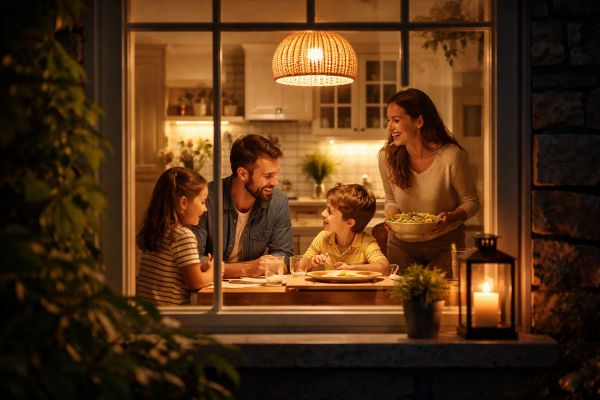
At night, when you have lights on inside and it’s dark outside, this light balance flips. This is what we call the nighttime reversal effect. The inside of your home becomes the brighter space, so the reflection also moves inside. From the outside, people will be able to see in, while from the inside, you will see a faint reflection of your room in the glass.
It’s crucial to understand this limitation. No standard privacy film can reverse the laws of physics. The key is to see the film for what it is: an incredible daytime privacy solution.
Practical Solutions for Complete 24/7 Privacy
So, how do you get total privacy around the clock? The great news is, you likely already have the answer in your home. One way windows for home film works in perfect harmony with your existing window treatments.
- Pair with Blinds or Curtains: The film gives you complete freedom during the day. At night, you simply close the same blinds or curtains you were using before. You’re no longer forced to keep them shut all day long.
- Manage Interior Lighting: Using dimmers or lamps instead of bright overhead lights can reduce the reversal effect, providing a degree of privacy without making the room completely dark.
The goal isn’t to replace your curtains, it’s to make them optional during the day. You gain hours of unobstructed views and natural light that you were missing before.
Choosing the Right See-Out-Not-In Film
Selecting the right film depends on balancing your privacy goals with your desire for natural light.
Match Reflectivity to Your Privacy Needs
The “magic” of one-way privacy comes from the film’s reflectivity. The more reflective the film, the stronger the mirror effect on the outside. If your main concern is a ground-floor window on a busy street, a highly reflective film is your best option. For a second-story window, you might opt for a less reflective film that offers ample privacy with a more subtle look.
Consider Tint Levels and Natural Light
One of the biggest worries we hear is, “Will window film make my house dark?” The answer is no, not if you choose the right film. Reflectivity provides privacy, while the tint level controls how much visible light passes through. Modern films can be highly reflective without relying on dark tints.
- Lighter Tints: Perfect for maximizing light, especially in north-facing rooms.
- Medium Tints: The sweet spot for most homes, offering a great balance of glare reduction and light preservation.
- Darker Tints: A lifesaver for rooms blasted with intense sun, dramatically cutting glare and heat.
Assess Your Window Types and Orientation
Where your windows are and which direction they face plays a huge role. South and west-facing windows are prime candidates for films with significant heat rejection. North-facing windows benefit from lighter tints to keep rooms from feeling dim. A professional consultation is the best way to ensure the film you choose is safe and effective for your specific windows, as some films aren’t recommended for certain double-pane glass.
Why Professional Installation is a Smart Investment
Choosing the perfect film is half the battle. Ensuring it’s applied flawlessly is what guarantees you’ll love the result for years. While DIY might seem tempting, it often leads to frustration and a finish that undermines the high-end look you want.
Common DIY pitfalls include ugly air bubbles, trapped dust, jagged edges, and wasted money on ruined film. A botched job not only looks bad but also fails to provide the seamless performance you were hoping for.
Professional installation is an investment in peace of mind. Our expert technicians use specialized tools to ensure a smooth, bubble-free finish that looks like it’s part of the glass itself. The film is trimmed with precision, creating clean lines from edge to edge. Furthermore, professionals use higher-quality, more durable materials than what’s available in DIY kits, and the work is backed by a warranty.

Privacy, Light, and Views Without Compromise
You shouldn’t have to choose between feeling secure in your home and enjoying the natural light and views your windows provide. Reflective mirrored window tint offers a modern solution that lets you have the best of both worlds during the day. It’s a practical, elegant way to solve the feeling of being exposed without turning your home into a dark cave.
If you love your big windows but keep the blinds shut just to stop passersby from looking in, this film is almost certainly a perfect solution. It gives you the freedom to live with your windows uncovered all day long, regaining your space without compromise.
Feeling confident that residential window tinting can solve your privacy concerns is the first step. The next is getting a solution tailored for your home. The process is straightforward: start by identifying your priority home windows, then schedule a free consultation with CoolVu. An expert can assess your situation, show you film samples, and provide a no-obligation quote. After a flawless installation, you’re left with nothing but a crystal-clear view and total daytime privacy. Many homeowners begin their search online using terms like Home Window Tinting Near Me, but working with experienced professionals ensures you receive the right privacy film for your home’s unique layout, lighting conditions, and privacy goals.
Frequently Asked Questions
Will one-way window film make my house too dark?
Not at all. Modern window films are designed to provide privacy without sacrificing natural light. You can choose from various tint levels. A medium tint is the most popular choice, offering a perfect balance of glare reduction and light preservation, while lighter tints are available to maximize brightness.
Can people see into my house at all during the day?
With a properly selected and installed reflective film, it is virtually impossible for people to see inside your home during the day. The side of the window with more light (the outside) will see a mirrored reflection, while you enjoy a clear view from the inside.
What’s the best way to clean windows with privacy film?
Cleaning is easy. After the film has fully cured (usually about 30 days), you can clean your windows as you normally would. Use a soft cloth or paper towel and a simple solution of water with a few drops of mild soap. Avoid using ammonia-based cleaners or abrasive tools.
How long does professionally installed window film last?
High-quality, professionally installed window film is incredibly durable. Most films come with a manufacturer’s warranty and are designed to last for 15 years or more without bubbling, peeling, or fading, making it a long-term investment in your home’s comfort and privacy.