

Every afternoon, the same pattern repeats. Around 2 PM, your office starts feeling uncomfortably warm. By 3 PM, you’re adjusting the thermostat. By 4 PM, colleagues are complaining, and by 5 PM, the space is nearly unbearable despite the air conditioning running constantly.
If your office faces west, this isn’t a coincidence. It’s physics.
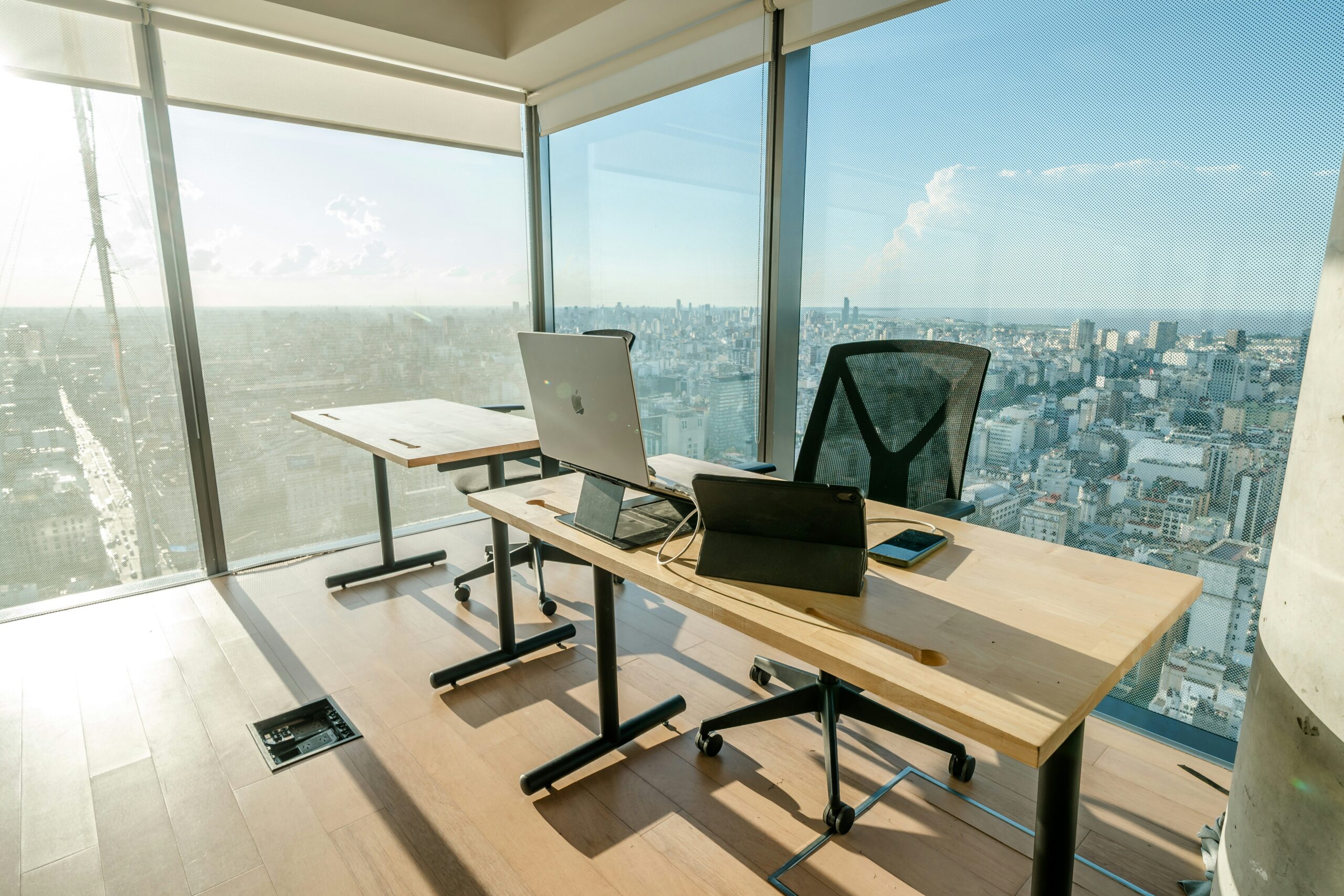
West-facing spaces experience a unique thermal challenge that combines the worst of both worlds: peak solar intensity coinciding with the hottest outdoor temperatures of the day. Understanding why this happens, and why simply turning down the thermostat doesn’t solve it, requires knowing something about how buildings interact with sunlight.
The West-Facing Office Window Problem
West-facing windows receive sunlight, but they face compounding challenges.
Afternoon Solar Intensity: The sun’s rays strike west-facing glass at nearly perpendicular angles between 2-6 PM, maximizing the amount of solar radiation passing through the window. This isn’t morning sun filtered through atmospheric haze—it’s intense, direct exposure.
Peak Outdoor Temperature: Outdoor air temperatures peak between 3 and 5 PM. The thermal mass of the earth (ground, pavement, buildings) has absorbed heat all day and is now radiating it back. Your west-facing windows receive solar radiation while outdoor temperatures are at their highest.
Cumulative Heat Load: By afternoon, your building has already absorbed heat throughout the day. Interior temperatures have been climbing gradually. The afternoon west-facing solar blast adds to this accumulated load rather than starting from cooler morning conditions.
Research on building orientation confirms west-facing windows introduce intense afternoon heat that significantly impacts thermal comfort and energy consumption.

The Physics: How Solar Radiation Becomes Interior Heat
Direct Solar Heat Gain:
When sunlight strikes a window, it doesn’t just make the room brighter. It directly heats everything the light touches, such as:
- Floors absorb radiation and become warm to the touch
- Desks and furniture heat up throughout the afternoon
- Walls facing windows receive concentrated solar exposure
- The objects themselves then radiate heat to surrounding air
Standard glass allows roughly 70-75% of solar radiation to pass through. On a sunny afternoon, a single six-by-four-foot west-facing window can admit 600-800 watts of solar heat—equivalent to running multiple space heaters pointed into your workspace.
The Greenhouse Effect:
Once solar radiation enters through the glass and heats interior surfaces, that heat becomes trapped. The infrared radiation these warm surfaces emit cannot pass back through the glass as easily as the original sunlight entered. Heat accumulates throughout the afternoon as solar input continues while thermal output is restricted.
Building science research shows that commercial buildings with glazed west-facing facades without adequate solar control experience excessive heat gain and glare during afternoon hours, with temperature increases of several degrees near window zones.
Why Your HVAC System Struggles
Your cooling system was sized for typical conditions, but west-facing afternoon solar gain creates challenges it wasn’t designed to handle:
Continuous Heat Input: The sun adds heat faster than HVAC can remove it—like trying to cool a room while someone keeps opening a hot oven.
Uneven Distribution: Areas near windows become significantly warmer than the rest of the space. The centrally-located thermostat may read acceptable temperatures while window zones experience much hotter conditions.
Peak Load Timing: Afternoon heat gain occurs when outdoor temperatures are highest, forcing maximum system capacity when it’s least efficient. Research shows cooling can account for over 50% of office building energy use, with afternoon solar gain significantly driving consumption.
The Impact on Productivity and Comfort
Thermal discomfort directly affects work performance. Studies on workplace environmental conditions show that overheating reduces concentration and increases distraction. The timing compounds the problem. West-facing heat peaks in the afternoon, when workers already experience natural circadian energy dips.
Employees report headaches, drowsiness, and irritability in spaces that become progressively warmer throughout the afternoon. Research confirms that while daylight and views improve cognitive performance, thermal discomfort negates these benefits. The challenge is maintaining natural light while controlling accompanying heat.
Why Traditional Solutions Fall Short
Turning Down the Thermostat creates new problems: overcooling other areas while west zones remain hot, wasted energy fighting solar gain, and ongoing thermostat battles between cold and hot employees.
Closing Blinds eliminates heat but sacrifices daylight and views. Studies show natural light improves mood, satisfaction, and cognitive function—benefits lost when windows stay covered all afternoon.
Rearranging Workspace helps individual comfort but doesn’t address overall heat load. Solar radiation still enters and heats the space while premium window-adjacent areas go unused.
The Root Cause: Uncontrolled Solar Radiation
The Real Problem:
West-facing afternoon heat isn’t an HVAC problem, an insulation problem, or a thermostat problem. It’s a solar radiation problem. The heat source is the sun’s energy passing directly through transparent glass into your office.
Building science identifies this clearly: West-facing glazing without adequate solar control introduces peak thermal loads during the hottest part of the day. The solar heat gain coefficient of standard glass means 70-75% of solar energy becomes interior heat.
Why This Matters:
Understanding the root cause changes how you think about solutions:
- Prevention vs. Compensation: Blocking heat before it enters is more effective than trying to remove it after entry
- Addressing the Source: Solar control at the glass surface targets the actual problem
- Maintaining Benefits: Solutions that prevent heat while maintaining light preserve the advantages of windows
The Building Science Solution
Research on window shading performance shows that solar control treatments can reduce heat gain while maintaining daylight and views. The key is selectivity—blocking infrared heat while allowing visible light through.
Modern building science recognizes sunlight as a spectrum. Solar control technology targets infrared specifically while preserving natural light transmission, addressing west-facing heat without creating dark offices. Some businesses also use smart window film to combine solar control with on-demand privacy and light management.
Buildings implementing solar control on west-facing glazing report temperature reductions of several degrees in perimeter zones, reduced cooling energy, improved afternoon comfort, and maintained daylight access—confirming that proper fenestration design establishes productive working environments.
Take Action on Afternoon Heat
Assess: Document afternoon temperature differences in west-facing areas, note when discomfort begins (typically 2-3 PM), track thermostat adjustments and energy patterns, survey employee comfort levels.
Consider Impact: West-facing heat affects employee productivity, energy costs, space utilization, and HVAC loads. Addressing the problem delivers benefits across all areas simultaneously.
Solar control solutions range from exterior shading to advanced glazing treatments. Consultation with building science professionals helps identify effective approaches for specific situations.
The Bottom Line
If your office becomes unbearably hot every afternoon, and it faces west, you’re experiencing the predictable result of intense solar radiation entering through glass during peak heat hours.
This isn’t a problem you can thermostat away. It’s not solved by adding more AC capacity. Closing blinds works but sacrifices the natural light that makes offices pleasant.
The solution requires addressing what’s actually happening: controlling solar heat gain at its source—your west-facing windows—while maintaining the daylight and views that contribute to a productive workspace.
Physics created the problem. Building science solves it.
Control West-Facing Heat Gain
CoolVu specializes in solar control solutions for commercial spaces and in diagnosing why your office is experiencing afternoon heat problems. We understand building science and design approaches that maintain natural light while eliminating excessive solar heat gain.
Free Commercial Assessment Includes:
- West-facing solar exposure analysis
- Afternoon temperature measurements
- Solar heat gain calculations
- Energy impact projections
Find your local CoolVu installer: www.coolvu.com
Your afternoon shouldn’t be spent fighting your windows.