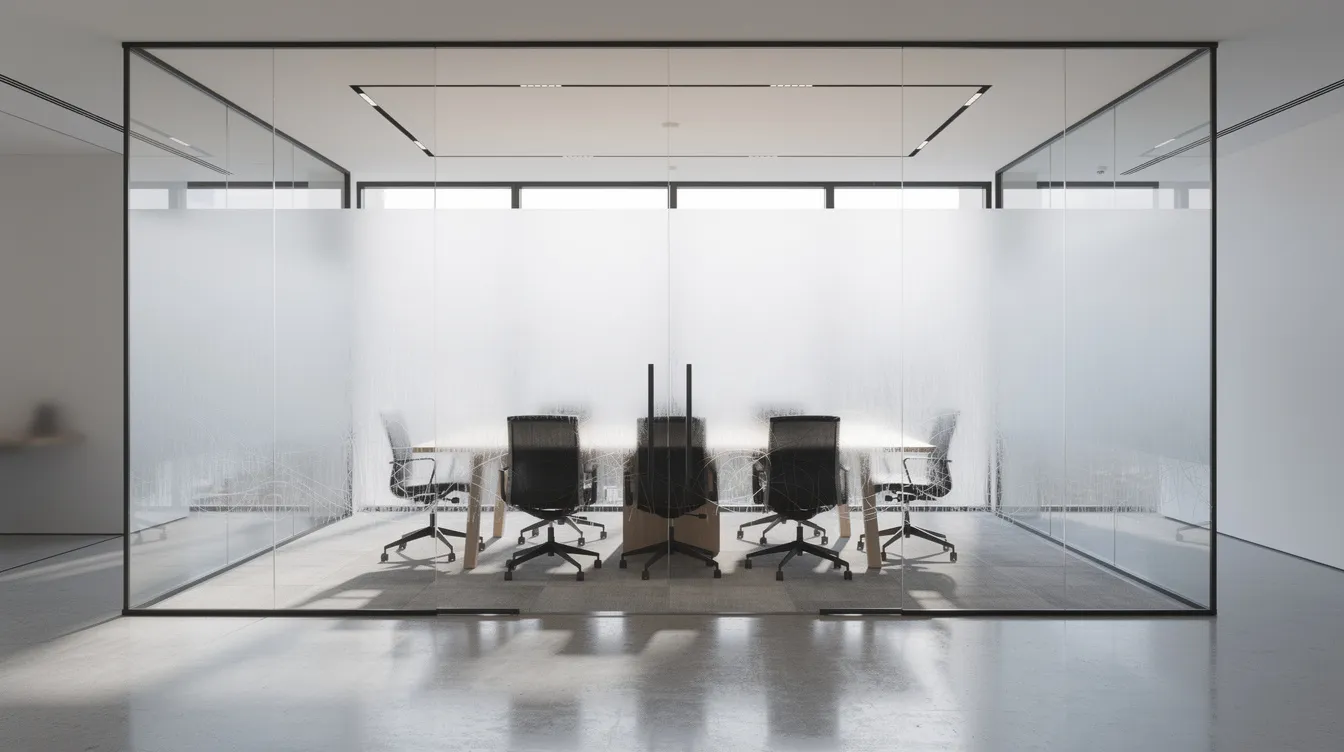
Imagine walking into a glass-walled conference room, pressing a wall switch, and watching every panel shift from crystal-clear to frosted in under a second. That is exactly what switchable films deliver. Known interchangeably as switchable smart film, pdlc smart film, or simply smart film, these thin electronic layers adhere directly to existing glass and transform it from transparent to opaque instantly. The broader category of smart glass and switchable glass includes factory-laminated units, but switchable film is the retrofit solution that avoids full glass replacement.
CoolVu’s SmartVu™ switchable film brings this smart film technology to homes, offices, medical facilities, and educational campuses nationwide. Switchable films provide instant privacy at the touch of a button while keeping spaces filled with natural light. They can be retrofitted onto existing glass surfaces, avoiding the need for full replacements. Throughout this guide you will learn how the technology works, what drives project cost, and how to decide whether switchable films are right for your space.
Table of Contents
- How Switchable Films Work (PDLC and Other Technologies)
- Smart Film vs Smart Glass: Retrofit Film on Existing Glass
- CoolVu SmartVu™ Switchable Film: How Our System Works
- Durability, Maintenance, and Everyday Use
- What Customers Should Know Before Choosing Switchable Film
- FAQs about Switchable Smart Film and Smart Glass
How Switchable Films Work (PDLC and Other Technologies)
At the core of most switchable smart film is polymer-dispersed liquid crystal (PDLC) technology. Millions of microscopic liquid crystal droplets sit inside a polymer matrix sandwiched between transparent conductive layers. When electricity is off, the liquid crystal molecules are randomly oriented, making the film appear milky white or frosted. When a low voltage is applied, the liquid crystal molecules align, allowing light to pass and making the film clear. Switching happens in roughly 50 milliseconds-faster than a blink.
Other intelligent glass technologies exist. Electrochromic glass darkens gradually over minutes for solar tinting. SPD glass uses suspended particles for glare control. Thermochromic materials respond to temperature. None of these match PDLC’s speed for instant privacy, which is why CoolVu specifies PDLC-based SmartVu for projects like hospital observation windows and 2025-era office build-outs. For a broader look at how this dynamic glazing compares to other options, review CoolVu’s smart window films and smart glass film overview. The system runs on low voltage AC (typically 48–65 VAC), consumes only 3–5 watts per square meter in the transparent state, and meets electrical safety requirements through code-compliant transformers and wiring.
Smart Film vs Smart Glass: Retrofit Film on Existing Glass
Factory-laminated smart glass embeds the switchable layer between two pieces of glass during final manufacturing. It is durable and well-suited to new construction curtain walls. Retrofit switchable smart film, by contrast, applies directly to existing glass panes-interior glass partitions, doors, sidelites-without tearing out and replacing anything.
For remodels and tenant improvements, retrofit film wins on cost, lead times, and minimal disruption. You keep your glass, skip weeks of construction, and maintain flexibility for future layout changes. CoolVu operates as film and surface specialists, so SmartVu is engineered for retrofit scenarios where customers want performance without the expense and complexity of full switchable glass units.
Key Benefits of Switchable Smart Film
Organizations and homeowners choose switchable film in 2026 for a straightforward reason: it solves multiple problems with a single glass film surface. Switchable films provide instant privacy and glare control without the need for blinds or curtains. They provide a minimalist aesthetic by eliminating the need for bulky drapes or blinds, maintaining a modern look across commercial spaces and luxury residences alike.
Light transmission remains high in the transparent state-around 80–85% visible light passes through-so rooms stay bright even when panels are clear. In the opaque state, diffuse light still enters but direct views are blocked, offering full privacy without darkness. Switchable film can block over 98% of UV rays, providing uv protection that guards interiors against fading. Switchable films can reduce heat by up to 50%, and the technology allows for controlled solar heat gain, improving energy efficiency in buildings, contributing to reduced energy use. Smart films can also transform glass into a projection screen, letting conference rooms double as presentation spaces. In healthcare and education, the smooth surface wipes down easily-far more hygienic than fabric shades.
Common Applications: Where Switchable Films Make the Biggest Impact
Switchable films can be installed in various environments, including commercial, residential, and healthcare settings. Smart films are ideal for offices and conference rooms where on-demand privacy supports video calls, HR meetings, and client presentations. Private offices and executive suites gain transparency for open collaboration and privacy control for focused work.
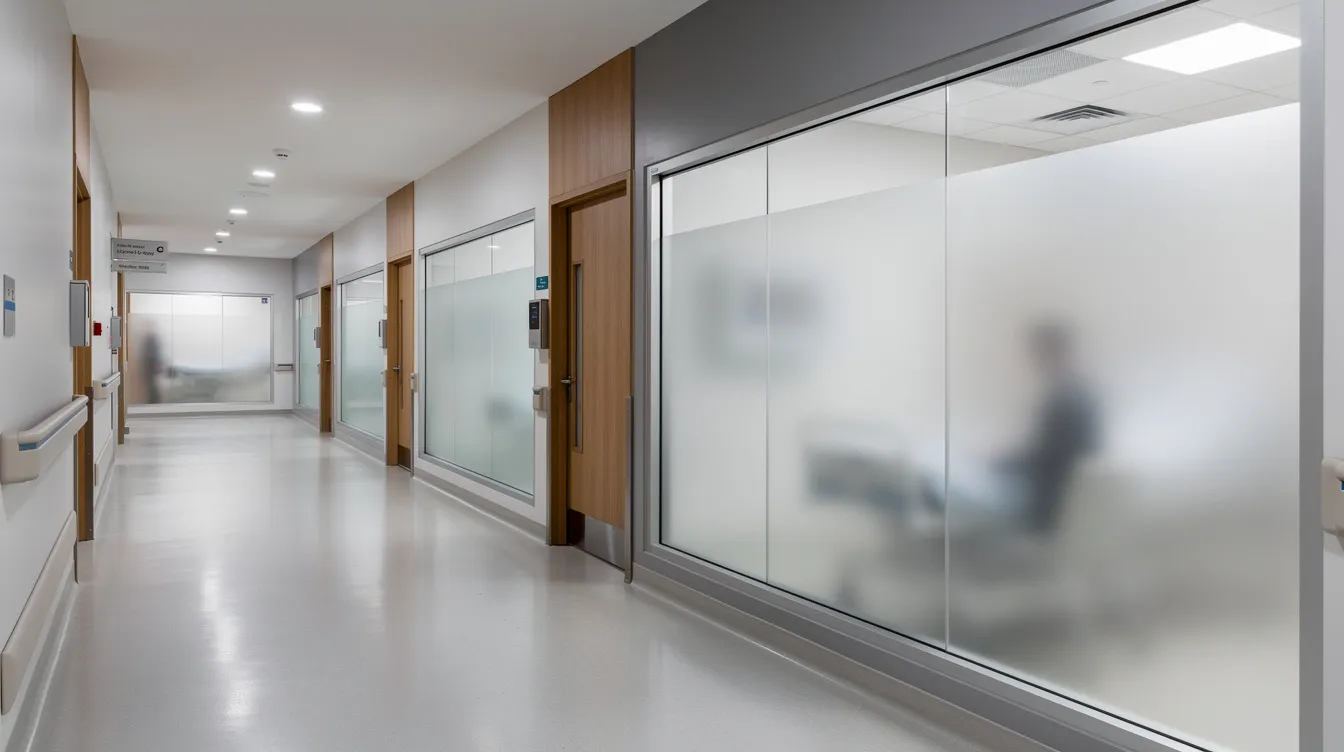
Healthcare facilities utilize switchable films to replace traditional curtains, providing easy cleaning and patient privacy in observation windows, procedure rooms, and nurses’ stations. Education and training rooms toggle between open collaboration and distraction-free testing environments. Switchable films are used in corporate offices for private meeting rooms and in residential spaces for bathrooms and shower doors. Specialty environments-museums, retail fitting rooms, bank branches, and government buildings-benefit from controlled visibility and clean aesthetics. Switchable films can be used in both luxury homes and commercial spaces to achieve dynamic privacy solutions.
CoolVu SmartVu™ Switchable Film: How Our System Works
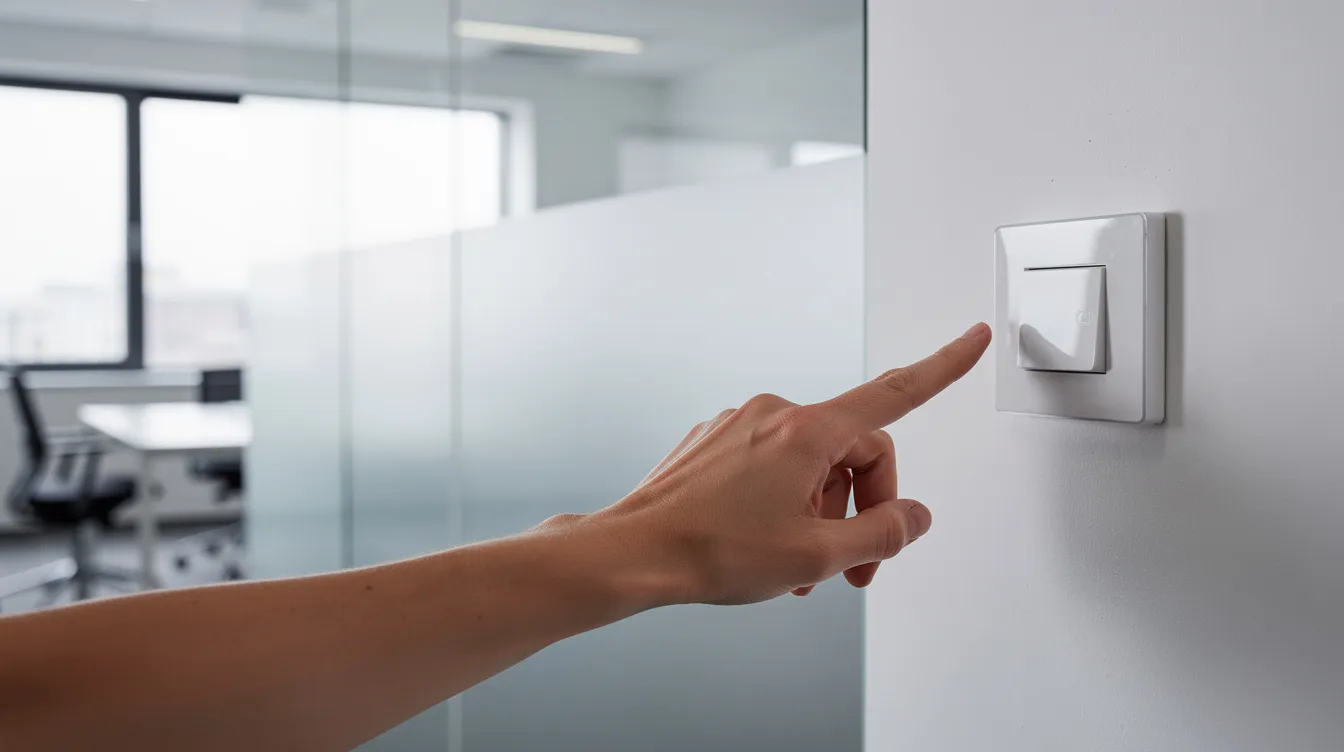
SmartVu is a PDLC-based switchable smart film designed to adhere to existing interior glass surfaces. When powered off, the film presents an ultra-clean frosted appearance. When powered on, it becomes clear. The film connects to a low voltage power supply and is controlled by a wall switch, remote, or integration with smart building systems. Switchable films can be controlled via remote or smartphone for convenient daily operation.
CoolVu installers route wiring discreetly along the top, bottom, or side edges of the glass, coordinating with customers on preferred wire locations. SmartVu sits alongside CoolVu’s broader portfolio of window tinting, security window film, and privacy window film solutions, giving customers a single source for complete glass surface solutions.
Technical Basics: Power Supply, Wiring, and Controls
Each SmartVu panel or group of panels connects to a transformer that converts standard building power to the required low voltage AC range. Controllers are concealed above ceilings, inside mullions, or within adjacent millwork. They are often controlled via wall switches, remote controls, or smart home systems, and 2026 installations commonly integrate with AV systems and platforms like Crestron, Lutron, or KNX.
CoolVu coordinates with electricians, AV integrators, and general contractors to ensure all wiring meets UL standards and local codes. Power consumption is minimal-a 100-square-foot glass wall in continuous clear mode costs only a few dollars per month in electricity, supporting reduced energy budgets.
Switchable Smart Film vs Transitional and Solar Control Films
No single window film solves every problem. Switchable PDLC smart film excels at instant privacy and visual control on interior glass but is not designed as a primary solar heat rejection product for sun exposure on exterior windows. CoolVu’s transitional window film technology darkens under UV on exterior glazing, cutting heat and glare passively.
The practical combination: SmartVu on interior conference room glass partitions for providing privacy, plus CoolVu solar-control or security film on exterior windows for thermal best performance. If privacy and visual flexibility are top priorities, choose switchable film. If heat and fading control dominate, choose solar or transitional film-or combine both through a CoolVu consultation.
Material Options and Design Choices for Switchable Films
Standard PDLC smart film appears as a clean white frost in the opaque state, similar to etched glass. Gray-tinted and decorative layering options are available for projects where design calls for warmer or darker tones. Maximum roll widths reach approximately 1.8–2.0 meters, with laminated panels available up to roughly 1.8 × 3.6 meters for large glass partitions without seams.
CoolVu plans edge treatment and bus bar alignment during shop drawings so the finished product looks like a single, clean glass lite. Switchable film can also be combined with printed graphics or branded logos from CoolVu’s printed graphics division-useful for corporate lobbies and branded conference rooms. The industry has matured significantly; Smart Tint® has manufactured over 6,000,000 square feet of smart film, reflecting the scale of demand for this high quality product.
Understanding Self-Adhesive vs Non-Adhesive Smart Films
Self adhesive PDLC smart film uses a peel-and-stick adhesive peel layer that bonds directly to glass. Non-adhesive films are captured mechanically or laminated between two pieces of glass during final manufacturing. For long-term commercial projects, CoolVu typically recommends permanent self adhesive smart film installation by trained professionals who deliver a bubble-free, lasting bond.
Generic low-cost products marketed online often suffer from haze, adhesive peel failure, and premature delamination. Professional-grade materials installed by CoolVu technicians-with proper surface prep, glass testing, and edge sealing-avoid these issues and protect your investment, especially when you choose spec-grade switchable smart glass film engineered for commercial and institutional projects.
Project Types: Offices, Conference Rooms, and Beyond
Switchable smart film supports modern space planning and hybrid work environments. In conference rooms, it delivers privacy on demand for board meetings and video calls, while the frosted surface doubles as a projection screen for presentations. Open offices use glass-front huddle rooms and phone booths that switch opaque for heads-down focus.
In one recent 2025 project, a CoolVu franchise outfitted a 12-room corporate conference center with SmartVu film across interior glass walls. Each room’s multiple pieces of glass connect to individual controls, allowing the facilities team to manage transparency room by room. Law firms, financial institutions, and healthcare consult rooms where confidentiality is critical represent growing demand segments and underscore CoolVu’s nationwide glass and surface solutions expertise.
Suitability for Homes: Where Switchable Film Works Best Residentially
Homeowners often ask whether smart film is worth the investment. The strongest residential use cases include primary bathroom windows, shower enclosures with glass doors, street-facing sidelites and transoms by the front door, and glass home offices. A typical project might involve a two-panel shower enclosure or a single office slider-manageable in scope and budget.
Compared to blinds and shades, switchable film offers convenience, a cleaner look, and long-term value. The trade-off is that power access and wiring routes can add complexity in existing homes. CoolVu consultants help plan around these constraints during the initial site visit, identifying the best wire locations and transformer placement before any materials are ordered.
Durability, Maintenance, and Everyday Use
Modern PDLC smart films are built for daily switching and long service life. Expect 10–15 years under normal interior conditions; premium installations with proper edge sealing can reach 15–20 years. UV sun exposure, switching frequency, and installation quality are the main factors affecting longevity.
Maintenance is simple: clean with standard non-abrasive glass cleaners and soft cloths. Avoid harsh chemicals, plastic scrapers, or stickers that trap moisture at the edges. Quality power supplies and properly specified film eliminate flicker and ensure uniform switching across the entire panel, even under varied lighting conditions.
Cost Factors and Budgeting for Switchable Film Projects
The main cost drivers for any switchable film project include total square footage, panel count, glass access, electrical distances, control complexity, and project timeline. A single conference room wall is a straightforward retrofit; a multi-floor rollout with dozens of panels requires more coordination, multiple pieces of transformer hardware, and potentially phased installation to avoid disrupting operations.
Professional design, shop drawings with final measurements, and trained installers are worth the investment compared to DIY smart film kits that risk voiding warranties and creating performance issues. Contact your local CoolVu franchise to request a free estimate with project-specific pricing, whether you need security window film, smart glass, or privacy film alongside switchable solutions.
How a CoolVu Switchable Film Project Works: Step-by-Step
- Consultation – Site visit or virtual review to discuss goals like instant privacy, branding, or light control
- Survey & Measurements – Detailed glass measurements, frame assessment, and power/wiring evaluation
- Design & Proposal – Film type selection, switching method, any decorative overlay, and a clear written proposal with product details
- Coordination – Collaboration with electricians and facilities staff to plan power supply locations and switching hardware
- Installation – Surface prep, film application, wiring, testing, and user training on controls
- Follow-up – Final quality check, warranty documentation, and care guidance through your local CoolVu franchise
What Customers Should Know Before Choosing Switchable Film
Clarify your goals early: is the priority instant privacy, aesthetics, or energy savings? Understand which glass surfaces are interior versus exterior, tempered versus laminated-this affects product choice. PDLC film provides privacy but still transmits light; it is not the same as blackout shades. For new construction or major renovations, coordinate wiring and power supplies from the start. Collect floor plans, photos, and rough dimensions before contacting CoolVu to accelerate the estimating process.
Common Mistakes to Avoid with Switchable Smart Films
Buying generic online pdlc smart film kits without professional assessment of glass type, wiring needs, or building codes is the most frequent mistake. Cutting or trimming PDLC film on site without manufacturer-approved methods can damage bus bars and void warranty coverage. Underestimating electrical complexity or ignoring ADA and life-safety considerations creates problems that are expensive to fix later. Incompatible cleaning products, stickers, or decals applied to the exposed film surface cause delamination. Using authorized CoolVu installers and genuine, spec-grade materials prevents most of these issues.
Switchable Film, Security, and Privacy Regulations
In clinics, hospitals, financial offices, and schools, instant privacy via smart film can support compliance with HIPAA and other confidentiality regulations. However, PDLC smart film does not turn standard glass into security or impact-resistant glass-security window film is a separate CoolVu solution. Pairing switchable privacy glass film with security film on appropriate glazing addresses both visual privacy and intrusion resistance, and regional providers like CoolVu of South St. Paul deliver security window film, smart film, and privacy film services tailored to local building needs. Involve your compliance or risk teams early when specifying switchable glass projects in regulated environments.
FAQs about Switchable Smart Film and Smart Glass
How does switchable film create instant privacy?
Switchable smart film transforms from clear to frosted glass when power is toggled. In the opaque state, liquid crystals scatter light to block direct views while still admitting soft, diffused daylight. Switchable films transform glass from clear to opaque instantly.
Can smart film be installed on my existing office glass walls?
Yes. SmartVu is specifically designed for retrofit onto existing glass-glass partitions, door panels, sidelites, and windows. No glass replacement is needed.
What happens to switchable glass during a power outage?
Standard PDLC defaults to the frosted, private state when power is lost. This means your space stays private during outages-a built-in fail-safe for conference rooms and medical facilities.
Does PDLC smart film block UV and reduce heat?
Switchable film can block over 98% of UV rays in both states. Switchable films can reduce heat by up to 50%. For maximum thermal performance on exterior windows, pair SmartVu with CoolVu’s dedicated solar control films.
How long does installation take?
A typical conference room with one to two glass walls can be completed in a single day. Larger multi-room projects may take several days depending on electrical coordination and the number of panels.
What maintenance does smart film require?
Clean with non-abrasive glass cleaner and a soft cloth. Avoid solvents, abrasive pads, and adhesive stickers on the film surface. Transformer replacement is the most common long-term service need.
Can switchable smart film be used in wet areas like showers?
Yes, with proper edge sealing and code-compliant low voltage wiring routed outside splash zones. CoolVu designs shower and bathroom installations with moisture protection as a priority.
Does it work with smart home systems?
SmartVu integrates with popular automation platforms, AV control panels, and voice assistants. A simple cart button on an app, a wall switch, or a conference room keypad can all serve as the system control point.
Why Choose CoolVu for Switchable Smart Film Solutions
CoolVu is a national franchise network focused on window film, glass film, and architectural surfaces. Our teams have designed and installed switchable films for offices, medical facilities, schools, and residences across the country. Working with a franchise-based provider means you get local ownership backed by national standards, training, and ongoing support.
Beyond SmartVu, CoolVu offers solar and transitional window films, security window film, decorative films, and architectural surface solutions-allowing a single provider to handle every glass and surface need in your environment, with local teams such as CoolVu of Central San Diego providing window tinting, security window film, privacy film, and smart glass services. Every project starts with a free estimate, includes detailed shop drawings where needed, and is completed by trained installers. For entrepreneurs, CoolVu also offers a franchise opportunity to bring switchable smart film and surface solutions to new markets.
Getting Started: Requesting a Switchable Film Quote from CoolVu
Ready to create a smarter, more flexible space? Contact your local CoolVu franchise through the online locator, by phone, or by submitting a request form, whether you are working with CoolVu of Lower Fairfield County for glass and surface solutions or engaging CoolVu of North Nassau County for privacy and security window films. To speed up your quote, have photos, approximate glass sizes, building type, and your preferred control method ready.
If you are testing smart film for the first time, start with one priority space-a conference room, a primary bath, or a single office door-to experience the technology firsthand. Modernize your glass, gain instant privacy on demand, and elevate the look of any space with professionally installed switchable smart film from CoolVu.