Table of Contents
- Residential Window Tinting in Indianapolis
- Why Indianapolis Homes Need Residential Window Tinting
- How Residential Window Film Works
- Types of Residential Window Films We Install
- Our Residential Window Tinting Process in Indianapolis
- What Indianapolis Homeowners Should Know Before Choosing Window Tinting
- Common Mistakes to Avoid with Home Window Tinting
- Frequently Asked Questions About Residential Window Tinting in Indianapolis
Residential Window Tinting in Indianapolis
Residential window tinting is the process of applying a thin, engineered film to your home windows to control heat, glare, and UV exposure without replacing the glass itself. If you live in Indianapolis, where summer afternoons routinely push past 90°F and winter cold stresses every surface in your home, choosing a residential window tinting company in Indianapolis can make a measurable difference in daily comfort and long-term energy costs.
CoolVu is a residential window tinting company serving Indianapolis and surrounding communities like Carmel, Fishers, Zionsville, and Greenwood. Residential window tinting companies specialize in custom films to block heat, and CoolVu focuses on helping homeowners reduce heat, cut glare, protect furnishings from fading, boost privacy, and enhance curb appeal. In this guide, you will learn how window film works, what options exist, what installation looks like, realistic pricing, and how to schedule a free estimate.
Why Indianapolis Homes Need Residential Window Tinting
Indianapolis sits in a humid continental climate with roughly 18 days per year hitting 90°F or higher, intense afternoon sun from May through September, and cold winters that demand heavy HVAC use. That seasonal swing creates real problems for untreated glass, especially on south- and west-facing windows in neighborhoods across Marion and Hamilton County.
Think about a Meridian-Kessler living room where hardwood floors fade visibly within two seasons, or a Geist lake home where afternoon glare makes the TV unwatchable without blackout curtains. In Zionsville subdivisions, nursery rooms on the west side overheat by mid-afternoon. Modern window film can reduce indoor heat by up to 67%, block up to 99% of UV rays, and help stabilize interior temperatures year-round. For homes built between the 1970s and 2010s with standard double-pane or basic low-E glass, tinting is a low-disruption alternative to full window replacement.
How Residential Window Film Works
Residential window film is a thin, multilayer material – typically polyester or ceramic-based – applied directly to the interior surface of existing glass. It manages solar energy through a combination of reflective, absorptive, and nano-ceramic particle layers that target infrared wavelengths (the heat-carrying portion of sunlight) while allowing visible light through.
The technology has advanced well past the dark, mirrored look most people associate with car windows. A clear film can block 95% of heat without darkening windows, which is ideal for HOA neighborhoods in Hamilton County where exterior appearance standards are strict. Window tint can also block up to 98% of infrared heat on high-performance ceramic products, keeping rooms noticeably cooler without altering curb appeal.
Films are engineered specifically for flat, architectural glass, tested to building standards, and backed by manufacturer warranties when installed by trained professionals like CoolVu.
Types of Residential Window Films We Install
Homeowners in Indianapolis can choose from several film families depending on their goals. Window films come in various tints for aesthetic and functional needs, and CoolVu helps match the right product to each room and window orientation.
Solar control films are the most common starting point. They reduce solar heat gain on large picture windows and sunrooms, helping AC systems across Marion and Hamilton County run less during peak summer months. Advanced films can reflect solar energy for energy savings that homeowners notice on monthly utility bills.
Nano-ceramic and infrared films represent the premium tier. Ceramic films reject significantly more heat than standard films because they use non-metallic particles to target infrared wavelengths without adding reflectivity or darkness. These are the go-to solution for homeowners who want maximum heat rejection with a nearly transparent appearance.
Dual-reflective films combine high exterior reflectivity for daytime privacy with a softer interior finish so your view out stays clear. Reflective or frosted tints can enhance privacy without sacrificing light, making them popular for street-facing rooms.
Decorative and privacy films include frosted, patterned, and etched-look options perfect for bathrooms, sidelights, and home offices. In historic areas like Irvington, homeowners use decorative film to add privacy to original glass without altering the window profile. Window films can provide daytime privacy without blocking natural light.
Safety and security films are thicker (4–12 mil) and designed to hold glass together on impact. Durable films make windows more shatter-resistant, enhancing security against break-ins, storms, or accidental impacts. Safety films strengthen glass and reduce injury risks in family homes with young children.
Key Benefits of Tinting Your Indianapolis Home Windows
Most homeowners contact CoolVu to solve one specific problem – usually heat or glare – but end up happy with multiple benefits from a single installation.
Heat and hot spot reduction. Advanced window tinting reflects solar energy for cooler homes, especially in west-facing rooms that absorb intense afternoon sun. High-performance ceramic options block a significant share of infrared radiation, and the difference in a July living room is immediately noticeable. Home window tinting enhances privacy and comfort simultaneously.
Energy efficiency. High-quality window films improve energy efficiency in homes by reducing the load on your AC system during June through August. Advanced films can improve energy efficiency measurably, and window film installation can improve home resale value by signaling a well-maintained, energy-conscious property.
Fade protection. Residential window tint blocks up to 99% of UV rays that damage hardwood floors, artwork, furniture, and carpet. Over 10–15 years, the protection is visible compared to untreated rooms.
Glare reduction. Tinting minimizes glare, enhancing comfort for activities like watching TV or working from home. Solar films can reduce glare on television screens and computer screens, which matters in open-concept Indianapolis homes with large east- or west-facing windows.
Privacy. Professionally installed window films can provide a modern appearance while giving you daytime privacy without closing blinds or sacrificing your view of the neighborhood.
Our Residential Window Tinting Process in Indianapolis
CoolVu follows a clear, low-mess window film installation process that most Indianapolis installations complete in a single day. Most jobs are completed efficiently without rushing quality.
The process starts with a phone call or online contact where we log your address, window count, and goals – whether that is to reduce heat, protect against sun damage, or add privacy. Companies often offer free consultations for home window tinting projects, and most estimates for window tinting are provided at no cost, similar to CoolVu of Central Pennsylvania’s residential services.
During the free estimate visit, a CoolVu team member inspects each window’s glass type, sun exposure, and orientation, then presents film samples directly on your glass so you can see real-time differences in light and visibility. We walk you through light, medium, and darker options side by side.
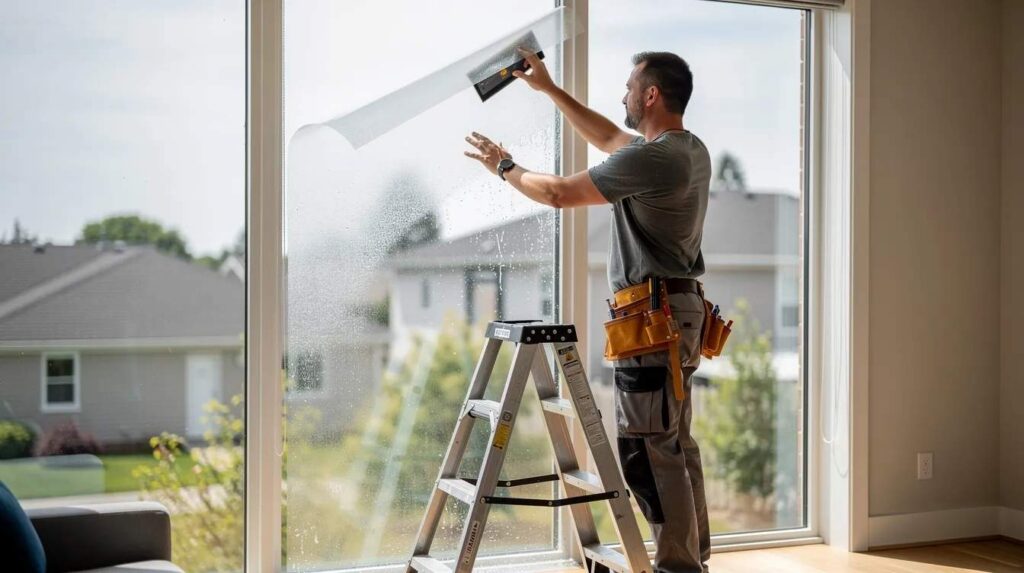
On installation day, our team protects surrounding furniture and flooring, cleans each surface thoroughly, and precision-cuts each piece. Window tinting films are custom cut using computerized systems for exact fit. A slip solution is used to position the tint film during installation, followed by squeegeeing out water and air, edge trimming, and a final inspection. While most automotive tint jobs take 45 to 90 minutes and factory-match tint jobs typically take about 20 minutes, residential projects covering 10–20 windows usually wrap in half a day when using architectural window films.
Expect slight haze or tiny water pockets during the curing period. After about 30 days, clean with non-abrasive products and a soft cloth. Premium films typically last 10–15 years or longer with proper care.
What Indianapolis Homeowners Should Know Before Choosing Window Tinting
Not all window film suits every type of glass or every HOA guideline in Central Indiana. Certain high-absorption films are not recommended on specific double-pane or low-E glass because they can cause thermal stress. CoolVu evaluates compatibility during every home visit to protect both your glass and your original window warranty.
Aesthetic expectations matter. Some films have mild exterior reflectivity visible from the curb in neighborhoods like Westfield or Brownsburg, while others remain nearly invisible. Indiana has no statewide law restricting residential window film (most tint regulations reference vehicle glass), but HOAs in suburbs like Carmel and Fishers may restrict mirrored finishes. CoolVu recommends HOA-friendly options when needed.
On pricing: window tinting prices vary based on film type and vehicle size for automotive work – most automotive tint jobs cost between $250 and $700, and a simple two-window tint job starts around $118 – but residential projects are quoted per square foot. Expect roughly $6–$14 per square foot installed for quality solar or ceramic film in Indianapolis. Full ceramic tint installations can cost up to $728 for select window groupings. A whole-house project treating 15–20 windows typically lands between $2,500 and $5,000. It is vital to compare warranty options and film types when selecting a service.
Common Mistakes to Avoid with Home Window Tinting
Correcting a poor tint choice or bad installation almost always costs more than doing the job right the first time.
Choosing film based solely on the darkest shade rather than performance data like solar heat gain coefficient or visible light transmission is a common error, especially in Indianapolis neighborhoods where overly dark glass draws HOA attention. Cheap, off-the-shelf films from big-box stores often develop purple discoloration, bubbling, and peeling within a few years – and carry no meaningful warranty. High-quality window films require professional installation to avoid defects like trapped air, uneven edges, and premature failure.
Ignoring glass type and orientation is another costly mistake. Applying the wrong film to a large south-facing, double-pane window wall can void the original window manufacturer’s warranty. Always verify that your installer is insured, trained, and using reputable film brands. Ask for local project examples or before-and-after photos, as showcased by CoolVu’s residential window tinting in Tucson.
Why Choose CoolVu as Your Residential Window Tinting Company in Indianapolis
CoolVu operates as a national franchise with a dedicated local presence in the Indianapolis area, delivering residential and commercial window film solutions backed by consistent quality standards and ongoing support, reflecting the company’s glass and surface solutions expertise.
The local CoolVu team serves Indianapolis, Carmel, Fishers, Zionsville, Noblesville, Avon, Greenwood, and nearby communities with in-home consultations and same-week scheduling when available through CoolVu of North Indianapolis. We specialize in spectrally selective, nano-ceramic, decorative, privacy, and security films designed for Midwestern homes. Our installers are professionally trained and background-checked, and we take pride in a transparent process from the initial consultation through final walkthrough.
CoolVu backs every project with strong manufacturer and labor warranties. Our customers across the Indianapolis area consistently report cooler rooms, reduced glare, and lower energy bills – the kind of results that confirm the difference between a quick fix and a lasting solution and mirror the experiences shared by clients of CoolVu of Northeast Columbus, Ohio.
Frequently Asked Questions About Residential Window Tinting in Indianapolis
How much does residential window tinting cost in Indianapolis?
Pricing typically runs $6–$14 per square foot installed, depending on film type and window complexity. A standard 3×5-foot window costs roughly $90–$210 with premium ceramic or spectrally selective film. Whole-house projects covering 15–20 windows generally fall between $2,500 and $5,000. The price depends on film grade, window count, access, and whether you include security or decorative films.
How much heat can window film actually reduce?
Window tinting can reduce indoor heat by up to 67% depending on film type and glass orientation. Ceramic films reject significantly more heat than standard dyed or metalized options, making them the top choice for west- and south-facing rooms that overheat in summer.
How long does residential window tinting last?
Premium films typically perform well for 10–15 years or longer. Many manufacturers offer limited lifetime warranties on residential ceramic and spectrally selective films when installed by a certified professional. Budget dyed films may degrade in 3–7 years.
Is residential window tinting legal in Indiana?
Yes. Indiana tint law primarily addresses vehicle windshield and car window transparency – there is no statewide statute restricting residential glass film. However, some HOAs set rules about exterior reflectivity and colors, so check your community guidelines. CoolVu can recommend compliant options for any neighborhood.
How do I clean tinted home windows?
Wait approximately 30 days after installation for full curing. Then use a soft cloth or sponge with a mild, ammonia-free cleaner. Avoid abrasive pads or harsh chemicals that can scratch or degrade the film surface.
Is window film applied to the inside or outside of the glass?
Residential window film is almost always applied to the interior surface of the glass. This protects the film from weather and extends its lifespan. At night, with interior lights on, some reflective films may create mild interior reflections, but most modern ceramic and neutral films maintain comfortable visibility from inside.
Schedule Your Free Estimate with CoolVu in Indianapolis
If you are dealing with hot rooms, fading floors, or relentless glare, the quickest path to a comfortable home is a simple conversation. Contact CoolVu to schedule a free estimate – we offer in-home consultations across Indianapolis and surrounding suburbs, typically available Monday through Friday during standard business hours.
There is no obligation and no high-pressure sales. Our visit focuses on education and problem-solving: inspecting your glass, showing you real film samples, and helping you find the right solution for your budget and style. Expect a quick response to your inquiry and a consultation window that respects your schedule.
Cooler rooms, reduced energy strain, protected interiors, and improved privacy – these are the results waiting on the other side of one phone call, whether you work with our Indianapolis team or regional providers like CoolVu of South St. Paul. Ready to explore what residential window tinting can do for your Indianapolis home? Reach out to CoolVu today and take the first step toward a more secure, comfortable living space, just as homeowners do with CoolVu of The Villages in Florida.