- Why Your Building’s Glass Is Its Greatest Vulnerability
- Your First Line of Defense: Shatterproof Window Film
- How It Works: The Science of Delaying Intruders
- More Than Just Security: Unexpected Benefits of Window Protection Film
- A High-ROI Investment: Advanced Security That Fits Your Budget
- What to Look for in a Security Film and Professional Installation
- Lessons from 50,000+ Installations: What Defines Real-World Protection
- Frequently Asked Questions
Why Your Building’s Glass Is Its Greatest Vulnerability
You’ve invested heavily in securing your buildings. You’ve installed robust locks, sophisticated alarm systems, and high-definition cameras. Yet, it’s easy to overlook the most obvious and fragile point of entry: the vast panes of glass that make up our windows and doors. This is the unseen security gap that intruders are all too willing to exploit.
The Unseen Security Gap in Schools and Businesses
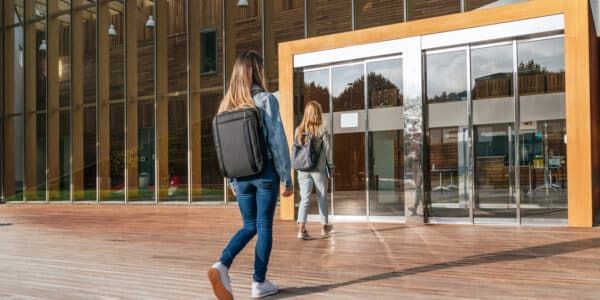
Think about the main entrance of a school or an office. It’s likely a set of glass doors, designed to be open and welcoming. For an intruder, however, that glass represents the path of least resistance. A single, well-aimed strike with a rock or hammer can shatter it in seconds. In that instant, every other security protocol becomes a race against the clock.
For a school superintendent, this is a particularly troubling reality. You can have the best lockdown procedures in the world, but if an intruder can bypass your main entryway in under five seconds, it dramatically reduces the time staff and students have to react and find shelter. The vulnerability isn’t just the glass itself. It’s the speed with which it can be defeated.
Beyond Break-ins: The Full Spectrum of Glass-Related Threats
While forced entry is a primary concern, the dangers of unprotected glass extend far beyond intentional acts of violence. A comprehensive safety plan has to account for the full spectrum of risks, all of which are made worse by the projectile-like nature of shattered glass.
- Forced Entry and Vandalism: The most common threat, where intruders seek immediate access for theft or to cause harm.
- Severe Weather: During hurricanes or tornadoes, flying debris can easily shatter windows, exposing the building’s interior and turning broken glass into dangerous projectiles.
- Accidental Impacts: From a stray baseball on a playground to a simple slip-and-fall accident, untreated glass can lead to serious injuries.
- Blast Hazards: In the event of a nearby explosion, whether from an industrial accident or a terrorist act, flying glass shards are a primary cause of injury and death.
Why Traditional Security Systems Only Tell Part of the Story
This brings us to a critical distinction in security planning: detection versus delay. Your alarms and cameras are excellent tools for detection. They tell you that a problem is occurring and capture evidence of it. But they do nothing to physically delay an intruder.
An alarm might blare instantly, but average police response times can be anywhere from three to ten minutes or even longer. If an intruder can breach your glass door in three seconds, they have a significant head start. They are already inside the building before help is even on the way.
That gap is measured in seconds, and it’s where tragedies happen. Relying on detection alone is like knowing a flood is coming but having no walls to hold back the water. To truly protect people, you must harden your building’s most vulnerable points to physically slow an attacker down. You need to create time.
Your First Line of Defense: Shatterproof Window Film
Imagine an invisible shield bonded directly to your existing glass, transforming your most fragile entry points into a formidable barrier. That, in essence, is what shatterproof window film does. It’s an advanced security solution engineered to hold glass together under extreme stress. It’s also the single most cost-effective way to fill the critical time gap that alarms and cameras can’t address.
Deconstructing Security Film: More Than Just a Tint
When people hear “window film,” many think of the dark tint used on cars to block sun and add privacy. Security window film is an entirely different category of product. While tinted versions exist, most security films are optically clear and virtually invisible once installed.
It’s not designed to hide what’s inside. It’s designed to protect who’s inside. This is a crucial point for schools and businesses that want to maintain a welcoming, open appearance. This type of window protection film is a powerful upgrade that works behind the scenes, reinforcing your glass without announcing its presence.
From Polyester Layers to Powerful Protection
So, what gives this thin film its incredible strength? The secret lies in its construction. This forced entry resistant film is made from multiple layers of high-tensile polyester, laminated together to create a tear-resistant sheet. The thickness of the film is measured in “mils,” and true security films are significantly thicker and stronger than decorative or solar films.
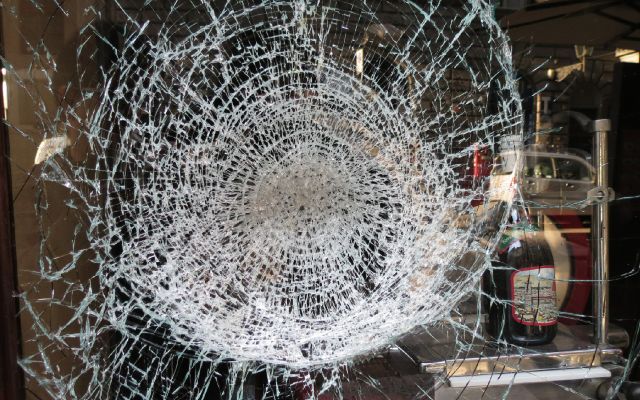
The real magic, however, happens with the adhesive. The film is applied to glass with a uniquely aggressive adhesive that forms a powerful molecular bond. When an object strikes the window, the glass may crack and spiderweb, but the film holds the thousands of sharp, dangerous pieces together. Instead of the glass collapsing, it remains a flexible, resilient barrier in the frame, denying immediate entry and absorbing immense impact energy.
Security Film vs. Safety Film: Understanding the Differences
It’s important to know that not all films are created equal. The terms safety film and security film are often used interchangeably, but they serve different purposes.
- Safety Film: Generally thinner, around 4 to 7 mil, this film is designed to meet building codes and prevent injury from accidental breakage. It will hold glass together from a minor impact, like a child running into a sliding door.
- Security Film: This is the product designed for forced-entry resistance and threat mitigation. It is significantly thicker, starting at 8 mil and going up to 21 mil or more. It’s engineered to withstand repeated, high-energy impacts from tools like hammers, bats, or bricks.
For protecting a school or business from a determined intruder, you need a true security film. Choosing the right product is essential for achieving the delay and protection you need.
How Film Preserves Aesthetics and Avoids a “Fortress” Appearance
For many, especially in a school setting, security upgrades bring to mind images of metal bars, heavy grilles, or bulky shutters. These measures, while effective, can create an intimidating, prison-like environment that hurts morale and the feeling of community.
This is where security film offers an unparalleled advantage. Because the most effective films are optically clear, they provide robust protection without changing the look of your building. Natural light continues to pour in, views remain unobstructed, and the building maintains its original architectural design. It’s a security solution that doesn’t force you to compromise, allowing you to create a safe space that still feels open, positive, and welcoming.
How It Works: The Science of Delaying Intruders
It’s a terrifying thought, but one we must confront. A standard glass door or window can be shattered in less than three seconds, granting an intruder immediate access. Alarms will sound and cameras will record, but by then, the breach has already happened. This is where shatterproof window film fundamentally changes the equation. It doesn’t just detect a threat. It actively delays it, turning a building’s most fragile points into formidable barriers.
Buying Time: The Single Most Important Benefit of Anti-Shatter Film for Glass Doors
In any emergency, time is your most valuable asset. It’s the one thing you can’t get back, and it’s what security window film is specifically engineered to give you. When an intruder strikes a protected window, the glass will crack, but it won’t collapse. Instead of walking through an open hole, the attacker is faced with a still-standing, flexible barrier that refuses to give way.
This creates a critical delay. Every second an intruder spends striking the window again and again is another second for:
- Occupants to execute lockdown procedures and find a secure location.
- Automated security systems to alert authorities.
- Law enforcement to travel to the scene and intervene.
This delay isn’t just a few seconds. Depending on the film and the tool used, it can add minutes of resistance. Those minutes are not just numbers on a stopwatch. They are the moments that disrupt an attacker’s plan, create a life-saving buffer, and allow for a controlled response instead of a chaotic reaction.
The Physics of Forced Entry Resistance
How does a thin layer of film accomplish this? It’s a remarkable demonstration of applied physics. The strength of security film comes from its ability to absorb and dissipate energy across the entire surface of the glass.
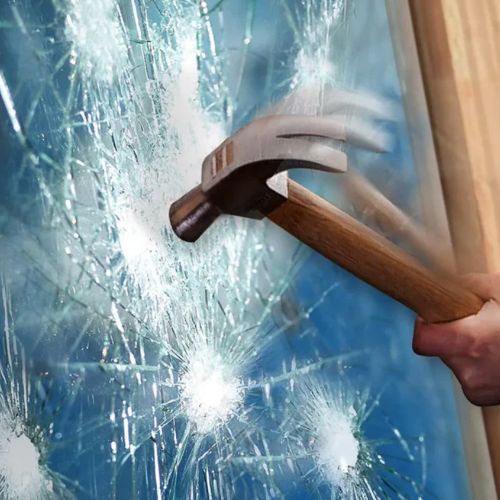
When a blunt object like a hammer strikes untreated glass, all the force is concentrated on a single point. This easily overcomes the glass’s structural integrity, causing it to shatter and fall away.
With security film applied, the powerful adhesive bonds the film to the glass as a single unit. Now, when an object strikes the window, the film acts like a net. The impact energy radiates outwards from the strike point, spreading across the entire pane.
The film stretches and absorbs the shock, holding the countless broken shards together in the frame. The intruder isn’t fighting a brittle piece of glass anymore. They’re fighting a tough, flexible membrane that is incredibly difficult to tear or push through.
Understanding Key Metrics: Thickness, Tensile Strength, and Adhesion
Not all security films perform the same, and understanding a few key metrics is vital to choosing the right level of protection. While a professional can guide you, it’s helpful to know what makes a film effective.
- Film Thickness: Measured in “mils,” this is the most common metric. A standard 4-mil film provides excellent protection against accidental breakage and basic break-in prevention. For higher-level security needs, films are available in 8-mil, 14-mil, and even thicker variations, offering significantly increased resistance.
- Tensile Strength: This measures the amount of force required to stretch and ultimately tear the film. A higher tensile strength means the film is more resistant to being punctured or ripped, even after the glass behind it is completely broken.
- Adhesion: A film is only as good as its bond to the glass. Modern security films use sophisticated, aggressive adhesives that form a molecular bond with the glass over time. This powerful adhesion ensures the broken glass fragments remain firmly stuck to the film, maintaining the barrier.
The Critical Role of an Attachment System for Maximum Protection
For the highest level of security, the film itself is only part of the solution. A determined attacker who can’t get through the filmed glass may eventually try to push the entire pane out of its frame. This is where an attachment system becomes essential.
An attachment system anchors the edges of the security film to the window frame, typically with a structural silicone glaze or a mechanical interlocking profile. By bonding the film and glass unit directly to the frame, it creates a single, unified structure. Now, an intruder must not only defeat the glass and the film, but they also have to defeat the entire window frame itself. This exponentially increases the time and effort required to create a breach, maximizing the delay and ensuring the system performs at its peak.
More Than Just Security: Unexpected Benefits of Window Protection Film
While delaying intruders is the primary mission of a security laminate, its physical properties deliver a host of other benefits that make it one of the smartest investments for a building’s safety and efficiency. This isn’t a single-purpose product. It’s a comprehensive upgrade to your windows.
Comprehensive Glass Hazard Mitigation
The same technology that holds glass together during a forced entry attempt works just as effectively against violent weather. During a hurricane, security film can prevent a stray branch from shattering a window, stopping wind and rain from entering and causing massive damage. Even in an earthquake, the film will hold broken glass in its frame, preventing a major source of injury.
Preventing Injury from Accidental Glass Breakage
In a school, office, or home, accidents happen. A student could slip and fall into a glass wall.
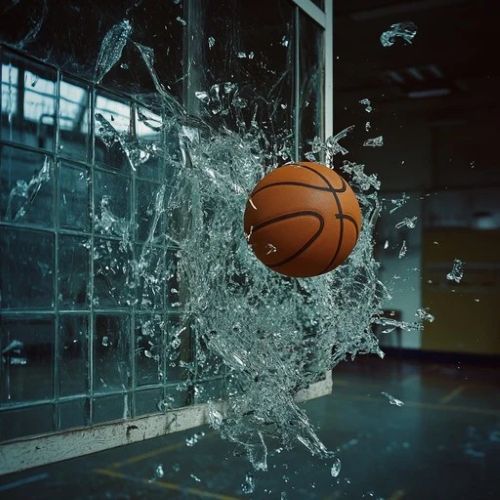
A stray ball in a gym could strike a window. In these everyday scenarios, security film is a silent guardian.
It prevents the glass from shattering into dangerous, razor-sharp daggers.
Instead, the glass simply cracks, holding together safely in the frame and preventing what could be a serious, life-altering injury.
Bomb Blast Protection: A Higher Level of Preparedness
While it’s an extreme scenario, the ability of security film to mitigate bomb blasts is the ultimate testament to its strength. During an explosion, most injuries are caused not by the blast itself, but by the thousands of flying glass shards propelled by the pressure wave. Thicker security films, especially when paired with an attachment system, are engineered for bomb blast protection, absorbing the shockwave and dramatically reducing the risk of deadly projectiles.
Shielding Occupants and Interiors from UV Radiation
An often-overlooked benefit is the powerful UV protection that comes standard with virtually all high-quality security films. These films block over 99% of the sun’s harmful ultraviolet rays. This provides two clear advantages. First, it protects the people inside the building from UV exposure. Second, it acts as a powerful sunblock for your building’s interior, which lowers your energy bills and protects your furniture, flooring, and classroom materials from fading and deteriorating.
A High-ROI Investment: Advanced Security That Fits Your Budget
When we talk about protecting our schools and businesses, the conversation often gets stuck on cost. Budgets are tight, and every dollar has to be justified. It’s a serious concern, especially for a school superintendent who has to balance security with educational necessities. But what if the most effective upgrade wasn’t the most expensive?
That’s exactly where shatterproof security film shines. It’s not an expense. It’s a high-return investment in safety, time, and peace of mind.
Calculating the True Value of Delaying a Threat
How do you put a price on time during a crisis? In an active threat situation, the answer is simple: it’s priceless. While alarms alert you and cameras record, security film is the only affordable solution that actively delays a breach.
Think about the timeline of an emergency response. It takes several minutes for law enforcement to arrive. A standard glass door can be breached in under 10 seconds. The same door fortified with a professionally installed security film system can withstand a determined assault for two, three, or even five-plus minutes.
This delay is everything. It’s the time needed to initiate a lockdown, for occupants to move to safer locations, and for first responders to arrive and neutralize the threat before an intruder gains widespread access. The true value isn’t measured in dollars, but in the critical window of time it creates to save lives.
Comparing the Cost: Security Film vs. Laminated Glass
When administrators look at hardening glass, they often assume it means a massive capital expenditure on ballistic or laminated glass replacements. While those solutions are effective, they are also incredibly expensive and disruptive. If you’re looking for a guide to Bulletproof Glass Film, it’s important to understand that security film is designed to hold shattered glass together and delay entry attempts, while true bullet-resistant protection requires specialized ballistic-rated glass systems.
- Full Glass Replacement: Upgrading to laminated or ballistic glass is the most robust option, but it comes at a premium. The cost can be 5 to 10 times higher than a security film retrofit. The process involves removing frames, lengthy construction, and a price tag that’s out of reach for most organizations.
- Shatterproof Security Film: This is the smart, cost-effective alternative. The film is applied directly to your existing glass, making it a simple retrofit that requires no construction. It offers comparable forced entry resistance for a fraction of the cost, delivering an unmatched return on investment.

For most threat scenarios, security film provides the perfect balance of performance and affordability, making meaningful commercial security accessible right now.
An Affordable Upgrade That Enhances What You Already Have
One of the most powerful benefits of security film is that it works with your existing infrastructure. There’s no need to tear out perfectly good windows and doors. The film is retrofitted directly onto the interior surface of your glass, instantly upgrading its performance.
This approach is not only cost-effective but also discreet. The film is optically clear, so it doesn’t change the appearance of your building or make it feel like a fortress. Your school still looks like a welcoming place of learning, and your storefront remains open and inviting to customers. You gain a powerful layer of invisible protection that doesn’t compromise the atmosphere of your space.
Addressing the Superintendent’s Dilemma: Maximum School Safety on a Limited Budget
Let’s return to the challenge facing school officials and business owners everywhere: how do you achieve maximum safety on a limited budget? Shatterproof window film provides a clear and powerful answer.
It directly addresses this dilemma by offering a tangible, physical security enhancement that is financially attainable. Instead of deferring action due to the high cost of replacement windows, you can take immediate steps to harden your building’s perimeter. It allows you to strategically protect your most vulnerable entry points, like main entrances and ground-floor classrooms, without a budget-breaking overhaul. This is about making a smart, strategic investment that accomplishes a critical safety goal efficiently and effectively.
What to Look for in a Security Film and Professional Installation
Now that you understand the immense value of security film, the next step is ensuring you choose the right product and, just as importantly, the right installation partner. Not all films are created equal, and the quality of the installation ultimately determines its effectiveness. A faulty installation can render even the best film useless.
Choosing the Right Film for Your Specific Threat Level
Security films are categorized by their thickness, measured in mils. The thickness you need depends on the threats you are most likely to face.
- Safety Films (4-7 mil): These films are excellent for mitigating hazards from accidental glass breakage, smash-and-grab burglaries, or extreme weather. They hold shattered glass together, preventing dangerous shards from flying and making entry more difficult.
- Security Films (8 mil and above): For delaying a determined, violent attacker, you need a thicker film. Films in the 8 to 21 mil range are specifically engineered to withstand repeated, high-force impacts from objects like hammers or bats. This is the category you should focus on for school safety and commercial security.
A professional security assessment can help you identify which areas of your building are most at risk and require a heavier-duty film.
Why Professional Installation is Non-Negotiable
This cannot be overstated: the performance of your security film is 100% dependent on the quality of its installation. This is not a DIY project. Hiring a general-purpose handyman will create a false sense of security and fail under pressure.
Professional installation is critical for two main reasons:
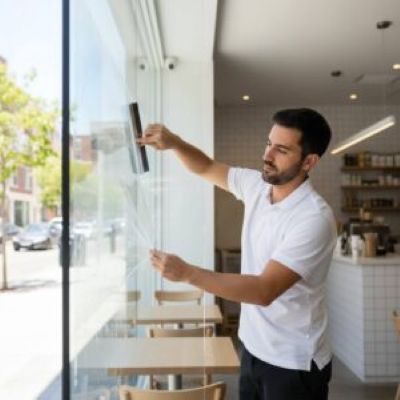
- Flawless Application: Certified installers are trained to prepare the glass and apply the film without contaminants, air bubbles, or edge gaps. This ensures a perfect bond, which is essential for performance.
- Anchoring Systems: A professional will use a mechanical attachment system to anchor the film and glass to the window frame itself. Without this anchor, an attacker could simply push the entire sheet of filmed glass out of the frame. The attachment system ensures the entire window unit works together to resist entry.
Key Questions to Ask a Potential Installation Partner
Vetting your installer is as important as choosing the right film. Before you sign a contract, ask these key questions to ensure you’re working with a true security expert:
- Are you a certified installer for the film brands you are recommending?
- What type of anchoring system do you recommend for my building, and why is it the right choice?
- Can you provide case studies from similar projects, such as other schools or government buildings?
- What does your warranty cover? Does it include both the film and the installation labor?
- What is your process for a clean installation that minimizes disruption to our operations?
The answers will reveal the depth of their expertise and their commitment to providing a true life-safety solution.
The Importance of Proven Brands and Certified Installers
In the security industry, reputation matters. Leading film manufacturers like 3M and LLumar invest millions in research and third-party testing to validate their products’ performance. Choosing a film from a proven brand ensures you are getting a product that lives up to its claims.
Likewise, a “certified installer” designation means the technicians have been trained by the manufacturer on how to install their products and attachment systems correctly. This synergy between a tested product and a trained installer is what creates a security system you can rely on when every second counts.
Lessons from 50,000+ Installations: What Defines Real-World Protection
Theory is one thing, but protecting lives in the real world is another. With over 50,000 successful security film installations, we’ve moved far beyond the spec sheet. We’ve seen firsthand what it takes to delay a determined intruder, what stands up to a smash-and-grab attempt, and what provides lasting peace of mind. This experience isn’t just a number. It’s a deep well of practical knowledge that informs every project we undertake.
Why Experience in High-Stakes Environments Matters
Applying security film in a school isn’t the same as a simple home project. There is no room for error. An experienced team understands that every building has unique vulnerabilities and that a one-size-fits-all approach is a recipe for failure.
For a school superintendent, this experience is your greatest asset. It ensures you’re not just buying a product, but investing in a comprehensive security solution installed by professionals who have protected thousands of students and staff members before. It’s the difference between simply adding a layer of film and truly hardening your building’s most vulnerable entry points.
Tailoring Solutions for Different Environments
A successful security strategy recognizes that every environment faces different threats. Our experience allows us to move beyond a generic application and engineer a solution tailored to your specific needs.
- Schools: Your primary concern is the safety of students and faculty. The goal is to create a significant delay at the glass, giving law enforcement critical time to arrive. We know you need to maintain an open and welcoming atmosphere, not create a fortress. Our school solutions are designed to be virtually invisible while providing powerful protection.
- Retail: For storefronts, the most common threat is the “smash-and-grab” burglary. Here, the film needs to withstand immediate, high-impact force to deter thieves who rely on speed and surprise, protecting your valuable inventory.
- Offices: Security in a corporate setting is about protecting both people and sensitive assets. The film serves as a barrier against forced entry but can also be a component of blast mitigation strategies, hardening the building against a wide range of threats.

The Hallmarks of a Successful Security Film Project
A truly professional installation is defined by several key elements that go far beyond just applying film to glass.
- A Thorough Security Consultation: The project should always begin with a detailed assessment of your building’s vulnerabilities and your security goals.
- Correct Film and System Selection: An expert will recommend the right film thickness and, when necessary, a mechanical anchoring system to bond the film, glass, and frame into one resilient structure.
- Meticulous Surface Preparation: The glass surface must be professionally cleaned and prepared to ensure the film’s powerful adhesive creates a permanent bond.
- Expert Application and Finishing: The film must be applied with precision, free from bubbles or creases, with proper edge-to-edge trimming.
- Anchoring System Integration: For maximum protection, especially in schools, the film must be anchored to the window frame. This is the most critical step for forced entry resistance.
Our 100+ Years of Combined Experience at Your Service
That number represents a century of collective knowledge, problem-solving, and refinement. It’s the experience of knowing which attachment system works best with a specific frame, or understanding the unique safety needs of a ground-floor classroom versus a second-story office.
For you, it means we’re not learning on your project. It’s the assurance that every technique and recommendation is backed by a legacy of successful real-world applications. We’ve seen what works, and we know how to deliver a security solution that is effective, reliable, and gives you the confidence that you’ve made the best possible investment in safety.
Ready to secure your glass with a smarter solution? Contact CoolVu today for a free estimate on professional shatterproof window film installation.
Frequently Asked Questions
Will security film make my windows bulletproof?
No, shatterproof window film is not bulletproof or bullet-resistant. Its primary purpose is forced entry resistance and glass hazard mitigation. It is designed to withstand repeated impacts from blunt objects like hammers or bricks, delaying an intruder for several minutes. While it significantly strengthens glass, it will not stop a bullet.
How much does security window film cost compared to replacing windows?
Professionally installed security film is significantly more affordable than a full window replacement. As a general rule, you can expect a security film retrofit to cost a fraction of what you would pay for new laminated or ballistic glass, often 5 to 10 times less. It provides a similar delay against forced entry without the high cost and disruption of construction.
Will the film change the appearance of my building?
No, the most popular and effective security films are optically clear and virtually invisible once installed. They are designed to provide powerful protection without altering the look of your building. Natural light, visibility, and architectural aesthetics are all preserved, allowing you to enhance safety without creating a “fortress-like” appearance.
How long does a professional installation of security film last?
High-quality security films installed by certified professionals are incredibly durable. Most leading manufacturers provide warranties of 10 years or more for commercial installations. The film is designed to last for the life of the window and will not peel, bubble, or discolor when properly maintained.
Why is an attachment system so important?
An attachment system is crucial for maximum forced entry protection. While the film holds shattered glass together, a determined attacker could still push the entire broken pane out of the window frame. An attachment system anchors the film and glass to the frame itself, creating a single, unified barrier. This forces an intruder to defeat the entire window system, not just the glass, which dramatically increases the time it takes to create a breach.