- The Modern Business Dilemma: Why Permanent Glass Frosting is an Outdated Strategy
- Introducing the Superior Alternative: The Rise of Architectural Privacy Films
- A Spectrum of Solutions: From Decorative Patterns to Switchable Smart Films
- Achieving Aesthetic Goals with Decorative Glass Film for Offices
- Full vs. Partial Privacy: Tailoring the Level of Seclusion
- Specialized Solutions: One-Way Mirror Films and Digital Information Privacy
- The Ultimate in Flexibility: Exploring Switchable Smart Privacy Film
- Advanced Options for Corporate Environments: Understanding Casper Cloaking Film
- Beyond Privacy: The Unexpected ROI of Non-Permanent Films
- Comparing the True Cost: Architectural Film vs. Traditional Glass Etching
- How to Choose the Right Glass Privacy Solution for Your Business
- Conclusion: A Strategic Investment in Flexibility, Aesthetics, and Value
- Frequently Asked Questions
The Modern Business Dilemma: Why Permanent Glass Frosting is an Outdated Strategy
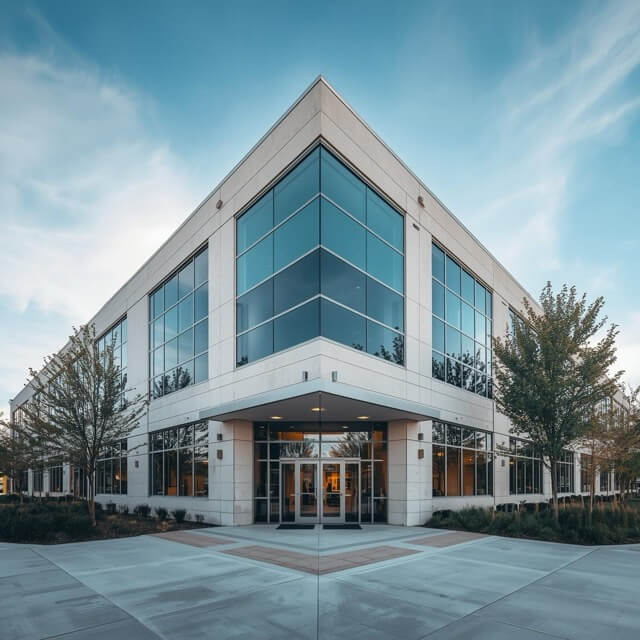
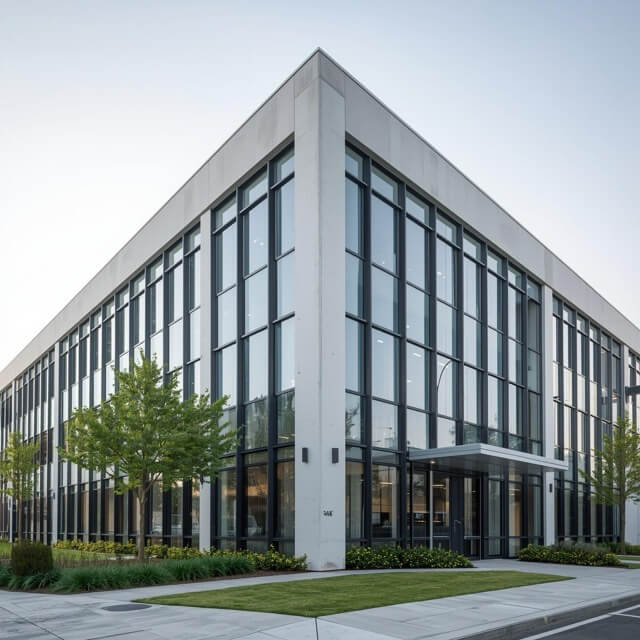
In today’s dynamic business environment, agility is not just an advantage; it’s a necessity. Yet, when it comes to creating privacy in a commercial space, many business owners still consider traditional methods like acid-etched or sandblasted glass. While these options deliver privacy, they lock you into a permanent decision that clashes with the core principles of a modern, adaptable business. This choice represents a static solution in a world that demands flexibility, creating a significant and often costly dilemma.
The Irreversible Commitment of Traditional Glass Etching
Choosing to permanently frost a glass panel through etching or sandblasting is a one-way street. These processes physically abrade the surface of the glass, creating a textured, opaque finish. The result is irreversible. If your business needs change, if you decide to rebrand, or if you simply want to update the aesthetic of your space, you are left with only one, very expensive option: replacing the entire glass unit. This level of commitment is a significant financial and design liability, turning a simple need for privacy into a permanent architectural feature that you may one day regret.
How Inflexible Design Limits Future Branding and Office Layouts
Imagine etching your company logo onto the glass walls of your conference rooms. It looks sharp and professional today. But what happens in three years when you undergo a complete rebranding? That permanent logo now makes your entire office look dated. The same issue arises with office layouts. A frosted pattern that works for a series of private offices becomes functionless or awkward when you decide to transition to an open-plan collaborative space. Permanent frosting anchors your interior design to a single point in time, severely limiting your ability to evolve your brand identity and workspace functionality without incurring massive costs.
The Hidden Costs and Disruptions of Permanent Alterations
The upfront cost of glass etching is only part of the financial picture. The installation process itself is highly disruptive. Sandblasting, for example, is a messy and noisy procedure that often requires sectioning off parts of your office, displacing employees and interrupting workflow for days. The potential for accidental damage to surrounding floors, walls, and furniture is real, adding another layer of risk and potential expense. These hidden operational costs and business disruptions are rarely factored into the initial quote but have a tangible impact on your bottom line.
The Evolution of Workplace Design: Embracing Flexibility and Adaptability
The modern office is no longer a static collection of cubicles and corner offices. It is an agile ecosystem designed to support collaboration, focus, and wellness. Companies now need spaces that can be easily reconfigured to accommodate growing teams, new projects, or shifting work styles. Hot-desking, modular walls, and multi-purpose rooms are the new standard. In this context, investing in a permanent, unchangeable feature like etched glass is a strategic misstep. It contradicts the very nature of a flexible workplace, favoring a rigid past over an adaptable future.
Introducing the Superior Alternative: The Rise of Architectural Privacy Films
Faced with the inflexibility and high cost of permanent solutions, a far more intelligent alternative has emerged as the industry standard for savvy business owners. Architectural privacy films deliver the sophisticated look of frosted, etched, or decorative glass without any of the irreversible drawbacks. They represent a modern approach to a timeless business need, prioritizing flexibility, cost-effectiveness, and design freedom.
What is Removable Privacy Window Film?
Removable privacy window film is a professional-grade, self-adhesive layer that is applied directly onto the surface of your existing glass panels. It is designed to mimic the appearance of expensive frosted or custom-etched glass, providing immediate privacy and an aesthetic upgrade. Crucially, these films are engineered to be cleanly and completely removed by a professional at any time, leaving the original glass in pristine, undamaged condition. This simple characteristic transforms it from a mere decorative product into a powerful business tool.
The Core Technology: Durable Polyester and Versatile Vinyl Films
The effectiveness of privacy films comes from advanced material science. Most professional-grade films fall into two primary categories, each serving a distinct purpose:
- Durable Polyester (PET) Films: Known for their exceptional optical clarity, dimensional stability, and durability. These films are often used for frosted looks and security applications, offering a clean, uniform appearance that is highly resistant to scratches and fading.
- Versatile Vinyl Films: Calendered and cast vinyl films provide an enormous range of creative possibilities. They are available in countless colors, textures, and finishes, and they are the ideal medium for computer-cut custom logos, intricate patterns, and bold branding statements.
This combination of materials allows for solutions ranging from simple, elegant frost for a conference room to vibrant, branded graphics for a storefront.
The Strategic Advantage of a Non-Permanent, Damage-Free Solution
Choosing a removable film is a strategic business decision that provides both immediate benefits and long-term security. The non-permanent nature of the solution directly addresses the pain points associated with permanent glass alterations.
For a business owner, this means you can:
- Satisfy Landlord Requirements: Apply privacy and branding to leased spaces without violating your agreement, as the glass can be returned to its original state upon move-out.
- Evolve Your Brand: Update logos, colors, and marketing messages on your glass surfaces as your company grows and changes, keeping your environment fresh and relevant.
- Adapt to New Layouts: Easily change or remove films to accommodate new office configurations, ensuring your privacy solutions always match your functional needs.
- Test Design Concepts: Experiment with different levels of opacity or decorative patterns at a fraction of the cost of permanent glass, de-risking your design choices.
Answering the Primary Need: Immediate and Effective Privacy Control
Beyond its strategic flexibility, architectural film delivers flawlessly on its core promise: privacy. The installation process is quick, clean, and quiet, causing minimal disruption to your daily operations. The moment the film is applied, you have an effective visual barrier. Whether you need to obscure a street-level view, create confidentiality in a boardroom, or simply add a sense of separation in an open office, privacy film provides an immediate and elegant solution. You can choose the exact level of opacity you need, from a subtle, light-diffusing frost to a complete block-out, giving you precise control over your environment.
A Spectrum of Solutions: From Decorative Patterns to Switchable Smart Films
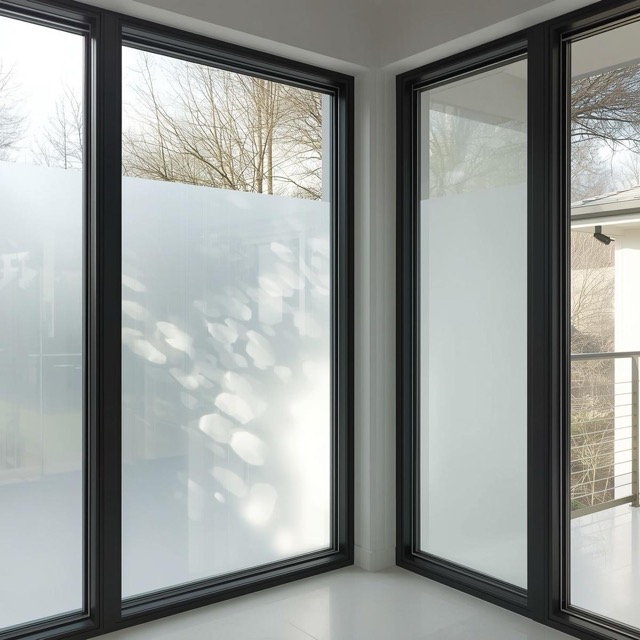
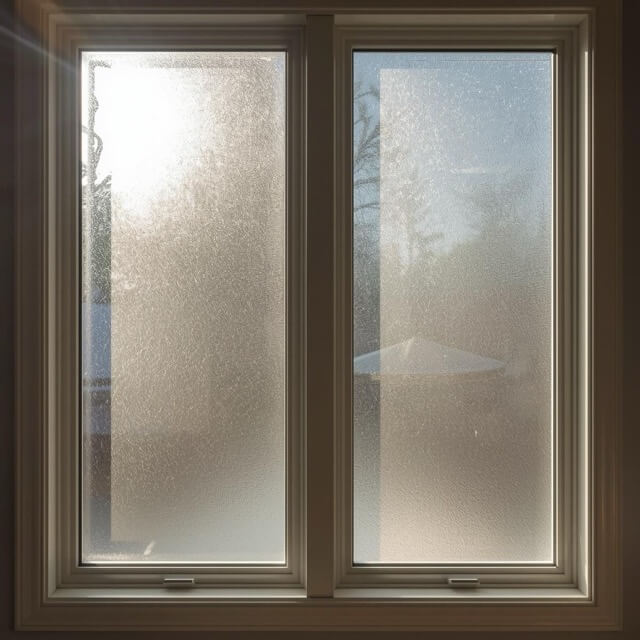
Moving beyond the simple frosted look, the world of architectural film offers a diverse toolkit for solving privacy and aesthetic challenges. Unlike the permanent and singular nature of etched or sandblasted glass, modern films provide a spectrum of options. This allows you to select a solution precisely engineered for your specific business needs, ensuring you invest only in the functionality and style you require.
Achieving Aesthetic Goals with Decorative Glass Film for Offices
Your office’s interior design is a direct reflection of your brand. Where traditional frosted glass offers a single, uniform look, decorative films transform glass into a canvas for creative expression. These films come in a vast library of patterns, textures, and opacities. You can choose from elegant geometric designs, subtle gradients that fade from clear to opaque, or even custom-printed graphics that incorporate your company’s logo and branding.
This versatility allows you to achieve sophisticated design goals without the high cost and permanence of custom glasswork. A conference room can feature a sleek, professional pattern that inspires confidence, while a collaborative workspace might use a more creative design to foster innovation. This is not just decoration; it is a strategic tool for shaping your environment and reinforcing your brand identity.
Full vs. Partial Privacy: Tailoring the Level of Seclusion
Not all spaces require the same level of privacy. A one-size-fits-all approach is often inefficient and can make a space feel closed off and uninviting. Privacy films give you granular control, allowing you to tailor the level of seclusion to the function of each area.
For a private office or a human resources department, a fully opaque film provides complete confidentiality. In contrast, a glass-walled conference room might only need a decorative band of film across the middle. This maintains an open, airy feel while preventing distractions and obscuring sensitive materials on the table from passersby. This targeted application is a more intelligent and cost-effective use of materials compared to frosting an entire pane of glass unnecessarily.
Specialized Solutions: One-Way Mirror Films and Digital Information Privacy
Certain business environments face unique privacy challenges that standard films cannot address. For these situations, specialized films offer targeted, high-performance solutions. One-way mirror film, for instance, provides daytime privacy for ground-floor offices or security monitoring rooms. It appears as a reflective mirror from the outside while allowing clear vision for those inside, operating on the principle of a light differential.
Furthermore, in today’s open and collaborative office designs, protecting digital information has become a critical concern. A standard privacy film can obscure a room’s occupants, but it does little to prevent a sensitive presentation or confidential spreadsheet from being viewed on a large monitor. This has created a demand for films that specifically address information security, which advanced technologies are now able to solve.
The Ultimate in Flexibility: Exploring Switchable Smart Privacy Film
For businesses seeking the pinnacle of modern functionality and control, switchable smart privacy film represents a transformative leap forward. This technology allows glass to change from transparent to opaque with the simple flip of a switch, a remote control, or even integration with a smart office system.
This dynamic capability offers unparalleled flexibility, turning a single space into a multi-functional asset.
- Instant Privacy: A glass conference room can become a private meeting space in a second, then revert to an open, transparent part of the office.
- Dynamic Design: Use it as a high-tech projection screen for presentations when opaque, creating a dual-purpose surface that maximizes utility.
- Enhanced Modern Image: The “wow” factor of switchable film projects a forward-thinking, technologically advanced brand image to clients and employees alike.
While it is a premium investment, switchable film provides a level of on-demand versatility that no permanent glass treatment can ever match, making it a strategic choice for boardrooms, executive offices, and client-facing areas.
Advanced Options for Corporate Environments: Understanding Casper Cloaking Film
In corporate settings where data security is paramount, Casper Cloaking Film offers a revolutionary solution tailored to the digital age. Unlike films that obscure the entire pane of glass, this advanced film is engineered to be optically clear to the human eye. Its magic lies in its ability to selectively obscure the light emitted from LED and OLED screens.
From outside a room treated with this film, the glass appears perfectly transparent, but any laptop, monitor, or television screen inside will look like a black, unlit box. This allows for confidential work and presentations in glass-walled offices without sacrificing the open, collaborative culture many businesses strive for. For industries like finance, law, healthcare, and technology, this film is not an aesthetic choice but a crucial layer of information security, protecting valuable intellectual property from visual hacking.
Beyond Privacy: The Unexpected ROI of Non-Permanent Films
While achieving privacy and enhancing aesthetics are often the primary reasons for choosing glass films, the decision yields a number of secondary benefits that create a compelling and rapid return on investment. These functional advantages contribute directly to a more comfortable, secure, and cost-efficient business environment.
Enhancing Employee Comfort and Productivity by Reducing Glare
Uncontrolled sunlight causes glare on computer screens, leading to eye strain, headaches, and a measurable dip in employee productivity. Many high-performance window films are engineered to cut harsh glare by over 50% without significantly darkening the room. This creates a more comfortable working environment, allowing your team to focus on their tasks instead of fighting reflections, which translates directly to improved efficiency and employee well-being.
Protecting Assets and Interiors with 99% UV Ray Rejection
The same sunlight that brightens your office also carries damaging ultraviolet rays. UV radiation is the leading cause of fading and degradation for your commercial interiors. By blocking up to 99.9% of UV rays, window films act as a powerful shield for your assets. This protects expensive hardwood floors, office furniture, carpets, and artwork from premature fading and damage, preserving your investment and keeping your space looking professional for years to come.
Contributing to Energy Efficiency and Lowering Utility Costs
Glass is a major point of thermal inefficiency in any building. Solar control window films are designed to reject a significant amount of solar heat during the summer, easing the burden on your air conditioning system. In cooler months, certain films provide an insulating layer that helps retain interior heat. This stabilization of indoor temperatures leads directly to lower energy consumption and reduced utility bills, providing a clear, measurable financial return.
Strengthening Brand Identity with Custom Graphics and Logos
Decorative films are not limited to pre-made patterns. They can be custom-printed with your company’s logo, brand colors, mission statement, or any other graphic element. This capability transforms plain glass partitions and windows into powerful branding opportunities. It reinforces your corporate identity for employees and presents a polished, cohesive, and modern image to every client and visitor who walks through your door, turning a functional necessity into a sophisticated marketing tool.
Comparing the True Cost: Architectural Film vs. Traditional Glass Etching
When evaluating privacy solutions, a surface-level price comparison can be misleading. A true assessment requires looking beyond the initial quote to the total cost of ownership, including the financial implications of future business needs. Choosing a non-permanent solution like architectural film is not just a reversible design choice; it is a strategic financial decision that offers a far greater return on investment.
Analyzing the Upfront Investment: Installation and Material Costs
At the outset, the cost difference between architectural film and traditional etched glass is significant. Etching or sandblasting is a manufacturing process that permanently alters the glass itself. This either requires the costly removal of existing panes and installation of new, custom-fabricated ones, or it involves bringing in heavy equipment to perform the work on-site. Both scenarios involve substantial material and labor expenses.
In contrast, decorative and privacy films are a retrofit solution applied directly to your existing glass surfaces. The material cost is inherently lower, and the installation process is far more efficient. This translates to a dramatically lower upfront investment, allowing you to achieve the desired aesthetic and privacy for a fraction of the price of permanent glass alteration.
The Cost of Change: The Financial Impact of Rebranding or Remodeling
For any modern business, change is inevitable. Your brand evolves, you may redesign your interior, or you might be a tenant in a leased space with obligations to return it to its original condition. This is where the inflexibility of etched glass becomes a significant financial liability.
If your logo, which is permanently etched into a glass conference room wall, becomes outdated, your only option is to replace the entire glass panel at great expense. The original investment is lost. Architectural films, however, are designed for this exact scenario. They can be professionally removed without damaging the glass underneath, allowing for easy and affordable updates. This flexibility protects your initial investment and empowers you to adapt your space as your business grows and changes.
Factoring in Business Downtime During Installation
Every hour your business is not fully operational can translate to lost revenue and productivity. The installation of replacement etched glass is an intrusive process. It often involves noise, dust, and safety concerns that may require you to close off sections of your office or retail space for an extended period.
The application of architectural film is a clean, quiet, and remarkably fast process. A skilled installation team can often complete an entire office in a matter of hours, frequently working after hours to ensure zero disruption to your daily operations. Your employees, customers, and workflow remain completely unaffected, making film the clear choice for any business that cannot afford to press pause.
Evaluating Long-Term Value and Total Cost of Ownership
When you combine the lower upfront cost, the negligible cost of change, and the avoidance of business downtime, the total cost of ownership for architectural film is substantially lower than that of etched glass. The value extends beyond pure financials. It provides an operational agility that permanent solutions simply cannot match. You gain the ability to refresh your environment, test new design concepts, or update branding without committing to a massive capital expenditure, securing a smarter, more flexible long-term asset for your business.
How to Choose the Right Glass Privacy Solution for Your Business
Once you recognize the strategic advantages of architectural films, the next step is to select the right product for your unique environment. This decision process goes beyond simply picking a pattern; it involves a thoughtful assessment of function, space, and ambiance to ensure the solution perfectly aligns with your business objectives.
Step 1: Assessing Your Specific Privacy and Aesthetic Requirements
Before exploring options, clarify your goals. The effectiveness of any solution depends on a clear understanding of the problem you are trying to solve. Start by asking critical questions:
- What is the primary goal: full privacy, partial obscurity, or a purely decorative element?
- Is the solution for a client-facing area like a lobby or a private internal space like a boardroom?
- Do you need to incorporate branding elements, such as a logo or brand colors?
- How important is it to maintain natural light in the space?
Defining your needs upfront will narrow down the options and guide you toward a solution that delivers both functional performance and the desired aesthetic.
Step 2: Matching the Film Type to the Function of the Space
With your requirements defined, you can begin matching film types to specific applications. The versatility of modern films means there is a specialized solution for nearly any commercial need.
For a law office or HR department conference room where confidentiality is paramount, a solid frosted or dusted film provides complete visual privacy. For an open-plan office, a gradient film can create a sense of separation for individual workstations without making the space feel closed in. In a retail storefront or restaurant, custom-printed decorative films can display branding, list services, or add a unique design element that enhances the customer experience.
Step 3: Understanding Light Transmission and its Impact on Ambiance
A key benefit of using glass in an office is the flow of natural light, which is proven to boost mood and productivity. A common concern is that adding a privacy film will make the space dark and uninviting. However, different films have different levels of visible light transmission (VLT).
A standard frosted film, for example, is excellent at obscuring views while still allowing a high percentage of soft, diffused light to pass through, preserving a bright and airy atmosphere. Conversely, a film with a dark or dense pattern will block more light. Understanding the VLT of a potential film is crucial to ensuring you achieve privacy without sacrificing the ambiance you want to cultivate in the space.
Step 4: The Critical Role of Professional Consultation and Installation
While it may be tempting to select and install a film yourself, the value of professional guidance cannot be overstated. An experienced consultant can help you navigate the vast product landscape, bringing physical samples to your space so you can see how they interact with your existing lighting and decor. They can provide expert recommendations based on your answers from Step 1, ensuring you make a choice you will be happy with for years.
Furthermore, the final appearance is entirely dependent on the quality of the installation. A professional ensures a flawless, bubble-free application that looks like it is part of the glass itself. This precision guarantees a high-end aesthetic and long-term durability, protecting your investment and ensuring your business environment looks polished and professional.
Conclusion: A Strategic Investment in Flexibility, Aesthetics, and Value
Making decisions about your commercial space involves a careful balance of immediate needs, future possibilities, and financial prudence. The choice between permanent glass alterations and modern privacy films is a perfect example. While traditional methods offer a single, unchangeable solution, the evidence points to a more intelligent, strategic alternative.
Recapping the Business Case for Modern Privacy Films
Choosing non-permanent privacy films over traditional glass frosting is not merely a reversible design choice. It is a strategic business decision that enhances aesthetics, improves functionality, and delivers a far greater return on investment. The case is built on several practical advantages that directly impact your bottom line and operational efficiency.
- Financial Sense: Films offer the sophisticated look of etched or frosted glass for a fraction of the cost of glass replacement, freeing up capital for other business priorities.
- Operational Continuity: Installation is fast, clean, and quiet, involving minimal to no disruption to your daily operations, employees, or customers.
- Brand Alignment: With endless options for colors, patterns, and custom-cut logos, films transform standard glass into a powerful branding asset that can be updated as your business evolves.
- Asset Preservation: Films are completely and safely removable, preserving the original condition and value of your glass. This is especially crucial for leased spaces where permanent alterations are often prohibited or must be reversed at your expense.
Why Flexibility is the New Currency in Commercial Space Design
In today’s fast-paced business environment, agility is paramount. Your physical space should be an asset that can adapt, not an anchor that holds you back. This is where the true value of modern privacy films shines. They give you the power to pivot without the penalty of a costly, permanent commitment.
Imagine needing to reconfigure an open-plan office to create private zones for focused work, or wanting to refresh your storefront’s look to reflect a new marketing campaign. With etched glass, your options are nonexistent. With decorative film, these changes are simple, affordable, and fast. This flexibility allows your space to evolve with your company’s growth, changing client needs, or new branding initiatives. It future-proofs your interior design, ensuring your environment remains relevant, functional, and beautiful for years to come.
Next Steps: Partnering with a Solutions Expert to Transform Your Space
Understanding the benefits of privacy film is the first step. The next is navigating the vast array of options to find the perfect fit for your specific needs. The difference between a good result and a great one often lies in the quality of the consultation and installation.
A true solutions expert will do more than just sell you a product. They will partner with you to:
- Assess your physical space and understand your unique privacy, light control, and aesthetic goals.
- Explain the performance differences between various film types, from simple frost to gradient patterns and custom-printed graphics.
- Provide physical samples so you can see and feel the materials in your own environment.
- Ensure a flawless, professional installation that guarantees longevity and performance.
Engaging with a specialist removes the guesswork and empowers you to make a confident investment that will pay dividends in both function and form.
Conclusion: A Strategic Investment in Flexibility, Aesthetics, and Value
Choosing the right privacy solution for your commercial glass is more than an aesthetic preference. It is a financial and operational decision that impacts your budget, your brand, and your ability to adapt to future needs. The evidence points overwhelmingly to one conclusion: modern privacy films are not just an alternative to traditional etched glass, but a fundamentally smarter business investment.
Recapping the Business Case for Modern Privacy Films
Throughout this discussion, we have compared the permanent, costly nature of traditional glass treatments with the dynamic, cost-effective benefits of architectural films. When viewed as a strategic asset, privacy film delivers a superior return on investment by addressing the core concerns of the modern business owner.
The business case is clear and compelling. Modern privacy films offer:
- Significant Cost Savings: Films provide the elegant look of frosted or etched glass for a fraction of the cost, both in terms of initial outlay and potential replacement.
- Operational Efficiency: Installation is fast and clean, with minimal disruption to your daily operations. There is no need to shut down areas of your office for days to accommodate glass replacement.
- Unmatched Design Freedom: From simple frosted looks to intricate custom patterns and branded graphics, films provide a canvas for creativity that permanent solutions cannot match.
- Asset Protection: Films are completely and cleanly removable, preserving the value of the underlying glass. This is crucial for leased spaces where permanent alterations are often prohibited or must be reversed at your expense.
Why Flexibility is the New Currency in Commercial Space Design
In today’s dynamic business environment, agility is paramount. Your commercial space is not a static museum. It is a living environment that must evolve with your company’s brand, culture, and operational needs. Permanent installations like acid-etched glass lock you into a single design choice, creating a significant barrier to change.
What happens when you rebrand? What if you decide to sublease a portion of your office? Or when workspace trends shift from open-concept layouts to ones requiring more delineated, private zones? With etched glass, your only options are to live with an outdated look or undertake a costly and disruptive replacement.
Architectural films transform this liability into an opportunity. They empower you to update your environment with ease, aligning your physical space with your business strategy in real time. This ability to adapt is not a minor convenience. It is a critical competitive advantage that ensures your investment in your space continues to pay dividends for years to come.
Next Steps: Partnering with a Solutions Expert to Transform Your Space
Understanding the benefits of privacy film is the first step. The next is translating that knowledge into a solution perfectly tailored to your space. The sheer variety of finishes, opacities, and custom options can be overwhelming, and the quality of the final result depends entirely on the quality of the installation.
To ensure you achieve the desired aesthetic and performance, the most effective next step is to schedule a consultation with a surface and window film specialist. A true solutions expert will not just sell you a product. They will listen to your needs, assess your space, understand your budget, and collaborate with you to specify the ideal film. This partnership ensures your project is a strategic success from concept to completion, transforming your glass into a high-performing asset that enhances both privacy and your bottom line.
Frequently Asked Questions
Why is film considered a better alternative to permanent glass etching?
Permanent etching or sandblasting physically alters the glass, making it impossible to undo. If your branding changes or you relocate, you must replace the entire glass unit. Glass privacy solutions like architectural film provide the same high-end look but can be cleanly removed or updated, protecting your investment and maintaining the glass’s value.
Can these films be customized with my company’s logo?
Yes. Unlike traditional frosting, privacy films are highly versatile. They can be computer-cut into intricate patterns or custom-printed with your brand’s specific colors and logos. This allows you to integrate your corporate identity directly into your office partitions while maintaining the desired level of seclusion.
Will the privacy film make my office feel dark and closed off?
Not necessarily. Most glass privacy solutions are designed to be “translucent,” meaning they obscure views while still allowing a high percentage of soft, natural light to pass through. You can also opt for “partial privacy” designs, such as a frosted band at eye level, which maintains an open, airy feel in the room.
What is “Switchable Smart Film” and how does it work?
Switchable film is the pinnacle of modern privacy technology. It uses a low-voltage electrical current to align molecules within the film. With the flip of a switch or a remote, the glass instantly transforms from perfectly clear to completely opaque. It is an ideal solution for multi-purpose boardrooms that require on-demand confidentiality.
How does Casper Cloaking Film differ from standard frosting?
Casper Cloaking Film is a specialized technology designed for the digital age. It appears optically clear to people in the room, but it selectively filters the light emitted by LED and OLED screens. To anyone outside the glass, all monitors and TVs appear as black boxes, preventing “visual hacking” of sensitive data without blocking the view of the office.