Table of Contents
- The Appeal of Dynamic Glass Design
- Understanding Dichroic Film Technology
- Types and Specifications of Dichroic Films
- Applications and Use Cases
- Installation Process and Best Practices
- Common Challenges and Solutions
- Conclusion and Next Steps
- Frequently Asked Questions
The Appeal of Dynamic Glass Design
Dichroic film is a multi-layered optical material that creates dynamic color-shifting effects when applied to glass surfaces, transforming ordinary windows and partitions into captivating visual displays. This innovative material manipulates light through thin-film interference, reflecting certain wavelengths while transmitting others to produce colors that change depending on viewing angle and lighting conditions.
This guide covers architectural applications, artistic uses, and commercial installations of dichroic window film, while distinguishing it from traditional dichroic glass alternatives. The target audience includes architects seeking innovative façade solutions, interior designers looking for dramatic visual effects, facility managers evaluating cost-effective upgrades, and property owners interested in aesthetic enhancement without major renovations.
Dichroic film is a multi-layered polyester material with metallic oxide coatings that creates dramatic color shifts when applied to existing glass surfaces, offering a similar visual effect to dichroic glass at a fraction of the cost.
Key benefits you will learn from this content:
- Cost savings: dichroic window film typically costs around $15 per square foot compared to approximately $150 per square foot for traditional dichroic glass
- Installation versatility: film can be applied to windows, partitions, doors, and even metal and plastic surfaces
- Durability specifications: 5-10 year lifespan with proper installation and maintenance
- Design possibilities: warm tones and cool tones available across multiple color families
- Practical benefits: UV protection, solar heat reduction, and privacy enhancement
Understanding Dichroic Film Technology
Dichroic film represents a significant advancement in decorative glass finishes, offering architects and designers the ability to incorporate color-shifting effects into projects without the complexity and expense of traditional dichroic glass manufacturing. Understanding how this technology works helps specify the right product for each application.
How Dichroic Film Creates Color Effects
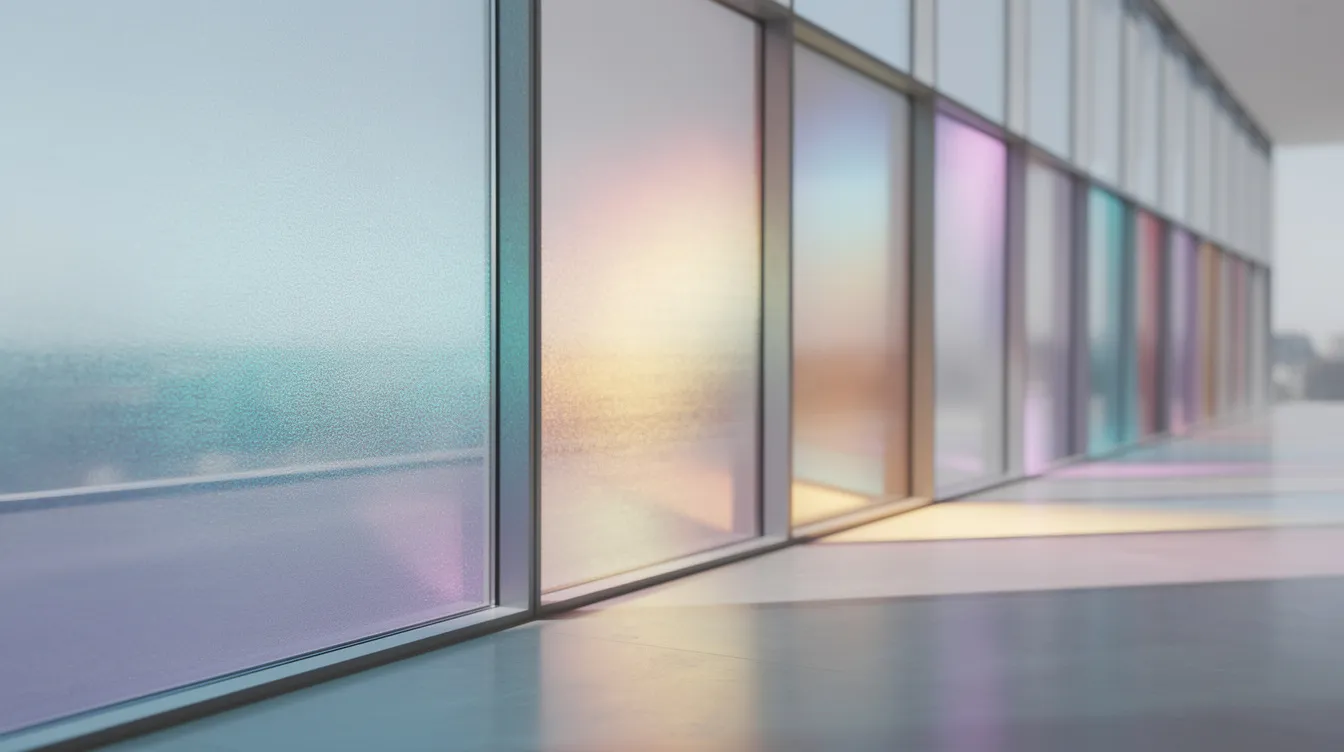
The color-shifting effect originates from thin-film interference, where multiple ultra-thin layers of dielectric and metallic oxides are deposited at precise thicknesses measured in nanometers. When light interacts with these layers, it reflects from multiple interfaces simultaneously. Certain wavelengths reinforce through constructive interference while others cancel through destructive interference, creating the characteristic color shifts.
This subtractive color mixing process means the film may reflect certain colors while transmitting others—warm colors in reflection and cool colors in transmission, or vice versa. The film consists of multiple layers that manipulate light waves, leading to dramatic shifts in hue that captivate onlookers, similar to the colors seen in butterfly wings. Natural phenomena like oil slicks on water and soap bubbles demonstrate this same principle of microscopic layering creating iridescence.
Angle dependency drives the dynamic appearance: at steeper angles of incidence, the interference pattern shifts toward shorter wavelengths, producing blue shifts. At normal incidence, longer wavelengths dominate. This explains why dichroic film appears to change color as viewers move through a space or as daylight shifts throughout the day.
Material Composition and Structure
The foundation of dichroic film consists of a PET (polyester) base layer providing structural integrity and flexibility. Multiple polyester laminations build upon this base, each contributing to the overall optical performance and durability of the finished product.
Metallic oxide coatings—including titanium dioxide, silicon dioxide, aluminum oxide, and chromium—are applied through vacuum deposition processes. These coatings determine the specific color spectrum each film produces, whether shifting through gold, magenta, cyan, or other hues across the visible wavelengths.
Adhesive systems typically use transparent acrylic formulations designed for wet application, allowing installers to adjust positioning during installation. Protective topcoats resist abrasion and UV degradation, extending the film’s functional lifespan under normal conditions. Film thickness ranges from 70-140 microns depending on variant and application requirements.
These technical characteristics translate directly into practical applications, where material composition determines which environments and glass types work best with specific film products.
Types and Specifications of Dichroic Films
Building on the material science foundation, dichroic films are available in distinct product categories designed to produce different color families and performance characteristics. Major manufacturers like 3M offer specific product lines tailored to architectural and commercial applications.
Warm Tone Films (DF-PA Blaze)
Warm tone dichroic films, exemplified by products like 3M’s DF-PA Blaze, produce a color spectrum shifting among cyan, blue, magenta, red, and gold depending on viewing angle and lighting conditions. These films create energetic, vibrant transitions that draw attention and create focal points within interior and exterior spaces.
Ideal applications include entrance lobbies seeking dramatic first impressions, retail environments requiring visual excitement, and hospitality venues where ambiance drives customer experience. The warm palette complements materials like wood, copper, and earth-toned finishes commonly found in contemporary design.
Technical specifications for warm tone films include roll widths of approximately 122 cm (48 inches) with typical roll lengths of 30 meters. Standard warranty coverage extends 5-7 years when professionally installed under manufacturer specifications in continental U.S. applications.
Cool Tone Films (DF-PA Chill)
Cool tone dichroic films, such as 3M’s DF-PA Chill line, feature a color range transitioning through blue, magenta, yellow, and gold hues. The cooler palette creates calming, sophisticated atmospheres suited to corporate environments, healthcare facilities, and residential applications where subtlety matters.
These films may require stronger illumination or specific daylight angles to manifest their full effect, making them particularly effective in spaces with abundant natural light or controlled artificial lighting. The cool tones complement modern minimalist interiors featuring whites, grays, and metallic accents.
Performance characteristics mirror warm tone products in terms of adhesive systems, application methods, and durability ratings. Both film types use acrylic adhesives designed for wet application with minimum installation temperatures around 12°C (54°F).
Technical Specifications Comparison
| Specification | Warm Tone (Blaze) | Cool Tone (Chill) |
|---|---|---|
| Film Thickness | 70-140 microns | 70-140 microns |
| Roll Width | 122 cm (48”) | 122 cm (48”) |
| Roll Length | ~30 meters | ~30 meters |
| Adhesive Type | Transparent acrylic | Transparent acrylic |
| Application Method | Wet application | Wet application |
| Warranty Period | 5-7 years | 5-7 years |
| Expected Lifespan | 5-10 years | 5-10 years |
| Min. Install Temp | 12°C (54°F) | 12°C (54°F) |
| UV protection levels vary by specific product but generally provide filtering of harmful ultraviolet wavelengths that cause fading in interior furnishings, helping mitigate UV damage and furniture fading. Temperature resistance allows for standard architectural glazing applications, though extreme heat sources should be avoided. Cleaning compatibility includes mild soap solutions and non-abrasive cloths; harsh solvents and ammonia-based cleaners should be avoided, particularly near exposed edges. |
When selecting between warm and cool tones, consider the existing color palette of the space, the quality and direction of available light, and the emotional atmosphere desired. Request samples viewed in actual installation conditions before making final selections.
Applications and Use Cases
The versatility of dichroic film extends across commercial, residential, artistic, and architectural contexts, similar to many architectural window film solutions used for building façades and interiors. Dichroic film can be applied to glass, plastic, and metal surfaces, allowing for custom shapes and creative installations that adapt to virtually any design vision. These applications extend across the design world.
Commercial and Office Environments
In commercial spaces, dichroic window film is often used in lobbies, conference rooms, and offices to enhance aesthetics and provide privacy while creating a dynamic visual effect. Entrance applications establish brand identity through distinctive color treatments that differentiate properties from competitors.
Conference room installations provide privacy solutions with aesthetic appeal, obscuring sight lines while maintaining natural light transmission, much like dedicated privacy window film options used in commercial interiors. The color-shifting properties create visual interest that elevates meeting spaces beyond standard frosted glass alternatives.
Partition systems benefit from dichroic film’s ability to define areas while maintaining spatial openness. Carnegie Mellon University’s Nano-Bio-Energy Technologies Building demonstrates this application at scale, using dichroic glass in curtain walls to create shimmering effects that vary by time of day and viewing angle.
Residential and Hospitality Projects
Shower doors and glass furniture gain dramatic visual enhancement through dichroic film application. Kitchen backsplashes transform into art pieces as light conditions shift throughout the day, creating ever-changing color displays behind cooking and preparation areas.
Hotel and restaurant venues leverage dichroic film for ambiance creation that photographs distinctively for social media while providing memorable guest experiences. Property owners also frequently combine these aesthetics with privacy, security, and decorative window film services to address performance needs in offices and public spaces. The Pluralsight headquarters in Draper, Utah showcases this approach with 2,300 feet of dichroic glass installations throughout elevator lobbies and public spaces.
Decorative panels and custom shapes allow residential designers to incorporate color-shifting effects in furniture, cabinetry, and architectural details without the expense of full dichroic glass fabrication. These features are often selected for decorative purposes.
Artistic and Cultural Installations
Dichroic film is increasingly popular in artistic projects, where it is used to enhance gallery windows and cultural landmarks, providing a unique visual experience that captivates viewers. Museums and galleries worldwide incorporate these materials for both permanent installations and temporary exhibitions. Many artists use dichroic film to create engaging visual displays.
Theater and entertainment venues use dichroic film for lighting effects and scenic elements where color-shifting properties enhance dramatic presentations. Stage designers appreciate the material’s ability to transform under changing lighting conditions, particularly when combined with technologies like smart window films for dynamic privacy and light control.
Public art installations and architectural landmarks employ dichroic film to create accessible art experiences that engage communities throughout the day, often coordinated alongside local window film and surface enhancement providers who execute complex glazing upgrades. The CUNY Science campus features triple-laminated custom-curved dichroic guardrails for a six-story interior staircase, demonstrating integration of safety requirements with artistic vision.
These diverse applications all share common installation considerations that determine long-term success and visual performance.
Installation Process and Best Practices
Professional installation is recommended for most architectural applications due to the precision required for optimal results. However, understanding the standard method helps project managers evaluate contractor capabilities and anticipate project requirements.
Step-by-Step Installation Procedure
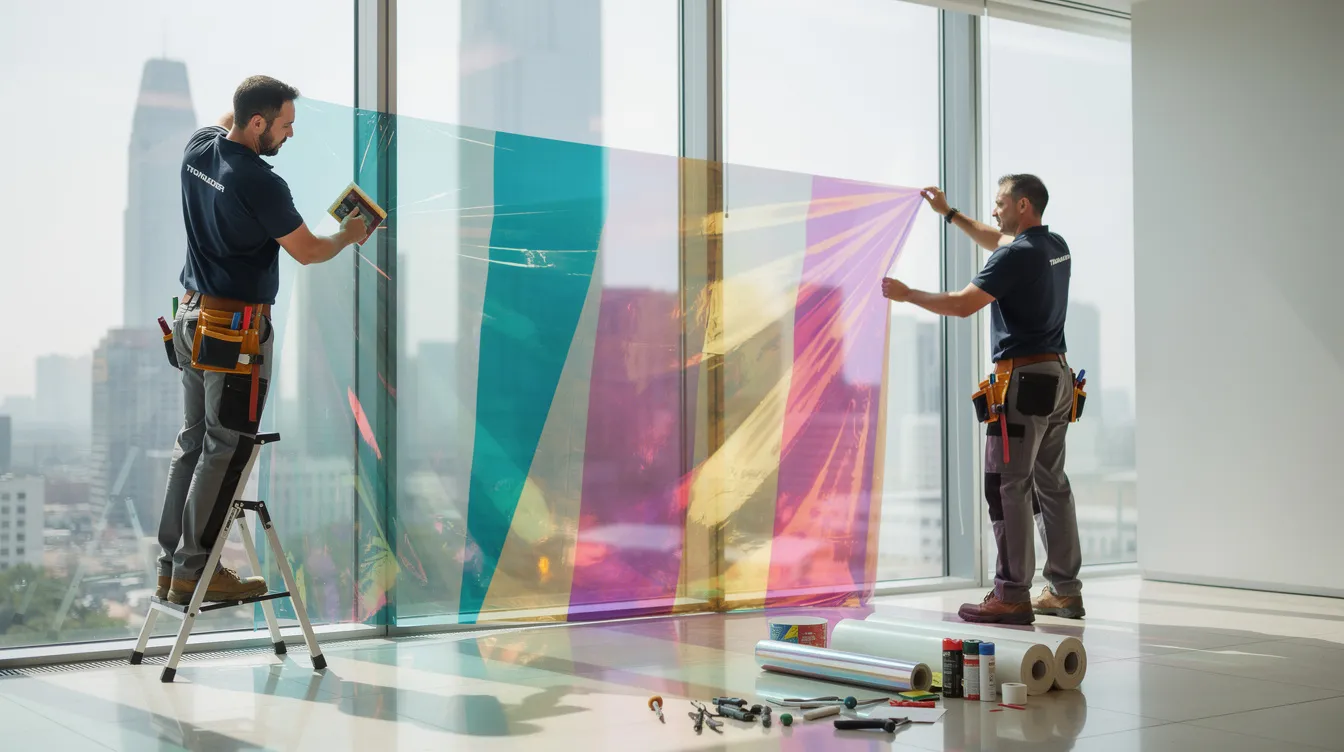
Surface preparation requires thorough cleaning to remove dust, grease, silicone residues, and lime deposits. Use alcohol or appropriate solvent cleaners, ensuring glass edges and seals are smooth. Film adhesives perform poorly on textured, frosted, or contaminated surfaces.
- Surface cleaning: Apply cleaning solution and remove all contaminants using lint-free cloths. Inspect under strong light for remaining residues. Allow sufficient time to pass before proceeding to the next step if moisture remains.
- Film measurement and cutting: Measure glass dimensions and cut film with extra margin using a sharp blade. Account for any irregular shapes or patterns required.
- Application: Spray glass surface with soapy water solution. Position film and squeegee outward from center, removing moisture and air progressively. Work systematically to avoid trapping bubbles.
- Heat activation: Apply controlled heat using a heat gun to relax film and improve adhesion at edges and corners. Avoid excessive heat that could damage adhesive systems.
- Trimming and finishing: Using a sharp blade held at low angle, trim excess film to final dimensions. Seal edges where moisture ingress poses concern.
- Quality inspection: Examine installation under various lighting conditions for bubbles, wrinkles, or adhesion failures. Address defects immediately using heat and squeegee techniques.
The installation of dichroic film is versatile, allowing it to be trimmed, shaped, and applied in various ways to adapt to unique design requirements. Dichroic film can be applied directly to existing glass surfaces, which reduces installation time and minimizes disruption compared to traditional dichroic glass that requires full panel replacement, especially when handled by professional window tinting and film installation services.
Cost Comparison Analysis
| Factor | Dichroic Film | Dichroic Glass |
|---|---|---|
| Material Cost | ~$15/sq ft | ~$150/sq ft |
| Installation Time | Hours | Days/weeks |
| Existing Glass | Can retain | Requires replacement |
| Custom Shapes | Cut on-site | Factory fabrication |
| Weight Impact | Minimal | Significant |
| Maintenance | Moderate | Low |
| Lifespan | 5-10 years | Decades |
| Producing dichroic glass requires specialized materials and manufacturing processes, making it more expensive compared to dichroic film, which offers a similar visual effect at a lower cost. ROI calculations for commercial applications should account for the shorter film lifespan against dramatically lower initial investment. |
Long-term durability considerations favor glass for permanent installations where replacement access is difficult or disruptive. Film solutions excel where design flexibility, budget constraints, or future modification potential takes priority, often in combination with solar window film for heat and glare control. Budget planning should include potential replacement costs at 7-10 year intervals for film installations.
Common Challenges and Solutions
Understanding typical issues helps prevent problems during installation and ensures long-term performance meets expectations.
Bubble Formation During Installation
Bubbles result from trapped moisture, improper surface preparation, insufficient squeegee pressure, or film applied under cold conditions that slow adhesive activation. Prevention requires thorough surface cleaning, maintaining installation temperatures above 12°C, and systematic squeegee technique working from center outward.
For existing bubbles, apply controlled heat to increase adhesive flow while re-squeegeeing affected areas. Small persistent bubbles can be released through pinhole punctures followed by smoothing. Extensive bubbling typically indicates fundamental preparation or technique issues requiring film replacement.
Color Inconsistency Across Large Surfaces
Different production batches may exhibit slight variation in coating thickness, creating visible inconsistency when panels are installed adjacent to each other. Order sufficient material from a single production lot for projects requiring seamless appearance across large surfaces. This helps prevent noticeable differences as expectations rise for visual consistency.
Installation sequencing matters: maintain consistent film orientation relative to light sources and viewer positions. Pre-installation mock-ups reveal potential variation before commitment to final installation. Quality control measures include visual inspection of all panels under standardized lighting before application.
Adhesion Issues on Textured Glass
Textured, frosted, sandblasted, or low-E coated glass surfaces may reduce adhesion quality. Surface compatibility testing using sample pieces confirms whether direct application will succeed. Primers or bonding agents can improve adhesion on challenging surfaces.
Alternative mounting methods include laminating film between glass layers during fabrication rather than surface application. Non adhesive film options exist for temporary installations or surfaces incompatible with standard adhesives, while separate security window films for impact resistance can be considered when safety and forced-entry protection are priorities. When compatibility concerns exist, specify laminated glass products with dichroic film encapsulated within the assembly.
Cleaning and Maintenance Concerns
Recommended cleaning uses mild soap solutions with soft cloths or squeegees. Avoid abrasive pads, ammonia-rich cleaners, or strong solvents that may degrade adhesives or scratch protective coatings. Power washing at close range risks edge lifting and should be avoided.
Maintenance frequency guidelines suggest visual inspection every 6-12 months for edge lift, fading, or delamination. Clean as needed based on environmental conditions and aesthetic standards. Proper ongoing care directly impacts whether installations achieve their full potential lifespan.
Conclusion and Next Steps
Dichroic film delivers the captivating color-shifting effects of traditional dichroic glass at a fraction of the cost while offering installation versatility that adapts to existing structures. With proper installation and maintenance, these films provide 5-10 years of dynamic visual performance that transforms ordinary glass into architectural features. The constant interaction of light and color creates a sense of visual action throughout the day.
Immediate next steps to pursue:
- Measure glass surfaces where dichroic film installation is being considered, noting dimensions and any irregular shapes
- Request samples from manufacturers in both warm tones and cool tones to evaluate under actual lighting conditions
- Obtain professional installation quotes from authorized dealers to ensure warranty coverage and optimal results
- Review surface compatibility for any textured, coated, or specialty glass that may require modified installation approaches
Related topics worth exploring include architectural glass films for solar control, privacy films for commercial applications, and transitional window films with photochromic technology as well as other sustainable building materials that incorporate advanced optical technologies for energy efficiency and occupant comfort.
Frequently Asked Questions
What causes the color-shifting effect in dichroic films and how durable is it?
Thin-film interference creates the color-shifting effect: multiple ultra-thin layers of metallic oxides deposited at nanometer-scale thicknesses cause light wavelengths to interfere constructively and destructively. The effect is inherently durable because it results from physical layer structure rather than dyes or pigments that fade. Under proper installation and maintenance conditions, color-shifting performance persists throughout the 5-10 year product lifespan.
Can dichroic film be applied to both interior and exterior glass surfaces?
Yes, dichroic films are designed to be applied to a variety of glass surfaces, including windows, doors, ceilings, and partitions, making them suitable for both commercial and residential applications. Exterior applications often benefit from laminating film between glass layers to protect against environmental degradation. Warranty terms may differ for exterior versus interior installations.
How does the cost of dichroic film compare to actual dichroic glass installation?
Dichroic window film typically costs around $15 per square foot, while traditional dichroic glass can cost approximately $150 per square foot—representing approximately 90% cost savings on materials alone. Additionally, dichroic film can be applied directly to existing glass surfaces, reducing installation time and costs compared to the full panel replacement often required for dichroic glass.
What maintenance is required to keep dichroic film looking optimal?
Clean with mild soap solution and soft cloths, avoiding abrasive pads, ammonia-based cleaners, or strong solvents. Conduct visual inspections every 6-12 months checking for edge lift, fading, or delamination. Address any edge issues promptly to prevent moisture ingress that accelerates degradation. Avoid power washing at close range.
Is dichroic film compatible with all types of glass including tempered and laminated?
Dichroic film works with standard float glass, clear safety glass, and laminated glass. Tempered glass poses no inherent incompatibility but should avoid situations with high thermal stress. Low-E or low emissivity coatings may affect adhesion or optical behavior; testing confirms compatibility. Textured or frosted surfaces typically require primers or alternative mounting methods for successful adhesion.
Can dichroic film be removed without damaging the underlying glass surface?
Yes, removal involves heating the film with a hair dryer or heat gun to loosen adhesive, then peeling slowly at a consistent angle. Adhesive residue typically removes with appropriate solvents and careful scraping using a razor blade held at low angle to avoid scratching. Films that have been exposed to excessive heat over time may prove more difficult to remove without residue.
What warranty coverage is available for professional dichroic film installations?
Major manufacturers like 3M offer 5-7 year warranties for products like DF-PA Blaze and Chill when installed by authorized dealers in compliance with product specifications. Coverage typically addresses material and manufacturer defects. Warranties do not cover misuse, improper installation, exposure beyond specifications, or damage from unapproved cleaning agents.
How do lighting conditions affect the appearance of dichroic film colors?
Lighting conditions dramatically impact visual appearance. The color-shifting effect varies between reflection and transmission, changes with sun angle throughout the day, differs under artificial versus natural light, and shifts based on viewer position. Overcast skies produce different effects than direct sunlight. Design planning should include mock-ups viewed under actual installation conditions to confirm the desired visual results will be achieved by a specific date.