Table of Contents
- Benefits of Commercial Decorative Window Film
- Types of Decorative Window Films for Businesses
- How Commercial Decorative Window Film Projects Work with CoolVu
- Why Choose CoolVu for Commercial Decorative Window Film Solutions
- FAQs About Commercial Decorative Window Film
- Get Started with a CoolVu Decorative Window Film Solution
Benefits of Commercial Decorative Window Film for Your Building
Commercial decorative window film transforms plain glass in offices, storefronts, clinics, schools, and government buildings into functional design elements. Rather than treating glass as a structural afterthought, decorative film turns every panel, partition, and sidelight into an opportunity to solve real problems – from privacy gaps to faded furnishings to bland, unmarked corridors.
Decorative window films offer functional benefits in addition to aesthetic improvements, and understanding those benefits helps you make a smarter investment.
Privacy Without Sacrificing Natural Light
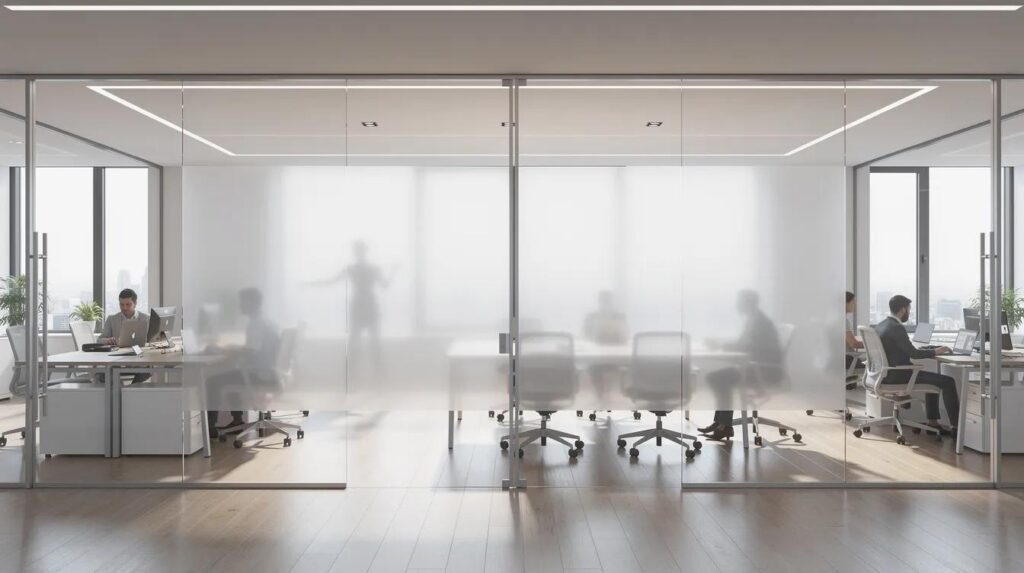
One of the most common reasons commercial properties turn to decorative film is privacy. Commercial decorative window films enhance privacy while allowing natural light to pass through – a combination that’s nearly impossible to achieve with curtains, blinds, or opaque walls.
Consider these real-world scenarios:
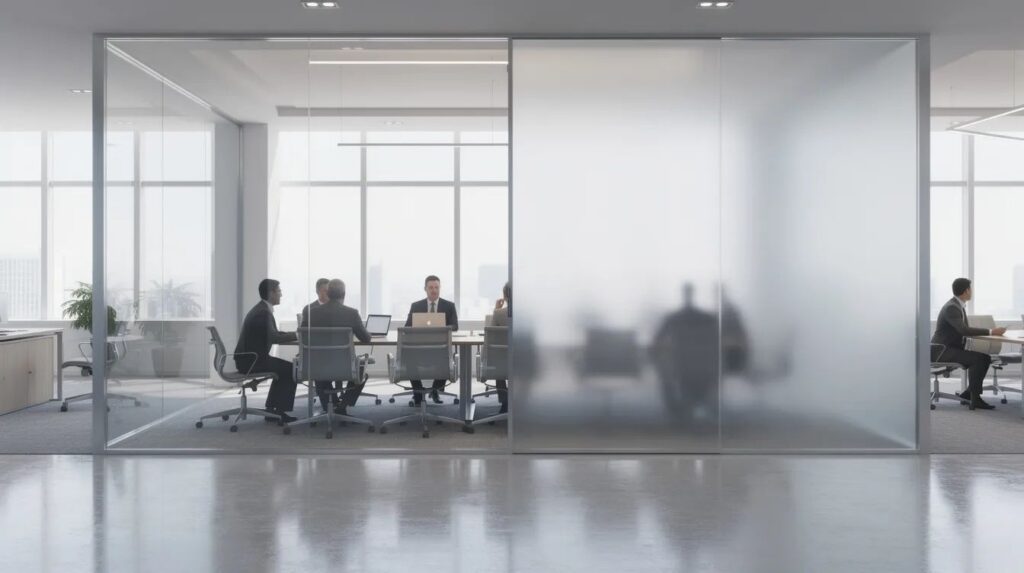
- Conference rooms along glass corridors where employees and visitors walk past during sensitive meetings. A frosted band at eye level blocks sightlines while keeping the upper portion clear for daylight.
- HR and legal offices on interior glass walls where personal conversations require discretion, but enclosed drywall rooms would feel oppressive.
- Patient intake areas in clinics where partial visual screening is needed without creating a closed-off, unwelcoming environment.
Decorative films allow natural light while enhancing privacy, which means you can keep your space bright and open while giving people the separation they need. Frosted window films enhance privacy without glass replacement, saving you the time and cost of ordering new panels.
Visual Interest and Wayfinding
Beyond privacy, decorative window films add visual interest to otherwise monotonous glass surfaces. A glass-heavy building can feel sterile without design cues to guide people and create distinct zones.
Practical examples include:
- Patterned glass bands installed along hospital corridors to help patients and visitors orient themselves by floor or wing
- Branded films in multi-tenant lobbies that distinguish suites and give each business a unique identity at the entrance
- Geometric patterns, organic textures, subtle lines, and corporate-color accents that break up large glass walls without blocking views entirely
These applications help improve customer experience in commercial spaces by making environments feel intentional, welcoming, and easy to navigate.
Energy, Comfort, and UV Protection
Many decorative window film solutions block up to 99% of UV rays, helping protect flooring, merchandise, carpets, and furnishings from fading and sun damage. Window films provide 99% UV protection, which can meaningfully extend the life of interior finishes in sun-exposed spaces.
Many decorative films include solar control properties, reducing glare and heat gain. While decorative film is not primarily a solar control product, the overlap is significant. Many decorative films enhance employee comfort by reducing screen glare, which is particularly valuable in open-plan offices where monitors face windows. Window films also reduce energy costs significantly when combined with solar-control layers, because less heat entering through glass means less load on HVAC systems.
CoolVu can combine decorative and performance window films on the same project, so you don’t have to choose between style and function.
Cost Savings vs. Replacement Glass
Decorative films are cost-effective compared to etched glass – often dramatically so. Here’s a general comparison for a typical 10-panel office frontage or a 200-square-foot conference room:
| Solution | Approximate Installed Cost (200 sq ft) |
|---|---|
| Standard frosted decorative film | $1,600 – $2,400 |
| Patterned or gradient decorative film | $2,000 – $4,000 |
| Custom printed or branded film | $3,000 – $6,000 |
| Acid-etched or sandblasted glass | $5,000 – $10,000 |
| Factory-frosted replacement glass | $8,000 – $16,000+ |
| Film can often be installed in occupied spaces overnight or on weekends with minimal disruption, which avoids the lost-productivity cost of shutting down areas for glass replacement. |
Flexibility and Reversibility
Films can be updated as branding, tenants, or layout changes occur. This is ideal for leased spaces where landlords don’t want permanent glass alterations, and for businesses that rebrand every few years. Unlike etched or sandblasted glass, decorative film is fully removable and replaceable – giving you design freedom without long-term commitment.
Safety and Code Considerations
- Some decorative films help bring large glass panels up to safety-marking visibility requirements, satisfying building codes that mandate visual cues on full-height glass doors and walls.
- Certain films improve safety by holding glass fragments together when shattered, and decorative film can be combined with security window film in high-risk or street-level installations for layered protection.
Types of Decorative Window Films for Commercial Spaces
CoolVu offers a curated range of decorative window film options, from subtle frosts to bold, custom-printed designs, suitable for virtually any commercial building type. Decorative window films come in various shades, colors, and styles, which means there’s a solution for every aesthetic goal, privacy requirement, and budget. Commercial decorative window film can be applied to various glass surfaces, including doors, sidelights, interior partitions, curtain walls, and storefront glazing.
Textured and Patterned Decorative Films
Patterned and textured films add visual interest to glass surfaces while providing varying levels of privacy. Popular options in 2026 include:
- Linen and woven textures that soften glass without fully obscuring views
- Dot, stripe, and geometric patterns that create semi-private partitions
- Gradient fades that transition smoothly from opaque to translucent to clear
- Prism or fluted-glass effects that mimic specialty architectural glass
These films work well in open-plan offices, coworking spaces, banks, universities, and law firms seeking semi-private glass partitions with visual interest. The key advantage: they can mimic expensive specialty glass at a fraction of the price, keeping a project within budget while still looking polished and intentional.
Frosted and Etched Glass Films
Frosted window film recreates the look of acid-etched glass on existing clear glass, and it’s one of the most widely used decorative films in commercial settings. Frosted window films provide privacy without costly glass replacement, making them a practical first step for any building owner or property manager.
Common applications include:
- Conference rooms and executive offices where meeting content must stay private
- Restroom doors and sidelights in public-facing buildings
- Lab and clinic doors in healthcare facilities
- Classroom sidelights in schools and universities
Options range from full-coverage frost to horizontal or vertical bands, logos cut out of frost (so clear glass shows a logo shape against a frosted background), and gradient frosts that fade from opaque to clear. Decorative films can enhance the aesthetic appeal of interior office spaces simply by replacing bare glass with a more refined, finished look.
Colored and Decorative Graphic Films
For spaces that call for bolder design moves, colored and decorative graphic films deliver:
- Solid-color films in brand tones for retail or franchise environments
- Translucent colored films that cast tinted light in creative studios, hospitality spaces, and entertainment venues
- Stained-glass-style decorative films for churches, historic buildings, and boutique hotels
Decorative films are a popular choice in hospitality for creating intimate spaces – think restaurant partitions, spa dividers, or hotel meeting room glass where ambiance matters as much as privacy. Colored films can also be used to zone departments within a corporate office (blue for HR, green for finance, red for R&D), maintaining a cohesive aesthetic while giving each area its own identity.
Custom Printed and Branded Window Film Solutions
Custom graphics and branded films integrate company logos and colors directly onto glass. CoolVu can produce logos, typography, environmental graphics, and full-wall murals printed on film and applied to glass surfaces as part of its broader window film installation services.
Real-world use cases include:
- Retail storefront branding displayed across entrance glass, refreshed seasonally or with each campaign
- Environmental branding in a corporate headquarters lobby showcasing company history, mission statements, or product imagery on interior glass walls
- Franchise rollouts where dozens of locations receive identical branded glass treatments for consistency
Decorative films are commonly used in corporate offices and retail stores for exactly this reason – they turn every glass surface into a branding opportunity without permanent alteration.
Specialty Privacy and Gradient Films
Gradient films transition from opaque to transparent for partial privacy, making them ideal for reception desks, medical waiting areas, and check-in counters where staff need visual screening at seated eye level but want to maintain an open, approachable feel above.
Dual-purpose decorative and privacy films serve wellness centers, spas, and hotel meeting rooms where the design needs to feel calming and private simultaneously.
Choosing the Right Decorative Film
Selecting the right film comes down to a few key considerations:
- Sightlines: Where do people stand, sit, and walk? Privacy needs differ at seated eye level versus standing height.
- Daylight goals: Spaces that depend on natural light should lean toward higher-VLT films (70%+ visible light transmission).
- Brand standards: Color accuracy, logo placement, and pattern scale all need to align with corporate guidelines.
- Maintenance: High-traffic areas benefit from films with scratch-resistant hard coats.
CoolVu provides physical samples and digital mockups so you can evaluate options on-site before committing. Seeing a film on your actual glass – with your lighting, your sightlines, your surroundings – is the most reliable way to make a confident decision.
How Commercial Decorative Window Film Projects Work with CoolVu
CoolVu follows a clear, consultative process that’s ideal for facility managers, architects, and business owners who need predictable timelines and professional installation. Here’s how a typical project moves from idea to finished glass.
Initial Consultation and Site Assessment
A local CoolVu franchise partner visits the commercial building, reviews existing glass types (doors, sidelights, interior partitions, curtain walls), and listens to your privacy, branding, and safety goals, whether you’re working with a national portfolio or a single location like CoolVu of Northeast Columbus. Expert guidance is crucial for selecting window film types, because glass thickness, tempering, coatings, and frame styles all affect which films will perform best.
During this visit, the team gathers:
- Precise measurements of every panel to be filmed
- Photos of glass conditions, lighting, and surrounding finishes
- Any relevant building code requirements or landlord restrictions
- Notes on accessibility (heights, scaffolding needs, security clearances)
Design, Film Selection, and Mockup
CoolVu provides physical samples and, when helpful, digital mockups laid over photos of the actual space. This step lets stakeholders – owners, designers, tenants – compare decorative window film patterns, frost densities, and color options side by side.
Custom decorative films can be tailored to specific business needs, which means if you have a unique pattern, a Pantone color match, or a full-wall mural concept, the design team can develop it for production. For standard films (frosts, textures, gradients), selection from the existing catalog is usually fast and straightforward.
Quoting and Scheduling
Quotes typically break out materials, installation labor, and any design or custom-printing costs so budgeting is transparent. No hidden fees or vague line items.
Typical lead times:
| Film Type | Lead Time |
|---|---|
| Standard frost or texture | 1–2 weeks |
| Patterned or gradient | 1–3 weeks |
| Custom printed or branded | 2–4 weeks |
| These timelines can vary depending on project scale, glass accessibility, and design complexity. |
Professional Installation
Professional installation ensures optimal fit for window films. CoolVu’s trained installers follow a systematic workflow:
- Surface cleaning – removing dust, oils, and residue from glass
- Solution application – a positioning solution allows precise placement before the film bonds
- Film placement – aligning patterns, logos, or frost edges to exact measurements
- Trimming – cutting film precisely to frame edges
- Squeegeeing – pressing out air bubbles and excess solution for a smooth, clean finish
Installers are trained to work in occupied spaces, coordinate with facility teams, and minimize disruption. Many commercial installations happen after hours or on weekends so your employees, customers, and tenants experience zero downtime. Professional services can enhance aesthetic and functional aspects that DIY approaches simply can’t match – alignment, edge sealing, and bubble-free finishes require experience and proper tools.
Durability, Maintenance, and Warranty
Most commercial decorative films are designed for multi-year performance. Indoor decorative films typically last 7–10 years or more when properly installed and maintained. Some installations in low-sun interior locations exceed that range comfortably.
Simple care keeps films looking new:
- Clean with non-abrasive cleansers and soft cloths
- Avoid ammonia, bleach, or abrasive pads unless the film manufacturer specifies otherwise
- Inspect edges periodically for peeling, especially in high-humidity areas
If a section is damaged – a scratch from furniture, a peel from impact – only the affected panel needs replacement, not the entire glass wall. Many decorative films carry manufacturer warranties of 7–15 years for indoor use.
Integration with Other Window Film Solutions
CoolVu can combine decorative films with solar control, security, or anti-graffiti window film in a single project. For example, you might install decorative privacy film on interior partitions while adding security film on street-facing windows to protect against break-ins or storm damage. This layered approach lets you address multiple needs without multiple vendors, and can even incorporate smart window film technology where on-demand privacy or projection surfaces are desired.
Decorative privacy films are easy to apply and remove for branding updates or design changes, so as your business evolves, your glass can evolve with it.
Why Choose CoolVu for Commercial Decorative Window Film
CoolVu is a specialized national provider of window film and architectural surface solutions with deep experience across retail, corporate, healthcare, education, and government sectors. When you’re evaluating who should handle your commercial decorative window film project, here’s what sets CoolVu apart.
Expertise and Product Range
CoolVu offers more than decorative films. The full suite includes solar control, safety, security, and privacy window film solutions, plus architectural surface finishes, printed graphics, and murals, backed by a nationally recognized glass and surface solutions team. This breadth matters because most commercial buildings need more than one type of film solution. Working with a single provider who understands how different products interact – and who can design a cohesive package – saves time, money, and coordination headaches.
These films are utilized in healthcare facilities to ensure patient confidentiality, in schools to manage sightlines into classrooms, and in corporate offices to reinforce brand identity. CoolVu has worked across all of these verticals.
Professional Installation and Consistent Quality
CoolVu’s trained franchise installers follow standardized processes and use tested, commercial-grade films. Whether it’s a single suite or a multi-story office tower, the installation quality stays consistent, following the same customer-focused window tinting and installation process used by local CoolVu franchisees. Projects completed between 2020 and 2026 span everything from small clinic retrofits to large-scale franchise rollouts across dozens of locations.
Benefits for Every Stakeholder
| Stakeholder | What CoolVu Delivers |
|---|---|
| Property managers | Streamlined communication, clear timelines, minimal disruption to tenants |
| Architects & designers | Design support, samples for finish schedules, help meeting aesthetic and performance specs |
| Tenants | Branded, private, comfortable workspaces without permanent alterations to the base building |
| Business owners | A fast, budget-friendly way to upgrade glass that can improve customer experience and employee comfort |
Franchise Model and Local Support
CoolVu’s franchise model provides local accountability and service, backed by national resources, training, and product access. Your local CoolVu partner knows the building codes, climate considerations, and vendor landscape in your area, whether you’re working with a provider like CoolVu of Northern Virginia or another regional team. This structure also enables fast response times for both small updates and large rollouts across multiple locations.
Long-Term Partnership
Many CoolVu clients return when they update branding, expand floors, or open new locations, partnering with regional teams such as CoolVu of North Milwaukee for ongoing upgrades. The relationship doesn’t end at installation – it’s an ongoing partnership for window film solutions, architectural surfaces, and future upgrades. When your needs change, your film can change with you.
FAQs About Commercial Decorative Window Film
These FAQs address common questions facility managers, business owners, and designers ask when considering decorative window films for their properties.
How long does commercial decorative window film typically last?
Indoor decorative films typically last 7–10 years or more, depending on sun exposure, humidity, and cleaning practices. Films installed on interior partitions away from direct sunlight often exceed 10 years. Exterior decorative graphics generally have shorter lifespans unless they’re rated for outdoor durability. Proper installation and gentle cleaning with non-abrasive products are the two biggest factors in maximizing film life.
Can decorative window film be removed or changed later?
Yes. Decorative films are designed to be removable by trained installers. The process involves heating the film to soften the adhesive, peeling it away, and cleaning any residue from the glass. This is one of the biggest advantages over permanent treatments like etched or sandblasted glass – when branding changes, tenants turn over, or you simply want a new look, films can be swapped without replacing or damaging the glass underneath.
Will decorative window film make my office too dark?
Most decorative films are engineered to transmit a significant amount of daylight. Standard frosted films typically allow 70–90% of visible light through while diffusing it to reduce direct views. Gradient films and partial-coverage designs (bands, patterns with clear areas) preserve even more brightness. CoolVu can recommend options that balance your privacy needs with your natural light goals – the right film shouldn’t make a space feel dim.
Is decorative window film suitable for healthcare and educational buildings?
Absolutely. In healthcare settings, decorative film helps address patient confidentiality requirements by screening exam rooms, intake areas, and counseling offices from hallway views. In schools, films on classroom sidelights and lab doors manage visibility while keeping corridors well-lit. Both environments benefit from film’s ability to create a welcoming, open atmosphere while still providing the private separation that people expect.
Can I include my logo or custom artwork in decorative window film?
CoolVu offers custom printing and contour-cutting capabilities for logos, typography, environmental graphics, and full murals. The process typically starts with submitting vector artwork (AI, EPS, or high-resolution PDF files), which the team prepares for production. Common use cases include branded glass at reception areas, conference room names or department identifiers cut from frost film, and franchise-wide rollouts where every location receives identical branded glass treatments.
How much does commercial decorative window film cost?
Cost depends on several factors:
- Film type: Standard frost is the most affordable; custom printed and branded films cost more
- Coverage area: Larger projects often benefit from volume pricing
- Glass accessibility: High windows or difficult-to-reach panels may require lifts or scaffolding
- Project location: Labor rates vary by market
- Design complexity: Full-color graphics and intricate patterns require more production time
As a general range, standard decorative films run roughly $8–$12 per square foot installed, while custom graphics and branded designs can reach $15–$30+ per square foot. The best way to get accurate pricing for your specific project is to contact CoolVu and request a tailored quote based on your space, goals, and glass inventory.
Get Started with a CoolVu Decorative Window Film Solution
If you’re ready to reimagine your glass, CoolVu’s commercial decorative window film solutions can help you move from concept to finished installation faster than you might expect.
Before you reach out, it helps to gather a few basics:
- Approximate number and size of glass panels you’d like to film
- Your primary goals – whether that’s to increase privacy, add branding, refresh the design, or meet safety marking needs
- Any upcoming renovation timelines or lease deadlines that affect scheduling
Taking the next step is simple. Contact CoolVu to schedule a free on-site consultation with a local franchise partner. Many projects begin with a small test area or pilot space before rolling out decorative window films across an entire building or portfolio – so you can see and feel the results before committing to a full-scale install.
Decorative window film is one of the fastest, most cost-effective ways to transform a commercial building’s interior glass without construction. Whether you need frosted privacy for a single conference room or a branded glass package across a national portfolio, CoolVu is built to deliver as your long-term partner for window film solutions, architectural surfaces, and every upgrade that follows.
Contact CoolVu today to get your free estimate and see what your glass can become.