
Table of Contents
- Turf Guard Film Basics
- Understanding Turf Guard Window Film
- Benefits and Applications of Turf Guard Film
- Installation Process and Product Specifications
- Common Turf Melting Problems and Solutions
- Conclusion and Next Steps
- Frequently Asked Questions
Turf Guard Film Basics
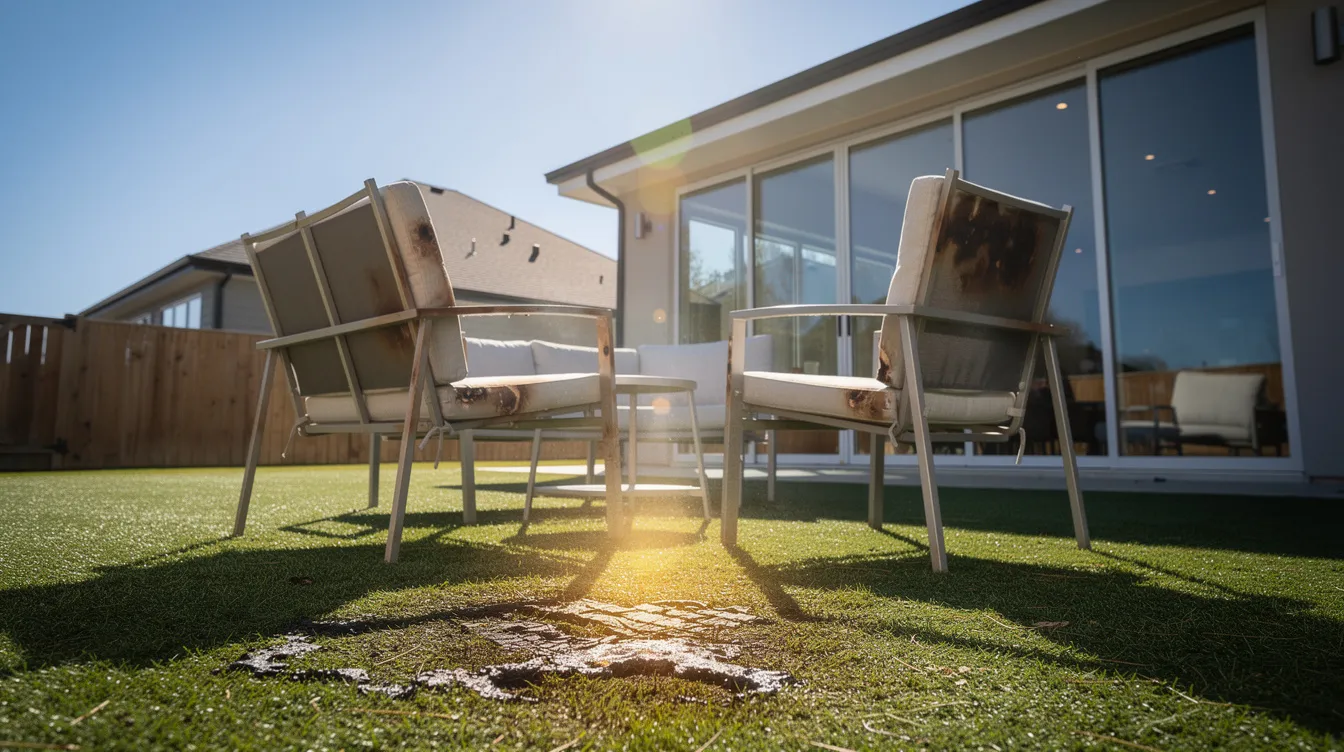
Turf Guard window film is an exterior-applied, perforated film designed to stop artificial turf from melting by breaking up and diffusing concentrated sunlight. It is specifically designed to be installed on the exterior of modern energy-efficient (Low-E) windows to prevent the “magnifying glass effect” that can melt artificial turf, vinyl siding, and outdoor furniture. This great product helps homeowners address recurring heat damage issues caused by reflective glass.
This guide covers everything homeowners need to know about protecting their synthetic turf investment from window reflections, including installation options, product specifications, and practical solutions for common heat damage scenarios. Whether you’ve recently had turf installed in Las Vegas or another sunny climate, or you’re planning an artificial grass lawn near west facing windows, understanding how to protect turf from the sun’s damaging reflection is essential for maintaining your outdoor space.
Turf Guard window film is a specialized, anti-reflective exterior film designed to prevent artificial turf, natural grass, and vinyl siding from melting or burning due to concentrated sunlight reflections. The film effectively stops the melting of synthetic grass, vinyl siding, patio furniture, and car trim by scattering reflected sunlight instead of allowing it to focus.
Key outcomes you’ll gain from this guide:
- Understanding how window reflections cause artificial turf melting and damage
- Knowledge of heat-blocking and UV protection capabilities that protect your lawn
- Clear comparison of Turf Guard versus Turf Shield window film and Reflect Defense window film options
- Step-by-step guidance for easy installation on your home or business’s windows
- Actionable solutions for specific reflection problems affecting your outdoor environment
Understanding Turf Guard Window Film
Turf Guard window film functions as a heat-reducing protective screen for Low-E and energy efficient windows that would otherwise create dangerous hot spots on nearby surfaces. Unlike standard window films that primarily block light from entering a building, this solution specifically addresses the concentrated sun reflection that bounces off reflective windows onto grass, siding, and other materials exposed to the elements.
The critical difference lies in the perforated film design. Standard tinted films can actually worsen reflection problems by creating mirror-like surfaces. Turf Guard’s perforated structure diffuses reflected sunlight across many micro-streams, eliminating the focused heat concentration that causes damage. This makes it the intended solution for homeowners dealing with artificial turf melting near their house.
How Window Reflection Damages Artificial Turf
Low-E windows can reflect sunlight in a way that concentrates heat onto artificial turf, potentially causing it to melt or warp. The reflective coating on Low-E windows can act like a mirror, intensifying sunlight and creating hot spots that can reach temperatures above 200°F, which is sufficient to damage synthetic turf.
The concentrated sunlight reflected from windows can heat artificial turf to temperatures above 200°F, leading to permanent damage. This occurs because double- or triple-pane windows may bow slightly, creating concave surfaces that focus the reflected sun like a weak magnifying glass. When direct sunlight hits these surfaces at certain angles, the resulting window glare creates invisible heat lanes across your lawn.
Artificial turf is made from plastics like polyethylene or nylon, which have a melting point that can be easily exceeded by the concentrated solar reflections from Low-E windows, leading to visible damage such as melted spots and discoloration. The melting point of artificial turf, typically made from polyethylene or nylon, is around 175 to 200 degrees Fahrenheit, making it vulnerable to damage from reflected sunlight. As more homes use low e glass in construction, incidents of turf from melting have increased significantly, particularly in sunny climates.
The Technology Behind Turf Guard Film
The film reduces solar heat gain by diffusing sunlight before it passes through or reflects off the glass, helping to maintain a consistent indoor temperature. This diffusion technology works by scattering light across the perforated surface rather than allowing it to concentrate into damaging beams, and can be integrated with regional window film installation services in Sacramento or similar markets for full-property protection.
Turf Guard window film provides energy efficiency and UV protection by diffusing reflected sunlight and blocking up to 99% of UV rays. It prevents high-heat reflections that damage artificial grass, siding, and patio furniture while reducing interior glare and lowering solar heat gain. Similar multi-purpose privacy, security, and decorative window films can be used inside to address different performance needs. Homeowners looking for indoor heat and glare reduction may also benefit from solar window tint solutions. These films can block up to 99% of harmful UV rays, helping prevent interior fading of furniture and flooring while reducing indoor glare.
The perforated design of Turf Guard window film allows for good visibility while blocking exterior glare. Homeowners maintain their view and natural light while the film safeguards outdoor assets from UV-related deterioration and fading. Some versions of the film are designed to allow specific light spectrums (like UV-C) through if needed for plant growth, while still blocking the most damaging rays.
This technology provides the foundation for preventing artificial grass from melting and protecting various outdoor materials, which leads to understanding the full range of applications and benefits available.
Benefits and Applications of Turf Guard Film
Building on the heat-diffusion technology, Turf Guard delivers measurable protection across multiple scenarios while maintaining the aesthetic and functional qualities homeowners expect from their windows and outdoor spaces.
Protection for Different Turf Types
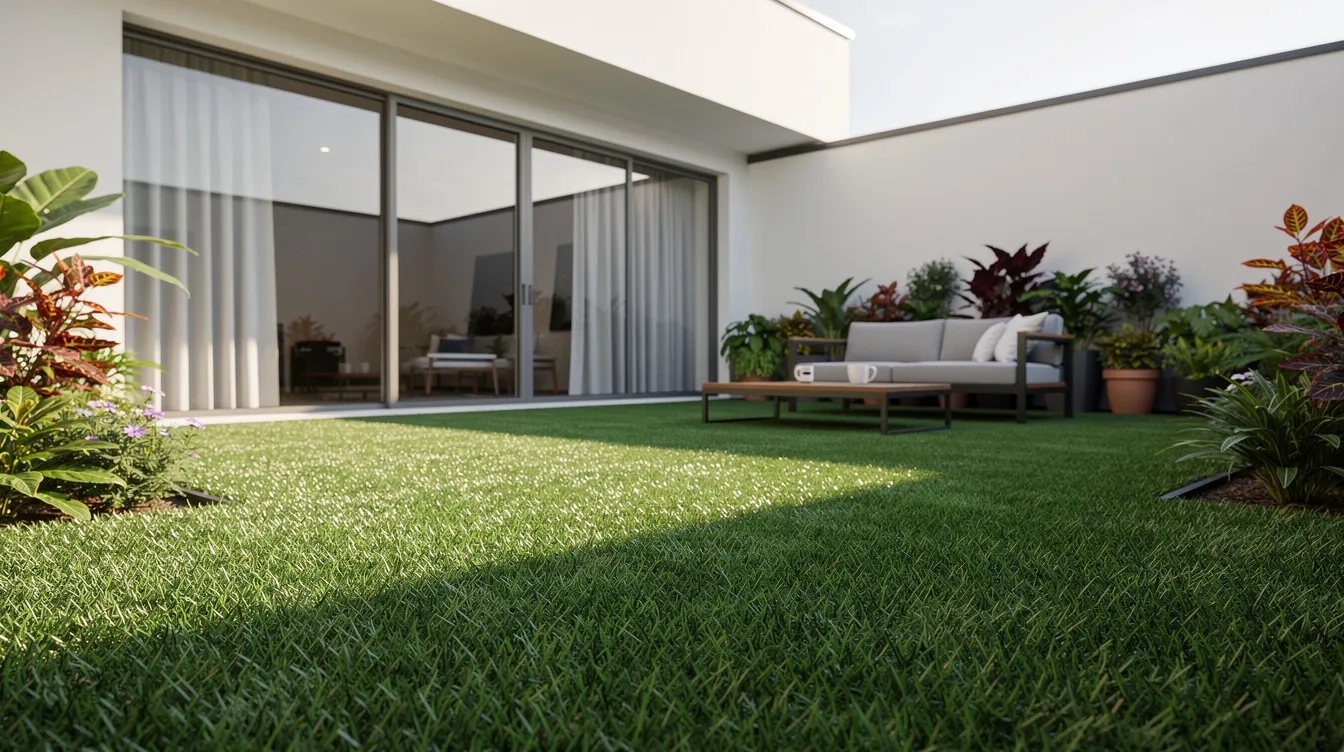
Window films can significantly reduce the damaging effects of sunlight reflections from windows, which can cause artificial turf to melt and warp. Using window films designed to diffuse sunlight can help maintain the integrity of artificial grass by preventing concentrated heat from reaching it.
Protection extends across:
- Artificial grass lawns – Standard polyethylene turf commonly installed in residential yards receives full protection from high temperatures generated by window reflections
- Synthetic putting greens – Higher-density nylon-blended surfaces benefit despite their greater heat tolerance, as reflections can still exceed even elevated temperature thresholds
- Sports turf installations – Athletic surfaces near buildings with large glass areas avoid the burning and warping that would require costly section replacement
- Real grass and natural lawn areas – Natural grass can also suffer from concentrated heat, experiencing brown spots and die-off in reflection zones
The film works effectively regardless of turf quality grade, though higher-grade materials with better heat tolerance provide an additional margin of safety when combined with window film protection.
Energy Efficiency and Cost Savings
By minimizing heat buildup, it reduces the strain on air conditioning systems, leading to lower energy consumption and utility bills. Similar solar window film solutions are often used to cut glare and heat indoors, while Turf Guard does not interfere with the thermal performance of existing energy-efficient windows, continuing to keep interiors cool while stopping exterior heat damage.
Cost savings calculations favor window film decisively:
- Window film rolls cost approximately $250 per roll in various sizes
- Turf replacement runs $5-25 per square foot plus labor
- A single melted section often costs more to repair than treating all problem windows
- Preventing further damage protects your initial turf investment
Most turf warranties explicitly exclude damage caused by window glare or reflective heat. Installing protective film helps avoid warranty conflicts and eliminates repeat damage expenses, and many homeowners also consider security window films to strengthen glass or smart window films that provide on-demand privacy as part of a broader window upgrade.
Aesthetic and Functional Benefits
Clear versions of the film are often approved by Homeowners Associations because they don’t significantly alter the appearance of the glass. The screen-like material maintains excellent visibility from inside while diffusing problematic reflections outside, while interior privacy and decorative window films can be used when a frosted or patterned look is also desired.
Key aesthetic advantages include:
- Minimal change to window appearance from both interior and exterior views
- No darkening of rooms or reduction in light transmission
- Natural light preservation for plants and living spaces
- No impact on curb appeal or property value
The film integrates seamlessly with existing architecture, which brings us to the practical considerations of getting it installed on your home or business’s windows.
Installation Process and Product Specifications
It is typically an exterior-applied DIY solution that is safe for all glass types because it does not increase solar heat absorption within the window itself. This safety factor makes it suitable for homeowners who want to handle installation themselves or for those who prefer professional help, and it can be paired with interior transitional window films that adapt to sunlight for added comfort and glare control.
Professional Installation Process
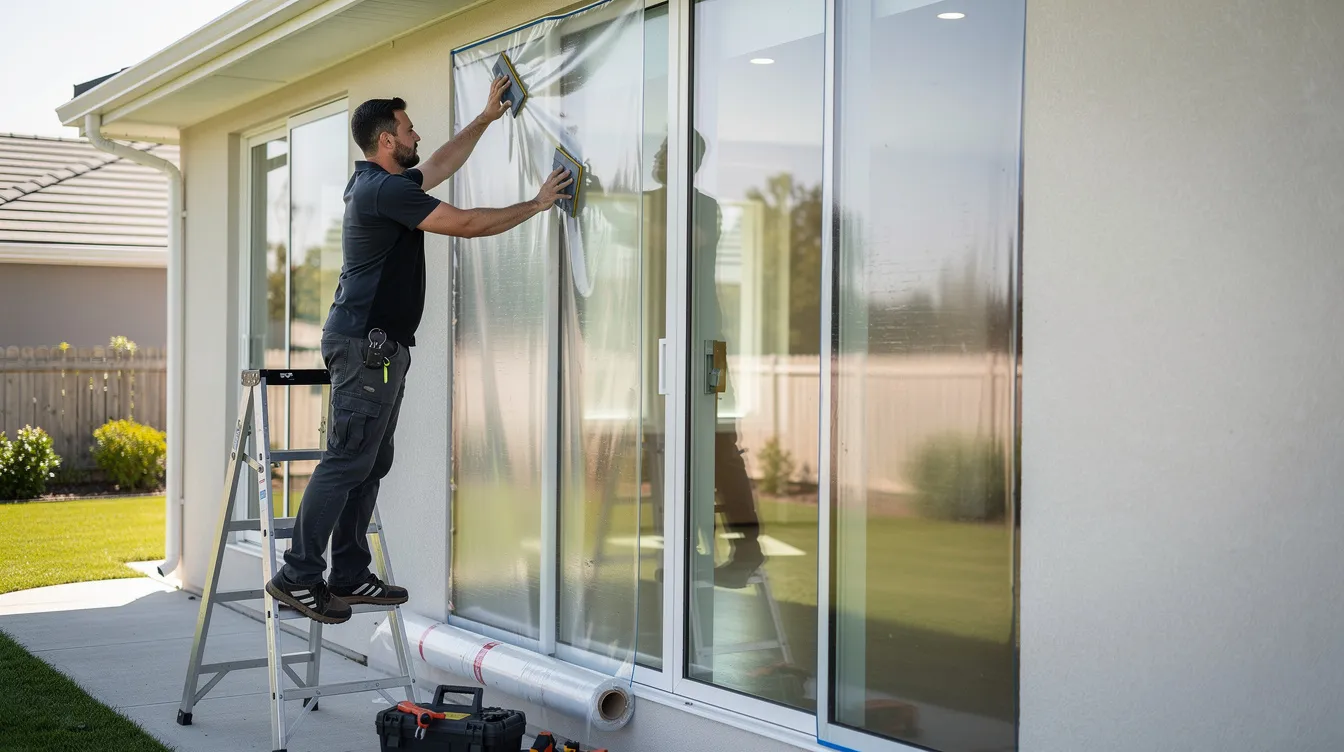
Professional installation is recommended for large windows, second-story applications, or situations requiring precise optical quality, and many homeowners choose professional window tinting and film installation services for these projects. The process follows these steps:
- Window assessment – Technicians identify which windows cause reflections using temperature mapping and visual observation throughout the day
- Surface preparation – Exterior glass receives thorough cleaning with appropriate non-abrasive solutions to ensure proper adhesive contact
- Film application – Material is aligned carefully with edge measurements, smoothed to eliminate bubbles, and trimmed to exact dimensions
- Quality inspection – Installation is verified from both inside and outside for consistency, with any lifting or shrinkage addressed immediately
For DIY installation, rolls come in various length options (5 ft, 10 ft, 25 ft, 50 ft) with complete instructions. Homeowners familiar with architectural window films for homes and buildings will find the process similar, and most complete standard window installations in approximately one hour per window.
Product Comparison Table
When selecting protection for your artificial grass and outdoor surfaces, several defense window film products offer different specifications:
| Criterion | Turf Guard | Turf Shield Window Film | Reflect Defense Window Film |
|---|---|---|---|
| Heat Reduction | High – complete hot spot elimination in 150,000+ sq ft installed | Moderate to High | Moderate to High |
| UV Protection | Up to 99% UV blocking | Varies by product line | Varies by product line |
| Cost | ~$250 per roll | Varies by size/type | Varies by size/type |
| Installation | DIY-friendly exterior application | Professional recommended | DIY and professional options |
| Color Options | Clear and white versions | Multiple options available | Clear, black, white versions |
| Visibility Impact | Minimal – maintains natural light | Varies by product | Varies by color selection |
| Glass Compatibility | All types – no thermal absorption increase | Most types | Most types |
| Warranty Coverage | Contact manufacturer | Varies | Varies |
Turf Guard has demonstrated positive feedback with over 150,000 square feet installed across the US and Canada, with complete problem resolution reported in all documented cases. The choice between products depends on specific window configurations, budget, and aesthetic preferences for your particular home or business’s windows environment. Review available product specifications and current stock before making a final purchasing decision.
Common Turf Melting Problems and Solutions
To prevent turf from melting, homeowners can use exterior solar screens, window films, or strategically plant landscaping to provide shade and block harmful reflections from windows. Different window configurations create distinct challenges requiring targeted approaches.
Second-Story Window Reflections
Upper floor windows often direct intense glare over rooflines directly onto ground-level turf, creating severe hot spots. The angle and unobstructed path make these reflections particularly damaging.
Solution: Apply Turf Guard film to all second-story windows facing turf areas. The exterior application intercepts reflections before they travel downward, eliminating the concentrated heat entirely. For homes with two windows or more on upper floors, prioritize those with southern or western exposure first.
Large Sliding Door Heat Damage
Expansive glass doors create wide reflection bands that shift throughout the day, affecting large turf sections. The size of these glass surfaces magnifies both the intensity and coverage area of damaging heat.
Solution: Install perforated film across the entire door surface, including fixed panels. For very large installations, consider combining film with exterior shade structures for comprehensive protection. The film maintains the view and light transmission that makes sliding doors desirable while stopping sun damage.
Multiple Window Reflection Patterns
Homes with several windows facing turf create overlapping heat zones that shift with the sun’s arc. These complex patterns can damage turf in unpredictable locations throughout the day.
Solution: Map reflection paths using temperature measurements or visual observation during different sun positions. Apply film systematically to all windows contributing to the problem, starting with west facing windows that create afternoon heat concentration. A comprehensive approach using durable exterior film on all contributing windows provides complete protection, and can complement interior solar window film used for glare and heat control.
Addressing these specific scenarios leads to an overall protection strategy that preserves your outdoor investment.
Conclusion and Next Steps
Artificial turf can melt due to concentrated sunlight reflected from windows, especially energy-efficient low-E glass, which can intensify sunlight and create hotspots that exceed the melting point of turf materials. Turf Guard window film provides the most direct and effective solution by addressing the source of the problem rather than attempting to modify the turf itself.
The technology works great for protecting synthetic turf, vinyl siding, patio furniture, and other materials exposed to window reflections. With proper installation, the film eliminates heat damage while maintaining natural light, window visibility, and energy efficiency. As a stop turf melting solution, it provides long-term protection without altering the appearance of your windows.
Immediate steps to protect your turf:
- Map hot spots – Use a temperature gun or visual inspection during peak sun hours to identify which windows cause reflections onto your turf
- Measure affected windows – Record dimensions of all windows requiring treatment, including height, width, and total glass area
- Check HOA requirements – Verify that clear window film is permitted in your community (most associations approve non-tinted options)
- Select appropriate product – Choose between DIY installation or professional service based on window accessibility and your comfort level
- Schedule installation – Plan installation before peak summer temperatures to prevent further damage
Related topics worth exploring include selecting heat-resistant turf infill materials, designing landscape shade structures for additional protection, and understanding window film warranty coverage for long-term maintenance planning.
Frequently Asked Questions
How long does Turf Guard window film last?
The film is designed for durable outdoor use and provides long-term protection when properly installed. While specific warranty periods vary by product, exterior-rated films typically perform effectively for several years depending on climate exposure and maintenance. The product has demonstrated complete effectiveness across over 150,000 square feet of installations.
Can I install Turf Guard film myself?
Yes. The product is marketed as a DIY solution with rolls available in multiple sizes (5 ft, 10 ft, 25 ft, 50 ft) and included instructions. Most homeowners complete easy installation on standard windows within about an hour. Professional installation is recommended for large, high, or difficult-to-reach windows.
Will the film affect my window warranty?
Turf Guard does not interfere with the thermal performance of existing energy-efficient windows and does not increase solar heat absorption within the glass. Because it’s an exterior-applied screen rather than an adhesive tint, it generally doesn’t void window warranties. However, verify with your specific window manufacturer before installation.
How much heat reduction can I expect?
The film diffuses concentrated reflections sufficiently to drop maximum surface temperatures below the 175-200°F threshold where turf materials begin melting. Users report complete elimination of hot spots and burning damage. The exact temperature reduction depends on original reflection intensity and window configuration.
Does Turf Guard film work on all window types?
It is safe for all glass types because it does not increase solar heat absorption within the window itself. The film works effectively on Low-E windows, standard double-pane glass, and most modern energy efficient windows. The exterior application method makes it compatible with virtually any residential or commercial glazing.
What’s the cost difference between film and turf replacement?
Window film rolls cost approximately $250 each in various sizes, while turf replacement costs $5-25 per square foot plus professional labor. For a typical damaged section of 50-100 square feet, replacement costs can easily exceed $500-2,500. Treating problem windows with film usually costs less than a single repair and prevents all future damage.
Can the film be removed if needed?
Yes, exterior perforated films can be removed. The adhesive used allows for careful removal without damaging the glass surface. If removal proves difficult or you’re concerned about residue, professional removal services can ensure clean glass restoration.
How quickly will I see results after installation?
Results are immediate. Once the film is applied, the diffused reflection eliminates hot spots during the very next sunny period. Within hours of installation on a sunny day, previously damaged areas stop receiving concentrated heat. Existing damage won’t reverse, but no further damage will occur to your artificial grass or other affected materials.