Table of Contents
- How Commercial Anti Glare Window Film Works
- Key Benefits of Anti Glare Window Film for Commercial Buildings
- Choosing the Right Anti Glare Window Film for Your Commercial Building
- Installation Process, Timelines, and What to Expect With CoolVu
- FAQs About Commercial Anti Glare Window Films
- Why Choose CoolVu for Commercial Anti Glare Window Film
Why Commercial Anti-Glare Window Film Matters in 2026
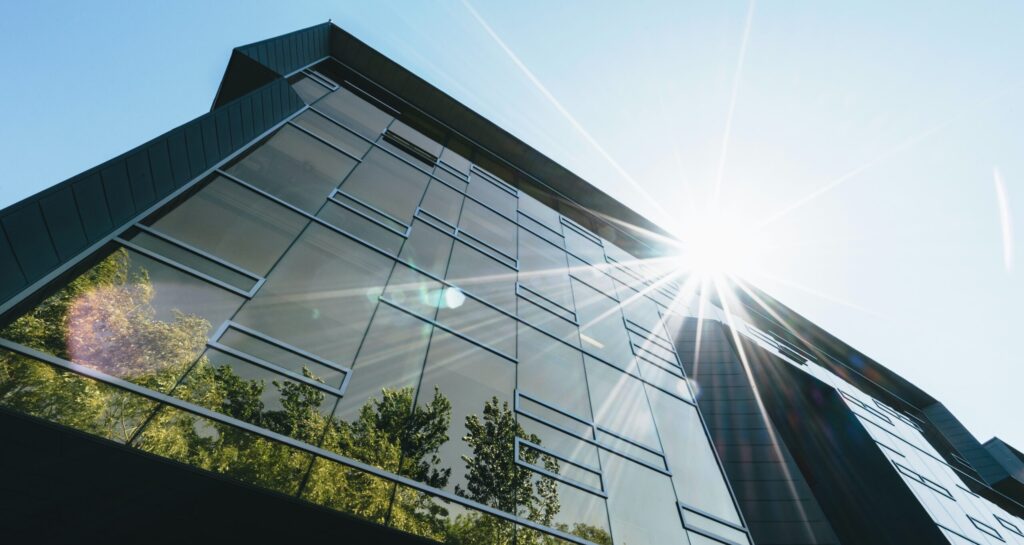
Modern commercial buildings rely on expansive glass facades to bring in daylight, but that same glass often creates punishing glare, uneven indoor temperatures, and fading interiors. In offices where hybrid workers spend hours on laptops and dual monitors, screen glare and harsh light have become daily productivity killers. Fortunately, commercial anti glare window film offers a practical solution: a retrofit film applied directly to existing glass that reduces glare without blocking natural light, cuts the sun’s heat, and improves energy efficiency – all without replacing a single pane.
Whether you manage corporate offices, retail stores, schools, healthcare facilities, or government buildings constructed between the 1980s and 2025, this technology addresses the comfort and cost challenges your property faces right now. Anti-glare film is a simple upgrade for existing windows, and commercial anti-glare window film improves occupant comfort and energy efficiency across virtually every building type.
By the end of this article, you’ll understand how anti glare film works, what benefits it delivers, how to choose the right product, and how CoolVu helps property owners and facility managers nationwide.
How Commercial Anti Glare Window Film Works
Untreated commercial glass allows three forms of solar energy to pass through: visible light (causing glare), infrared radiation (bringing heat), and ultraviolet rays (causing fading and UV exposure). Anti-glare films work by absorbing or reflecting incoming light and solar radiation before it reaches occupants. These films reflect or absorb solar energy while allowing natural light to enter at comfortable levels.
Modern films use nano-ceramic, metalized, or spectrally selective layers to achieve this balance. Anti-glare films are spectrally selective, filtering specific sunlight wavelengths – rejecting infrared heat and UV while transmitting useful visible light. Anti-glare window films reduce harsh glare on screens by up to 80%, and many commercial films are designed to reject a high percentage of UV radiation, often blocking 99% or more.
Two metrics matter most when evaluating performance. Visible Light Transmission (VLT) indicates how much light passes through the film, typically ranging from 20% to 70% depending on the product. Solar Heat Gain Coefficient (SHGC) measures how much heat is blocked by the film – lower values mean better heat control. Performance varies based on visible light transmission and reflectivity ratings, so the same building might use different films on different facades.
Common commercial film types include:
- Neutral/low-reflective films – subtle appearance, minimal change to curb appeal
- Tinted films – stronger glare reduction and heat control, slightly darker interiors
- Reflective/metalized films – maximum solar heat gain reduction and daytime privacy
- Spectrally selective ceramic films – nearly clear appearance with strong infrared and UV rejection
CoolVu’s consultants evaluate glass type, orientation, and local climate to select the right VLT and solar performance for each project, drawing on a broad portfolio of architectural window films for residential and commercial buildings.
Key Benefits of Anti Glare Window Film for Commercial Buildings
Here’s where the practical value becomes clear for facility managers and building owners considering anti glare window film.
Comfort and productivity. When sunlight washes out computer screens in open offices, conference rooms, and classrooms, employees close blinds, lose their view, and still deal with eye strain and headaches. Installing anti-glare film improves employee productivity in offices by cutting screen glare and contrast issues so teams can focus without constantly adjusting their space. Natural light boosts productivity and improves moods, and keeping blinds open instead of resorting to curtains or blinds preserves the daylight connection that supports circadian health and relaxation throughout the day.
Protection and longevity. Anti-glare window film blocks 99% of harmful UV rays, and anti-glare films can block up to 99% of UV rays across the spectrum. The films help protect flooring and furniture from sun damage – think retail merchandise fading near storefront windows, hotel lobby furnishings bleaching in direct sunlight, or school library books deteriorating along window walls. Many anti-glare films strengthen glass and enhance security, adding a barrier against break-ins and accidental impacts that also improves safety, especially when installed as part of professional window tinting and security window film solutions.
Energy efficiency and cost savings. Anti-glare window film can reduce indoor temperatures significantly on sun-exposed facades. It reduces solar heat gain, lowering cooling costs by easing the load on air conditioning systems, especially during summer months in hot-climate states like Texas, Florida, and Arizona. Real-world projects have demonstrated annual cooling energy reductions of 5–15% depending on building orientation and climate, with some large installations cutting summer solar heat gain by over 80%.
Occupant experience and property value. Anti-glare film improves tenant comfort and satisfaction by allowing employees and visitors to enjoy natural daylight and outdoor views on screens without the discomfort of harsh light or reflecting surfaces. For property owners, more comfortable and visually consistent interiors help attract and retain tenants in competitive markets. Anti-glare film can increase long-term property value, and upgrades like window film can contribute to improved ENERGY STAR scores or support LEED green building goals.
Choosing the Right Anti Glare Window Film for Your Commercial Building
Anti glare window film is not one-size-fits-all. Choosing the right film depends on building glass type and sun exposure, along with design goals and budget. Anti-glare films can be applied to both new and old windows, but the selection process requires professional evaluation.
Key factors to weigh when selecting film:
- VLT – how much visible light you want indoors (higher = brighter)
- Glare reduction percentage – how aggressively you need to reduce glare
- SHGC – how much solar heat gain you want to block
- Reflectivity – how the glass looks from inside and outside; reflective anti-glare films provide daytime privacy and more privacy for ground-floor tenants
- Appearance – anti-glare window films provide a uniform appearance to a building’s exterior, which matters for curb appeal and design standards
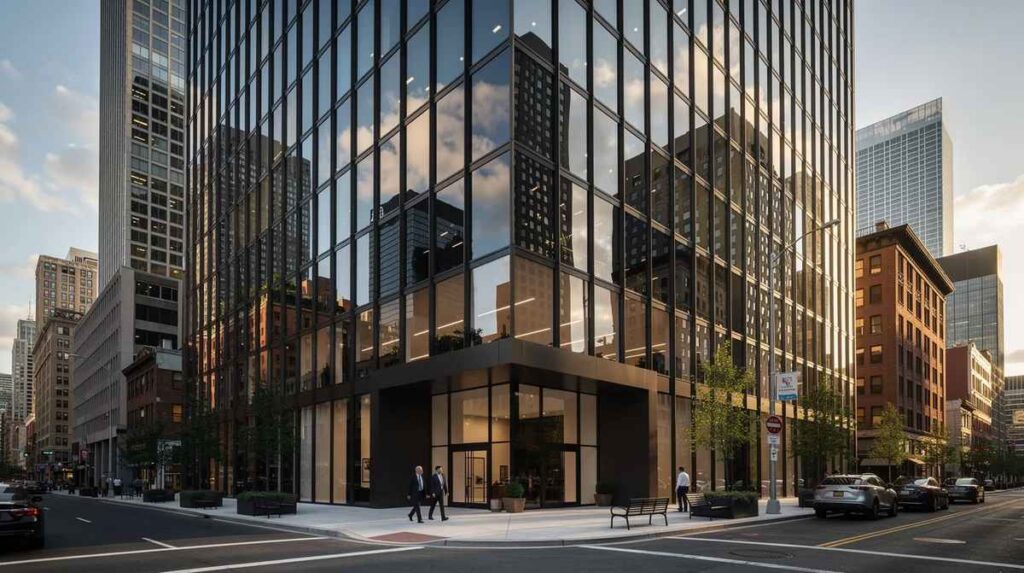
Flexible selection of window film can accommodate specific business environments. A corporate headquarters may need a nearly invisible film to preserve its facade, while street-level retail wants glare control without dimming window displays. Healthcare or education facilities often balance comfort with added visibility and privacy, making them strong candidates for privacy window film and decorative glass solutions.
Applying window film is a cost-effective alternative to replacing windows, but common mistakes can undermine the investment. Avoid choosing the darkest film assuming it’s “best” – a film that’s too dark increases lighting costs and may violate building codes. Skip DIY installs on commercial buildings, and always verify landlord or design review requirements before committing.
CoolVu provides free on-site assessments, takes digital light and heat measurements, and places film samples directly on your glass so you can see the real-world impact before making a decision, backed by an experienced national glass and surface solutions team.
Installation Process, Timelines, and What to Expect With CoolVu
Commercial anti glare window film installation is fast, clean, and designed to minimize disruption to your building’s daily operations. Professional installation of window film helps ensure long-term value and performance, which is why CoolVu uses trained, insured installers across its national franchise network.
The typical installation process includes:
- On-site survey, glass inspection, and measurements
- Film selection and a proposal with performance specs
- Scheduling around business hours or off-peak times
- Detailed glass cleaning and surface preparation
- Precision cutting, wet application, squeegeeing, and trimming
- Final inspection and walkthrough
Timelines depend on project scale. Small offices or storefronts are often completed in a single day. Medium buildings take one to three days. Large office towers or campuses can be phased by floor, wing, or tenant so operations keep running. For example, a 15,000-square-foot medical office building might schedule installation over a weekend, while a school district can stage the work during summer break, similar to how local window tinting and privacy film specialists in Central San Diego coordinate projects around operating hours.
After installation, occupants may notice slight haze or small moisture pockets – these disappear within a few days to weeks as the film cures. Once cured, windows can be cleaned with standard non-abrasive glass cleaners. No special long-term maintenance is required.
FAQs About Commercial Anti Glare Window Films
These frequently asked questions address the most common concerns from property managers and business owners evaluating glare reduction films for their buildings.
How much glare reduction can I expect from commercial anti glare window film?
Most mid-range films deliver 60–80% glare reduction, depending on the product’s VLT and reflectivity. Lighter, spectrally selective films may reduce glare by 30–50% while keeping interiors brighter. Your CoolVu consultant can match the right range to your building’s sun exposure and interior needs.
Will anti glare window films make my building too dark or change how it looks from the street?
Not necessarily. Neutral ceramic films maintain a nearly clear appearance and allow substantial natural light to pass through. Tinted or reflective options create a slightly darker or mirrored look. CoolVu can show you samples and before-and-after photos from previous projects so you can compare options on your own glass.
Can anti glare window film help lower my energy bills?
Yes. By cutting solar heat gain, these films reduce the load on air conditioning systems, which often translates to measurable cooling cost reductions and more stable indoor temperatures. Exact energy costs savings depend on factors like climate, building orientation, and existing glass type.
Is window film installation disruptive to tenants or daily operations?
Installation is quiet and clean. CoolVu stages work around business hours and can phase large projects by floor or wing. Most tenants simply notice cleaner, more comfortable windows once the work is done, whether they’re in a single storefront or a North Milwaukee commercial building using professional window film installation.
How long does commercial anti glare film last on windows?
Premium commercial films typically last 10–15 years or more, depending on product type and sun exposure. Manufacturer-backed warranties cover film performance, color stability, and in many cases, glass breakage for qualifying installations.
Can anti glare film be combined with security or privacy window films?
Absolutely. CoolVu offers a full range of window films, and many projects combine anti glare film with security film for added protection, or with decorative and branded graphics for select glass panels. This flexibility lets you address glare, safety, and privacy in a single project.
Have a building-specific question not covered here? Contact CoolVu directly – their team can walk through your situation and recommend the right approach.
Why Choose CoolVu for Commercial Anti Glare Window Film
CoolVu is a specialized national provider of commercial window films, architectural surface finishes, and glass enhancements – not a generic contractor who dabbles in film on the side. Their nationwide franchise network pairs local, owner-operated service with the training and support of a national brand, giving you access to experienced, manufacturer-certified installers focused on commercial and institutional projects.
CoolVu’s project experience spans Class A and B office buildings, K–12 schools and universities, hospitals, retail chains, and government facilities, including regional window film projects across the Sacramento area. Every engagement starts with a consultative approach: on-site evaluations, digital light and heat assessments, side-by-side film samples on your actual windows, and clear proposals showing expected glare reduction and solar performance. You see results before you commit.
Beyond anti glare film, CoolVu can coordinate privacy films, branded graphics, decorative surface finishes, and even security window film and smart glass upgrades alongside your window film project – saving time and simplifying vendor management during broader renovation timelines. Manufacturer-backed warranties, insured installers, and long-standing relationships with facility managers and property management firms give you confidence that the work will hold up for years.
Schedule Your Commercial Anti Glare Window Film Assessment
Reducing glare, protecting interiors from fading, and lowering energy costs doesn’t require tearing out your existing glass. It starts with understanding what your building actually needs. CoolVu offers free on-site and virtual assessments where their team reviews your floor plans, glass specs, and comfort concerns to propose a tailored anti glare window film solution, similar to the consultative window tinting services provided in the Tucson region.
Before your consultation, simply note the rooms with the worst glare, the times of day when discomfort peaks, and any fading or hot-spot complaints from your team, especially if you’re coordinating with a local residential and commercial window tinting expert in Tucson. Scheduling before peak summer heat – or ahead of your next budget cycle – helps you save on cooling costs sooner and lets your employees and tenants enjoy more comfortable, productive workdays.
Ready to turn your windows into an asset instead of a problem? Reach out to CoolVu by phone or online to request your free quote and get started.