Table of Contents
- How Heat Reducing Window Film Works in Office Buildings
- Key Benefits: Comfort and Energy Efficiency in Office Spaces
- Types of Heat Reducing Window Films for Offices
- How to Choose the Right Window Film for Your Office
- Common Mistakes and Myths About Office Window Films
- FAQs About Heat Reducing Window Film for Offices
Why Heat Reducing Window Film Matters for Modern Offices
If you manage a commercial building or oversee office operations, you already know the pattern. Summer rolls in, west facing windows turn perimeter offices into greenhouses, employees pile up complaints about glare and too much heat, and the HVAC system struggles to keep up. Cooling costs climb while comfort tanks.
Heat reducing window film for offices solves this cycle without replacing glass, blocking views, or turning workspaces dark. Unlike generic tint or curtains and blinds that simply diffuse light, modern window film works at the glass surface to reject solar energy before it enters the room. The result is lower interior temperatures, preserved natural light, and measurable drops in energy consumption.
In 2026, stricter energy codes and ESG reporting targets are pushing commercial buildings toward smarter envelope upgrades. Window film is one of the fastest, least disruptive retrofits available, and it helps building owners save energy without major construction. At CoolVu, our national franchise network of trained commercial installers has applied heat reducing films across office towers, medical offices, schools, and government buildings. This article walks you through how the technology works, which films fit different types of offices, what installation looks like from a B2B perspective, realistic costs and ROI, and common pitfalls to avoid.
How Heat Reducing Window Film Works in Office Buildings
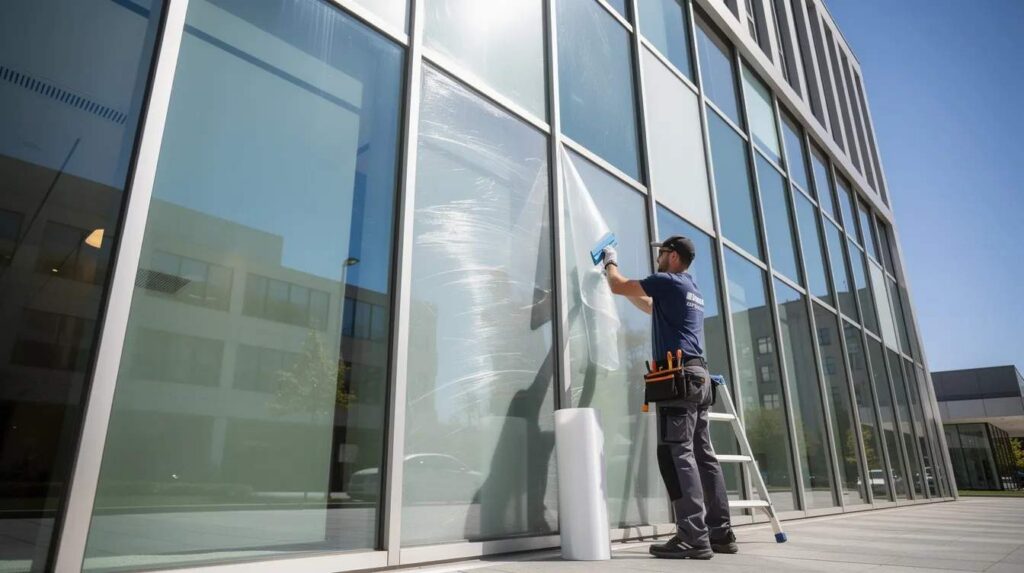
Sunlight hitting office glass delivers energy in three forms: infrared radiation (the source of the sun’s heat), visible light (what you see), and ultraviolet rays. Standard commercial glass lets most of this energy pass straight through, heating interior surfaces, raising air temperature, and forcing air conditioners to work harder. The closer your desk sits to the window, the hotter it gets.
Window film applies a micro-thin layered coating directly to the glass that intercepts a portion of that solar energy. Depending on the film type, metalized, ceramic, or spectrally selective layers either reflect or absorb infrared and UV wavelengths before they reach the interior. This lowers the Solar Heat Gain Coefficient (SHGC) of the existing glazing – a lower Solar Heat Gain Coefficient means less heat enters your space. For perspective, applying a high-performance ceramic film to standard clear glass can drop SHGC from roughly 0.73 to around 0.49.
For open-plan offices, this matters beyond individual comfort. Perimeter zones near glass often run several degrees hotter than interior zones, creating the familiar “too hot by the window, too cold in the middle” problem. By cutting solar heat gain at the glass, film helps HVAC systems deliver more even temperature distribution across the entire floor plate. Key performance metrics to know include SHGC, Visible Light Transmission (VLT), U-value, and UV rejection – all of which a qualified installer can explain during your assessment.
Key Benefits: Comfort and Energy Efficiency in Office Spaces
Heat reducing window film connects directly to measurable improvements in comfort and energy efficiency for commercial offices. Here is where the investment pays off across multiple dimensions.
Employee comfort and productivity. Heat-reducing window film improves employee comfort by limiting excessive heat near perimeter workstations. Window films can reduce indoor temperatures by 6 to 8 degrees near glazed areas during peak sun hours. Heat-reducing window film can also reduce glare on computer screens, cutting complaints in meeting rooms and at workstations facing south or west. When employees are comfortable, focus improves and facility ticket volume drops.
Lower cooling costs and HVAC efficiency. Heat-reducing window films reduce reliance on air conditioning, resulting in energy savings that show up quickly on utility statements. Commercial spaces can see a 15 to 25 percent reduction in cooling bills from window films, and energy bills can decrease by nearly 20 percent after installation. Window films help air conditioners run more efficiently by reducing peak load demand, which can also extend equipment life and delay costly HVAC replacements.
Natural light and views preserved. Unlike blinds or shading systems that block the view when closed, films let offices keep natural light and sightlines year round. Higher visible light transmission (VLT) allows more light into offices while reducing heat, supporting occupant satisfaction and even circadian rhythm health across seasons.
Secondary protection. Quality window films block up to 99 percent of UV rays, which protects office furniture, flooring, artwork, and technology from fading. Using heat-reducing window film can lower energy consumption, and installing window films can contribute to LEED green building certification credits, helping buildings meet sustainability targets.
For multi-tenant buildings, improving thermal comfort and reducing glare in previously hot corner suites can support higher tenant retention and easier leasing – a direct financial benefit for property owners, especially when partnering with regional experts like CoolVu of Lower Fairfield County for office window solutions.
Types of Heat Reducing Window Films for Offices
Not all window films are the same, and different technologies suit different office aesthetics, budgets, and performance goals. Understanding the different types helps you match the right window film to your building.
CoolVu helps offices select from reflective, dual-reflective, ceramic, and spectrally selective window films, as well as low-E options for four-season energy efficiency. Each type balances heat reduction, visible light levels, and exterior appearance differently.
Aesthetic considerations for professional environments matter more than many decision-makers initially realize. Reflective films create a mirrored exterior that can modernize an older facade but may not fit every architectural context. Ceramic and spectrally selective options offer subtle, neutral tones – some are nearly invisible – preserving the building’s original design intent. For conference rooms and executive suites, many offices prefer high-performance films that deliver strong heat reduction without making interiors feel dark or heavily tinted.
Where each type fits best:
- Reflective or dual-reflective films work well on older curtain wall buildings where privacy and aggressive shading are priorities
- Ceramic and spectrally selective films suit Class A offices with glass facades and design restrictions
- Low-E films are ideal for buildings in climates with both hot summers and cool winters, where insulation performance matters year long
Effective heat-reducing window films include ceramic and spectrally selective films, and the right choice depends on your building’s orientation, climate zone, and tenant expectations.
Reflective, Ceramic, and Spectrally Selective Films Explained
This section breaks down the main film families you will hear about when requesting quotes from installers. Each has distinct pros and cons for commercial office applications.
Reflective and dual-reflective films. High-performance reflective films provide exceptional heat rejection and glare reduction. Reflective films block a significant portion of solar heat and provide daytime privacy while maintaining outward visibility – outsiders cannot see in during daylight, but occupants keep their view. The trade-off is a more mirrored exterior appearance, which may require approval from landlords or architectural review boards. Heat-reducing window film can block up to 78 percent of solar heat with reflective technology.
Ceramic films. Ceramic films use microscopic particles to absorb infrared radiation rather than reflecting it, which means they deliver strong heat rejection with low exterior reflectivity. Ceramic films block over 90 percent of infrared heat while maintaining optical clarity, making them a perfect fit for Class A office lobbies, executive floors, and buildings with strict facade guidelines. They tend to carry a higher price per square foot but offer superior color stability and long durability.
Spectrally selective films. These films select which wavelengths to block. Spectrally selective films block infrared rays while allowing visible light to pass through at high rates, letting offices stay bright while still achieving significant heat reduction. They are an ideal investment for spaces where preserving natural daylight is non-negotiable.
Choosing among them: Prioritize your target appearance, desired level of privacy, building orientation, and any landlord or historic review requirements. CoolVu can walk you through sample panels on-site so you see the difference before committing.
Compatibility with Double Pane, Low-E, and Existing Office Glazing
Modern commercial window films are designed to work with common office glass types – including insulated double pane units and existing low-E coatings – when correctly specified. You do not need to replace your windows to benefit from film.
However, not every film works on every glass type. Applying the wrong product can increase thermal stress in the glass, potentially leading to seal failure or crack development in older units. Manufacturer guidelines exist for a reason, and this is exactly why working with a trained installer like CoolVu matters. We evaluate existing glazing systems during every site survey, checking glass type, thickness, tint, orientation, and any visible issues like failed seals or interior condensation.
Many office towers built between the 1980s and early 2000s have double pane units that can safely receive specific films engineered for insulated glass. These films further reduce heat, improve comfort, and can extend the useful life of the original glazing – all without the cost and disruption of a full window replacement. Research has shown that applying film to double pane low-E glazing can reduce cooling load through those windows by over 20 percent, with exterior application producing even stronger results.
For heritage or architecturally sensitive buildings with unique glass, CoolVu can recommend low-reflectivity or lighter films that respect the outside appearance while still delivering meaningful heat reduction. The key is matching the film to the glass – something a professional site survey makes straightforward, not complicated, especially when you consider advanced options like transitional window films with photochromic technology.
How to Choose the Right Window Film for Your Office
Selecting the right window film for a commercial space involves more than picking the cheapest option from a catalog. Here is a practical framework for property managers and corporate real estate teams comparing multiple bids or film specs.
Key evaluation factors:
- Climate zone: A building in Phoenix needs aggressive solar rejection; a building in Chicago needs a film that balances summer heat reduction with winter insulation to keep heating costs in check. Low-E films help retain warmth in winter and reduce heat in summer, making them strong candidates for mixed-climate offices.
- Building orientation: South and west facing windows receive the most intense afternoon sun and offer the highest ROI from film. Focusing on these elevations first can deliver the biggest comfort improvement per dollar.
- Window-to-wall ratio: Buildings with high proportions of glass (curtain walls, floor-to-ceiling windows) gain the greatest benefit because more of the envelope is exposed to solar energy.
- Tenant complaints: Determine whether the primary issue is heat, glare, privacy, or a combination, and select films that address the dominant concern.
- Exterior appearance: Confirm that the film’s outside look is acceptable to building ownership, any design review board, and the surrounding community.
When reviewing datasheets, prioritize a lower SHGC for aggressive heat reduction in hot climates, and higher VLT when bright interiors matter most. A lower Solar Heat Gain Coefficient means better heat rejection, while higher VLT means letting in more light without sacrificing comfort.
Think long term: factor in energy savings, HVAC capacity constraints, and potential participation in utility rebate programs. Our recommended process is to schedule an assessment with CoolVu, review architectural window film options, test a sample install on one floor or elevation, gather comments from occupants, and then continue with a phased rollout across the building.
Installation Process: What Office Teams Can Expect
Professional window film installation is minimally disruptive and usually does not require major downtime for tenants when properly scheduled. Here is what the process looks like from start to finish.
Step 1: Consultation and site survey. A CoolVu specialist meets with your facility team to review heat load concerns, glare complaints, and building goals. We document glass types, orientations, and access requirements.
Step 2: Film selection and performance modeling. Based on the survey, we recommend specific films matched to your glazing and climate. If needed, we model expected SHGC and energy improvements.
Step 3: Scheduling. CoolVu coordinates with property managers and facility directors to work outside of peak office hours – evenings, weekends, or floor-by-floor phasing – so daily operations continue uninterrupted.
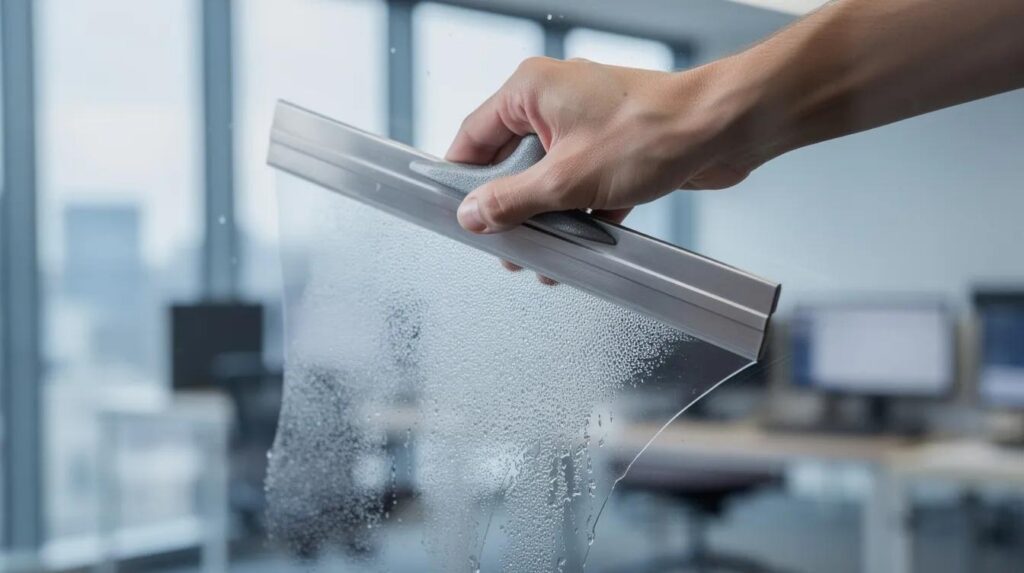
Step 4: Installation. Installers prepare the space by protecting floors and furniture, then thoroughly clean each pane of glass. Film is applied using slip solutions, squeegeed to remove moisture, and trimmed for a factory-like finish. Professional installers ensure precise alignment and smooth application, which is critical for large commercial panes.
Step 5: Cure and inspection. Film may appear slightly hazy for several days to a few weeks as moisture evaporates, depending on temperature and humidity. Full heat reduction performance is realized once curing is complete.
DIY kits are suitable for small projects only – a house window or a single apartment pane. For commercial offices, professional window film installation services save time and avoid costly mistakes. Most DIY installations can lead to shorter film life due to bubbles, misalignment, and poor edge sealing. Professionals offer warranties that protect against installation errors, and all CoolVu work is performed by trained, insured crews backed by manufacturer and CoolVu warranties tailored for commercial projects.
Maintenance, Lifespan, and Long-Term ROI for Offices
Office decision-makers need to understand not just upfront cost but also life expectancy and maintenance requirements before approving a capital improvement. Here is what to expect.
Lifespan. Most high-quality films last between 10 and 20 years under normal commercial conditions. High-quality films last between 10 and 20 years, with exact longevity depending on sun exposure, glass orientation, interior vs. exterior application, and maintenance. Films in sunny climates may need replacement sooner than those in shaded areas, but premium ceramic and reflective products are engineered for long performance in demanding environments. Proper installation extends window film lifespan and maintains clarity throughout its service life.
Maintenance. After a brief curing period, clean film-covered glass the same way you clean regular windows – just use mild, ammonia-free cleaner and non-abrasive cloths. Share these simple instructions with your janitorial vendor and avoid harsh chemicals or abrasive pads.
ROI. Window film installations are typically much less expensive than replacing windows. For a representative example, a 180,000-square-foot Class A office tower that invested roughly $500,000 in premium solar control film across south and west facades saw annual energy savings of approximately $73,000, plus an additional $18,000 per year in reduced HVAC maintenance. Payback came in under six years, with estimated 10-year net savings exceeding $400,000. Window films help lower energy bills by reducing cooling costs, and many building owners capitalize film as an energy efficiency improvement. Check with your energy advisor or accountant about local incentives, utility rebates, or tax benefits that may further improve the money equation.
Common Mistakes and Myths About Office Window Films
Misconceptions cause building owners to delay a beneficial upgrade or select the wrong product. Here are the most common myths and mistakes to avoid.
“Window film makes offices too dark.” This is the most persistent myth. Modern spectrally selective and ceramic films maintain VLT above 40 to 50 percent, preserving natural light and keeping interiors bright. You do not have to sacrifice daylight to reduce heat. Select a film with higher VLT if brightness is your priority.
“Film will damage our double pane or low-E glass.” Issues arise mainly from mis-specified products or amateur installs, not from the technology itself. Certified commercial installers follow manufacturer thermal stress guidelines to protect glass warranties. This is one reason professional assessment matters – it is not something to leave to guesswork.
“Blinds and curtains do the same thing.” Interior blinds and shading are useful for privacy and glare control, but they do not stop solar heat at the glass the way window film does. By the time sunlight passes through the glass and hits your blinds, the heat is already inside the room. Film works at the source, rejecting energy before it enters. Blinds and curtains can complement film but are not a substitute for it, and some offices even choose dynamic solutions like smart window films that switch between clear and private states.
Common selection and installation mistakes:
- Picking film based only on price without evaluating performance specs
- Failing to consider how the film looks from the outside
- Ignoring local building codes or historic review requirements
- Hiring non-specialist contractors who lack commercial glass experience
Real-World Office Case Examples and Performance Results
Here is a look at how office clients have used heat reducing window film to solve specific problems, drawn from documented commercial projects.
Example 1: Mid-rise corporate office in a warm U.S. metro. A 10-story office building applied dual-reflective film to its west-facing glass – roughly 42,000 square feet of treated area. The building saw interior temperatures drop by several degrees near perimeter offices during summer afternoons, and cooling costs fell by approximately 15 percent annually. Tenant complaints dropped dramatically, and some lease renewals specifically cited improved comfort as a factor.
Example 2: Tech company with open-plan, floor-to-ceiling glass. A technology firm’s headquarters had chronic complaints about screen glare and hot spots near the perimeter. They installed spectrally selective film that maintained high visible light transmission while cutting significant solar heat gain. Employees near the glass reported a comfortable, glare-free workspace without feeling like they were sitting in a tinted space. Many high-quality films can block 95 to 99 percent of ultraviolet rays, and this project also protected expensive monitors and furnishings from UV fading.
Example 3: Municipal office building in a mixed climate. A government office building with both summer heat and winter cold applied low-E film to improve year round envelope performance. Reception areas and waiting rooms became noticeably more comfortable in every season. The film helped retain warmth during winter months while reducing solar heat gain in summer – a dual benefit that justified the investment on both sides of the energy equation.
In each case, the key to success was matching the film type to the building’s specific orientation, glass type, and occupant needs – exactly what a professional site survey identifies before a single foot of film is installed.

FAQs About Heat Reducing Window Film for Offices
Below are answers to questions we hear most often from property managers, facility directors, and business owners considering office window film.
How much can heat reducing window film lower office temperatures?
Window films can reduce indoor temperatures by 6 to 8 degrees near glazed areas during peak sun hours. Exact results vary by building orientation, glass type, and climate, but most offices also experience a more even temperature distribution between perimeter and interior zones. Heat-reducing window films can significantly reduce solar heat gain, which is the primary driver of hot spots near windows.
Will window film make our office too dark or change the view?
Many modern commercial films are designed to preserve natural light and maintain clear views. Options with higher VLT are nearly invisible from the inside. Reflective or tinted films are available if greater privacy or a specific exterior look is desired, but they are not mandatory for effective heat reduction. You can love your view and still block the sun’s heat.
Can you install window film on our existing double pane office windows?
Yes. There are films engineered specifically for double pane and low-E glass. A professional assessment ensures compatibility and protects glass warranties by accounting for thermal stress limits. CoolVu routinely installs film on insulated glass in office buildings, following manufacturer guidelines.
How long does commercial window film last in an office setting?
High-quality films last between 10 and 20 years under normal conditions, depending on product type, sun exposure, and maintenance. CoolVu specifies commercial-grade films backed by manufacturer warranties appropriate for office and institutional applications.
What does office window film installation cost?
Pricing depends on total square footage, film type, glass access, and project complexity, so most commercial jobs are quoted after an on-site evaluation. Window film installations are typically much less expensive than replacing windows – often a fraction of the cost. Contact CoolVu for a no-obligation estimate tailored to your building.
Will installation disrupt our employees or tenants?
Professional installers work with building management to phase work by floor or area, often during off-hours or weekends, minimizing disruption. Most work is performed from the interior with small, mobile crews, allowing businesses to stay open throughout the project. Window films can also help hold broken glass in place, enhancing safety – an added security benefit during and after the install. Heat-reducing window films also enhance daytime privacy by preventing outsiders from seeing in, which many tenants appreciate as a bonus.
Why Choose CoolVu for Your Office Window Film Project
CoolVu is a national franchise network focused on window films and architectural surface solutions for commercial, institutional, and government properties. We are not a general contractor who occasionally handles film – glass and surface transformation is our entire business.
Commercial expertise. Our trained installers carry product knowledge across reflective, ceramic, spectrally selective, and low-E film technologies. We have experience with everything from small professional offices to large corporate campuses, including regional markets such as North Milwaukee commercial window tinting services, and we understand that every building has a fit that is unique to its glass, orientation, and tenant needs.
Consultative approach. Every project starts with a free on-site evaluation. We assess your glazing, review your comfort and energy goals, and recommend films that balance heat reduction, aesthetics, and budget. We do not push a single product – we help you select what is right for your space.
Comprehensive capabilities. As a dedicated glass and surface transformation specialist, CoolVu can coordinate heat reducing films with decorative and privacy window films, security films, and branded graphics if your office wants a comprehensive upgrade in one project.
Quality and trust. All installations are performed by insured crews who adhere to manufacturer specifications. Commercial warranties are standard, and the CoolVu Glass & Surface Solutions team includes local franchise owners who understand regional climates and building codes in every part of the country. You get national brand support with local accountability – a combination that makes the long investment worthwhile.
Next Steps: Schedule a Commercial Window Film Consultation
Taking the next step toward a cooler, more efficient building is straightforward. Whether your priority is reducing summer cooling costs, eliminating glare complaints, or meeting energy performance targets, the process starts with a simple conversation.
When you contact CoolVu, here is what happens: a quick discovery call to understand your building and goals, a scheduled site visit where we evaluate your glass and heat load concerns, and a written proposal with recommended films, expected benefits, and transparent pricing. No pressure, no obligation.
Act before peak summer demand so you can lock in comfort and energy savings ahead of hotter weather and potential utility rate increases. Phased installs can begin with your highest-priority elevations and expand from there.
Reach out to your local CoolVu franchise by phone or online form for a no-obligation commercial estimate and product demonstration, whether you need window tinting and film installation in Northeast Columbus or energy-efficient window film solutions across the Columbus area. See sample films on your own glass before you commit.
More comfortable offices, better energy performance, and happier occupants – without replacing a single window.