Table of Contents
- What Is Sun Control Window Film for Offices?
- How Sun Control Window Film Works (Without Making Offices Dark)
- Key Benefits of Sun Control Window Film for Office Buildings
- Types of Sun Control Window Films for Offices
- Installation Process: What to Expect When You Add Window Film to an Office
- Frequently Asked Questions About Office Sun Control Window Films
Why Sun Control Window Film Matters for Modern Offices
Picture a mid-July morning in 2026. Your team arrives at a glass-fronted office, and by 10 a.m. the south-facing desks are already dealing with glare on monitors, uncomfortable hot spots near windows, and an HVAC system straining against rising energy costs. The blinds go down, the natural light disappears, and the space starts to feel like a cave.
Sun control window film for offices is a retrofit solution applied directly to existing glass. It reduces heat, glare, and UV exposure without replacing windows or launching a construction project. For facility managers, building owners, and corporate tenants, it is one of the most practical ways to improve comfort and energy efficiency with minimal disruption.
The result is more comfortable workstations, lower HVAC strain, and a professional interior that still preserves daylight and views. CoolVu specializes in commercial window film solutions and operates through a national franchise network with trained installers, so the perspective here comes from hands-on experience across diverse facilities.
This article covers how sun control films work, their measured benefits, film options, the installation process, ROI, maintenance, and how to choose a provider, drawing on CoolVu’s window film installation services for commercial and residential properties.
What Is Sun Control Window Film for Offices?
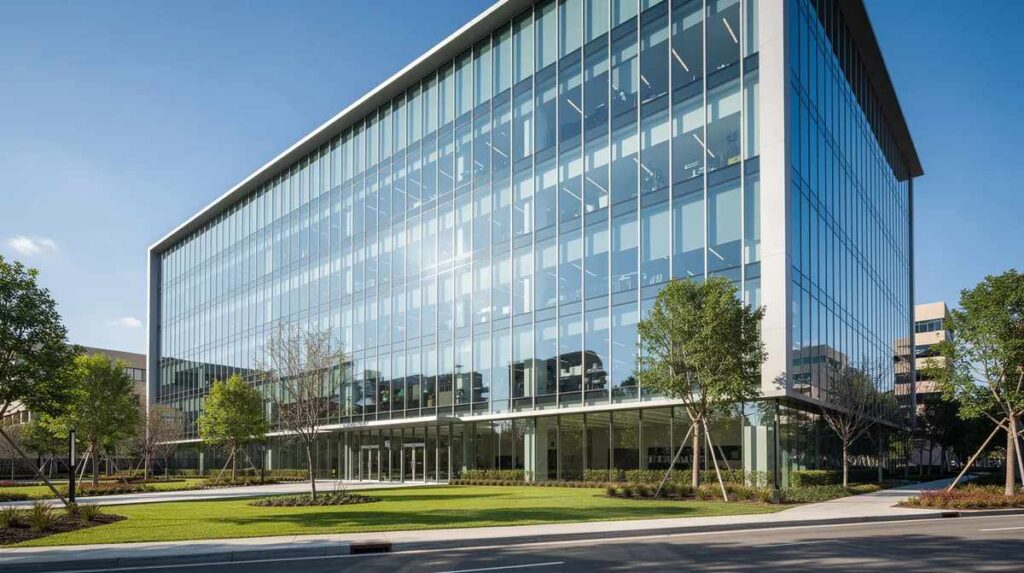
Sun control window film is a thin, multi-layer material-typically polyester or ceramic-based-adhered to the inside surface of existing glass. These films are designed to selectively filter solar energy, blocking a significant portion of infrared heat and uv rays while allowing visible light to pass through.
This is not the same as basic automotive tint. Commercial sun control films are engineered around specific performance metrics: solar heat gain reduction, glare control, and UV rejection. The goal is comfort and efficiency, not just darkening glass.
Films can be applied to offices of all sizes-small professional suites, multi-story corporate headquarters, medical campuses, schools, and government buildings. They work on single-pane, double-pane, and even low-E glazing systems after a professional assessment of the glass type and condition.
CoolVu also provides complementary solutions like decorative films, security window film, and architectural surface finishes, but the focus here is squarely on sun control for office environments.
How Sun Control Window Film Works (Without Making Offices Dark)
Modern sun control films use metalized, ceramic, or spectrally selective nano technology layers to reflect and absorb specific portions of the solar spectrum. Here is the short version of what happens at the glass surface:
Solar energy arrives in three forms:
- Visible light (~43% of solar energy) – what you see and need for daylight
- Infrared radiation (~52%) – the primary source of heat
- Ultraviolet radiation (~5%) – the wavelengths that cause fading and skin damage
Spectrally selective films reject the infrared and UV portions while letting a high percentage of visible light through. The Total Solar Energy Rejected (TSER) metric measures the overall heat reduction effectiveness of any given film, while a lower Solar Heat Gain Coefficient (SHGC) value indicates better heat rejection. Higher infrared rejection indicates better heat control in direct sunlight.
Sun control window film can reject up to 75–78% of solar heat coming through the glass. Prestige series window films reject up to 97% of infrared light, and 3M window films reject up to 97% of the sun’s infrared light, keeping the space cool without forcing occupants into a dim room. Spectrally selective films provide good heat rejection while maintaining brightness. Daylight preservation allows natural light to pass through without significant darkening, and Visible Light Transmission (VLT) is important for allowing natural light into spaces.
Uncoated glass vs. filmed glass:
| Metric | Uncoated Clear Glass | Glass with Sun Control Film |
|---|---|---|
| Solar heat blocked | ~10–15% | Up to 75–78% |
| UV rejection | ~25% | Up to 99%+ |
| Visible light | ~88% | 35–70%+ (varies by film) |
| Glare reduction | Minimal | Significant |
| The film interacts with existing glazing and HVAC systems by reducing solar heat gain, smoothing temperature swings, and allowing thermostats to operate more efficiently. |
Key Benefits of Sun Control Window Film for Office Buildings
The advantages line up across comfort, financial performance, and asset protection.
Comfort and glare
- Window films can reduce glare in office environments, particularly on monitors in open-plan layouts where sunlight creates excessive heat and visual strain near perimeter windows.
- Sun control films improve tenant comfort by reducing hot spots that make certain desks nearly unusable during peak afternoon hours.
- Window films can enhance productivity by reducing glare on screens, which matters even more as hybrid work schedules bring employees into the office for focused collaboration days.
Energy efficiency
- Energy-efficient window films reduce load on HVAC systems, often resulting in cooling energy savings of 10–30% depending on glass area, orientation, and climate.
- Sun control films can reduce energy bills significantly-some commercial facilities report enough savings to offset the complete project cost within a few years.
- These films can keep lights off longer in buildings by preserving enough natural light that perimeter zones do not need artificial lighting as early in the day.
UV and asset protection
- 3M window films reject up to 99.9% of uv rays, and uv rays can fade furnishings and artwork over time. By blocking this radiation, films protect carpets, office furniture, digital signage, and branded materials in lobbies and conference rooms from fading.
- Window films can balance heat rejection and natural light preservation, so you get protection without sacrificing the view.
Productivity and wellness
- Window films can improve employee comfort and productivity. Fewer comfort complaints, less eye strain, and better use of sunlight contribute to a more comfortable working environment.
Building appearance
- Sun control films can enhance building aesthetics by providing a uniform exterior look, hiding cluttered blinds, and presenting a clean façade that aligns with corporate branding. The color and reflectivity of the film can be selected to match the building’s design language from both inside and outside.
Types of Sun Control Window Films for Offices
Window films often come in several types including ceramic and reflective options. Here is what facility teams typically evaluate:
Neutral and gray films
These products offer a subtle tint with low reflectivity, providing balanced heat and glare reduction. They work well in professional settings where a natural appearance is preferred and the view from inside should remain largely unchanged.
Ceramic and spectrally selective films
High-performance ceramic films deliver strong heat and UV control with minimal visible tint. Ceramic Series films block 99% of uv rays while maintaining clarity. Spectrally selective films reject infrared energy at high rates, and Prestige Series films reject up to 60% of heat through windows, making them ideal for Class A office towers and customer-facing spaces that need to stay bright and comfortable.
Reflective and dual-reflective films
These increase daytime privacy from the outside while providing high solar rejection. They are commonly used on older buildings or those with strong afternoon sunlight exposure. The trade-off is higher exterior reflectivity, which may not suit every building’s look.
Low-E and all-season films
Designed for climates with both hot summers and cold winters, these films improve insulation by reflecting interior heat back into the building during colder months while still controlling summer solar gain. Companies in four-season markets often find these deliver the best year-round value.
Night Vision Series
For offices that need privacy and heat control but operate around the clock, Night Vision Series allows up to 35% visible light transmission, balancing solar rejection with adequate interior brightness during daytime hours.
CoolVu offers a curated range of commercial sun control window films and recommends specific products based on glass type, orientation, aesthetics, and local climate details, with local specialists such as CoolVu of Lower Fairfield County for regional glass and surface solutions.
Choosing the Right Sun Control Film for Your Office (What to Decide Upfront)
Before requesting quotes, clarify your priorities:
- Primary goal: Is it comfort, privacy, energy savings, or some combination?
- Appearance: What level of tint or reflectivity is acceptable from both inside and outside?
- Budget: Are you looking to treat the entire building or start with the worst-performing exposures?
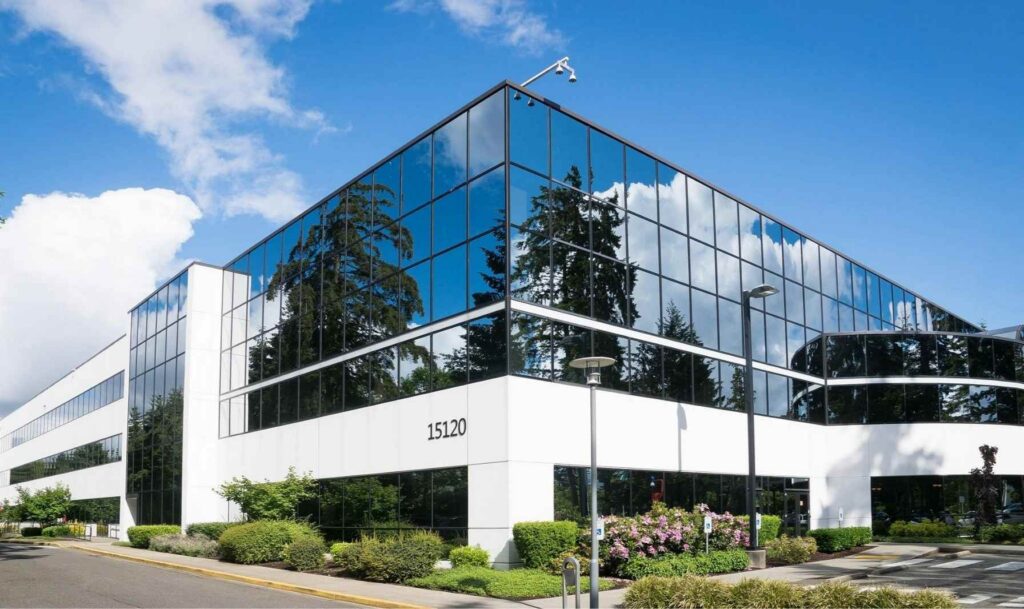
Window orientation matters. East, south, and west exposures create excessive heat and glare issues during different parts of the day, and local climate determines how much cooling savings you can capture. A building in Phoenix faces different challenges than one in Chicago, and offices in hot, sunny markets like Arizona often benefit from engaging local experts such as CoolVu of Tucson for energy-efficient window film.
Gather your building information in advance: estimated window square footage, glazing type, current HVAC pain points, and utility cost data. In multi-tenant offices, building owners and corporate tenants may both have rights over aesthetic decisions-align expectations about the look from inside and outside early.
Check building codes, glass warranties, and landlord approvals. Some cities with strict façade standards or historic districts limit allowable reflectivity. A professional installer can advise on compliance.
A CoolVu representative typically conducts a site visit to assess glass, take readings, discuss comfort complaints with staff, and recommend specific window film solutions tailored to the space.
Installation Process: What to Expect When You Add Window Film to an Office
Installation of window films is generally less disruptive than replacing windows. The standard commercial sequence looks like this:
- Site assessment – Installer evaluates glass type, condition, and orientation
- Proposal – Film options, specifications, and pricing presented
- Scheduling – Work planned around business hours and sensitive departments
- Surface preparation – Glass cleaned thoroughly; furniture and equipment protected with drop cloths
- Film application – Film cut to size and applied with solution to eliminate air pockets
- Final inspection – Installer checks for imperfections and confirms complete coverage
Noise is minimal, and most work happens from the inside. A small suite can often be finished in a single day. Larger multi-floor projects may be phased over several days or weeks to limit disruption.
After application, films may appear slightly hazy for a short period as moisture evaporates during the curing process. Clarity improves over days to weeks depending on climate and film type.
CoolVu franchise teams are trained for commercial environments, including respect for data privacy around conference rooms and screens, and safety protocols in high-traffic office areas, with local operations like CoolVu of Northeast Columbus serving Ohio businesses.
Cost, ROI, and Energy Savings for Office Sun Control Films
The main cost drivers for commercial installations are total glass square footage, film type, accessibility (ground floor versus high-rise), and complexity such as cutouts around mullions or interior partitions.
Commercial sun control window film typically falls into a mid-range cost per square foot-significantly less than replacing glass, installing motorized blinds, or upgrading HVAC equipment. Industry benchmarks place standard film retrofits around $6 per square foot for stock dimensions.
Energy savings drive the ROI calculation:
- Reduced cooling load in summer months
- Potential to defer or downsize HVAC replacement
- More efficient use of existing systems
- Lower artificial lighting usage during daylight hours
3M films can provide ROI in as short as three years, and return on investment can be captured in as short as three years when energy savings and the extended life of furnishings are factored in. Productivity and comfort gains provide additional non-monetary returns that are harder to quantify but very real to occupants.
Collect 12–24 months of historical utility data where possible so a provider like CoolVu can use modeling tools or case-study benchmarks to estimate potential savings for your building. Some utilities or local programs offer incentives for energy-efficient building upgrades, and professional dealers may help identify those opportunities.
Maintenance, Durability, and Warranty Expectations
Once cured, quality office window films become a durable part of the glazing system. Cleaning is straightforward-similar to regular glass-with a few precautions:
Do:
- Wait the recommended curing period before first cleaning
- Use soft cloths or rubber squeegees
- Use mild, non-ammonia cleaning solutions
Don’t:
- Scrape with razor blades or metal tools
- Use abrasive pads or scouring powders
- Apply ammonia-based cleaners that can damage the scratch-resistant coating
Professional-grade commercial films maintain performance and clarity for years under typical office conditions. 3M’s Prestige Series films have a 15-year warranty, and most reputable manufacturers offer coverage for peeling, bubbling, discoloration, and adhesive failure. Properly installed films are designed not to damage sound glass.
CoolVu partners with established manufacturers and provides professional installation backed by warranty support, giving you a single point of contact if any issues arise over the life of the film, a customer-focused approach mirrored by CoolVu of Northeast Columbus window tinting and film services.
Frequently Asked Questions About Office Sun Control Window Films
Will sun control window film make our office too dark?
Films are available across a wide range of light transmissions. Spectrally selective options can significantly reduce heat and UV while maintaining a bright interior with VLT values above 60%. 3M films can block up to 99% of harmful uv rays without turning the space dim. A professional assessment includes discussing desired brightness levels, and CoolVu installers often show physical samples on existing glass before final selection so you can see the difference firsthand.
How will window film affect views and privacy in our office?
During daytime, certain films increase privacy from the outside while preserving clear views looking out-particularly reflective and dual-reflective products. At night, when interior lights are on, the privacy characteristics change and blinds or shades may still be needed for conference rooms or sensitive areas. CoolVu can recommend the right balance of privacy and view clarity based on your floor level and surroundings.
Is sun control window film better than replacing our windows?
Film is a non-invasive retrofit. Full window replacement involves carpentry, permits, and extended downtime that can disrupt an entire floor for weeks. When frames and glass are structurally sound, sun control film is typically the most economical first step to address thermal and glare problems. If windows are failing, replacement may be necessary-but film handles the solar performance gap at a fraction of the cost and timeline.
Will window film interfere with Wi-Fi, cell signals, or existing glass coatings?
Most modern office sun control films-especially ceramic and non-metallic options-are engineered to minimize interference with wireless technologies. During product selection, professional dealers check existing glazing, including low-E coatings, and recommend compatible films that maintain performance without voiding glass warranties.
Can we combine sun control and security window film on the same glass?
Many offices choose a layered approach or combination product that provides both impact resistance and solar control on vulnerable areas like ground-floor glass and lobby entrances. CoolVu can recommend configurations that meet security goals while still delivering meaningful heat, glare, and UV protection, with local teams such as CoolVu of South St. Paul for security and privacy window film.
How long does a typical office window film project take?
Timelines depend on scale. A small suite can often be complete in a single day. A full floor may take several days, and large multi-story buildings are typically scheduled in phases to limit disruption. CoolVu works with property managers to plan around business hours, peak usage times, and sensitive departments so operations continue smoothly.
Why Offices Choose CoolVu for Sun Control Window Film
CoolVu is a specialized provider in window films, tinting, and architectural surface solutions with national franchise coverage and local service in communities across the country, backed by over a century of combined experience highlighted on the company’s CoolVu Glass & Surface Solutions overview.
What sets CoolVu apart:
- Trained and certified installers who understand commercial environments, from data-sensitive conference rooms to high-traffic lobbies
- Broad product portfolio covering sun control, privacy, decorative, and security film products tailored to each building’s needs
- Consultative site assessments focused on comfort, energy performance, and aesthetics-not just selling the most expensive option
- Diverse experience across corporate campuses, medical offices, K–12 schools, universities, municipal buildings, and federal facilities
Beyond installation, CoolVu handles warranty support, future expansions or renovations, and can add complementary solutions like branded graphics, decorative films, or security upgrades as your needs evolve, with regional providers such as CoolVu of Northern Virginia offering comprehensive window and wall enhancements. Teams are background-checked, respect sensitive information inside your office, and follow building safety protocols.
When you need a provider who treats your space with the same care you do, CoolVu is built for that job.
Next Steps: How to Get Started with Office Sun Control Window Film
Getting started is simpler than most office improvement projects:
- Schedule a free on-site consultation – A CoolVu representative visits your space, evaluates the glass, and discusses your comfort and energy goals.
- Review film options – You receive a proposal with specific film recommendations, performance data, and pricing.
- Select a timeline – Work is scheduled around your operations with minimal disruption.
To make the consultation more productive, gather basic information ahead of time: floor plans or photos of problem areas, recent utility bills, and notes on which zones create the most discomfort.
Involve key stakeholders early-facility management, operations, and HR for comfort concerns. If you are a tenant, loop in building ownership or property management to align on exterior appearance, and consider coordinating with local experts like CoolVu of North Milwaukee for commercial window film projects.
Contact your local CoolVu franchise or submit an online request to discuss architectural window film solutions tailored to your office. The core promise is straightforward: improved comfort, better-looking workspaces, and measurable energy savings-without the disruption of major construction.