Table of Contents
- Ballistic Glass Film Basics
- Understanding Ballistic Glass Film Technology
- Types and Applications of Security Window Film
- Installation Process and Performance Standards
- Common Challenges and Solutions
- Conclusion and Next Steps
- Frequently Asked Questions
Ballistic Glass Film Basics
Ballistic glass film is a high-strength security window film designed to reinforce existing glass against impacts, forced entry attempts, and certain threat scenarios. This protective film adheres to glass windows and holds broken glass fragments together when the window is attacked, significantly delaying entry while reducing injury risks from flying shards.
A critical distinction must be understood upfront: ballistic glass film is not bulletproof in most cases. The term “ballistic” is commonly referred to in marketing materials, but standard security film applied to regular glass windows cannot stop bullets from penetrating. What these security film products actually deliver is forced entry delay, fragment retention, and impact resistance—valuable protective functions that buy critical response time during an attack. There is no such thing as bulletproof window film that can reliably stop all firearm threats when applied to standard glazing.
This guide covers security window film technology, installation requirements, performance standards, and realistic expectations for various applications. The content is designed for facility managers evaluating building protection upgrades, security professionals conducting threat assessments, and school administrators seeking cost-effective solutions to protect students and staff.
Direct answer:
Ballistic glass film enhances existing glass security by holding shattered glass in place and delaying forced entry by 30 seconds to several minutes, depending on film thickness and installation quality. However, it requires professional installation with proper frame anchoring and realistic expectations about what protection levels it can actually deliver.
Key outcomes from this guide:
- Understanding what ballistic window film can and cannot protect against
- Knowledge of film compositions, thicknesses, and performance differences
- Installation requirements that determine real-world effectiveness
- Cost considerations for residential, commercial, and institutional applications
- Criteria for selecting appropriate security film for specific threat levels
Understanding Ballistic Glass Film Technology
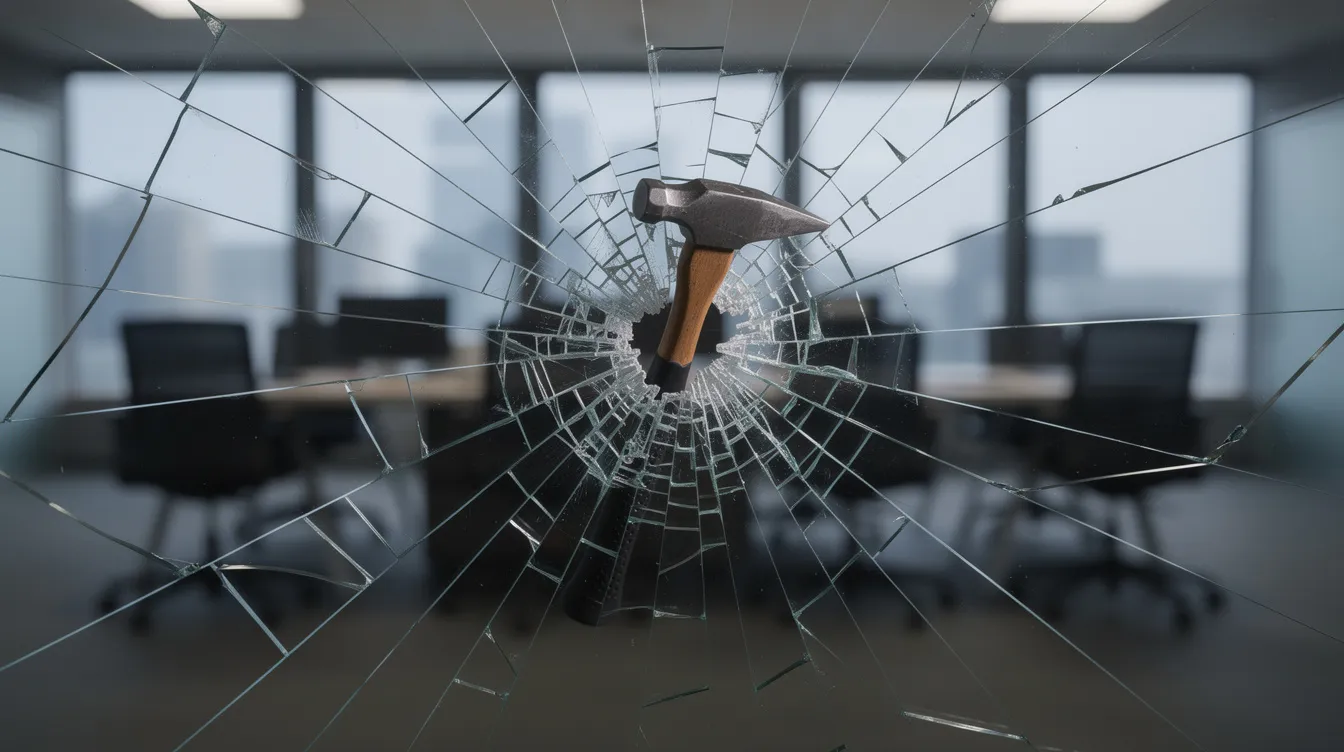
Ballistic glass film works as an adhesive layer that bonds directly to glass surfaces, creating a composite structure that resists impacts and holds together under stress. When glass breaks, the film prevents fragments from scattering and maintains the barrier function of the window, forcing an intruder to spend significantly more time attempting to gain entry.
Film Composition and Materials
Security window films are typically manufactured from polyester (PET) or urethane-based materials with specialized adhesive backing. The film construction involves multiple layers designed to absorb impact energy, resist tearing, and maintain adhesion even after the underlying glass shatters.
Film thickness is measured in mils (1 mil = 1/1000 inch) and directly affects protection level:
- 4-6 mil films provide basic safety glazing, primarily holding glass fragments together during accidental impacts
- 8-12 mil films offer moderate security protection suitable for residential and light commercial applications
- 15+ mil films deliver heavy-duty forced entry delay for high-risk environments
- 20-27 mil specialized systems combine multiple layers with structural anchoring for maximum protection
Material quality significantly affects performance. Urethane-based films like 3M’s S2400 (approximately 24 mil) demonstrate roughly 66% higher tear resistance compared to standard PET films of similar thickness. This translates to substantially longer delay times before an attacker can breach the window.
Security vs. Ballistic Terminology
The difference between security film and true ballistic protection is substantial and frequently misunderstood. Bullet resistant glass and ballistically rated glass are engineered composite systems—typically thick laminated glass with polycarbonate layers—that are independently tested to stop bullets from specific firearm calibers.
These systems are specifically designed to address ballistic attacks and other high-threat scenarios that standard security film is not engineered to withstand.
Standard security window film applied to existing glazing does not provide ballistic protection. The term “ballistic glass film” is marketing terminology rather than technical specification. While some retrofit laminate systems can achieve limited bullet resistance when combined with proper glass and frame assemblies, film alone over conventional glass windows cannot reliably stop bullets.
What security film actually provides is forced entry resistance and fragment retention. This distinction matters because proper specification requires matching the protection system to the actual threat, whether that’s smash-and-grab burglary, vandalism, blast mitigation, or active shooter situations.
Types and Applications of Security Window Film
Understanding how security film performs in different real-world scenarios helps determine appropriate product selection and installation requirements for specific building types and threat profiles.
School and Educational Facility Protection
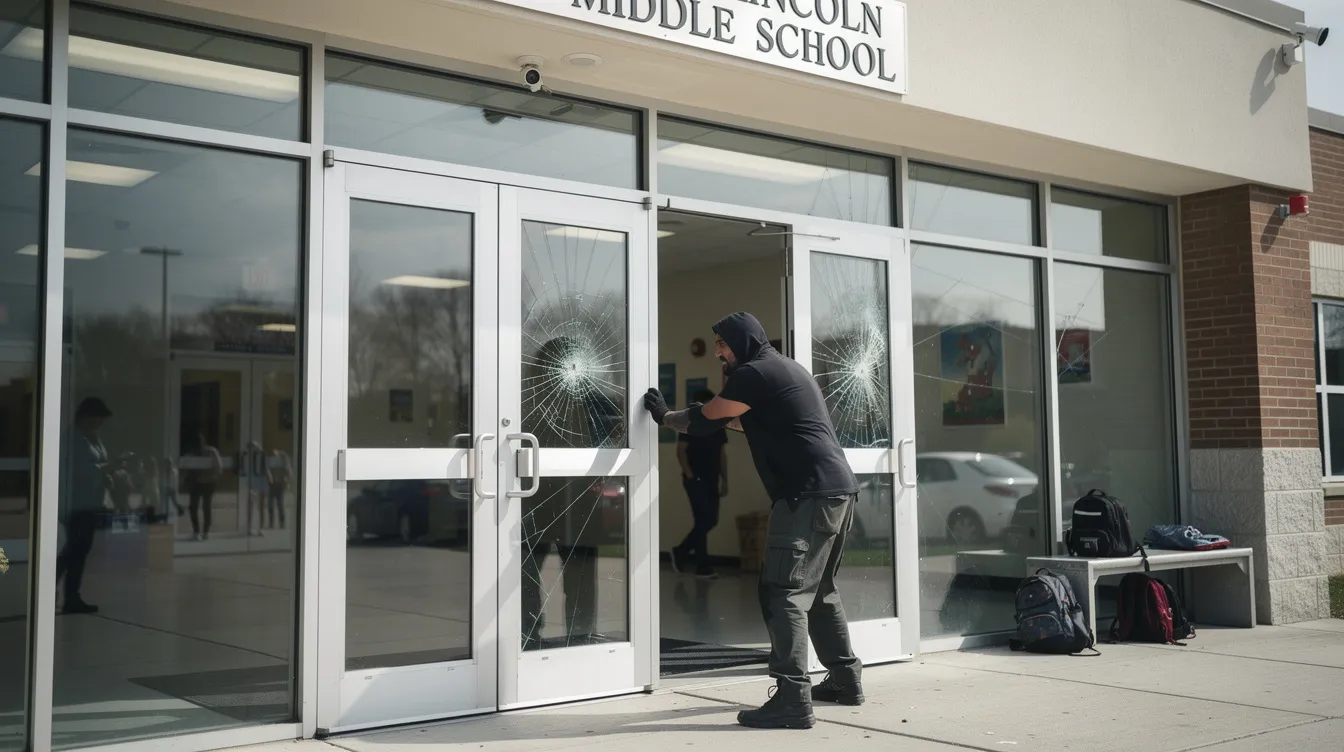
Educational institutions increasingly install security window film to delay entry during active shooter situations, providing critical response time for lockdown procedures and law enforcement arrival. The goal is not to stop bullets but to prevent an attacker from quickly gaining access through glass windows and door glass. These measures are intended to help prevent active shooter situations from escalating by slowing unauthorized access through vulnerable glazing.
Properly installed security film systems can delay forced entry by 60 seconds to several minutes—time that allows students and staff to evacuate or secure in place while first responders travel to the scene. Some specialized systems like SchoolSafe glazing, which combines glass with polycarbonate and polyurethane layers, claim up to 20 additional minutes of protection when tested to ASTM F3561 Level 8 standards. This additional delay can slow attackers and provide more time for emergency personnel to respond.
For school administrators working within limited budgets, retrofit security film offers a cost-effective alternative to full window replacement with bullet resistant products. A school can protect high-risk areas—entry vestibules, ground-floor classrooms, and populated area windows—with quality security film at a fraction of the cost of installing ballistically rated glass throughout the building.
Commercial and Government Applications
Commercial buildings, retail locations, and government facilities deploy security window film for protection against multiple threat types:
- Smash-and-grab theft where film delays entry long enough to trigger alarm response
- Vandalism and civil unrest where windows must remain intact under repeated impacts
- Explosive threats and blast mitigation where fragment retention protects interior occupants
- Forced entry attempts targeting valuable assets or sensitive areas
Security film is also commonly specified in buildings seeking additional protection from explosions and related glass fragmentation hazards.
Storefronts commonly use 8-12 mil security film with frame anchoring to protect against break-ins. High-value commercial installations and government buildings may specify 15+ mil films with structural adhesive systems for extended delay times. Many commercial security films also incorporate solar control properties, reducing cooling costs while providing protection. In facilities facing elevated security concerns, these measures are often used alongside bulletproof glass systems in areas requiring higher levels of ballistic protection.
Residential Security Applications
Home security applications typically focus on ground-floor windows, French doors, sliding door glass, and entry points most vulnerable to break-ins. Residential security film serves dual purposes: deterring burglars by making entry difficult and protecting family members from glass fragments during storms or accidents.
For residential installations, 8-12 mil security film with proper frame anchoring typically provides 30-60 seconds of forced entry delay—often sufficient to deter opportunistic burglars or allow home security systems to alert authorities. Premium residential installations may use thicker films in high-risk areas while applying lighter films elsewhere to balance cost and protection.
The key difference between institutional and residential applications involves scale, budget constraints, and threat assessment. Schools and commercial buildings typically require higher performance specifications across larger glass areas, while residential installations can be more targeted to specific vulnerable entry points.
Installation Process and Performance Standards
Professional installation determines whether security film performs as designed or fails under real-world attack conditions. Even the highest-quality film underperforms without proper surface preparation, application technique, and critical frame anchoring.
Professional Installation Requirements
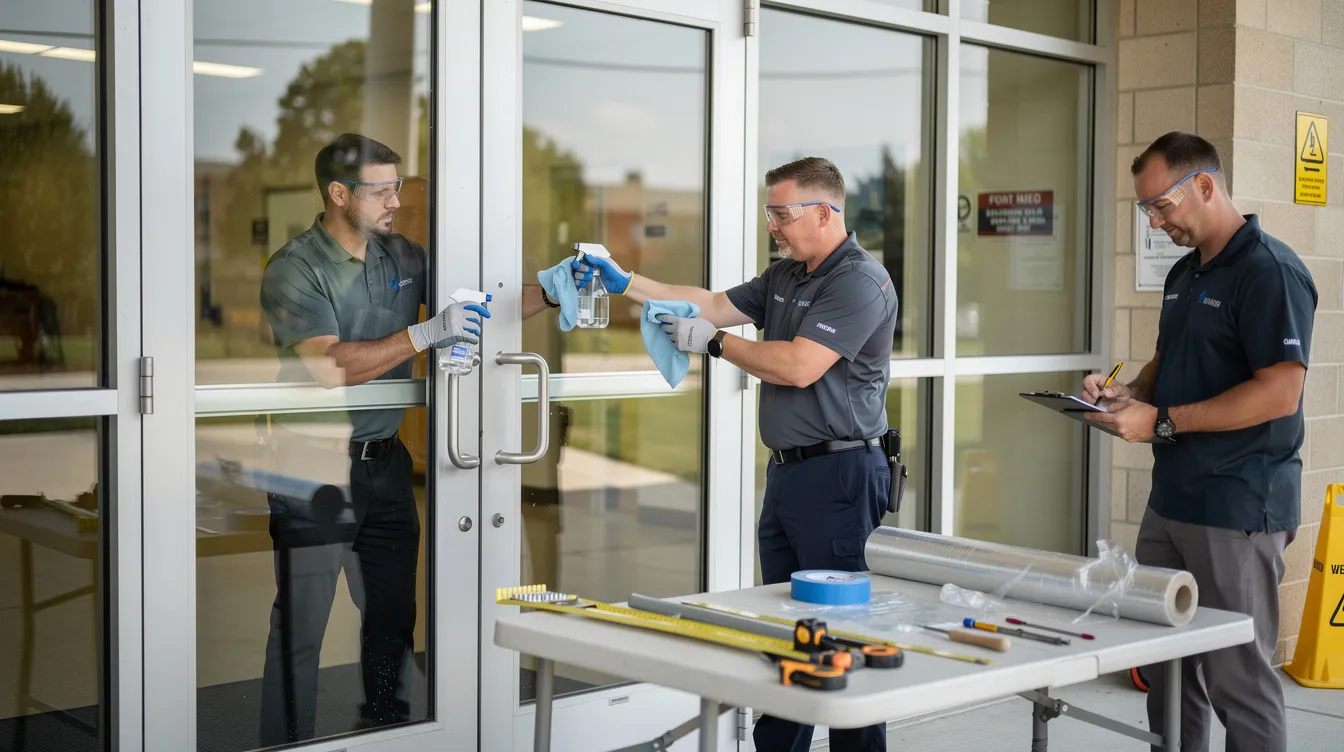
Professional installation is necessary for any security film expected to delay forced entry. DIY installation may achieve basic fragment retention but typically cannot deliver meaningful forced entry resistance without proper anchoring systems.
Surface Preparation and Cleaning: Glass must be thoroughly cleaned to remove oils, residues, and microscopic debris that compromise adhesion. Professional installers use specific cleaning solutions and techniques to ensure optimal film bonding.
Film Application Techniques: Wet installation methods using water and alcohol slip solutions allow precise positioning and bubble removal. Installers squeegee the film to eliminate air pockets and achieve full surface contact. Proper edge trimming ensures complete coverage without gaps.
Structural Adhesive Anchoring: This step separates basic safety film from true security installation. Anchoring the film edges to the existing glazing frame using structural silicone or mechanical attachment systems prevents attackers from simply pushing the entire glass panel out of the frame. Without anchoring, even thick film can fail within seconds as the glass pane is forced from its frame.
Curing and Inspection: Structural adhesives require 24-72 hours to fully cure. Post-installation inspection verifies complete adhesion, proper edge sealing, and anchoring integrity. Many manufacturer warranties require documented professional installation and inspection.
Performance Testing Standards
Multiple testing standards exist for security glazing, each measuring different aspects of protection:
| Standard | What It Tests | Applicable Systems |
|---|---|---|
| UL 752 | Bullet resistance (Levels 1-10) | Complete ballistic glazing assemblies |
| ASTM F3561-22 | Ballistic + forced entry combined | Active shooter resistant glazing systems |
| ASTM F1233-21 | Security glazing under attack sequence | Laminated security glazing |
| UL 972 | Forced entry/burglary resistance | Film + glass + frame combinations |
| ANSI Z97.1 | Safety glazing (fragment retention) | Basic safety films |
When evaluating test results, verify that the tested assembly matches your intended installation. A film tested on laminated glass with structural frame anchoring will perform very differently when installed on annealed glass with standard framing. Request complete test reports showing glass type, frame configuration, anchoring method, and actual delay times achieved. The testing line should clearly identify all components and installation methods included in the evaluated assembly.
Impact resistance ratings indicate how many strikes or impacts the glazing system withstands before breach. Forced entry delay times—measured in seconds or minutes—indicate how long an attacker with common tools requires to gain access through the filmed glass.
Common Challenges and Solutions
Several recurring issues affect security film selection and performance. Understanding these challenges helps avoid costly mistakes and unrealistic expectations.
Unrealistic Expectations About Bulletproof Protection
The most common misconception is that security window film makes windows bulletproof. Standard security film installed on regular glass cannot stop bullets—the projectile will penetrate both the glass and film in most cases. Only complete glazing systems with thick laminated glass, polycarbonate layers, and tested assemblies to UL 752 or similar standards provide actual bullet resistant protection.
Solution: Focus on what security film actually delivers: forced entry delay and fragment retention. Specify products based on forced entry resistance ratings (UL 972) rather than imagined ballistic properties. If ballistic protection is genuinely required, budget for true bullet resistant glass replacement rather than expecting film to perform beyond its capabilities.
Improper Installation Leading to Film Failure
Film failure during attack typically results from inadequate installation rather than product defects. Common failures include insufficient surface preparation causing adhesion loss, unsecured edges allowing glass panel displacement, and incompatible film-glass combinations.
Solution: Select certified professional installers with documented training from film manufacturers or industry organizations. Require structural adhesive or mechanical anchoring to window frames. Verify that the installer has experience with your specific glass type (annealed, tempered, or laminated) and can demonstrate previous security installations. Schedule post-cure inspection to confirm proper adhesion and anchoring.
Cost vs. Performance Balance
Higher-performance security film systems cost significantly more—thicker films, specialized materials, and anchoring systems increase both material and labor costs. Balancing protection needs against budget constraints requires strategic thinking.
Solution: Apply tiered specifications based on risk assessment. Install highest-performance films (15+ mil with full anchoring) at primary entry points and high-risk areas like ground-floor exterior windows in populated areas. Use moderate-grade films (8-12 mil) for secondary glazing where threat likelihood is lower. Consider combining security film with other measures—alarm systems, reinforced door glass, improved lighting—for comprehensive protection at lower per-window cost.
Typical installed costs range from $8-12 per square foot for residential 8-12 mil security film, $15-25+ per square foot for heavy-duty commercial installations, compared to $50+ per square foot for complete bullet resistant glass replacement.
Conclusion and Next Steps
Ballistic glass film provides valuable security enhancement when properly installed with realistic expectations about its capabilities. Security window film delays forced entry, holds broken glass together during attacks, and protects building occupants from flying fragments—but it does not make standard windows bulletproof.
The effectiveness of any security film installation depends on three factors: appropriate product selection for the identified threat level, professional installation with proper frame anchoring, and realistic understanding of what “security” versus “ballistic” protection actually means.
Immediate next steps:
- Conduct a security assessment identifying vulnerable glass areas and specific threat scenarios relevant to your building
- Request quotes from multiple certified installers, specifying the test standards and performance levels required
- Verify installer certifications and request references from similar completed projects
- Review test documentation to ensure specified products have been independently tested in configurations matching your installation
For situations requiring true ballistic protection—where the threat involves firearms rather than forced entry with tools—explore bullet resistant glazing options designed and tested specifically to stop bullets. Comprehensive building security typically integrates multiple layers: access control, alarm systems, reinforced entry points, and appropriate glazing protection matched to actual threat profiles. As security concerns continue to rise, many organizations evaluate whether bullet proof glazing solutions are necessary for their specific threat environment.
Frequently Asked Questions
Is ballistic glass film actually bulletproof?
No. Standard security film installed on regular glass windows cannot stop bullets. The term “ballistic glass film” is marketing terminology. True bullet resistant protection requires complete glazing systems—thick laminated glass with polycarbonate layers—that are independently tested to UL 752 or similar ballistic standards. Security film provides forced entry delay and fragment retention, not bullet resistance.
How long does security window film installation take?
Installation time varies with project scope. A residential installation covering 15-20 windows typically requires one full day. Commercial installations on storefronts or curtain wall systems may require multiple days depending on total square footage, glass accessibility, and anchoring requirements. Structural adhesives then require 24-72 hours curing time before the installation reaches full performance.
What is the cost difference between film and bullet-resistant glass?
Security film retrofit typically costs $8-25 per square foot installed, depending on film thickness and anchoring requirements. True bullet resistant glass replacement costs $50+ per square foot and often requires frame modifications. Film installation is generally 1/3 to 1/10 the cost of full ballistic glazing replacement, making it attractive for budget-conscious applications where forced entry delay rather than bullet stopping is the objective.
Can ballistic glass film be installed on tempered glass?
Yes, but with considerations. Tempered glass shatters into small fragments when broken, and security film helps hold these fragments together. However, tempered glass under film may still fracture more dramatically than annealed glass, and the entire panel may break under impact. Proper anchoring becomes especially critical with tempered glass installations.
Does security film affect window appearance or visibility?
Quality security films are designed for optical clarity with minimal impact on visible light transmission. Thicker films (15+ mil) may show slight distortion, particularly at angles. Many security films are available in clear versions or with added tint for solar control. Review samples before purchase to evaluate appearance impacts for your specific aesthetic requirements.
How long does ballistic glass film last before replacement?
High-quality security films with UV-stabilized adhesives typically last 10-15 years under normal conditions. Most manufacturers offer 5-10 year warranties. Lifespan depends on climate exposure, UV intensity, and installation quality. Films in harsh climates with extreme temperatures or high UV exposure may require earlier replacement. Annual inspection helps identify adhesive degradation or delamination before performance is compromised.
What thickness of security film is recommended for schools?
For active shooter mitigation and forced entry delay in schools, security experts recommend minimum 12-15 mil film with structural frame anchoring, or complete glazing systems tested to ASTM F3561 Level 3 or higher. These specifications can provide 60+ seconds of forced entry delay. High-risk areas like ground-floor windows and entry vestibule door glass should receive maximum protection, while interior glazing may use lighter specifications.
Can existing window film be removed and replaced with security film?
Yes, existing film can be removed and replaced with security-grade products. Removal adds cost and time to the project. The underlying glass must be inspected for damage, and old adhesive residue must be completely removed before new film installation. Glass type and frame condition should be assessed to determine compatibility with security film and anchoring requirements.