
Table of Contents
The Common Misconception: Why Simplicity Falls Short in Commercial Window Film Pricing
When business owners first consider solar control window film, a common initial question revolves around the “price per square foot.” While this metric provides a basic starting point, it dramatically oversimplifies the true economic impact and value proposition of such an enhancement for a commercial property. Reducing the decision to a mere unit cost overlooks the intricate factors that contribute to film performance, installation complexity, and, most importantly, the comprehensive, long-term returns.
This narrow focus can lead to an incomplete understanding, making it difficult to accurately budget or assess the real benefits. A lower initial cost per square foot might seem appealing, but if it translates to subpar energy efficiency, a shorter lifespan, or inadequate UV protection, the perceived savings quickly evaporate against ongoing operational expenses and potential asset degradation.
Understanding the “Investment” Mindset for Commercial Properties
Shifting from a “cost” perspective to an “investment” mindset is crucial when evaluating solar control window film for commercial applications. Unlike a one-time expense, high-quality film is a strategic capital improvement designed to deliver continuous returns over its lifespan.
These returns manifest not just as direct energy savings, but also through enhanced occupant comfort, extended lifespan of interior furnishings and equipment, and even improved tenant satisfaction and retention.
Viewing window film as an investment allows business owners to quantify its financial impact through metrics like Return on Investment (ROI), payback period, and overall increase in asset value.
It becomes a tool for operational efficiency and a competitive advantage in attracting and retaining tenants, solidifying its place as a smart business decision rather than a simple expenditure.

Setting the Stage: What This Guide Will Uncover About Value and ROI
This guide moves beyond the superficial price tag to delve into the comprehensive value proposition of commercial solar control window film. We will dissect the elements that genuinely influence its cost and, more critically, its long-term financial benefits. Our objective is to empower you with the knowledge to make an informed decision, ensuring your investment aligns with your operational goals and delivers maximum ROI.
We will explore the nuanced interplay between material specifications, project scope, warranty assurances, and regional market dynamics, all while consistently framing these factors within the context of sustained value and measurable returns for your business.
Key Factors That Shape Your Commercial Window Film Investment
Material Type and Performance Specifications: Decoding the Film Itself
The core of any solar control solution lies in the film material and its inherent performance characteristics. Not all films are created equal; they vary significantly in composition, durability, and effectiveness, directly impacting both the initial cost and the long-term ROI. Understanding these specifications is paramount to selecting the right film for your property’s specific needs.
Key performance indicators include:
- Total Solar Energy Rejected (TSER): This crucial metric indicates the total percentage of solar energy (visible light, infrared, and ultraviolet) that is blocked by the film. Higher TSER values translate directly to greater heat reduction and, consequently, lower cooling costs and more comfortable indoor temperatures.
- UV Light Rejection: High-quality films typically block 99% or more of harmful UVA and UVB rays, significantly reducing fading of interior furnishings, flooring, and merchandise. This also offers critical protection for occupants from sun damage.
- Glare Reduction: Films can dramatically reduce uncomfortable glare, improving visibility for computer screens and enhancing overall comfort for employees and customers. This leads to increased productivity and a more pleasant environment.
- Visible Light Transmittance (VLT): This indicates how much visible light passes through the film. While some films are designed for maximum light, others are engineered for privacy or to reduce excessive brightness without excessively darkening the interior.
- Material Composition: Films can be dyed, metalized, ceramic, or a hybrid. Ceramic films, for example, often offer superior heat rejection and durability without interfering with cell signals, but typically come at a higher price point. Metalized films are highly reflective and effective but can sometimes cause signal interference.
Investing in a film with superior specifications often translates to quicker energy savings payback and extended protection, justifying a higher upfront cost through enhanced long-term performance.
Window Size, Shape, and Overall Project Scope: Dimensions of Difficulty
Beyond the film itself, the physical characteristics of your building’s windows and the overall complexity of the installation project significantly influence the final investment. These factors directly impact the labor hours required, the necessary equipment, and potential safety considerations.
Considerations include:
- Window Dimensions and Quantity: Larger windows naturally require more material, but unusually tall or wide panes can also necessitate specialized equipment and more installers. A greater number of windows means a larger project, often requiring more time and coordination.
- Window Shapes: Standard rectangular windows are typically straightforward to film. However, arched, circular, or unusually shaped windows demand precise custom cutting and more intricate installation techniques, increasing labor time and potentially material waste.
- Accessibility and Height: Installing film on ground-level windows is vastly different from working on the 10th floor of a high-rise. Projects involving elevated windows, difficult-to-access areas, or the need for scaffolding, lifts, or rappelling equipment will incur higher labor and equipment rental costs due to increased safety protocols and logistical challenges.
- Surface Preparation: Older windows with existing film, heavy grime, or unusual frames may require more extensive preparation work before new film can be applied effectively.

These variables underscore why a simple per-square-foot estimate is insufficient, as installation complexity can be a major cost driver for any commercial film project.
Warranties and Manufacturer Reputation: Assurance for Your Asset
A significant component of your commercial window film investment, often overlooked in initial price comparisons, is the assurance provided by comprehensive warranties and the reputation of both the film manufacturer and the installer. These elements are critical for protecting your investment and ensuring long-term satisfaction.
- Manufacturer Warranty: Reputable manufacturers stand behind their products with robust warranties, typically covering against defects like bubbling, peeling, cracking, or discoloration for many years, often extending to 10-15 years or more for commercial applications. This warranty is a testament to the film’s quality and durability.
- Installation Warranty: Equally important is the warranty provided by the professional installer. This covers the labor and application quality, ensuring that any issues arising from the installation process itself are rectified promptly and without additional cost. A strong installation warranty reflects the installer’s confidence in their craftsmanship.
- Manufacturer and Installer Reputation: Partnering with established, reputable brands and experienced, certified installers provides peace of mind. A proven track record indicates consistent product quality, reliable performance, and professional installation practices. This reduces the risk of future problems and ensures access to support if issues arise, safeguarding your investment against premature failure or performance degradation.
These assurances are not mere line items; they represent crucial protection for a long-term capital improvement, directly impacting the effective lifespan and sustained ROI of your window film.
The Role of Location and Market Dynamics: Regional Cost Variations
The geographic location of your commercial property and the prevailing market dynamics within that region play a discernible role in shaping the overall cost of your window film investment. What might be standard pricing in one metropolitan area could differ significantly in another, reflecting variations in operational expenses for service providers.
Key factors contributing to regional differences include:
- Labor Costs: Wages for skilled technicians can vary substantially across different states and cities. Regions with higher costs of living generally see higher labor rates, which are directly passed on in installation service fees.
- Regulatory Requirements and Building Codes: Some municipalities or states may have specific building codes or environmental regulations that influence the types of films that can be used or dictate specific installation practices, potentially affecting material or labor costs.
- Local Supply Chain and Shipping: The proximity of distributors and the cost of transporting materials to your location can impact pricing. Remote areas might incur higher shipping costs, for instance.
- Market Competition: The level of competition among commercial window film providers in a given area can also influence pricing. In highly competitive markets, prices might be more aggressive, while in areas with fewer providers, prices could be higher due to less competition.
- Energy Costs: While not directly affecting the film’s upfront cost, regional energy prices significantly impact the value proposition and payback period. In areas with high electricity rates for cooling, the ROI from energy-saving film will be realized much faster and be substantially higher, making the investment even more compelling.
Understanding these regional variances helps business owners interpret quotes accurately and appreciate that optimal pricing reflects localized economic realities, while still delivering superior long-term value.
Breaking Down the Tiers: From Standard Efficiency to Advanced Solutions
Understanding the different tiers of solar control window films is crucial for any business owner looking to make an informed investment. These tiers are defined by their material composition, manufacturing complexity, and, most importantly, their performance capabilities. Each tier offers a distinct balance of initial cost versus the long-term value and return on investment (ROI) it delivers.
Entry-Level Films: Balancing Initial Cost and Basic Protection
Entry-level solar control films represent an accessible starting point for businesses seeking fundamental improvements without a significant capital outlay. Typically, these films provide essential UV rejection, significantly reducing the harmful effects of sun exposure on interior furnishings, flooring, and merchandise. They also offer a noticeable reduction in glare, which can improve occupant comfort and productivity in workspaces. While their heat rejection capabilities may not match more advanced films, they still contribute to a more stable indoor temperature, leading to modest but tangible energy savings. For businesses with tight budgets or those testing the waters of window film benefits, entry-level options offer a quick and effective path to addressing immediate pain points and realizing an early, albeit more conservative, ROI.
Mid-Range Performance Films: Enhanced Heat, Glare, and UV Rejection
Stepping up to mid-range performance films introduces a significant leap in solar control capabilities. These films often incorporate more sophisticated dyes and metallized layers to achieve a superior balance of heat rejection, glare reduction, and UV protection. They are designed to deliver a more substantial impact on energy consumption, translating into greater savings on heating and cooling costs. The enhanced glare reduction creates a more comfortable and productive environment for employees and customers alike, which can indirectly contribute to business performance. For many commercial applications, mid-range films strike an optimal balance between initial investment and the accelerated, more comprehensive long-term ROI derived from improved energy efficiency and occupant well-being.
Premium and Specialty Films: Advanced Technologies for Maximum Impact
At the pinnacle of solar control technology lie premium and specialty films. This category includes advanced options like Low-E (Low-Emissivity), ceramic, and spectrally selective films. These films utilize cutting-edge materials and manufacturing processes, such as nanotechnology in ceramic films, to achieve exceptional performance characteristics.
- Low-E Films: These films are engineered to reflect interior heat back into a building during cooler months while still rejecting solar heat in warmer periods. This dual-action capability makes them incredibly effective in managing energy costs year-round.
- Ceramic Films: Known for their durability and clarity, ceramic films use microscopic ceramic particles to block a high percentage of solar heat and UV rays without interfering with wireless signals or altering a building’s exterior appearance.
- Spectrally Selective Films: These advanced films selectively filter parts of the solar spectrum, allowing a high percentage of visible light to pass through while rejecting a significant portion of infrared (heat-generating) and ultraviolet (damage-causing) light. This means a bright interior with minimal heat gain.
While the initial investment for premium films is higher, their advanced capabilities translate to maximum energy savings, superior occupant comfort, and the most robust protection for interiors. This often results in the highest overall ROI over the lifespan of the film, making them a strategic choice for businesses prioritizing long-term value, energy independence, and optimal environmental control.
Understanding Critical Performance Metrics: TSER, UV Rejection, and Visual Light Transmission
Evaluating solar control window films requires a clear understanding of key performance metrics, as these numbers directly correlate to the value and ROI your business will achieve.
- Total Solar Energy Rejected (TSER): This is arguably the most crucial metric for energy efficiency. TSER measures the percentage of total solar energy (visible light, infrared, and ultraviolet) that is rejected by the film. A higher TSER percentage indicates greater heat rejection, which directly translates to reduced demand on HVAC systems and significant energy cost savings.
- UV Rejection: Measured as a percentage, UV rejection indicates how much harmful ultraviolet radiation the film blocks. High UV rejection (typically 99% or more in quality films) is vital for protecting interior assets like furniture, flooring, artwork, and merchandise from fading and degradation. This extends the lifespan of your assets, providing a clear financial return.
- Visual Light Transmission (VLT): VLT is the percentage of visible light that passes through the film. A higher VLT means more natural light enters the space, which can improve occupant mood and productivity. However, a lower VLT is often associated with greater glare reduction. The ideal VLT depends on the specific needs of the space, balancing natural light access with glare control.
Understanding these metrics allows business owners to compare films objectively and choose a solution that precisely matches their operational needs and desired ROI, moving beyond a simple price tag to a comprehensive value assessment.
The Human Element: Expert Installation and Its Impact on Price and Performance
While the quality of the film itself is paramount, the expertise of its installation is equally critical to realizing the promised benefits and long-term ROI. The “human element” – the skill, experience, and precision of the installation team – directly impacts both the upfront cost and the sustained performance of your solar control window film investment.
Assessing Site Complexity and Accessibility Challenges: What Drives Labor Costs
The cost of professional installation is significantly influenced by the specific characteristics of your commercial property. Factors such as building height, the size and shape of windows, and internal or external accessibility challenges directly affect the time, labor, and equipment required for a successful application. For instance, installing film on a multi-story building may necessitate the use of lifts, scaffolding, or rope access techniques, all of which add to labor costs due to increased safety protocols and specialized training. Similarly, complex architectural designs with irregular window shapes or limited access points require more meticulous planning and execution. These challenges are not merely “extra costs” but rather necessary investments to ensure a flawless, long-lasting application that maximizes the film’s performance and protects your overall investment.
Specialized Tools and Techniques Required for Commercial Applications
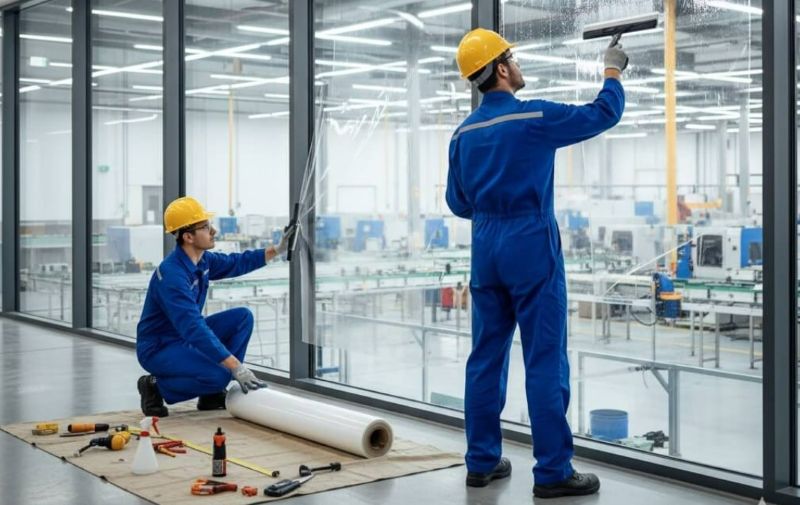
Commercial window film installation is a specialized craft that goes far beyond basic DIY window treatments. Professional installers utilize an array of sophisticated tools and employ precise techniques to achieve optimal results, especially for the larger panes and unique architectural demands of commercial properties.
This includes using precision cutting equipment for perfectly seamless edges, specialized squeegees for bubble-free application, and specific cleaning solutions to ensure pristine glass surfaces. The handling of large film panels without creasing or damaging them requires a level of skill and coordination developed through extensive training.
Investing in this specialized approach minimizes material waste, ensures the film adheres correctly, and prevents common issues like bubbling or peeling, all of which are crucial for the film to perform effectively over its guaranteed lifespan.
The Value of Certified and Experienced Installers: Minimizing Risks and Maximizing Durability
The adage “you get what you pay for” holds particular resonance in the context of window film installation. The value of certified and experienced installers cannot be overstated. These professionals possess a deep understanding of different film types, their optimal application methods, and manufacturer specifications, ensuring adherence to warranty requirements. An inexperienced installer, on the other hand, poses significant risks: poor adhesion, unsightly bubbles or creases, premature peeling, or even damage to the glass itself. Such issues compromise the film’s performance, diminish its aesthetic appeal, and ultimately jeopardize your long-term ROI, potentially leading to costly re-work or early replacement. Choosing certified experts is an investment in peace of mind and the assurance that your solar control film will deliver its full range of benefits for years to come.
Ensuring Long-Term Durability Through Professional Execution and Post-Installation Care
Professional execution is the bedrock of long-term durability for solar control window film. It encompasses meticulous site preparation, thorough cleaning of the glass, precise cutting and positioning, and the use of the correct application solutions. Every step is critical to achieving a strong, lasting bond between the film and the glass. Furthermore, expert installers provide clear guidance on post-installation care, advising on appropriate cleaning methods and products to maintain the film’s clarity and performance without causing damage. This professional touch extends beyond the day of installation; it is a commitment to the enduring performance of your investment. By ensuring the film is installed correctly and cared for properly, you unlock its full potential for energy savings, asset protection, and enhanced comfort, thereby maximizing its return on investment over its entire projected lifespan.
The Hidden Value: Calculating the ROI of Your Window Film Investment
Focusing solely on the initial solar control window film price overlooks its most significant financial impact: the substantial, long-term ROI delivered through energy savings, tenant retention, and asset protection, making it one of the smartest capital improvements a business can make. Understanding this value proposition transforms the conversation from a mere expense to a strategic investment.
Quantifying Energy Savings: Directly Reducing HVAC Load and Utility Bills
One of the most immediate and tangible returns on investment from solar control window film stems from its direct impact on energy consumption. These films are engineered to reject a significant portion of solar heat, preventing it from entering your building through windows. This reduction in heat gain directly lessens the workload on your heating, ventilation, and air conditioning (HVAC) systems.
- Reduced HVAC Cycling: With less heat entering, your air conditioning units run less frequently and for shorter durations, extending their lifespan and reducing maintenance needs.
- Lower Utility Bills: This decreased HVAC activity translates directly into lower electricity consumption, leading to noticeable reductions in monthly utility expenses. Businesses often see a rapid payback period on their film investment, sometimes within just a few years, solely from energy savings. This isn’t just about saving dollars on a bill; it’s about shifting operational expenses to a strategic capital improvement with a measurable return.
Enhancing Tenant Comfort, Productivity, and Retention
Beyond energy savings, the improved internal environment created by solar control window film significantly impacts occupant well-being and, by extension, your bottom line. Uncontrolled sunlight often leads to “hot spots” near windows, inconsistent temperatures, and excessive glare, all of which contribute to tenant discomfort.
- Consistent Temperatures: Film helps stabilize indoor temperatures, eliminating uncomfortable hot and cold zones.
- Reduced Glare: By reducing harsh glare, employees and tenants can work more comfortably without straining their eyes, directly improving productivity and reducing complaints.
- Increased Satisfaction: A more comfortable and productive environment translates into higher tenant satisfaction. For commercial landlords, this can mean reduced vacancy rates, higher retention, and the ability to attract new tenants who prioritize a quality workspace.
Protecting Interior Assets: Fade Protection and Superior UV Rejection Benefits
The sun’s ultraviolet (UV) rays are relentless and destructive, silently damaging interior furnishings, flooring, artwork, and merchandise. Solar control window films act as a critical shield, blocking up to 99% of harmful UV radiation.
- Preserving Valuables: This superior UV rejection dramatically slows down the fading process for carpets, upholstery, wood finishes, retail displays, and even sensitive documents.
- Extending Lifespan: By protecting these assets from premature degradation, businesses can significantly extend their lifespan, deferring costly replacement or refurbishment expenditures. Consider the cost of replacing faded merchandise, furniture, or artwork; solar film acts as an invisible insurance policy against these depreciating effects.
Contributing to Building Health: Glare Reduction and Optimizing Natural Light
A well-lit interior, predominantly by natural light, is often preferred for its aesthetic and psychological benefits. However, too much direct sunlight can lead to debilitating glare, making screens unviewable and creating uncomfortable conditions. Solar control window films expertly balance these factors.
- Mitigating Glare: Films reduce glare without significantly darkening the room, allowing occupants to enjoy natural light and exterior views comfortably.
- Improved Focus: This reduction in glare minimizes eye strain and headaches, fostering a healthier and more focused work environment. It optimizes the use of natural light, reducing the need for artificial lighting during daylight hours, further contributing to energy efficiency.

Long-Term Asset Preservation and Potential Increase in Property Value
Investing in solar control window film is not merely a short-term fix; it’s a strategic move for long-term asset preservation and enhancement. By mitigating the effects of solar heat and UV radiation, the film contributes to the structural integrity and aesthetic longevity of the building itself.
- Reduced Wear and Tear: Less strain on HVAC systems means less wear and tear and lower maintenance costs over time.
- Enhanced Curb Appeal: A building that effectively manages its interior environment and protects its assets often presents a more professional and appealing image.
- Increased Property Value: These tangible benefits—reduced operating costs, improved tenant satisfaction, and extended asset life—collectively contribute to a higher perceived and actual property value, making the building more attractive to potential buyers or future tenants.
Securing Your Investment: How to Get an Accurate Commercial Window Film Quote
Understanding the myriad benefits of solar control window film highlights its value, but translating this into a precise investment figure requires a methodical approach. Obtaining an accurate and transparent commercial window film quote is paramount to making an informed decision.
Preparing for Your Consultation: Key Information to Gather for Precision Pricing
Before engaging with a window film expert, gathering specific information about your property can streamline the quoting process and ensure accuracy. The more detail you provide, the more tailored and precise your estimate will be.
- Building Specifications:
- Total number and approximate dimensions of windows requiring film.
- Type of glass currently installed (e.g., single-pane, double-pane, low-e, tinted).
- Building orientation and specific areas with sun exposure issues.
- Your Primary Goals:
- Are you primarily seeking energy savings, glare reduction, UV protection, or a combination?
- Do you have specific comfort complaints from tenants or employees?
- Accessibility and Logistical Details:
- Are windows easily accessible from the interior and exterior?
- Are there any height or access challenges that might require specialized equipment?
- Preferred installation timeline.
The Importance of a Detailed On-Site Assessment for Comprehensive Planning
While your preparatory information is valuable, a professional, on-site assessment by a commercial window film expert is indispensable. Every building is unique, and a site visit allows for a thorough evaluation that cannot be replicated remotely.
- Precise Measurements: Accurate measurements of each window opening are taken, accounting for any irregularities.
- Glass Analysis: Experts can identify the type of glass, its condition, and its existing performance characteristics, which is crucial for recommending compatible and effective film solutions.
- Environmental Factors: The assessment considers sun exposure angles throughout the day, local climate conditions, and internal factors like occupancy and HVAC system design. This holistic view ensures the recommended film aligns perfectly with your building’s specific needs and your desired outcomes.

Understanding Itemized Pricing: What Should Be Included in Your Estimate
A reliable commercial window film quote should be clear, comprehensive, and itemized. Avoid estimates that provide only a single, vague figure. A transparent quote empowers you to understand precisely what you are paying for and compare proposals effectively.
Look for a breakdown that includes:
- Film Material Costs: The specific type and quantity of film recommended, including brand and performance specifications.
- Labor Costs: Installation time, complexity, and specialized skills required.
- Preparation and Cleanup: Costs associated with preparing the work area and ensuring thorough cleanup post-installation.
- Access Equipment: Any charges for lifts, scaffolding, or other equipment needed for hard-to-reach windows.
- Warranty Information: Details on the film manufacturer’s warranty and the installer’s warranty on labor.
- Additional Services: Any other agreed-upon services, such as glass cleaning or pre-existing film removal.
Asking the Right Questions to Ensure Transparency, Value, and a Tailored Solution
Engaging actively with your window film provider is key to securing an investment that delivers maximum value. Don’t hesitate to ask probing questions during your consultation and when reviewing the quote.
Consider asking:
- “What specific performance data (e.g., TSER, UV rejection) does this film offer, and how will it address my primary concerns?”
- “Can you provide references for similar commercial projects you’ve completed?”
- “What is your installation process, and how do you minimize disruption to our operations?”
- “What is the expected lifespan of the film, and what does the warranty cover?”
- “How will this film impact my specific utility bills, and can you provide an estimated payback period?”
By asking these questions, you ensure a clear understanding of the proposed solution, its benefits, and the commitment of your chosen provider, ultimately securing a valuable, long-term asset for your business.
Conclusion: Strategic Investment for a Smarter Commercial Property
Recapping the True Value Proposition of Solar Control Window Film
Throughout this discussion, we’ve explored the intricate factors that shape the investment in solar control window film. However, reducing this decision to a simple “cost per square foot” misses the profound, multifaceted value it delivers. The true proposition of solar control window film extends far beyond mere aesthetic enhancement; it is a strategic asset that fundamentally improves a commercial property’s operational efficiency, occupant well-being, and long-term financial health.
Consider its role in:
- Energy Efficiency: Significantly reducing solar heat gain translates directly into lower HVAC loads and substantial energy cost savings, creating a tangible return on investment.
- Occupant Comfort and Productivity: By mitigating glare and maintaining more consistent indoor temperatures, these films create a more comfortable and productive environment for employees and tenants, reducing complaints and improving satisfaction.
- Asset Protection: Blocking up to 99% of harmful UV rays protects interior furnishings, flooring, and merchandise from premature fading and degradation, preserving the value and appearance of your assets.
- Enhanced Safety and Security: Certain films offer an added layer of protection by reinforcing glass, making it more resistant to breakage from impacts, weather events, or attempts at forced entry.
- Improved Aesthetics and Privacy: Modern films can enhance a building’s exterior appearance, offering a uniform look, while also providing daytime privacy without sacrificing natural light.
These are not disparate benefits but interconnected elements that contribute to a superior commercial property experience and a healthier bottom line.
Why Focusing on Long-Term Benefits Outweighs Initial Commercial Window Tinting Cost
For the astute business owner, the initial commercial window tinting cost is not an expense but a capital improvement with a clear and compelling return on investment. Viewing it purely through the lens of upfront expenditure ignores the predictable and measurable financial advantages that accrue over the lifespan of the film.
The long-term benefits consistently outweigh the initial outlay through several key mechanisms:
- Accelerated Payback Period: With documented energy savings often ranging from 10-30%, many businesses experience a relatively rapid payback period on their film investment, sometimes within just a few years.
- Reduced Operational Expenses: Beyond direct energy savings, solar control film can extend the life of HVAC systems by reducing their workload, deferring costly repairs and replacements.
- Increased Property Value: A more energy-efficient, comfortable, and well-maintained building inherently holds greater appeal and value in the commercial real estate market, potentially commanding higher rental rates and attracting premium tenants.
- Tenant Retention and Attraction: In a competitive market, a building that prioritizes occupant comfort and sustainability is a powerful differentiator, leading to higher tenant satisfaction and lower vacancy rates.
The focus, therefore, must shift from the one-time cost to the continuous stream of savings and value generation. It’s an investment that pays dividends year after year, enhancing the property’s financial performance and its appeal as a modern commercial space.
Your Next Step Towards a More Efficient, Comfortable, and Valuable Building
Understanding the multifaceted value of solar control window film is the first step; the next is action. Given the unique characteristics of every commercial property—its orientation, existing glazing, climate, and specific operational needs—a generic solution rarely delivers optimal results.
To truly unlock the maximum potential and ensure a tailored approach that aligns with your financial goals, your next step should involve consulting with commercial window film experts. A professional assessment will typically include:
- On-site Evaluation: Analyzing your building’s specific solar exposure, window types, and existing energy consumption patterns.
- Performance Modeling: Utilizing data-driven insights to project potential energy savings and return on investment with various film options.
- Customized Recommendations: Proposing the most suitable film technologies and installation strategies to meet your building’s unique requirements and objectives.
This collaborative process ensures that your investment is not just informed, but strategic, positioning your property for enhanced efficiency, comfort, and long-term value.
Contact CoolVu for clear, accurate guidance on solar control window film price and what drives real long-term value for your building. Our team will assess your glass, performance goals, and installation requirements to recommend the ideal film solution—backed by proven products and expert installation—so you can invest confidently, reduce operating costs, and protect your commercial space for years to come.
MORE POSTS:
- The Power of Near-Me Searches – How hyper-local demand creates a profitable opportunity for window film entrepreneurs.
- The Overlooked Drain on Your Profits – How professional solar control window film installation stops compounding energy and comfort losses.
- Why Ceramic Film Outperforms Traditional Tint – How spectrally selective films deliver efficiency, clarity, durability, and long-term ROI.
- How Solar Heat Control Works – The science behind managing infrared heat, UV radiation, and visible light to stabilize indoor environments.