- Beyond Blinds and Curtains: The Limits of Traditional Window Coverings
- How Advanced Window Film Technology Solves the Heat Problem
- Selecting the Best Window Tint for Afternoon Sun
- The CoolVu Difference: Expertise and Lasting Results
- Conclusion: A Clearer, Cooler, More Cost-Effective Future
- Frequently Asked Questions
Beyond Blinds and Curtains: The Limits of Traditional Window Coverings
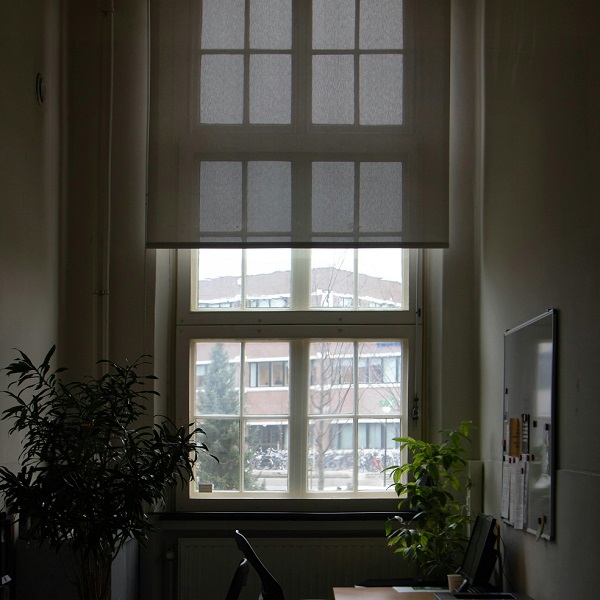
For decades, the go-to solution for an overly bright window has been a set of blinds or a heavy curtain. While these traditional coverings offer privacy and can certainly block visible light, they fail to address the primary problem of west-facing windows: solar heat gain. When it comes to creating a truly comfortable and energy-efficient commercial space, these methods are fundamentally flawed.
Why Blinds and Drapes Trap Heat Instead of Rejecting It
The most significant limitation of interior blinds and drapes is a matter of simple physics. They are installed on the inside of the glass, meaning solar energy has already passed through the window and entered your building’s thermal envelope.
The fabric or vinyl of the covering absorbs the sun’s energy, heats up significantly, and then radiates that heat directly into the room. The space between the window and the closed blind can become a pocket of intensely hot air, acting like a passive radiator. While you may have blocked the glare, you have not stopped the heat. You’ve simply converted it from direct radiant heat to convective heat within your space, forcing your HVAC system to work just as hard, if not harder, to remove it.
The Trade-Off: Sacrificing Natural Light and Views for Shade
Traditional window coverings force a difficult choice: suffer from the intense sun or plunge your space into darkness. To get any relief from the heat and glare, you must close the blinds or draw the curtains. This immediately severs the connection to the outdoors, blocks valuable natural light, and obstructs what might be a premium view.
For a business, the consequences are tangible. An office that relies on artificial lighting all afternoon feels less welcoming and can even increase energy costs. A restaurant or retail store with blocked windows appears closed and uninviting from the outside, while customers inside lose the ambiance of a sunlit space. You are forced to trade the benefits of your windows for a moment of shade, a compromise that modern solutions make unnecessary.
The Inefficiency of Traditional Solutions for Solar Heat Gain Control
From a building performance standpoint, blinds and curtains are an exceptionally inefficient tool for managing solar heat gain. Because they trap heat inside the building, they do very little to reduce the actual cooling load on your HVAC system. Your thermostat still registers the rising temperature from the heat radiating off the coverings, and the air conditioning continues to run, battling a problem that is being actively generated at the window.
This makes them a reactive, rather than a preventative, solution. They react to the light, but they do nothing to prevent the thermal energy from entering and remaining within the conditioned space. The result is a cycle of high energy consumption without a meaningful increase in comfort.
The Short Lifespan and Maintenance of Mechanical Coverings
Finally, the practical considerations of maintenance and durability cannot be overlooked. Traditional window coverings, with their many moving parts and exposed surfaces, are prone to a host of issues that add to their total cost of ownership over time.
For any commercial property, this translates to ongoing operational headaches and expenses.
- Mechanical Failure: Cords snap, wands break, and tilting mechanisms jam, requiring frequent service calls or replacement.
- Damage and Dirt: Slats on blinds are easily bent or broken, and both blinds and drapes accumulate dust, allergens, and grime, demanding regular, often tedious cleaning.
- Fading and Degradation: The same intense UV radiation that heats your space also causes fabrics to fade and plastics to become brittle and discolored over time.
- Inconsistent Appearance: Employees or customers often adjust blinds inconsistently, creating a messy and unprofessional appearance from both inside and out.
How Advanced Window Film Technology Solves the Heat Problem
The intense heat and glare pouring through west-facing windows can feel like an unsolvable problem. Many businesses resort to closing blinds or drawing curtains, but this creates a dark, cave-like environment and only traps heat, forcing your HVAC system to work overtime. The good news is that there is a far more effective, modern solution. Instead of just blocking light, advanced window films are engineered to reject the specific wavelengths of solar energy that produce heat, all while preserving your natural light and view.
Introducing Spectrally Selective Film: The Core Technology
At the heart of this solution is a category of products known as spectrally selective window films. Unlike traditional dark or reflective tints that block heat by blocking light, these advanced films are designed with precision. They can differentiate between the desirable wavelengths of daylight and the undesirable wavelengths of infrared heat and ultraviolet (UV) radiation.
Think of it as a smart filter for your windows. This technology allows high levels of visible light to pass through, keeping your space bright and welcoming. At the same time, it acts as a powerful barrier against the invisible heat and damaging UV rays that are most responsible for discomfort, high energy bills, and fading interiors.
Deconstructing Solar Energy: Blocking UV and Infrared Heat, Not Light
To understand how this works, it helps to know what solar energy is made of. The sun’s energy that reaches us through a window is comprised of three main components:
- Visible Light (44% of energy): This is the light we see, which brightens our rooms.
- Infrared Radiation (53% of energy): This is the primary source of solar heat you feel. It’s invisible to the human eye but has a major impact on room temperature.
- Ultraviolet (UV) Light (3% of energy): This invisible radiation is the main cause of fading in furniture, flooring, and merchandise. It also poses health risks with prolonged exposure.
Spectrally selective films are engineered to target the problematic parts of this spectrum. They are designed to be highly transparent to visible light but highly reflective or absorptive to infrared and UV radiation. By rejecting the majority of infrared heat, the film keeps your interior space significantly cooler without making it darker.
Understanding Key Metrics: Solar Heat Gain Coefficient (SHGC) Explained
When evaluating window film, one of the most important performance metrics is the Solar Heat Gain Coefficient, or SHGC. This number, which ranges from 0 to 1, represents the fraction of solar radiation admitted through a window.
A lower SHGC number means less solar heat is being transmitted into your building. For example, a standard dual-pane window might have an SHGC of 0.70, meaning it allows 70% of the sun’s heat to pass through. Applying a high-performance spectrally selective film can lower that SHGC to 0.35 or even less. This effectively cuts the solar heat gain in half, leading to a dramatic reduction in cooling costs and a more stable, comfortable indoor temperature.
For any business struggling with afternoon heat gain, a low SHGC is your primary weapon in the fight for lower energy bills and improved comfort for employees and customers.
How to Reduce Heat From Windows Without Blocking Natural Light
The answer lies in choosing a film that prioritizes a low SHGC while maintaining a high Visible Light Transmission (VLT). It is a common misconception that a window has to be dark to be effective against heat. Modern film technology has completely changed this reality.
By leveraging spectrally selective properties, manufacturers can produce films that are virtually clear yet reject a tremendous amount of solar heat. This allows property owners to solve their heat and glare issues definitively without sacrificing the natural light that makes a commercial space feel open, productive, and inviting.
Selecting the Best Window Tint for Afternoon Sun
Once you understand the science, the next step is choosing the right product. Not all films are created equal, and selecting the best one for intense afternoon sun requires looking at a few specific features. A film that performs well on a north-facing window may be completely inadequate for the solar onslaught of a western exposure.
Key Features to Look for in a High-Performance Film
When comparing films specifically for heat rejection, focus on these key performance indicators. A reputable window film expert can provide a specification sheet for any product that details these metrics.
- Low Solar Heat Gain Coefficient (SHGC): As discussed, this is the most critical factor for reducing heat. Look for the lowest number you can find that meets your other needs.
- High Visible Light Transmission (VLT): This measures how much visible light passes through the film. A higher VLT means a clearer, less tinted appearance.
- High Infrared (IR) Rejection: This metric specifies how much of the invisible heat-producing radiation is blocked. Look for films that reject 90% or more of infrared energy.
- High UV Rejection: Most quality films block 99% or more of UV rays. This is a standard feature you should always expect.
Balancing Heat Rejection with Visible Light Transmission
The ideal film for a west-facing window offers the best of both worlds: maximum heat rejection with minimal impact on natural light. This is where professional guidance is invaluable.
For a retail storefront, you might prioritize a very high VLT to keep your merchandise clearly visible, even if it means a slightly higher SHGC. For a conference room or office where glare on computer screens is a major issue, a film with a slightly lower VLT might be a better choice, as it will cut more glare while still providing significant heat rejection. The goal is to find the perfect balance that solves your specific problems.
The Importance of UV Rejection for Fading Protection
While heat is often the primary complaint, the destructive power of UV radiation should not be underestimated. For any business with merchandise in a window display, expensive office furniture, or custom artwork, UV damage can be a significant source of financial loss.
By blocking over 99% of UV rays, window film acts as a powerful sunscreen for your property. It drastically slows down the fading process, extending the life of your valuable assets and keeping your interiors looking fresh and new for years. This added layer of protection is a standard benefit of nearly all professional-grade window films.
Comparing Film Types: Ceramic vs. Metallic and Their Applications
Two of the most effective technologies for combating solar heat are ceramic and metallic films. While both can be effective, they have key differences that make one a superior choice for most modern applications.
Ceramic Films: The Modern Standard
Ceramic films are constructed using nano-ceramic particles that are invisible to the eye but are exceptional at absorbing and rejecting infrared heat.
- Performance: They offer outstanding heat rejection without the need for a dark or shiny appearance.
- Clarity: Ceramic films provide the highest levels of optical clarity and VLT, preserving natural light and your view.
- No Signal Interference: Because they contain no metal, ceramic films will not interfere with cell phones, Wi-Fi, or other electronic signals, making them the ideal choice for modern offices and commercial buildings.
Metallic Films: An Earlier Technology
Metallic films work by reflecting solar energy away from the glass. They are made by embedding a micro-thin layer of metal, like aluminum or nickel.
- Performance: These films can be very effective at rejecting heat and are highly durable.
- Appearance: Their primary drawback is a reflective, mirror-like appearance, which may not align with the desired aesthetic of a building.
- Signal Interference: The metal content in these films can interfere with cellular and radio signals, a significant issue for today’s connected businesses.
For most west-facing window applications, particularly in a commercial setting, advanced ceramic films offer a superior combination of high performance, aesthetic neutrality, and technological compatibility.
The CoolVu Difference: Expertise and Lasting Results

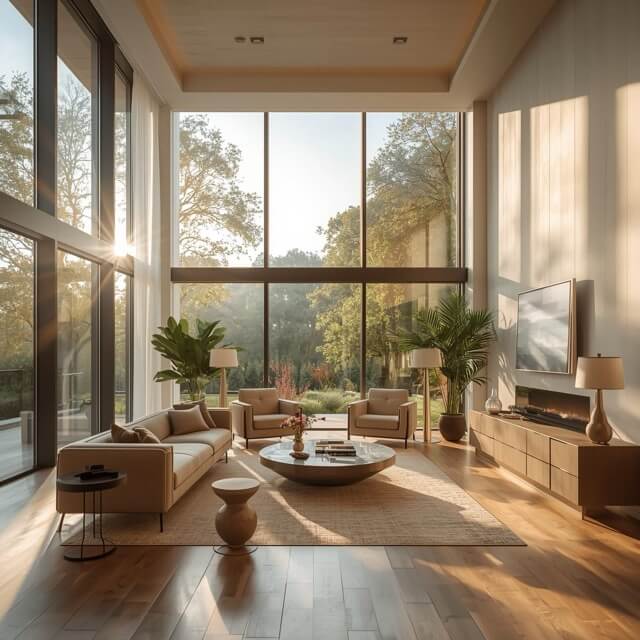
Understanding the science behind solar control window film is the first step. The second, and equally important step, is recognizing that the full benefit of this technology is only realized through expert application. The film itself is a high-performance product, but its effectiveness and lifespan are directly tied to the skill and knowledge of the team you entrust with your property.
Why Professional Installation is Critical for Performance and Longevity
Advanced window film is not a simple peel-and-stick decal. It is a sophisticated material that requires a meticulous, multi-step process to ensure it performs as designed. A professional installation guarantees that the film forms a perfect, durable bond with the glass. This is achieved through a clean-room-like preparation of the window surface, precise cutting of the film to exact dimensions, and expert squeegee techniques that eliminate all air and moisture.
When installation is handled by an amateur or an inexperienced crew, the results are immediately obvious and detrimental. You will see bubbles, trapped dust particles, and peeling edges that are not just unsightly but also create weak points. These imperfections compromise the film’s ability to reject heat evenly and can lead to premature failure, completely negating your investment and leaving you back where you started.
Leveraging Three Decades of Industry Experience for Your Property
Choosing the right film for a west-facing window is more complex than it sounds. Factors like the type of glass, the building’s elevation, local climate, and the specific use of the space all influence which product will deliver the best results. This is where deep industry experience becomes invaluable. With a foundation of over 30 years in the window film industry, the CoolVu network brings an unparalleled level of diagnostic expertise to every project.
Our specialists don’t just sell you a product. They analyze your unique situation to prescribe the ideal solution. A ground-floor retail storefront may need a film that balances strong heat rejection with a crystal-clear appearance, while a high-rise office might benefit from a dual-reflective film that provides superior glare control and daytime privacy. This tailored approach ensures you get the maximum return on your investment, solving your specific problem without compromise.
The Power of a National Network of Certified Window Film Experts
CoolVu operates as a national network of locally owned and operated businesses, all held to the same high standards of certification and training. For you, this means you receive the dedicated service and accountability of a local expert who is invested in your community. At the same time, that expert is backed by the collective knowledge, resources, and best practices of a nationwide organization.
This structure provides a distinct advantage, especially for businesses with multiple locations. You can achieve a consistent standard of quality, product, and service across all your properties, managed through a streamlined process. Whether you have one building or one hundred, you are tapping into a system built on shared expertise and a commitment to excellence.
Our Commitment: A Proven System for Guaranteed Results
Ultimately, your goal is to solve a problem. You need to reduce heat, cut energy costs, and create a more comfortable environment for your employees and customers. Our commitment is to deliver that result through a proven, end-to-end system. This system is about more than just installing window film; it’s about providing a comprehensive solution you can count on.
The CoolVu process ensures your project is handled professionally from start to finish, delivering lasting performance and peace of mind.
- Expert Consultation: We begin by thoroughly understanding your needs and assessing your property to recommend the most effective solution.
- Precision Installation: Our certified technicians use proprietary methods and tools to ensure a flawless, durable application.
- Quality Assurance: We stand behind our work, conducting a final inspection to confirm the installation meets our rigorous standards.
- Comprehensive Warranty: Your investment is protected by a manufacturer-backed warranty, providing long-term assurance of quality and performance.
Conclusion: A Clearer, Cooler, More Cost-Effective Future
The relentless afternoon sun doesn’t have to dictate the comfort, productivity, and energy costs of your property. While it’s easy to reach for traditional solutions, understanding the science behind solar heat reveals a far more effective approach. Moving forward means choosing a solution that works smarter, not just harder, to create a better indoor environment.
Recapping the Superiority of Film Over Traditional Coverings
Throughout this discussion, a clear distinction has emerged. Traditional window coverings like blinds and drapes operate on a simple principle: they block visible light. While this provides relief from glare, it’s an incomplete solution to the problem of solar heat. These coverings absorb solar energy and trap it between the fabric and the glass, where it eventually radiates into your space, forcing your air conditioning to work overtime. You lose your view, sacrifice natural light, and still fight a losing battle against the heat.
Specialized solar control window film, on the other hand, offers a scientifically superior alternative. Instead of just blocking light, it actively rejects the sun’s infrared heat and harmful UV rays directly at the window’s surface. This technology addresses the root cause of the problem, stopping the heat before it can enter your building. The result is a solution that preserves your valuable natural light and outdoor views, creating a more pleasant and open atmosphere while delivering powerful heat-blocking performance.
The Tangible ROI of Investing in Solar Heat Control
For a business or property owner, any improvement must be measured by its return on investment. The benefits of installing high-performance window film on west-facing windows are not just about comfort; they translate directly into tangible financial gains and operational improvements.
- Drastic Energy Savings: By rejecting a significant percentage of solar heat, window film dramatically reduces the load on your HVAC system, especially during peak afternoon hours. This leads to immediate and sustained reductions in your monthly energy bills, often providing one of the quickest paybacks of any building upgrade.
- Enhanced Productivity and Patron Comfort: An environment free from oppressive heat and distracting glare is a more productive one. Employees can work more comfortably and effectively without battling eye strain or hot spots. In a retail or hospitality setting, comfortable customers are proven to stay longer and spend more, directly impacting your bottom line.
- Protection of Interior Assets: The same UV radiation that harms our skin also causes expensive furniture, flooring, artwork, and merchandise to fade and deteriorate. Professional window films block up to 99.9% of these damaging rays, acting as a constant guardian for your valuable interior investments and significantly extending their lifespan.
Next Steps: How to Get a Professional Assessment for Your Property
Making the right choice for your property begins with understanding its unique challenges. A professional consultation is the most critical step toward finding a permanent solution to your solar heat and glare problems. An expert can accurately assess your specific situation, including window orientation, existing glass type, and your primary goals, whether they are energy savings, glare reduction, or both.
During a professional assessment, a specialist will provide you with data-driven recommendations and samples, allowing you to see and feel the difference for yourself. This tailored approach ensures you invest in a solution perfectly matched to your needs, guaranteeing the best possible performance and return on investment. Taking this step empowers you to move beyond temporary fixes and implement a lasting strategy for a cooler, more cost-effective, and more comfortable property.
Frequently Asked Questions About Heat Control Window Film
We understand that investing in a building upgrade comes with important questions. Below, we’ve answered some of the most common inquiries from property and business owners considering heat control window film.
How much can I expect to save on energy costs?
Energy savings are one of the most significant benefits, but the exact amount will vary. Factors like your local climate, the size and number of your windows, your building’s insulation, and the efficiency of your current HVAC system all play a role.
However, it’s common for commercial properties to see a reduction in cooling costs between 15% and 30% after installing high-performance window film. For buildings with significant sun exposure, particularly on west-facing facades, the savings can be even greater. Over time, these savings create a compelling return on investment, often allowing the project to pay for itself in just a few years.
Will window film make my building look dark from the outside?
This is a common concern, but the answer is no, not unless you want it to. Modern window film technology offers an incredible range of options. While some businesses prefer a dark or reflective film for enhanced privacy and a sleek, uniform appearance, it is not a requirement.
Many of our most popular films are what we call “spectrally selective.” These advanced films are designed to be nearly undetectable, allowing for maximum natural light to pass through while specifically targeting and rejecting the infrared and UV wavelengths that cause heat and fading. You can maintain your building’s original architectural look while gaining powerful solar control.
What is the lifespan of professionally installed window film?
High-quality, professionally installed window film is a durable, long-term solution. For commercial applications, you can expect a lifespan of 15 years or more. The longevity of the film is directly tied to two factors: the quality of the film material itself and the expertise of the installation.
CoolVu films are manufactured to the highest industry standards and are protected by a comprehensive manufacturer’s warranty against issues like cracking, peeling, or demetallizing. Our certified installation process ensures a flawless, contamination-free bond to the glass, guaranteeing performance and durability for years to come.
How is window film maintained and cleaned?
Maintaining your window film is simple and requires no special equipment. After the film is installed, there is a curing period of about 30 days where the film fully bonds to the glass. After that, you can clean your windows as you normally would, with a few minor adjustments.
- Use soft, clean materials like a microfiber cloth or a rubber squeegee.
- Clean with simple solutions of soap and water or common, ammonia-free glass cleaners.
- Avoid using abrasive scrubbers, razor blades, or harsh chemical cleaners, as these can damage the film’s protective hard coat.
Your CoolVu expert will provide you with complete care instructions upon completion of your project.
Does window film affect my view at night?
This is an excellent question that touches on how light interacts with glass. Any window, even without film, can have some reflection at night when the interior is brightly lit and the outside is dark. Some types of window film, particularly those with higher exterior reflectivity, can increase this effect.
However, this is precisely why choosing the right film is so important. Modern ceramic and other low-reflectivity films are specifically engineered to minimize this nighttime interior reflection, preserving your view out. During your consultation, we will discuss your priorities. For a restaurant that needs to showcase a nighttime city view, we would recommend a different film than for a daytime office where maximum heat rejection is the primary goal.