If you’ve been searching for one way window film near me, you’re likely dealing with a specific problem: too much visibility into your home or business, too much heat pouring through your glass, or both. In 2026, with energy costs climbing and remote work keeping more people at home during peak sun hours, the demand for effective window privacy film and heat control has never been higher.
CoolVu provides professional installation of mirror window film and reflective window tint across local neighborhoods in cities like Phoenix, Gilbert (Arizona), Atlanta, Columbus, and dozens of communities nationwide. The core benefit is straightforward: you see out clearly while people outside see a modern mirror finish during the day. This article will help you compare DIY static cling rolls against pro-grade films, understand realistic costs, and decide whether a nearby CoolVu installer is your best next step.
Table of Contents
- What Is One Way Window Film (and How Does It Really Work)?
- Is One Way Window Film Right for Your Home or Business?
- One Way vs. Frosted Window Film vs. Traditional Tint
- DIY One Way Window Film vs. Professional Installation
- Common Myths & Mistakes About One Way Window Film
- Pricing: What One Way Window Film Typically Costs in 2026
- Frequently Asked Questions About One Way Window Film
- How to Get Started: Schedule Your Local CoolVu Estimate
What Is One Way Window Film (and How Does It Really Work)?
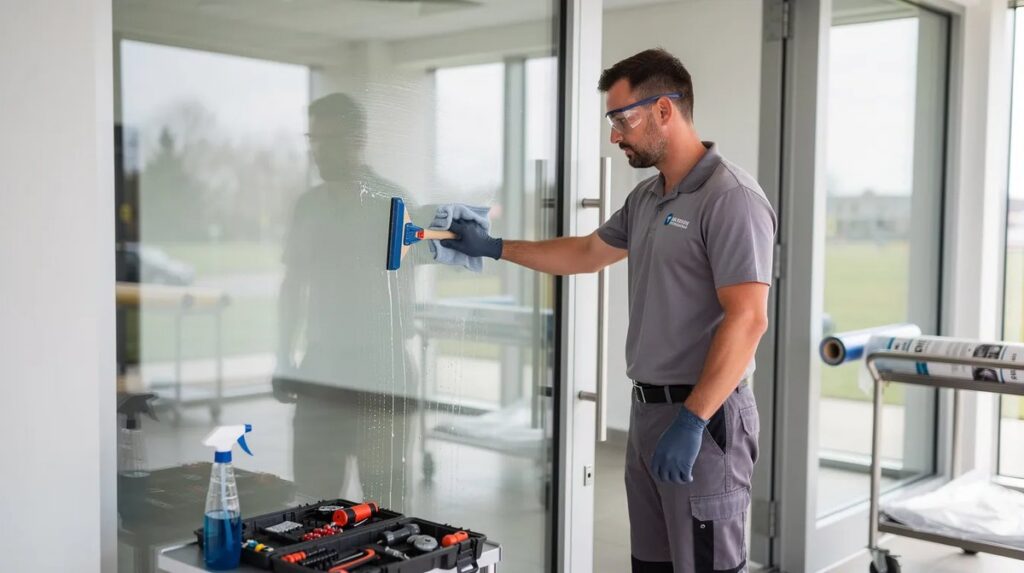
One way window film-sometimes called one way window tint or reflective window film-is a thin, metallized or nano-ceramic layer applied to glass that creates a reflective effect on one side while remaining transparent on the other. It delivers daytime privacy by leveraging the natural difference in light levels between the outside and inside of a building.
The science is simple: the brighter side of the glass becomes a mirror, while the darker side stays see-through. During the day, sunlight overwhelms interior light, so the exterior surface reflects like a mirror and passersby cannot see in. From inside, you maintain a clear outward view because your side is the darker environment. This is driven by reflectivity, not just darkness-which is what separates one way mirror film from plain dark tint.
Modern reflective window film products in 2026 typically offer a Visible Light Transmission (VLT) around 10–20% for strong privacy grades, exterior reflectance of 50–70%, infrared rejection around 85%, and UV rejection of 97% or higher. One important caveat: at night with lights on inside, the mirror effect reverses, so curtains or blinds are still advised for full 24/7 privacy.
Is One Way Window Film Right for Your Home or Business?
The most common pain points driving people to search for one way window film near me are nosy neighbors, street-level windows, home offices plagued by glare, and rooms that overheat from direct sun exposure. If any of these sound familiar, this product is worth serious consideration.
Think about a 2026 Phoenix house with west-facing glass that turns the living room into an oven every afternoon. Or a ground-floor Atlanta condo where pedestrians can see directly into the bedroom. Or a Columbus storefront with large display windows causing merchandise to fade. These are the exact scenarios where one way film delivers the most value.
Ideal use cases include:
- Living rooms facing sidewalks or busy streets
- Bedroom windows needing daytime privacy
- Glass front doors and entry sidelights
- Office conference rooms visible from lobbies
- Medical clinic reception areas
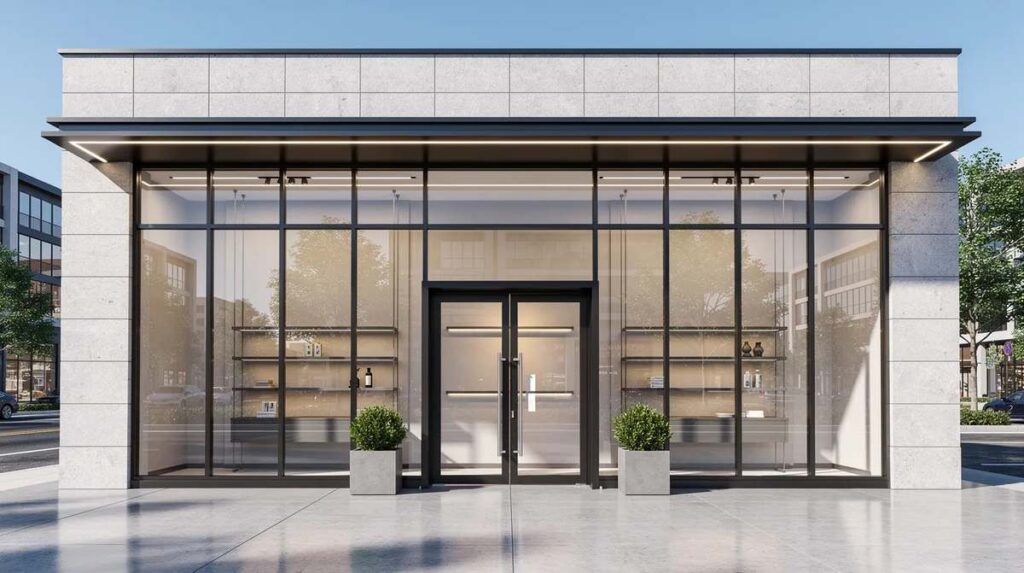
- Retail storefronts with large glazing
- Kitchen windows above sinks facing neighbors
When one way film might not be ideal alone:
- Bathrooms needing 24/7 privacy-a frosted window film is better here
- Fully shaded north-facing windows where reflectivity stays weak
- Historic properties with strict exterior appearance guidelines
If you’re unsure which film type suits your space, scheduling a local CoolVu consultation is the fastest way to find out.
Key Benefits of One Way Window Film Near Me
Here’s what you actually gain when you install quality one way window film:
- Daytime privacy: One way window film provides daytime privacy by allowing visibility from the inside while blocking outside views. Passersby see only a mirror finish.
- Heat control: Reflective and nano-ceramic films can reduce heat by 81%, cutting solar heat gain dramatically in sun-baked rooms. The reflective properties of one way window film can help reduce energy costs throughout the cooling season.
- UV protection: One way window film can block up to 93% of UV rays, while high-quality window films from premium manufacturers block up to 99% of harmful UV rays-protecting furniture, floors, artwork, and skin.
- Glare reduction: One way window films help reduce glare on screens and indoor discomfort, improving visibility on TVs, monitors, and laptops.
- Energy savings: Window films can lower summer air conditioning costs by reducing solar heat gain, which means less AC cycling, lower utility bills, and longer HVAC equipment life.
- Safety: One way window films can make glass more shatter-resistant during breakage, holding fragments in place and reducing injury risk. This is not a replacement for dedicated security film but adds a meaningful layer of protection.
- Aesthetics: A clean, uniform reflective look in silver, black silver, or neutral tones modernizes older buildings and creates great curb appeal.
One Way vs. Frosted Window Film vs. Traditional Tint
People frequently confuse these three products when searching for window privacy film, so here’s a clear breakdown.
One way mirror film vs. frosted window film:
- One way film gives directional daytime privacy with a reflective finish and a clear outward view
- Frosted film provides 24/7 privacy by diffusing light, but eliminates any clear view in either direction
- Frosted works best in bathrooms and interior partitions; one way works best on exterior-facing glass
One way reflective window tint vs. traditional tint:
- Traditional dyed tint darkens glass but doesn’t reflect strongly-privacy is poor compared to reflective film
- Dyed tint absorbs heat rather than reflecting it, offering weaker heat control
- Car-style window tint on large home windows often causes distortion and warranty issues
Smart pairing examples: Use frosted film on bathroom sidelights, one way film on your street-facing living room, and skip automotive-grade tint for residential glass entirely. CoolVu helps mix and match-reflective on the front facade, frosted on side windows, and decorative film on interior glass-for a cohesive result.
Popular One Way Window Film Styles (Mirror, Black Silver & More)
“One way” is a category, not a single look. CoolVu offers multiple reflective window film options to suit different aesthetics and performance needs.
- Black silver mirror window film: Dark interior appearance with a strong exterior mirror effect. VLT around 10–15%, exterior reflectance around 60–70%. Popular in urban homes and office buildings.
- Neutral reflective film: Less shiny, more smoky or gray. VLT 20–40%, moderate reflectance. Ideal for HOA-sensitive neighborhoods and professional buildings.
- Tinted mirror tones: Bronze, gold, or blue accents provide warmer or cooler finishes while maintaining privacy. VLT around 15–25%.
- Dual reflective film: High exterior reflectance but lower interior reflectance, preserving better nighttime view clarity from inside.
- Hybrid privacy films: Mild reflection combined with soft frosted or gradient elements for design-forward spaces.
A local CoolVu consultant brings real samples so you can see the exact effect on your own glass before committing to a product.
How Daytime Privacy Really Works (and Its Limits)
The principle is straightforward: one way films work best when the outside light is brighter than the inside light. The brighter side becomes the mirror, the darker side stays transparent.
Best conditions: Strong outdoor daylight, moderate indoor lighting, and exterior-facing glass on east, south, or west exposures.
Limits: One way window film effectiveness can be affected by lighting conditions outside and inside. The mirror effect reverses at night when indoor lights are on-people outside can then see in. Overcast days and heavily shaded exteriors also weaken the effect. To maintain privacy at night, curtains or blinds are recommended when using one way films.
Practical tips:
- Use dimmable interior lights near filmed windows in the evening
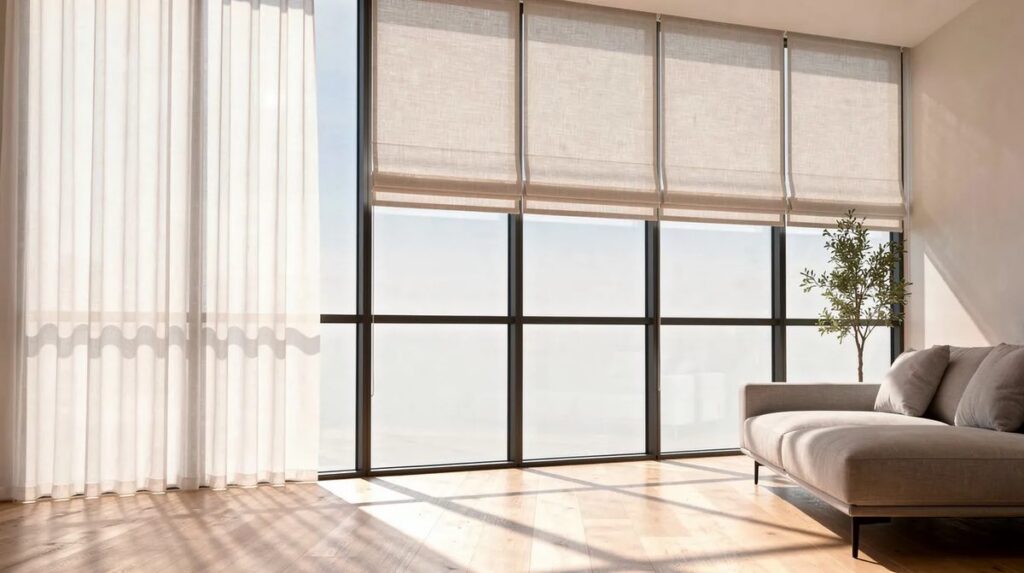
- Combine film with sheer curtains for transitional hours
- Consider frosted film for bathrooms and bedrooms used heavily after dark
- CoolVu installers perform on-site light assessments during free estimates to set accurate expectations
Home Use Cases: Where to Install One Way Window Film
Open-concept living, oversized sliders, and suburban lots with close neighbors make 2026 residential layouts particularly vulnerable to privacy and heat issues.
Typical installation locations:
- Living room picture windows and front-facing bedrooms
- Kitchen windows above sinks facing neighbors
- Sliding patio doors and entry sidelights
- Home offices and home gyms with large glass
Scenario-based examples:
- Street-level townhomes wanting privacy from sidewalk foot traffic
- New construction with large south-facing glass overheating in summer
- Lakefront homes needing glare reduction off the water
CoolVu installers check film compatibility with double-pane and low-E glass, review manufacturer warranties, and handle building code awareness, often recommending architectural window films for residential and building applications that balance privacy, efficiency, and appearance. Before your visit, gather a simple window list-sizes, orientation, and room use-to streamline quoting.
Commercial & Institutional Use Cases
Businesses and institutions searching for one way window film near me typically need a combination of privacy, branding control, and indoor comfort improvements.
Key property types: Retail storefronts, medical offices, banks, schools, law firms, government buildings, and coworking spaces.
Practical applications include: Secure reception areas, observation rooms, conference-room glass facing lobbies, and employee break areas. Reflective window film can also be integrated with printed graphics and murals-a CoolVu specialty-for branding, wayfinding, or decorative facades.
Facility managers benefit from more stable interior temperatures, better occupant comfort, and potential alignment with sustainability and ESG initiatives when they work with professional window tinting and security window film installation services that tailor solutions to their building needs.
DIY One Way Window Film vs. Professional Installation
The attraction of low-cost DIY rolls promoted online is understandable. A static cling black silver film in a small size can cost just a few dollars. Here’s an honest comparison.
DIY pros:
- Low upfront price (roughly $1–$5 per square foot for materials)
- It is a static cling film that requires no adhesive-static cling films require no glue for installation
- Removal leaves no sticky residue on the glass
- Installation is quick and can be done in seconds for small panes
- The film can be repositioned during installation if alignment is off
- Good for test areas or renters who need a temporary solution
DIY cons:
- Higher risk of bubbles, edge lift, and miscuts on large windows
- Performance variance from product to product-quality can be poor
- Limited warranties and no compatibility check for insulated or low-E glass
- Hard to achieve a seamless, professional finish across multiple windows
Professional advantages:
- Commercial-grade mirror film with advanced heat control and nano-ceramic technology
- Precise trimming, dust control, and manufacturer-backed warranties up to 10–15 years
- Glass compatibility assessment before any film is applied
- CoolVu teams are trained franchise professionals who complete most single-family home projects in one day
How Professional One Way Film Installation Works with CoolVu
The standard CoolVu process is designed to minimize disruption and maximize results.
Steps:
- Free on-site or virtual consultation with glass inspection and film recommendations
- Same-day or scheduled measurement of all windows
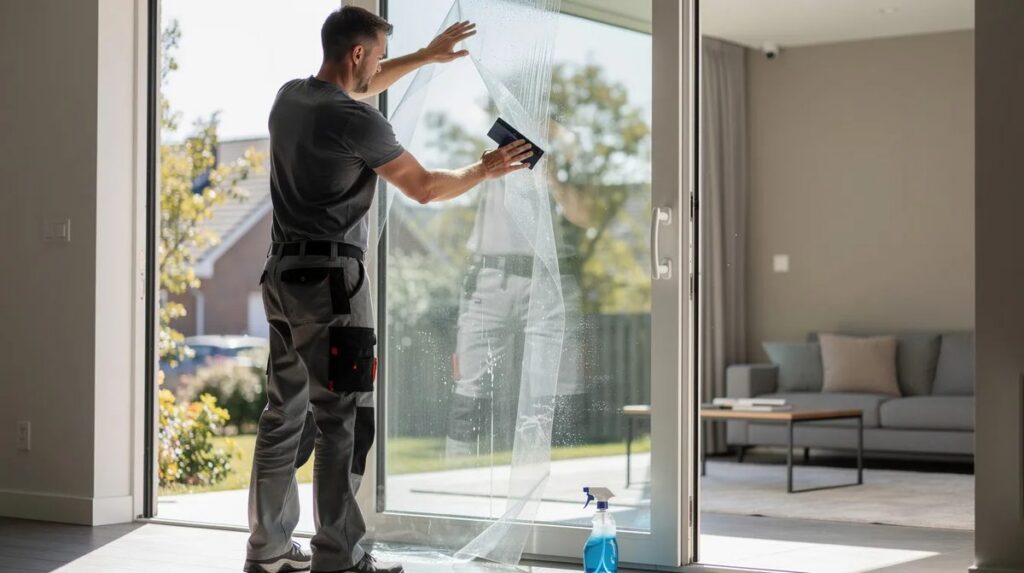
- Installation day: thorough surface cleaning, safe removal of hardware if needed, and careful application of reflective window film. Installation involves spraying soapy water on the glass, positioning the film, then using a squeegee to remove air and water for a smooth bond
- Edge detailing and final inspection
Aftercare: Expect a drying period of 7–30 days depending on climate. Minor haze and small water pockets are normal and dissipate on their own. Clean with soft cloths and non-ammonia cleaners only. CoolVu installers protect floors and furnishings and leave the space clean.
Heat Control, Energy Savings & Comfort
In hot regions-and in 2026 with higher electricity rates nationwide-the energy case for one way window film is compelling. The film reflects solar heat, which can lower summer cooling costs substantially. Advanced films shield against heat-causing light by reflecting infrared radiation before it enters the room.
One way window film can reduce heat by 81%, and nano-ceramic films significantly reduce heat indoors even on extreme days. In west-facing windows on a 95°F afternoon, occupants typically notice a tangible temperature drop. High-performance reflective films can achieve Total Solar Energy Rejected (TSER) rates of 75–82%, translating directly to reduced AC cycling, longer equipment life, and more even temperatures throughout the building.
Commercial owners and schools can pair window films with other upgrades to pursue utility rebates or green building credits where available.
Glare Reduction & Screen Comfort
With remote work and hybrid schooling still prevalent in 2026, screen visibility matters more than ever. One way reflective window tint reduces harsh sunlight on TVs, laptops, and large monitors, improving contrast and reducing eye strain throughout the day.
Ideal rooms include home offices, gaming rooms, media rooms with big windows, and conference rooms with projectors. CoolVu can combine one way tint with interior shades for users who need very precise light control in design studios or editing suites.
Design & Aesthetic Considerations
Mirror film subtly changes a building’s exterior appearance, so aesthetics deserve attention. Benefits include a uniform exterior look, a modern glass facade effect, the ability to hide cluttered interiors from street view, and enhanced reflections of landscaping.
Some HOAs or architectural review boards have reflectivity limits. CoolVu can supply spec sheets, samples, and mockups to facilitate approvals. Coordinate your film color-silver, smoke, or black silver-with existing frames, siding, and roof colors for a cohesive design that adds real curb appeal.
Common Myths & Mistakes About One Way Window Film
There’s a lot of conflicting information online about mirror window film. Let’s clear up the most common misunderstandings.
| Myth | Reality |
|---|---|
| “It works the same at night” | The effect reverses when indoor lights are brighter than outdoor light. Blinds are needed after dark. |
| “It will make the room dark and gloomy” | VLT varies by product. Films in the 25–35% range feel like wearing quality sunglasses-dimmer but not dark. |
| “It always damages glass” | Properly matched film does not damage glass. Issues arise only from installing incompatible film on certain insulated units. |
| Common mistakes to avoid: |
- Applying reflective film to textured or already-frosted glass
- Ignoring manufacturer glass-type guidelines for double-pane or low-E windows
- Choosing too dark a film in already-dim rooms
- CoolVu provides glass compatibility checks and realistic before/after expectations to prevent disappointment
How to Choose the Right One Way Film Near You
Turn a vague “one way window film near me” search into a clear decision by evaluating these factors:
- Privacy level needed: How much do passersby actually see? Ground floor vs. upper story matters.
- Heat gain per room: West- and south-facing glass benefit most from strong reflective films.
- Orientation: North-facing windows may not generate enough exterior light for a strong mirror effect.
- Existing window treatments: Films layer well with blinds and sheers.
- Neighborhood standards: Check HOA or historic district rules before ordering high-reflectance products.
Start with high-priority areas-front-facing and west-facing windows-and expand later to fit your budget. CoolVu’s franchise model means local owners operate in their own communities and understand regional climate and style preferences, and can also recommend privacy window film and decorative interior glass solutions when full-time privacy is the priority.
Pricing: What One Way Window Film Typically Costs in 2026
Costs vary by film type, glass size, access difficulty, and region, but here are realistic ballpark numbers. Residential professional installation of reflective window film typically runs $5–$15 per square foot all-in. For a single 15-square-foot street-facing window, expect $60–$150. A whole-home project covering 20 windows generally falls in the $1,500–$4,500 range.
DIY static cling mirror film rolls are cheaper at $1–$5 per square foot for materials, but coverage is limited and durability is shorter. Request a free CoolVu estimate for exact local pricing-quotes typically itemize film type, labor, and any prep work. The value equation improves when you factor in lower energy bills, extended furnishing life, and added indoor comfort.
What to Expect After Installation (Care & Longevity)
Modern reflective window films are built to last when properly installed and maintained. Wait the recommended curing time (7–30 days) before cleaning. Use soft cloths and non-abrasive, non-ammonia cleaners. Avoid scraping the film surface with blades.
Minor haze and small water pockets during curing are completely normal and will dissipate. Quality films installed by authorized dealers like CoolVu carry warranties of 10–15 years covering peeling, bubbling, discoloration, and adhesive failure. Keep your warranty documents and schedule an inspection if you ever notice unusual changes.
Local & Regional Considerations for One Way Film
Climate, altitude, and sun exposure patterns matter when selecting reflective window tint. High-heat zones like Arizona, Nevada, and Texas favor stronger heat control films. Home window tinting services are available in Gilbert, Arizona, and across the Sun Belt where demand is highest, with dedicated teams such as residential window tinting and window film installation in Tucson serving local homeowners. Coastal climates need corrosion-resistant films. Colder climates may prioritize glare and UV reduction over peak heat rejection.
Building codes, historic district rules, and HOA guidelines differ by city. CoolVu franchises navigate these requirements locally and recommend films tested for your specific climate zone and window construction, whether you’re working with window tinting and window film installation experts in Northern Virginia or other regions.
Why Local Expertise & a Franchise Network Matter
Choosing a nearby, trained installer for a permanent home improvement beats ordering from an anonymous online seller every time. CoolVu’s franchise model delivers locally owned businesses backed by national training, vetted products, safety protocols, and centralized support.
Local teams understand typical housing stock-1990s stucco homes in Phoenix, brick colonials in the Midwest, glass-heavy condos in coastal cities-and tailor film recommendations accordingly, as seen with window tinting and window film installation in North Milwaukee and similar markets. The same quality standards apply whether it’s a single sunroom or an entire office tower.
Frequently Asked Questions About One Way Window Film
These FAQs address the most common questions CoolVu receives from customers across the country and reflect the expertise of a leading national window film and surface solutions provider.
Will one way mirror film stop my neighbors from seeing inside during the day?
Yes. One way window film provides daytime privacy when exterior light is significantly brighter than interior light. Films with 50–70% exterior reflectance and VLT around 10–20% deliver excellent results. At dusk or on heavily overcast days, the effect weakens.
Does reflective window film make my rooms too dark?
It depends on the product. VLT of 10–15% feels noticeably dimmer, while 25–35% VLT films feel more like wearing quality sunglasses. CoolVu can demo samples on your actual glass so you see the real-world effect before committing.
Can one-way window tint actually lower my AC bills?
Absolutely. Films rejecting 70–85% of infrared heat meaningfully reduce cooling loads. The film reflects solar heat, which can lower summer cooling costs-especially on south- and west-facing glass in hot climates.
Is one way film safe for my double-pane or low-E windows?
Compatibility depends on glass type and film selection. Some reflective metallic films can create thermal stress on certain insulated units. CoolVu evaluates your glass and uses manufacturer-approved pairings to avoid issues.
How long does one way window film last?
Quality reflective films typically last 10–15 years or more with proper maintenance. Longevity depends on sun exposure, whether the film is interior or exterior mounted, and product tier.
Can I remove or replace the film later?
Yes. Adhesive-based films can be removed professionally. Static cling versions peel off easily and leave no residue, though they may not perform as well as pro-grade films. Upgrading to newer, higher-performing film generations is common among returning customers.
Why Choose CoolVu for One Way Window Film Near You
CoolVu is a trusted national franchise with local teams specializing in window films, architectural surfaces, and privacy solutions. Every installer is trained and certified, with access to advanced nano-ceramic and reflective window films backed by strong manufacturer warranties.
Beyond one way tint, CoolVu offers decorative and frosted window film, security film, printed graphics, murals, and surface finishes-making it easy to handle comprehensive property upgrades in a single project. CoolVu works with homeowners, commercial property managers, schools, and government facilities on projects ranging from a single sunroom to entire building facades, with locations like CoolVu of Northeast Columbus providing comprehensive window and wall enhancement solutions.
The approach is people-first: clear explanations, no-pressure recommendations, transparent pricing, and genuine respect for your home or workplace during every installation.
How to Get Started: Schedule Your Local CoolVu Estimate
If you’re ready to solve privacy, heat, or glare issues, the next step is simple:
- Gather basic information: your address, window locations, and a few photos if possible
- Visit the CoolVu website or call your nearest franchise location
- Written proposals clearly outline film options, timelines, and investment. Ask about combining one way mirror film with frosted or decorative films in the same project for a cohesive, customized solution.
**Contact your local CoolVu team today to explore one way window film near you and see live samples on your own glass.