Table of Contents
- How energy saving window films actually reduce home energy use
- Window film science 101
- Types of energy saving window films
- Matching the right film to your climate
- Comfort, glare, UV, and privacy benefits
- Costs, ROI, and rebates in 2026
- Why choose CoolVu for residential window films
Why Energy Saving Window Film for Homes Matters in 2026
Utility rates across most U.S. regions have climbed 15–25% since 2021, and the trend shows no sign of reversing. For most homeowners, the monthly energy bill is the one recurring expense that feels hardest to control-especially during hot summers and bitter winters. Yet one of the biggest culprits behind those inflated bills is hiding in plain sight: your windows.
Windows can account for 25–30% of a home’s total heating and cooling energy use. Untreated glass lets solar heat pour in during summer and allows indoor warmth to escape during the colder months. Modern energy saving window films address both problems by controlling how heat moves through glass-without the mess, lead time, or price tag of full window replacement.
This guide is for homeowners who want to lower bills, keep natural light, and avoid a major construction project. You’ll learn how window films work, which types deliver the best results by climate, what a realistic ROI looks like in 2026, and why working with a professional installer like CoolVu makes a measurable difference.
How Energy Saving Window Films Actually Reduce Home Energy Use
Every window in your home is a two-way energy gate. In summer, direct sunlight pushes solar heat through the glass and raises indoor temperatures, forcing your air conditioner to work harder. In winter, heat radiates outward through the same glass, driving up heating costs. Energy saving window film controls how heat moves through glass in both directions.
These films are ultra-thin layers-typically polyester or nano ceramic particles bonded together-applied directly to the inside surface of your existing windows. They work by selectively filtering the solar spectrum. Films block a significant amount of infrared energy (the invisible wavelength responsible for heat) and reject harmful UV rays, while still allowing visible light to pass through. Solar control films can block up to 70% of solar heat gain, keeping your rooms cooler without darkening them.
The practical effect is straightforward: window films can lower cooling and heating bills by up to 30%, and energy saving films can reduce HVAC run time by 20–30%. Less cycling means your system lasts longer, needs fewer repairs, and uses less electricity or gas. Solar control films help stabilize indoor temperatures in summer, so your thermostat isn’t constantly chasing comfort.
Unlike heavy drapes or blinds that force you to choose between comfort and a view, energy saving window film blocks excessive solar heat in summer and retains indoor warmth in winter-all while your shades stay open. You keep natural light and outdoor views without paying a penalty on your energy bills.
Window Film Science 101: Low Emissivity, SHGC, and Other Key Metrics
Understanding a handful of technical terms helps you choose the right window film rather than simply picking the darkest tint on the shelf. Here are the metrics that matter most.
Solar heat gain coefficient (SHGC) measures how much solar heat passes through your window assembly (glass plus film) into your home. Lower numbers mean less heat coming in. Clear double-pane windows typically score 0.60–0.80. Adding a high-performance energy saving window film can drop that effective SHGC to roughly 0.20–0.30-a dramatic reduction in solar heat gain.
Low emissivity (low-E) describes a coating’s ability to reflect long-wave thermal infrared radiation. In everyday terms, a low emissivity surface bounces radiant heat back to its source. Low-E films reflect indoor heat, improving insulation in winter by keeping warmth inside, and they also reduce heat gain from the sun in summer. Low-E films reflect indoor heat, reducing winter heat loss, which is why they perform well in year round comfort applications.
Visible Light Transmission (VLT) is the percentage of visible light that passes through the glass and film. The best window films balance high VLT (keeping rooms bright) with strong solar rejection. Spectrally selective films, for example, often transmit 50–70% of visible light while still filtering out most heat.
Total Solar Energy Rejected (TSER) is the single “big picture” number for heat reduction. It tells you what percentage of all incoming solar energy-UV, visible, and infrared-the film keeps out. Good residential energy saving films land in the 40–70% TSER range.
You don’t need to memorize these numbers. But when you’re comparing products, asking your installer to walk through the SHGC, VLT, and TSER on the spec sheet will tell you far more about real-world performance than a marketing label ever could.
Types of Energy Saving Window Films for Homes (and When to Use Each)
No single film type is universally “best.” The right window film depends on your climate, window orientation, glazing type, and how you want your home to look. Here’s how the major categories compare.
Low-E insulating films are engineered to reduce heat loss in winter by reflecting indoor heat back into homes, while also offering moderate summer solar control. They’re an excellent choice for older single pane or early double-pane windows in heating-dominated climates. Think of them as giving your glass improved insulation without touching the frame.
Ceramic films use non-conductive nano ceramic particles to absorb infrared energy rather than reflecting it. Ceramic films can block 50% to 80% of total solar energy, and they do it without metallic layers-so there’s no signal interference with Wi-Fi or cell service. Ceramic films block heat without reducing natural light, which makes them a favorite for homeowners who want clarity and performance.
Spectrally selective films use multi-layer optical coatings to allow high levels of natural light while filtering out heat-producing infrared and UV rays. They maintain a neutral appearance with minimal reflectivity, making them ideal for HOA-regulated neighborhoods or homes where aesthetics matter.
Reflective and dual-reflective films offer high heat rejection with a mirrored appearance on the exterior. They’re effective for maximum solar heat control but can change your home’s curb appeal and may not meet all HOA guidelines.
Insulating films enhance insulation by reducing heat loss, making them a strong fit for colder regions where lowering heating costs is the priority.
Even DIY films are generally adhesive-based and designed for straightforward installation, but the performance gap between consumer-grade products and professionally installed films is significant-more on that later.
A professional such as CoolVu will typically recommend different film types for different sides of your home based on sun exposure, so you get the best balance of performance and appearance room by room.
Matching the Right Window Film to Your Climate, Windows, and Lifestyle
The same film that’s perfect for a Phoenix home may be a poor choice for a Minneapolis bungalow. Choosing the right film depends on local climate and window orientation-getting this wrong can actually increase your energy costs.
Hot and sunny climates (Southwest, South Florida, Gulf Coast): Prioritize films with high TSER, low SHGC, and strong infrared rejection. Ceramic or spectrally selective films that focus on blocking solar heat and cutting cooling costs are the go-to options here. These climates see the fastest payback periods because home cooling costs are such a large share of the annual bill.
Cold or heating-dominated climates (Upper Midwest, Northeast, Mountain West): Emphasize low e films that reduce winter heat loss through the glass while still offering moderate summer solar control. Window film can make a single pane window perform closer to a double-pane window in thermal efficiency, which is a major upgrade for older homes. Thermal films enhance insulation, reducing heat loss in winter without blocking all beneficial solar gain.
Mixed or four-season climates (Atlanta, Charlotte, Denver): All-season energy saving window films that both reduce heat gain in summer and add insulation in winter deliver the best overall value. Look for moderate SHGC and good emissivity ratings.
Lifestyle and design preferences also matter. Homeowners who value clear views and natural light tend to prefer lighter spectrally selective films. Those who want privacy or a sleek modern exterior may choose more tinted or reflective options. There’s no wrong answer-only wrong mismatches.
CoolVu and other professional installers often conduct room-by-room assessments, taking readings and noting issues like afternoon hot spots or severe glare before recommending the right architectural window film solutions for each window.
Beyond Energy Savings: Comfort, Glare Reduction, UV Protection, and Privacy
Most homeowners reach out about energy costs, but they stay happiest with their window films because of day-to-day comfort improvements and protection they didn’t fully expect.
Glare reduction is one of the most immediately noticeable benefits. Energy saving films reduce glare by up to 95%, which translates to easier TV watching in a west-facing living room at 5 p.m., reduced eye strain in home offices with large south-facing windows, and fewer washed-out reflections on laptop and tablet screens. Premium options like ceramic window film can improve indoor comfort by reducing glare across every room that gets direct sunlight. Window films eliminate hot spots near windows, so you can finally use that reading chair next to the glass without baking.
UV protection is another major advantage. Window films block up to 99% of harmful UV rays-both UVA and UVB. High-performance films block over 99% of harmful UV rays, which is critical because UV radiation is the primary cause of fading in hardwood floors, area rugs, artwork, and upholstery. UV protection helps prevent furniture and flooring from fading, and it prolongs the life of interior finishes like wood stain and fabric dyes. The difference is visible within just a few years when you compare treated rooms to untreated ones.
Daytime privacy improves as well. Many energy saving films and dedicated privacy window films make it harder to see into your home from the street while preserving your outward view and natural light. You get the openness of large windows without feeling exposed.
Security films are also worth considering. Some products combine impact resistance with solar control, adding a layer of protection against break ins and storm-related glass breakage alongside their energy benefits. A professional window film installation service can help you choose the right security and solar control combination for your home. These are especially popular in hurricane-prone areas and ground-floor applications.
Costs, Energy Savings, and ROI of Residential Window Film in 2026
One of the first questions homeowners ask is whether the cost is worth it. The short answer: energy saving window film is generally a more affordable alternative to replacing older windows, and the payback timeline is surprisingly fast.
Typical 2026 residential pricing:
| Film Category | Installed Cost per Sq Ft | Best For |
|---|---|---|
| Standard solar control | $5–$8 | Budget-friendly heat reduction |
| Ceramic / spectrally selective | $9–$14 | High clarity + strong performance |
| Premium low-E / nano-ceramic | $14–$18+ | Maximum year round comfort |
| For a complete home project, expect roughly $800–$1,500 for a small home or condo, $1,500–$4,000 for an average 2,000 sq ft home, and more for large custom properties or premium film types. Compare that to window replacement, which commonly runs $8,000–$15,000 for a full home-a cost effective upgrade by any measure. |
A concrete ROI example: A home with a $250/month average electric bill where cooling makes up about 40% ($1,200/year). Energy saving films can lower cooling costs by 15–30%. At a 20–25% reduction, you save roughly $240–$360 per year. With an installed cost of $1,500–$3,000, the payback window falls in the 3–5 year range-and the film keeps saving for 15–20 years after that. Window film can lower cooling and heating bills by up to 30% in the most favorable conditions.
Factors that shift your numbers include total glass area, window height and accessibility, film type, local energy rates, and existing window performance. Professional films typically offer superior long-term performance and warranties, making them the better investment compared to bargain products.
Many utility companies and state energy programs offer rebates or incentives for energy efficiency upgrades including window films. Working with an experienced provider like CoolVu Glass & Surface Solutions makes it easier to document the upgrade and take advantage of available incentives. Check your local programs-they change frequently but can meaningfully reduce your upfront cost.
Unlike many renovations, a professionally installed film project starts saving energy the same month it goes on the glass. There’s no waiting period for immediate comfort improvements.
Installation Process: What Homeowners Can Expect with Professional Window Film
Professional window film installation is quick, clean, and far less disruptive than window replacement or any major construction project. Most homeowners are surprised by how simple it is.
Here’s what a typical CoolVu residential project looks like:
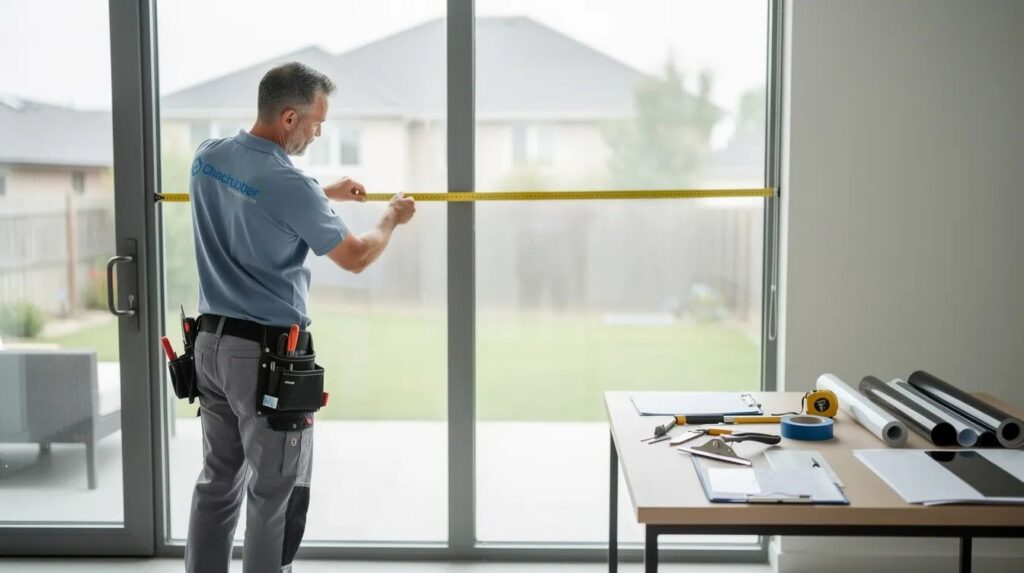
- Consultation and measurements – A local installer visits your home, evaluates your glass types and window orientation, measures each window, and discusses your goals (energy saving, glare reduction, privacy, or all three).
- Film selection – Your installer brings samples that can be held against the glass so you can see exactly how each film type looks and feels in your space before committing.
- Scheduling and prep – On installation day, the crew protects your floors and furnishings, then thoroughly cleans each pane to ensure a clean finish free of debris.
- Application – Film is precision-cut, positioned on the interior glass surface, and bonded using a solution that allows repositioning. Professional tools squeegee out moisture and air for a bubble-free result.
- Trim, edge finishing, and inspection – Edges are trimmed to exact tolerances, and every window is inspected for optical clarity and adhesion quality.
Most standard single-family homes are completed in a single day. Larger or more complex properties may take two days. Your windows remain structurally intact throughout.
After installation, expect a short curing period-thin haze or small water pockets may be visible for a few days to a few weeks depending on film type and weather. Performance reaches full spec once the film is fully cured.
Reputable providers like CoolVu carry insurance, follow manufacturer guidelines, and register warranties, protecting you against defects. They can also advise when advanced options like smart window film make sense for spaces that need on-demand privacy or multi-use glass surfaces. DIY window film kits often lead to bubbling, creases, poor optical clarity, and reduced energy performance-issues that cost more to fix than professional installation would have cost in the first place.
Maintenance, Lifespan, and Warranty of Energy Saving Window Films
Once films are installed and cured, they require almost no maintenance compared with other home upgrades. There are no filters to change, no moving parts, and no seasonal adjustments.
Lifespan: Many professional-grade residential films last 15–20 years or more when properly installed. Low-E and ceramic films in mild climates often exceed that range. Most homeowners end up updating films for style reasons or during a remodel-not because the film has failed.
Care instructions:
- Wait the recommended period (typically 30 days) before your first cleaning.
- Use soft cloths or a rubber squeegee with a mild soap-and-water solution.
- Avoid abrasive pads, razor blades, and ammonia-based cleaners, which can damage the scratch-resistant coating.
- No special recoating or reapplication is ever needed-routine window cleaning keeps clarity and performance intact.
Warranties from quality manufacturers typically cover peeling, bubbling, discoloration, adhesive failure, and sometimes glass breakage related to thermal stress. When you work with a professional network like CoolVu, warranty documentation and service claims are handled for you-no chasing down a manufacturer on your own.
If you remodel, replace windows, or update your home’s exterior in the future, existing films can be safely removed and new films applied by professional installers without any damage to the glass.
Common Mistakes Homeowners Make When Choosing Window Film (and How to Avoid Them)
Online shopping and DIY options make it easy to choose the wrong product or underestimate what proper installation requires. Here are the mistakes that cost homeowners the most.
Choosing by darkness instead of performance. Many people assume a darker tint means better heat rejection. In reality, a heavily tinted film may darken your rooms without meaningfully lowering your SHGC or TSER. The result: less natural light and only marginal energy saving. Always compare performance specs, not just appearance.
Buying the cheapest film available. Lower-end dyed products may fade, turn purple, bubble, or delaminate within a few years. That erases any initial cost savings and can sometimes void your glass warranty. A film that lasts 3 years at half the price is never cheaper than one that lasts 20.
Ignoring climate and window orientation. Installing a cold-climate low e window film designed for reducing heat loss on a home in a very hot climate-where cooling costs dominate-can actually increase your overall energy bills. The reverse is equally wasteful.
Going DIY on large residential panes. Trapped dirt, visible seams, edge lifting, and poor optical clarity are common with self-installed films. These problems can’t be fixed without full removal and reinstallation, which often costs more than hiring a pro from the start.
Smart selection checklist:
- Consult a professional installer who will assess your specific glass and climate
- Review TSER, SHGC, VLT, and emissivity ratings on the spec sheet
- Match the film to your climate, lifestyle, and aesthetic preferences
- Confirm warranty coverage and installer credentials before signing
Why Choose CoolVu for Energy Saving Window Film for Your Home
CoolVu is a national franchise network specializing in window films, window coverings, decorative and security films, and architectural surface finishes for homes and commercial properties. Every location is locally owned and backed by consistent manufacturer training, so you get the expertise of a national brand with the accountability of a neighbor, all supported by the broader CoolVu Glass & Surface Solutions organization.
What sets CoolVu apart from many small contractors:
- Consultative approach – CoolVu installers conduct in-home evaluations, taking readings on each window to recommend the right film for each elevation and room rather than offering a one-size-fits-all solution.
- Wide product portfolio – Access to a full range of energy saving, low e, ceramic, decorative, and security films means your home gets exactly what it needs, not just what’s in stock.
- HOA and specialty glass expertise – CoolVu teams are experienced with HOA requirements, historic properties, and specialty glass types that many competitors avoid.
- Residential and commercial capability – Whether you need film on your kitchen windows today and your office building next month, CoolVu handles both.
CoolVu solutions are designed to balance energy savings, natural light, aesthetics, and privacy-not just maximize tint or reflectivity. The crews treat your home with care, protect your furnishings, explain every option clearly, and follow up after installation to make sure you’re satisfied.
Local CoolVu franchise owners build their businesses on referrals, online reviews, and repeat customers, whether you’re working with CoolVu of Northeast Columbus, CoolVu of North Milwaukee, or another nearby location. When you’re happy with the results in your living room, they want to be the first call for your bedroom, sunroom, or investment property.
FAQs About Energy Saving Window Film for Homes
These FAQs address the most common concerns homeowners raise during in-home consultations about performance, appearance, and practical details.
Can window films really reduce my home’s energy bills by 20–30%?
Properly specified energy saving window films often reduce cooling energy use by 15–30% in sun-exposed homes, especially those with large west- and south-facing glass areas. The exact savings depend on local climate, existing window efficiency, your HVAC system, and occupant behavior. But measurable reductions are common-many homeowners track the difference on year-over-year utility statements and see lower cooling costs year round in warm climates.
Will energy saving window film make my rooms too dark or change the view?
Modern ceramic and spectrally selective films are designed to maintain high visible light transmission while filtering heat and UV. Most homeowners notice clearer, more comfortable views rather than a heavy “tint.” Darker tints are available for privacy or style, but they’re not required for strong energy saving performance. During a CoolVu consultation, samples are placed on your glass so you can judge the look before committing.
Do energy saving window films work on double-pane or low-E windows?
Many films are engineered for use on standard double-pane and even some existing low e window glass, but the specific film must be compatible to avoid thermal stress. Professional installers evaluate glass type, thickness, and spacer system before recommending a product-ensuring both performance and warranty compliance.
How long does residential window film last before it needs to be replaced?
Professionally installed, high-quality films typically last 15–20 years or more. Some low-corrosion ceramic and low-E products exceed that in mild climates. Most homeowners choose to update for style or during a remodel rather than because the film has failed.
Will window film void my window warranty?
Some window manufacturers restrict aftermarket films, but many professional film brands offer glass breakage and seal failure warranties that supplement or replace OEM coverage. Working with a certified installer like CoolVu ensures correct film selection and documentation, so warranty issues are minimized and clearly handled if they arise.
Can I install energy saving film myself to save money?
DIY kits exist, but large residential panes and complex shapes make bubble-free, optically clear installation difficult without professional tools and experience. Small installation errors can significantly reduce energy performance and lifespan, making professional installation the better long-term value despite a higher upfront cost.
Next Steps: Schedule a Home Energy Window Film Consultation with CoolVu
You’ve seen the numbers: lower energy costs, indoor comfort that lasts all day, glare reduction that makes every room more livable, uv protection that preserves your floors and furnishings, and maintained natural light-all without the disruption or expense of window replacement. Energy saving window film is one of the most practical upgrades available to homeowners in 2026.
The easiest next step is a free in-home or virtual estimate from your local CoolVu franchise, whether that’s CoolVu of Lower Fairfield County, CoolVu of The Villages, or another service area near you. Your installer will bring film samples, measure your glass, review your energy priorities, and provide a clear written proposal with no obligation. If budget is a factor, CoolVu can phase your project-starting with the hottest rooms or the most sun-exposed elevations-so you get immediate comfort improvements and energy savings while spreading the investment over time.
Ready to take control of your energy bills and indoor comfort? Call your nearest CoolVu location, submit an online request, or visit the CoolVu location finder to get started with energy saving window film for your home.
With energy prices continuing to climb and temperature swings growing more extreme, the homes that perform best are the ones that manage every square foot of glass intelligently. Window film is a smart, proven improvement that pays you back in comfort and savings for years to come.