
July 2026
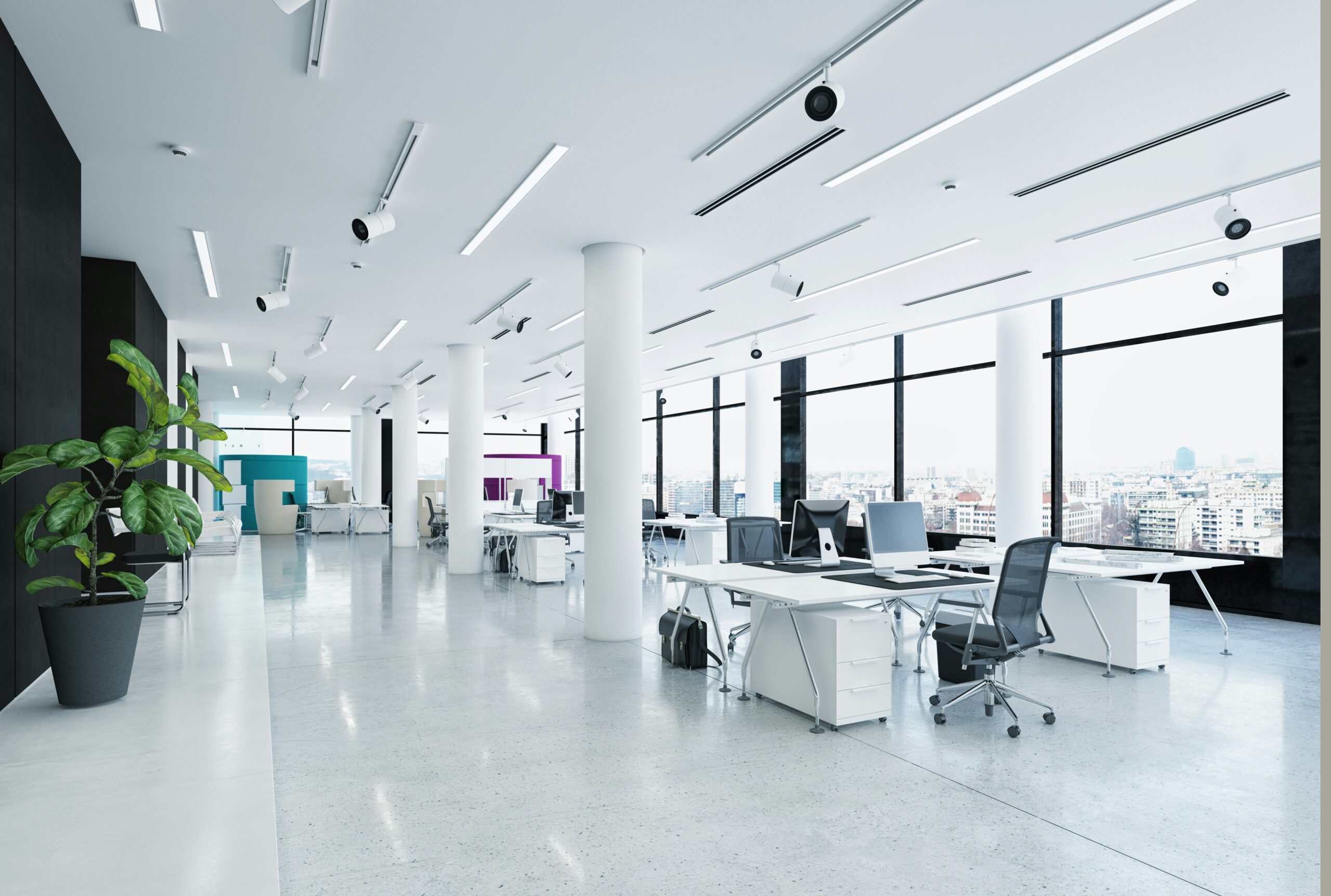
Walk into a modern hospital, a well-run hotel, or a large corporate campus and you’ll notice something you might not be able to name. The spaces feel controlled. Not sterile — controlled. Temperatures stay consistent. Glare doesn’t chase you from room to room. The light is natural but not aggressive.
That is part of the design. Part of it, is operations. A significant part of it, in buildings constructed or retrofitted in the last two decades, is what’s on the glass.
Institutional and commercial operators figured out something about windows a long time ago that the residential market is only beginning to internalize: the glass itself is a system component. It performs — or fails to perform — just like HVAC, lighting, and insulation. Unlike those systems, it was historically ignored.
The Institutional Advantage: Volume and Accountability
Here’s why large institutions got to this realization before most homeowners did.
A hospital running 24 hours a day with hundreds of occupied rooms cannot afford for patient comfort to vary based on which side of the building a room is on. A hotel with 200 rooms across multiple sun exposures needs consistent guest experience regardless of whether someone is in a south-facing corner suite or a north-facing interior room. A corporate campus with thousands of employees working near floor-to-ceiling glass cannot accept that productivity dips every afternoon in the west wing.
When you operate at scale, the inefficiencies that individual homeowners absorb as personal annoyances become measurable operational problems. From energy invoices to guest complaints. They even influence lease renewals and affect employee satisfaction surveys.
The accountability that comes with operating large, occupied buildings forced a rigorous look at where thermal comfort problems actually originated. That investigation led, consistently, to the same place: windows.
What Each Sector Learned — And How It Applies at Home
Hospitals and Healthcare Facilities
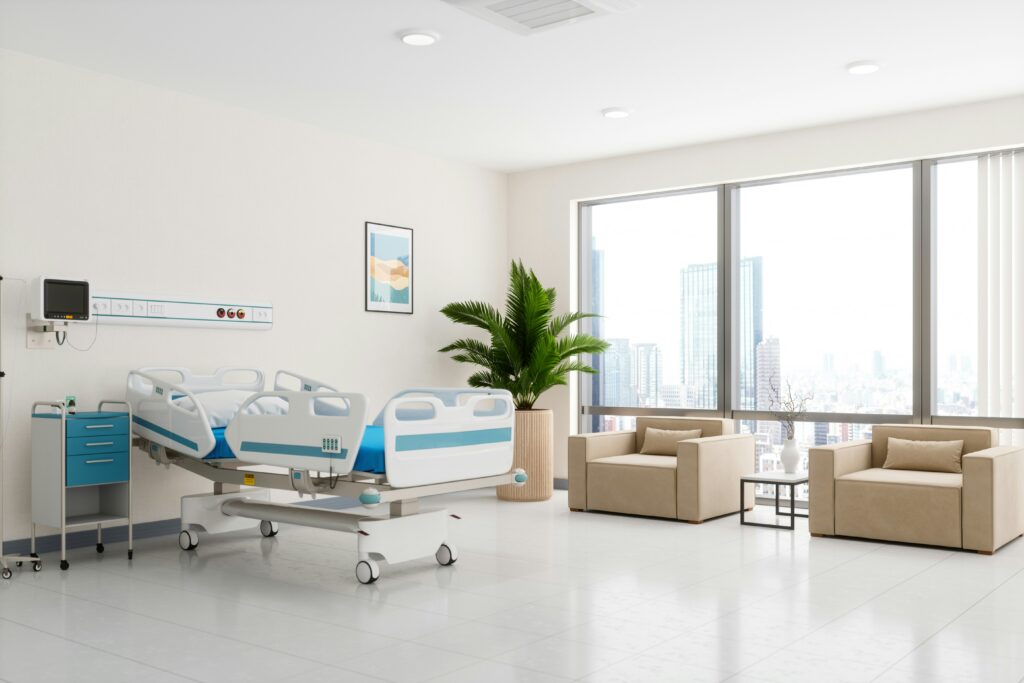
Healthcare environments face a specific challenge that mirrors an often-overlooked residential one: UV radiation in occupied spaces.
Patients in recovery rooms, rehabilitation wards, and long-term care settings may spend hours or days near windows without the ability to control their exposure. Healthcare designers and facility managers have addressed this by specifying window film that blocks ultraviolet radiation — not primarily for energy savings, but for occupant protection.
The same logic applies at home, with less urgency but equal consistency. Someone working from a home office near south-facing windows, a retiree spending afternoons reading by a window, a child in a sun-bright bedroom — all are accumulating UV-A exposure that standard glass does nothing to stop. The institutional response to this problem was systematic. The residential response, when it exists at all, is usually an afterthought.
Healthcare facilities also prioritize thermal consistency across rooms. Temperature variation between sun-exposed and non-sun-exposed spaces creates discomfort for patients who cannot simply move to a cooler area. Solar control film applied to south and west-facing glass reduces that variation without the HVAC overcorrection.
Overcooling some spaces to compensate for overheating others — is one of the most common comfort complaints in residential homes. Institutions solved it at the building envelope. Homeowners solve it, imperfectly, at the thermostat.
Hotels
The hotel industry’s relationship with window performance is almost entirely guest-experience driven. A guest who cannot sleep because afternoon light turns their west-facing room into a sauna will mention it in a review. A guest who pulls the blackout curtain at 2 PM & disconnects from the view they paid for is a missed opportunity.
The solution hospitality operators landed on isn’t blackout curtains for daytime — it’s reducing the solar intensity that makes the room uncomfortable in the first place. Spectrally selective window film cuts solar heat gain without eliminating the view or the natural light that makes premium rooms feel premium.
The residential translation is direct: the home office that becomes unusable on summer afternoons, the bedroom where sleep is disrupted by heat buildup, the living room where you default to closing the blinds by noon. These are the same problems hotels solved — the scale is different, the physics isn’t.

Schools and Educational Buildings
The research on classroom temperature and learning outcomes is clear enough that building design guidance now accounts for it. Studies have consistently found that student performance declines in thermally uncomfortable environments — and that sun-exposed classrooms in afternoon hours, particularly those facing west or south, create exactly those conditions.
School facilities teams have responded by prioritizing solar control in glazing specifications for new construction and retrofits. The goal isn’t aesthetic — it’s functional. Consistent thermal comfort across all classrooms, regardless of orientation, so that which side of the building a student sits on doesn’t affect their performance.
At home, the parallel is a room where a child does homework in afternoon heat while the rest of the house stays comfortable. Or a home office where productivity drops predictably after 2 PM. The mechanism is identical. The scale is smaller. The solution is the same.
Corporate Offices
The commercial office sector has perhaps the most direct parallel to residential solar control. The problems are experienced the same way: glare on screens, uneven temperatures, afternoon discomfort, energy costs.
What office building managers added to this list — one that residential owners rarely consider explicitly — is occupant satisfaction as a measurable outcome. When employees report discomfort, it registers. When sections of a building are avoided during peak afternoon hours, the space utilization data shows it.
The response in commercial environments is typically phased. First, identify which glazing faces create the worst conditions. Second, specify appropriate film for those exposures. Lastly, measure the change in comfort reports and energy usage.
Homeowners rarely approach window comfort that systematically. But the diagnostic framework is useful.
What are the rooms to avoided in summer? Are there rooms that require constant thermostat adjustment? Which rooms have the most noticeable fading on floors and furniture?
Those rooms are the starting point . The solution is the same one corporate facilities managers have been applying for years.
The Scale Difference — And Why It Doesn’t Change the Physics
Institutional buildings deal with hundreds of windows. Homes deal with dozens. The numbers are different. The thermal physics, the UV transmission properties of glass, the behavioral patterns of solar radiation — none of that changes based on the size of the building.
Standard window glass transmits the same percentage of solar heat whether it’s in a hospital or a house. UV-A radiation breaks down materials at the molecular level whether it’s hitting a hotel corridor floor or a living room hardwood. West-facing rooms get hot in the afternoon whether the building has six stories or one.
What institutions have is the operational incentive to address these things systematically rather than tolerating them as personal inconveniences. They also have procurement experience — they’ve learned which solutions work, which don’t, and what questions to ask.
The insight that transfers most directly from institutional to residential: this is not an HVAC problem. It is not solved by better thermostats or larger air conditioning capacity. The building envelope — specifically, the glass — is where the intervention is most effective, because it addresses solar heat gain at the point of entry rather than compensating after the fact.
Applying Institutional Thinking at Home
You don’t need to think like a hospital administrator to use the same framework they do.
Start with the rooms that perform worst. The room that overheats in summer, where screens are unwatchable in the afternoon, where UV fading is most visible on floors or furniture. These are diagnostic signals — the same signals that trigger glazing assessments in commercial and institutional facilities.
Then ask the same question institutional operators ask: is this a problem with the HVAC system, or is it a problem with the glass? In most cases where a specific room or exposure is the issue, the answer is the glass.
The solutions available to residential homeowners are the same ones used in hospitals, hotels, schools, and offices. Solar control window film is not a consumer compromise version of a commercial product — it’s the same technology, applied to a smaller number of windows.
The institutional sector worked this out decades ago. The residential market is catching up.
Find Out What Your Home’s Windows Are Actually Doing
CoolVu offers free residential assessments that evaluate solar heat gain, UV exposure, and film options for existing glass — the same diagnostic approach used in commercial and institutional projects, scaled for your home.
Find your local CoolVu installer: www.coolvu.com
The physics doesn’t change based on the size of the building. Neither does the solution.