Table of Contents
- How Window Film Solves Real Problems in Charleston, South Carolina
- Types of Window Film Available in Charleston
- Understanding South Carolina Window Tint Laws (Without the Legal Jargon)
- How Window Film Protects Against Harmful UV Rays
- What to Know Before Choosing a Charleston Window Film Installer
- FAQs About Charleston Window Film & Tinting
- Ready to Upgrade Your Glass? Schedule Your Charleston Window Film Consultation
Why Charleston Window Film Matters in 2026
If you live or work in Charleston, you already know the sun doesn’t hold back. Summers that stretch from May through October, humidity that wraps around everything, and sunlight that bounces off marshes, harbors, and sandy shores – it all adds up to punishing conditions for your glass. Charleston window film has become one of the most practical upgrades homeowners, business owners, and vehicle owners in the low country are making in 2026, and for good reason. Window film addresses challenges posed by Charleston’s hot, humid climate in ways that blinds, curtains, and hoping for cloud cover simply cannot.
The benefits hit on multiple fronts: reducing harmful uv rays that fade your interiors and affect your skin, cutting glare that makes screens unreadable, lowering energy bills during months when your AC runs almost nonstop, and adding layers of privacy and security to your glass. Whether you’re dealing with a marsh-facing wall of windows in Mount Pleasant or a storefront on King Street, Charleston window films offer measurable relief. Window tinting – for buildings and vehicles alike – is no longer a luxury. It’s a smart, cost-effective upgrade with real returns.
CoolVu is proud to serve Charleston and the surrounding low country communities including Mount Pleasant, West Ashley, North Charleston, Summerville, Daniel Island, Johns Island, and Isle of Palms with mobile, professional service for every type of window film project. Here’s what you’ll get from this guide:
- How automotive window tinting and paint protection film keep your car cooler and better protected in coastal conditions
- Why residential and commercial window film can transform comfort and cut energy costs in your home or business
- What security film and decorative films can do for safety, privacy, and style
- How South Carolina tint laws affect your choices, explained without legal jargon
- How to schedule a free consultation and get a no-pressure estimate from CoolVu
How Window Film Solves Real Problems in Charleston, South Carolina
Charleston’s climate is relentless on glass. Average high temperatures in July sit in the low 90s °F, mean humidity hovers above 70%, and the city sees roughly 11 hours of direct sunshine per day during summer. UV index values reach 7 (classified as “high”) from May through August. Add in the reflective glare that bounces off tidal creeks, the harbor, and sandy beaches, and you have conditions that turn unprotected windows into radiators.
That solar energy doesn’t just make rooms uncomfortable. It fades hardwood floors, bleaches upholstery, damages artwork, and puts strain on HVAC systems that are already working overtime. In offices, glare on computer screens and POS terminals tanks productivity. In vehicles parked outside at MUSC, the port, or beach lots, dashboards crack and leather seats deteriorate. And every minute you spend near unfiltered glass, uv rays are reaching your skin – even indoors.
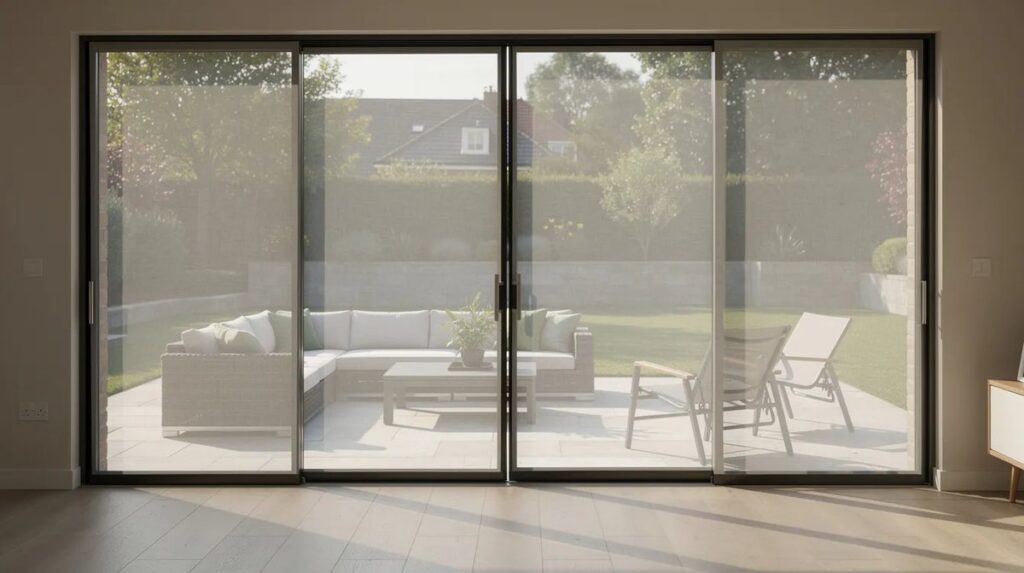
Think about a family home in Mount Pleasant with large marsh-facing windows. The view is the reason they bought the place, but by 2 PM, the living room is a greenhouse. Or picture a south-facing office downtown where employees squint through glare all afternoon. Window film reduces glare from sunlight significantly in both scenarios while preserving the view that makes Charleston special.
Here’s what window film directly solves in the Charleston area:
- Excessive indoor heat from solar gain through south- and west-facing glass
- Glare on screens, artwork, and living spaces caused by water and sand reflection
- UV-driven fading of floors, furniture, fabrics, and retail merchandise
- High energy bills from AC systems compensating for solar heat load
- Privacy concerns on street-level windows without sacrificing natural light
Types of Window Film Available in Charleston
Not all window films are the same, and choosing the right one depends on whether you’re solving a heat problem, a privacy issue, a security concern, or protecting your vehicle. CoolVu offers specialized solutions across every category, tailored for homes, businesses, and vehicles in the Charleston area. Window film can be used for residential, commercial, and automotive applications, and understanding the differences helps you invest in the right product for your situation.
Here’s a breakdown of the primary categories, including options like advanced solar window film for heat and glare reduction:
- Solar control window film – Designed to reject solar heat, block uv rays, and reduce glare. Available in ceramic, metallized, and spectrally selective options. Best for living rooms, sunrooms, offices, and any glass with heavy sun exposure. Reflective films provide maximum glare and heat reduction and are well-suited for commercial facades.
- Decorative and privacy film – Frosted, patterned, gradient, and custom-printed privacy window film options that transform glass without heavy window treatments. Ideal for bathrooms, sidelights, conference rooms, and street-facing windows in downtown Charleston condos or historic homes.
- Security window film – Thick laminate films (4–14 mil) that hold glass together on impact, slowing break-ins and reducing injury from shattered glass during storms. A practical upgrade for storefronts, schools, medical facilities, and coastal properties.
- Automotive window tinting – Ceramic, metallized, or dyed films applied to vehicle glass to reduce cabin heat, block uv rays, and improve driving comfort. Ceramic window films do not interfere with wireless signals, making them the preferred choice for GPS, radio, and emergency communication. Ceramic window film is popular for its heat rejection properties across all vehicle types.
- Paint protection film (PPF) – A clear, durable urethane film applied to a vehicle’s hood, bumpers, mirrors, and door edges to guard against road debris, sand, salt air, and insect damage. Especially valuable for cars driven near Charleston’s beaches and port areas.
Residential Window Film in Charleston: Comfort, Privacy & UV Protection
Picture a typical afternoon in a Charleston or Mount Pleasant home: the sun has shifted west, and your living room feels ten degrees warmer than the rest of the house. The AC kicks into high gear. Your hardwood floors near the windows are starting to show fade lines. You close the blinds, and now you’ve lost the view and the natural light that made the room worth designing in the first place.
Residential window film changes that equation. By applying a quality solar control film to your most exposed windows, you reduce solar heat gain without darkening the room. Window film can reduce solar heat by up to 80% depending on the film type and glass, which means noticeably cooler rooms and less strain on your HVAC system. At the same time, the film filters harmful uv rays that cause fading, protecting everything from hardwood floors and oriental rugs to family photos and leather furniture.
Privacy is another major draw. Window films enhance privacy by making it difficult for outsiders to see inside, which is especially valuable for street-facing windows in downtown Charleston, ground-floor condos, and homes close to neighbors. Frosted and decorative films work well for bathrooms and sidelights, while reflective daytime privacy films let you see out without others seeing in.
Here’s where residential film makes the biggest difference in Charleston homes:
- Large living room and dining room windows with southern or western exposure
- Sunrooms and three-season porches that overheat by midday
- Bonus rooms and bedrooms above garages that run hot
- Stairwell and transom windows that funnel heat upward
- Waterfront and marsh-facing glass where reflected light amplifies heat and glare
Realistic expectations matter: most homeowners notice a meaningful reduction in peak afternoon temperatures in treated rooms, with some reporting their AC runs noticeably less during summer months. Payback periods for residential solar film installations in climates like Charleston’s typically fall in the 3–5 year range.
Commercial Window Film for Charleston Businesses
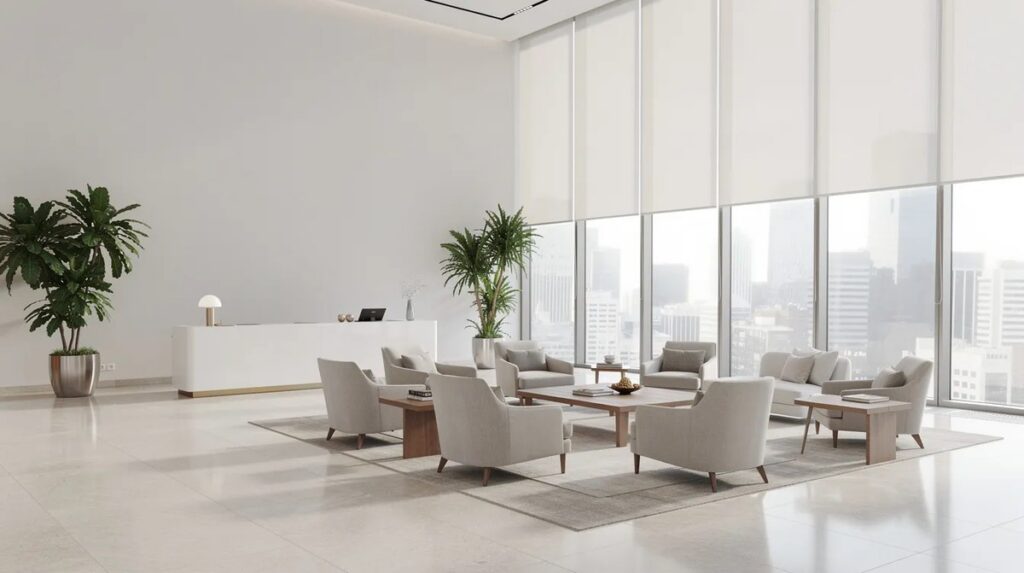
Charleston’s commercial landscape is a mix of centuries-old storefronts, modern glass office buildings, hotels, hospitals, and restaurants – many with large glass facades that look great but let in punishing amounts of heat and glare. For business owners and property managers, commercial window film offers a fast, cost-effective way to improve tenant comfort, protect inventory, and reduce energy costs without major renovation.
Window films can mitigate glare on TVs and computer screens, which is a daily issue in offices, medical waiting rooms, and retail spaces with digital displays. In medical offices across West Ashley, hospitality venues on Meeting Street, and office parks in North Charleston, window film helps create more comfortable, productive environments. Schools and universities benefit too – classrooms with large windows become usable spaces instead of ovens.
Beyond comfort, CoolVu offers decorative and branded films that serve double duty. Frosted logos, privacy bands on conference room glass, and printed graphics and murals turn plain glass into branding and wayfinding tools. For restaurants and hotels, custom films add sophistication without structural changes. And for storefronts, security window film helps hold shattered glass together during break-in attempts or severe weather impacts.
Top benefits for Charleston business owners and property managers:
- Reduced glare on screens and workstations, improving staff productivity and customer comfort
- Lower cooling costs for buildings with large or south-facing glass, especially older properties without Low-E glazing
- Enhanced branding through custom-printed films, frosted logos, and decorative privacy bands
- Improved security for street-level glass, reducing risk from break-ins, vandalism, and storm damage
- Minimal disruption during installation – most commercial projects are scheduled in phases to avoid business downtime
Automotive Window Tinting & Paint Protection Film in Charleston
Driving in Charleston during July means climbing into a car that’s been baking in a parking lot for hours. The steering wheel is untouchable, the dashboard radiates heat, and the sun glare off the Ashley or Cooper River makes the commute physically uncomfortable. Automotive window tinting changes the experience immediately – and in a coastal city where your car spends most of its life in direct sun, the investment pays off fast.
Window tinting can block harmful uv rays effectively, protecting your skin during long commutes and shielding leather seats, dashboards, and interior trim from cracking and fading. Quality automotive window film reduces cabin temperatures significantly, which means your AC doesn’t have to work as hard, and you’re comfortable from the moment you get in. Window tinting can reduce solar heat and glare, making driving safer and more pleasant on bright days along I-26, Highway 17, or the Isle of Palms Connector.
Paint protection film is the other half of the equation for Charleston drivers. Here’s what PPF covers and why it matters:
- Hood and front bumper – Takes the brunt of road debris, sand, and love bugs on Highway 17 and rural Lowcountry roads
- Side mirrors and door edges – Protects against parking lot dings and salt air corrosion common near the coast
- Rocker panels – Guards against chips from gravel and shell roads on Daniel Island and Johns Island
Common vehicle types CoolVu works on in the Charleston area include daily drivers, SUVs, work vans, luxury vehicles, and even boats with cabin glass. CoolVu helps customers understand South Carolina window tint law basics and choose shades that are legal, practical, and effective for both front and rear windows – so you drive away confident that your tint won’t attract a ticket.
Understanding South Carolina Window Tint Laws (Without the Legal Jargon)
One of the most common questions CoolVu hears is “how dark can I go?” The answer depends on South Carolina law, and CoolVu helps ensure every automotive window tinting job meets current legal requirements so you don’t have to memorize statutes or worry about fines.
Here’s what you need to know in plain English:
- Front side windows: South Carolina requires 27% light transmission for front side windows. That means at least 27% of visible light must pass through the glass plus film combined.
- Back side and rear windows: South Carolina allows any darkness for back side and rear windows, giving you more flexibility for privacy and heat rejection in the rear of your vehicle. (Note: the statute language has been interpreted differently by some sources; CoolVu verifies compliance at the time of installation based on current enforcement standards.)
- Windshield: Only non-reflective tint is allowed above the AS-1 line (the manufacturer’s line near the top of the windshield). No film is permitted below that line unless you have a medical exemption.
- Reflective and colored films: Mirror-like reflective tint is prohibited on all windows. Red, yellow, and amber film colors are banned on front side windows and the windshield area.
- Rear-view mirrors: If your rear windshield is tinted, your vehicle must have both left and right exterior rear-view mirrors.
- Medical exemptions: Drivers with qualifying medical conditions can obtain a physician’s affidavit for darker tint. The certificate must be carried in the vehicle and renewed every two years.
- Penalties: Violations can result in fines up to $200 for the driver. Installers who knowingly apply illegal tint face fines up to $1,000 per window.
Laws can change, and enforcement interpretations vary. CoolVu stays current on South Carolina regulations and verifies compliance at the time of every installation, so you can focus on choosing the film that works best for your car.
How Window Film Protects Against Harmful UV Rays
Ultraviolet radiation comes in two forms that matter for daily exposure: UVA rays penetrate deep into skin and cause premature aging, while UVB rays cause sunburn. Both contribute to skin cancer risk. In a sunny coastal city like Charleston, where you’re exposed to high UV levels for most of the year, the glass in your home, office, and vehicle is often the only barrier between you and those rays – and standard glass blocks very little UVA.
High-quality window films can block up to 99% of UV radiation in Charleston, turning every window into a shield. Window film blocks up to 99% of harmful uv rays regardless of whether the film is designed for heat rejection, privacy, or security – UV blocking is a baseline feature of virtually all professional-grade films. That protection matters for your health, but it also matters for everything the sun touches inside your space.
Here’s where UV protection makes a measurable difference in the Charleston area:
- Historic homes downtown – Preserving original hardwood floors, millwork, and plaster that can’t be easily replaced
- Retail shops on King Street – Protecting merchandise displays, fabrics, and signage from sun bleaching
- Medical and dental offices – Reducing UV exposure for patients and staff seated near windows for extended periods
- Vehicle interiors – Safeguarding dashboards, leather seats, and electronics in cars parked outside at MUSC, the port, or beach lots
- Family living spaces – Protecting children and pets from UV exposure during hours spent near windows
UV protection from window film is valuable year-round, even on cloudy days and in cooler months. UVA rays penetrate cloud cover and glass consistently, so the film works every day – not just when it feels hot outside.
Energy Efficiency & Cost Savings for Charleston Properties
Energy costs in South Carolina have been climbing, and in a city where air conditioning runs six to eight months of the year, any reduction in cooling load translates directly to savings. Solar control window film is one of the most cost-effective energy upgrades available, especially for properties with older or single-pane glass.
Window film can reduce solar heat gain by up to 30% across treated windows, with premium ceramic and spectrally selective films capable of rejecting 60–80% of total solar energy (TSER). Window film can improve cooling efficiency in buildings by reducing the heat load that forces your HVAC system to cycle more frequently. For upper-floor rooms, sunrooms, and glass-heavy spaces that always run hot, the difference is often immediate and noticeable – interior temperatures in high-exposure rooms can drop 5–10°F after installation.
Low-E films enhance insulation by reducing heat transfer, which provides benefits in winter months as well by helping retain interior warmth. This dual-season performance makes window film a year-round investment, not just a summer fix.
Here’s what homeowners and property managers in Charleston should expect:
- South- and west-facing windows see the greatest benefit – these are your highest solar gain surfaces and where film delivers the fastest payback
- Typical payback period for residential solar film installations in Charleston falls in the 3–5 year range, depending on glass type, film quality, and electricity costs
- Older and historic buildings benefit most because their original glass typically has no Low-E coating; film adds performance without the cost or disruption of full window replacement
- Corner offices, conference rooms, and top-floor commercial spaces with large glass facades often see the most dramatic comfort improvements
- Film is not a replacement for insulation or HVAC maintenance – it’s a complement that reduces load and extends equipment life
For many Charleston property owners, window film is the practical middle ground between doing nothing and spending tens of thousands on replacement windows.
Security & Safety Window Film: Extra Protection for Glass
Glass is the most vulnerable entry point in any building. A thrown rock, a forced entry attempt, a hurricane-driven projectile – standard glass shatters into dangerous shards in an instant. In a coastal city like Charleston, where severe weather is part of life and street-level businesses face real security concerns, safety films provide additional strength to hold glass together if broken.
Security window film is a thick, clear or tinted laminate (typically 4–14 mil) bonded to existing glass. It doesn’t make glass unbreakable, and it’s not a substitute for storm shutters or impact-rated windows. But it does change what happens when glass fails: instead of scattering shards across a room, the film holds the pieces in place, reducing injury risk and significantly slowing forced entry attempts.
Here are the highest-priority locations for security film in the Charleston area:
- Retail storefronts on King Street and in shopping centers, where smash-and-grab incidents target accessible glass
- Schools, universities, and daycare centers where protecting occupants from glass hazards is a safety priority
- Medical facilities and government buildings that need to meet safety glazing standards
- Waterfront and coastal properties exposed to strong winds and storm debris during hurricane season
- Street-level office windows in high-traffic areas where accidental impacts or vandalism are concerns
Security film works quietly in the background – you don’t notice it until the day it matters, and similar protection is available from CoolVu window tinting services in Greenville and Spartanburg.
Decorative, Privacy & Branded Films for Style and Function
Charleston businesses and homeowners often want privacy and style without blocking natural light or cluttering their spaces with heavy curtains or blinds. Privacy films eliminate the need for heavy curtains or blinds entirely, offering a cleaner look that fits both historic and modern architecture.
Decorative films include frosted or etched designs for privacy and come in a wide range of patterns – from simple frost to geometric designs and gradient fades. They work beautifully on glass doors, sidelights, shower enclosures, conference room partitions, and street-facing windows. Reflective films offer daytime privacy but may require curtains or blinds at night when interior lighting reverses the visibility dynamic.
CoolVu takes this further with printed graphics, murals, and architectural surface finishes that extend branding and design beyond glass onto walls, counters, and interior partitions. This is especially valuable for hospitality, healthcare, and retail businesses that want cohesive visual environments, similar to the window film and surface solutions offered in Northern Virginia.
Concrete examples of decorative and branded film applications in Charleston:
- Frosted logos and privacy bands on conference room glass in a King Street law office
- Branded murals and custom graphics in a Charleston hotel lobby or boutique retail space
- Privacy films on medical exam room glass in West Ashley clinics, meeting HIPAA visual privacy needs
- Gradient frost on restaurant windows downtown, creating ambiance without losing street-level visibility
- Custom-printed wall graphics in school hallways and common areas for wayfinding and school branding
What to Know Before Choosing a Charleston Window Film Installer
Film quality and installation skill vary widely in the window film industry, and the outcome of your project depends heavily on who does the work. The Charleston area has several providers – Sun Stoppers has over 20 years of window tinting experience, and Charleston Window Films has served the area for over 10 years – but not every installer offers the same range of services, product quality, or warranty backing.
Here’s what to look for before committing to a professional window tinting and window film installation provider:
- Verified experience with residential, commercial, and automotive window film projects – not just one category
- Manufacturer-backed warranties on both the film product and the installation workmanship
- Clear, written estimates that detail square footage, film type, specifications, and total cost
- Willingness to show product samples on your actual glass so you can see appearance and light levels before installation
- Documented film specifications including UV blocking percentage, TSER, SHGC, and infrared rejection ratings
- Proof of insurance and trained, certified installers who understand different glass types (single-pane, double-pane, tempered, Low-E)
- A portfolio of previous local projects, especially in conditions similar to yours (coastal exposure, historic homes, commercial facades)
CoolVu offers free consultations and brings film samples directly to your property so you can evaluate options on your own glass before making a decision. CoolVu of Charleston South provides these local window tinting services. That kind of hands-on approach helps you make a confident choice.
The CoolVu Charleston Window Film Process: From Estimate to Installation
CoolVu uses a straightforward, transparent process for every project in Charleston and the surrounding low country. The goal is simple: minimal disruption, clear communication, and a result you’re pleased with, backed by a nationally recognized CoolVu glass and surface solutions team.
Here’s how it works, step by step:
- Initial contact – Call or submit a request through the website. Describe your project (home, business, or vehicle), and a team member will set up a time to visit.
- On-site assessment – A CoolVu installer visits your property, measures the glass, evaluates sun exposure and glass type, and discusses your goals (heat reduction, privacy, security, aesthetics).
- Product recommendations – Based on your glass, exposure, and budget, the installer recommends specific films and shows samples on your windows.
- Detailed written quote – You receive a clear estimate with film type, square footage, cost, and warranty details. No surprises.
- Scheduling – Pick an installation date that works for your schedule. CoolVu offers flexible scheduling throughout the Charleston metro area.
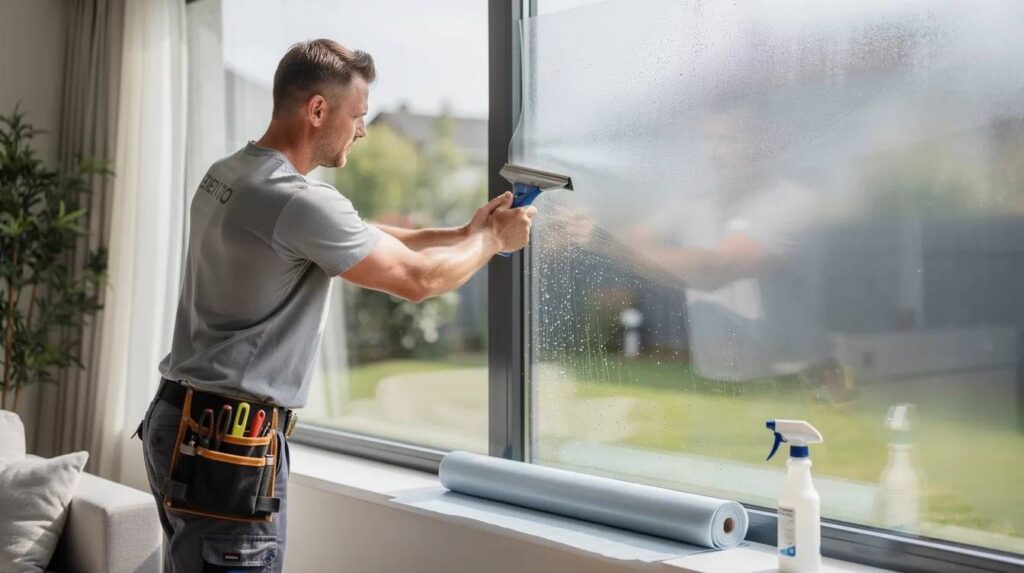
- Installation day – The installer arrives, preps the glass, applies the film, and ensures clean, bubble-free results.
- Final walkthrough – You inspect every window with the installer and confirm you’re satisfied before the job is complete.
Typical time frames: automotive window tinting is often completed the same day. Most residential projects wrap up in a single day. Larger commercial jobs may be scheduled in phases to minimize disruption to daily operations, following the same efficient approach used by CoolVu window tinting services in Southeast Raleigh.
To prepare, clear window sills of plants and fragile items, ensure the installer has access to all windows, and arrange convenient parking for the installation vehicle. The process is quick, clean, and designed around your schedule.
Common Window Film Mistakes to Avoid in South Carolina
A few avoidable mistakes can turn a window film project into a headache – or worse, a waste of money. Here’s what to watch out for:
- Choosing the cheapest film with no warranty – Budget dyed films may cost less upfront but often fade, purple, or peel within a few years. In Charleston’s intense sun and salt air, quality matters more than almost anywhere.
- Going too dark and violating South Carolina tint laws – Especially common on vehicles. Drivers assume SUVs can go darker on all windows, but enforcement of the 27% VLT standard on front side windows applies broadly.
- DIY installation – Bubbles, trapped dirt, uneven adhesion, and poorly sealed edges are nearly impossible to avoid without professional tools and training. The result looks bad and performs worse.
- Ignoring glass type – Certain high-absorption films can cause thermal stress in double-pane or insulated glass units, potentially leading to seal failure or cracking. A professional installer checks glass compatibility before recommending a product.
- Skipping the consultation – Choosing film online without seeing it on your actual glass often leads to surprises in darkness level, appearance, or reflectivity that don’t match expectations.
CoolVu helps Charleston customers avoid every one of these pitfalls through product education, glass assessment, and professional installation backed by manufacturer warranties.
How Long Does Window Film Last in Charleston’s Climate?
Charleston’s coastal environment – salt air, intense sun, and persistent humidity – is tougher on building materials than inland climates. Film longevity is one of the most important questions to ask before investing, because cheap film in harsh conditions fails fast.
Here’s what to expect from quality films properly installed in the Charleston area:
- Dyed and budget films: 5–8 years before noticeable degradation (color shift, purpling, loss of adhesion). These are generally not recommended for south- or west-facing windows in coastal South Carolina.
- Metallized and mid-grade films: 10–15 years with good performance, though metallized options may interfere with cell and WiFi signals.
- Ceramic and spectrally selective films: 15–20 years or more under favorable conditions. These are the best match for Charleston’s climate, combining durability with high heat rejection and signal transparency.
Signs it may be time to consider replacement:
- Visible discoloration, bubbling, or peeling at edges
- Reduced heat rejection performance (rooms that used to stay cool are heating up again)
- Haze or cloudiness in the film that affects clarity
CoolVu uses high-quality films designed to perform well in harsh sun and backs them with manufacturer warranties covering discoloration, peeling, adhesion failure, and bubbling. Professional installation standards and proper glass preparation are the foundation of long film life – and in a place like Charleston, cutting corners on either one shows up fast.
Why Choose CoolVu for Charleston Window Films
CoolVu is a trusted national brand with a local Charleston franchise team that understands the specific demands of this market – from historic downtown properties to modern waterfront construction to daily-driver vehicles that live in coastal sun. The staff is trained, the product lineup is deep, and the focus is on long-term results, not quick sales.
Here’s what sets CoolVu apart for Charleston customers:
- Trained and certified installers with experience across residential, commercial, and automotive window film projects
- A full suite of solutions: solar control film, privacy film, security film, automotive tint, paint protection film, decorative graphics, architectural surfaces, and printed murals
- Premium films from leading manufacturers with strong warranties that cover real-world performance in coastal climates
- Detailed, no-pressure consultations with on-site samples so you see the product on your glass before committing
- Flexible scheduling across the Charleston metro area and surrounding communities: Mount Pleasant, West Ashley, North Charleston, Summerville, Daniel Island, Johns Island, Isle of Palms, and beyond
- One-stop capability for both glass and surface transformation – branded films, murals, and architectural finishes for businesses that want cohesive design
- Experience serving homeowners, commercial property managers, institutional clients (schools, government buildings, healthcare), and hospitality businesses across South Carolina
CoolVu doesn’t just sell film. The team helps you solve a comfort, efficiency, privacy, or protection problem – and stands behind the work with warranties and a professional service standard that reflects well on the brand, much like the Charlotte-area window tinting and film installation team.
FAQs About Charleston Window Film & Tinting
Here are the questions CoolVu hears most often from Charleston and low country clients:
How much does window film installation typically cost in Charleston?
Residential solar control film generally runs $7–$15 per square foot installed, depending on the film type (dyed, metallized, ceramic, or spectrally selective) and the number and size of windows. Automotive tinting costs vary by vehicle and film quality. CoolVu provides detailed written estimates after an on-site assessment so there are no surprises.
How long does installation take for a home, business, or vehicle?
Automotive window tinting is often completed the same day – typically a few hours. Most residential projects finish within a single day. Larger commercial installations may be phased over multiple days to keep the business running smoothly.
Will window film make my rooms too dark?
Not necessarily. Spectrally selective and ceramic films can reject significant solar heat while maintaining VLT levels of 50–70%, which means rooms stay bright and comfortable. CoolVu brings samples to your property so you can see the actual light level on your glass before choosing.
Can window film be removed or replaced later?
Yes. Professional-grade window film can be removed without damaging the glass. If your needs change or the film reaches end of life, it can be stripped and replaced with a new product.
Does window film affect my view or the appearance of my windows from outside?
Quality films are designed to be subtle. Most solar control films are nearly invisible from inside. From outside, the appearance depends on the film type – some have a slight reflective sheen during the day, while decorative films are intentionally visible. CoolVu shows you exterior and interior appearance during the consultation.
Is there a warranty on the film and installation, and what does it cover?
Yes. CoolVu uses manufacturer-backed warranties that typically cover defects like peeling, bubbling, discoloration, and adhesion failure. Warranty length varies by film type – premium ceramic films often carry the longest coverage. Ask your CoolVu installer for specific warranty documentation.
Does window film work on double-pane or Low-E glass?
It can, but compatibility matters. Some high-absorption films aren’t suitable for certain insulated glass units because they can cause thermal stress. CoolVu evaluates your glass type during the assessment and recommends only compatible films.
Ready to Upgrade Your Glass? Schedule Your Charleston Window Film Consultation
Charleston’s sun, heat, and coastal conditions aren’t going anywhere. But with the right window film, you control how much of that energy gets inside your home, office, or vehicle. Whether you’re a homeowner tired of hot rooms and fading floors, a business owner looking to improve comfort and cut energy costs, or a driver who wants a cooler, more protected ride, CoolVu is here to serve you.
CoolVu proudly serves Charleston and surrounding South Carolina communities for residential, commercial, and automotive window film and paint protection film, just as our Charlotte Central window tinting and film installation location serves clients in the greater Charlotte metro. Our team is based in the Charleston area, and we bring the great work, product knowledge, and experience your project deserves.
Here’s how to start:
- Call today to speak with a CoolVu team member about your project
- Submit a request through our website to schedule a visit at your convenience
- Request a free on-site estimate – we bring film samples to your property so you can see and compare options
- Book an automotive tint appointment and drive away the same day with cooler, UV-protected glass
Thanks for taking the time to research your options. We hope this guide gave you the answer to every question you had – and if you have more, we’re happy to help. Whether you’re ready to move forward or just exploring what’s possible, contact CoolVu for a free consultation. Making your glass work harder for you is one of the quickest, most impactful upgrades you can make to any home, town office, or vehicle in the Charleston area. We look forward to helping you protect what matters most – your family, your comfort, your business, and your investment.