Table of Contents
- Why Conference Room Privacy Film Matters in 2026
- What Is Conference Room Privacy Film?
- Why Conference Rooms Need Privacy Film: Key Benefits
- Common Privacy Challenges in Glass Conference Rooms
- Types of Conference Room Privacy Film
- Frequently Asked Questions About Conference Room Privacy Film
Why Conference Room Privacy Film Matters in 2026
Picture this: your HR director is conducting a performance review in the main conference room, and every person walking past can see the screen, the body language, and the facial expressions through floor-to-ceiling glass walls. Or a finance team is reviewing acquisition numbers on a 75-inch display that faces the hallway. These scenarios play out daily in modern offices that embraced glass partitions during the 2018–2024 open-office boom.
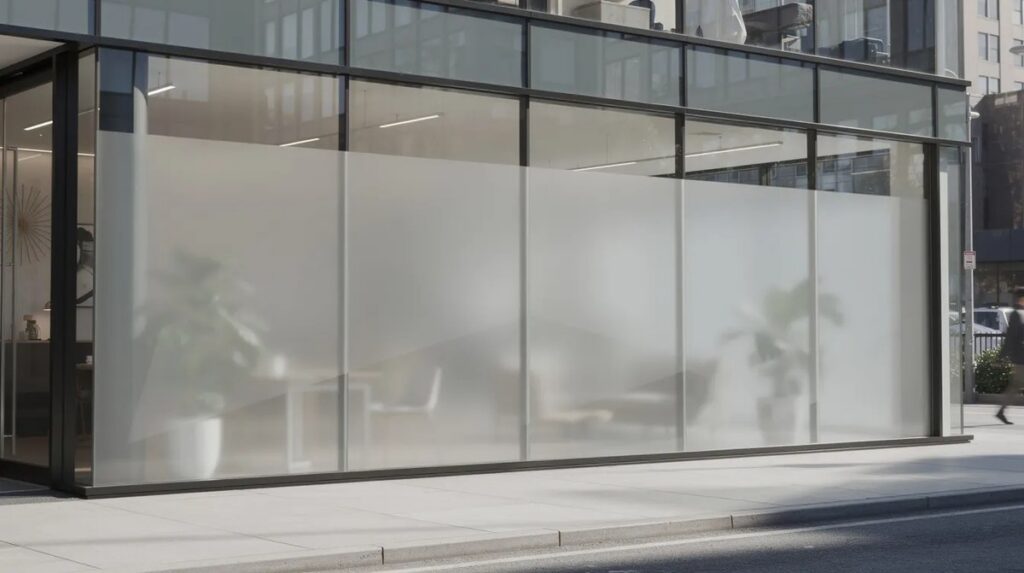
Conference room privacy film is a thin, architectural film applied directly to glass walls, doors, and sidelites to create privacy while still allowing natural light and supporting contemporary design. It is not a tint or shade-it is a purpose-built solution that obscures direct lines of sight without sealing off the room.
Hybrid work and the rise of video conferencing since 2020 have made visual privacy and on-screen confidentiality more critical than ever. When half your team is remote and watching a shared screen, anything visible through the glass can be captured on camera.
In this guide, you’ll learn the differences between frosted window film, decorative window film, and switchable smart film. You’ll understand how to choose the right option for your office environment, what installation involves, what it costs in 2026, and how CoolVu can support you with a nationwide franchise network built on real commercial and institutional project experience.
What Is Conference Room Privacy Film?
Privacy window film is a retrofit solution designed for existing glass panels and doors in conference rooms and meeting spaces. Instead of replacing glass or building new walls, the film is applied directly to the surface of interior glass to change how visibility and light work through the panel.
Most privacy films are made from polyester or vinyl layers, often incorporating specialized coatings, printed patterns, or embedded particles that control light diffusion. Privacy films enhance confidentiality by obscuring the view from outside while many allow natural light to filter through and keep rooms feeling bright and open.
It’s worth distinguishing privacy film from standard window tint. Tint films primarily reduce solar heat and glare through light absorption or reflectivity. Privacy films are engineered specifically to block or distort direct sight lines-hiding faces, screen content, and written material from people outside the glass.
In a typical conference room, these films are applied to full-height glass walls, interior glass partitions, vision panels in doors, sidelites next to doors, and transom glass above door frames. Conference room privacy film can look permanent but remains removable, which makes it well suited for leased commercial spaces, tenant improvements, and buildings where layouts evolve over time.
Why Conference Rooms Need Privacy Film: Key Benefits
Glass-walled conference rooms deliver modern aesthetics and a sense of openness. But left fully transparent, they create real problems around privacy, security, and productivity.
Here’s what privacy film solves:
- Protecting confidential meetings. Glass conference rooms expose sensitive discussions to outside visibility. HR reviews, legal briefings, financial presentations, and M&A conversations all become vulnerable when anyone walking by can read a screen or gauge the mood of the room. Privacy window film helps maintain confidentiality during meetings without sacrificing the glass architecture.
- Reducing visual distractions. Movement in hallways, people gathering near break areas, and activity at open workstations all pull attention away from the meeting at hand. Visual distractions can break concentration during important meetings, especially for participants seated facing the glass.
- Shielding on-screen content. With video calls now central to daily work, what’s on your display matters. Privacy film helps in reducing glare on digital screens and improving comfort while also preventing passersby from reading projected content or shared documents.
- Supporting compliance. Industries like healthcare, financial services, and legal have internal privacy policies and best practices that require reasonable visual barriers during sensitive discussions.
Unlike blinds, shades, or solid walls, privacy film maintains natural daylight and the open-office feel. Rooms don’t look or feel sealed off, which means people actually use them for the sensitive conversations they’re designed for.
There are secondary benefits, too. Privacy film can block up to 99% of harmful uv rays, which helps protect furniture from UV fading and stabilize indoor temperatures. The film also adds tensile strength to glass, improving safety and security-a detail that matters in high-traffic office spaces.
Common Privacy Challenges in Glass Conference Rooms
CoolVu installers see the same patterns across office environments nationwide. The challenges are predictable, but they’re rarely addressed until they become a real problem.
Teams avoid the main conference room because “everyone can see us.” Instead, they crowd into smaller rooms or delay sensitive conversations. Employees write on glass walls or use large displays that are clearly visible from corridors and reception areas. Guests and clients feel on display during negotiations or reviews, undermining the professional atmosphere you’re trying to create.
High-traffic corridors, reception zones, and break areas located near glass conference rooms make this worse. The closer the foot traffic, the higher the confidentiality risk. Even a brief glance through clear glass can reveal who’s meeting and what’s on screen.
Floor-to-ceiling glass that runs to door frames or corners often doesn’t need full coverage. Many rooms benefit from partial privacy zones at eye level-roughly 36 to 60 inches from the floor-while leaving the top and bottom of the glass clear. Specialized films can even obscure screens while keeping the room partially visible, letting coworkers see that the room is occupied without revealing what’s being discussed.
One critical clarification: privacy film addresses visual privacy only. It does not create soundproofing. Rooms hosting confidential meetings with sensitive audio may also need acoustic panels, door seals, or white noise systems.
Take a walk through your office and note what’s visible from 15 to 30 feet away-whiteboards, LED screens, meeting participants. That assessment is the starting point for any privacy film project.
Understanding Privacy Levels: From Partial to Full Visual Privacy
Not every conference room needs the same level of protection. Evaluating privacy needs involves considering the level of visibility required for each space and matching that to the right film solution.
Partial privacy means films that blur silhouettes while still showing some movement. This level works well for everyday team meetings, project rooms, and huddle spaces where the goal is to create separation from hallway traffic without fully isolating the room. Partial privacy is often achieved with decorative films, gradient designs, or banded frosted patterns. Gradient films provide partial privacy while maintaining openness, making them a popular choice for spaces near reception or client-facing areas.
Full visual privacy means preventing clear recognition of faces, printed text, or on-screen content from the hallway side. This level typically requires solid frosted window film, higher-opacity decorative films, or switchable privacy film in “opaque” mode. Frosted window film blocks over 95% of visibility, making it the standard for rooms where complete privacy is non-negotiable.
Remember that visual privacy is separate from sound privacy. Some firms pair glass film with acoustic panels, door seals, or white noise systems to address both dimensions in sensitive areas.
A practical way to prioritize: list which rooms host HR, executive, legal, or client negotiations and mark those for full privacy. Everyday meeting rooms and collaboration spaces may only need partial privacy. This phased approach helps you decide where to invest first and where a lighter solution is enough privacy for the purpose.
Types of Conference Room Privacy Film
Here’s a high-level overview of the main categories of privacy film used in conference rooms and interior office glass:
- Frosted window film – a classic etched-glass look that provides uniform translucency
- Decorative film and decorative window film – patterned, gradient, or textured options that add visual interest while obscuring sight lines
- Branded or custom-printed films – company logos, brand elements, and wayfinding integrated into the film
- One-way and reflective films – typically designed for exterior glass, sometimes misunderstood as an interior conference room solution
- Switchable smart privacy film – electrically controlled opacity that toggles between clear and frosted states on demand
CoolVu works with a broad catalog of privacy and decorative window films to match design preferences, privacy requirements, and budget goals. There’s no one-size-fits-all product here-what works for an everyday huddle room is different from what a boardroom needs.
The sections below explore each category with specific use cases, advantages, and limitations so you can decide which direction fits your space.
Frosted Window Film: The Go-To Solution for Conference Room Privacy
Frosted window film creates a translucent, etched-glass effect that obscures details on both sides of the glass while still allowing abundant natural light to pass through. It provides translucent privacy and is the most widely used conference room privacy solution for good reason: it’s reliable, professional, and cost effective.
Typical conference room applications include:
- Full-panel frosting from floor to ceiling for maximum discretion in HR or executive rooms
- Frosted bands at eye level (36 to 60 inches) to block direct sight lines while leaving top and bottom glass clear
- Door vision panel frosting for private offices adjacent to conference spaces
Frosted window film blocks visibility while allowing natural light, so rooms stay bright without the need for additional overhead lighting. The privacy effect is consistent day and night-it doesn’t depend on lighting conditions the way reflective films do. The aesthetic is timeless and professional, working with virtually any interior design.
From a cost perspective, frosted film is the most budget-friendly privacy upgrade, and it can be installed across multiple rooms on the same floor in a single day. Frosted film is ideal for consistent privacy in conference rooms where the requirement doesn’t change.
The main limitation is that once installed, the privacy level is fixed. There’s no on-demand “clear” mode. And large solid frost areas can make a room feel dark or closed in if not designed thoughtfully. Using bands, gradients, or decorative patterns instead of wall-to-wall coverage avoids that problem.
In a recent CoolVu office project, three conference rooms on the same floor were upgraded with frosted bands at eye level across all glass panels and door lites. Leadership had flagged that employees were avoiding the rooms for performance reviews. After installation, room bookings for HR and management conversations increased noticeably within the first month.
Decorative Window Film: Balancing Privacy and Design
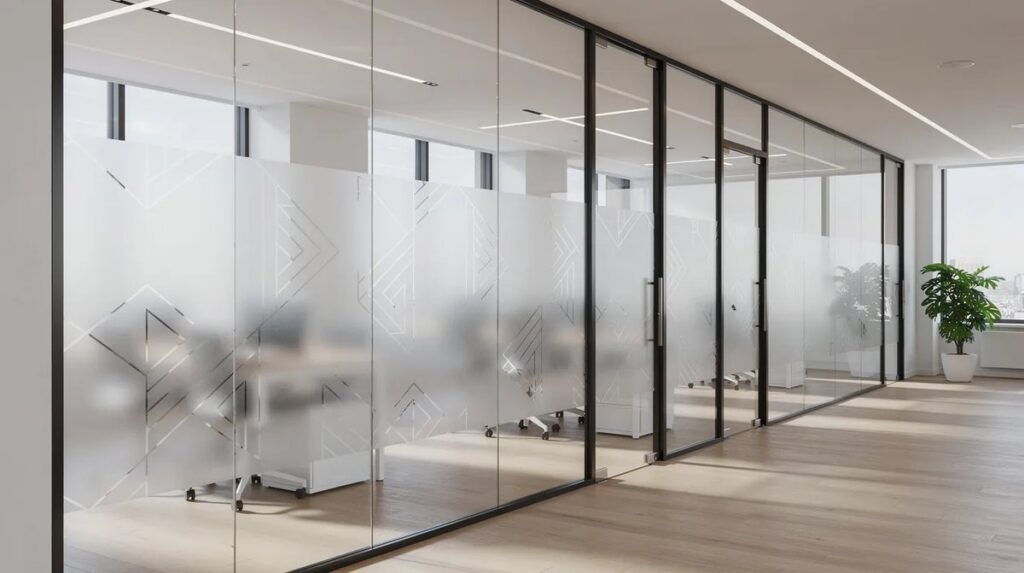
Decorative film and decorative window film go beyond simple frosting by incorporating patterns, textures, or printed designs that serve double duty as both a privacy solution and a design feature within the office environment.
Common looks include:
- Geometric patterns, stripes, or organic textures that break up sightlines without fully blocking them
- Gradient films that transition from opaque at eye level to clear at the top and bottom
- Specialty finishes that mimic etched, sandblasted, or textured glass surfaces
Decorative window film can include custom designs and patterns tailored to specific conference room dimensions. This flexibility lets designers create separation between meeting spaces and corridors while preserving a sense of openness-especially important in client-facing conference rooms near reception where you want the space to feel welcoming rather than sealed off.
Color accents and subtle decorative patterns can coordinate with furniture, flooring, or brand colors without becoming visually overwhelming. The goal is to add visual interest and privacy simultaneously, not to turn a glass wall into a billboard.
CoolVu helps clients choose from extensive manufacturer catalogs or create custom decorative films to fit specific layouts. Decorative window films can include custom designs and patterns that align with the broader interior design vision, turning plain glass into an architectural feature rather than just a barrier.
Branded & Custom Designs for Conference Room Glass
Privacy film can double as brand expression and wayfinding, turning plain glass into a branded experience instead of just a frosted panel. Custom designs in privacy films can enhance office branding and aesthetics, making every glass surface work harder for your organization.
Examples of custom film designs include:
- Company logos or wordmarks repeated in a subtle, frosted pattern across glass walls
- Room names, floor numbers, or directional arrows integrated directly into the film
- City maps, industry icons, or mission statements printed onto decorative films for visual storytelling
Custom films can maintain conference room privacy at eye level while leaving selected glass areas clear for openness or views. This layered approach means you don’t sacrifice style for security-both work together.
CoolVu’s printed graphics and murals capabilities allow matching wall graphics with conference room glass designs for cohesive environmental branding. If your reception area features a specific color palette or your corridors carry brand messaging, the conference room glass can carry that same language through coordinated film application.
The design process typically involves supplying vector artwork, approving printed proofs, and test-fitting sample swatches on actual glass before full production. This step ensures the final product matches expectations and that the film adds style while solving the privacy problem.
Switchable Smart Film: On-Demand Privacy for High-End Conference Rooms
Switchable smart film, also called PDLC film, is a premium solution that toggles from clear to opaque when powered. CoolVu smart window film technology changes from clear to opaque on demand, giving conference rooms instant flexibility that static films can’t match.
In simple terms, when electricity flows through the film, particles align and the glass becomes transparent. When power is cut, the particles scatter light to create a frosted appearance. The transition happens in under 100 milliseconds with high-quality films-fast enough that it feels instantaneous.
Best-fit use cases include:
- Executive boardrooms hosting confidential board or investor meetings
- High-profile client suites where privacy needs shift throughout the day
- Multifunction spaces that alternate between open collaboration and private sessions
The advantages are significant. You get instant on/off control via wall switch, automation system, or remote. The look is clean and minimalist with no blinds, curtains, or mechanical parts. Switchable SmartVu glass film provides on-demand privacy for conference rooms that need to shift modes throughout the day.
There are important considerations, though. Smart film costs significantly more than static frosted window film-installed costs typically run between $37 and $69 per square foot. It requires access to electrical power and coordination with electricians for driver and transformer placement. The default state should be opaque (privacy mode) so that a power failure doesn’t accidentally expose a sensitive meeting. CoolVu’s trained installers manage both the film application and integration planning to ensure the system works reliably.
One-Way and Reflective Films: When They Do and Don’t Work for Conference Rooms
One-way privacy film is a reflective film that appears mirror-like on the brighter side and allows viewing from the darker side. It’s a technology most people associate with police interrogation rooms or exterior building facades.
Here’s the problem for interior conference rooms: one way privacy film relies on lighting differences for effectiveness. It only works when there’s a significant brightness gap between the two sides of the glass. On exterior windows facing direct sunlight, this gap is large and consistent. On interior glass between a conference room and a corridor with similar lighting levels, the effect is unreliable.
Reflective films provide daytime privacy but may reverse the effect at night or whenever interior lights are brighter than the corridor. That means your “private” conference room becomes a fishbowl after hours or during evening meetings.
There are narrow cases where reflective films might help-for example, glass conference rooms that border bright atriums or exterior-facing facades with consistent sun exposure. But these situations require a professional lighting assessment before committing.
For typical conference rooms in modern offices, architectural frosted and decorative films or switchable smart film are far more reliable privacy solutions. They work regardless of lighting conditions and provide consistent conference room privacy around the clock.
How to Choose the Right Privacy Film for Your Conference Rooms
Choosing the right film comes down to four factors:
| Factor | What to Consider |
|---|---|
| Privacy level | Partial (blur movement) vs. full (block faces, text, screens) |
| Aesthetic goals | Minimalist, decorative, branded, or high-tech switchable |
| Budget and timeline | Tenant improvement budget, renovation phase, or new build |
| Future flexibility | How often room usage or branding might change |
| Factors for selecting privacy film include lighting conditions and architectural needs, so a walkthrough is essential before making a decision. |
Use-based recommendations:
- Everyday meeting rooms: Frosted bands or decorative films to add privacy without making the space feel closed off
- HR and legal rooms: Higher-opacity frosted window film for complete privacy
- Executive boardrooms: Switchable smart film for on-demand privacy during confidential meetings
- Client-facing spaces near reception: Decorative films with brand cues and controlled privacy zones that create a professional first impression
CoolVu consultants typically walk a floor with the facilities or design team, viewing sight lines from hallways and reception to determine coverage heights and film types. This on-site assessment catches issues that floor plans alone can’t reveal-like unexpected angles from stairwells or elevator lobbies.
Start by prioritizing the few rooms where confidential meetings happen daily. Then plan a phased rollout for remaining conference rooms as budget allows. You don’t have to film every panel on day one, and a professional window film installation process can be tailored to match your schedule and scope.
Conference Room Privacy Film Installation: Step-by-Step Overview
Here’s what a typical professional installation process looks like for one or more conference rooms.
Pre-install planning:
- A site visit to measure each glass panel and door lite accurately, including hardware cutouts and frame dimensions
- Discussion of patterns, decorative films, or custom designs with the client
- Creation of cut sheets so films are pre-cut to each panel’s exact specifications
Surface preparation:
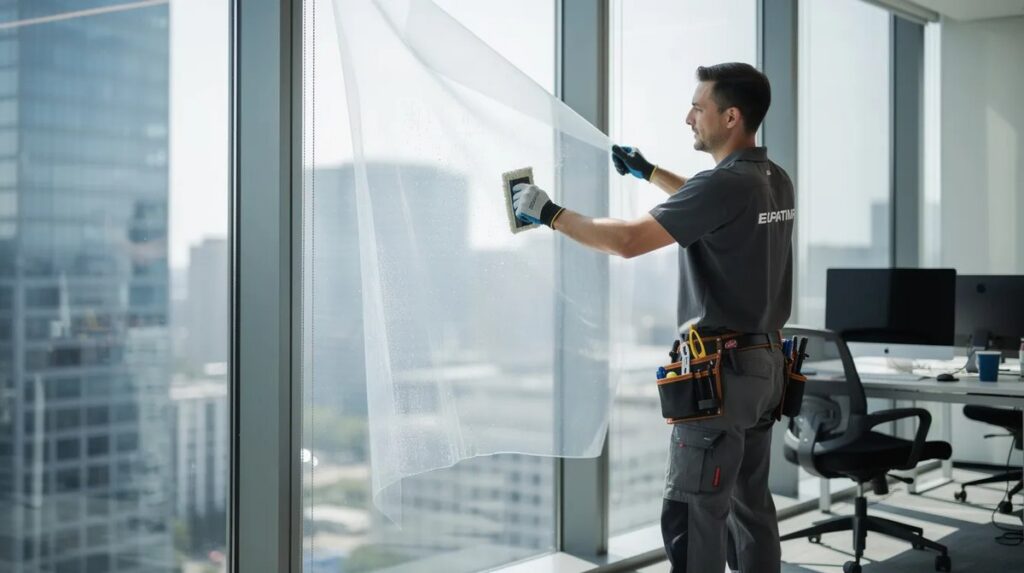
- Thoroughly cleaning glass to remove dust, silicone residue, stickers, and paint. Installation requires a clean glass surface for best results-any debris trapped under the film becomes permanently visible.
- Using specialized blades and cleaners to avoid scratching tempered or laminated glass
Film application:
- Applying a slip solution to the glass and film to allow precise positioning
- Squeegeeing from center outward to remove water and air bubbles
- Trimming edges cleanly at frames, hinges, and hardware cutouts
Cure and inspection:
- Light haze or small moisture pockets may appear initially but clear within days. Allow 24 to 72 hours for privacy film to cure after installation before judging the final appearance.
- A final walkthrough with the client to confirm privacy levels and aesthetics
- CoolVu installers provide care instructions for cleaning and long-term maintenance of your architectural window films
Professional installation ensures proper alignment and durability across every panel, which matters when you have multiple glass walls that need to look seamless. Applying film is often cheaper and less disruptive than installing new walls or blinds, making it one of the most efficient ways to improve conference room privacy.
DIY vs Professional Installation for Conference Room Glass
Commercial conference rooms are rarely good candidates for DIY film application, especially in office spaces where clients and executives regularly meet.
Common DIY risks include:
- Trapped dust and visible debris permanently sealed under the film
- Crooked bands, uneven edges, and light gaps at frame edges that undermine the professional look
- Damage to tempered or laminated glass from improper scraping or blade use
- DIY installation can lead to bubbles and uneven coverage that are difficult to fix after the fact
Working with trained installers eliminates these issues. Professionals bring experience handling large glass panels and tall partitions safely. They can align patterns or bands across multiple adjacent panels so the design reads as one continuous surface rather than a patchwork. Warranty-backed work means any issues with adhesion or appearance are corrected without additional cost.
CoolVu’s franchise network is particularly useful for multi-location businesses, schools, or government agencies that need to roll out consistent conference room privacy standards across multiple sites. The same film, same design, same quality-whether it’s installed in Atlanta or Portland-all backed by a national CoolVu Glass & Surface Solutions team.
DIY might make sense for very small, low-visibility rooms or temporary needs. But for any space where brand perception and professionalism matter, the value of a flawless installation far outweighs the cost difference.
Cost of Conference Room Privacy Film in 2026
Pricing varies by film type, square footage, installation complexity, and whether designs are custom-printed or selected from standard catalogs.
Directional cost ranges for 2026 (not binding-site-specific quotes are always recommended):
| Film Type | Approximate Installed Cost per Sq Ft |
|---|---|
| Standard frosted film | $5–$8 |
| Decorative or patterned film | $7–$15 |
| Custom-printed or branded film | $10–$20+ |
| Switchable smart film | $37–$69 |
| For a typical 10×20-foot glass wall (200 square feet), basic frosted film might cost between $1,000 and $1,800 installed. Decorative mid-range jobs could run $3,000 to $4,000. Smart film for the same area could reach $7,500 to $14,000 depending on wiring and driver integration. |
Key cost drivers include:
- Number and size of panels, door cutouts, and hardware notches
- Height of the glass-10-foot or 12-foot walls may require ladders or lifts
- Complexity of patterns or brand elements, and whether designs must align across multiple panels
- Removal of existing film or surface treatments
The long-term value is significant. Privacy film reduces the need for blinds, shades, or costly office front rebuilds. It enhances the perception of professionalism for clients and recruits. And it causes far less disruption than replacing glass or adding new walls.
Rather than relying on generic per-square-foot numbers, request a free, site-specific estimate from CoolVu. Every room has different glass configurations, and an accurate quote starts with accurate measurements.
Maintenance, Durability, and Lifespan of Conference Room Privacy Film
Quality interior privacy films installed by professionals typically last well beyond 10 years in commercial settings. Many manufacturers offer warranties covering premature peeling, cracking, or discoloration under normal use.
Durability and maintenance of privacy films are important for high-traffic conference rooms where doors open and close frequently and people regularly touch or lean against the glass. Routine maintenance is straightforward:
- Clean with non-abrasive cloths and mild, ammonia-free cleaners
- Avoid razor blades or harsh scrub pads on the film surface
- Report any damage so localized panels can be replaced without redoing entire walls
Interior conference room glass films are protected from weather extremes, so wear comes more from daily use, accidental contact, or improper cleaning than from sun exposure. Most privacy films hold up well under normal office conditions for the duration of a typical lease or beyond.
If office branding or layout changes, privacy films can be removed and replaced, making them a flexible component of long-term workspace planning. CoolVu-selected films come from reputable manufacturers, and the franchise network provides warranty-backed installation for peace of mind.
Common Mistakes to Avoid When Adding Conference Room Privacy
Frequent missteps that CoolVu installers encounter:
- Choosing one-way reflective film for interior glass. As discussed, lighting differences between a corridor and conference room shift constantly, leading to inconsistent or reversed privacy.
- Over-frosting every inch of glass. Full-coverage frosting on all panels can make a room feel dark and make the space feel closed off. Strategic bands and gradients avoid this while still providing good privacy.
- Ignoring ADA and safety requirements. Large glass panels may require visibility markings at certain heights. Skipping these creates compliance risk and potential liability.
- Failing to align bands across panels. When privacy bands don’t line up across adjacent glass panels and door lites, the result looks unprofessional and undermines the whole investment.
Buying cheap, off-the-shelf frosted film rolls without proper planning often leads to uneven edges and an amateurish appearance that hurts brand perception rather than helping it.
Coordinate your privacy film plans with interior designers, HR and legal stakeholders, and IT/AV teams. Film placement should support camera angles for video calls, display locations, and sight lines to whiteboards-not block them accidentally.
Engaging CoolVu early in renovation or build-out phases means measurements, film selection, and film application can be scheduled before move-in or major events, avoiding the scramble of last-minute fixes.
Frequently Asked Questions About Conference Room Privacy Film
This section addresses the most common questions facility managers, office tenants, and designers ask about conference room privacy solutions.
Will conference room privacy film make the room feel dark?
Most privacy films do not make the room feel dark. Frosted and decorative films transmit a high percentage of visible light-typically 50% to 70%-so rooms stay bright compared with using blinds or solid walls. Fully opaque, colored, or very dense patterns will reduce more light, but CoolVu typically recommends light-transmitting films for interior office glass specifically to avoid blocking light and creating a dim space. The result is a room that feels private without feeling enclosed.
Does privacy film provide both day and night privacy?
Frosted and most decorative privacy films offer consistent, dual-sided privacy around the clock because they do not depend on light direction. They work identically whether the hallway lights are on or off. This is in contrast to one-way reflective films, which lose their privacy effect at night when interior lights are brighter than surrounding spaces. For rooms used during evening events or late meetings, frosted or decorative film provides reliable protection at all hours.
Can people still see movement through frosted or decorative films?
Many frosted and decorative films will show soft movement or outlines when someone stands very close to the glass, but details like faces, text on screens, or handwriting on whiteboards are effectively obscured. For rooms that require enough privacy to conceal even silhouettes-such as executive or legal conference rooms-higher-opacity patterns or layered film solutions reduce movement visibility further. CoolVu can demonstrate samples on your actual glass to help you gauge the privacy effect before committing.
Is conference room privacy film permanent, or can it be removed?
Professionally installed films are intended as long-term solutions but can generally be removed without damaging the underlying glass. Removal is usually done by trained technicians using safe techniques. Many tenants change graphics or privacy layouts when they rebrand, restructure, or renew leases. This removability makes privacy film a flexible investment for both owned and leased commercial settings.
How long does it take to install film on a typical conference room?
For one medium-sized room with two full glass walls and a door, installation is often completed in a few hours once designs are approved and materials are on-site. Multi-room projects may be scheduled over evenings or weekends to minimize disruption to daily operations. CoolVu’s franchise network can usually accommodate these scheduling needs for occupied office spaces, whether you’re working with a local team like CoolVu of Central Pennsylvania or another regional office.
Can privacy film be applied to any type of glass?
Most interior tempered glass partitions and doors are excellent candidates. However, certain specialty glazing-like patterned or wired glass-may not yield a perfectly uniform appearance. CoolVu installers inspect the glass type and condition before proceeding, flagging any rare cases where film application requires special handling or is not recommended.
Will privacy film affect fire or building code compliance?
Interior films are usually acceptable when applied correctly, but there may be requirements around safety markings and visibility at certain heights on large glass panels. CoolVu teams stay within local code guidelines and coordinate with building management or architects as needed to ensure the installation meets all applicable requirements.
Why Choose CoolVu for Conference Room Privacy Solutions
CoolVu specializes in window film, decorative films, printed graphics, and architectural surface finishes. With a national franchise network, CoolVu serves commercial, institutional, and government buildings across the country-delivering consistent quality regardless of location.
Key advantages of working with CoolVu:
- Local franchise owners provide on-site consultation and precise measurements tailored to your specific glass configuration
- Broad product access across frosted, decorative, branded, and smart film options rather than being limited to a single manufacturer or product line
- Trained installers who regularly work on interior glass partitions, conference rooms, boardrooms, and glass-fronted office spaces in commercial settings
- Multi-site consistency for organizations that need the same privacy standards applied across multiple offices, campuses, or regions
CoolVu has experience delivering commercial window film projects for offices, schools, healthcare facilities, and government agencies where conference room privacy and confidentiality are critical. The team understands both the film application process and the broader context of how these rooms are used day-to-day.
Beyond film, CoolVu can coordinate wall graphics, reception branding, surface finishes, and other glass treatments to create a cohesive, professional environment. Every project is backed by warranties, insurance, and adherence to safety practices during installation in occupied workspaces.
When you need privacy solutions that provide privacy and elevate the aesthetics of your office, CoolVu brings the combination of product range, installation expertise, and local service that generic contractors can’t match.
How to Get Started: Next Steps to Add Privacy to Your Conference Rooms
The path from problem to solution is simpler than you might expect.
Start with a walkthrough:
- Walk your office and list which conference rooms and glass-fronted offices need better room privacy
- Note what can be seen from hallways, reception, and adjacent workstations-screens, whiteboards, participant faces
- Gather any branding guidelines or design preferences you want reflected in decorative films
Connect with CoolVu:
- Request a free on-site or virtual consultation through the CoolVu website or by phone
- Share floor plans or photos so a CoolVu representative can provide preliminary ideas and budget ranges
- Review film samples on your actual glass before making a final decision
Schedule smart:
- Plan installation during low-traffic times to minimize disruption to meetings and daily operations
- For multi-room projects, CoolVu can phase work across evenings or weekends
Your conference rooms should be spaces where people feel confident having private, productive conversations-not fishbowls that force sensitive discussions into hallways or cramped offices. The right privacy film transforms that glass from a liability into an asset.
Reach out to your local CoolVu franchise today—whether that’s CoolVu of Northeast Columbus, CoolVu of Northern Virginia, CoolVu of North Milwaukee, or another regional office—to design conference room privacy film solutions that elevate both confidentiality and style across your entire workspace.