Table of Contents
- Is Solar Control Window Film Worth It for Your Home in 2026?
- How Solar Control Window Film Works to Reduce Heat and Glare
- Which Windows and Glass Types Benefit Most from Solar Films?
- Key Benefits: Comfort, Energy Savings, and Protection
- How Solar Film Compares to Low E Glass, Blinds, and Other Options
- FAQs About Home Solar Control Window Film
Is Solar Control Window Film Worth It for Your Home in 2026?
Picture a south facing living room in July. The strong afternoon sun turns the space into an oven by 2 PM, your air conditioning runs nonstop, and the room is basically unusable until sunset. This is the exact problem home solar control window film solves.
Solar control window film is a thin, transparent or lightly tinted coating applied directly to your existing glass. It blocks a significant share of solar heat, glare, and harmful uv rays without major construction, replacement frames, or weeks of disruption. High-quality films can block up to 79% of solar heat, which translates into real energy savings: solar window films can reduce cooling costs by up to 30% in homes with substantial glass exposure.
Compared to blinds, curtains, or a full swap to low e glass, solar window film starts delivering comfort improvements almost immediately at a fraction of the cost. Home solar control window film manages solar energy at the glass surface, meaning less heat enters your room, your furniture and flooring get better uv protection, and your carbon emissions drop along with your energy bills.
This guide walks you through how solar control window film works, which glass types are suitable, what performance to expect, and how CoolVu helps with selection and installation.
How Solar Control Window Film Works to Reduce Heat and Glare
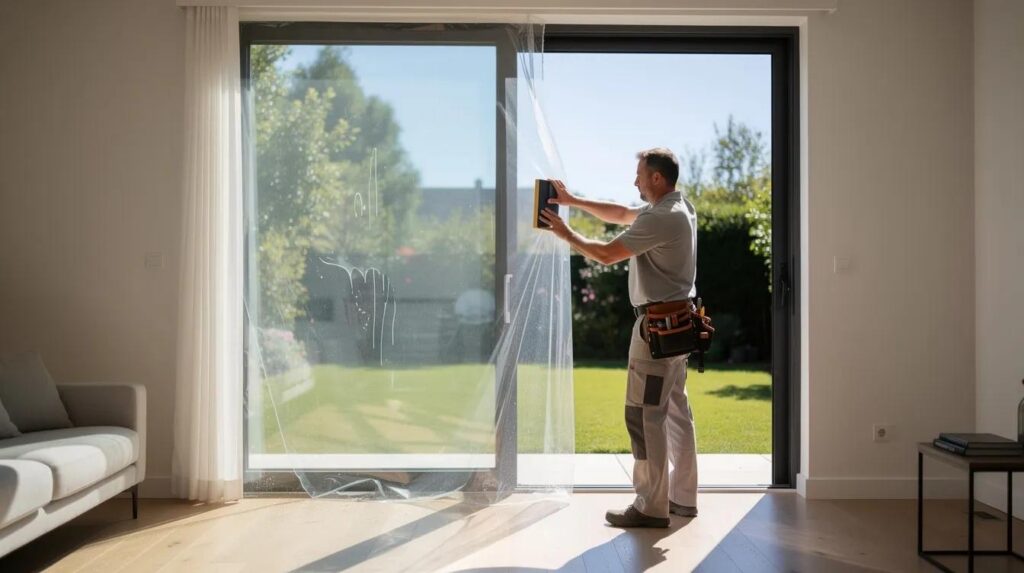
Solar film acts as a gatekeeper at your window. Instead of letting all sunlight pass through untreated glass-where it converts to infrared heat inside your room-solar control window film reflects significant solar heat away from glass and absorbs a portion of the remaining solar energy, reducing heat passing into rooms.
Modern solar films are built from multiple layers: a polyester base, a metalized or ceramic coating that targets specific wavelengths of light, a scratch-resistant top coat, and a pressure-sensitive adhesive. Reflective films use a metallic layer for maximum heat reduction, while ceramic and spectrally selective film options use non-metallic coatings to achieve similar heat rejection without a mirrored look.
Here is how the key performance metrics break down:
- Total Solar Energy Rejected (TSER) indicates the percentage of solar energy blocked by the film. Higher is better.
- Visible Light Transmission measures how much daylight passes through the film. Higher VLT means a brighter room.
- Solar Heat Gain Coefficient (SHGC) measures how much solar heat enters. Lower SHGC means less heat gain.
Solar window films allow visible light to pass while reducing harmful radiation-particularly near-infrared heat and uv rays. Ceramic or spectrally selective films are highly effective at this, maintaining natural light levels above 60–70% while rejecting the majority of heat-producing wavelengths. The result: your interior spaces stay bright but significantly cooler, and a range of solar window tinting films makes it possible to match performance with your specific home and climate needs.
Films can be installed on the interior surface (most common in residential settings) or exterior surface. External solar films stop heat before it enters dual pane windows, which can be beneficial for conservatories, roof glazing, and improving insulation performance overall.
Which Windows and Glass Types Benefit Most from Solar Films?
Not every window in your home needs the same treatment. Here is a practical hierarchy:
Windows with large west- or south-facing surfaces are best for solar control films. South facing windows catch sustained midday and early-afternoon sun, while west-facing glass takes the full force of strong sunlight during the hottest part of the day. Strong heat rejection films are recommended for south or west-facing windows in virtually every US climate zone.
East-facing windows benefit from morning glare control and uv damage prevention. North facing windows receive less direct sun, but solar films can still reduce glare, improve comfort, and provide a uniform look across the building exterior.
For glass type compatibility:
- Single-pane clear glass sees the largest improvement-SHGC can drop from roughly 0.70 to around 0.28 with a high-performance film.
- Dual pane windows with tempered or toughened glass handle solar film well and tolerate thermal stress.
- Standard double glazing with unknown glass type requires a professional assessment before specifying darker or highly absorptive films.
- Roof glass, skylights, and lantern roofs often benefit from exterior application to manage extreme exposure.
- Triple glazing and certain laminated units may need special attention from the installer.
Not all films are compatible with certain glass types to prevent thermal cracking. Darker or heavily metalized films can overheat the inner pane of insulated glass units, risking seal failure. A lighter film or external application typically solves this. It is also worth noting that adding solar film can void some window manufacturers’ warranties, so checking your glass warranty before installation is smart.
Before calling for a consultation, note the approximate age of your windows, any existing low e glass coatings, window size, and whether you have ever had issues like fogging between panes.
Most residential windows are compatible with some type of architectural control window film when specified correctly by a trained CoolVu consultant, and local teams such as CoolVu of Northeast Columbus can evaluate glass types and recommend safe options for your region.
Key Benefits: Comfort, Energy Savings, and Protection
Home solar control window film improves energy efficiency and comfort across several measurable dimensions. Solar films can increase energy efficiency by regulating indoor temperatures, and the benefits extend well beyond a lower thermostat reading.
Enhanced comfort and heat reduction. High-performance films can lower interior temperatures by 5 to 10 degrees Fahrenheit near problem windows. That means fewer hot spots, more even temperatures across open-plan spaces, and rooms like sunrooms and loft conversions that are actually usable in summer. Solar control films can block up to 81% of the sun’s heat on certain glass configurations.
Energy savings. Solar window films can reduce cooling costs by up to 30%, directly lowering your energy costs each billing cycle. They also reduce total building energy use by up to 10% and help extend the life of HVAC systems by reducing strain on your air conditioning. A medium-sized office saved 20% on cooling costs after installation-residential results scale similarly depending on glass area and orientation. Lower air conditioning costs also mean lower carbon emissions.
UV and fade protection. Solar window films block up to 99% of uv rays. UV protection helps prevent fading on furniture and artwork, hardwood floors, rugs, and window treatments. This means the things you have invested in inside your home last significantly longer. You reduce fading and uv damage without sacrificing your view.
Glare control. Solar films reduce harsh glare from sunlight, making TV screens, laptops, and monitors far easier to see. This cuts down on eye strain in home offices and media rooms without the need to close blinds or shades.
Privacy and aesthetics. Solar films offer daytime privacy while allowing a view out. Daytime privacy is enhanced with reflective films, while near-invisible spectrally selective options leave your glass looking almost unchanged. For exterior-facing glass, transitional photochromic window films automatically adapt to changing sunlight conditions while maintaining views. For interior spaces, privacy and decorative window films can further control sightlines and add style. Certain safety films add tensile strength to glass, providing an additional security benefit.
Environmental impact. Upgrading existing glass with solar control film is a far more sustainable step than full window replacement, with lower embodied energy and less construction waste. Reduced cooling demand means measurably lower carbon emissions over the life of the film.
How Solar Film Compares to Low E Glass, Blinds, and Other Options
Low e glass comes factory-applied on new windows, with coatings designed to reduce heat transfer. It is effective, but replacing windows is expensive, disruptive, and not always necessary. High-end solar control window films can deliver similar or better solar heat gain reduction on older clear glass at a fraction of the cost-without removing frames or disturbing your home.
Blinds, curtains, and shades provide glare control and privacy, but they allow solar heat to pass through the glass first. That heat gets trapped inside, warming the room even with shades drawn. Solar film stops a large share of that heat at the glass surface before it enters.
Film type matters for the comparison, and it is helpful to review options in person with a local expert such as CoolVu of Charlotte Central:
- Reflective films provide maximum heat rejection and privacy, making them ideal for strong sunlight exposure.
- Ceramic films maintain clear views while blocking heat, suiting homeowners who want performance without a mirrored look.
- Ceramic and spectrally selective films provide excellent heat rejection with minimal color shift.
- Tinted films offer a more subtle appearance with glare reduction.
- Darker films offer more privacy but allow less light-a trade-off worth considering based on the room.
- Low-E films improve insulation by reducing heat loss in winter, making them a year-round option.
One trade-off to understand: solar control films can reduce beneficial winter solar heat gain. In cold climates, specifying a film with moderate SHGC or choosing low-E options that balance summer and winter performance is important.
Solar films are usually the least disruptive and most cost-effective first step versus full window replacement, particularly in finished homes, condos, and historic properties.
When window frames are failing or air leaks are the primary problem, new windows may still be the right call. Solar film can also complement replacement windows, and CoolVu helps homeowners understand when film is the primary solution versus part of a broader plan, with local teams such as CoolVu of Central San Diego or CoolVu of Northern Virginia for regional window film installation guiding property owners through options for their specific region.
DIY Installation vs Professional Solar Film Application
DIY solar film kits are available at home centers and online, and they can be appealing for small, simple windows. But there is a meaningful gap between a DIY attempt and a professional result.
Key challenges with diy installation include:
- Achieving a perfectly dust-free surface on larger panes
- Precise cutting and alignment without creases or trapped bubbles
- Managing squeegee technique across wide glass
- Working around gaskets, frames, and irregular trim
Professional installation ensures proper adhesion and warranty protection. Trained installers use specialized tools, controlled environments, and exact trimming techniques for clean edges and consistent optical clarity. Improper installation can lead to peeling and void warranties-an expensive mistake on premium film.
Most premium residential solar films with 10-plus year warranties require certified installers. DIY application may void that coverage entirely, including for glass damage claims, which is why many homeowners turn to regional experts like CoolVu of Salt Lake, CoolVu of Greenville Spartanburg, or CoolVu of North Milwaukee for professional window film installation for professional assessment and installation.
DIY may be reasonable for a detached garage window or small shed. For large sliding doors, conservatories, roof glazing, or complex glass types, professional installation is strongly recommended, and specialists like CoolVu of Central San Diego, CoolVu of Tucson, or CoolVu of Sacramento Northeast for local window film installation routinely handle these more demanding residential and commercial projects.
CoolVu’s process includes an on-site assessment, glass type evaluation, film recommendations with side-by-side samples, a written quote, scheduled installation, cleanup, and post-installation care instructions. You should wait 30 days after installation before cleaning solar window film, giving the adhesive time to fully cure.
FAQs About Home Solar Control Window Film
These FAQs address the most common questions CoolVu hears during in-home consultations across the franchise network.
How much can solar control window film actually reduce heat in my home?
Solar films can block up to 79% of solar heat on treated glass, translating to noticeably cooler rooms, lower air conditioning runtime, and lower cooling costs. Results depend on glass type, orientation, and film selection, but reductions of 5–10°F near windows are common.
Will solar film make my rooms too dark or reflective?
It depends on the film. Reflective films provide maximum heat rejection and daytime privacy but do create a mirrored exterior. Ceramic films maintain clear views while blocking heat, keeping rooms bright with minimal reflectivity. Spectrally selective film options preserve over 60% visible light while still cutting significant solar heat gain.
Is solar film safe for double-pane or low E glass?
Yes, when specified correctly. Professional installers evaluate glass type, check manufacturer data, and assess thermal stress limits before recommending a film. For certain insulated glass units, lighter-shade or external films prevent thermal stress. Not all films work on every glass-this is exactly why a trained assessment matters.
How long does home solar control window film last, and how do I clean it?
High-quality solar window films last between 10 and 20 years, often backed by manufacturer warranties. After the initial 30-day curing period, clean with a soft cloth and use a non-ammonia cleaner. Avoid abrasive tools or harsh chemicals.
Will solar window film make my home colder in winter?
Some winter solar heat gain may be reduced, but many modern films are designed to balance summer cooling with winter performance. Low-E film options can actually reflect interior heat back inside, improving insulation. Climate, orientation, and film choice all factor in-a CoolVu consultant can recommend the right balance.
What does it cost to install solar control film, and when do I see payback?
Installation costs range from $6 to $15 per square foot depending on film type, window size, access, and glass type. Energy savings can recover installation costs within three to five years in sunny climates or areas with high electricity rates. In milder regions, payback may stretch to five to seven years. Utility rebates, where available, can shorten the timeline further.
Why Choose CoolVu for Home Solar Films
CoolVu is a national franchise network specializing in residential and commercial buildings’ window films, with local owners who understand regional climates, sun angles, and building styles, whether you are working with CoolVu of Lower Fairfield County or another regional office. When you work with CoolVu, you get a consultant who knows the difference between what a Phoenix home needs and what works in Portland, backed by a company with over 100 years of window film experience and tens of thousands of successful installations.
CoolVu installers are professionally trained in glass assessment, film specification, and installation best practices-minimizing the risk of thermal stress while ensuring strong adhesion, clean edges, and optical clarity, whether you are working with regional teams like CoolVu of Northeast Columbus for window tinting and film installation or CoolVu of South St. Paul or another local office. The product range includes reflective, neutral, ceramic, and spectrally selective solar films, so you can prioritize heat reduction, natural appearance, privacy, or maximum light rather than settling for a one-size-fits-all option.
The service model is straightforward: free on-site estimates, detailed measurement of problem rooms, side-by-side film samples on your actual glass, and clear written proposals. Every installation is backed by manufacturer warranties on materials and CoolVu workmanship guarantees, with local franchise accountability if you ever need service or replacement.
Beyond solar films, CoolVu offers a full suite of glass and surface solutions-decorative and privacy films, security service options including security films that protect glass, printed graphics, and architectural surface finishing-making it easy to handle multiple improvements through a single partner, whether you work with CoolVu of East Jacksonville for local window film installation, CoolVu of Western North Carolina, or choose their window film and tinting installation services for residential and commercial properties. When you visit CoolVu’s site to request a quote, their system handles performing security verification to filter out malicious bots and ensure real homeowners connect with the team. Once security verification is successful, a local consultant will respond promptly-they track every inquiry by a unique ray id so nothing is missed, connecting you with the right regional team, such as CoolVu of The Villages or CoolVu of West Los Angeles, to move your project forward.
Next Steps: Get a Custom Solar Control Window Film Plan for Your Home
Home solar control window film is a fast, non-invasive way to reduce heat, improve comfort, protect your interiors, and cut energy bills without replacing windows. A one-time professional installation can deliver years of enhanced comfort, measured performance gains, and protection for the things you have invested in.
To get started, schedule a free in-home consultation with your local CoolVu franchise. Before reaching out, gather recent utility bills, snap photos of your problem rooms during the hottest time of day, and note any details about your window age or existing coatings.
Call CoolVu, complete an online quote request, or locate your nearest dealer to start building a custom solar control window solution designed around your home, your climate, and your budget.