Table of Contents
- Why Frosted Office Window Film Is Everywhere in 2026 Workspaces
- What Is Frosted Office Window Film and How Does It Work?
- Key Benefits of Frosted Office Window Film for Modern Workspaces
- Best Places to Use Frosted Window Film in Offices and on Glass Doors
- Design Options: From Simple Frosted Bands to Branded Glass Graphics
- FAQs About Frosted Office Window Film
Why Frosted Office Window Film Is Everywhere in 2026 Workspaces
Picture a typical open-plan office in 2026: glass partitions separate teams, meeting rooms have floor-to-ceiling glazing, and phone booths are transparent boxes. It looks sleek – until someone takes a video call and every passing colleague becomes a distraction, or a client presentation is displayed on a screen visible from the corridor.
Frosted office window film solves this without turning your workspace into a series of dark, closed-off rooms. It is a thin, functional layer applied directly to existing glass that scatters light to blur the view while keeping interior spaces bright and welcoming.
With hybrid work now standard, more video conferencing, and growing pressure around data protection and employee wellbeing, the demand for privacy solutions that preserve openness has never been higher. This guide covers how frosted window film works, where to use it, what it costs compared to alternatives, how to choose the right opacity, installation best practices, common mistakes, and how to plan a project for your own office space. Everything here is aimed at office managers, facilities teams, architects, and business owners managing real commercial fit-outs – not generic home DIY advice.
What Is Frosted Office Window Film and How Does It Work?
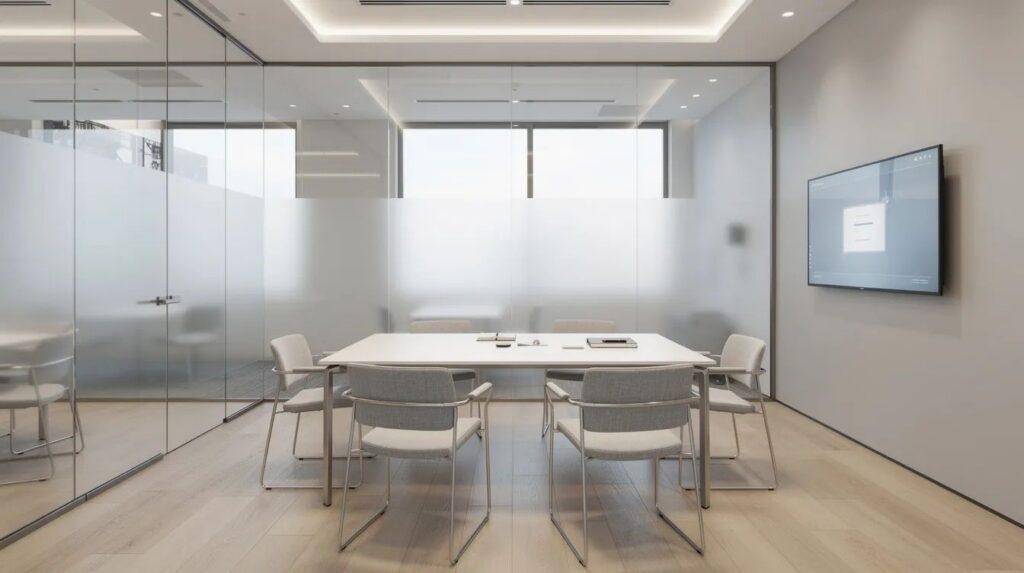
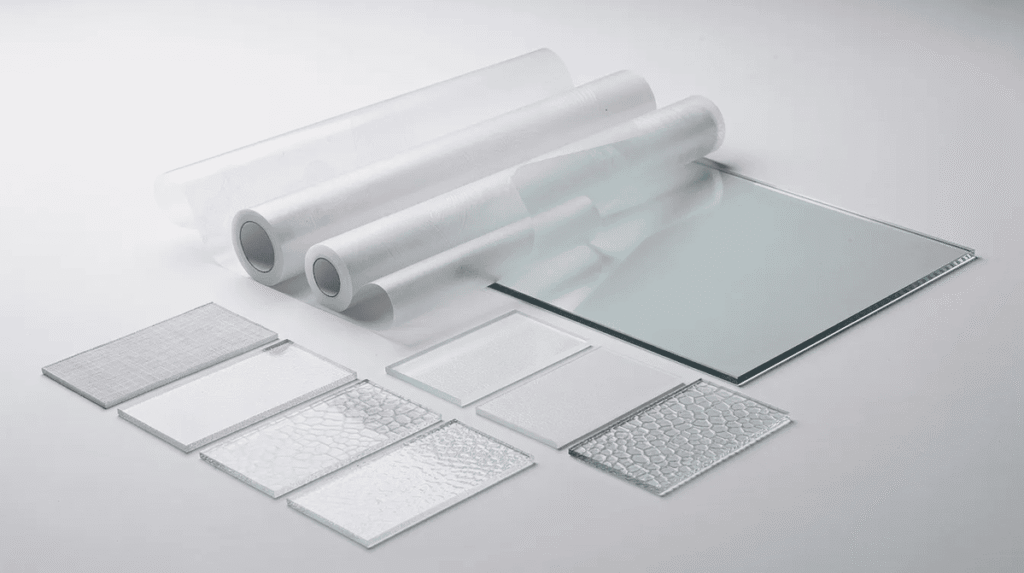
Frosted office window film is an adhesive or static-cling polyester (PET) or vinyl film that transforms clear glass into a translucent surface resembling sandblasted or etched glass. It can be applied to various glass surfaces easily – internal partitions, windows, sidelights, and doors – without replacing any glazing.
The film works through micro-textured surfaces that scatter and refract incoming visible light. Instead of reflecting light like a mirror film, frosting diffuses it, so shapes and movement remain faintly visible but details like faces, text, and screen content are obscured on both sides.
There are several common types used in office settings:
- Full frost – uniform frosting across the entire pane for maximum privacy.
- Light frost (lite frost) – a softer diffusion that provides a gentle blur while letting in more light.
- Patterned, banded, or gradient – privacy bands at eye level with clear glass above and below, or gradients that transition from solid frost to transparency.
Typical commercial uses include glazed meeting rooms, corridor windows, sidelights next to glass doors, reception areas, and street-facing office windows. Frosted window film is a semi-permanent solution for privacy in offices – it can be removed and replaced in most cases without damaging the underlying glass, which makes it particularly useful for tenants in leased office buildings who need flexibility.
Key Benefits of Frosted Office Window Film for Modern Workspaces
From a business perspective, frosted office window film delivers on three fronts simultaneously: employee comfort, regulatory compliance, and cost control. Here is what that looks like in practice.
Privacy and confidentiality
Frosted window film enhances office privacy while allowing natural light to pass through. It provides visual privacy for sensitive discussions – think HR interviews, legal consultations, financial reviews, and creative agency pitches where unreleased campaign work is displayed on screens. Quality frost makes text unreadable and faces unrecognizable from the other side of the glass, while frosted window film eliminates the “fishbowl” effect of glass walls that makes people feel exposed.
Natural light without glare
Frosted window film diffuses incoming sunlight without blocking it, creating softer, more even illumination across the room. This means less harsh glare on monitors during all-day computer use. Frosted films allow natural light while enhancing privacy – rooms stay bright and productive rather than feeling closed off. Frosted window film also blocks up to 99% of UV rays, which helps protect personal items and prevents furniture fading over time, similar to dedicated solar window tinting films for heat and glare reduction. It also reduces heat from direct sun exposure.
Design and branding
Frosted window film enhances office design by adding a modern, polished appearance. It allows for customized designs and branding elements – company logos, typography, icons, and patterns can all be incorporated into the film, much like broader privacy and decorative window film collections used in commercial interiors. Manufacturers like 3M’s Fasara line offer 100+ pattern and opacity options with tight production tolerances, so multi-site rollouts look consistent.
Cost savings vs etched or replacement glass
Frosted window films provide a cost-effective alternative to etched glass. Installed frosted film typically runs $8–$20 per square foot depending on complexity and region, while factory-etched or sandblasted replacement glass costs $25–$50+ per square foot. Frosted window film is a cost-effective alternative to replacing glass entirely, and it avoids the major construction disruption and lead times that come with re-glazing, especially when compared with other architectural window film solutions for buildings.
Flexibility and reversibility
When a company rebrands, changes floor plans, or sublets space, the film can be swapped without replacing the glass or destroying partitions. This keeps ongoing costs low and makes frosted film ideal for businesses that expect to change or grow within the next few years.
Best Places to Use Frosted Window Film in Offices and on Glass Doors
Here is a practical tour of the zones where frosted window film consistently delivers the most value.
Meeting rooms and boardrooms
Frosted window film is commonly used in offices with glass walls for privacy. Full-height frosting or frosted bands at eye level (typically 800–1200 mm from the floor) prevent people walking past from reading screens or whiteboards, while still letting managers see at a glance whether a room is occupied; in some spaces this function is complemented by switchable smart glass films for on‑demand privacy.
Office glass doors and sidelights
Frosting on glass doors and narrow side windows is one of the simplest ways to add privacy for private offices, medical consultation rooms, and HR interview spaces. A partial frost with a clear vision panel near the top keeps things safe in busy corridors while blocking the view at seated height.
Open-plan partitions and hot-desking zones
Frosted window film can minimize distractions in open-plan offices by creating subtle visual breaks between teams or zones. Horizontal frosted stripes or gradient film on low partitions reduce visual noise without hard walls. Frosted window film enhances focus by blurring movement outside transparent spaces, helping people concentrate in busy environments, and can be paired with smart window film that switches between clear and private states in high-value collaboration areas.
Reception and front-of-house glazing
Frosted film on entrance doors and reception windows screens waiting areas from the street while creating a welcoming, light-filled first impression. It is a simple way of keeping the interior visible enough to feel inviting but private enough to protect customer and visitor information.
Breakout spaces, focus rooms, and phone booths
Adding frost to small acoustic rooms or phone pods prevents people feeling “on display” in transparent boxes – a common complaint in offices that rely on glass-walled pods for video calls.
Design Options: From Simple Frosted Bands to Branded Glass Graphics
Frosted office window film is not only functional; it can become part of the visual identity of your workspace. The options go well beyond a plain white frost.
Classic full-frost coverage
A clean, minimal look for maximum privacy. This works well on HR offices, internal storage rooms with glazed fronts, and any area where you want a uniform, unobtrusive finish. The frosted surface looks polished from both sides.
Frosted bands and stripes
Vision band layouts – a frosted band at eye level with clear glass above and below – are one of the most popular choices. They meet safety regulations for manifestation on large glass areas, let in plenty of light, and still block the sightline where it matters. Multiple parallel stripes create a more dynamic, contemporary aesthetic.
Cut graphics and logos
Logos, text, and icons can be cut out of frosted film so clear glass shows through the design, or reversed – a frosted logo on a clear background. This allows discreet brand presence on glass doors, reception windows, and conference rooms without overwhelming the space.
Patterned and reeded-style films
Reeded Glass Film offers medium privacy with a decorative design that mimics the look of fluted glass at a lower cost than ordering specialty glazing. Reeded Glass Film offers a medium privacy level of 3/5, making it a strong choice for collaborative areas where full obscuration is not required. Lite Frost films allow an indistinct view while providing privacy, which is perfect for corridors and breakout zones, while adaptive transitional window films that darken in sunlight can add glare and heat control on exterior-facing glass.
Zoning and wayfinding
Different frosting patterns or densities can identify different floors, teams, or room types. For example, focus rooms might use heavy frost while collaborative zones use a lighter, patterned film – an easy visual cue that people learn to read intuitively.
Privacy Levels, Light Transmission, and Choosing the Right Frost
Not all frosted films add privacy in the same way. The level of privacy depends on visible light transmission (VLT), pattern style, and placement on the glass. Frosted films vary in light transmission and privacy levels, so choosing the right product for each area is important.
Understanding VLT
VLT measures the percentage of visible light that passes through the film. Higher VLT means more light and more visibility; lower VLT means stronger frost and more privacy. Suppliers often label their products as light, medium, or heavy frost to simplify selection.
Choosing by room function
| Room Type | Recommended Frost | Typical VLT Range |
|---|---|---|
| HR, legal, medical rooms | Heavy frost | 10–25% |
| Conference rooms, boardrooms | Medium frost | 40–55% |
| Open-plan partitions, corridors | Light/gradient frost | 65–85% |
| Breakout areas, reception | Light frost or bands | 70–95% |
| Frosted window film allows approximately 70–90% of daylight to pass through with standard medium to light frost options. Even with heavier frost, many installations still permit 40–65% of natural light. Frosted films provide privacy without darkening the room – they obscure visibility while maintaining a bright environment. In fact, frosted window films provide 96% privacy protection in heavier frost configurations, keeping confidential settings secure. |
Day vs night privacy
Frosted privacy films provide consistent privacy both day and night because they scatter light rather than relying on one-way reflection. Even with interior lights on at night, views remain blurred. People close to the glass will see moving shapes but not specific details – a significant advantage over reflective films that lose their privacy effect after dark.
Practical tip: Test a sample panel on at least one meeting room window before committing to a full office rollout. Check privacy from several distances and under different lighting conditions to make sure the frost level matches your actual needs.
Frosted Office Window Film vs Alternatives (Blinds, Curtains, Etched Glass)
Businesses often weigh frosted office window film against blinds, curtains, and permanent etched or sandblasted glass when planning privacy upgrades. Each has trade-offs worth understanding.
Versus blinds and curtains
Frosted film keeps natural light flowing, requires no daily adjustment, collects no dust or fabric allergens, and has no dangling cords. There is no mess of tangled slats or faded fabric to deal with. Blinds do have one clear advantage: they can provide complete blackout when needed, which still matters in AV rooms or settings where projection or training requires total darkness.
Versus etched or sandblasted glass
Permanent glass treatments look premium and resist scratching, but they involve removing and replacing glass panels – typically $25–$50+ per square foot, plus lead times for fabrication and shipping. Frosted films are a cost-effective alternative to etched glass, costing a fraction of what replacement glazing runs. And if your brand or layout changes, etched glass means starting over entirely. Frosted window films are cost-effective alternatives to etched glass and far more adaptable.
Versus one-way mirror or reflective films
Reflective window film depends on light direction: it works when the sun is brighter outside, but at night with interior lights on, the effect reverses and people outside can see in. Frosted film avoids this problem entirely, making it the more reliable choice for office interior spaces where lighting conditions shift throughout the day.
When frosted film is the ideal choice
Frosted film is ideal for leased offices, rapid refurbishments, multi-tenant buildings, and companies expecting to grow or rebrand within the next 3–7 years. It delivers privacy, design flexibility, and cost control without locking you into a permanent decision, and can be combined with higher-grade ballistic and intrusion-resistant glazing solutions where threat levels require enhanced protection.
Installation: Professional Fit vs. DIY Static-Cling Films
While small frosted films can be a simple DIY project, business-critical office installations typically benefit from professional work for a flawless, bubble-free finish and long-term durability.
Professional installation process
The typical workflow follows these steps:
- Site survey and measurements – an installer reviews every window, partition, and glass door to confirm dimensions and glass type.
- Design and layout approval – patterns, logo placement, and band heights are agreed upon before any film is cut.
- Meticulous glass cleaning – proper installation of frosted window film requires meticulous cleaning to remove all dust, oils, and residue from the glass surface.
- Film application – frosted window film is installed using a soapy water solution to assist positioning. Frosted window films can be applied using a water/soap mixture that allows the installer to slide and adjust the film before it bonds.
- Squeegeeing – installation requires a squeegee to remove bubbles and excess water from beneath the film.
- Trimming and inspection – cutting the film to size is necessary before installation, and edges are trimmed precisely around hardware and frame edges.
DIY static-cling options
Static cling films do not require adhesive for installation, making them renter-friendly and repositionable. Frosted films can be easily applied without glue or damage, which is convenient for small offices or temporary privacy needs. Static cling window films require no adhesive for installation, but they are more prone to edge lifting in high-traffic zones and may not hold up as well on glass doors that open and close frequently.
Common installation issues to avoid
Trapped dust particles, misaligned designs across multiple panels, poorly finished corners, and accidentally covering required safety markings on glass are the most frequent problems. Scheduling installations during evenings or weekends keeps disruption to a minimum – most small to mid-size offices can be completed in a single day.
Care, Cleaning, and Lifespan of Frosted Window Films in Offices
Frosted office window film is low maintenance, but proper care keeps it looking crisp and professional for years.
Safe cleaning practices
Use mild, non-abrasive cleaners and soft microfiber cloths or a window squeegee. Avoid razor blades, harsh chemical solvents, and scouring pads – these can scratch or damage the film’s textured surface. A simple pass with glass cleaner and a soft cloth every few weeks is usually all that is needed.
Typical lifespan
Frosted films can last over 5 years with proper care. Quality commercial-grade films on interior glass commonly carry 5–7 year warranties, and many installations look good well beyond that timeframe when installed by a professional window film company for homes and offices. Lower quality films may degrade in as little as 1–2 years – showing yellowing, peeling, or edge lifting.
Wear and tear considerations
Films on glass doors, low-level panels, and high-traffic corridors tend to show edge wear sooner due to frequent contact, cleaning, or accidental impact. Thicker films and properly sealed edges help extend life in these areas.
When to replace
Look for discoloration, peeling edges, noticeable scratches, or branding that is out of date. Frosted films are removable and reusable without damage in many cases, though adhesive-backed films may require solvent cleaning on the glass surface after removal.
Common Mistakes When Choosing or Installing Frosted Office Window Film
Avoiding a few predictable mistakes can save money and prevent frustrating rework.
Underestimating privacy needs
Some teams choose a lite frost because it looks elegant, then discover that meeting notes, screen content, and faces are still visible. This leads to a second project to upgrade to heavier frost – doubling cost and disruption. Always test before committing to a full rollout.
Poor layout planning
Misaligned bands across neighboring glass panels, logos cut off by mullions, and frosted bands ending at awkward heights relative to desks or seated eye level are all common and avoidable. A professional site survey catches these issues before film is cut.
Ignoring safety and compliance
Large glass doors and partitions in commercial buildings typically require manifestation or safety markings to prevent collisions. Covering these with film – or failing to add new ones – creates a compliance and liability risk.
Choosing low-quality films
Cheap films save money upfront but often bubble, discolor, or peel within a year or two. The difference in price per square foot between budget and certified commercial-grade products is relatively small, but the difference in longevity and appearance is significant, especially if you also need security window films for impact and intrusion resistance.
DIY on large, high-visibility areas
DIY may work for a single internal window, but for reception glazing, main glass doors, or big meeting rooms where first impressions and durability matter, professional installation is worth the investment.
FAQs About Frosted Office Window Film
These FAQs address the most common questions from office managers, facilities teams, and business owners planning to add privacy to windows and glass doors.
How much privacy does frosted window film really provide in an office?
Quality frosted films prevent people from seeing details such as faces, text on screens, and whiteboard content. Heavy frost options with low VLT offer near-complete visual privacy – shapes and general movement remain visible, but nothing specific enough to compromise confidentiality. For most business uses, this level of privacy is more than sufficient to protect sensitive information.
Can frosted office window film be removed without damaging the glass?
Yes. Professional-grade adhesive films can be removed with careful peeling and adhesive remover, leaving the original glass intact. Static-cling options leave no residue at all, making them ideal for leased premises where you need to return the space to its original condition at the end of a lease.
Will frosted film make our meeting rooms too dark?
Frosted films are translucent, not fully opaque, so they diffuse daylight rather than block it. Most offices experience a softer, more even light rather than a noticeably darker room. Even full-frost options typically allow 40–65% of natural light to pass through, and lighter frost products let through considerably more.
Is frosted window film suitable for office glass doors and high-traffic areas?
Commercial-grade films are designed to withstand regular use on glass doors, partitions, and sidelights. Strategic placement – such as keeping a clear vision panel at the top of a door – balances privacy, security, and safety. Thicker film and sealed edges help increase durability in areas with heavy foot traffic.
How long does frosted office window film last before it needs replacing?
Expect 5–7 years or more from quality interior films. Factors like sun exposure, cleaning frequency, and physical contact affect actual lifespan. Cheaper, no-brand films may fail much sooner – peeling, discoloring, or developing edge lift within a couple of years.
Can we add our logo or branding into the frosted window film?
Absolutely. Options include cutting the logo out of the frost so clear glass shows through, printing directly onto the film, or combining clear and frosted sections for a subtle branded look. Custom or branded films typically cost $15–$22 per square foot installed, depending on complexity.
Is frosted window film compliant with office safety and building regulations?
Frosted film can support compliance by adding manifestation bands to large glass areas, helping people see that a glass panel is there and avoiding collisions. It is important to check local building regulations and work with certified installers who understand safety marking requirements on commercial glazing. For fire-rated glass, confirm with the glass manufacturer before applying any surface treatment.
Why Choose Professional Frosted Window Film Services for Your Office
Working with an experienced commercial window film provider is usually the best route for offices, rather than buying generic film rolls online and hoping for the best. Here is why.
Expert product selection
Specialists match film type and privacy level to each area of your office. They know which products work on different glass types – tempered, laminated, low-E – and can recommend the right combination of heavy frost for HR rooms, patterned film for collaborative zones, and safety markings on glass doors.
Design and branding support
A good provider helps with layouts, alignment across multiple panels, and logo integration. They make sure the final design complements your existing interiors and signage – so people love the finished look rather than noticing things that do not quite match.
Quality materials and warranties
Professional companies provide access to proven film brands with documented performance data, UV resistance, and manufacturer-backed warranties suited to commercial environments. These products hold their appearance and adhesion far longer than budget alternatives you might buy from an online cart.
Efficient, low-disruption installation
Trained installers deliver a cleaner finish, correct trimming, and faster work. They can schedule outside standard office hours – evenings or weekends – so your team arrives to a finished result with zero downtime.
Aftercare and future changes
Having a trusted partner means future rebrands, expansions, or damaged panel replacements are handled quickly. You do not have to start the research and vetting process from scratch every time something needs to change.
Next Steps: Planning Your Frosted Office Window Film Project
Moving from research to action is simpler than most teams expect. Even complex office layouts can be managed in clear, manageable phases.
Initial assessment
Walk your office and list every glass door, window, partition, and meeting room where you want to increase privacy or control glare. Note dimensions, current issues (distracting foot traffic, screen visibility from corridors), and any areas where you want to add branding. Having this information ready before you contact an installer saves time for everyone.
Define goals and budget
Set priorities – privacy, branding, light control, aesthetics – and agree on a realistic budget. Keep in mind that frosted window film typically costs a fraction of what re-glazing would run, so even a comprehensive project may come in well under initial expectations.
Consultation and design
Book a site visit with a specialist to review options in person. Ask to see physical samples of frosted films at different opacities, and discuss any logo or pattern ideas tailored to your office’s design language. If you are based in Northern California, a local window film installation service in Sacramento can provide this kind of on‑site consultation. Seeing and touching the products makes the final decision far easier than choosing from a page of thumbnails.
Scheduling and communication
Plan installation during quieter office periods and let your team know what will be frosted, when, and why. A short heads-up email or message goes a long way toward making the change feel positive rather than surprising.
Get started today
Whether you need privacy for a single meeting room or a full-floor rollout, the right frosted office window film project starts with a conversation. Reach out by phone, email, or online form to request a quote, ask technical questions, or book a design consultation. Your workspace deserves to look as good as it works.