Table of Contents
- Core Benefits of Storefront Window Film for Businesses
- Types of Storefront Window Film and What Each Solves
- How Commercial Window Film Installation Works (From Quote to Clean‑Up)
- Codes, Compliance & Local Signage Rules for Storefront Films
- FAQs About Storefront Window Film
- Why Storefront Owners Choose CoolVu for Commercial Window Film
Why Storefront Window Film Matters for Modern Businesses
Picture a boutique on a sun-drenched commercial strip in mid-2026. The displayed merchandise is fading, the AC runs nonstop against heat pouring through floor-to-ceiling glass doors, and last month a smash-and-grab two blocks away put the whole corridor on alert. That scenario is playing out in thousands of storefronts right now.
Storefront window film is a thin polyester layer applied directly to existing glass doors and commercial windows to improve security, comfort, UV protection, and branding. Many business owners search for this solution because of three urgent pressures: rising energy costs, the threat of forced entry, and the need to stand out on busy streets. Window film can improve the aesthetic appeal of storefronts without expensive remodeling-making it a practical first move.
CoolVu provides national commercial window film installation through local franchise teams focused on retail shops, restaurants, and offices. Below, you will learn how different types of film work, what each solves, and how to choose the right window film and installer.
Core Benefits of Storefront Window Film for Businesses
Window films turn vulnerable glass into a multi-function asset that pays for itself. Here is what a single retrofit delivers:
Security and safety. Glass doors and display windows become far less vulnerable to forced entry and accidental breakage. Security window film holds glass together if it breaks, keeping flying glass shards contained and people safer.
Lower cooling costs. Solar control films help regulate indoor temperatures and lower utility bills. Window film enhances energy efficiency for storefronts by reducing heat transfer, and energy-saving films reduce reliance on air conditioning-critical when large commercial windows face south or west.
Merchandise protection. Window film blocks up to 99% of UV rays, dramatically slowing the fading of fabrics, furnishings, and digital displays. It also helps protect merchandise from fading that costs retailers real revenue.
Curb appeal. Decorative films enhance storefront aesthetics and curb appeal, delivering a more professional appearance compared with bare glass. Window films also reduce glare by up to 76%, improving customer comfort inside.
Compare a shop relying only on blinds-blocking both glare and street visibility-with one using performance commercial window film that cuts heat, reduces glare, and keeps product displays visible to foot traffic. The film-equipped store wins on every front.
Types of Storefront Window Film and What Each Solves
Different film constructions target specific problems, and films can be layered or combined for multiple benefits. The main categories include:
- Tinted window film – reduces solar heat gain and glare while maintaining a clean look.
- Security window film – thick, multi-ply polyester that resists penetration and holds shattered glass in place.
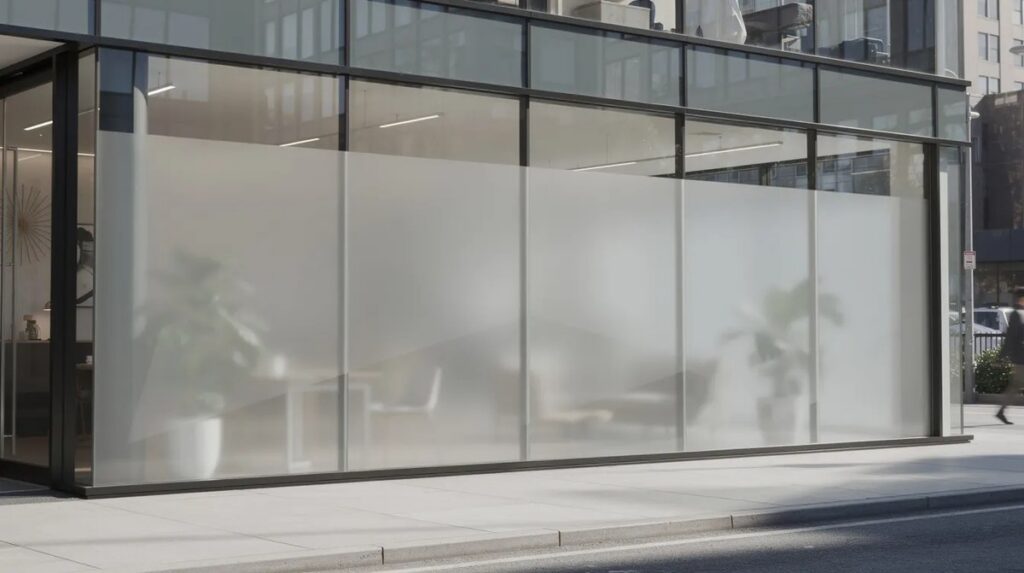
- Frosted films and decorative films – mimic etched or sandblasted glass for privacy and style.
- Solar and low-E films – spectrally selective coatings that reject infrared heat while preserving natural light.
- Anti-graffiti films – sacrificial layers that protect glass from tagging and scratching.
Ceramic films reject heat without affecting visible light, preserving display visibility for retailers who need bright storefronts. Combining different film types can provide multiple benefits such as UV protection and privacy in a single installation. The right choice depends on window orientation, local crime risk, climate zone, and how the space is used-whether that is a boutique, a restaurant, or a medical office. Safety films and security films are detailed next.
Security & Safety: Reinforcing Storefront Glass Against Break‑Ins and Accidents
Unprotected storefront windows remain the most common entry point for break-ins, with average reported losses around $22,000 per incident. For high-value product retailers like jewelry stores and electronics boutiques, security window film is essential.
Security window film is constructed from multiple layers of heavy-duty polyester bonded with industrial adhesive. On impact, it keeps the glass intact as a flexible barrier, reducing the risk of injury from broken glass and dramatically slowing penetration. Thicker security film can delay forced entry by up to 6 minutes-often enough for alarms to trigger and police to respond.
Safety films serve a related but distinct role: they help glass doors and sidelights meet safety glazing standards by preventing dangerous spall, even from accidental impacts. A pharmacy on a busy urban sidewalk, for example, benefits from safety films that reduce vandalism damage and protect passersby.
Anti-graffiti film protects storefronts from vandalism and tagging by acting as a sacrificial layer that can be replaced without touching the glass underneath. Security films pair with existing alarm systems, quality locks, and camera setups. CoolVu offers professional installation nationwide for security films on doors, storefront glass, and interior showcases, with products tested to recognized standards, providing comprehensive window tinting and window film installation services for commercial properties.
Comfort, Sun Control & Energy Savings for Storefronts
Large commercial windows without sun control act like radiators, pushing cooling systems to their limits. Between 2024 and 2026, utility rate increases have made this an even sharper pain point for many business owners.
Solar window films reduce interior glare and heat by reflecting and absorbing a significant portion of solar energy. UV protection films block up to 99% of harmful rays, shielding merchandise and interiors. Energy-saving films lower heat inside, reducing air conditioning reliance and helping a retail shop or salon trim summer AC runtime noticeably. Window film can lower utility bills significantly-studies show perimeter HVAC savings in the range of 20–29% for single-pane, sun-facing glass.
Glare reduction matters beyond comfort. When films reduce glare on POS screens, digital signage, and product displays, employees work more efficiently and customers browse longer in a comfortable environment. Many locations may also qualify for local rebates or green building incentives tied to energy efficiency improvements.
Compared with full glass replacement, energy-saving film is faster, less disruptive, and a fraction of the cost-making it a great option for buildings where budget or lease terms rule out major renovations.
Design, Privacy & Branding: Frosted Films and Custom Graphics
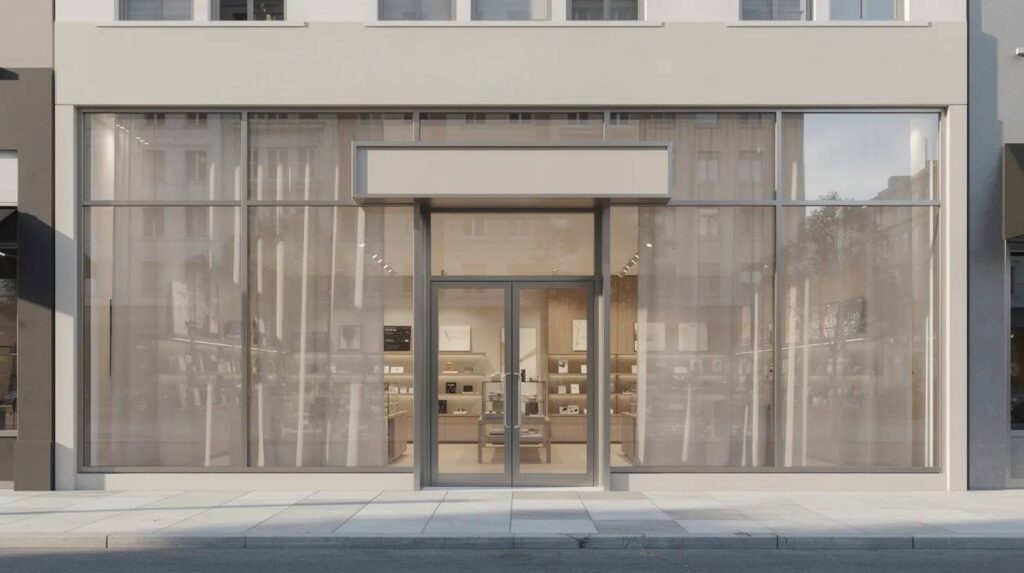
Every square foot of storefront glass is marketing real estate. Storefront window film can transform clear windows into signage, wayfinding, or privacy screens without permanent etching.
Frosted films create privacy while allowing natural light-perfect for salons, medical practices, and offices where you need to hide treatment rooms or conference areas from the street. Decorative films mimic etched glass at lower costs, giving dated storefronts an updated style without construction. Privacy films limit visibility while allowing natural light to keep interiors bright.
Decorative window films can display branding elements while maintaining natural light. Printed vinyl window graphics can turn storefront windows into marketing spaces with logos, hours, taglines, QR codes, and seasonal promotions. Perforated films let pedestrians see a full-color image from outside while staff inside retain their outward view.
A café running seasonal film campaigns-spring graphics in March, holiday scenes in November-keeps its façade fresh and present without permanent changes. CoolVu handles design, printing, and installation of custom graphics, and can also integrate smart window films where on-demand privacy or dynamic displays are needed, giving the business owner a single point of contact from concept to clean-up.
How Commercial Window Film Installation Works (From Quote to Clean‑Up)
Many business owners worry about downtime, but professional installation is typically fast and can be scheduled around business hours. Installation typically takes less than a day for storefronts.
The process follows a clear sequence:
- Site assessment – a CoolVu technician measures commercial windows and glass doors, evaluates sun exposure and security risks, and reviews local code requirements.
- Product recommendation – matching film types (security, tinted, frosted, custom graphics) to goals and budget, with samples shown on live glass.
- Scheduling – standard films ship quickly; custom-printed graphics may add one to three weeks for design and production.
On installation day, surfaces are thoroughly cleaned, film is precision-cut and applied using slip solutions and squeegees, and edges are sealed. Customers may notice slight haziness or small moisture pockets that cure over several days depending on film type and climate.
Professional installation prevents bubbles and uneven edges that plague DIY attempts, and CoolVu’s experienced glass and surface solutions team brings standardized best practices to every project. Consulting professionals ensures proper film selection and installation, especially on tempered or insulated glass where the wrong product can cause thermal stress. CoolVu backs every project with material and workmanship warranties, and local providers like CoolVu of Lower Fairfield County extend that support with in-person service and follow-up. A small storefront is typically finished in a few hours; a large multi-bay restaurant or retail location wraps up in one to two days.
Codes, Compliance & Local Signage Rules for Storefront Films
Cities often regulate how much glass can be covered, reflectivity levels, and signage size-particularly in downtown districts and historic areas. Ignoring these rules risks fines or forced removal.
Common regulations include limits on opaque coverage (many municipalities cap graphics at 20–50% of glazed area), safety requirements for glass doors and sidelights, and restrictions on highly reflective mirrored films in pedestrian zones.
Professional installers like CoolVu help by reviewing local ordinances and landlord criteria before work begins, suggesting compliant film combinations such as solar control plus limited custom graphics, and providing product data sheets if building officials request them. Franchise locations, national retail chains, and healthcare offices face additional layers where brand standards and privacy laws intersect with local rules. Always confirm requirements before a major branding rollout and keep permit documentation on file.
FAQs About Storefront Window Film
Below are the most common questions CoolVu hears from storefront, restaurant, and office clients.
How long does storefront window film typically last?
Most films last 10 to 15 years with proper care, though heavy-traffic anti-graffiti layers or extreme-sun installations may have shorter cycles. Window films can last between 5 to 15 years with proper care depending on film type, glass orientation, and installation quality. Use a soft cloth and mild soap for cleaning window film to maximize lifespan. CoolVu provides manufacturer-backed warranties on materials and workmanship.
Will security film or tinted window film make my store too dark?
Modern commercial films are spectrally selective, blocking heat and UV while keeping interiors neutral and bright. Visible light transmission options range from very light to darker tints, and CoolVu helps pick the right level so product displays remain clearly visible from the street. Most films maintain enough natural light that customers and employees notice improved comfort, not dimness.
Can storefront window film be installed on any glass doors and windows?
Most standard commercial glass, tempered glass, and doors can accept film. Certain insulated or wired glass may require specific products to avoid thermal stress. CoolVu technicians test and assess glass type and condition before recommending a film, and older or damaged glass may need repair before installation.
How much does commercial window film installation cost for a storefront?
Cost depends on total square footage, film type, access conditions, and location. Security films and custom printed graphics cost more per square foot than basic solar control films. Many projects pay for themselves over time through energy savings, reduced merchandise loss, and fewer breakage incidents, as demonstrated by regional teams such as CoolVu of Tucson that routinely help clients cut glare and cooling costs.
Can window film be removed or updated later without damaging the glass?
Window films can be removed without damaging the glass when handled by trained installers using safe techniques and adhesive removers. Seasonal graphics, rebranding, or remodeling are common reasons CoolVu clients update films. DIY removal on large storefronts is not recommended due to residue risk and potential scratching.
Does security window film replace the need for alarms or physical barriers?
Security window film is one layer in a broader security plan-not a complete replacement for alarms, cameras, or quality hardware. Film works as a delay and deterrent, making glass harder to breach quickly and often sending opportunistic thieves elsewhere. Combining film with existing systems creates an added level of protection that is far stronger than any single measure alone.
Why Storefront Owners Choose CoolVu for Commercial Window Film
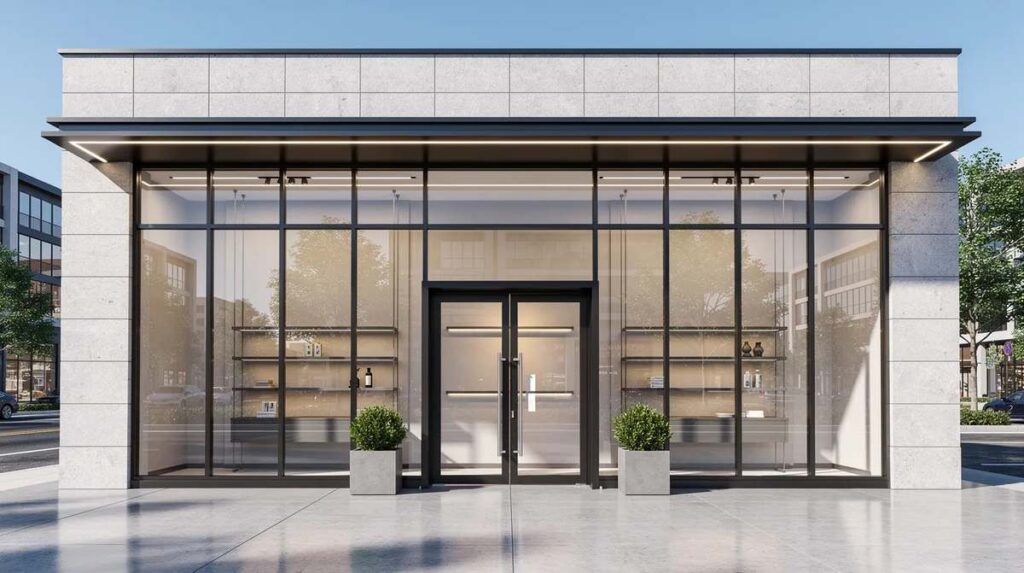
CoolVu is a national franchise network specializing in window film for storefronts, with local teams that understand regional climate, crime patterns, and design trends. That local knowledge matters when recommending the right window tinting for a sun-blasted Phoenix storefront versus a security-focused installation in an urban corridor.
Key differentiators include trained, insured installers experienced with retail shops, restaurants, medical offices, and multi-location brands. CoolVu delivers a full suite of solutions in one place: security films, sun control, frosted window films, custom graphics, and architectural surface finishes. Every engagement starts with an on-site assessment, film samples on live glass, and a clear proposal-no guesswork.
CoolVu provides free estimates, product-backed warranties, and post-installation support, with local operations like CoolVu of Tucson offering on-site consultations tailored to each storefront. One multi-location retailer saw repeat smash-and-grab attempts drop to zero after installing security film across three storefronts. A restaurant owner in a historic district achieved compliant branding graphics that passed inspection on the first review. Results like these are why many business owners come back to CoolVu when they expand.
Next Steps: Schedule Your Storefront Window Film Consultation
Storefront window film delivers measurable returns in security, energy savings, and street-level branding with minimal disruption to daily operations. Whether you are planning a 2026 remodel, dealing with repeat heat and glare complaints, responding to nearby break-ins, or rebranding multiple locations, a professional consultation is the fastest path to the right solution.
Contact CoolVu to schedule a free on-site or virtual evaluation. Share photos, floor plans, or recent energy bills so recommendations can be tailored to your specific space and goals.
See what your storefront glass could do with the right film solution from CoolVu.